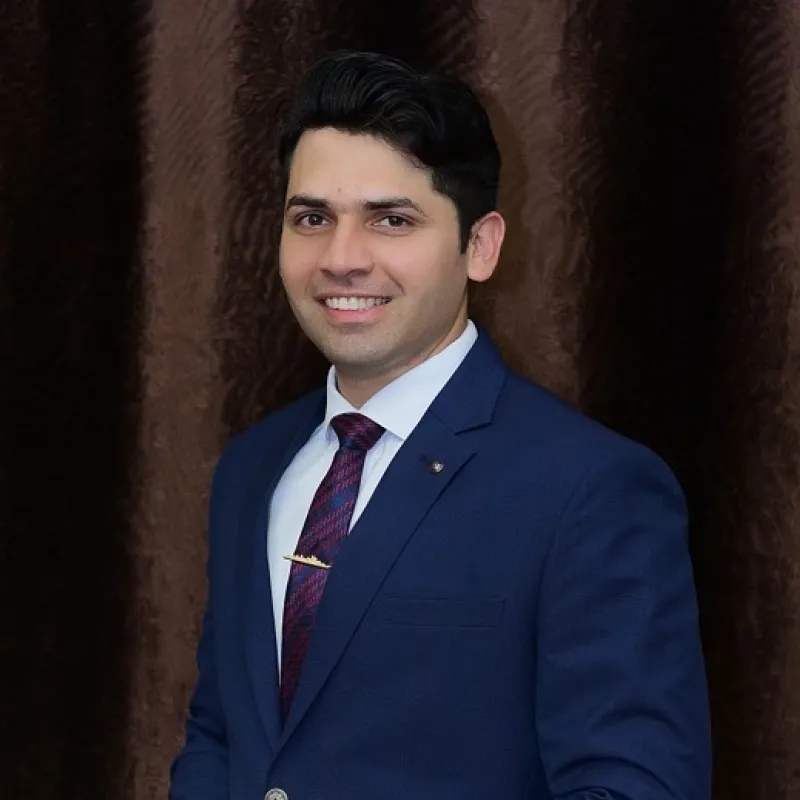
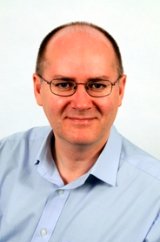
Adeel Tariq is a Post-Doctoral Researcher at the Industrial Engineering and Management department of LUT School of Engineering Sciences , Lappeenranta University of Technology, Finland. He completed his Ph.D. (2019) and MBA (2014) at the School of Management , Asian Institute of Technology, Thailand. Research Focus: Technology and innovation management, digital transformation, sustainable development, knowledge management, and leadership studies. Peer Review: Active reviewer for journals including Leadership & Organization Development Journal , Journal of Intellectual Capital , and European Journal of Innovation Management . Collaborations: Regular co-author with Waqas Tariq, Muhammad Saleem Sumbal, and Marko Torkkeli on topics like digital governance, fintech, and SME sustainability.
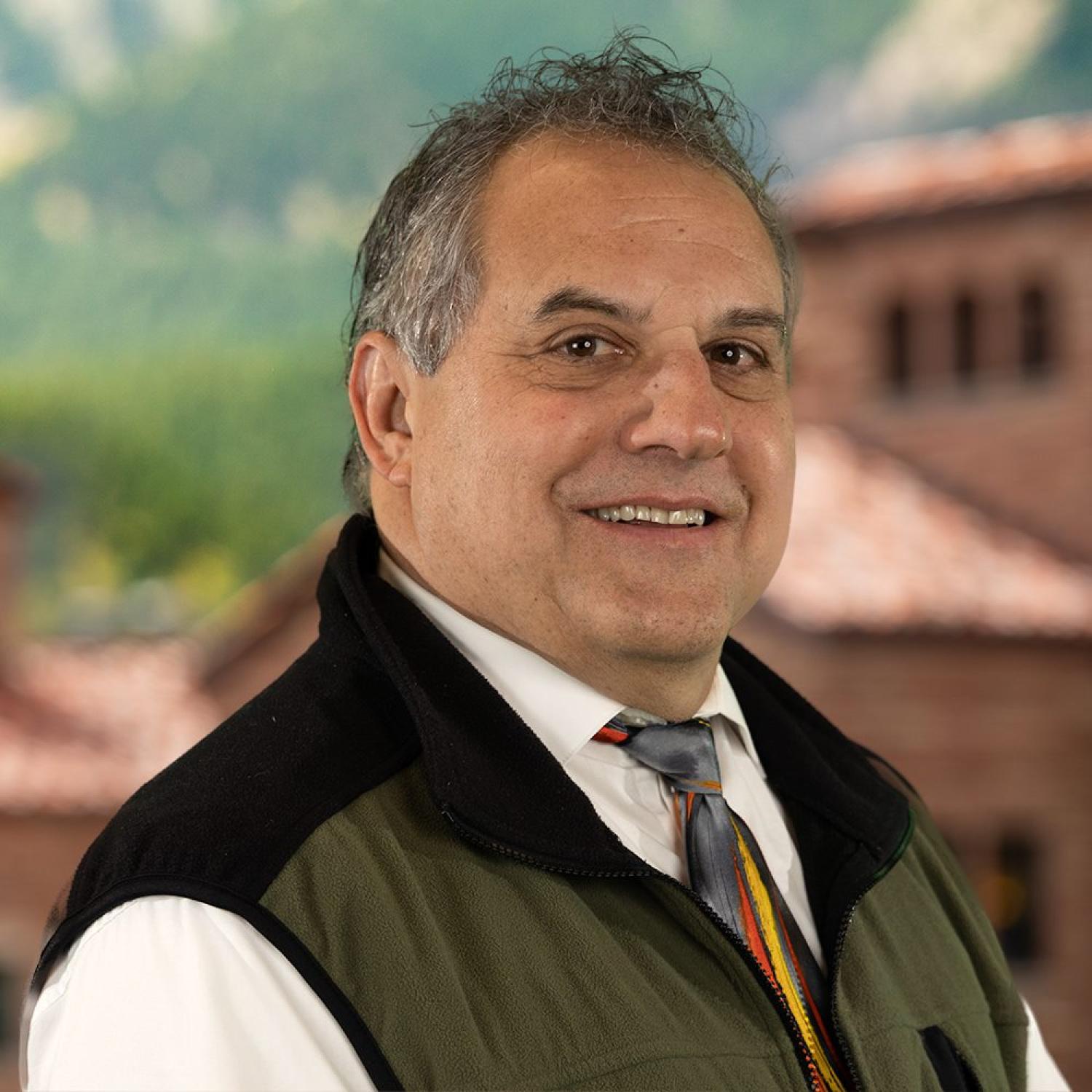
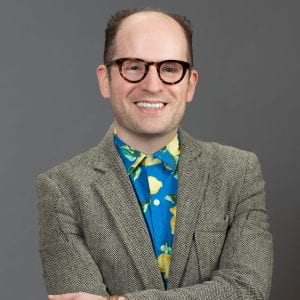
Robert Donchez serves as an Associate Teaching Professor and Faculty Director of the Business of Sports Program at the Leeds School of Business, University of Colorado Boulder. He holds an MBA in Finance from Fordham University and a BS in Business and Economics from Lehigh University. Professional Experience: Analyst at Salomon Brothers (Global Equities/Capital Markets), IBM World Trade (International Accounting & Financial Systems) Professional Affiliations: Faculty Advisor for Alpha Kappa Psi, Past Faculty Advisor for CFA Challenge Competition (2017-2020) His teaching interests include Corporate Valuation, Securities Fraud, and Corporate Finance, with a focus on real-world applications in finance and sports business. He has authored publications on college football rivalries and contributed to Entrepreneurial Finance teaching materials. Notable honors include the Faculty/Staff Impact Award (2021), multiple MBA Teaching Excellence Awards (2019, 2013), and recognition from the Athletic Department (2010-2011) and Frascona (2008). Beyond academia, he is a real estate investor and co-owner of Colorado craft breweries, with two decades of experience working with local professional sports teams.
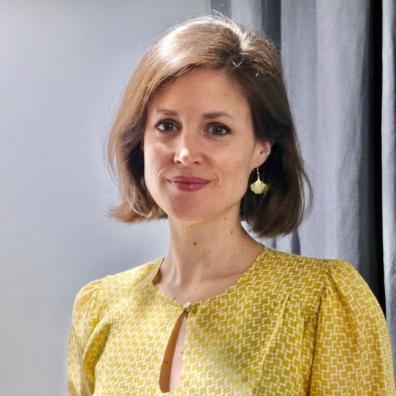
Delphine Allès is a University Professor at the National Institute of Oriental Languages and Civilizations (INALCO) in Paris, France, where she serves as Vice-President responsible for board of directors, organization and resources. She is a leading scholar in International Relations with a focus on Southeast Asia, particularly Indonesia, and specializes in non-Western approaches to international relations, religion in global politics, and Indo-Pacific security dynamics. Her research interests span multiple interconnected domains: Religion and International Relations Non-Western Approaches to International Relations Diplomacy, Security and Multilateral Cooperation in Southeast Asia (Indonesia / Indo-Pacific) Civilizational Narratives Global International Relations and Area Studies Allès's scholarly work demonstrates a consistent focus on decentralizing International Relations theory through empirical studies of Southeast Asian practices. Her recent publications examine the Indo-Pacific concept, religious diplomacy between Russia and Indonesia, and critiques of Western-centric security frameworks. She has pioneered research on how non-Western civilizations conceptualize international order, particularly through religious frameworks. Professor Allès serves on the editorial boards of multiple prestigious journals including European Journal of East Asian Affairs, Global: Jurnal politik internasional, and Archipel. She is also Scientific manager of the AMI-SHS DECRIPT program focused on crises and civilizational narratives. Her administrative leadership includes membership on the Scientific and Strategic Council of Pôle Asie (MEAE) and the board of the French Political Science Association. Previously, she directed the International Relations department at INALCO (2018-2023) and co-edited the journal Etudes internationales (2021-2024).
Professor Sławomir Kaczorowski, Ph.D., has been a faculty member at the Grażyna and Kiejstut Bacewicz Academy of Music in Łódź since 1981, where he teaches composition and served as Head of the Department of Composition from 2011 to 2021. He previously held significant leadership roles including Vice-Rector for Artistic and Teaching Affairs (1999-2005) and Vice-Dean of the Faculty of Composition, Music Theory, Music Education and Rhythmics (1996-1999). His educational background includes diplomas in music theory (1981) and composition under Professor Bronisław Kazimierz Przybylski (1981) from the State Higher School of Music in Łódź. Awarded the title of professor by the President of Poland in 2002, he remains an active academic leader currently serving as chairman of the Art Section of the Polish Accreditation Commission. Kaczorowski specializes in contemporary composition with emphasis on instrumental works, chamber music, and choral compositions. His research interests manifest in diverse output featuring piano, accordion, and mixed ensembles, with notable focus on tango-inspired forms and liturgical reinterpretations. He pioneered the MUSICA MODERNA sessions promoting new music through biannual concerts and lectures. Analysis of his 15 most recent compositions reveals consistent exploration of Polish contemporary classical traditions with strong emphasis on instrumental timbre, cross-genre fusion (particularly tango elements), and innovative approaches to sacred music forms. His works demonstrate technical mastery across diverse ensembles from solo piano to full orchestral settings. Silver Medal for Merit to Culture – Gloria Artis (2021) Numerous national composition competition awards Jury membership at international competitions including the T. Baird Young Composers' Competition (Warsaw 2018) and National Association of Composers USA competitions (2017-2018) Professor Kaczorowski has mentored award-winning composers including Grzegorz Duchnowski and Tomasz Szczepanik. His institutional leadership includes directing the Grażyna Bacewicz International Composition Competition (2012, 2015, 2019) and serving as president of the Łódź Branch of the Polish Composers' Union until 2022. He maintains active artistic engagement through premieres across Europe, China, and the United States. His creative work is organized through departmental initiatives including the Department of Composition's performance series and collaboration with the Artur Rubinstein Łódź Philharmonic. Current activities focus on expanding Polish contemporary music's international presence through competitions and cross-border artistic exchanges.
Joel Zylberberg is an Adjunct Assistant Professor at the University of California, Los Angeles (UCLA), affiliated with the Department of Ophthalmology within the School of Medicine . His research bridges Computational Neuroscience , Neural Networks , and Machine Learning , focusing on how neural activity and biological mechanisms inform artificial intelligence and visual cortex dynamics . Joel's work explores retinal computation , population coding , and neural adaptation , often analyzing mouse visual cortex and neurophysiological data . His recent publications highlight trends in dynamic retinal processes , stimulus-driven network topology , and brain-inspired machine learning , emphasizing the interplay between biophysics and computational modeling . Collaborators include Greg Field (UCLA), Richard Born (Harvard), and Michael DeWeese (UC Berkeley), with affiliations spanning institutions like University of Washington and University of California, San Diego (UCSD). His work appears in journals such as Nature Neuroscience , Neuron , and PLOS Computational Biology .
Dr. Lucy Gloag is a Lecturer at the Research School of Chemistry at the Australian National University (ANU), where she joined in 2024 after previously serving as a Lecturer at the University of Technology Sydney in 2023. Her research focuses on the development of advanced nanomaterials for energy applications, particularly in electrocatalysis and energy storage. Education: BSc/BCA and BSc(Hons) from Victoria University of Wellington, New Zealand PhD from the University of New South Wales (2018) on synthesis and characterization of Ru-based nanocatalysts Dr. Gloag is a nanomaterials chemist and electron microscopist specializing in the synthesis and characterization of nanomaterials for electrocatalytic applications. Her research addresses the fundamental question of how nanostructure can be used to enhance the performance of electrocatalysts . She employs solution-phase synthesis techniques to create nanoparticles with precise control over crystal structure, dimensions, and surface faceting, then correlates these structural features with electrocatalytic properties using transmission electron microscopy and electrochemistry. Her work spans energy conversion technologies, biomedical applications of nanoparticles, and advanced materials characterization. Analysis of her recent publications reveals a strong focus on single-atom catalysts, hierarchical nanostructures, and the relationship between nanomaterial structure and function. Her research spans both fundamental materials science and practical applications in energy conversion, with significant work on oxygen evolution reaction, hydrogen evolution reaction, and methanol oxidation electrocatalysts. She has also made notable contributions to biomedical applications of nanoparticles, particularly in magnetic particle imaging and Alzheimer's disease diagnostics. Scientific Awards: ARC Discovery Project Grant (2023) ARC Linkage Project Grant (2023) UNSW Science COVID19 Strategic Support Grant (October 2021) Dementia Australia Research Foundation – Yulgilbar Innovation Grant (2019-2022) Australian Postgraduate Research Scholarship (2015) AMN-7 Image Competition Finalist (2015) Dr. Gloag currently leads the ANU Futures Scheme 2.0 project (2024-2028) and has secured multiple competitive research grants, demonstrating strong research leadership. Her work involves extensive collaboration with researchers at UNSW and other institutions, particularly with Professors Richard Tilley and Justin Gooding. She has published 28 research outputs since 2015, with significant citation impact (h-index of 17). Her laboratory at ANU (Building 137, room 2.49) focuses on developing single atom and nanomaterials for energy storage and conversion technologies, continuing her trajectory as an emerging leader in advanced materials synthesis and electron microscopy characterization.
Maria Monica Wihardja serves as a Visiting Fellow and Co-coordinator of the Media, Technology and Society Programme at ISEAS–Yusof Ishak Institute while holding an Adjunct Assistant Professor position at the National University of Singapore. Her career bridges academic research and high-impact policy engagement, including former roles as World Bank Economist in the Poverty and Equity Global Practice and senior advisor to Indonesia's Presidential Executive Office on strategic economic reforms. Her educational background features: PhD in Regional Science, Cornell University MPhil in Economics, Cambridge University BA in Applied Mathematics-Economics, Brown University Wihardja's research integrates economic analysis with sociotechnical systems, focusing on digital transformation's impact on labor markets, food security, and democratic processes. She examines how technological disruption creates both opportunities for inclusion and risks of inequality, particularly through studies of platform economies, electoral disinformation, and sustainable agro-food systems. Her methodology combines quantitative econometrics with policy-oriented field research, often leveraging large-scale datasets from government and private sector partnerships. Analysis of her recent publications reveals three dominant research trajectories: (1) Digital economy effects on labor market polarization and inclusion, (2) Food system resilience through agricultural modernization, and (3) Geopolitical dimensions of supply chain reconfiguration. These intersect with her policy engagement in ASEAN economic integration frameworks and Indonesia's G20 presidency initiatives. Her scientific recognition includes: Nikkei Asian Scholar 2023 award Wihardja actively shapes regional discourse through editorial roles at East Asia Forum and Center for Indonesian Policy Studies. Her grant-funded work frequently involves World Bank partnerships and Indonesian government collaborations, particularly on stunting prevention and food policy reforms. Current projects examine deepfake impacts on electoral integrity and sustainable financing mechanisms for green transitions. She leads the Media, Technology and Society Programme at ISEAS, coordinating interdisciplinary research on digital governance and Southeast Asian technology policy. The programme partners with regional think tanks, government agencies, and private sector stakeholders to develop evidence-based policy responses to technological disruption.
Michael J. Meurer is a Professor of Law at Boston University School of Law, holding the Abraham and Lillian Benton Scholar title. He holds an SB in Economics and Interdisciplinary Science from MIT, a JD cum laude from the University of Minnesota, and a PhD in Economics from the same institution. His research focuses on Intellectual Property & Economics , with emphasis on patent policy, antitrust, and high-tech industry regulation. He has received multiple Pew Charitable Trust Grant Ford Foundation Grant Olin Faculty Fellowship at Yale Law School AT&T Bell Labs Postdoctoral Fellowship His teaching includes core courses in Intellectual Property and Patent Law, alongside workshops for international scholars and policymakers. Meurer's recent publications analyze patent reform frameworks collusion dynamics in patent disputes economic models for nonobviousness costs of patent trolling copyright policy in digital markets innovation economics He actively contributes to antitrust symposiums and law & economics workshops, maintaining a dual focus on legal theory and empirical economic analysis.
Cécile Mailler is a Reader in Probability at the University of Bath, where she is a member of the probability group Prob-L@B. She has held significant research positions including an EPSRC postdoctoral fellowship (2018-2021) titled "Random trees: analysis and applications" and previously worked as a postdoc at Prob-L@B (2013-2016) as part of Peter Mörters' EPSRC project "Emergence of Condensation in Stochastic Networks". She earned her PhD under the supervision of Brigitte Chauvin and Danièle Gardy at the Laboratoire de Mathématiques de Versailles. Her research focuses on probability theory with emphasis on branching processes, random trees, reinforcement mechanisms, Pólya urns, stochastic approximation, random networks, and statistical physics. She has made significant contributions to understanding preferential attachment models, zero-range processes, and random Boolean trees. Her work bridges theoretical probability with applications in statistical physics and combinatorics. Analysis of her recent publications shows a strong focus on random tree structures, branching processes, and reinforcement learning algorithms, with applications spanning from network theory to statistical mechanics. Her research demonstrates sophisticated mathematical techniques applied to complex stochastic systems, particularly those with reinforcement mechanisms and memory effects. Associate Editor of the Applied Probability Trust (since October 2020) Associate Editor of Stochastic Processes and Their Applications (since March 2022) Author of a general introduction to Pólya urns for the LMS Newsletter (November 2020) Co-organizer of the "Random Walks: Applications and Interactions" conference at CIRM (January 2026) She actively supervises PhD students working on topics including the multi-city ants process, Pólya urns with growing initial composition, large deviations for the Monkey walk, and competing growth processes. She has secured research funding through EPSRC fellowships and has been involved in multiple collaborative projects with prominent researchers in probability theory. Mailler regularly teaches mini-courses on advanced probability topics at international summer schools and workshops, demonstrating her commitment to knowledge dissemination in the field.
Megan Lawrence is an Assistant Professor of Strategic Management in the Strategy and Business Economics group at the Vanderbilt Owen Graduate School of Management . Her research focuses on organizational adaptation, knowledge evolution, and managerial strategies across firms ranging from Fortune 500 companies to startups. Education: D.B.A. in Strategy from Harvard Business School (2016), B.S.E. in Operations Research & Financial Engineering from Princeton University (2006) Her research interests include organizational management practices, firm capabilities, and structural adaptation. Articles like 'The Growth of Hierarchy in Organizations' and 'Learning to Manage Breadth' highlight her work on knowledge scope, experience repetition, and implementation performance. Scientific Awards: Brownlee O. Currey Jr. Dean’s Faculty Fellow, Poets & Quants 40-Under-40, Strategic Management Society Best Video Abstract Winner, and others Professor Lawrence teaches strategic management in MBA and Specialized Masters programs and has prior industry experience in quantitative consulting at Merrill Lynch. Her email is megan.lawrence@vanderbilt.edu .
Francis Y. Yan is an Assistant Professor of Computer Science at the University of Illinois Urbana-Champaign (UIUC), holding an affiliate appointment in Electrical & Computer Engineering within the Grainger College of Engineering. He leads the Illinois Networked Systems and AI (NSAI) research group, focusing on building intelligent networked systems that are safe, robust, and performance-optimized through practical machine learning integration. Prior to joining UIUC in January 2025, he served as a Senior Researcher at Microsoft Research Redmond under Victor Bahl. His educational background includes: Ph.D. in Computer Science from Stanford University (2020), advised by Keith Winstein and Philip Levis B.S. in Computer Science (Yao Class) and B.A. in Economics from Tsinghua University (2015) Additional undergraduate studies at MIT Yan's research adopts a holistic approach to practical machine learning for networked systems, emphasizing judicious application rather than indiscriminate use. He builds real-world systems and research platforms to lay ML foundations, devises deployable algorithms using domain insights, and validates performance through extensive empirical evidence. His work consistently addresses operator concerns regarding ML deployment—focusing on safety, robustness, generalization, and efficiency—while strategically combining ML with classical networking and systems techniques. Analysis of his 15 most recent publications (2023-2025) reveals dominant themes in resource allocation for microservices (DeDe, Autothrottle), real-time video optimization (Mowgli, GRACE), and LLM-driven network algorithm design. His work bridges theoretical advances with industrial deployment, evidenced by platforms like Puffer (400,000+ users) and OpenNetLab that have become community standards for validating congestion control algorithms. His research has been recognized with top honors: USENIX NSDI Outstanding Paper Award (2024) for Autothrottle APNet Best Paper Award (2022) IRTF Applied Networking Research Prize (2021) USENIX NSDI Community Award (2020) USENIX ATC Best Paper Award (2018) for Pantheon Yan actively recruits master's and undergraduate researchers for his NSAI group, prioritizing self-motivated students for projects in networked systems and AI. His research is supported by industry collaborations (notably Microsoft) and manifests in deployable platforms like Puffer—which has enabled award-winning research at NSDI and SIGCOMM—and OpenNetLab for real-time communications. His work directly impacts production systems including Microsoft Teams and Bing. He founded and directs the Illinois Networked Systems and AI (NSAI) research group, which operates critical infrastructure including Puffer (a live TV service and research platform) and OpenNetLab. These platforms facilitate community-wide validation of novel algorithms, with Puffer alone supporting multiple best-paper awards at top conferences. Current workstreams span cloud resource management (Teal, Autothrottle, DeDe), low-latency video (Puffer, Tambur, Mowgli), and LLM-augmented systems (Nada, Designing Network Algorithms via LLMs).
Charles Fine is the Chrysler Leaders for Global Operations Professor of Management at MIT Sloan School of Management and concurrently serves as CEO, President, and Dean of the Asia School of Business (ASB) in Kuala Lumpur since 2015. He holds an AB in Mathematics and Management Science from Duke University, MS in Operations Research, and PhD in Business Administration from Stanford University. His research focuses on supply chain strategy, value chain roadmapping, and operations management in fast-clockspeed industries such as automotive and aerospace. He has pioneered frameworks for strategic innovation, entrepreneurial operations, and urban mobility systems. Key contributions include the concept of 'clockspeed' in industry dynamics and co-authoring Clockspeed (1998) and Faster, Smarter, Greener (2017). Fine co-directs MIT Sloan’s Driving Strategic Innovation executive program with IMD, Switzerland. He previously served on the board of Greenfuel Technologies, a biotech startup he co-founded. His work has been published in top journals like Management Science , Production and Operations Management , and Interfaces . Recent research highlights include analyzing unintended consequences of automated vehicles and exploring supply chain strategies for market expansion through O2S (Online-to-Store) models. He advises global corporations on supply chain resilience, value chain design, and innovation scaling.
Carles Padro Laimon is a Professor at the Universitat Politècnica de Catalunya (UPC), affiliated with the Department of Mathematics and the School of Telecommunications Engineering. He is a leading researcher in cryptography and information security, focusing on secret sharing schemes, combinatorial structures, and cryptographic protocols. His work integrates discrete mathematics, coding theory, and algorithmic design to address security challenges in digital systems. Padro leads the MAK Research Group (Mathematics Applied to Cryptography) and the ISG-MAK Information Security Group. He has been involved in numerous competitive research projects, including initiatives on post-quantum cryptography and secure multi-user systems. His contributions span over 211 documented activities, including articles, theses, and conference participations. His research interests include the theoretical foundations of cryptography, with a focus on optimizing secret sharing schemes, analyzing matroid-based structures, and developing secure communication protocols. He has collaborated extensively with institutions like the UPC and European research networks, contributing to both academic and practical advancements in cybersecurity. Padro holds a PhD in Mathematics from UPC and has supervised doctoral theses and mentored researchers in his field. His work frequently appears in top journals like IEEE Transactions on Information Theory, Designs, Codes and Cryptography, and SIAM Journal on Discrete Mathematics.
Brian Roberts is a Professor at Aston University's School of Psychology within the College of Health and Life Sciences. His primary research focuses on auditory perception, particularly auditory scene analysis and speech perception. He holds a PhD in Experimental Psychology (Auditory Perception) from the University of Cambridge (1989) and has held academic positions at the University of Birmingham (1993-2001) and Aston University since 2005. His work explores perceptual grouping mechanisms, cochlear implant listening, and the neural bases of auditory phenomena. Affiliations: Cognition & Neuroscience Research Group (CNRG), Centre for Vision and Hearing Research Employment History: Reader at University of Birmingham (2001), Senior Lecturer (1999), Lecturer (1993) Research interests include auditory stream segregation, formant analysis, and the effects of stimulus properties on perceptual organization. He has collaborated internationally, including visiting appointments at Macquarie University (2019) and the University of British Columbia (2011). Notable achievements include being elected a Fellow of the Acoustical Society of America (2009). Recent publications investigate factors influencing stream segregation (2024), asymmetric timbre effects (2023), and lexical bias in consonant identification (2022). Current projects explore sudden changes in auditory stimuli and their impact on perceptual grouping. Grants & Funding: Extensive research grants supporting auditory perception studies (details not explicitly listed) Supervised Work: 4 documented supervisees, though names not provided Labs/Teams: Active in the Auditory Perception Laboratory at Aston University, focusing on psychophysical and computational modeling approaches.
Joshua D. Kertzer is the John Zwaanstra Professor of International Studies and Government at Harvard University, where he also serves as Director of Graduate Studies. His research integrates international security, political psychology, and foreign policy analysis. His work examines public opinion formation, elite decision-making, and experimental approaches to international relations. Recent studies focus on how observers assess resolve in international conflicts, partisan influences on foreign policy attitudes, and the psychological foundations of reputation costs. Publications demonstrate methodological innovation in combining survey experiments with archival research, exploring topics from democratic credibility to signaling in crisis diplomacy. His award-winning research has been recognized by the International Studies Association and American Political Science Association.