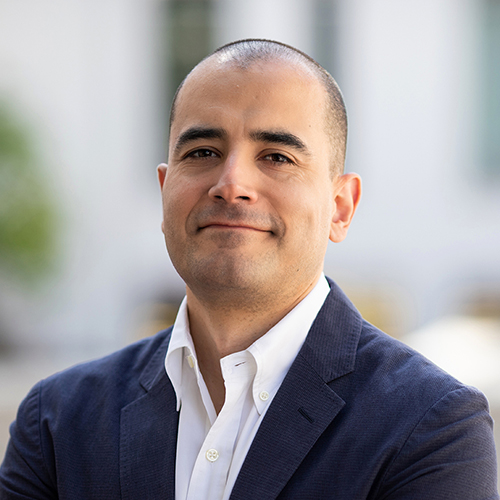
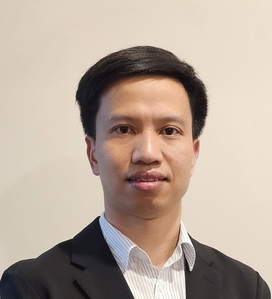
Seung-Hyun Hong is an Associate Professor and Associate Head of the Department of Economics at the University of Illinois, affiliated with the College of Liberal Arts & Sciences. His research focuses on industrial organization, real estate economics, and digital technology impacts. He has contributed to understanding housing market dynamics, real estate brokerage practices, and the effects of digital platforms on industries like music and postal services. Key works include analyzing financing risks in housing markets and the influence of Napster on music sales. His research bridges theoretical frameworks with empirical applications, addressing issues of market efficiency, consumer behavior, and regulatory implications. Notable publications include studies on housing finance risks (2024), real estate agent influence (2022), and Napster's economic impact (2004–2013). His work often employs difference-in-differences approaches and explores strategic behaviors in markets. Hong's research spans multiple disciplines, including urban economics, consumer behavior, and technological adoption patterns. He maintains an active academic profile with collaborations across institutions. His advising and grants are not explicitly listed, but his extensive publication record indicates sustained research activity. Hong is based at the David Kinley Hall campus in Urbana, Illinois.
Miguel R. Rueda is an Associate Professor in the Department of Political Science at Emory University, specializing in electoral manipulation, civil conflict, money in politics, and political methodology. He holds a PhD from the University of Rochester (2014), an M.Sc. in Economics, and a B.Sc. in Economics and Mathematics from La Universidad de los Andes. Before Emory, he was a visiting scholar at Princeton University's Center for the Study of Democratic Politics (2013–2014). In Fall 2024, he will serve as a Visiting Associate Professor at Vanderbilt University. His research has been published in top journals like the American Political Science Review , American Journal of Political Science , and Journal of Conflict Resolution . Key themes include electoral fraud mechanisms, civil war dynamics, and the intersection of political methodology with empirical policy analysis. Rueda's work spans theoretical models of strategic behavior (e.g., foreign aid allocation, partisan poll-watching) and applied analyses of electoral systems, conflict outcomes, and governance challenges. His methodological contributions address econometric issues like post-instrument bias and omitted variable effects. Contact: miguel.rueda@emory.edu , 315 Tarbutton Hall, Emory University, Atlanta, GA 30322.
Tridas Mukhopadhyay is the Deloitte Consulting Professor of e-Business at Carnegie Mellon University's Tepper School of Business, where he has served on the faculty since 1986. His academic journey at CMU progressed from Instructor of Information Systems (1986-1987) to Assistant Professor (1987-1993), Associate Professor (1993-1997), Professor (1998-present), and Deloitte Consulting Professor of e-Business (2000-present). He also served as Director of the MS in Electronic Commerce program from 1999-2004. Ph.D. in Computer and Information Systems, University of Michigan–Ann Arbor, 1987 M.B.A. in Computer and Information Systems, Indian Institute of Management Calcutta, 1981 B. Tech. in Electrical Engineering, Indian Institute of Technology Kharagpur, 1978 Professor Mukhopadhyay's research spans multiple critical areas in information systems and technology management. His work on strategic IT use examines how organizations derive business value from information technology investments. He has conducted extensive research on business-to-business commerce, particularly focusing on e-procurement systems, web-based marketplaces, and electronic intermediation models. His cybersecurity research investigates the economic aspects of cyber security, including liability mechanisms and patch release strategies. In software engineering, he has studied productivity, quality metrics, and offshore software development contracts. His most recent publications reveal several key trends in his research trajectory. There's a growing focus on digital platform economics, examining advertising models, virtual currency systems in gaming, and sharing economy dynamics. His work increasingly incorporates behavioral aspects, studying how users respond to personalized content and how backers exert control in crowdfunded projects. Methodologically, his research employs sophisticated analytical approaches including hierarchical Bayesian models, structural equation modeling, and natural experiment designs. CART Research Frontier Award, Carnegie Mellon, 2005 Distinguished Ph.D. Alum, Michigan Business School, 2004 Best Paper, International Conference on Information Systems, 2001 Best Paper, MIS Quarterly, 1995 Xerox Research Chair, Tepper School of Business, 1988-1989 Information Systems Society Distinguished Fellow, 2012 Professor Mukhopadhyay has served on numerous editorial boards including Information Systems Research (1994-2003), Management Science (1999-2003), and MIS Quarterly (1997-1999), demonstrating his significant contributions to the field. His consulting work with major organizations including Alcoa, Chrysler, Ford, General Motors, IBM, and governmental agencies like the United States Post Office and Pennsylvania Turnpike has provided practical insights that inform his academic research. He has been actively involved in university governance through committee service including the Business Technology Faculty Search Committee and the CMU Faculty Senate. His research has been supported through various industry partnerships and academic grants, though specific grant details aren't provided in the source material. His teaching focuses on Business Computing and Strategic IT courses, reflecting his expertise in both foundational information systems concepts and strategic applications of technology in business contexts.
Associate Professor Sonny Pham leads research in artificial intelligence at Curtin University's School of EECMS. His work balances theoretical foundations with practical applications in computer vision, data mining, and deep learning. As head of the IAMAI research group, he collaborates with industry partners on security systems, healthcare AI, and sustainable technologies. His research explores: Computationally efficient deep learning architectures Compressed sensing for high-dimensional data Robust statistical methods for real-world problems Applications in computer vision and industrial automation Recent publications demonstrate a focus on medical imaging interpretation and efficient neural networks, with applications spanning radiology report generation, semantic segmentation for autonomous systems, and cybersecurity. His team's work consistently bridges theoretical AI advancements with industrial applications. Honors include: Multiple WANMA Awards (2021-2024) for industry-impactful research INCITE Award for social impact technology (2024) IEEE Young Author Best Paper Award (2010) Over $5M in competitive research funding including MRFF and DFAT grants He leads the IAMAI research group with 12+ graduate students and coordinates Curtin's Master of Artificial Intelligence program. Industry collaborations include Alcoa Australia, iCetana, and HyprFire.
Professor Damian Damianov holds the Chair in Finance at Durham University Business School. His research examines asset pricing anomalies, housing market dynamics, and household financial behavior, with particular focus on boom-bust cycles in real estate and cryptocurrency markets. Methodologies combine econometric analysis with behavioral experiments to study price formation mechanisms. Recent work investigates housing affordability policies, wealth accumulation pathways, and cross-market contagion effects. His laboratory develops novel experimental designs to test auction mechanisms and fundraising strategies for charitable organizations. Current projects analyze: (1) Property tax compliance in shared occupancy arrangements; (2) Uncertainty transmission across cryptocurrency markets; (3) Lifecycle models of household wealth management.
Dr. Laura Rodriguez Castro is a Vice-Chancellor Senior Research Fellow at Southern Cross University's Faculty of Education, specializing in Feminist Geography and Decolonial Studies. She leads the Sustainability, Environment and the Arts in Education Research Cluster and serves as Secretary for the Association of Iberian and Latin America Studies of Australasia. Her work bridges critical pedagogies, memory studies, and rural studies through arts-based and participatory methodologies. Her research focuses on Southern knowledges, decolonial feminisms, and the intersections of memory and place. Notable contributions include her 2021 Palgrave monograph exploring rural women's decolonial feminist praxis in Colombia. She also critiques settler colonial representations in Australian rural media and examines Latin American migrant memory practices in Australia. Research Interests: Decolonial methodologies, feminist geographies, rural social movements, memory politics, participatory research Awards: 2024 Southern Cross University Outstanding Contribution to Research Impact Editorial Roles: Associate Editor, Journal of Intercultural Studies
Ion Androutsopoulos is a Professor of Artificial Intelligence in the Department of Informatics at Athens University of Economics and Business (AUEB), where he also serves as Head of Department. He is founder and co-director of AUEB's Natural Language Processing Group and an Adjunct Researcher at the Digital Curation Unit and "Archimedes" Research Unit of the Research Centre "Athena". His research spans multiple dimensions of Artificial Intelligence with a focus on Natural Language Processing. Key interests include: Machine learning in NLP, particularly deep learning and large language models Question answering and retrieval augmented generation for document collections Dialog systems for new languages and knowledge domains Sentiment analysis and emotion recognition from text and speech Detecting toxic posts and disinformation online Image-to-text generation for medical diagnostics NLP applications in biomedical, legal, and financial domains His recent publications demonstrate strong activity across medical AI (particularly ImageCLEFmed Caption competitions where his group consistently ranks 1st-2nd), legal NLP (LexGLUE benchmark), financial NLP (EDGAR-CRAWLER), and multilingual challenges. His work shows increasing emphasis on large language models, explainability, and practical applications. Notable awards include: Top 2% scientist worldwide (Stanford University database, 2023) Multiple AUEB Excellent Teaching Awards (2017-18, 2021-22, 2023-24) Three consecutive BioASQ awards (2018-2020) Multiple 1st/2nd place rankings in ImageCLEFmed Caption competitions (2021-2025) He actively organizes major events including the Athens Natural Language Processing Summer School (AthNLP) and SemEval tasks. His group maintains strong industry and research collaborations, particularly in medical AI applications where they've developed systems that generate diagnostic captions from medical images with state-of-the-art performance.
Dr. Sergio Ascencio is a Lecturer in the Department of Government at the University of Essex. He holds a PhD from the University of Rochester (2018). His academic career includes roles as Assistant Professor at the University of New Mexico (2019–2021) and Postdoctoral Associate at NYU Abu Dhabi (2018–2019). His research focuses on comparative politics, electoral systems, and political behavior, with a regional emphasis on Mexico and South Asia. Key themes include primary elections, vote buying, political dynasties, and party strategies. His work employs experimental methods and institutional analysis to explore questions of governance and democratic accountability. Recent publications (2021–2024) examine nomination rules, primary adoption, and voter dynamics across multiple countries. His 2019 study on partisan poll watchers and electoral manipulation highlights expertise in electoral integrity. Earlier work (2015, 2009) addresses issue salience modeling and delegation mechanisms in Mexican state legislatures. Contact: Email at sergio.ascencio@essex.ac.uk or via Zoom during academic support hours (Tuesdays 2–4 PM).
Stefan Weik is an Assistant Professor of Finance at the University of St. Gallen (HSG), affiliated with the School of Finance and the Center for Financial Services Innovation. His research focuses on private markets, venture capital, private equity, and the economics of entrepreneurship and innovation. He holds a PhD in Finance from the Technical University of Munich (2023). His work examines European startup migration to the US, venture capital dynamics, and the impact of entrepreneurship education. Key contributions include analyses of startup performance disadvantages in Europe, cross-border venture capital flows, and policy implications for innovation ecosystems. Affiliations: Swiss Finance Institute, Center for Entrepreneurial and Financial Studies, European Finance Association Awards: Deutsche Bundesbank Special Prize for Dissertation (2024) Best Doctoral Paper Award at ENTFIN Conference (2023) TUM Research Fest Best Paper (2023) Germany Scholarship (2015) 2nd Place, DZ-Bank Preis for banking/finance theses (2014) His research agenda emphasizes global venture capital landscapes, entrepreneurial ecosystems, and policy solutions to bridge European innovation gaps. Active in academic networks, he contributes to shaping discourse on cross-border capital mobility and startup competitiveness.
Tor Söderström is a Professor at the Department of Education at Umeå University. His research focuses on learning and development in sports, computer simulation training, and professional knowledge development in police education. He has contributed extensively to understanding talent identification in sports, particularly in Swedish football, and the efficacy of simulation-based training methodologies in law enforcement education. His research spans topics including athlete development trajectories, the impact of physiological testing on elite athlete performance, and the role of childhood athletic ability in long-term sports participation. Notable projects include a study on dropout processes in Swedish football talent systems and analyses of Swedish gym-goers' training patterns over two decades. Publications highlight interdisciplinary approaches, combining sports science, sociology, and educational technology. Recent work explores children’s rights in sports through scoping reviews and examines athlete retention strategies from adolescence into adulthood. His research often emphasizes practical applications in training design and policy development for both sport and professional education sectors. No scientific awards are explicitly mentioned in the provided texts. His work has involved collaborations with institutions like the Swedish Football Association and police education programs, focusing on scenario-based training methodologies and competency development in high-stakes professions.
Edward D. Cavanagh is a Professor of Law at St. John’s University School of Law, where he has taught since 1982. He holds a J.S.D. (1988) and LL.M. (1986) from Columbia Law School, a J.D. (1974) from Cornell Law School, and an A.B. in Economics (summa cum laude, 1971) from the University of Notre Dame. His research focuses on antitrust law, federal procedure, complex litigation, and law and economics. He has authored numerous articles on topics such as antitrust remedies, pleading standards, and civil litigation reform. Professor Cavanagh has held leadership roles in professional organizations, including co-chairing the ABA Antitrust Section’s Public Service Committee and serving on the New York State Bar Association’s Antitrust Section Executive Committee. He has also contributed to judicial reforms, including advising the Eastern District of New York on civil litigation rules. His publications explore the intersection of law, economics, and procedural fairness, emphasizing practical solutions to modern litigation challenges. Key Awards: Order of the Coif, Phi Beta Kappa, Cedric Major Scholarship (Cornell), Ford Foundation Scholarship, and Dean’s List (8 semesters). Professional Service: Reporter for the EDNY Committee on Civil Litigation, member of the ABA Antitrust Section Council, and advisor to federal judicial reform initiatives. His teaching spans antitrust law, civil procedure, conflict of laws, and federal practice. Recent scholarship addresses Twombly’s impact on pleading standards, the FTAIA’s role in foreign antitrust claims, and procedural reforms in federal courts.
R. Michael Alvarez , Flintridge Foundation Professor of Political and Computational Social Science at Caltech, is a leading scholar in election technology, political methodology, and machine learning applications in social science. Affiliated with the Caltech/MIT Voting Technology Project , the Social and Decision Neuroscience Program , and the Resnick Sustainability Institute , his work bridges technology and democracy. Education: B.A. from Carleton College, Ph.D. from Duke University Academic Career: Caltech faculty since 1992 His research spans: Election Integrity : Monitoring election security, fraud detection, and ballot systems Computational Social Science : Applying machine learning to voter behavior and policy analysis Climate Policy : Examining public attitudes and behavioral interventions for sustainability Online Behavior : Analyzing toxicity in gaming and social media dynamics Key article trends show focus on election forensics (2025 Nature Climate Change study), game toxicity analysis (2025 CHI Play paper), and LLM applications in social science. His students include Jacob Morrier, Mitchell Linegar, and teams of postdocs and undergraduates in Caltech's SURF program. Scientific recognition includes: Google Cloud Research Innovators Class of 2022 Co-editor of multiple academic series including Cambridge Elements in Quantitative Methods
Prof. Hatice Gunes is a Full Professor of Affective Intelligence and Robotics at the University of Cambridge's Department of Computer Science and Technology, leading the Affective Intelligence and Robotics Lab (AFAR Lab). She holds an EPSRC Fellowship and is an EPSRC Fellow. Her research focuses on multimodal affective and social intelligence for AI systems, particularly embodied agents and robots, integrating Machine Learning, Affective Computing, and Human Nonverbal Behaviour Understanding. Key projects include the CHANSE initiative (2025–2028) for child mental health assessment via social robotics, the EPSRC Fellowship on robotic EQ for wellbeing (2019–2025), and the EU Horizon 2020 WorkingAge project. Prof. Gunes has pioneered systems like the EU SEMAINE project's SAL system, recognized with Best Demo and Paper Awards, and co-founded SensingFeeling, a spin-out company from the Innovate UK Sensing Feeling project. Her work emphasizes ethical AI and fairness, earning awards like the Best Paper Award in Responsible Affective Computing (IEEE ACII'23). She has delivered keynote talks at IEEE FG’19 and ICPR’22 and collaborates with the Department of Psychiatry and wellbeing professionals. Education: PhD in Computer Science from University of Technology Sydney (UTS) under Australian Government IPRS Scholarship Postdoctoral Research at Imperial College London (SEMAINe project) Research Interests: Multimodal affective computing, social robotics for mental wellbeing, fairness in AI systems, human-robot interaction (HRI), and ethical deployment of AI technologies. Her lab develops robots for workplace wellbeing coaching and child mental health assessment, with over 700 media coverages and partnerships with industry and healthcare sectors. Notable Achievements: Runner-up Collaboration Award (2023 VC Research Impact) Better Future Award (2023 Hall of Fame) Finalist RSJ/KROS Interdisciplinary Research Award (2021) Shortlisted Sony Women in Technology Award 2025 Labs & Teams: AFAR Lab drives interdisciplinary research in Cambridge, focusing on socially intelligent robots and AI systems that address critical societal challenges in wellbeing and mental health.
Dr. Victoria Serra-Sastre is a Senior Lecturer at City, University of London, with research affiliations at the London School of Economics (LSE). Her expertise centers on health economics and applied microeconometrics, focusing on technology diffusion in healthcare, including the impact of medical technologies on health outcomes, hospital performance, and workforce dynamics. She investigates substitution/complementarity between technologies and explores hospital competition and workforce trends. Research interests include analyzing how technological advancements affect healthcare delivery and labor markets. While affiliated with City University, her collaborative work at LSE emphasizes medical technology uptake and its systemic implications in healthcare systems.
Adam Brandenburger is a prominent academic holding the J.P. Valles Professorship at NYU Stern School of Business and a Distinguished Professorship at NYU Tandon School of Engineering. He also serves as Faculty Director of the NYU Shanghai Program on Creativity + Innovation and is a Global Network Professor. Previously, he was at Harvard Business School (1987–2002). He earned his B.A., M.Phil., and Ph.D. from the University of Cambridge. His research spans game theory, quantum mechanics, and business strategy. Notable contributions include co-authoring the best-selling book Co-opetition , which introduces the concept of co-opetition (cooperative competition). His work bridges theoretical frameworks like epistemic game theory with practical applications in strategy and decision-making. Recent research focuses on quantum systems' non-classical correlations, divisive normalization in neuroscience, and the implications of finite-order reasoning in games. He has collaborated with institutions like the Royal Society and journals such as Nature Communications and Proceedings of the National Academy of Sciences . Brandenburger’s academic career reflects interdisciplinary impact, combining economics, physics, and cognitive science. His courses include The Strategist and Creativity Considered , emphasizing strategic thinking and innovation.