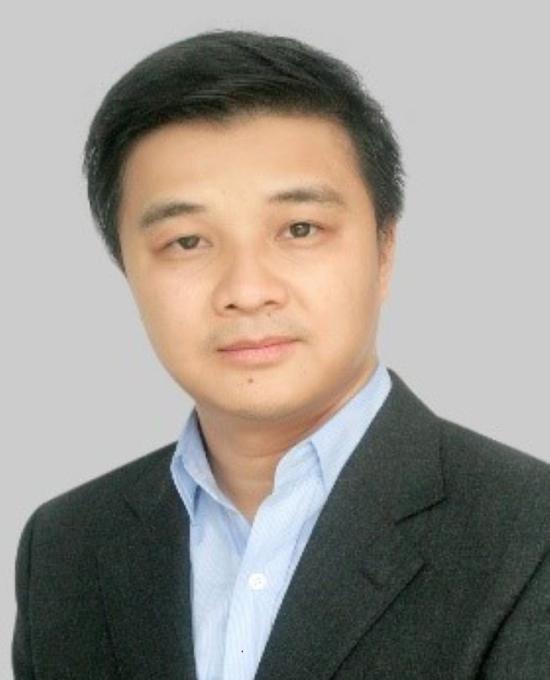
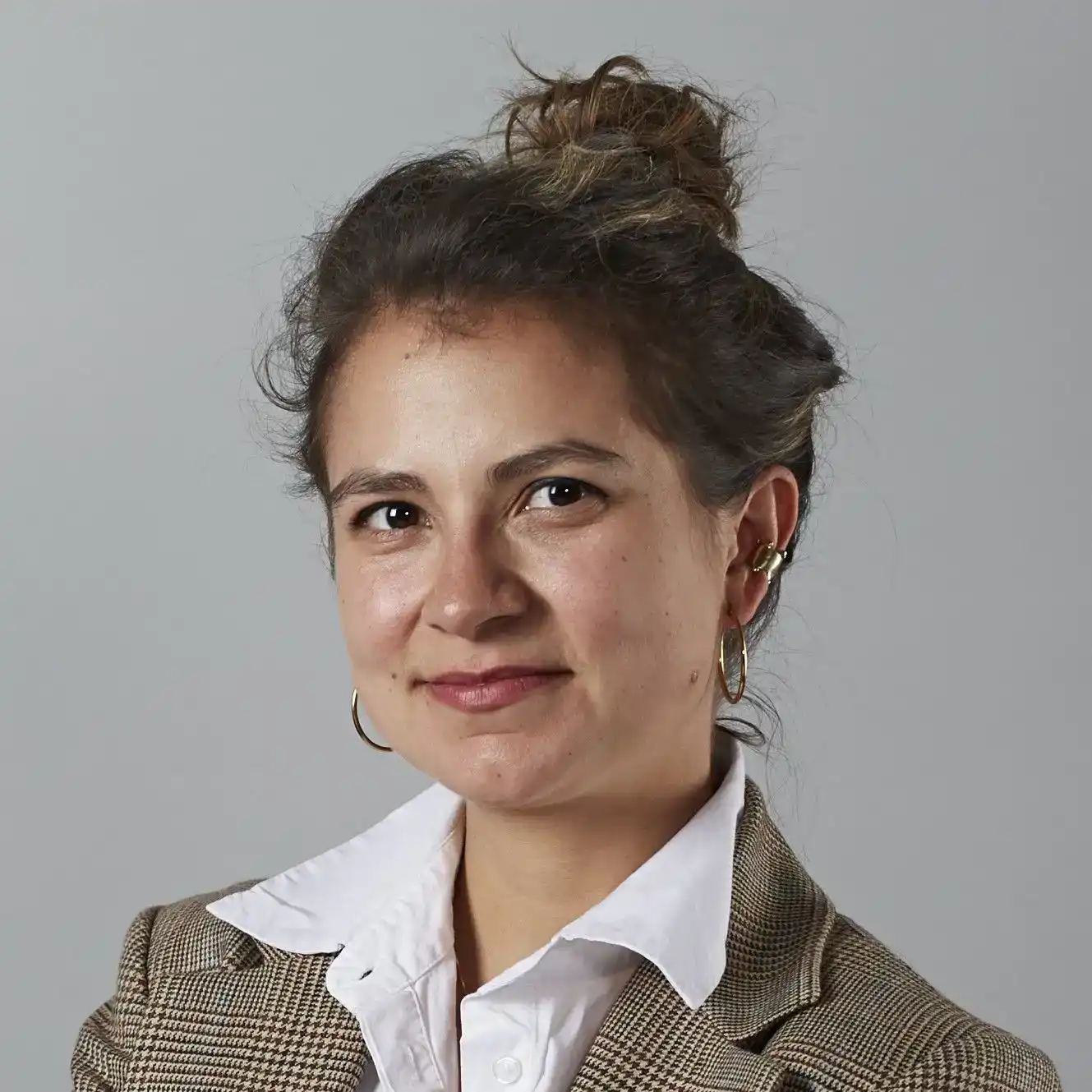
Christophe Bisson is an Associate Professor at SKEMA Business School (Paris campus) specializing in Strategy, Innovation & Entrepreneurship. His research examines augmented anticipatory systems, competitive intelligence, AI governance, and strategic early warning frameworks. He directs the MSc International Strategy and Influence program and leads research at the SKEMA Center for Artificial Intelligence. Bisson holds a PhD in Competitive Intelligence from Aix-Marseille University and a Postgraduate Certificate in AI from the University of Helsinki. His professional experience includes international strategy consulting and academic positions at universities in Turkey and France. Awards & Honors: Inducted into Council of Competitive Intelligence Fellows (2023) SCIP International Academic Award (2017)
Annie BLANDIN is an Enseignant Chercheur (Professor) at IMT Atlantique, a leading French technological university, where she is affiliated with the Department of Network Systems, Cyber Security and Digital Law at the Rennes campus. Her academic work bridges legal studies and digital technology, focusing on the evolving relationship between law, governance, and the digital world. Professor BLANDIN's research interests center on digital law and governance, with particular emphasis on European digital sovereignty, data protection frameworks, internet regulation, telecommunications law, and the intersection of market forces with digital rights. Her work critically examines how legal frameworks can address the power dynamics between large digital platforms and nation-states, exploring whether law can serve as a tool for digital sovereignty rather than merely accommodating existing technological and economic power structures. Her recent publications (2020-2024) reveal a consistent focus on European regulatory approaches to digital challenges, with particular attention to data sovereignty, digital market regulation, and the geopolitical dimensions of internet governance. Her work demonstrates a sophisticated understanding of how digital sovereignty operates both as a factual reality shaped by platform dominance and as a legal construct that can be shaped through regulation and ethical frameworks. The research shows increasing attention to practical implementation challenges of digital rights, such as data portability, and the international dimensions of digital governance, particularly regarding EU-Asia and EU-Canada relations. Professor BLANDIN has maintained a productive academic career spanning nearly three decades, with publications dating back to 1996. Her early work focused on telecommunications regulation within the European context, evolving to address broader digital governance issues as technology advanced. She has authored significant books including Droits et souveraineté numérique en Europe (2016) and L'Union européenne et internet : entre logique de marché et préoccupations citoyennes (2001), demonstrating her longstanding engagement with the legal and policy challenges posed by digital technologies. Her scholarly contributions appear across various formats including peer-reviewed journal articles, conference papers, book chapters, and research reports. She frequently collaborates with other scholars from diverse disciplines, reflecting the interdisciplinary nature of digital governance issues. Her work has been cited in academic and policy contexts, particularly regarding European approaches to digital sovereignty and data protection.
Michael Haenlein is a Professor of Marketing at ESCP Business School in Paris. He holds a Ph.D. from WHU, Otto Beisheim School of Management, and a Habilitation from Pantheon-Sorbonne University. His research focuses on the impact of emerging technologies such as AI, social media, and video gaming on businesses and consumers. He has published over 50 articles and received the 2021 Jan-Benedict Steenkamp Award for long-term academic impact. Haenlein serves on the editorial boards of journals like the Journal of Marketing and International Journal of Research in Marketing . He is actively involved in professional organizations, including the American Marketing Association (AMA) Academic Council and the European Marketing Academy (EMAC), where he chairs the Publications Committee. His work bridges academic research with industry applications, emphasizing digital transformation and strategic marketing. Recent publications explore topics like metaverse retailing, AI-driven consumer insights, and influencer marketing strategies. He advises companies across sectors such as telecommunications and finance on leveraging technology for competitive advantage.
Mélanie Ouvry is an Associate Professor and Dean of Faculty at MBS Education since 2017. With over 15 years of experience in higher education, she has held roles as program director for specialized master's programs, department head for marketing and interim management, and served as a communication strategy consultant at Publicis Group. Her research focuses on consumer behavior, retail dynamics, and cross-cultural marketing experiences. Her academic expertise includes strategic marketing, buyer behavior analysis, and advertising strategy. Key research themes explore multi-store shopping behaviors, consumer experience valuation, loyalty mechanisms, and the cognitive dimensions of retail environments. She has conducted extensive studies in retail distribution systems, communication strategies, and tourism-related consumer behavior in historical commercial districts like the Medina of Sousse. Her publications span topics from grocery shopping decision-making to television audience engagement, reflecting her interdisciplinary approach bridging marketing, cognitive science, and cultural studies. Teaching responsibilities include advanced marketing strategy courses and consumer behavior analysis modules.
Elena Poliakova serves as Assistant Professor of International Negotiation at IÉSEG School of Management in France since 2021, bringing dual expertise from her PhDs in Marketing/International Business (Georgia State University, 2020) and Linguistics (Lomonosov Moscow State University, 2014). Previously, she was Teaching and Research Assistant at Georgia State University (2016-2020). Her interdisciplinary academic foundation includes: Ph.D. in Marketing, International Business, Georgia State University, USA (2020) Ph.D. in Linguistics, Lomonosov Moscow State University, Russia (2014) Master in Philology (Languages and Literature), Lomonosov Moscow State University, Russia (2010) Dr. Poliakova's research uniquely bridges International Business , Marketing , and Linguistics , with concentrated focus on negotiation dynamics and sales management . Her work investigates how linguistic structures (particularly metaphors), cultural cognition, and native-language use impact negotiation efficiency and comfort across international contexts. She examines diaspora networks' role in foreign investment and crisis-driven business adaptations, employing methodologies spanning discourse analysis to cross-cultural case studies. Her publication trajectory (2018-2025) reveals deepening integration of linguistic theory with international business practice. Early work established foundations in intercultural cooperation, while recent publications analyze metaphorical communication in negotiation (2025) and cognitive-emotional dimensions of native-language negotiation (2024). Her scholarship spans premier journals including Negotiation and Conflict Management Research and Journal of International Business Policy , addressing both theoretical frameworks and applied contexts like pandemic-era business resilience. Her scholarly contributions have been formally recognized through: Best Reviewer Award, Academy of International Business (2022) Current public records indicate no active student advising roles or externally funded research grants. There is no documented affiliation with specialized research laboratories or structured academic teams beyond standard departmental collaborations at IÉSEG.
Dr. Oussama AMMAR is a Full Professor of Strategy and serves as Dean of Programs at Montpellier Business School since November 2020. He leads the development and internationalization of academic programs, overseeing operations including student mobility, career services, and quality initiatives. Previously, he held roles as Dean of the US Campus of SKEMA Business School in Raleigh, North Carolina, and Associate Dean of Undergraduate Programs at SKEMA’s Lille campus. His academic leadership spans faculty management, curriculum design, accreditation compliance, and strategic planning. His research focuses on business model innovation, strategic management in SMEs, and change management. Notable contributions include studies on Alibaba’s strategic capabilities, gender leadership in IT sectors, and participative innovation in organizations like SNCF. He has also explored synergies between economic intelligence and knowledge management to enhance organizational absorption capacity. Dr. AMMAR’s career includes over 20 years of teaching strategic management across diverse audiences. His academic leadership roles at both Montpellier Business School and SKEMA reflect his expertise in global academic governance and program development. He holds a global perspective shaped by roles in France, the US, China, and Brazil.
Patrick Präg serves as an Associate Professor of Sociology at CREST/ENSAE (part of the Institut Polytechnique de Paris) and holds an associate faculty position at Oxford University’s Nuffield College. His research integrates quantitative methods and survey data to address social stratification, demography, health, and work-family dynamics. He earned his PhD in Sociology from the ICS/University of Groningen in 2015. His work has been recognized with the Aage B. Sørensen Award (2014). Education: PhD in Sociology, ICS/University of Groningen (2015) Master’s Thesis: Nonresponse to Items on Self-Reported Delinquency, University of Hamburg Research Interests: Patrick’s work explores the interplay between social structure and individual wellbeing. Key topics include: Intergenerational mobility and health outcomes Work-life balance and gender inequalities Pandemic-driven societal changes Algorithmic bias in social science Subjective socioeconomic status measurement Grants & Collaborations: He contributed to the EU-funded ‘Families and Societies’ project, producing deliverables on assisted reproduction and demographic consequences. His research often involves cross-national datasets and methodological innovation, with replication materials shared via Open Science Framework (OSF). Labs & Teams: He is affiliated with CREST (Center for Research in Economics and Statistics) and collaborates with institutions like the Max Planck Institute for Demographic Research (MPIDR) and the Nuffield College. His work frequently intersects with interdisciplinary teams addressing health, education, and labor market policies.
Mickaël CAMPO is an Associate Professor at the University of Burgundy (Université Bourgogne Franche-Comté) in Dijon, France, specializing in sports psychology. He is affiliated with the Faculty of Sports and Physical Education (UFR STAPS) and the Socio-Psychology and Sports Management Laboratory (Laboratoire Psy-DREPI). His educational background includes a Doctorate in Sports Psychology. Prior to his current position, he served as an Associate Professor at Université de Rouen Normandie from 2013 to 2015 and completed his PhD studies at Claude Bernard University Lyon 1 from 2007 to 2010. Dr. CAMPO's research focuses on the interpersonal emotional process (IEP), particularly examining: Relationships between social psychological variables such as social identity and emotions in group contexts Interpersonal emotion regulation in sports settings Emotional contagion phenomena in team sports Psychological adaptation processes in performance and learning contexts Emotional intelligence development and application in sports His work primarily centers on team sports, with a special emphasis on rugby. He has developed theoretical frameworks like the Interpersonal Emotional Process (IEP) model and has conducted extensive research on how emotions affect performance in competitive sports environments. Dr. CAMPO has received recognition for his research, including the 1st Young Researcher Prize in 2010. His scientific contributions span numerous publications in prestigious journals, with his work focusing on the intersection of social psychology and sports performance. As an academic, Dr. CAMPO has supervised multiple research projects and has been invited to present at various conferences, including the clinical medico sport congress in Lyon. His work bridges theoretical research with practical applications for athletes, coaches, and sports psychologists.
Higher School of Economic and Commercial SciencesFrance
Overview Prof. Harris Kyriakou is an Associate Professor and Chair Holder of the Media & Digital Chair at ESSEC Business School. His research focuses on leveraging artificial and collective intelligence to enhance organizational value creation, digital strategy, and data-driven decision-making. He has advised multinational firms like Airbnb, Facebook, and Yelp, and his work is supported by grants from NSF and the Spanish government. Education Ph.D. in Management Sciences (Stevens Institute of Technology, 2016) M.S. in Engineering & Technology Innovation Management (Carnegie Mellon University, 2010) B.Sc. in Digital Systems (University of Piraeus, 2007) Research Focus His research explores intersections between AI/collective intelligence, blockchain, sharing economy regulations, and platform governance. Key themes include data network effects, algorithmic regulation, and digital transformation. Recent work on ChatGPT vs. Google examines AI-driven competitive dynamics in search markets. Recognition Awarded the 2024 Case Centre Triple Award, 2022 Early Career Award (AIS), and multiple best paper awards (AoM, INFORMS). Recognized as a 40-Under-40 MBA Professor by Poets & Quants. Teaching & Leadership Co-leads the 'Algorithmic Governance in Platform Economy' thesis Teaches courses on AI, digital strategy, and IT management at ESSEC and IESE Former Assistant Professor at IESE Business School (2016–2021) Professional Contributions Serves as a European Commission advisor on digitalization, reviewer for top journals (MIS Quarterly, Academy of Management Review), and mentor for doctoral candidates.
Fahiem Bacchus is a Professor in the Department of Computer Science at the University of Toronto, within the Faculty of Arts and Science. His research is centered on foundational problems in Artificial Intelligence, particularly in reasoning, representation, and algorithm design. Institution: University of Toronto School: Faculty of Arts and Science Department: Department of Computer Science Email: fbacchus@cs.toronto.edu His work spans key areas including constraint satisfaction, satisfiability (SAT), automated planning, Bayesian inference, and constraint optimization. He focuses on developing algorithms that exploit domain-specific knowledge and structural properties to improve performance. His research has led to significant contributions such as the TLPlan planning system, which won the AIPS2002 international planning competition, and the 2clseq SAT solver, which demonstrated that extensive binary clause reasoning can dramatically improve solver efficiency. His work on preprocessors like Hypre further advanced formula simplification techniques. The recent articles reflect a strong focus on improving search algorithms through richer reasoning mechanisms, particularly in SAT solving and non-clausal logic. His publications show a consistent trend toward enhancing DPLL-based solvers with advanced inference techniques, reducing search space through preprocessing, and leveraging structural knowledge in logical theories. No scientific awards are explicitly mentioned in the provided text. Bacchus has supervised research and developed educational materials, with involvement in teaching and academic conference organization. While specific grants are not listed, his software releases (2clseq, Hypre, NoClause) suggest externally supported research activity. He has contributed tutorials, talks, and online teaching resources, indicating an active role in academic dissemination and mentoring. His research group has produced several software systems available for non-commercial research use, including 2clseq, Hypre, and NoClause, reflecting a strong applied and experimental component to his work. These tools are used in SAT solving, preprocessing, and non-clausal reasoning, and are documented with detailed technical information and usage instructions.
Margherita Pagani is a Full Professor and Director of the SKEMA Centre for Artificial Intelligence at SKEMA Business School in Paris. She holds a Ph.D. in Management and an HDR (Habilitation à Diriger des Recherches). Her roles include Research Affiliate at UC Berkeley’s APEC Study Center and Advisor to the European Economic Social Committee (EESC) on virtual worlds and the Metaverse. Previously, she founded and led the MSc in Digital Marketing & Data Science and the AIM Research Center at emlyon business school. She has held visiting roles at MIT, UCLA, Georgetown, NUS, and Redlands University. Education: Ph.D. (2015, Lyon), HDR (2016, Évry), MSc (1995, Bocconi), MIT Certifications (2005-2006). Research: Focuses on AI in consumer engagement, digital ecosystems, robotics in services, and metaverse applications. Over 130 publications in journals like MIS Quarterly, MIT Sloan Management Review, and Harvard Business Review. Awards: 2023 International Marketing Trends Award, 2022/2023 Top 2% Cited Scientist (Elsevier), 2009 Mobile Marketing Academic of the Year. Her work bridges AI and marketing creativity, emphasizing human-centric systems. She leads initiatives like the SKEMA AI School and organizes conferences on ethics, AI in education, and service recovery. Active in editorial roles for journals like Micro & Macro Marketing and Industrial Marketing Management . Key affiliations include the Association Française de Marketing and involvement in policy initiatives. Supervised over a dozen PhD students, focusing on AI applications in marketing and entrepreneurship.
Caroline Lequesne (HDR) is a Lecturer in Public Law at the Faculty of Law and Political Science , University of Côte d'Azur. She conducts research within the Law, Economics, Management (GREDEG) group and co-manages the EDEN team under the PNCR (Norms, Competition, and Regulation) division. Her work focuses on algorithmic law, data governance, and digital welfare state policies. Master 2 Program Director in Algorithmic Law and Data Governance Specializes in public digital law and AI regulatory frameworks Active in surveillance technology analysis and digital inequality research Her publications address critical legal challenges in AI governance, digital welfare systems, and emerging technologies like Web3 and the Metaverse. She has contributed to key debates on French and European digital policy through articles in journals such as Revue française de droit administratif and Recueil Dalloz . Caroline Lequesne also participated in analyzing surveillance technology experiments during the 2024 Olympic Games. As co-manager of the EDEN team in the PNCR division, she contributes to interdisciplinary research on economic law and digital regulation frameworks.
Ngoc Thang NGUYEN is an Associate Professor of Management and Vice Dean at the Hanoi School of Business and Management , Vietnam National University, Hanoi. He is also an Affiliate Senior Research Fellow at IPAG Business School , France. He holds a Ph.D. in Applied Economic Sciences from Ghent University (2009), an MBA from the University of Southern California (2003), and dual bachelor’s degrees in Economics and English from National Economics University and Hanoi University (1999). Education: Ph.D. in Applied Economic Sciences, Ghent University, Belgium (2009) MBA, University of Southern California, U.S.A. (2003) Bachelor of Economics, National Economics University, Vietnam (1999) Bachelor of English, Hanoi University, Vietnam (1999) His research focuses on Human Resource Management, Knowledge Management, Green HRM, and Corporate Social Responsibility (CSR), particularly examining labor practices and organizational sustainability. He has published in journals such as Asia Pacific Business Review , International Review of Economics and Finance , and Journal of Developmental Entrepreneurship . His recent work explores employer branding, CSR attractiveness for Generation Z job seekers, and green training’s impact on environmental performance. He has led 4 research projects at Ministerial and National levels and served on editorial boards for journals including Asia Pacific Business Review and Journal of Human Resource and Sustainability Studies . He has taught over 1,000 executive courses for corporations like Samsung, Viettel, and Petro Vietnam, and supervised doctoral dissertations as pre-examiner or committee member.
Indranil Bose is a Distinguished Professor and Head of the Area of Excellence in AI, Data Science, and Business at NEOMA Business School, with a Ph.D. in Management from Purdue University. He specializes in business analytics, big data, and digital transformation, leveraging expertise from prior roles at IIM Calcutta, University of Hong Kong, University of Florida, and UT Arlington. Education: Ph.D. in Management (Purdue University, 1997) M.S. (Purdue University) M.S. (University of Iowa) B.Tech (IIT Kharagpur) Research Focus: His work spans predictive analytics, social media impact on business, innovation management, cybersecurity, fintech, and AI ethics. Key themes include consumer behavior in digital ecosystems, AI-driven decision systems, and ethical implications of emerging technologies. Publication Trends: Recent articles emphasize AI ethics, digital misinformation, and predictive modeling in finance/healthcare, reflecting a focus on societal impacts of technology. Methodologies include deep learning, sentiment analysis, and causal inference. Awards & Recognition: Winner, EFMD 2017 Case Competition Ranked 29th globally for Information Systems research productivity (2005–2014) Editorial Leadership: Senior Editor for Decision Support Systems and Pacific Asia Journal of the AIS ; Associate Editor for Information & Management , Journal of the AIS , and Communications of the AIS .
Beatriz Botero Arcila is an Assistant Professor of Law at Sciences Po Law School and a Faculty Associate at the Berkman Klein Center for Internet and Society at Harvard University. She specializes in the governance of data, artificial intelligence, and digital surveillance. LLM and Doctorate from Harvard Law School Research Focus : Law of the Digital Economy Privacy Law / Global Data Law Surveillance Law Legal Theory Scientific Awards : Future of Privacy Forum's 14th Annual Privacy Papers Award (2024) Labs & Teams : Co-founder of The Edgelands Institute, a pop-up institute incubated at the Berkman Klein Center focused on digital surveillance and cities.