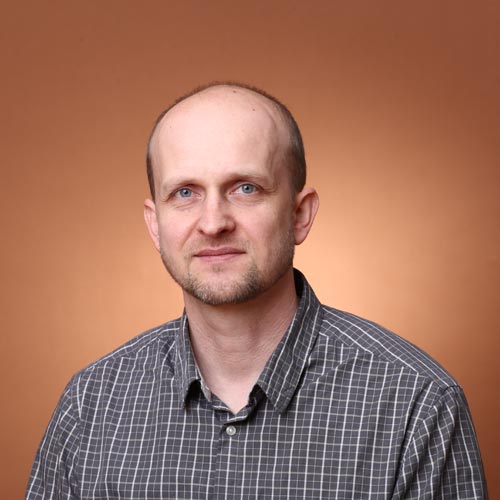
David Hunter is a Lecturer in Computer Science at the Department of Computer Science, Aberystwyth University. His research spans computer vision, binocular vision, and educational identity studies. He has contributed to projects involving 3D shape retrieval, natural image statistics, and protein domain analysis through initiatives like SHREC challenges. Research Interests: Computer Vision: Focusing on binocular disparity, depth perception, and natural image processing. 3D Shape Retrieval: Developing novel algorithms for nonrigid and protein surface comparisons. Educational Studies: Exploring student and graduate identity transitions in higher education. His publications highlight contributions to journals like Royal Society Open Science and conferences such as CSCI. He manages the Tobii Pro Eye Tracking Glasses facility, aiding visual research. Supervised graduate students include Dave Davies (MPhil) and Muhammad Iftikhar (PhD).
Associate Professor Goran Mihulja PhD is affiliated with the Department of Wood Technology at the University of Zagreb's Faculty of Forestry and Wood Technology. His work focuses on advanced wood processing techniques, adhesive bonding mechanisms, and CNC machining optimization. He has held academic positions since 1999, progressing from junior assistant to his current role. Research interests include wood modification via thermal/chemical treatments, surface preparation for optimal adhesion, and industrial applications of CNC technology. His over 70 publications span topics like UV surface modification, particleboard formaldehyde reduction, and structural wood joint analysis. He teaches courses in furniture production and computer-aided woodworking in Croatian and English. Recent work emphasizes sustainable adhesives, UV curing effects on wood surfaces, and durability of thermally treated wood joints. His contributions bridge traditional woodworking with modern materials science, addressing both mechanical performance and environmental impacts. Affiliated with the Institute of Wood Science and Materials Technology, his research supports forest-based industries through innovations in material characterization and eco-friendly manufacturing processes.
George Asimellis is a Professor of Vision Sciences at New England College of Optometry (NECO) and serves as Chair of the Institutional Review Board. He holds advanced degrees including a PhD in Optical Signal Processing from Tufts University, an MBA from the University of Pikeville, and dual MSc and BSc in Physics from Tufts University and the University of Athens, Greece. His research focuses on corneal biomechanics, ocular imaging, refractive surgery techniques, and keratoconus management. He has authored over 60 peer-reviewed publications and serves as Associate Editor for the Journal of Refractive Surgery and editorial board member for seven journals. Dr. Asimellis is a Fellow of the American Academy of Optometry (AAO) and member of SPIE. His work includes pioneering the Athens Protocol for keratoconus treatment combining topography-guided excimer laser ablation with high-fluence corneal cross-linking. He has received the 2017 Emerging Vision Scientist Award from NAEVR/AEVR. His clinical interests span corneal cross-linking efficacy, refractive surgery outcomes, and objective dry eye screening techniques. He advises on accreditation for the Accreditation Council on Optometric Education (ACOE) and reviews grants for the U.S. Department of Defense’s CDMRP programs. His research integrates optical coherence tomography (OCT), advanced imaging technologies, and biomechanical modeling to improve surgical precision and patient outcomes in vision correction and corneal disorders.
ALEXANDER JUKES is a Senior Lecturer in Multimedia within the School of English & Creative Arts. His academic work focuses on the material aspects of 3-D CGI animation, blending theoretical research with practice-based projects. He holds a PhD from the Royal College of Art, where his thesis explored CGI’s materiality. Jukes has curated exhibitions, produced animations, and presented internationally on digital art topics. His research contributes to Sustainable Development Goals related to innovation and cultural preservation. Education: PhD by Practice in 3-D CGI Animation, Royal College of Art Research Interests: Jukes investigates the intersection of digital media and materiality, particularly in CGI animation. He explores how 3D digital environments challenge traditional notions of space, texture, and viewer interaction. His work bridges fine arts, computer science, and humanities, addressing topics like digital aesthetics, experimental animation, and the philosophical implications of virtual materials. Key Themes in Articles: His publications analyze CGI’s role in architecture, social housing, and digital art installations. Recent works examine 'emptiness' in animation spaces and the specificity of digital media compared to physical mediums like wood. Projects like the VR Historical Archive (active since 2020) aim to digitize cultural heritage using immersive technologies. Awards: 2018-2019 Norman McLaren/Evelyn Lambart Award for his chapter in Experimental and Expanded Animation . Grants & Supervision: Jukes leads projects such as the VR Historical Archive (funded since 2020) and the 100 Years from Now initiative (2020-2021). He advises PhD students focusing on digital art and animation. Labs/Teams: Collaborates with the Practice Research Group, exploring interdisciplinary approaches to digital arts. Projects often involve artists and technologists to create interactive installations and virtual environments.
Alexei Poludnenko is an Associate Professor at the University of Connecticut, specializing in combustion physics, detonation dynamics, and turbulent flows. His research focuses on numerical simulations of high-speed reacting flows, including spray detonations, hydrogen/hydrocarbon combustion, and astrophysical phenomena like Type Ia supernovae. He employs advanced methods such as Large Eddy Simulations (LES), Direct Numerical Simulations (DNS), and BLASTNet frameworks to study turbulence-chemistry interactions and detonation initiation mechanisms. His work bridges terrestrial combustion systems and astrophysical scenarios, contributing to understanding flame acceleration, detonation cell structure, and turbulence-driven deflagration-to-detonation transitions. Key topics include shock-droplet interactions, multiphase detonations, and the role of compressibility in fast flames. Poludnenko’s research has implications for energy systems, propulsion, and fundamental combustion science. Recent studies emphasize high-Reynolds number turbulence, phase equilibrium effects under high pressure, and the validation of reduced chemical kinetic models. His computational approaches address challenges in capturing multi-scale phenomena and improving predictive accuracy in complex reactive flows.
Clément Bonnerot is an Assistant Professor at the Institute for Gravitational Wave Astronomy within the University of Birmingham's School of Physics and Astronomy. His research focuses on theoretical modeling of transient and high-energy phenomena, particularly tidal disruption events (TDEs), combining numerical simulations and analytical tools. Bonnerot previously held a Marie Curie fellowship at the Niels Bohr International Academy and conducted postdoctoral research at Caltech's TAPIR group. He earned his PhD from Leiden Observatory in 2017. Key research interests include relativistic hydrodynamics, debris stream dynamics, magnetic field evolution in TDEs, and accretion disc formation. His work addresses topics such as nozzle shocks, stream self-crossing, and quasi-periodic eruptions in galactic nuclei. Bonnerot has contributed to developing computational tools like the Phantom SPH/MHD code and has secured funding from the EU's Horizon 2020 programme (Marie Skłodowska-Curie grant). Teaching activities include lectures on astrophysics, and his research group explores TDE observational signatures, relativistic effects, and connections to gravitational wave astronomy. Collaborations span institutions worldwide, with publications in MNRAS , ApJ , and A&A .
Roles & Affiliations: Gabriela Apreutesei is a Lecturer (PhD) at the Department of Mathematics, Faculty of Mathematics, Alexandru Ioan Cuza University of Iași, Romania. She specializes in Convex Analysis, Variational Calculus, Functional Analysis, and Topology. Her work focuses on set-valued analysis, hypertopologies, and nonlinear functional spaces. Education: PhD in Mathematics (2000) from Alexandru Ioan Cuza University of Iași, with a thesis on topological structures in linear spaces. She holds a Master's and Bachelor's degree from the same institution. Research Interests: Her research spans convex analysis, variational calculus, and topology, particularly in hypertopologies, set-convergence, and fuzzy multimeasures. She explores semi-linear spaces and their applications in optimization and control theory. Recent work includes studies on C-metric spaces, Cauchy conditions in topological frameworks, and continuous dependence in difference equations. Key Contributions: Notable contributions include developing topological properties for non-linear spaces and proving results on continuous dependence in second-order systems. Her work on Darboux properties of fuzzy multimeasures earned a Best Paper Award at the 2009 WSEAS Conference. Awards & Grants: Recipient of the 2005 Act of Honour for contributions to the American Romanian Academy Congress. She led or participated in multiple research grants, including CNCSIS-funded projects on set-valued analysis and variational methods. Recent grants include WSEAS-funded projects on fuzzy mathematics and set-valued analysis. Teaching & Service: Teaches complex analysis and related courses. Served as a reviewer for An. St. Univ. 'Al. I. Cuza' Iasi and Mathematical Reviews . Actively participates in seminars on measure theory and optimization, presenting on topics like hypertopologies and bounded conditions.
Haim Dubossarsky is a Lecturer at the School of Electronic Engineering and Computer Science, Queen Mary University of London, with a secondary affiliation as an Affiliated Lecturer in the Language Technology Lab at the University of Cambridge. His research bridges artificial intelligence, natural language processing, and cognitive science, with specialized focus areas including: Computational modeling of lexical semantic change across languages Intersections of linguistics, cognition, and neuroscience Robustness and interpretability in NLP systems Cross-lingual transfer learning for low-resource scenarios His publication trends (2022-2025) reveal concentrated work in semantic change detection methodologies, with innovations in evaluation frameworks (LSC-Eval), multilingual applications (SenWiCh), and model comparisons (GPT vs. BERT). Recent expansions include cognitive neuroscience integrations for narrative processing and sentiment-aware diachronic analysis. A consistent theme is improving NLP robustness through topological analysis, adversarial training, and logical reasoning frameworks. Dubossarsky contributes to the Language Technology Lab at Cambridge, focusing on interdisciplinary approaches to language modeling. No information is available regarding awards, students, or grants in the provided materials.
Flaviana Calignano is an Associate Professor at Politecnico di Torino, Department of Management and Production Engineering (DIGEP), and a member of the Interdepartmental Center IAM@PoliTo for Integrated Additive Manufacturing. She serves on the University Quality Assurance Committee and is an active editor for SCIENTIFIC REPORTS since 2022. Her research focuses on additive manufacturing technologies, particularly laser powder bed fusion for metals, with expertise in design for additive manufacturing, process optimization, and reverse engineering. Her work spans industrial applications across aerospace, biomedical, and sustainable manufacturing sectors, addressing challenges in material properties, dimensional accuracy, and surface quality. Analysis of her publication record shows a strong emphasis on metal additive manufacturing, particularly with aluminum, titanium, and nickel-based alloys. Her research explores the relationships between process parameters, microstructure, and mechanical properties, with applications in biomedical implants, heat exchangers, and electronics cooling systems. She has made significant contributions to understanding surface roughness, dimensional accuracy, and the effects of heat treatments on additively manufactured components. Editor of SCIENTIFIC REPORTS (2022-) Scientific Manager of LUX-CER-3DPRINTING (2023-2026) under PNRR Member of BIG - Blue Is Green research group (2024-2026) Dr. Calignano supervises multiple PhD students working on sustainable manufacturing in PBF-LB processes and fractal geometry production. She leads several commercial research contracts with industry partners focusing on applications like 3D printed heat exchangers and precision measurement of additively manufactured components. Her research bridges academic investigation with industrial implementation, emphasizing sustainable manufacturing practices. She is actively involved in the Integrated Additive Manufacturing research group and leads projects that connect academic research with industrial applications, particularly in the qualification of additively manufactured components for automotive and manufacturing processes.
Paolo Claudio Priarone is an Associate Professor at the Department of Management and Production Engineering (DIGEP) of the Polytechnic University of Turin. He is a member of the Interdepartmental Center IAM@PoliTo (Integrated Additive Manufacturing) and serves as Scientific Director for multiple research projects. Research Interests: Energy efficiency, life cycle assessment, machining, sustainable manufacturing, titanium aluminides Skills: Materials engineering, mechanical manufacturing, production technology, sustainable design His recent research focuses on AI-based assistive systems for manufacturing, hybrid WAAM-subtractive processes, and sustainable material recycling. He supervises PhD student Marta Ceroni and leads projects like FACILE (2024-2026) and 3aDitional (2024-2026). Scientific Fellowships CIRP Fellow (2020-) CIRP Associate Member (2013-2019) AITeM Research Affiliate (2011-) He contributes to editorial boards and teaches courses such as Sustainable Manufacturing and Additive Manufacturing at undergraduate, master’s, and PhD levels. His work aligns with SDG Goal 12 on responsible production.
Nicola Bosso is a Full Professor at the Department of Mechanical and Aerospace Engineering (DIMEAS) at the Polytechnic University of Turin, Italy. He serves as a member of the College of Mechanical, Aerospace and Automotive Engineering and has been continuously involved in the PhD program in Mechanical Engineering for multiple cycles from 2015/2016 through 2024/2025. His academic career spans over a decade of teaching and research in mechanical engineering with a strong emphasis on railway systems and multibody dynamics. Research Focus: Professor Bosso specializes in experimental mechanics and multibody dynamics with particular expertise in railway dynamics, monitoring systems, and vehicle dynamics. His research encompasses roller rig testing methodologies, wear analysis of materials, and wheel-rail contact mechanics. His work aligns with several Sustainable Development Goals including Industry, Innovation and Infrastructure (Goal 9), Sustainable Cities and Communities (Goal 11), Responsible Consumption and Production (Goal 12), and Climate Action (Goal 13). His research integrates computational engineering with experimental validation to address complex railway engineering challenges. Publication Trends: Recent publications demonstrate a strong focus on digital twin technology for freight wagon monitoring, advanced wear simulation algorithms, and thermo-mechanical interactions in braking systems. His work increasingly combines AI techniques with traditional engineering approaches, reflecting the evolving nature of railway engineering research. The publications span conference proceedings and journal articles in high-impact railway engineering venues. Advising and Research Leadership: Professor Bosso has supervised PhD students including Matteo Magelli (35th cycle, 2019-2023), whose thesis focused on numerical and experimental tools for train braking simulations. He leads numerous research projects including AI4FREIGHT (2025-2029), a Railway Freight Wagon Monitoring System based on Digital Twins, and various consulting projects with railway industry partners. His research portfolio spans competitive national grants, regional innovation centers funding, and commercial contracts with railway technology companies. Research Infrastructure: He is affiliated with the Design and experimentation of industrial and railway systems and microsystems (DIMEAS) research group, where he contributes to the development of testing methodologies and simulation tools for railway applications. His work involves close collaboration with industry partners on practical railway engineering challenges, including derailment prevention, vehicle dynamics optimization, and innovative testing equipment development.
Dr. Negin Nazarian is a Scientia Senior Lecturer at UNSW Sydney's School of Built Environment, with affiliations at the ARC Centre of Excellence for Climate Extremes and City Futures Research Centre. She leads the Climate-Resilient Cities (CRC) research lab, focusing on urban climate interactions through climate modeling, environmental sensing, and IoT technologies. Her work addresses urban heat exposure, ventilation, and multiscale urban canopy parameterizations.
Rodrigo I. Silveira is an Associate Professor in the Department of Mathematics at Universitat Politècnica de Catalunya (UPC), where he conducts research in computational and combinatorial geometry. He is a member of the UPC research group on Discrete, Combinatorial and Computational Geometry and has a strong academic background, having earned his PhD at Utrecht University under Marc van Kreveld and completed prior studies at the Universidad de Buenos Aires. His research focuses on Computational Geometry , particularly problems arising from Geographic Information Science (GIS) , such as map construction, trajectory analysis, and visibility. He also works on Graph Drawing and algorithms for geometric structures. His work combines theoretical algorithm design with practical applications in spatial data. His recent publications reflect a consistent trend in geometric algorithms, including shortest paths in complex environments (e.g., portalgons), Voronoi diagrams with color constraints, robot motion coordination, and map inference from GPS data. These works appear in top-tier journals and conferences such as Algorithmica , Computational Geometry: Theory and Applications , SoCG, WADS, and LATIN. He has received scientific recognition, including a Best Paper Award at AGILE 2009 and another at SpatialGems 2021. He has supervised several PhD students to completion, including Guilermo Esteban (2024) and Pilar Cano (2020), and continues to advise current students. Rodrigo has been deeply involved in the academic community, organizing major events such as the European Workshop on Computational Geometry (EuroCG 2023), Graph Drawing 2018, and the Intensive Research Program on Discrete Geometry (2018). He has served on the program committees of SoCG, WADS, LATIN, and CCCG, and has chaired tracks for EGC and CG:YRF. His work is supported by collaborations with leading researchers such as Kevin Buchin, Maarten Löffler, Prosenjit Bose, and Vera Sacristán, and he contributes to both theoretical advances and practical implementations in geometric computing.
Stavros Sintos is an Assistant Professor in the Department of Computer Science at the University of Illinois Chicago. He previously held a postdoctoral position at the University of Chicago and earned his Ph.D. and B.S. in Computer Science from Duke University and the University of Ioannina, respectively. Education: Ph.D. in Computer Science (Duke University, 2020), B.S. in Computer Science (University of Ioannina, Greece). His research focuses on designing efficient algorithms for databases, data mining, and computational geometry. Specific interests include geometric indexes with theoretical guarantees, approximate query processing, top-k queries, summarization queries, and join queries. He explores intersections with algorithmic fairness and temporal data analysis. Recent publications highlight innovations in clustering algorithms , temporal join queries , GPU-accelerated visualization , and fairness-aware systems . Key venues include SIGMOD, VLDB, PODS, and ICML-affiliated conferences. Scientific Awards: James B. Duke Fellowship; nominee for Outstanding Ph.D. Dissertation Award (2019-2020). He mentors talented students like Ph.D. candidate Aryan Esmailpour and collaborates with teams at UIC and Duke University. His work bridges theoretical guarantees with practical implementations for real-world data challenges.
Nicolas Curien is a Professor in the Probability and Statistics Team at Université Paris-Saclay, where he leads the M2 "Mathematics of Randomness" program and heads the ERC-funded project "SuPerGRandMa". His office is located in Building 307, Orsay. Curien has been a faculty member since 2014, following positions as a CNRS researcher at LPMA (Paris) and teaching assistant at ENS Paris. He completed his PhD under Jean-François Le Gall in 2011. Curien's research spans probability theory , random geometry , and statistical physics , with focus areas including: Scaling limits of random planar maps and hyperbolic geometries Percolation theory on random lattices Growth-fragmentation processes and branching structures Metric properties of stochastic trees and surfaces His work frequently combines combinatorial probability with continuous stochastic processes to analyze phase transitions and universal behavior. Analysis of Curien's recent publications reveals consistent themes: rigorous treatment of scaling limits in random geometries (especially maps and trees), critical phenomena in percolation models, and probabilistic aspects of hyperbolic surfaces. Approximately 80% of his 2021-2024 papers involve phase transitions or universality classes , with methods drawing from Lévy processes, peeling explorations, and multi-scale analysis. Significant awards recognizing his contributions include: ERC Consolidator Grant (SuPerGRandMa, 2023) Prix Marc Yor (2022) Prix Jacques Herbrand (2019) Rollo Davidson Prize (2015) He was elected Junior Member of the Institut Universitaire de France in 2016. Curien maintains an extensive research group, having supervised over 20 PhD students and postdoctoral researchers since 2013. Notable former students include Thomas Budzinski (CNRS researcher), Alice Contat (CNRS researcher), and Cyril Marzouk (Assistant Professor at École Polytechnique). His ERC project currently supports 4 early-career researchers. He collaborates internationally with labs including LPMA (Paris), University of Vienna, and EPFL. Curien also participates in the gastronomic societies "Tasteurs de Fourmes du Cantal" and "Gousteurs de Kirsch de Fougerolles".