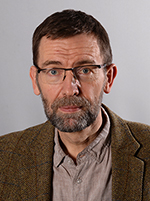
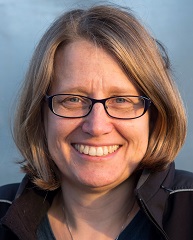
Genggeng Zhang is a Lecturer in the Writing Program at the University of California, Santa Barbara (UCSB). She holds a PhD in Applied Linguistics from Penn State University. Her teaching focuses on Writing 2 and 109ST courses, emphasizing academic writing instruction. Her research interests span discipline-specific and multilingual writing, academic literacy development, and computer-assisted pedagogy, with a particular focus on the intersection of language use in technical and academic contexts. Her work appears in journals such as the Journal of English for Academic Purposes , English for Specific Purposes , and Journal of Second Language Studies . Her research explores citational practices in engineering and social science disciplines, syntactic complexity in academic discourse, and aviation communication. She has conducted corpus-based analyses of technical and professional language, including studies targeting aviation maintenance students and emerging scholars. No scientific awards or grants are explicitly mentioned. She advises no listed students at this time. Her office is located in Girvetz Hall 1318 on the UCSB campus.
Marcel Bollmann is an Associate Professor at the Department of Computer and Information Science (IDA) at Linköping University, Sweden, where he leads research in the Artificial Intelligence and Integrated Computer Systems (AIICS) division. His work focuses on natural language processing (NLP), machine learning, and computational linguistics, particularly in under-resourced languages, multilinguality, and historical document analysis. Education: He holds a PhD in Computational Linguistics from Ruhr-Universität Bochum (2018), funded by projects on historical German language corpora. Previously, he was a postdoc at the University of Copenhagen (2018–2021), supported by an EU Marie Skłodowska-Curie Fellowship, and an assistant professor at Jönköping University (2021–2023), where he developed AI Engineering courses. Research: Bollmann’s interests include linguistically-informed NLP approaches, historical text normalization, and improving NLP accessibility across language genres. His work has addressed challenges like morphology-aware models and low-resource language support. Awards: His 2021 paper on morphology’s role in error analysis won the EACL Best Long Paper Award. He also contributed to the ACL Anthology as Site Development Lead, advancing NLP infrastructure. Advising & Grants: He has supervised projects on historical language corpora and received funding from EU initiatives. His lab collaborations focus on advancing AI through interdisciplinary methods. Labs/Teams: Active in the AIICS division at IDA, contributing to WASP (Wallenberg Autonomous Systems Program) and other interdisciplinary AI initiatives.
Professor Michael Meeuwis is a distinguished academic at Ghent University's Department of Languages and Cultures, Faculty of Arts and Philosophy, where he serves as Professor of Lingala and African Sociolinguistics. With expertise spanning linguistic anthropology, African languages, and colonial history, Professor Meeuwis has established himself as a leading scholar in the study of Lingála and language policy in the Democratic Republic of Congo. Professor Meeuwis holds an MA in African History and Philology from Ghent University (1990), an MA in General Linguistics from the Universities of Antwerp and Amsterdam (1991), and a PhD in Sociolinguistic-Ethnographic studies from the University of Antwerp (1997). He was a Postdoctoral Research Fellow of the Fund for Scientific Research - Flanders from 1997-2002 and served as Professor of Anthropological Linguistics at the University of Amsterdam in 2001-2002 before joining Ghent University in 2002. Professor Meeuwis's research focuses on the linguistic, historical, and sociopolitical dimensions of African languages, particularly Lingála. His work examines the grammatical structure and historical development of Lingála, the sociolinguistic situation in the Democratic Republic of Congo, colonial language policies in the Belgian Congo, and the epistemological dimensions of colonial knowledge production. He explores how language ideologies intersect with power structures, colonial histories, and contemporary decolonial movements. His research bridges linguistic anthropology, historical sociolinguistics, and postcolonial theory to analyze how language functions as both a tool of colonial domination and a medium for resistance and identity formation. Professor Meeuwis's extensive publication record reflects his interdisciplinary approach, spanning linguistic description, historical analysis, and critical theory. His recent work has increasingly focused on the decolonial dimensions of language knowledge, examining how colonial language policies continue to shape contemporary linguistic landscapes in Africa. He has made significant contributions to understanding the complex relationship between missionary activity, language standardization, and political power in Central Africa. Professor Meeuwis has supervised numerous PhD students including Margot Luyckfasseel, Eric Mijts, Hilde Gunnink, Minah Nabirye, Bienvenu Sene Mongaba, and Gilbert Kadima Batumona Adi. His research has been supported by multiple projects including 'A historiography of Kikongo language studies and management (1624-1960),' 'Victor Roelens and the 'missionaries of Africa' (white fathers) in colonial society in Congo, 1880-1926,' and 'Lingala franca. Language, conflict and political power in Mobutu's Congo/Zaire, 1965-1997.' Professor Meeuwis is affiliated with several research centers at Ghent University, including the Afrikaans - Ghent Center for Afrikaans and the Study of South Africa, CARAM - Center for Anthropological Research on Affect and Materiality, CESSMIR — Center for the Social Study of Migration and Refugees, and MULTIPLES - Research Center for Multilingual Practices and Language Learning in Society. These affiliations reflect the interdisciplinary nature of his work, which connects linguistic analysis with broader social, historical, and political contexts.
Ranke de Vries is the Ben Alder Professor and Chair of the Department of Celtic Studies at St Francis Xavier University. She holds a Master's in Celtic Languages and Literature and Medieval Studies from Utrecht University, followed by a PhD in Early Irish from Trinity College Dublin. Her research focuses on medieval Irish and Welsh languages, narrative traditions, textual editions, and the intersection of medieval Celtic medicine with continental-European and Arabic traditions. She leads the MMIST project (Medicine in Medieval Irish Saga Texts), examining pre-15th century Irish medical knowledge influenced by external traditions. Current courses include Celtic Civilizations I & II, Medieval Manuscripts, Medieval Medicine, and Old Irish language courses. Her publications span academic monographs, journal articles on medieval medical practices, and pedagogical grammar guides. Teaching responsibilities in 2024-25 include advanced Old Irish language instruction and specialized seminars on medieval Celtic medicine and manuscript culture. No awards are explicitly listed in the provided materials.
Jeta Hamzai is a Senior Lecturer at the Language Center of South East European University (SEEU) in Tetovo, North Macedonia, employed full-time since 2013. She holds a PhD in Linguistics from the Faculty of Education at Ss. Cyril and Methodius University (2017), an MA in English Language Teaching from SEEU (2009), and a BA in English Education from SEEU (2005). Her research focuses on language teaching methodologies, legal English compound structures, multilingualism in education, and student-centered learning strategies. Research interests include morphological productivity in compound words, inquiry-based learning in higher education, and comparative analysis of English-Albanian lexical patterns. She has co-authored over 15 publications addressing topics like EFL pedagogy, legal discourse analysis, and educational technology adaptation during the pandemic. Notable works include studies on legal English compounds (2024), self-regulated learning in digital environments (2023), and multilingual university policies (2023). Her professional experience spans over 18 years in education, beginning as a secondary school English teacher (2005-2007) before transitioning to higher education roles. She has contributed to curriculum development in ESP (English for Specific Purposes) programs and professional development workshops for educators. Current work emphasizes bridging theoretical linguistics with practical teaching strategies in multilingual academic settings.
Pilar Pinar is a Professor in the Department of World Languages and Cultures at Gallaudet University, part of the Language, Education, and Culture school. She specializes in bilingualism, deaf education, and second language acquisition with a focus on Spanish and American Sign Language (ASL) bilingual populations. Her research explores cognitive aspects of bilingualism, including lexical access, cross-language activation, and reading comprehension in deaf readers. Serves as Spanish Program Coordinator and Academic Advisor Leads the International Studies Program Former Faculty Leader for LSE Study Abroad in Spain (2002) Editorial roles include Co-Editor of Sign Language Studies (2021–present) and Board Member of Gallaudet University Press Research interests emphasize bilingual processing in deaf populations, including studies on eye movement patterns during reading, syntactic parsing in ASL-English bilinguals, and cultural identity among DHH Latine students. She has secured grants from NIH and Gallaudet’s Research Institute to investigate deaf literacy and perceptual span dynamics. Teaching includes foundational Spanish courses (SPA-111/112), advanced language studies, and interdisciplinary courses like Comparing Multicultural Perspectives . Her advising spans over 30 undergraduate students annually, with active roles on doctoral committees in Linguistics and Educational Neuroscience. Publications bridge cognitive science and deaf education, with contributions to Journal of Deaf Studies and Deaf Education and Bilingualism: Language and Cognition . Her work highlights unique challenges and strengths of bilingual deaf populations in language processing and education.
Professor Alexandra Simonenko (Ghent University) is a leading scholar in historical and diachronic linguistics, specializing in the evolution of determiners, nominal syntax, and pragmatic-driven language change across French, Finno-Ugric, and Scandinavian languages. Her work integrates treebank analysis, computational modeling, and formal semantics to trace grammatical shifts over time. Research Interests: Diachronic Semantics: Tracking how determiners and possessives shift from strong to weak interpretations Treebank-Based Methodology: Leveraging annotated corpora for quantitative analysis of Medieval French syntax Pragmatic Reasoning: Modeling language change through game-theoretic and information-theoretic frameworks Determiner Typology: Cross-linguistic analysis of full vs. clitic vs. bound determiners DP Islands and Factive Constraints: Investigating syntactic-pragmatic interactions in question structures Key Article Trends: Her recent work (2022-2026) focuses on determiner semantics, French possessive evolution, and computational models of definiteness. Earlier studies (2015-2019) emphasize Medieval French null subjects, cliticization, and treebank-based syntactic analysis.
Brigitte Bauer is a distinguished Professor and Research Fellow at the University of Texas at Austin, with a focus on Comparative (Indo-European) Linguistics, Historical Linguistics, and the Evolution of Latin-Romance languages. She serves as a Guest Researcher at the Max Planck Institute for Psycholinguistics and has held affiliations with Wolfson College, University of Cambridge, and the Linguistics Research Center at UT Austin. Her career spans over three decades, including roles as a University Lecturer at Radboud University Nijmegen and Visiting Fellow at All Souls College, Oxford.
Anna Morbiato is an Associate Professor in the Department of Asian and North African Studies at Ca' Foscari University of Venice, where she teaches Chinese language and linguistics. She is a member of the Board of Directors of the Ca' Foscari School for International Education (CFSIE) and serves as Editor-in-Chief of the journal Annali di Ca’ Foscari Serie orientale . Her academic work bridges linguistics, cognitive science, and artificial intelligence. Education: PhD in Linguistics, University of Sydney (Cotutelle) PhD in Asian and African Studies, Ca' Foscari University of Venice MA in Technical and Scientific Translation, Ca' Foscari University of Venice (First Class Honours) BA in Translation and Interpretation, Ca' Foscari University of Venice (First Class Honours) Her research focuses on Chinese syntax, information structure, pragmatics, and second language acquisition, employing cognitive-functional and corpus-based methodologies. She has contributed extensively to the understanding of word order, topic structure, and anaphora in Mandarin, with applications in language teaching and AI. The recent publications of Anna Morbiato reveal a strong trend toward interdisciplinary research, particularly in human-centric AI and natural language understanding. Her work connects linguistic theory with practical applications in technology, focusing on how language encodes meaning in procedural and culinary texts. She integrates cognitive linguistics with corpus analysis and experimental data, especially in studying Italian learners of Chinese. Scientific Awards: Marie Skłodowska-Curie Actions Seal of Excellence (2018) Valedictorian, Ca’Foscari University (2018) Campus Mentis Award (2010) Chinese Bridge Competition 3rd Prize (2007) Multiple First Class Honours distinctions Anna Morbiato has supervised numerous BA and MA theses and is responsible for Chinese language instruction at her department. She has received competitive research grants from the European Union (Horizon 2020, PRIN), Australian Government (Endeavour), and the University of Sydney. Her leadership extends to organizing international conferences and serving on PhD committees and editorial boards. She is actively involved in the MUHAI (Meaning and Understanding in Human-centric AI) project, where she contributes case studies in cognitive semantics and pragmatics, and in the PRIN ACHIEVE project on Chinese verb complex acquisition. Her institutional roles include curriculum development, editorial leadership, and academic governance.
Amy Rose Deal is an Associate Professor of Linguistics in the Department of Linguistics at the University of California, Berkeley, within the College of Letters and Science. Her research lies at the intersection of syntax, semantics, and linguistic fieldwork, with a strong focus on understudied languages such as Nez Perce, Zapotec, and Tiwa. Her research interests include: Syntax-Semantics Interface Syntactic Ergativity and Case Systems Indexicality and Logophoricity Agreement and Morphosyntactic Variation Definiteness and Countability Linguistic Fieldwork and Language Documentation Her recent publications reveal a sustained engagement with formal theoretical frameworks combined with empirical data from endangered languages. Themes across her work include the nature of syntactic movement, the interpretation of pronouns and indexicals, and cross-linguistic variation in nominal and verbal morphology. She frequently investigates how syntactic structure influences semantic interpretation, especially in non-canonical alignment systems. Her scientific contributions are reflected in numerous high-quality publications in formal linguistics, though specific awards or fellowships are not mentioned in the provided text. Amy Rose Deal advises students in syntax, semantics, and fieldwork, though no specific names are listed. She has collaborated with researchers such as Vera Hohaus, Julia Nee, and Matthew Wolf. There is no mention of grants or lab affiliations in the provided material. She maintains an active research profile, with publications from 2013 through 2020, indicating ongoing scholarly productivity.
Gabriel Rei-Doval is an Associate Professor in the Linguistics Department at the University of Wisconsin-Milwaukee . His career spans sociolinguistics, bilingualism, and Galician language studies, with a focus on language contact, purism, and planning. He holds a PhD in Galician Linguistics (2001) and has published extensively on Galician, Hispanic, and Lusophone linguistics. Research Interests : Sociolinguistics and Language Contact Bilingualism in minority language contexts Language Purism and Standardization Galician, Hispanic, and Lusophone Studies Teaching Areas : Bilingualism, General Linguistics, Hispanic Sociolinguistics. Key Contributions : Co-editor of Lusophone, Galician, and Hispanic Linguistics: Bridging Frames and Traditions (2019) Author of Principios de lingüística hispánica (2025), a foundational textbook Founder of the Galician Studies Initiative at the Modern Language Association
Stephan Oepen is a Professor at the Department of Informatics, University of Oslo, specializing in Computational Linguistics and Natural Language Processing (NLP). He leads the Research Group for Language Technology and serves as Academic Chair in Artificial Intelligence for the Circle U European University Alliance. His research bridges formal linguistics with large-scale computation, focusing on semantic parsing, dependency structures, and multilingual language models. 2002–present: Researcher → Professor at UiO 2011–2017: Head of Language Technology Research Group 2019–20: Section Head for Machine Learning 2021–24: Department Head for Informatics Current projects include HPLT (High-Performance Language Technologies), Nordic Language Processing Laboratory (NLPL), and OpenEuroLLM . He co-directs the 2017 ACL Shared Task on Extrinsic Parser Evaluation and contributes to international NLP conferences like ACL, EMNLP, and CoNLL. Recent publications focus on: Uniform semantic graph representations Hybrid parsing architectures Continual training for small languages Diagnostic parser evaluation Copyright implications in LLMs Community language resource infrastructure He actively participates in editorial boards and technical coordination roles, including the LUMI Scientific Advisory Group and Horizon Europe's High-Performance Language Technologies project.
Hans-Olav Enger is a renowned Professor of Scandinavian Linguistics at the University of Oslo since 2008. He has held previous academic positions at the University of Stavanger (2003–2008) and Stockholm University (1992–1993, 1996–2000), and served as a part-time "Guest professor/Professor II" at the University of Zurich (2012–2019). His work focuses on the Department of Nordic Languages with expertise in morphology, grammatical gender, and diachronic linguistics. Current affiliation: University of Oslo, Nordic Languages Previous roles: Professor II (Zurich), Professor (Stavanger), Lecturer (Stockholm) Key projects: MultiGender (2019–2020), co-editor of Maal og Minne (2016–2024) Enger's research delves into grammatical gender systems , inflectional morphology , and grammaticalization processes in Scandinavian languages. His work explores the interplay between semantic rules and morphological structures, particularly in Norwegian dialects. Notable contributions include analyzing the Animacy Hierarchy , changes in plural inflection , and the autonomy of morphology in the context of sound laws. His publications reveal a focus on historical linguistics , morphosyntactic variation , and agreement patterns across Scandinavian languages. Enger has contributed to understanding gender assignment mechanisms , definiteness markers , and syntactic evolution in Norwegian dialects and beyond. Enger has supervised MA theses on topics like gender appropriation in Norwegian , linguistic features in multiethnic environments , and inflectional class changes . He actively participates in the Language Change research group and has co-edited the journal Maal og Minne since 2016.
apl. Prof. Dr. Thilo Rudnig is an extraordinary professor and Hebrew lecturer at the Faculty of Theology, University of Göttingen. His academic journey includes a doctorate from the University of Münster (1999), habilitation (2005), and extensive research on Old Testament texts. He coordinates the ludus linguarum at the Centrum Orbis Orientalis et Occidentalis and serves as the Faculty Representative for Good Scientific Practice and Chairman of the Equal Opportunities Commission. Rudnig's research focuses on Old Testament exegesis, Hebrew linguistics, prophetic literature, and ancient Near Eastern religions. Key areas include Ezekiel studies, Davidic historiography, temple theology, and Hebrew syntax. His work integrates philology, literary criticism, and comparative analysis of Ugaritic and biblical texts. His publications emphasize textual criticism, theological motifs in biblical narratives, and modern adaptations of scriptural themes. Recent works explore holiness concepts in Isaiah, Syriac Psalms, and cinematic reinterpretations of Job. His Luther Bible revisions reflect rigorous engagement with historical and linguistic contexts. Awards: Dissertation prize, WWU Münster (1999) Rudnig actively contributes to academic societies including the Scientific Society for Theology and the Hebraists Association. He examines Old Testament theology for the Evangelical Church of Hanover and participates in Christian-Jewish dialogue.
Professor Sam Hellmuth is a leading academic in phonology at the University of York's Department of Language and Linguistic Science within the Faculty of Arts and Humanities. She serves as Associate Dean for Teaching, Learning and Students while maintaining an active research program focused on Arabic prosody and second language phonology. Her educational background includes: BA (Hons) in Arabic and French, University of Leeds (1985-1989) MA in Linguistics (Arabic), SOAS University of London (2000-2001) PhD in Linguistics and Phonetics, SOAS University of London (2001-2006) Postdoctoral Researcher, University of Potsdam (2006-2007) Professor Hellmuth's research centers on suprasegmental phenomena in Arabic dialects, particularly intonation patterns across regional varieties. Her work bridges theoretical phonology with empirical corpus-based approaches, examining prosodic variation in both native Arabic speech and L2 English acquisition. She specializes in the syntax-phonology interface and has pioneered methodologies for documenting intonational variation through large-scale comparative projects. Her publication record reveals consistent focus on Arabic intonational typology, with recent work expanding to Northern England dialects and emergent bilinguals. The research demonstrates sophisticated integration of auditory transcription with statistical F0 modeling within the Autosegmental-Metrical framework. Professional recognition includes: Editorial Board, Al-'Arabiyya (Journal of the American Association of Teachers of Arabic) Editorial Board, Arabic Linguistics (John Benjamins) Economic and Social Research Council Peer Review College membership Professor Hellmuth actively supervises 25+ graduate students, primarily on Arabic phonology topics, and leads major funded projects including the ESRC-supported 'Generations of London English' (2023-2026). Her collaborative network spans institutions in Tunisia, Saudi Arabia, Lebanon, Pakistan, and across the UK. She directs the Phonetics and Phonology and Language Variation and Change research groups, with recent work focusing on corpus development for multidialectal Arabic teaching resources.