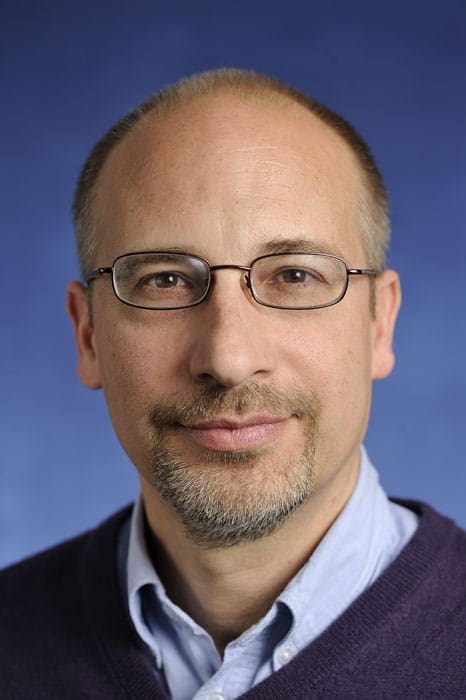
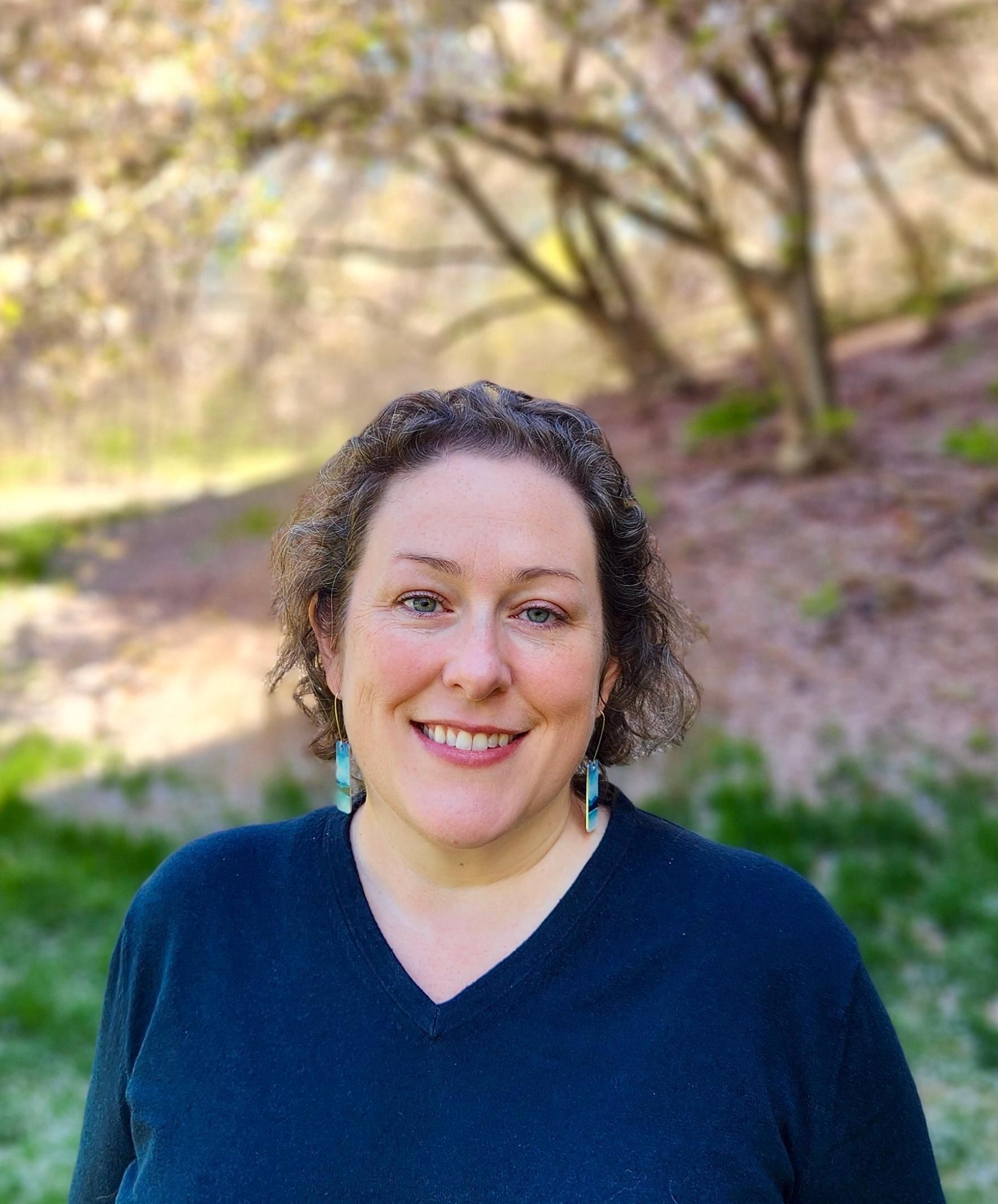
Joel Andreas is a Professor of Sociology at Johns Hopkins University since 2003, serving as Program Director of the East Asian Studies Program. His research focuses on political contention, social inequality, and social change in contemporary China. He holds a PhD in Sociology from UCLA and teaches social theory, political sociology, and courses on Chinese society. He has held visiting positions at universities including the University of Sydney, Hong Kong University, and Ningxia University. His work examines labor movements, rural land policies, and class dynamics in China. Recent research includes analyses of staff-worker congresses, rural land dispossession, and the persistence of militarism in U.S. policy. He critiques market reforms and explores the legacy of the Cultural Revolution. Andreas has contributed to debates on China’s transition to capitalism and the decline of socialist systems. His publications span topics from urbanization to state coercion in rural development. He maintains an active role in academic exchanges and policy-relevant research on China’s socio-political landscape.
David Glovsky serves as Assistant Professor of History and African and African American Studies within Harvard University's Faculty of Arts and Sciences, focusing on 19th-20th century West Africa with regional expertise in Senegal, Gambia, Guinea-Bissau, and Guinea. His research examines borderlands through lenses of mobility, citizenship, and alternative geographies, challenging state-imposed borders with community-driven spatial narratives. His educational foundation includes a B.A. in History and Human Geography from Dartmouth College and a Ph.D. in African History from Michigan State University. Prior academic appointments include the Department of Africana Studies at University at Albany and the Department of History at Boston University, following Peace Corps service in southern Senegal that redirected his career from sports media into academia. Glovsky's research program centers on social justice-oriented historical narratives of marginalized West African communities, particularly Fulbe populations. His work synthesizes oral histories and archival research across six nations to analyze how borderland residents construct fluid geographies that transcend colonial/postcolonial boundaries. Key themes include migration as resistance , gendered border experiences , and Islam's role in transnational community formation , with methodological innovation in spatial history and decolonial approaches. Analysis of his nine recent publications (2019-2023) reveals consistent engagement with West African borderland resilience , demonstrating how communities maintain cross-border networks despite state fragmentation. His work bridges historical scholarship and contemporary migration debates , employing interdisciplinary frameworks from anthropology, geography, and postcolonial theory to document alternative spatial organizations that challenge Western cartographic traditions. ACLS Fellowship supporting book project Borderlanders: Popular Geographies, Mobility, and Belonging in West Africa Glovsky actively mentors graduate students interested in African history, emphasizing pathways for underrepresented scholars into U.S. academia. His research has received competitive external funding including the ACLS Fellowship, while his collaborative work on the NEH ‘Ajamī Project advanced accessibility of Pulaar manuscripts through digitization and multilingual translation. He maintains strong community ties with West African scholars and institutions, particularly in Senegambia. Though not leading a formal laboratory, Glovsky collaborates with international research teams across West Africa on borderland studies and manuscript preservation, working closely with scholars in Kolda (Senegal), Dakar, and Guinea-Bissau to document community histories through participatory methodologies.
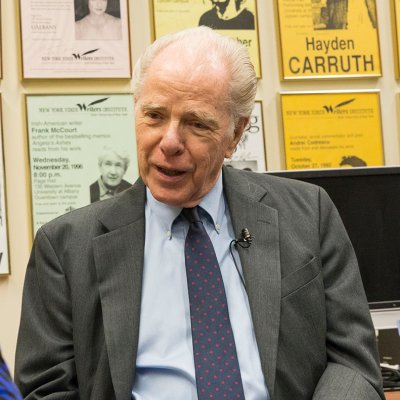
William Kennedy is a Professor in the English Department at the University at Albany, State University of New York. For over 40 years, he has crafted a body of literature centered on Albany, New York, creating what is known as the "Albany Cycle" of novels. His work has established Albany as a significant place in American literature, comparable to Joyce's Dublin and Bellow's Chicago. His educational background includes a BA from Siena College, following attendance at Public School 20 and Christian Brother's Academy. Professor Kennedy's creative work focuses on American fiction, particularly historical and urban narratives rooted in Albany's cultural and political landscape. His writing explores machine politics, family sagas, and the interplay between individual lives and historical events, rendering Albany's "outcasts and machine politicians, lowlifes and swells" with profound humanity. His narratives transform the city into a mythic capital of national memory. His publications consistently draw from Albany's history, with recurring themes of political corruption, redemption, and the resilience of marginalized communities. The "Albany Cycle" demonstrates his mastery in blending local history with universal human struggles across multiple literary forms. William Kennedy's distinguished honors include: John D. and Catherine T. MacArthur Foundation Fellowship Election to the American Academy of Arts and Letters National Endowment for the Arts Fellowship Regents Medal of Excellence from SUNY Governor's Arts Award Commander of the Order of Arts and Letters in France Election to the American Academy of Arts and Sciences As an educator, Kennedy taught creative writing and journalism at the University at Albany from 1974-1982 and Cornell University in 1982-83. His MacArthur Fellowship directly funded the creation of the New York State Writers Institute at Albany, with matching funds from the university and legislative support from Governor Cuomo. He has served on the New York State Council for the Humanities board and the Academy of Motion Picture Arts and Sciences. William Kennedy co-founded the New York State Writers Institute in 1984, which has grown into a major literary hub conducting statewide cultural and educational activities. The Institute remains central to his legacy, fostering literary arts through readings, workshops, and educational programs across New York.
Linda Morrice is a Professor of Education and Migration at the School of Education and Social Work, University of Sussex. She specializes in the intersection of refugee/migration studies with education, focusing on informal learning, social integration, and exclusion. Her research spans both the Global North and South, emphasizing refugee access to higher education and policy implications. Current role: Co-Director, Centre for International Education (2021-2024) Education: BA(Hons) in Social Anthropology (University of Sussex), PgDip (Birkbeck, 2004), MA (University of Sussex, 2005), Doctorate in Education (University of Sussex, 2010) Her scientific work explores refugee education through participatory methodologies, creative/narrative methods, and life history approaches. Recent publications analyze racialized borders, digital technology’s role in refugee well-being, and sanctuary city frameworks. Supervision interests include refugee family dynamics, informal pedagogies, and gendered policy impacts. Key grants include UKRI funding for digital well-being of unaccompanied refugee children (2024-2027), ESRC projects on longitudinal qualitative studies (2023-2024), and AHRC research on refugee cultural values (2013-2014). She has led evaluations for the Home Office and Queen Rania Foundation. Professional roles: Co-Chair, Sussex University of Sanctuary group (2019-2024) Advisory member for Home Office integration frameworks and vulnerable persons resettlement schemes Labs/teams: Founding member of University of Sussex Sanctuary Group and Brighton & Hove Sanctuary on Sea. Her research emphasizes participatory practices with refugee communities and longitudinal tracking of social networks.
Dr Alison Powell is an Associate Professor in the Department of Media and Communications at the London School of Economics and Political Science (LSE), serving as Programme Director for the MSc Media and Communications (Data and Society). Her research focuses on technology design, public sector technology, and digital futures. She is known for her book Undoing Optimization: Civic Action in Smart Cities (2021) and her participatory research method, data walking. From 2019–2023, she directed the JUST AI network, supported by the Ada Lovelace Institute and UKRI, advancing AI ethics research. Her work integrates critical theory, participatory methods, and interdisciplinary collaboration. Education: PhD in Communication from Concordia University (Canada), MA in Media Studies from Toronto Metropolitan University, and postdoctoral research at the Oxford Internet Institute. Prior to academia, she worked in the film and TV industry. Research interests include civic engagement in data-driven governance, ethical AI, and participatory urbanism. She has advised projects like Africa Just AI and Operationalising Ethics for AI, funded by Horizon Europe, AHRC, and the Open Society Foundations. Her articles address topics such as AI governance, urban light ecology, feminist research praxis, and the ethical implications of technology for marginalized communities. She contributes to blogs like Media@LSE and leads initiatives at Polis and the LSE’s Digital Futures for Children project. Grants and collaborations include work with Projects by IF, Open Rights Group, and the Human Data Interactions Network (EPSRC). She explores intersections of technology, justice, and sustainability, emphasizing equitable and inclusive innovation.
Laverne Jacobs, PhD, is a Full Professor at the University of Windsor's Faculty of Law where she holds the Research Chair in Disability Equality & Administrative Justice. She serves as the founder and Director of the Law, Disability & Social Change Project, a research and public policy center dedicated to fostering inclusive communities. Notably, Professor Jacobs was elected to the United Nations Committee on the Rights of Persons with Disabilities in 2022, becoming the first Canadian to serve on this UN Human Rights Treaty Body. She also serves as Co-Director of the Disability Rights Working Group at Berkeley Law's Center for Comparative Equality & Anti-Discrimination Law and previously held the position of Associate Dean (Research & Graduate Studies) for the Faculty of Law from 2018-2021. B.A. (Honours), McGill University, 1994 LL.B., McGill University, 1999 B.C.L., McGill University, 1999 Ph.D., Osgoode Hall Law School, York University, 2009 Professor Jacobs' research sits at the intersection of disability equality law and administrative law and justice, characterized by an interest in the everyday work of the administrative justice system and the lived experiences of people who use it, particularly persons with disabilities. Her work spans disability rights, administrative justice, human rights law, socio-legal theory, and empirical research methodologies. She has made significant contributions to understanding accessibility legislation, transportation inequality, post-secondary education access for students with disabilities, and the implementation of disability equality principles in administrative decision-making. Her scholarship bridges theoretical legal frameworks with practical applications, emphasizing citizen participation in policy development and the importance of inclusive design in legal systems. Analysis of Professor Jacobs' recent publications reveals a consistent focus on how administrative law can better serve persons with disabilities through inclusive design and accessible processes. Her work demonstrates growing attention to intersectional issues, particularly how women with disabilities experience administrative systems, and increasingly examines the implementation challenges of accessibility legislation across Canadian jurisdictions. She frequently employs empirical research methods to ground her legal analysis in real-world experiences of marginalized communities. Scientific Awards and Honors: Canadian Bar Association Touchstone Award (2021) Canadian Association of Law Teachers (CALT) Academic Excellence Award (2022) Hummingbird Award from the Disabled Women's Network of Canada (DaWN), 2022 Election to the United Nations Committee on the Rights of Persons with Disabilities (2022) Professor Jacobs has held significant leadership roles including service on the Board of Directors of the Income Security Advocacy Centre and the Canadian Institute for the Administration of Justice. Through her role as Director of the Law, Disability & Social Change Project, she has secured research funding to support policy-relevant scholarship on disability rights and administrative justice. Her work has influenced accessibility legislation development across Canada, particularly through her annotated version of the Accessible Canada Act. She provides expert consultation to government bodies and international organizations on disability rights implementation. The Law, Disability & Social Change Project serves as Professor Jacobs' primary research hub, bringing together interdisciplinary scholars, disability advocates, and policy makers to develop practical solutions for creating more inclusive legal and administrative systems. The project has produced numerous research reports, policy briefs, and public resources that translate academic research into actionable recommendations for improving accessibility and disability equality in Canadian society.
Katherine Lemons is an Associate Professor in the Department of Anthropology at McGill University's Faculty of Arts. Her research focuses on Islamic family law adjudication in India, examining its implications for understanding Muslim gender and kin relations, secularism, minority politics, and legal pluralism in postcolonial contexts. She has established herself as a leading scholar in the anthropology of law with her groundbreaking work on Muslim divorce practices and their relationship to Indian secularism. Dr. Lemons earned her Ph.D. from the University of California, Berkeley in 2010. Her academic journey has centered on the intersections of religion, law, and gender in South Asian contexts, with particular attention to how religious legal systems operate within secular states. Her research interests span multiple interconnected fields including the anthropology of law, Islamic legal studies, secularism theory, feminist anthropology, and South Asian studies. Lemons approaches these topics through careful ethnographic work in India, particularly examining how Muslim communities navigate family law disputes through non-state Islamic institutions. Her work challenges conventional understandings of the relationship between religious and secular law, arguing that Muslim divorce practices in India represent a critical site for understanding the complexities of secular governance in postcolonial contexts. She investigates how legal pluralism functions in practice, how religious legal authority is established adjacent to secular states, and how gender relations are shaped through these intersecting legal regimes. Dr. Lemons' scholarly output reveals a consistent focus on the tensions between religious legal traditions and modern secular governance, with particular attention to how marginalized communities navigate these complex legal landscapes. Her work demonstrates how legal practices often blur the boundaries between religious and secular domains, challenging simplistic understandings of secularism. She has made significant contributions to understanding how Islamic law functions in non-Muslim majority contexts, both in India and more recently in her research on sharia courts in Ontario. Michelle Z. Rosaldo Prize from the Association for Feminist Anthropology, American Anthropological Association (Honorable Mention) Critical Anthropology Book Prize from the Association for Political and Legal Anthropology (Honourable Mention) South Asian Muslim Studies Association Book Award (Honourable Mention) As an academic mentor, Dr. Lemons advises graduate students working at the intersections of anthropology, law, and religious studies. Her research has been supported by various academic grants that have enabled extensive fieldwork in India and Canada. She is currently developing two major research projects: "Traveling for Justice," which examines transnational dimensions of Islamic legal knowledge, and "Adjacent to the State," an ethnographic study of sharia courts in Ontario. Dr. Lemons is affiliated with several research centers at McGill University that focus on South Asian studies, legal anthropology, and religious studies. Her work connects with broader scholarly communities through collaborations with researchers studying legal pluralism, secularism, and Islamic jurisprudence across multiple national contexts.
Mallory Elizabeth SoRelle serves as the Tony & Teddie Brown Associate Professor at Duke University's Sanford School of Public Policy. Her research examines how public policies both stem from and perpetuate socioeconomic and political inequality in the U.S., with a focus on consumer financial protection and civil justice—issues critical to marginalized communities yet often neglected by welfare state scholars. Her academic credentials include: Ph.D. in Government, Cornell University (2016) M.A. in Government, Cornell University (2014) Master of Public Policy, Harvard University (2010) B.A. in Government, Smith College (2006) SoRelle's scholarly work centers on policy feedback effects, investigating how existing policies shape political behavior and future policy design. She analyzes consumer finance regulation, student debt relief, voting access reforms, and preemption politics, highlighting their disparate impacts on vulnerable populations and implications for democratic health. Her recent publications demonstrate a cohesive research agenda applying policy feedback theory across diverse policy domains. Key themes include the political consequences of financial regulation, the dynamics of student debt politics, and the erosion of voting rights, all examined through the lens of inequality and democratic participation. Dr. SoRelle holds the distinguished Tony & Teddie Brown Associate Professorship at Duke University. She is an active educator teaching courses such as The Political Economy of Policymaking and Public Policy, Political Power, and Social Change. Her research is supported by an NSF CAREER grant (2024-2029) investigating the political economy of fringe financial technologies and their impact on economic inequality.
Lance Freeman is the Penn Integrates Knowledge (PIK) Professor of City and Regional Planning and Sociology at the University of Pennsylvania's School of Arts & Sciences. His research focuses on neighborhood dynamics, gentrification, urban poverty, housing policy, and the interplay between the built environment and public health. He holds a Ph.D. in City and Regional Planning from the University of North Carolina at Chapel Hill (1997), an MRP in Regional Planning (1991), and a B.S. in Business Administration from SUNY Buffalo (1987). Prior to academia, he worked at Mathematica Policy Research and as a City Planner at the New York City Housing Authority. Freeman teaches courses on urban planning theory, quantitative methods, and community development at Columbia University and the University of Delaware. His research interests include understanding neighborhood change, leveraging social media and technology for urban analysis, and promoting equitable urban development. Key publications include There Goes the Hood: Views of Gentrification from the Ground Up (2006), A Haven and a Hell: The Ghetto in Black America (2019), and co-authored Planning and Control of Land Development (2020). He has contributed to debates on inclusionary zoning, racial equity planning, and the impacts of urban policies on marginalized communities. Freeman's work intersects urban sociology, policy analysis, and spatial demography. His recent studies explore gentrification migration patterns, the role of social media in neighborhood change, and historical segregation dynamics. He advocates for evidence-based planning to address urban inequality and spatial injustice.
Armelle Choplin is an Associate Professor at the University of Geneva's Department of Geography and Environment within the Geneva School of Social Sciences, and affiliated with the Global Studies Institute since 2019. She serves as Director of the Institute of Environmental Governance and Territorial Development (IGEDT), leading research on urban transformations in the Global South. Research Focus Her research examines urban policies, social transformations, and development challenges in African cities and the Global South. Core interests include: urban planning dynamics, governance frameworks, construction industry impacts, poverty alleviation, sustainable development pathways, globalization effects, digital innovation in urban contexts, and postcolonial urban studies. Her geographical specialization focuses on West Africa and MENA regions. Publication Analysis Recent publications (2017-2024) demonstrate consistent focus on material urbanism, governance innovations, and spatial justice in African cities. Key thematic clusters include: urban material flows (concrete, energy), participatory planning methods, transnational urban corridors, and postcolonial urban theory. Methodologically, her work combines spatial analysis with political economy and ethnographic approaches. Research Leadership She directs multiple international projects including: Global Urb: Global Urbanism from the South MatéRhône: Construction materials in Rhone Valley West African Coastal Corridor study (Accra-Lagos axis) URBACOT: West African Coastal Urban Dynamics Observatory Map&Jerry: Participatory mapping in Cotonou Student Advising Currently supervising eight doctoral candidates researching urban development topics across Africa. Her teaching portfolio includes courses on urban globalization, metropolitan governance, spatial justice, and regional project development at both bachelor's and master's levels.
Carol Carpenter is a Senior Lecturer and Associate Research Scholar at Yale University's School of the Environment. She has held teaching and research positions at Syracuse University, the University of Hawaii, and Hawaii-Pacific University, and a research role at the East-West Center. Her expertise spans environmental anthropology, conservation, sustainable development, and gender in agrarian systems. She earned a B.A. from SUNY Binghamton and M.A./Ph.D. from Cornell University. Her research focuses on the social science of conservation, economic anthropology in agriculture, and gender dynamics in ecological systems. Notable fieldwork includes four years in Indonesia studying rituals and social networks, followed by four years in Pakistan as a development consultant on social forestry and women's issues for USAID, the World Bank, and the Asia Foundation. She joined Yale in 1998 and published Power in Conservation: Environmental Anthropology Beyond Political Ecology (2020) and co-edited Environmental Anthropology: An Historical Reader (2007). Her recent work critiques conservation practices through an anthropological lens, emphasizing cultural contexts and gender roles. Earlier studies explored resource management in Pakistan, including women’s labor in agriculture and afforestation impacts. Her articles span decades, addressing topics from ritual ethnobotany to development surveillance in Bolivia. While no specific grants or lab affiliations are detailed, her consultancy roles highlight applied research in development sectors. No awards are explicitly mentioned, though her academic contributions are substantial.
Anastasia Loukaitou-Sideris is a Distinguished Professor of Urban Planning and Interim Dean of the UCLA Luskin School of Public Affairs. She holds a Ph.D. in Urban and Regional Planning from the University of Southern California. Her research focuses on the intersection of urban design, public spaces, and social equity, emphasizing user-centered perspectives in urban environments. Key research areas include public space utilization by diverse ethnic groups, transit security, gentrification impacts on transit neighborhoods, and urban regeneration strategies. Her work has been funded by entities like the U.S. Department of Transportation and the Mellon Foundation. She has authored/co-authored influential books such as Sidewalks: Conflict and Negotiation over Public Space (2009) and Transit-Oriented Displacement or Community Dividends? (2019). Dr. Loukaitou-Sideris has served as a consultant for organizations including the Transportation Research Board and the Greek Government, advising on urban design, land use, and transportation policy. She co-leads the UCLA Urban Humanities Initiative, blending interdisciplinary approaches to urban challenges. Her professional service includes roles as former Associate Dean at Luskin and leadership in academic programs. She actively engages in policy-relevant research, addressing issues such as parklet development, inner-city commercial corridors, and sexual harassment in transit environments.
Asef Bayat is Professor of Sociology and the Catherine and Bruce Bastian Professor of Global and Transnational Studies at the Department of Sociology, University of Illinois, Urbana-Champaign. He has held previous academic positions at the American University in Cairo, Leiden University (where he held the Chair of Society and Culture of the Modern Middle East), and visiting appointments at UC Berkeley, Columbia University, Oxford, and Brown University. His research interests include: Political Sociology Collective Behavior and Social Movements Sociology of Religion Urban Life and Politics Islam and Modernity Contemporary Middle East Bayat's research focuses on the role of ordinary people and subaltern classes in social and political transformations, particularly in the context of the Arab Spring and Middle Eastern urban movements. His work bridges comparative and historical sociology with global and transnational perspectives, emphasizing everyday forms of resistance and the reconfiguration of political Islam. He has extensively explored the sociological dimensions of revolution, modernity, migration, and loss of home. His recent publications, including articles in International Journal of Urban and Regional Research and Journal of Democracy , reflect a sustained engagement with urban politics, revolutionary dynamics, and youth activism in the Global South. The recurring themes across his work include the agency of marginalized populations, the transformation of public space, and the evolving nature of political engagement in non-Western contexts. Bayat has received numerous honors and fellowships: Guggenheim Fellow Ford Foundation Fellow MacArthur Fellow Open Society Fellow Wissenschaftskolleg Fellow, Berlin He has been actively involved in academic leadership, having served as director of the International Institute for the Study of Islam in the Modern World (ISIM) and elected to the Board of the UN Research Institute for Social Development. He has taught key courses such as Global Social Movements, Global Religion and Politics, and Middle Eastern Societies. Though specific students are not listed, his role as a full professor and author of major works indicates extensive mentorship and academic advising. He is affiliated with multiple interdisciplinary centers, including the Center for African Studies, Center for South Asian and Middle Eastern Studies, European Union Center, and Center for Global Studies.
Julie Rak is the HM Tory Chair and Professor in the Department of English and Film Studies at the University of Alberta. She holds a BA and PhD from McMaster University and an MA from Carleton University. Her research focuses on auto/biography, life writing, and nonfiction in North America, with specialties in gender, Canadian literature, and publishing studies. She has authored or co-edited numerous books, including False Summit: Gender in Mountaineering Nonfiction (2021) and The Routledge Introduction to Auto/biography in Canada (2023). Rak’s academic roles include interim Chair of the EFS Department (2023–2024) and leadership in the Stories of Change research group. She has received prestigious awards such as the J. Gordin Kaplan Award (2023) and the Killam Annual Professorship (2017–2018). Her research explores marginalized narratives, including Inuit literature and digital life writing, with a commitment to inclusivity and community engagement. Her teaching spans undergraduate and graduate courses on autobiography, gender theory, and Canadian literature. She actively supervises research projects and supports student initiatives like the Roger Smith Undergraduate Research Award. Rak’s work bridges academic rigor with public scholarship, with over 90 media engagements. Education: PhD in English, McMaster University MA in Canadian Studies, Carleton University BA in English, McMaster University Grants & Projects: SSHRC Insight Grant for Government Agents, Literary Agents: Inuit Books and Government Intervention, 1968–1985 Leadership in the Stories of Change initiative Awards & Honors: Fellow of the Royal Society of Canada (2022) Henry Marshall Tory Chair (2019–2025) 2024 Visiting Professor at Merton College, Oxford
Dr. Auzeen Shariati is an Associate Professor and Director of Undergraduate Programs in the Department of Criminology, Law and Society at George Mason University. She holds a Ph.D. in Public Affairs and Criminal Justice from Florida International University (2017), an M.A. in Criminal Law and Criminology from Allameh Tabataba’I University (2010), and a B.A. in Judicial Law from the University of Tehran (2006). Prior to academia, she practiced as a defense attorney at the Iranian Bar Association. Her research focuses on environmental criminology, crime prevention, victimization, policing strategies, and comparative criminal justice systems. Key areas include pandemic impacts on domestic violence, school safety through Crime Prevention Through Environmental Design (CPTED), and policy evaluation in criminal justice. She has published extensively in journals like American Journal of Criminal Justice , Journal of Family Violence , and Security Journal . Recent work examines how the Covid-19 pandemic and social upheavals like the murder of George Floyd influenced domestic violence reporting and victim experiences. Her studies combine quantitative and qualitative methods, emphasizing real-world policy implications. Dr. Shariati teaches courses such as Introduction to Criminology , Law and Justice Around the World , and Evaluation of Crime and Justice Policies . She actively presents at conferences like the American Society of Criminology and has contributed to public discourse on campus safety and criminal justice reform through media engagements.