Jovana Jović, MA, is a doctoral researcher at the University of Regensburg's Institute of Slavic Studies under Prof. Dr. Björn Hansen. She specializes in lexical semantics, corpus linguistics, and corruption studies, with a focus on Serbian and Croatian press texts. Doctoral dissertation: 'Framing Corruption – A lexical-semantic analysis of the thematic use of words based on Serbian and Croatian press texts from 1919 to the present day' Key projects: DFG-funded 'From Informality to Corruption (1817-2018): Serbia and Croatia in Comparison' Research Interests: Her work bridges lexical variation/change, cognitive semantics (frame theory), and corpus-based approaches to analyze corruption discourse. She explores sociosemantic networks and historical semantics in Southeast European contexts. Conference Participation: Presented at the 14th German Slavic Studies Day, Interdisciplinary Corruption Workshops in Cres/Belgrade, and international student conferences in Wrocław/Kiel. Collaborated with historian Miloš Lecić on cross-disciplinary informal practices research. Publications: Contributed to Tokovi Istorije and Junge Slavistik im Dialog with analyses of corruption framing and Slovenian relativpronouns.
Dr. Emilia Nottbeck is a Scientific Associate at the Institute for English and American Studies, Faculty of Cultural Studies, University of Paderborn. She has been working at the university since 2012, progressing from Student Assistant to her current position under Professor Langstrof's department since October 2024. Previously, she worked under Professor Mindt from 2016-2024. Master of Arts in Linguistics (University of Paderborn, 2011-2015) Bachelor of Arts in Linguistics, historical comparative linguistics, phonetics and Portuguese (University of Cologne, 2007-2010) Dr. Nottbeck specializes in Second Language Acquisition with a particular focus on prosody and turn-taking behavior. Her research examines how L2 learners use prosodic cues to predict turn-ends in conversation, a critical component of fluent dialogue. She has been developing this line of inquiry since at least 2018 through her dissertation work titled 'Predicting Turn-Ends of Questions. The Role of Prosody in SLA.' Her recent publications (2019-2024) consistently address the intersection of prosody, turn-taking, and second language processing, demonstrating a focused research trajectory within linguistic pragmatics and conversation analysis. The publications reveal increasing sophistication in experimental design and theoretical framing within Processability Theory. Modelling Relative Clauses in Processability Theory using Lexical Functional Grammar (2019) Turn-Taking in SLA: Investigating the Role of Prosody (2021) Reconsidering the Role of Prosody for Turn-Taking in Second Language Acquisition (2022) Investigating Speed-up Processes in Experimental Research Design in SLA (2023) Turn-Taking and L2 Learners: The Role of Prosodic Cues (2023) Turn-Taking in Second Language Acquisition: How do L2 learners make use of prosody in turn-end predictions? (2024) Dr. Nottbeck actively supervises students through internship courses and teaches across the linguistics curriculum including Semantics, Methodological Foundations, and specialized topics like Language, Reality and Power. She is currently organizing the 23rd International Symposium on Processability Approaches to Language Acquisition (PALA 2025), demonstrating leadership in her academic community. Her office is located in building J4.202 at Warburger Str. 100, Paderborn, with appointments required for office hours.
Dr. Frank Savelsberg serves as a Research Associate at the Seminar for Romance Philology and the Center for Medieval and Early Modern Research at Georg-August-Universität Göttingen. His office is located in SRP 1.221 at Humboldtallee 19, D-37073 Göttingen, with office hours scheduled for Wednesdays 9:00-10:00 a.m. during the winter semester 2025/26 by prior registration. Dr. Savelsberg's research focuses on the linguistic history of Sephardic Jews, specializing in Judeo-Spanish language development from the Middle Ages to contemporary usage. His work examines language contact phenomena, historical lexicography, and sociolinguistic variation within Sephardic communities across different historical periods and geographical locations. He investigates how historical experiences of Sephardic speakers have shaped linguistic structures, with particular attention to medical glossaries, inquisition archives, rabbinic responsa, and recordings of contemporary speakers. His recent publications demonstrate a strong trend toward collaborative, interdisciplinary scholarship at the intersection of Jewish studies and linguistic research. The 2024 edited volume explores synchronic and diachronic studies of Sephardic languages, while the 2023 manual provides comprehensive reference work on Judaeo-Romance linguistics. His research addresses crucial issues including language contact effects on linguistic structures, norm possibilities for polycentric languages, and the relationship between lexicon and speech community vitality. Dr. Savelsberg has established significant scholarly collaborations, particularly with Laura Minervini and Guido Mensching, resulting in major reference works in the field of Judaeo-Romance linguistics. His editorial work has facilitated important contributions from international scholars examining diverse aspects of Sephardic linguistic heritage.
Dr. Markus Tönjes is a Researcher at the Department of German Philology, University of Göttingen, where he has served as Head of Department Administration since 2020. His career spans roles as an Analyst/Linguist in IT, Research Assistant in psycholinguistics, and contributor to DFG-funded projects on language acquisition in hearing-impaired children and language in dementia. PhD (2012) in German Linguistics, focusing on reference in dementia patients. Magister Artium (2006) in German Language and Literature, Communications Research, and Phonetics. His research integrates Linguistics with Artificial Intelligence , emphasizing formal semantics and NLP . He explores phonology , morphology , and syntax in hearing-impaired children, language and dementia , and empirical methods . His publications and lectures highlight interdisciplinary work with Star Trek linguistics and forensic authorship analysis . Recent publications and presentations focus on phonological processes , orthographic norms , language in aging , and cross-linguistic syntax . He supervises BA and MA theses on topics like Kiezdeutsch , orthographic competence , and aphasia , reflecting his broad methodology in empirical linguistics. Key supervised works: Lara Meyer (2023): "Prototypical Sprecher des Kurzdeutschen?" Laura Gleixner (2023): "Bilingualism and Cognitive Reserve" Anna Katharina Baumgartl (2024): "Aphasie: Schweigen oder Leben"
Prof. Dr. Malte Zimmermann is a Full Professor of Semantics and Theory of Grammar at the Department of Linguistics, University of Potsdam. He is also a faculty and board member of the African Linguistics School (ALS), which biannually convenes in West African countries to advance formal linguistics knowledge among African scholars. His editorial roles include Associate Editor for Natural Language and Linguistic Theory and former Associate Editor for Linguistics and Philosophy . His educational background includes: Ph.D. in General Linguistics, Universiteit van Amsterdam (2002) M.A. in German Language and Linguistics/English/Anglistic/Philosophy, Universität zu Köln (1998) Abitur, Gymnasium Athenaeum, Stade/Niedersachsen (1989) Zimmermann's research centers on the interface between linguistic form and meaning, with specialization in formal semantics and grammar theory. His work spans quantification, tense, question semantics, discourse particles, and information structure, with particular emphasis on semantically under-researched West African languages (Chadic, Kwa, Grassfield Bantu). His research combines theoretical analysis with experimental methods, notably through projects like 'ExQ' examining embedded question interpretation across European and Non-European languages. He has led field research in Ghana, Cameroon, and Nigeria, challenging assumptions about language universals through empirical investigation of linguistic diversity. His publication trajectory reveals consistent focus on cross-linguistic semantic variation, particularly in focus interpretation, quantifier scope, and information structure phenomena. Recent work demonstrates growing integration of experimental methodologies with traditional formal approaches, with frequent comparisons between German, English, and diverse African languages. His investigations into serial verb constructions have been especially influential, uncovering hidden syntactic variability beneath surface similarities across languages like Akan and Igbo. As a supervisor, Zimmermann has guided numerous doctoral students to completion, with recent graduates including Giuliano Armenante (2024), Eva Shipova (2024), and Mareike Philipp (2023). His research has been supported by substantial funding including: SFB1287 Limits of Variability in Language, 'Limits of variability in interpretation' (2017-2021) SPP 1727 XPRAG.de, 'Exhaustiveness in embedded questions across languages' (2017-2020) SPP 1727 XPRAG.de, 'Exhaustivity in it-clefts' (2014-2017) DFG-Network 'Questions in Discourse' (2012-2016) SFB632 Information Structure projects (2007-2015) He leads the Potsdam semantics group (including Peter Sutton, Giuliano Armenante, Jeanne Lecavelier, Anna Struck, and Carla Bombi) which conducts fieldwork in West Africa. Currently, he co-directs the SFB-project on the 'Limits of Variability in Interpretation,' examining scope ambiguities, reconstruction, and bare NP interpretation across German, English, Akan, Igbo, and Medumba. His collaborative work with Edgar Onea (Graz) and Tatjana Scheffler exemplifies his commitment to bridging theoretical linguistics with empirical fieldwork and experimental validation.
Christopher Gabriel (* 30 September 1967) is a German linguist specializing in Romance studies. He currently holds a W3 professorship in Romance Linguistics (Spanish and French) at the Johannes Gutenberg University Mainz , following prior roles as a lecturer and professor at the University of Hamburg and a research assistant at the University of Osnabrück. Education: Technical University of Berlin (doctorate), Hannover University of Music and Theatre, Berlin University of the Arts Research interests center on the interplay between phonology and syntax , particularly in Spanish and French, with a focus on generative syntax , phonetic analysis , and Romance linguistic structures . His habilitation at the University of Osnabrück (2006) formalized his expertise in these areas. Trends in publications highlight his contributions to Romance phonetics , phonology , and generative syntax , often addressing cross-linguistic comparisons and educational frameworks for Romance languages. Scientific awards : Graduate Scholarship (State of Berlin) Current affiliations include the University Mainz and active participation in linguistic research networks. His work bridges theoretical and applied approaches to Romance languages.
Professor Sascha Gaglia serves as academic advisor and referee at an institution with German-language academic documentation. Specializing in Slavic linguistics, particularly Polish and Russian syntax and morphosyntax, their scholarly focus centers on predicate expressions and copular constructions. Research interests include comparative Slavic linguistics with emphasis on case systems (nominative vs. instrumental) and morphosyntactic properties of predicate expressions. Their work bridges theoretical linguistics with comparative analysis of Slavic language structures. Professor Gaglia has supervised doctoral research, most notably Hagen Pitsch's 2014 dissertation examining lexical and morphosyntactic properties of Polish and Russian predicate expressions. This indicates active mentorship within the field of theoretical linguistics.
Dr. Berkan Sariaydin serves as Lecturer in the Department of Didactics of Ancient Languages within LMU Munich's Faculty of Languages and Literatures, while concurrently holding a Studienrat position at Wilhelmsgymnasium Munich. His dual academic-school roles focus on bridging classical philology with contemporary pedagogy through innovative multimedia approaches. His educational trajectory includes: MA-level studies in Latin, German and Philosophy at LMU Munich (2012-2018) First State Teaching Examination (2018) Doctoral degree from LMU Munich (2018-2024) Second State Teaching Examination (2024) Research centers on classical reception studies with emphasis on intermedial transformations of antiquity. His work analyzes how ancient narratives (particularly Virgil and Ovid) manifest in modern media like graphic novels and fantasy literature, while developing practical didactic frameworks for language instruction. Current projects explore mythological narratives as tools for addressing contemporary social challenges through the ERC-funded 'Modern Argonauts' initiative. His publication record shows consistent output since 2016, with increasing focus on methodological innovation in classical reception studies. Recent works demonstrate growing integration of multimedia analysis and pedagogical application, particularly in teacher training contexts. Award highlights include: Bavarian State Ministry award for exceptional teacher training (2024) German National Academic Foundation doctoral scholarship (2019) LMU's MZL Prize for academic excellence (2019) Germany Scholarship for undergraduate studies (2015) Grant involvement centers on the ERC Proof of Concept project 'The Modern Argonauts' at Warsaw University, where he develops multicultural educational programs using classical mythology. His teaching methodology emphasizes active student engagement with ancient texts through contemporary media adaptations. He actively contributes to academic discourse through LMU's 'Rejuvenated Antiquity' research seminar and international conferences, focusing on practical applications of classical studies in modern educational settings.
Sebastian Hoffmann is a distinguished academic affiliated with the University of Trier , where he served as Dean of the Faculty of Languages, Literatures and Media Studies from 2017 to 2023. He has held significant roles, including Visiting Professor at the University of Tampere (2014–2017) and Lecturer in English Linguistics at Lancaster University (2006–2009). His expertise lies in Corpus Linguistics , with a focus on World Englishes , Syntactic Change , and Corpus Methodology . He co-developed BNCweb , a widely used web interface for the British National Corpus. PhD from the University of Zurich His research explores usage-based approaches to language study, including syntactic evolution , phonological patterns (e.g., intrusive /r/), tag questions , and verb complementation . Recent work highlights the role of Internet-derived data in corpus linguistics and the fixedness of collocations . His publications span Corpus Methodology , Historical Linguistics , and Phraseology , with key works such as Corpora and Lexis (2018) and Grammaticalization and English Complex Prepositions (2005). He has contributed extensively to journals like the International Journal of Corpus Linguistics and Journal of English Linguistics . Hoffmann has been recognized for leadership in professional organizations, including Chair of ICAME (2017–2023) and Vice-President for the Profession of the International Society for the Linguistics of English (2018–2023). He teaches courses such as The History of the English Language and Transcribing and Analyzing Spoken Language .
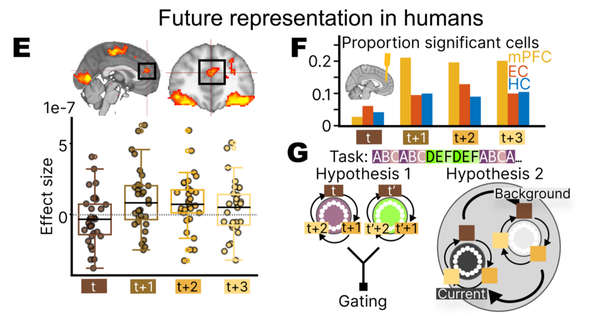
Mathias Sablé-Meyer is a Postdoctoral Researcher at University College London's Sainsbury Wellcome Centre, working in Tim Behrens's lab. He completed his PhD under the supervision of Stanislas Dehaene at PSL/Collège de France and NeuroSpin, CEA, where he investigated humans' ability to manipulate highly abstract structures, particularly focusing on the perception of geometry. His research spans cognitive neuroscience, computational modeling, and experimental psychology, with a focus on understanding the mechanistic implementation of compositional mental representations. He employs methodologies including MEG, fMRI, behavioral experiments, and computational models to investigate how humans mentally represent abstract structures like geometric shapes, language, and mathematical concepts. Sablé-Meyer's work reveals fascinating insights about human cognitive uniqueness, particularly in geometric perception compared to non-human primates. His recent research examines sequence processing mechanisms and aims to establish foundations for mechanistic implementations of Language of Thought models. He has published in top journals including Cognitive Psychology , Trends in Cognitive Sciences , PNAS , and Journal of Neuroscience . Glushko Dissertation Prize from the Cognitive Science Society (2023) As a supervisor, he co-advises Master's students including Maxime Cauté, who is exploring cross-modal representation of sequences, and is involved with several other students including Svenja Kuchenhoff, Amy Wong, and others. His lab follows open science principles, with code systematically published on the Open Science Framework alongside articles. His research program bridges cognitive science, neuroscience, and artificial intelligence, with implications for understanding both human cognition and developing more human-like AI systems. He maintains active collaborations across institutions including UCL, Collège de France, MIT, and École Normale Supérieure.