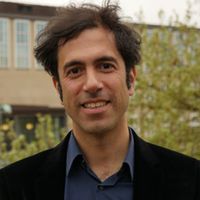
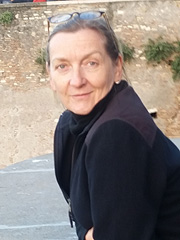
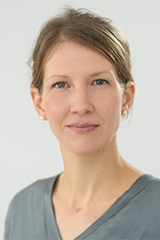
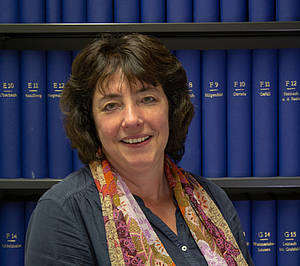
Aria Adli is a Professor of Linguistics at the Department of Romance Studies , University of Cologne, where he has been tenured since April 2014. He serves as Head of the Sociolinguistic Lab and is a principal investigator in the CRC 1412 (Register: Language-Users’ Knowledge of Situational-Functional Variation). Research focus: Grammatical variation, syntax in speech contexts, information structure, social stratification (Bourdieu), and register analysis Education: Habilitation from University of Freiburg (2011); PhD in Romance Linguistics (Tübingen 2004); Double MA in Linguistics/Psychology His work combines cross-cultural analysis (French, Spanish, Catalan, Persian) with empirical methods including fieldwork, corpus analysis, acceptability judgments, statistics, and computer simulations . He leads the Sociolinguistic Lab Cologne and has organized international workshops like the Flexible and Multiple Plural Marking in Language Contact (2022) and Sounds and Structure in Language and Music (2016). Scientific grants include CRC 1412 (2020-2027), DAAD EduVenTure (2020-2021), CRC 1252 (2017-2020), and DFG grants for projects like The Relation between Grammar and Usage (2013-2017). He has supervised 15+ students including PhDs by Amalia Canes Nápoles and Eric Engel.
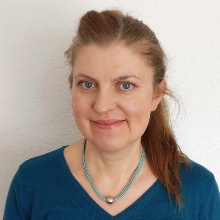
Prof. Dr. Silvia Kutscher serves as Professor for the Theory and History of Multimodal Communication at the Institute of Archaeology, Humboldt University of Berlin since March 2016, a position established within the Cluster of Excellence Topoi. Her interdisciplinary work bridges linguistics, semiotics, and archaeology with particular focus on ancient Egyptian communication systems. She leads project B03 on Register variation and asymmetric communication in Ancient Egypt within the Collaborative Research Center 1412 "Register: Language Users' Knowledge of Situational-Functional Variation". Her research centers on semiotics with emphasis on multimodal communication in ancient contexts. She has pioneered analytical methods for examining how spatial relations function as semiotic resources in pharaonistic communication, developing the theoretical framework for analyzing text-image compositions in Ancient Egypt. Her work creates crucial interdisciplinary connections between semiotic-linguistic multimodality research and Egyptology, revealing how dimensional aspects and spatial organization contribute to meaning-making in ancient artifacts. Recent publications demonstrate her sustained focus on multimodal analysis of ancient Egyptian artifacts, particularly through the CaeMmCom Corpus project. Her scholarly trajectory shows consistent development from general linguistic theory to specialized application in ancient communication systems, increasingly incorporating digital humanities methodologies. This work represents significant advancement in understanding how ancient societies structured information through combined textual and visual means. Prof. Kutscher holds leadership roles in academic organizations: Since 2018: Board member and co-leader of the Archaeology section of the German Society for Semiotics 2010-2013: Second chair of the German Linguistic Society (DGfS) 2014-2016: Advisory board member of DGfS She directs the Working Group on Multimodal Communication in Ancient Egypt, which develops theoretically grounded analytical tools by combining semiotic-linguistic approaches with Egyptological expertise. This initiative also implements technological tools for annotating and querying multimodal artifact data across the text-object-space continuum.
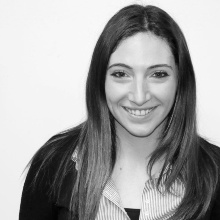
Muriel Norde is a full Professor of Scandinavian Linguistics at the Department of Northern European Studies , Humboldt-Universität zu Berlin, since 2013. Her research focuses on historical linguistics , construction grammar , and degrammaticalization in Germanic languages, particularly Scandinavian varieties. She has extensive experience in corpus linguistics and diachronic morphological analysis . Current Role: Professor at Humboldt-Universität Berlin Past Affiliations: University of Groningen (1997-2013), University of Amsterdam (1998-2003) Research Highlights : Spearheads the BiNoKo Corpus project for comparative historical register analysis. Leads international collaborations on exaptation in morphology and evaluative morphology . Key publications in Diachronic Construction Grammar and libfixes in European languages. Academic Contributions : Authored 83+ publications with over 21,182 reads. Notable works include studies on Swedish genitive evolution , Dutch diminutives , and modal constructions in Old Swedish . Her 2023 Frontiers in Psychology paper co-analyzes register pervasiveness across cultures. Supervision : Serves as promotor or committee member for 9+ PhD theses, including projects on Old Norwegian syntax , Dutch productivity shifts , and Norwegian demonstrative reinforcement . Collaborates with universities in Edinburgh, Ghent, Leuven, and Oslo.
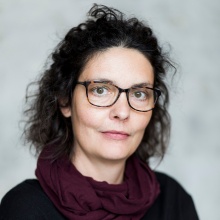
Ljudmila Geist serves as a Research Associate and DFG Project Manager at the University of Stuttgart's Institute of Linguistics within the Department of Linguistics and German Studies (ILG). Holding the academic rank of Privatdozent (equivalent to Associate Professor), she leads two major DFG-funded research projects while teaching linguistics and Slavic studies courses at undergraduate and graduate levels. Her institutional affiliation spans formal instruction in Linguistics, German Studies, and Slavic Studies programs including teacher training tracks for German and Russian. Her research expertise centers on the syntax-semantics interface with three core pillars: Semantics/Pragmatics : Nominal reference systems, information structure dynamics, speaker-hearer knowledge interaction in discourse, and copula clause semantics Morphosyntax : Argument linking mechanisms, case assignment for objects/predicatives, and co-argument binding phenomena Language Comparison/Typology : Cross-linguistic analysis of definiteness/indefiniteness in article-less languages, grammatical category comparisons between Russian and German Her work consistently bridges theoretical linguistics with empirical Slavic language data. Analysis of her 15 most recent publications reveals strong methodological continuity in formal linguistic approaches applied to Slavic languages, particularly Russian-German comparisons. Key thematic clusters include noun phrase semantics (mass/count distinctions, definiteness marking), copula constructions, and question-response systems. Her research increasingly incorporates experimental methodologies while maintaining rigorous formal analysis frameworks, demonstrating evolution from theoretical syntax toward integrated psycholinguistic approaches. Geist actively contributes to academic infrastructure through editorial roles including co-editing Advances in Formal Slavic Linguistics 2018 (Language Science Press, 2021) and multiple volumes of Investigations into Formal Slavic Linguistics . She has organized workshops such as Divide and Count at the 2023 DGfS conference in Cologne, demonstrating leadership in advancing research on morphosyntactic-semantic interfaces. Her teaching portfolio demonstrates deep integration of research and pedagogy across morphology, syntax, and Slavic linguistics courses. Recent offerings include Morphology (SS 2024), Syntax, Semantics and Typology of Nouns (WS 2023/24), and specialized seminars on nominal categories and German-Russian comparative linguistics. She completed Baden-Württemberg's 200-hour university teaching certification in 2008, reflecting commitment to pedagogical excellence.
Kouka Samuel Zongo is a Researcher at the University of Stuttgart , affiliated with the Department of Linguistics/German Studies . His research focuses on syntax and language comparison , particularly within the IMMAGES project, examining subordination phenomena in Mooré from a diachronic perspective. He is currently a doctoral student at the University of Stuttgart, building on his academic foundation from Joseph Ki-Zerbo University in Ouagadougou, where he earned a Master's degree in German Studies and a Licence es Lettres in Germanistik. His work bridges German and Gur language analysis, emphasizing structural and historical linguistic differences. Kouka Samuel Zongo's expertise spans syntax, comparative linguistics, and diachronic analysis. Born in Burkina Faso, he holds an A4-Baccalauréat and maintains consultation hours on Mondays (3:00 PM - 4:00 PM) at Keplerstrasse 17, Stuttgart.
Alessia Cassarà is a Research Fellow at the Institute of Linguistics and Romance Studies, University of Stuttgart, actively contributing to the DFG Research Group SILPAC (FOR 5157). She investigates how input differences influence language acquisition and diachronic change in French and Italian verbal structures under Project H2 led by Prof. Dr. Achim Stein. Education: PhD in Romance Studies from the University of Cologne, focusing on information structure-syntax interfaces in French and Spanish. Her research integrates Corpus Linguistics and Experimental Methods (e.g., structural priming) to analyze cognitive mechanisms like language economy in Romance language evolution. Specializing in Language Variation , Verbal Semantics , and Sociolinguistics , she examines minority languages including Sicilian, Catalonian Spanish, and Iranian Kurdish dialects through extensive fieldwork. Previously involved in the CRC 1252 "Prominence in Language" project, she maintains active research collaborations within DFG-funded frameworks while advancing diachronic-comparative methodologies in Romance linguistics.
Dr. Yela Schauwecker is a Senior Lecturer at the University of Stuttgart's Institute of Linguistics and Romance Studies, where she leads the project "Research Literacy of Teachers" (ReaLiTea) and collaborates with the Institute for Educational Analysis Baden-Württemberg (IBBW). Her office is located at Keplerstrasse 17, 70174 Stuttgart, Germany. Education 2000: Magister Artium in Romance Linguistics and Classical Philology (Latin), Heidelberg University 2004: PhD in Romance Linguistics, Heidelberg University 2007: Second State Examination in French and Latin 2022: Habilitation in Linguistics, University of Stuttgart Research Focus Her interdisciplinary research spans: Foreign language education : Research-based didactics for Romance languages/Latin, learner self-evaluation, and differentiated instruction Computational linguistics : Automation of language analysis and historical corpus annotation Historical lexicography : Medieval specialized texts, semantics, and editions (botany/astronomy) Publication Trends Schauwecker's recent work demonstrates strong emphasis on quantitative approaches to historical language contact (particularly Anglo-French), corpus linguistics, and syntactic evolution. Her publications frequently intersect medieval philology with computational methods, examining lexical borrowing, register formation, and pedagogical applications in language teaching. Awards DAAD/Maison des Sciences de l'Homme Postdoc Fellowship (2010) Projects & Advising She currently directs the ReaLiTea project at Zentrum für Schulqualität und Lehrerbildung Baden-Württemberg. Previous roles include leading the "Forschungsbasierte Fremdsprachendidaktik" project and contributing to ANR Crealscience (medieval scientific dictionary) and BASICS (contact linguistics).
Dr. Imme Kuchenbrandt is a Research Associate specializing in French and Spanish Linguistics at Goethe University Frankfurt's Institute for Romance Languages and Literatures . She holds examination responsibilities for L2/L3 Spanish and French programs and offers consultation services for students. Her academic role includes teaching courses such as Einführung in die Morphologie des Portugiesischen und Spanischen and phonology courses in French/Spanish. Research Focus Kuchenbrandt's research spans Romance linguistics, with emphases on Spanish and French. Key areas include: Phonology and prosody in historical texts Syntax and clitic systems in Old/Modern Spanish Cross-linguistic analysis (Spanish-German/French-English) Bilingual language acquisition and grammatical gender Corpus-based approaches to linguistic diversity Projects and Grants She co-leads the project Building Blocks of Grammar: A Multimedia Bridging Course (funded by the eLearning Fund 2014) and is developing a habilitation on Sentence structures in language comparison . She also coordinates outreach initiatives like the Introductory project on contrastive linguistics at Rivius-Gymnasium Attendorn. Publication Trends Her 15 recent articles (2019–2005) reflect a strong focus on historical Romance linguistics, particularly Spanish phonology and syntax. Recurring themes include prosodic evolution, clitic placement, bilingual acquisition, and corpus-driven comparisons between Spanish, French, and German. Methodologically, she prioritizes empirical analysis of historical texts and multilingual corpora. Awards and Advising No scientific awards are mentioned. Similarly, no supervised students or additional grants are documented.
Viktoria Eschbach-Szabo is a Professor of Japanese Studies at the University of Tübingen, where she has been faculty since 1992, and Project Professor at Tokyo College, University of Tokyo (2019). Previously, she served as Lecturer at ETH Zurich teaching Cultural and Scientific History of East Asia (2007-2017) and has co-directed the Tübingen University Center for Japanese Studies at Dōshisha University, Kyoto since 1994. Her academic career includes previous appointments as Professor for Modern Japanese Studies at Trier University (1990-92) and Research Assistant at University-Bochum (1983-90). Her educational background includes: Dr. Phil. from Ruhr University Bochum, Faculty of East Asian Studies (1981-84), completed summa cum laude under supervisors Professor Bruno Lewin and Professor Helmut Schnelle M.A. in German, Slavic, Chinese and Japanese Studies from Eötvös Loránd University Budapest (1975-81), with fellowships in Odessa (1976) and Berlin Humboldt University (1979) Eötvös József Gimnázium in Budapest with German minority class (1970-74) Professor Eschbach-Szabo's research spans semiotic and linguistic studies, particularly examining names in Japanese culture and Japanese language in various contextual frameworks including language policy, migration, aging society dynamics, and translation studies. Her three major research projects investigate language contact between East Asia and the West, speech transfer across language varieties, and transcultural perspectives on Japanese society, with specific focus on aging concepts. Her methodological approach combines rigorous linguistic analysis with deep cultural understanding, creating a unique bridge between European and Japanese academic traditions. She is linguistically exceptional, with proficiency in Hungarian, German, Japanese, and English, plus reading knowledge of Russian, French, Latin, Classical Chinese, Classical Japanese, and Ainu. Her scholarly output reveals consistent engagement with how Japanese language adapts to globalization while maintaining cultural specificity, particularly in areas like loanwords, personal names, and youth language. A significant trend in her work examines linguistic constructions of aging in Japanese society compared to German and European contexts. Her publications demonstrate strong interest in translation studies, especially challenges of conveying cultural concepts between Japanese and European languages. The interdisciplinary nature of her work connects linguistics with sociology, anthropology, and cultural studies. Her notable scientific achievements include: Best Essay award for 'Japanese in the European Language Space' from 日本語学論説資料 (2010) Best Ph.D. Dissertation of the year award from Ruhr University Bochum (1985) Professor Eschbach-Szabo has secured numerous research grants and participated in significant academic initiatives. She served as President of the European Association for Japanese Studies (2005-2008) and was instrumental in developing the Graduate School 'Global Challenges, Transcultural and Transnational Solutions' at Tübingen University. Her leadership extended to proposing the Excellence project 'High Tech and Hegel' to the German Science Foundation (2006). She has organized multiple international conferences, including the 12th International Conference of the European Association of Japanese Studies in Lecce, Italy (2008), and has been actively involved in promoting Japanese studies in Europe through various Japan Foundation initiatives. While specific laboratory information isn't detailed, Professor Eschbach-Szabo has been instrumental in developing collaborative research environments. She co-founded the Tübingen University Center for Japanese Studies at Dōshisha University in Kyoto and has participated in projects connecting Japanese and European academic institutions. Her work on car navigation systems for Japanese (2001-04) with Temic Mercedes/BMW demonstrates practical applications of her linguistic expertise. She has fostered academic networks through her leadership roles and organization of international workshops, creating platforms for transcultural dialogue between Japanese and European scholars.
Daniil Pleshak is a Researcher at the Department of History, Faculty of Humanities, University of Tübingen. He is affiliated with the Emmy Noether research group 'Religious Conflict and Mobility between Antiquity and the Middle Ages: Byzantium and the wider Mediterranean, 700-900'. His academic background includes extensive training in Byzantine studies, classical languages, and historical anthropology. Education: Promotion (PhD), Universität Tübingen (2021) MA in Bibelsprachen (Bible Languages), Staatliche Universität Sankt Petersburg (2017) BA in Bibelsprachen, Staatliche Universität Sankt Petersburg (2015) Additional training: Byzantine Greek Summer School (Boğaziçi University), 'Aspirantura' in Byzantinistik (St. Petersburg State University), and specialized summer schools in Judaistik and linguistics. Research Focus: Pleshak specializes in Byzantine history and literature, with emphasis on epistolography, rhetoric, encomia, religious conflict, and mobility. His work examines cultural and textual transmission across the Mediterranean, utilizing philological and historical methods to analyze Byzantine sources. Publication Trends: His recent articles (2015–2020) focus on Byzantine poetry (particularly George of Pisidia), apocryphal literature, linguistic analysis of ancient Greek texts, and cultural aspects of sexuality/space in antiquity. Methodologically, they blend philology, narratology, and socio-historical analysis. Academic Engagement: Pleshak has presented at international conferences including Oxford University, Central European University, and King's College London, covering topics like zoological knowledge diffusion, religious warfare, and Byzantine literary genres.
Prof. Dr. Susann Fischer is a Professor of Spanish and Catalan Linguistics at the University of Hamburg's Faculty of Humanities, Institute of Romance Studies. She has held a W2 professorship in Linguistics of Spanish and another Romance language since October 2009. Her academic journey began with studies in Hispanic Studies and North American Studies at Freie Universität Berlin (1987-1994), earning a Magister Artium degree. She then completed a European Master of Linguistics (1994-1995) through a joint program between University of Manchester and Freie Universität Berlin. Her doctoral studies at Humboldt-Universität zu Berlin and Universität Potsdam culminated in a Dr. phil. (2000) with her dissertation on Catalan syntax, followed by habilitation in 2008 on word-order change across Romance and Germanic languages. Prof. Fischer's research focuses on comparative syntax, syntax theory, syntax/morphology interface, distributed morphology, and contact-induced language change. Her work demonstrates a particular expertise in Romance languages, especially Spanish and Catalan linguistic structures. She has led significant research projects including DFG-funded studies on Judaeo-Spanish in Bulgaria and clitic doubling across Romance languages. She has organized numerous academic workshops including the Syntax of Small Objects (2022), Parameters in Context (2022), and Biolinguistics & Parameters (2015). Prof. Fischer actively contributes to the academic community through her membership in the Sintaxi histórica del Català project, the NEREUS research network, and editorial roles with Bucharest Working Papers in Linguistics and Zeitschrift für Sprachwissenschaft. Her academic career includes positions as Academic Assistant at Universität Stuttgart (2003-2009), acting W3 Professor at Goethe-Universität Frankfurt (2008-2009), and researcher positions on DFG projects at Humboldt-Universität zu Berlin and Universität Potsdam (2000-2003).
Jonas Grünke is a Researcher in Romance Linguistics at Johannes Gutenberg University Mainz, specializing in French, Spanish, and Portuguese. He will transition to a Professorship for Multilingualism at the University of Regensburg in 2025, leading the Forum for Multilingualism and Regionalism and its Master's program MaMuR. His office hours require email scheduling via Microsoft Teams. He also curates recent acquisitions for the Romance Linguistics Department. Education : BA in Spanish (University of Hamburg, 2010–2014), MA in Romance Linguistics (University of Hamburg, 2014–2015), Ph.D. (Mainz, 2022, summa cum laude). Research Focus : Phonetics/phonology (Spanish, Catalan, Judeo-Spanish), syntax (information structure, clitics), second/third language acquisition (heritage bilingualism), multilingualism (societal and individual), dialectology, and minority languages (Judeo-Spanish, Romansh, Occitan). Publications : Recent work explores intonation in Catalan-Spanish contact, Bulgarian Judeo-Spanish vowel reduction, L3 French prosody intervention studies, and digital tools for pronunciation training. Awards : Second Poster Prize at 27th LIPP Symposium (2021). Advising : Supervised 13 theses (B.Ed., M.Ed.) on topics like subject pronouns in French, creole language structures, and bilingual education. Projects : Co-leader of DFG project Jewish Spanish in Bulgaria (2022–2025), promoting lesser-known Romance languages (Occitan, Galician) via courses and workshops.
Damaris Bartz is a Researcher at the Institute for Special Education , Chair of Pedagogy and Intervention for Language and Communication Impairments , University of Würzburg. She holds a Diplom (2010) in General Linguistics/Patholinguistics from the University of Potsdam and has worked in academic and clinical settings since 2010. Her teaching focuses on speech therapy in teacher training programs, and she collaborates with the Research Laboratory for Communication and Language (FoKuS) . Academic Appointments Since 2020: Scientific Associate at University of Würzburg 2018: Education in Logopedics at Charité, Berlin 2016-2017: Seminar Instructor at Humboldt University Berlin Research 2017-2020: PhD on adversative particles ('auch', 'aber') and finiteness acquisition 2015-2016: DFG Project on adversative discourse relations in German, Bulgarian, and English Research Interests: Bartz investigates how adversative particles like 'aber' (but) influence the acquisition of finiteness in German-speaking children, particularly those with developmental language disorders (DLD). Her work bridges morphosyntax with discourse analysis, examining function words' role in syntactic development. Publications: Her publications focus on discourse particles, finiteness realization, and cross-linguistic comparisons in language acquisition. Recent contributions analyze adversative clauses in clinical populations and grammatical development in special education contexts. Clinical Experience: Since 2011, she has worked as a speech therapist in Berlin, specializing in childhood mental health settings. She is affiliated with professional societies like dbs , GISKID , and vpl .
Dr. Monika Fritz-Scheuplein is a full-time Researcher at the University of Würzburg , affiliated with the Institute of German Philology . She serves as the team leader of the Lower Franconian Dialect Institute (UDI), focusing on dialect preservation and research in Lower Franconia. Her career at the university spans over three decades, including roles as a scientific collaborator and dialectology expert since 1991. Education PhD (2000) : Universität Würzburg. Dissertation: "Geteilter Dialekt? Untersuchungen zur gegenwärtigen Dialektsituation im ehemaligen deutsch-deutschen Grenzgebiet." Magister Artium (1990) : Universität Würzburg. Thesis: "Jugendsprachlicher Wortschatz in Unterfranken. Eine empirische Untersuchung." Research Focus Fritz-Scheuplein specializes in the dialectology of Lower Franconia, with emphasis on dialect lexicography, phonetics, sociolinguistics, and cultural onomastics. Her work includes documenting dialectal variations, analyzing place nicknames, and promoting dialect awareness in educational contexts. Key research areas: Dialect dictionaries and digital archiving (e.g., Bayerische Dialektdatenbank) Dialect syntax and phonology in transitional regions Public engagement through projects like "Fränki" (student dialect research) Cultural studies of dialects in media, humor, and folklore Her recent publications (2015–2018) explore trends in regional linguistics, including dialect usage in social media, syntactic variations across German borders, and the role of dialects in identity formation. Articles frequently integrate computational methods for dialect data analysis and public dissemination. Grants & Advising No specific grants, awards, or supervised students are mentioned in the source material. Labs & Teams She leads the Lower Franconian Dialect Institute (UDI) , managing dialect research, public outreach, and educational initiatives. Collaborates with regional institutions to document and promote Bavarian dialects.
Prof. Dr. Nicole Richter holds the Professorship for Multicultural Communication (Slavonic and English Linguistics and Language Use) at the European University Viadrina and Collegium Polonicum. She is affiliated with the Department of Language and Media Studies under the Faculty of Cultural Studies. Her research spans phonetics, prosody, multilingualism, and sociolinguistics, with a focus on Slavic languages and cross-border communication.