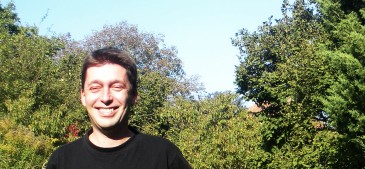
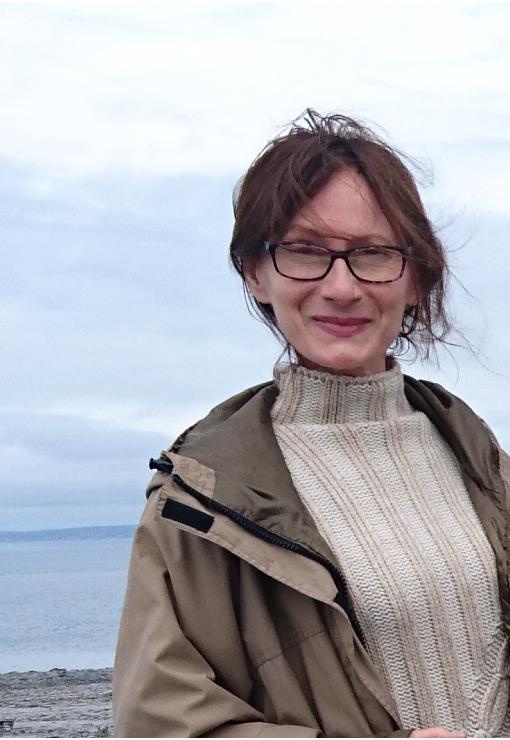
Michele Bianconi is a Departmental Lecturer in Classical Philology and Linguistics at the University of Oxford, affiliated with the Faculty of Classics and Wolfson College. His work bridges Classics, Linguistics, and Near-Eastern Studies through Indo-European comparative philology. Current role: Lecturer at Oxford Leading 'Ancient Anatolia Network' and managing the 'Uncovering Messapic Texts' project Research Interests: Focus on linguistic interactions between Ancient Greek and Anatolian languages, Indo-European reconstruction, and historical syntax. His work spans Anatolian languages like Hittite, Luwian, and Messapic, integrating comparative philology and cultural exchange analysis. Scientific Awards: Fellow in Hellenic Studies, Harvard (2021–22) Diebold Researcher in Comparative Philology (2021–23) Fellow at Getty Villa, Los Angeles (2025) Recent Publications: Highlight trends in Anatolian phonology, Graeco-Anatolian interactions, and historical syntax, with notable contributions to Messapic and Carian studies.
Alejandro Cuza is a Professor at Purdue University, affiliated with the Department of Spanish and Portuguese under the College of Liberal Arts. He specializes in Spanish Linguistics, focusing on morphosyntax, semantics, and psycholinguistic processes in second language acquisition and heritage language development. University: Purdue University School: College of Liberal Arts Department: Spanish and Portuguese Academic Rank: Professor Education: Ph.D. in Hispanic Linguistics, University of Toronto Research Interests: Cuza investigates psycholinguistic mechanisms in Spanish morphosyntax acquisition among bilingual children, adult L2 learners, and heritage speakers. Key areas include language transfer, input conditions, age of onset effects, and the interplay between syntax and semantics in bilingualism. Scientific Contributions: His recent work examines protracted development in heritage speakers, crosslinguistic influence in adverb distribution, and feature reassembly in grammatical gender. Publications span topics like copula use, clitic production, and aspectual interpretation across diverse bilingual contexts. Students: Elizabeth Barajas, a former advisee, is documented in his research collaborations. Labs & Teams: He leads the SLAR (Spanish Language Acquisition and Research) Lab at Purdue, focusing on empirical studies of bilingual development.
Dr. Banafsheh Karamifar is an Assistant Professor of Linguistics and French as a Second Language (FSL) at the School of Liberal Arts, Laurentian University, and an Adjunct Professor at the Faculty of Education, University of Ottawa. Her research and teaching focus on the intersection of linguistics, technology, and education. PhD in Linguistics from Université Paris 10 Postdoctoral diploma in Media Communication from University of Ottawa Research interests: Critical Discourse Analysis, semantics, culture, comparative studies, social justice, higher education, educational technology (EdTech), language education, curriculum development, and qualitative research methods. She examines multimodal learning, AI in language education, adaptive learning, inclusion, and the preservation of minority cultures. Teaching experience: Over a decade of experience teaching French writing, grammar, phonetics, phonology, syntax, and second language learning in France and Canada. Designed hybrid and online FSL curricula for Canadian government employees and immigrant communities. Additional roles: Senior Analyst for Strategic Research and Impact Evaluation in Higher Education at University of Ottawa (2021–2024); part-time professor at the Faculty of Education, University of Ottawa (since 2017).
Dr. Giorgio Marrapodi is a Researcher at Saarland University, working at the Lessico Etimologico Italiano (LEI) project since 1997. He currently focuses on the S- letter range (Latinisms) since 2025, having previously worked on the E- range from 2007-2025. His academic career includes positions at the Chair of Romance Philology and the Romanisches Seminar at the University of Bonn. Dr. Marrapodi earned his doctorate in Italian Philology with "Summa cum Laude" in 2005 from an institution (likely University of Genua based on his studies) under Prof. Max Pfister. His educational background includes a Diplomarbeit in Dialectology from the University of Genua in 1996 and undergraduate studies in "Lettere e Filosofia" at the same institution from 1989-1996. Dr. Marrapodi's research focuses on the intricate relationship between language, names, and cultural identity within Romance linguistics. His work explores how naming systems reflect historical, social, and geographical contexts across Italian and other Romance languages. He has made significant contributions to understanding the cognitive and structural aspects of onomastic systems, particularly examining how oral traditions influence name formation and preservation. His research bridges theoretical linguistics with practical lexicographical applications, demonstrating how historical dictionaries and modern computational methods can enrich our understanding of name evolution. Dr. Marrapodi's interdisciplinary approach connects linguistic analysis with cultural anthropology, revealing how naming practices serve as markers of identity and territorial belonging. His scholarly output reveals a consistent trajectory in onomastic research with increasing methodological sophistication. Early work focused on specific regional naming systems, particularly in Liguria and Piedmont, while later publications demonstrate broader theoretical frameworks and comparative approaches across Romance languages. A notable shift appears around 2008 toward incorporating digital humanities methodologies, as evidenced by his work on database resources and computational lexicography. His research consistently bridges Italian and broader Romance linguistic traditions, with particular attention to the interplay between written and oral name systems. Summa cum Laude Doctorate in Italian Philology (2005) Accademia della Crusca Scholarship (2001) Dr. Marrapodi has been actively involved in academic knowledge dissemination through numerous conference presentations across Europe, including participation in the Società di Linguistica Italiana, Romanistentag, and specialized onomastics conferences. His teaching experience spans multiple institutions, including the University of Bonn, University of Genua, and the Music Academy of Saarland, where he taught Italian language and specialized literature. He has collaborated extensively with international scholars on projects related to Romance onomastics and etymology. As a core member of the LEI project team and contributor to the Deonomasticon Italicum, Dr. Marrapodi works within collaborative research environments focused on comprehensive documentation of Italian etymology and onomastics. His work intersects with multiple research groups studying Romance linguistics across European institutions, particularly in Italy, Germany, and Switzerland.
Aida Talic is an Assistant Professor at the School of Literatures, Cultures & Linguistics, Department of Slavic Languages & Literatures, University of Illinois Urbana-Champaign. She specializes in syntax, phonology, and their interfaces, with a focus on Slavic languages. Her work bridges theoretical linguistics and psycholinguistic analysis. PhD, University of Connecticut (2017) Level 1 Mental Health Ambassador, University of Illinois Urbana-Champaign Her research explores the interplay between syntax, prosody, and morphology in Slavic languages, particularly Bosnian/Croatian/Serbian (BCS). Key themes include clitic incorporation, accent assignment, and structural parallelism. Her publications reflect a commitment to resolving morphosyntactic and phonosyntactic puzzles. Recent work includes studies on cyclic spell-out, affixal articles, and phase-based prosodic domains. She has taught courses like Elements of Syntax , Semantics and Pragmatics , and advanced seminars on morphosyntax. Her 2016 Outstanding Graduate Teaching Award underscores her pedagogical excellence. 2016 University of Connecticut Outstanding Graduate Teaching Award
Mikael Kalm is a Senior Lecturer at the Department of Swedish and Multilingualism , Stockholm University , where he has worked since 2018. He previously completed his PhD in Nordic Languages at Uppsala University (2016) and has served as subject manager/staffing director of studies at the Unit for Swedish, Nordic Languages and Swedish as a Second Language since 2023. His work integrates linguistic research with educational practice.
Ali Can YALÇINKAYA serves as an Instructor at Beykent University's Preparatory Unit Program, specializing in language education with research focusing on historical connections between Turkic and Hungarian languages. His academic profile combines practical language instruction with rigorous linguistic analysis. Educational Background: Master's Degree (2016), Institute of Social Sciences, Ankara University Bachelor's Degree (2010), Faculty of Language, History and Geography, Ankara University YALÇINKAYA's research centers on quantitative historical linguistics , particularly examining Turkic loanwords in Hungarian through diachronic analysis. His work bridges cognitive linguistics (prototype theory applications) and classical comparative linguistics, with significant contributions to understanding language contact phenomena between Uralic and Turkic language families. His methodological approach combines corpus-based quantitative analysis with theoretical frameworks from cognitive science. His publication trends reveal a consistent focus on empirical analysis of linguistic borrowing , progressing from theoretical explorations of prototype theory to sophisticated quantitative studies of loanword adaptation rates. Recent work demonstrates increasing methodological sophistication through statistical analysis of historical language change patterns. Professional Activities: Teaches English language courses (18 hours weekly) in the Preparatory Program Maintains active research profile with international publications Serves as academic reviewer for multiple linguistics journals YALÇINKAYA operates within the academic ecosystem through his institutional affiliation at Beykent University while maintaining strong research connections with Hungarian academic institutions, particularly evident through his publications in Hungarian journals and collaborations with Hungarian scholars like Parapathics Andrea and Szentgyörgyi Szilárd.
Cinzia Russi is Professor of Romance and Italian Linguistics and director of the Graduate Portfolio Program in Romance Linguistics at The University of Texas at Austin, College of Liberal Arts. Her academic career spans over two decades with expertise in historical linguistics, morphosyntax, and Italian dialectology. Her primary research focuses on: Historical (socio)linguistics with emphasis on (morpho)syntactic change Development of Italian discourse markers from a comparative Romance perspective Language of contemporary Italian crime fiction Metaphor and metonymy across languages and time periods Language of medicine in Old Italian Application of Cognitive Grammar to Italian language teaching Dr. Russi teaches undergraduate and graduate courses including Advanced Italian, Introduction to Italian Linguistics, Introduction to Romance Linguistics, and specialized courses on Italian television advertising and the language of Italian crime fiction. Her recent publications demonstrate a progression from theoretical historical linguistics to applied studies of contemporary Italian language phenomena, particularly in literary and media contexts. As Program Director for the Graduate Portfolio Program in Romance Linguistics, she oversees specialized graduate training while maintaining an active research agenda that bridges historical and contemporary linguistic analysis.
Markus Steinbach is a Professor of German Linguistics at the University of Göttingen, specializing in theoretical and experimental linguistics with a focus on sign languages, spoken language interfaces, and discourse structures. He serves as Spokesperson of the Göttingen Centre 'Text Structures' (2021–present) and has held prestigious fellowships, including a 2017 Distinguished Guest Scientists Fellowship at the Hungarian Academy of Sciences. Core research areas: German grammar, sign languages, syntax-semantics interface, grammaticalization. Active projects: TypMod (CNRS), Parts of Speech and Iconicity in DGS (DFG), IDEALISM (DFG-AHRC), and Sign Hub (Horizon 2020). His recent work explores temporal and causal pragmatics, polar response strategies, and neurophysiological aspects of sign language processing. Awards include a 2017 MTA fellowship, and he contributes to editorial leadership via co-editing Linguistische Berichte (since 2014) and the Sign Languages and Deaf Communities series (since 2012). Collaborations span institutions like the DFG and CNRS.
PD Dr. Andreas Blümel serves as a Researcher at the Department of German Linguistics, University of Göttingen, a position held continuously since April 2015. His academic trajectory includes prior research roles at Graz University (2013–2015) and Frankfurt University (2011–2013), alongside a visiting scholar appointment at Keio University in Tokyo (2022–2023). His research concentrates on: Syntax of German and English, particularly displacement phenomena Theoretical architecture of grammar within minimalist frameworks Diachronic evolution of syntactic and semantic structures Nominal domain syntax, including phrasal units and labeling theory Recent publications reveal a strong emphasis on resolving theoretical conflicts in nominal syntax, syntactic movement constraints, and cross-linguistic parameter variation. His work frequently engages with the Minimalist Program, examining phenomena like pro-drop parameters and subject properties through empirical German/English data and comparative Romance studies. Blümel actively supervises graduate theses (9 documented B.A./M.A. completions between 2016–2021) and secures competitive research funding, currently leading the DFG project "Revisiting Phrasal Units in the Nominal Domain" (2022–present) while contributing to the KAKEN-funded Japanese project on nominal structure defects and the DFG network on adverbial clauses.
Friedrich Neubarth is a lecturer at the University of Vienna, affiliated with the Department of German Studies and the Department of Philosophy. His work bridges theoretical linguistics and computational approaches to language processing. Research Focus: Speech synthesis for dialectal varieties, computational modeling of morphology/syntax, phonological representation primitives, and prosodic correlates of information structure. Key Projects: VSDS (Viennese Dialect Synthesis), MLT4MLV (Machine Learning for Language Varieties), LEGO Audio & Braille Building Instructions, and MAGNIFICENT (Multifaceted News Analysis). Academic Contributions: 15-year publication record (2008-2023) spanning speech technology, dialectal machine translation, crossmodal word learning, and formal syntactic theory. Notable collaborations with Brigitte Krenn, Harald Trost, and Michael Pucher. Teaching: Delivers courses in linguistics and grammar at the University of Vienna, including exercise courses and lecture+exercise combinations since at least 2003. Technical Expertise: Development of spoken dialogue systems incorporating Viennese dialect synthesis, creation of multimodal language learning frameworks, and construction of annotated linguistic corpora for research.
Mariola Wołk is a Professor at the Department of Polish Language and Speech Therapy, Institute of Linguistics, University of Warmia and Mazury in Olsztyn. Her research spans semantics , pragmatics , syntax , and contemporary Polish language , with a focus on lexical distinctions, referential mechanisms, and discourse markers. Her publications include analyses of antonymic expressions, semantic nuances in Polish adjectives, and pragmatic qualifiers in dictionaries. While one article (2020) inexplicably addresses molecular biology (cell survival under UVB radiation), the majority of her work remains firmly rooted in linguistics. She has secured funding for doctoral research and has access to departmental infrastructure. Dr. Wołk has supervised one doctoral student to completion and is available to mentor new PhD candidates. Her academic output (11 WoS/Scopus publications, H-index 1) reflects her engagement with theoretical and applied linguistics, though citations remain limited.
MÜFİDE AĠIRKAN serves as a Researcher at Niğde Ömer Halisdemir University within the Faculty of Islamic Sciences, Department of Arabic Language and Rhetoric, holding this position continuously since 2019. Her academic profile reflects deep specialization in Arabic linguistic traditions and Islamic rhetorical theory through both teaching and scholarly research. Her educational foundation includes: Doctorate in Fundamental Islamic Sciences from Erciyes University (2018-2023) with dissertation "An examination of the life and divan of Nasihuddin Abu Bakr Ahmed b. Muhammad al-Errejani in the context of rhetoric and intertextuality" Master's degree in Fundamental Islamic Sciences (Arabic) from Aksaray University (2016-2018) with thesis "تحقيق حاشية س 168 إلى 289" (Critical Edition of Marginalia from Page 168 to 289) Dr. Ağırkan's research program centers on Rhetoric, Arabic Linguistics, and Intertextuality, with significant extensions into Quranic Studies and Classical Arabic Poetry. She investigates historical grammatical debates, poetic aesthetics in pre-Islamic and early Islamic literature, and narrative techniques in religious texts, consistently bridging traditional Islamic scholarship with contemporary literary theory. Her methodological approach emphasizes textual analysis within historical contexts while examining rhetorical evolution. Analysis of her recent publications (2022-2025) reveals a cohesive trajectory exploring language-structure relationships across multiple genres. Key patterns include grammatical function analysis (Iʿrāb), metaphorical language in Quranic exegesis, and intertextual frameworks in classical criticism exemplified by scholars like Abdülkâhir al-Jurjani. Her work demonstrates particular interest in how rhetorical devices convey theological concepts and emotional dimensions in Arabic literary tradition. She has successfully completed research projects including "Abdulkahir al-Jurjani's Understanding of Language and Literature" (August 16, 2021-June 27, 2022), indicating active grant management capabilities. No information is available regarding graduate student supervision or additional funded research initiatives beyond this project.
Adam Biały serves as an Assistant Professor in the Department of English and Comparative Linguistics at the Faculty of Philology, University of Wrocław, where he also earned his PhD in English Linguistics in 2004. His institutional affiliation demonstrates long-term commitment to linguistic research and education within this Polish academic framework. Education: PhD in English Linguistics (2004), Faculty of Philology, University of Wrocław Research Focus: Dr. Biały's scholarly work centers on theoretical linguistics and general linguistics , with particular emphasis on language evolution and cognitive underpinnings of linguistic structures . His investigations bridge syntactic theory with psychological processes, examining how cognitive mechanisms shape grammatical phenomena in natural language systems. This interdisciplinary approach integrates historical linguistics with contemporary cognitive science frameworks. Publication Trajectory: Between 1998-2009, Dr. Biały produced 11 significant publications analyzing Polish linguistic structures, predominantly focusing on psychological predicates, reflexive constructions, and verbal-nominal interfaces. His methodological evolution shows progression from generative grammar analyses toward constructionist perspectives, while maintaining consistent focus on Polish as a case study for universal linguistic principles. Key recurring themes include argument structure, lexical semantics, and morphosyntactic interfaces across multiple subdomains. Scientific Recognition: No formal awards, fellowships, or medals are documented in the provided materials. Academic Contributions: While conference presentations at venues like PASE Annual Conferences and Poznań Linguistic Meetings indicate active scholarly engagement, the text provides no details regarding graduate student mentorship or externally funded research projects. His involvement in the university's "Integrated Development Programme 2018-2022" remains unspecified beyond institutional context.
Anna Budziak is a Professor at the Department of English Literature and Comparative Studies, University of Wrocław. She previously served as Deputy Head of the Department (2019), Head of the 19th- and 20th-Century English Literature Workshop (2009-2017), and supervisor of the Doctoral Research Group (2012-2014). Her qualifications include training at the Penn-Leuven Institute for Literary Studies (Belgium), Oxford's Teaching Literature Overseas program, and research fellowships at Ruhr-Universität Bochum (Germany), University of Warwick (UK), and Ulster University (UK). Her research examines Victorian decadence, modernism, and literary philosophy through frameworks like somaesthetics. Key focuses include T.S. Eliot's political reflections, Oscar Wilde's aesthetic ethics, interdisciplinary connections between literature/visual arts, and parody's cultural functions. She integrates these into courses on friendship philosophy, theory, and artistic intersections. Publications emphasize modernist reinterpretations, philosophical aesthetics, and historical contextualization, with recurring analysis of Eliot and Wilde. Recent works explore populism, education critiques, and somatic influences in literary expression. Finalist, ESSE Book Awards (2008-2009) for Text, Body and Indeterminacy Rector's Prize (First Degree), University of Wrocław Rector's Prize (unspecified) Liverpool University Press 2023 Awards for Outstanding Journal Reviewers She supervises doctoral candidates and leads academic initiatives, including the International T.S. Eliot Society's fellowship committee. Institutional roles encompass curriculum development and international research collaboration.