Prof. Dr. Simone Winko holds the Chair for Modern German Literature and Literary Theory at the University of Göttingen since 2003. Her research spans literary theory, canonization, praxeology of literary studies, and the intersection of emotions with German poetry around 1900 and digital humanities. Academic Roles: Chair at Göttingen (2003–), DFG Priority Programme 2207 leadership (2017–), Courant Center collaboration (2009–) Key Projects: DFG projects on literary change (2023–), computational literary history (2020–2023), and argumentation practices in interpretations (2018–2020) Her recent work focuses on emotions in German-language poetry , using computational methods to model text similarity and analyze historical shifts between Realism and Modernism. She explores how emotional codes and narrative strategies are embedded in lyrical structures, particularly through projects like Anthologien zeitgenössischer deutschsprachiger Lyrik (2022). Scientific Awards : 2010: 1st prize for best doctoral supervision (KissWin, BMBF-funded) Teaching & Collaboration : Supervises B.A., M.A., and Ph.D. theses; co-edits the Journal of Literary Theory and Revisionen book series. Collaborates with Fotis Jannidis, Gerhard Lauer, and Matías Martínez on computational approaches to literary studies.
Ulla Liukkunen is a Professor of Labour Law and Private International Law at the University of Helsinki's Faculty of Law. She also serves as a Docent at the University of Helsinki and is affiliated with the Helsinki Institute of Sustainability Science (HELSUS). Professor Liukkunen has held significant leadership roles including Director of the Center of Chinese Law and Chinese Legal Culture until 2022 and has been actively involved in numerous research projects funded by the Finnish Academy and other organizations. Professor Liukkunen's primary research interests focus on Labour Law, Private International Law, Comparative Law, Transnational Law, and Sustainability Law. Her work particularly examines the intersection of labour rights with international legal frameworks, with special attention to Chinese labour law and Nordic perspectives. She has made significant contributions to understanding collective bargaining systems, decent work standards, and the role of the International Labour Organization in global governance. Analysis of Professor Liukkunen's recent publications reveals a consistent focus on transnational labour governance, private international law applications to labour issues, and comparative analyses of labour law systems. Her work increasingly addresses contemporary challenges such as platform work, global value chains, and sustainability dimensions of labour regulation. There is a notable emphasis on bridging theoretical frameworks with practical policy implications, particularly in European and Chinese contexts. Professor Liukkunen has received significant recognition for her scholarly contributions: Member of the Finnish Academy of Science and Letters (2022) First Class Knight of the Order of the White Rose of Finland (2016) Professor Liukkunen has supervised numerous doctoral students and has been involved in significant research projects throughout her career. She has led Finnish Academy-funded research projects on international labour law and comparative labour law, as well as private international law. Her projects include 'Relevant Problems and Perspectives for the Development of International Private Law in Modern Conditions' (2023-2026), 'Employee Participation and Collective Bargaining in the Era of Globalization – Nordic and Chinese Perspectives' (2013-2016), and 'ILO Core Labour Standards Implementation in China: Legal Architecture and Cultural Logic' (2012-2015). Professor Liukkunen is actively involved with the Helsinki Institute of Sustainability Science (HELSUS) and has played key roles in establishing the Finnish Center of Chinese Law and Chinese Legal Culture. She has served in numerous advisory capacities including as a member of the Finnish Committee for Confirming the General Applicability of Collective Agreements, the Market Court until 2022, and as Vice Member of the Labour Court. Internationally, she serves as Vice Chair of the Mediation Board of the European Labour Authority and is a member of the European Centre of Expertise in the Field of Labour Law.
Professor Yusuf Karbhari is a Professor of Accounting at Cardiff Business School, Cardiff University. With a distinguished career spanning several decades, he has established himself as an expert in accounting, particularly in the areas of public sector accounting, Islamic finance, and corporate governance in emerging economies. His work bridges theoretical frameworks with practical applications across diverse economic contexts, from the UK public sector to Middle Eastern and Southeast Asian financial systems. Professor Karbhari holds a PhD and MBA from institutions in Wales, along with a BA (Hons) degree. His educational background has provided the foundation for his extensive research career focused on accounting practices in both developed and emerging economies. Professor Karbhari's research interests encompass a wide range of topics including Accounting and Accountability in government sectors across the Middle East and Malaysia, Accounting practices of UK Executive Agencies, International Government Accounting, Communicative Effectiveness of International Auditor's Reports, Financial Reporting and Performance Measurement in UK Central Government, and Managerial and Accounting Reforms in the Public Sector. His work particularly emphasizes the intersection of traditional accounting principles with cultural and religious contexts, especially in Islamic finance systems. His extensive publication record demonstrates a consistent focus on accounting practices in emerging economies, with particular attention to Islamic banking and finance, corporate governance structures, and public sector accounting. Over the past decade, his research has increasingly examined the role of Sharia boards in Islamic financial institutions, environmental disclosure practices, and the relationship between governance mechanisms and financial performance in diverse economic contexts. Professor Karbhari is available for postgraduate supervision and has research interests that align with his expertise in Accounting and Auditing in Emerging Economies, International Public Sector Accounting, Corporate Governance in emerging economies, and Islamic Banking and Finance. He teaches undergraduate courses in Accounting for Decision Making and Control (Year 2) and Public Sector Accounting (Year 3).
David Greenwood-Sanchez is an Assistant Professor at the University of Iowa's Department of Political Science, part of the College of Liberal Arts and Sciences. His research bridges comparative politics and international relations, focusing on food systems, agriculture, and global trade. He holds a PhD from the University of Wisconsin-Madison (2022), with fieldwork-based research on GM crops in Peru and Mexico. Prior to academia, he worked in program evaluation for the Minnesota state government and as a research analyst at J-PAL in Chile. Education: PhD in Political Science, University of Wisconsin-Madison (2022) His current projects include analyzing public attitudes toward GM foods in Mexico through an interdisciplinary survey and studying Central Asia's potato boom. Research interests emphasize agrobiodiversity, regulatory policy formation, and the intersection of food security with national identity. Despite no formal awards listed, his work bridges critical contemporary issues like climate resilience and indigenous rights in agricultural contexts. While no formal grants or advising records are noted, his academic profile highlights active engagement in policy-relevant research. He maintains non-academic pursuits including classical/jazz violin performance and specialty potato cultivation in Minnesota.
Daniel L. Schlafly is a Professor in the Department of History at Saint Louis University 's College of Arts and Sciences . His career spans decades of research in Russian and East European history, with a focus on cross-cultural exchanges between Russia and Western Europe. Education : Ph.D. (Columbia University, 1972), M.A. in Russian Studies (Columbia, 1965), Certificate from the Russian Institute (Columbia, 1965), A.B. (Georgetown University, 1961), and M.B.A. (Saint Louis University, 1998). Research interests include cross-cultural history, Jesuit educational institutions in Russia and America, religious minorities in post-Soviet Russia, and East-West encounters during the Enlightenment. His work emphasizes primary source analysis in original languages like Russian, French, and Italian. Publication trends highlight comparative studies of Jesuit schools, diplomatic records, and religious identity formation. His articles span 1970-2008 , with a focus on Russia's engagement with Catholicism and Western institutions. Scientific awards and grants include: Mellon grants for international research (1991-1996) Adenauer Scholarship for German studies (1961-62) Conference funding from 2002-2014 Grants for translating Marek Inglot's Jesuit history (2008-2013) He has taught courses on the origins of the modern world , history of Eastern Europe , Russian history , and nationalism studies .
Dr. Hagay Shemesh is an Associate Professor at the Academic Centre for Dentistry Amsterdam (ACTA), specializing in Endodontology. He holds a prominent role in teaching courses such as 'Endodontologie' and 'Clinic Year 3', and has supervised 7 PhD theses. His research focuses on root canal treatment outcomes, CBCT applications, endodontic retreatment strategies, and dental education methodologies. Active in professional societies, he is a member of the European Society of Endodontology (ESE) and has organized major conferences like the Lustrum congress NVvE. His work bridges clinical practice with evidence-based approaches, emphasizing cost-effectiveness and prognostic factors in endodontic care. Research Interests: Root Canal Treatment Outcomes, CBCT Imaging in Endodontics, Dental Education Innovation, Health Economics of Dental Procedures, and Periapical Pathology Analysis. His recent studies address prognostic factors in endodontic treatment (2025), cost-effectiveness of retreatment methods (2023), and educational strategies for instrumentation techniques (2023). These contributions highlight his dual focus on clinical efficacy and pedagogical excellence. Advising & Grants: Supervised 7 PhD theses (specific titles not listed) and has contributed to research datasets like 'Research priorities for oral healthcare: agenda setting from the practitioners’ perspective' (2021). His activities include editorial work, invited lectures on root canal fillings, and collaborative projects such as the 'Kennisagenda Mondgezondheid' initiative.
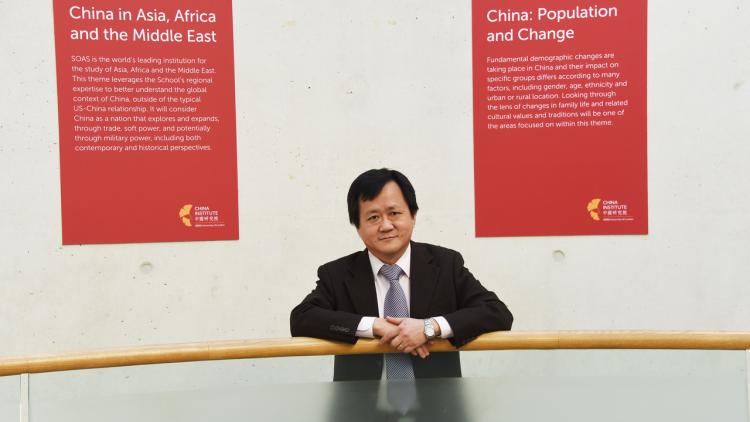
Roles and Affiliations: Steve Tsang is the Director of the SOAS China Institute at the School of Oriental and African Studies (SOAS), University of London. Previously, he served as Head of the School of Contemporary Chinese Studies at the University of Nottingham (2016) and held positions as Professorial Fellow (now Emeritus Fellow) at St Antony’s College, Oxford. He maintains strong ties with both SOAS and the Nottingham China Policy Institute through his editorial and research activities. Education: Steve Tsang holds an MA and DPhil (PhD) from the University of Oxford. Research Interests: His work focuses on Chinese politics, the evolution of China’s political system, and the Chinese Communist Party’s engagement with democracy and human rights. He explores China’s foreign policy dynamics, including soft power strategies, relations with the UK, EU, U.S., and Asia, as well as geopolitical issues like Taiwan’s security and Hong Kong’s post-colonial governance. His historical research delves into 20th-century Chinese history, decolonization processes, and colonial legacies in Hong Kong. Publications Trends: Recent scholarship emphasizes Xi Jinping’s political thought and its global implications, alongside analysis of China’s technological ambitions and military strategy. Earlier work chronicled Taiwan’s democratization journey and explored Hong Kong’s administrative challenges during its transition to Chinese rule. A consistent thread is the interplay between historical narratives and contemporary policy-making. Advising and Grants: He has supervised PhD theses on topics ranging from Taiwan’s party-movement relations to UK-China relations. Major research projects include a Smith Richardson Foundation-supported study on China’s global strategy under Xi Jinping. His advisory roles extend to governmental bodies, having testified before UK Parliament committees and the Canadian House of Commons. Labs/Teams: Central to his work is the SOAS China Institute, which focuses on China’s domestic and international dynamics, and the Nottingham China Policy Institute, where he previously led research initiatives.
Sheila R. Foster is a tenured Professor of Climate at the Columbia Climate School and an affiliated faculty member at Columbia Law School. Her research focuses on environmental and climate justice, innovative resource governance, land use policy, and the role of local governments in addressing global challenges. She holds a J.D. from UC Berkeley and a B.A. (English, Honors) from the University of Michigan. Foster co-directs LabGov, pioneering the 'co-city' approach to urban challenges, and has authored influential books like Co-Cities and From the Ground Up . She serves on the New York City Panel on Climate Change and the Environmental Justice Advisory Board, and has been recognized with awards including the ACOEL Fellowship and the IUCN Senior Scholar Award. Education: J.D., University of California, Berkeley B.S., University of Michigan (English, Honors) Research Interests: Environmental Justice, Climate Justice, Urban Policy, Land Use, Subnational Governance, and the Co-City Model. Foster’s work emphasizes equitable urban solutions through community collaboration and policy innovation, particularly in marginalized communities. Key Contributions: LabGov’s co-city model has been applied globally to foster inclusive urban development. Her recent work advances climate justice in NYC’s adaptation strategies and explores micropolitan urban-rural linkages. She co-edits the Journal of Climate Resilience & Climate Justice and advises global networks like the Global Parliament of Mayors. Awards & Honors: ACOEL Fellow (2024) American Bar Foundation Fellow (2024) Prose Award (2023) for Co-Cities IUCN Senior Scholar Award (2018) Grants & Advising: Collaborates with local governments, federal agencies, and international bodies. Advises on climate displacement, equity in urban resilience, and global mayoral networks. Previously taught at Georgetown and Fordham Universities, holding roles such as Scott K. Ginsburg Professor of Urban Law and Policy. Labs & Teams: Co-directs LabGov, a research lab advancing urban commons and equitable governance. Partners with organizations to operationalize the co-city framework in cities worldwide.
Ronald Fuentes is an Associate Professor and Director of Online Programs in the Department of English at the University of Memphis. His research focuses on language policy in education, immigration impacts on multilingualism, and transnational identity dynamics. He holds a Ph.D. in Sociolinguistics from the University of Washington, alongside a MAT in TESOL and a BA from the University of British Columbia. His research explores how immigration shapes language attitudes and practices, particularly in educational contexts. Fuentes examines language policy implementation in universities and K-12 settings, with recent work analyzing gender-inclusive language adoption and transnational family language maintenance strategies. He has published extensively on topics such as heritage language teaching in diaspora communities and structural barriers faced by immigrant students in higher education. His articles consistently address the interplay between institutional policies and individual agency, revealing both opportunities and constraints in multilingual education systems. Current projects investigate language planning in non-traditional migration regions and digital pedagogy for online language learners. As Director of Online Programs, Fuentes oversees innovative instructional design for distance learning initiatives while maintaining active grant-funded research on ESL program efficacy and transnational student support systems. His work bridges sociolinguistic theory and applied educational practice, contributing to both academic discourse and real-world policy recommendations.
Tianna Paschel is an Associate Professor in the Department of African American Studies at the University of California, Berkeley. Her research focuses on the intersection of racial ideology, politics, and globalization in Latin America, particularly exploring shifts from universal citizenship to multicultural frameworks recognizing black populations’ rights. She is the author of Becoming Black Political Subjects (winner of multiple awards) and co-editor of Afro-Latin@s in Movement . Paschel holds affiliations with the American Political Science Association Task Force on Race and Class Inequality, the Network of Anti-Racist Action and Research (RAIAR), and the Law Section of the American Sociological Association. Her work examines black mobilization in Colombia and Brazil, anti-blackness in immigration politics, and transnational solidarity networks. Key themes include racialized state policies, intersectionality of race and class, and hemispheric black activism. Her research methods combine ethnography, archival work, and survey data analysis. Paschel’s scholarly contributions bridge sociology, political science, and ethnic studies. Her 2020s work explores California’s racialized immigration debates while earlier projects analyzed Latin America’s ethno-racial rights frameworks. She has received prestigious awards recognizing her groundbreaking analysis of race, statecraft, and social movements. Her professional service includes advising on anti-racist research initiatives and collaborating across disciplines to center black perspectives in academic discourse. Office hours are held Monday-Friday 9am-4pm in 660 Social Sciences Building, UC Berkeley.
Mia Fuller is the Gladyce Arata Terrill Distinguished Professor of Italian Studies at the University of California, Berkeley. A cultural anthropologist and urban-architectural historian, she explores connections between physical space and political power, particularly in the context of Italian colonialism and fascism. Her work has earned the International Planning History Society book prize. Current projects include a revised Italian edition of Moderns Abroad and a new book Monuments and Mussolini . On sabbatical leave during Fall 2024. Research focuses on: Colonial architecture and urban planning in Italian colonies (Libya, Ethiopia, Eritrea) Memory studies and fascist-era monuments Discourse on modernism under authoritarian regimes Cultural identity formation through built environments Postcolonial mobility and architectural legacies Her recent publications (2015-2025) analyze Italian colonial cities, fascist architecture, and postcolonial urban studies, demonstrating consistent engagement with architectural history, urban planning, and political power dynamics. Key themes include colonial memory, modernist design's politicization, and spatial manifestations of authoritarianism. Scientific awards: International Planning History Society book prize for Moderns Abroad: Architecture, Cities, and Italian Imperialism Contact: miafull@berkeley.edu
Dr. Arash Beidollahkhani is a Research Fellow at the Global Development Institute, University of Manchester. His work focuses on Middle Eastern politics, authoritarian regimes, and the intersection of social media with socio-political movements. Key research areas include Iranian political dynamics, Afghan governance structures, and Central Asian geopolitical strategies. His interdisciplinary approach integrates cultural studies, political theory, and international relations to analyze issues like religious extremism, secular identity formation, and biopolitical state control. Recent research highlights include analyzing gender dynamics in Iranian revolutionary discourse via Twitter, exploring national identity through Persian literary classics, and examining geopolitical tensions in energy security and cross-border relations. His work contributes to UN Sustainable Development Goals through critical analysis of authoritarian governance and socio-cultural transformations. Notable collaborations include studies on Russia-EU energy politics and Iran-Pakistan security dynamics. He holds an ORCID identifier (0000-0002-8295-7142) and actively publishes in peer-reviewed journals like Feminist Media Studies and National Identities .
Helen Verran is a Professorial Research Fellow at Charles Darwin University's Northern Institute within the Faculty of Arts and Society. An accomplished ethnographer with a distinguished career spanning seven universities across four continents, she has dedicated her academic life to exploring cross-cultural knowledge work, particularly with Indigenous communities. Before joining Charles Darwin University, she spent twenty-five years teaching and researching in History and Philosophy of Science at the University of Melbourne, where she collaborated extensively with Yolngu Aboriginal knowledge authorities. University of Melbourne (25 years in History and Philosophy of Science) Nigeria (8 years in the 1980s working with Yoruba teachers) Charles Darwin University (current position at the Northern Institute) Verran's research centers on ethnographic approaches to knowledge production in an era dominated by numerics, algorithms, and big data. She investigates how first-person experience and Indigenous knowledge systems can inform policy and governance, preventing crucial aspects of human experience from being lost in purely quantitative approaches. Her work spans Indigenous knowledge traditions, philosophy of science, comparative philosophy, and decolonizing practices, with particular focus on Yolngu Aboriginal Australian knowledge systems and Yoruba knowledge from Nigeria. She has developed innovative 'Ground Up' research methods that enhance Indigenous sovereignties and has made significant contributions to Science and Technology Studies (STS), especially regarding numbers and enumeration in cross-cultural contexts. Her recent publications reveal a sustained engagement with decolonizing methodologies, museum epistemology, Indigenous knowledge systems, and the philosophical implications of cross-cultural knowledge exchange. Verran's work consistently examines the tensions between different knowledge systems while developing practical approaches for working across these differences respectfully. She has made notable contributions to understanding Indigenous mathematics and the role of numbers in different cultural contexts, as evidenced by her award-winning book 'Science and an African Logic' (2001). Vice Chancellor's Award for Research Impact (2023) International prizes for 'Science and an African Logic' (2001) Referenced in Wikipedia pages Verran actively supervises postgraduate research and shares her expertise through 'Espresso Yourself!' sessions for Higher Degree by Research students. Her current projects include 'Design and evaluation as strategies/practices for exploring organisational sustainability' and 'Hope and a Decolonising Pedagogy,' reflecting her commitment to developing practical applications of her theoretical work. She has established collaborative research frameworks with Indigenous communities in Arnhem Land, particularly focused on digital technologies, environmental management, and education in remote settlements. As an active participant in academic networks, Verran organizes conferences and workshops on STS and Indigenous methodologies, including the 'Making and Doing Top End Science and Technology Studies together' event in 2024. Her work contributes significantly to Sustainable Development Goals related to quality education, reduced inequalities, and peace, justice and strong institutions.
Professor Jo Fox serves as Pro Vice-Chancellor (Research & Engagement) and Dean of the School of Advanced Study at the University of London. She previously held leadership roles at Durham University, including the first female Director of the Institute of Historical Research and first female Professor of Modern History. Her research focuses on 20th-century propaganda, psychological warfare, and disinformation, with notable projects on WWII British-German propaganda dynamics and contemporary fake news analysis. Education and Career: Completed PhD in History at Durham University (1999 onward). Key roles include Chair of the Wellcome Trust Early Research Panel and Honorary Communications Director of the Royal Historical Society. Research Interests: Specializes in historical and modern disinformation campaigns, propaganda’s impact on public opinion, and the intersection of media and conflict. Active in projects like the Leverhulme-funded 'Political Warfare Executive' study and AHRC’s 'COVID-19 Rumours' research. Key Projects: Leading collaborative initiatives on covert propaganda’s role in British culture and historical context of disinformation during crises. Formerly examined Nazi cinematic propaganda and WWII documentary film strategies. Awards: National Teaching Fellow (2007), Fellow of the Royal Historical Society, and Fellow of the Royal Society of Arts. Grants and Consultancy: Secured major funding from the Leverhulme Trust and AHRC. Engages in media commentary on historical and contemporary misinformation. Currently chairs Wellcome Trust panels and advises on historical media studies. Labs/Teams: Collaborates with Durham University researchers on propaganda and cultural history projects. Oversees interdisciplinary teams in historical research initiatives.
Professor Myrto Tsakatika is a distinguished academic in the Department of Politics at the University of Glasgow's College of Social Sciences, where she has been employed since 2007. She holds the position of Professor in Political & International Studies and serves as Undergraduate Programme Director. Her office is located in the Adam Smith Building (R1311 Level 13), a prominent building housing the university's social sciences disciplines. Dr. Tsakatika earned her PhD from the University of Essex and previously taught at the Athens University of Economics. She has held prestigious visiting positions at the University of Trieste, the Juan March Foundation in Madrid, and the Centre Emile Durkheim at SciencesPo Bordeaux, establishing her as a scholar with significant international connections. Professor Tsakatika's research spans several interconnected domains within political science. Her primary focus lies in European Union politics and governance, particularly examining the democratic deficit, new governance modes, and evolving public attitudes toward European integration. More recently, she has developed expertise in radical left parties and populism, with special attention to Southern European cases including Greece, Portugal, Italy, and Spain. Her work often bridges comparative politics with European studies, analyzing how domestic political developments interact with broader European integration processes. She has made significant contributions to understanding SYRIZA's rise and governance in Greece as well as similar phenomena across Southern Europe. Analysis of Professor Tsakatika's recent publications reveals a consistent scholarly trajectory focused on the intersection of European integration, radical left politics, and populism in Southern Europe. Her work demonstrates increasing specialization in comparative analysis of radical left parties, particularly examining their organizational structures, electoral strategies, and governance challenges. The geographical focus remains firmly rooted in Southern Europe while maintaining connections to broader European political dynamics. Her publications appear in high-impact journals and prestigious academic presses, indicating recognition within the political science community. Professor Tsakatika has successfully supervised numerous PhD students whose research aligns with her expertise, including projects on populism's impact on foreign policy, EU peacebuilding, and the democratic deficit in the European Union. Her grant portfolio reflects sustained research activity, including projects funded by the Carnegie Trust, Caledonian Research Foundation, Royal Society of Edinburgh, and European Commission programs such as PADEMIA (2013-2016) and EUROSUD (2018-2024). These grants have supported comparative research on Southern European politics, European integration, and radical left parties. Within the academic community, Professor Tsakatika serves as Associate Editor for South European Society and Politics and as Editor for Politics Politics and International Relations. She teaches undergraduate courses on the Politics of the European Union (POLITIC4020) and postgraduate courses on Global Social Movements (POLITIC 5111), directly connecting her research expertise to her teaching responsibilities.