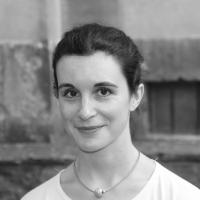
Dr. Julia Costa López is an Assistant Professor (tenured) in History and Theory of International Relations at the Department of International Relations and International Organisation, Faculty of Arts, University of Groningen. Her work bridges international relations, history, and political thought, focusing on how historical frameworks shape modern disciplinary concepts. PhD from University of Oxford Lecturer at St Hilda's College Fulbright scholar at University of Denver's Josef Korbel School Graduate studies at University of Cambridge Research spans medieval political authority, sovereignty emergence, racialized medievalisms in extremism, and translation politics in global scholarship. Key projects include Routledge Handbook of Historical International Relations (2021) and the Oxford Handbook of History and International Relations (2023). Publications address Eurocentrism, conspiratorial ideology, and ritual's role in authority production. Scientific contributions appear in Cambridge Review of International Affairs , International Organization , and European Journal of International Law . Awards include the Fulbright scholarship. Recent work explores terraqueous relations and premodern world conceptualizations, challenging simplistic land-sea dichotomies in IR.
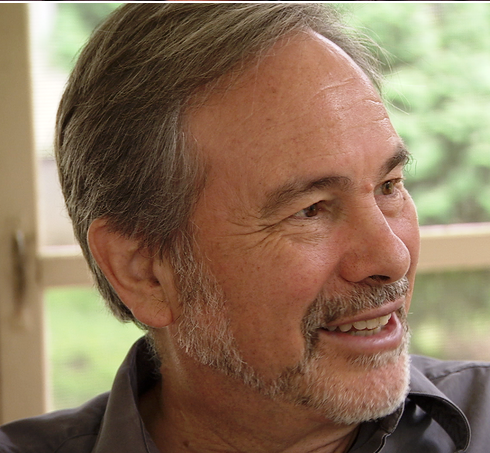
Loretta Lees is a Professor & Faculty Director of the Initiative on Cities at Boston University. She previously held professorships at Leicester University and King’s College London. Her research focuses on gentrification, urban regeneration, global urbanism, and urban policy. She has authored/co-authored 14 books, including seminal works like Planetary Gentrification and Gentrification . Lees is a leading scholar-activist, advocating for just urban policies through collaborations with residents, planners, and policymakers. She chairs the London Housing Panel and has been recognized with fellowships from Academia Europaea (2022), UK Higher Education Academy (2018), and the Royal Society for the Arts (2012). Education: University of Edinburgh, U.K. Research Interests: Gentrification processes and their global manifestations Urban public space and defensible space theory State-led urban regeneration and displacement Activism and urban policy advocacy Awards: Marilyn J. Gittell Activist Scholar Award (2022) Fellow of Academia Europaea (2022) Fellow of Royal Society for the Arts (2012) Grants & Advocacy: Lees has worked with the Mayor of London and Trust for London to address housing inequities. Her research often bridges academic rigor with practical policy interventions, emphasizing participatory approaches. Labs/Teams: She leads the Initiative on Cities, a multidisciplinary urban research hub at Boston University.
University of California, Los AngelesUnited States
Barbara Fuchs is a Professor in the Department of English at the University of California, Los Angeles, specializing in early modern European literature across Spanish, English, French, and Italian traditions from the 15th to 17th centuries. Her work emphasizes transnational contexts, theater and performance studies, and cultural production within imperial frameworks, with significant contributions to Mediterranean and transatlantic studies. Education Ph.D. in Comparative Literature, Stanford University (1997) B.A./M.A. in Comparative Literature (English, French, Spanish), summa cum laude, Yale University (1992) Research Interests Professor Fuchs' scholarship centers on transnationalism in early modern literature, examining how theater and performance negotiated imperial identities across Mediterranean and transatlantic contexts. Her work critically engages with race and religion in the early modern world, picaresque traditions, and Cervantes studies, revealing how cultural encounters shaped literary production. She bridges historical analysis with contemporary relevance through public humanities initiatives focused on classical Hispanic theater. Publication Trends Her recent publications demonstrate interdisciplinary innovation, merging literary analysis with performance studies and material culture. Recurring themes include transnational exchange mechanisms, racial formation processes, and textual materiality, while recent work addresses pandemic-era digital performance and modern adaptations of classical works. This trajectory highlights her commitment to connecting historical scholarship with current social and artistic practices. Scientific Awards Premio Ñ from the Instituto Cervantes (inaugural award) for promotion of Spanish language and culture Advising and Leadership Professor Fuchs mentors undergraduate and graduate students in early modern studies, translation, and performance. She leads the UCLA "Diversifying the Classics" initiative and LA Escena festival, securing institutional support for these collaborative projects. Her editorial leadership includes serving as articles editor for Renaissance Quarterly and co-editing the Norton Anthology of World Literature , demonstrating field-wide influence. Projects and Teams She directs the "Diversifying the Classics" initiative, which collaborates with theater professionals to adapt Hispanic classical works for contemporary Los Angeles audiences, and founded LA Escena—the biennial festival of Hispanic classical theater. These projects unite scholars, artists, and communities to explore historical texts through modern performance lenses, emphasizing accessibility and cultural relevance.
Ricarda Hammer is an Assistant Professor in the Department of Sociology at the University of California, Berkeley. Her work bridges colonialism, postcolonialism, empire, and race with a focus on the Caribbean as a site of global historical transformation. Department of Sociology, University of California, Berkeley Co-leader of the Anticolonial Lab (with Michael Rodríguez-Muñiz and Tianna Paschel) Former Postdoctoral Fellow at the University of Michigan, Ann Arbor Research Interests: Anticolonial Politics Imperial Legacies Racial Capitalism Caribbean Studies Radical Democracy Black Atlantic Thought Article Trends: Ricarda's recent publications emphasize the intersections of colonial history, racial capitalism, and radical anticolonial theory. Her work increasingly incorporates Du Boisian frameworks and examines the erasure of Caribbean revolutionary imaginaries from European political genealogies. Labs & Teams: At Berkeley, Ricarda co-leads the Anticolonial Lab, which investigates global anticolonial solidarity movements with special attention to the Caribbean and Bay Area resistance networks.
Angela Crow is an Associate Professor at James Madison University (JMU) in the School of Writing, Rhetoric and Technical Communication, where she has served since 2012. Her research bridges literacy studies, design, and urban mobility, focusing on how communities advocate for car-free infrastructure and equitable public spaces. She explores the role of digital communication in fostering feminist interventions, particularly around cycling advocacy and street design. Her work intersects with gender studies, urban studies, and rhetorical theory. Educated at the University of Kansas (Ph.D., 1997) and Point Loma College (B.A., 1987), she has authored books on writing programs and composition studies, including Aging Literacies (2006) and Field of Dreams (2002). Recent publications analyze surveillance, privacy in digital contexts, and transportation equity. Her research often highlights marginalized voices in shaping public discourse. Research Interests: Her current projects examine embodied literacies in mobility advocacy, social media practices of grassroots movements, and the rhetoric of urban infrastructure. She critiques car-centric planning through feminist and critical frameworks, emphasizing accessibility and safety for non-car users. Her work also addresses aging populations’ digital literacies and the intersection of technology with social inequality. Publications: Her articles span rhetorical analysis of social movements, educational assessment frameworks, and the sociotechnical dimensions of writing. Recent trends include collaborations on privacy in big data and participatory design for community mobility.
Christopher Ernest Ouma is an Associate Professor of English at Duke University's Trinity College of Arts & Sciences. He specializes in African literature, postcolonial studies, and diaspora studies with a focus on literary analysis of Cold War dynamics and Pan-Africanism. Ouma holds a Ph.D. (2011) and M.A. (2007) from the University of Witwatersrand, South Africa. Research Interests : His work examines intersections of diasporic identity, transnational literary networks, and historical memory in African fiction. Key themes include postcolonial spatiality, anti-apartheid intellectual movements, and the role of small literary magazines in shaping cultural discourse. Publications Trends : Recent work explores contemporary Nigerian author Yewande Omotoso's diasporic narratives and reinterprets Chimamanda Ngozi Adichie's portrayals of Biafran history. Earlier scholarship analyzed Cold War-era African literary networks and the evolution of African novel form. Professional Network : Maintains academic ties with North Carolina State University and University of Cape Town through institutional collaborations. Teaches courses on literature, African studies, and critical reading methodologies. Grants & Labs : No specific grants or research labs mentioned in provided materials. Active in editorial roles for journals like Social Dynamics and Black Scholar .
Mette Andersson is a Professor at the Department of Sociology and Social Geography, University of Oslo. She holds a PhD from the University of Bergen (1995-99) and has held visiting fellowships at Goldsmiths College, University of London (2000) and Yale University (2003). Previously, she served as Professor of Sociology at the University of Bergen (2009-2014), where she taught migration, race, transnationalism, and social movement theory. Her research focuses on cultural/political sociology, migration, ethnicity, social movements, globalization, and sport. Current projects include an antiracism study examining generational divides in activism and identity dynamics within Norwegian social movements. She employs qualitative methods like interviews, focus groups, and web-ethnography. Key contributions include analyzing racialization processes, public sphere debates on multiculturalism, and the role of sport in integration. Her work bridges theoretical conceptualization and empirical case studies, emphasizing comparative research and policy relevance. Notable collaborations include a multi-authored book chapter on antiracism dilemmas in Norway and research on Polish migrant workers' racialization. She actively engages in public debates on migration and racism through media contributions and policy-oriented research.
Charles L. Leavitt IV is the William Payden Associate Professor of Italian and Film at the University of Notre Dame, serving as Director of Graduate Studies in Italian. His research focuses on modern and contemporary Italian literature and film, with specialties in post-war cultural history, Fascism/Resistance studies, and minoritized cultures. He co-directs the Primo Levi Digital Commentary project and holds affiliations with the Kellogg Institute for International Studies and the Nanovic Institute for European Studies. Leavitt’s work has been honored with major awards, including the 2020 AAIS Visual Studies Book Prize for Italian Neorealism: A Cultural History and the 2022 Society for Italian Studies Essay Prize. Education: Ph.D. (Literature), M.A. (Italian Studies), and B.A. (Comparative Literature) from the University of Notre Dame and University of Oregon. His teaching spans Italian literature, cinema, and comparative studies, with a focus on post-war and contemporary contexts. He organizes the Italian Research Seminar and Modern Roads to Rome lecture series, and serves on editorial boards for Italian Studies , Italianist , and Annali d'italianistica . Key research areas include Italian Jewish culture, African American-Italian cultural intersections, and the legacy of Fascism. His current book project examines African American soldiers’ roles in Allied-Occupied Italy. Leavitt’s scholarship bridges film, literature, and history, emphasizing transnational cultural flows and Italian contributions to global culture. Award-winning educator, Leavitt has received teaching excellence awards from the University of Reading and University of Notre Dame. His work integrates interdisciplinary approaches, combining close textual analysis with broader historical and cultural frameworks to explore identity, memory, and resistance in 20th-century Italy.
Dr. Shaolu Yu serves as Associate Professor of Urban Studies and Chair of Asian and Asian American Studies at Rhodes College, leveraging an interdisciplinary background developed through urban studies projects across China, the U.S., and Canada to advance comparative geographic research. Her academic foundation includes: B.S. in Resources, Environment, Urban Planning and Management from Qufu Normal University, China M.S. in Urban Geography from Beijing Normal University, China Ph.D. in Geography from the University of Connecticut, U.S.A. Dr. Yu's research centers on Urban Space and Place-making , Migration and Mobility , Race and Ethnicity , and Asian Urbanism , employing mixed methods and GIS for spatial analysis. Current projects investigate Chinese communities in the American South ( Triangulated Between White and Black ) and LGBTQ+ spatial dynamics ( Urban Queer Space in the South ), while examining globalization's impact on Asian cities. Her teaching portfolio spans Urban Planning, GIS applications, Transportation Geography, and Queering Cities. Recent publications reveal a consistent focus on racial triangulation, ethnic entrepreneurship, and transnational migration patterns across American and Asian urban contexts, demonstrating methodological versatility through cartographic analysis and qualitative fieldwork. This body of work bridges cultural geography, critical race studies, and urban planning. No scientific awards were documented in available materials. Dr. Yu's academic leadership as Chair of Asian and Asian American Studies complements her research mentorship and course development in Urban Studies. While specific grant details are unreported, her sustained publication record in top geography journals indicates active research funding. Her Rhodes College affiliation includes collaborative work with the Media Studies and Chinese Studies programs. Information regarding dedicated research laboratories or formal research teams was not present in source materials.
Jorge Camacho is Professor of Spanish, Comparative Literature, and Latin American Studies at the University of South Carolina. He directs programs in Spanish, Comparative Literature, and Latin American Studies, and has published 14 scholarly books including critical editions and monographs on colonial Cuban literature. His research focuses on colonial literature, Latin American poetry, Cuban narratives, and cultural representations of race. He received the Russell Research Award for Humanities and Social Sciences in 2014. He has recovered and published over 80 previously unknown chronicles and poems by José Martí, Rubén Darío, and Mercedes Matamoros from historical archives.
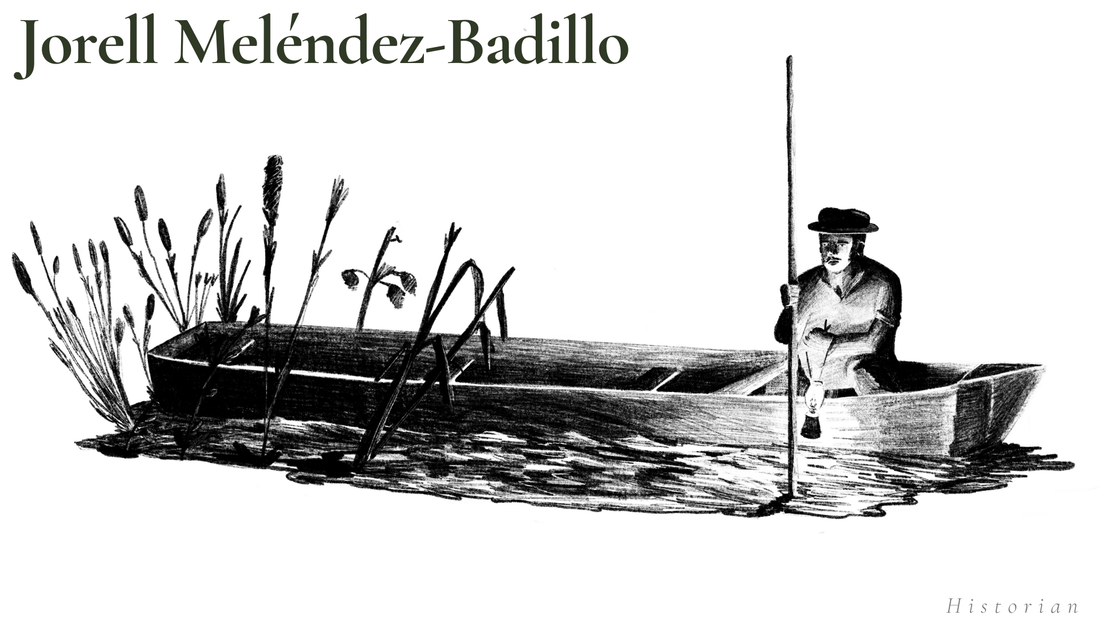
Jorell Meléndez-Badillo is an Assistant Professor of History at the University of Wisconsin–Madison, specializing in Puerto Rican, Caribbean, and Latin American history with a focus on radical ideas and working-class intellectual communities. He holds a Ph.D. in Latin American History from the University of Connecticut and previously taught at Dartmouth College. His research examines how marginalized groups produce and negotiate knowledge, resist colonialism, and imagine futures amid political and economic crises. Education: Ph.D., University of Connecticut; M.A. and B.A., Universidad Interamericana de Puerto Rico Leadership Roles: Vice-President (2025–2026) and President (2026–2028) of the Puerto Rican Studies Association His work includes the 2024 book Puerto Rico: A National History , which reframes Puerto Rico’s colonial history as a nation without a state, and The Lettered Barriada (2021), analyzing working-class intellectual production in early 20th-century Puerto Rico. Current projects explore transnational anarchist networks and Puerto Rican Studies’ future directions. His scholarship spans peer-reviewed articles, edited volumes, and public-facing works in outlets like The Washington Post . Meléndez-Badillo’s research intersects labor history, colonialism, gender studies, and radical movements. He critiques archival silencing, examines anti-colonial resistance, and highlights marginalized voices in Puerto Rico’s political and cultural landscapes. His courses address Caribbean diasporas, transnational utopias, and postcolonial Latin America.
Erin Suzuki is an Associate Professor in the Department of Literature at the University of California, San Diego. She holds a Ph.D. in English from UCLA and specializes in Asian American literatures, Pacific Island literatures, American studies, transpacific studies, speculative fiction, and ecocriticism. Her work critically examines intersections of colonialism, climate change, and cultural representation through a transpacific lens. She authored Ocean Passages: Navigating Pacific Islander and Asian American Literatures (2021), exploring maritime narratives and their ecological implications. Currently, she investigates undersea creatures in transpacific pop culture as tools for critiquing climate change and settler colonialism. Her research bridges literary analysis with environmental and postcolonial theory. Her academic contributions span theoretical frameworks like global Asian studies and postcolonial tactics, as seen in recent publications such as Global Asias: Tactics & Theories (2024) and Indigeneity and/as Method (2024). These works emphasize methodological innovation and decolonial perspectives. While no formal advisees are listed, her teaching and scholarship engage deeply with marginalized communities' cultural narratives.
Dr Dorothée Boulanger is a Career Development Fellow in Women's, Gender and Sexualities Studies and Junior Research Fellow at Linacre College, University of Oxford. She holds a Lecturer position in the Portuguese Sub-Faculty, specializing in African Literatures in Portuguese. Her academic roles include teaching core modules for the MSt in Women’s, Gender and Sexualities Studies and leading research initiatives like the African Languages, Literatures and Cultures TORCH network. Her research interrogates the intersection of African literatures, histories, and cosmologies, challenging Western academic frameworks through studies of Angolan postcolonial literature and ecocritical perspectives. Her major publication Fiction as History: Resistance and Complicities in Angolan Postcolonial Literature (2022) examines Angolan novels as historical sources, while her current project ‘Contemporary Griots’ explores postcolonial literary legacies across Africa. Awards include the Leverhulme Early Career Fellowship and a Humanities Division Excellence Award. She co-edits Sources: Materials and Fieldwork in African Studies and has pioneered queer and ecocritical approaches in African literary studies. Education: PhD from King's College London Key Projects: ‘Luso-Ecologies’ special issue, ‘Queer African Arts’ edited collection Grants: Leverhulme Fellowship, Junior Research Fellowship Her work bridges literary analysis with activism, emphasizing decolonial methodologies and environmental justice. Dorothée’s research networks include Linacre College, Jesus College, and the TORCH initiative, fostering interdisciplinary collaboration across Oxford.
Benjamin Braude is an Associate Professor in the History Department at Boston College. His research focuses on race, collective identities, and religious/ethnic dynamics across Jewish, Christian, and Muslim cultures. He holds a Ph.D. from Harvard University and has held distinguished visiting positions at institutions like the École des hautes études en sciences sociales in Paris and the Hebrew University of Jerusalem's Institute for Advanced Studies. Education: Ph.D., Harvard University Research interests include Ottoman history, Jewish history, and post-national historiography. His current book project explores the construction of racial attitudes from antiquity to modernity through the lens of the Sons of Noah narratives. Braude’s work bridges medieval and early modern periods, emphasizing comparative approaches to religious and ethnic identity formation. Publications span topics from Islamic-Jewish-Christian relations to economic histories of Mediterranean trade. His most recent work (2002) examines slavery and race through exegesis in three Abrahamic traditions. Earlier works include co-editing Christians and Jews in the Ottoman Empire (1982) and analyzing Sephardic economic stereotypes (2001). Awards and Fellowships: Institute for Advanced Studies, Hebrew University (Fellow) École des hautes études en sciences sociales (Visiting Professor) His scholarship engages with transnational and diasporic frameworks, as seen in his comparative study of Armenian and Jewish nationalist movements (1999). Braude’s work often critiques traditional historiographical boundaries, advocating for post-national analytical perspectives.
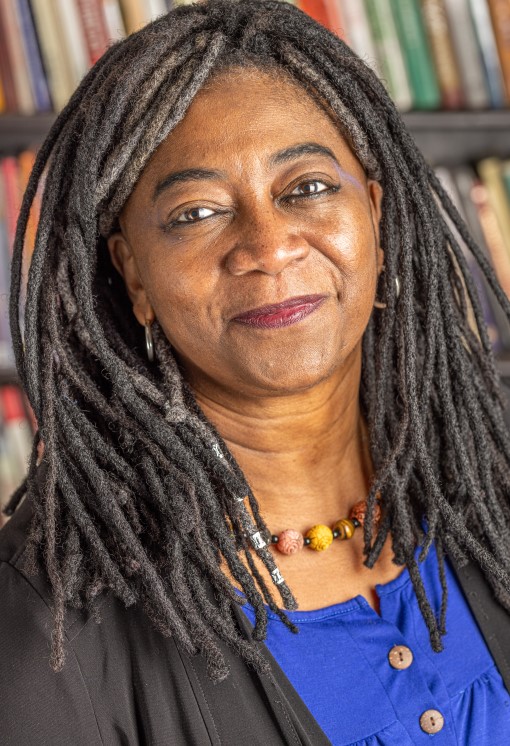
Kamari Maxine Clarke is a Distinguished Professor at the University of Toronto , cross-appointed to the Centre for Criminology & Sociolegal Studies , Centre for Diaspora & Transnational Studies , and the Department for the Study of Religion . Her work bridges legal institutions, human rights, religious nationalism, and the politics of race and globalization, with a focus on ethnographic analyses of globalizing legal and religious knowledge regimes. Ph.D. in Anthropology (1997, UC Santa Cruz) M.S.L. (2003, Yale Law School) Clarke’s research examines how transnational legal and religious systems intersect in contexts like the International Criminal Court (ICC) and the African Union (AU) . She has authored monographs such as Affective Justice (2019), Fictions of Justice (2009), and Mapping Yorùbá Networks (2004), alongside six edited volumes. Her recent articles analyze affective dimensions of international justice, legal materiality, and the geopolitics of racial inequality. She has advised the African Union and contributed to debates on structural biases in the ICC’s engagement with Africa. 2021 Guggenheim Prize for career excellence 2019 Royal Anthropological Institute’s Amaury Talbot Book Prize Clarke’s administrative roles include directorships at Yale University’s Council on African Studies and the MacMillan Center for Transnational Analysis. She is a 2024 inductee of the Royal Society of Canada .