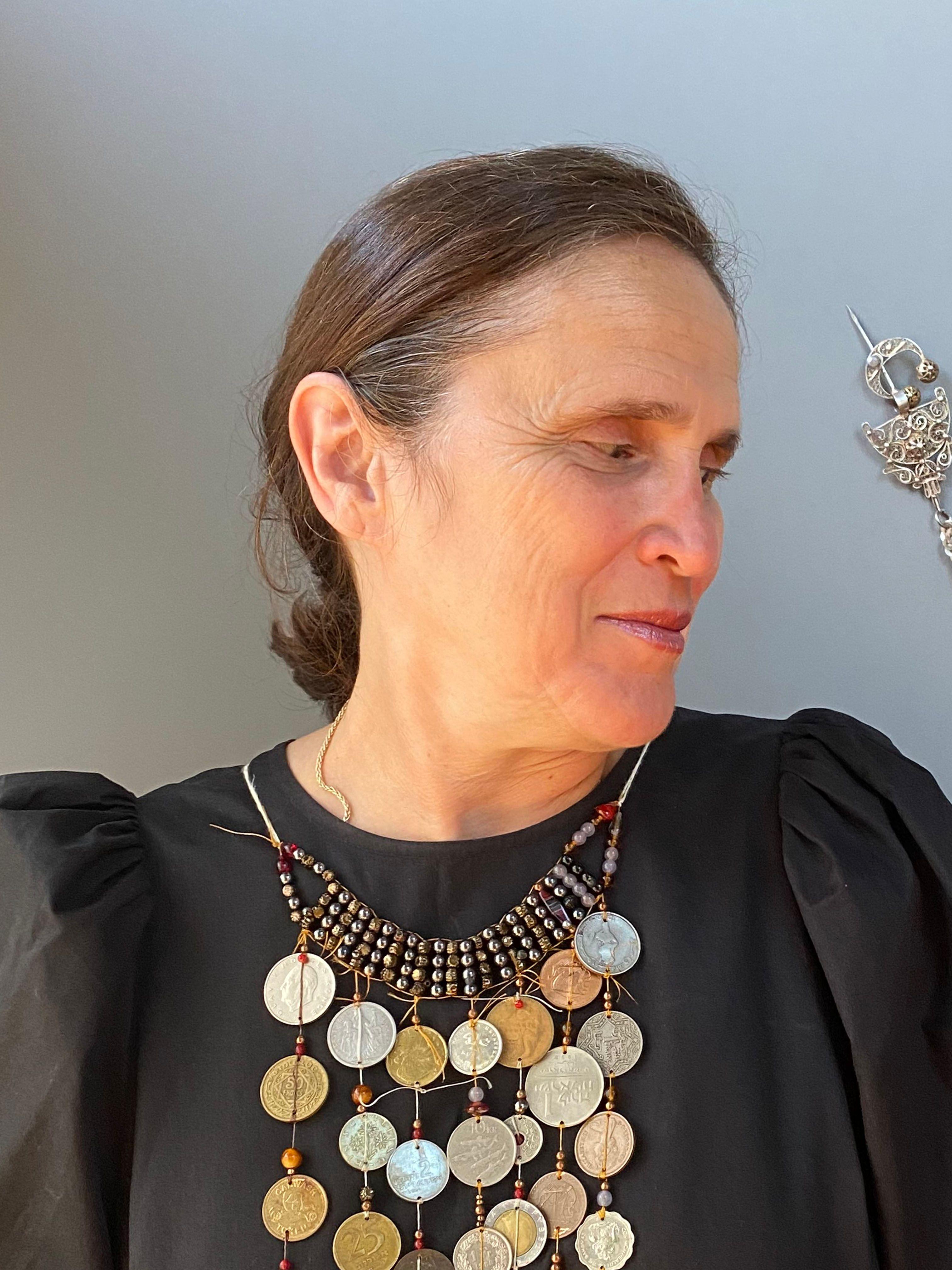
Elizabeth (Lisa) Alexandrin is an Associate Professor in the Department of Religion at the Faculty of Arts, University of Manitoba . Her academic work bridges Islamic Studies , Sufism , and gender theory , with a focus on visual and textual representations of mysticism. Education: PhD in Islamic Studies, McGill University (2006) MA in Anthropology, University of Toronto (1993) BA in Anthropology, Boston University (1993) Research Interests: Islamic intellectual history Sufism Ismaili thought Body histories Visual piety Key Themes in Publications: Apocalyptic narratives in Fāṭimid Ismāʿīlī thought Qurʾanic calligraphy as spiritual practice Symbolism of walāyah (sainthood) in Sufi texts Intersection of dreams and mystical exegesis Awards: SSHRC Insight Development Grant (2018-2022) Explore SSHRC/University of Manitoba grant (2021-2022) SSHRC standard research grant (2011-2012)
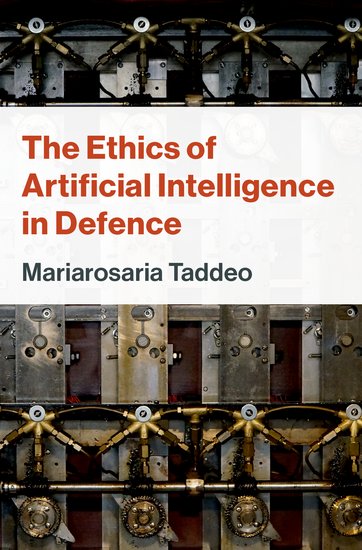
Mariarosaria Taddeo is Professor of Digital Ethics and Defence Technologies at the Oxford Internet Institute (University of Oxford) , where she also serves as DPhil Programme Director for Information, Communication and the Social Sciences. She is a Senior Research Fellow at the Alan Turing Institute and holds advisory roles at institutions including the Ministry of Defence (UK) Ethics Advisory Panel , the BRAID Programme , and the Leonardo Foundation . Education PhD (Doctor Europeus) in Philosophy from University of Padua Mariarosaria Taddeo’s research spans Digital Ethics, Philosophy of Technology, Cybersecurity Ethics, and AI Governance , with a focus on national defence applications. Her work addresses trust in AI , cyber conflict regulation , and ethical frameworks for autonomous weapons . She has published extensively in journals like Nature , Science , and Minds and Machines , including studies on data philanthropy , digital well-being , and quantum technology ethics . Scientific Awards 2010 Simon Award for Outstanding Research in Computing and Philosophy 2016 World Technology Award for Ethics 2018 InspiringFifty: Top 50 Italian women in technology ORBIT listings (2018, 2020) of top 100 women in AI Ethics 2020 Women’s Forum for Economy and Society: Outstanding Rising Talents ComputerWeekly Top 100 Influential Women in UK Technology (2020, 2023) Her projects include the UK MOD-funded AI Ethics Principles initiative, the NATO Cooperative Cyber Defence Centre of Excellence ethical guidance project, and contributions to the PETRAS IoT Research Hub . She advocates for ethical AI implementation in defence and digital governance, influencing EU policy through the CEPS Task Force on AI and Cybersecurity .
Unn Røyneland is a Professor of Scandinavian Linguistics and Multilingualism at the University of Oslo 's Faculty of Humanities . She is affiliated with the Center for Multilingualism in Society Across the Lifespan (MultiLing) and has been a key figure in Norwegian language policy and standardization efforts, including the Nynorsk 2011 orthographic revision . Current Research Focus: Multilingual and multilectal practices on social media Dialect acquisition among migrants Dialect levelling and language attitudes Language and embodiment Multiethnolectal speech styles Language policy and planning Ongoing Projects: Multilectal Literacy in Education (2020-2025) (RCN-funded, Co-PI) Multilectal Practices on Social Media (2020) (with Øystein A. Vangsnes) Urban Talk and Text (MultiLing Core-group project, 2021) AquaAurora (2021, UiT The Arctic University of Norway) Her scholarly work spans 15+ years of research output, with recent publications analyzing: Language activism and social justice (2024) Multilingualism across the lifespan (2022) Migration-induced dialect acquisition (2020) Youth multilingual practices in digital spaces (2018) Nynorsk standardization processes (2016) Multiethnolectal speech patterns (2008-2010) As Co-Chief Editor of the LME Linguistic Minorities in Europe Online series at De Gruyter, she continues shaping academic discourse in multilingualism studies.
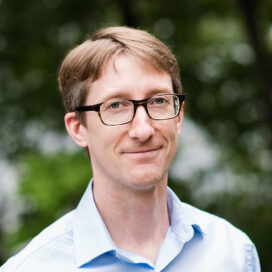
Taylor Perron is the Cecil and Ida Green Professor of Earth, Atmospheric and Planetary Sciences at Massachusetts Institute of Technology (MIT), where he also serves as the EAPS Undergraduate Officer. His research program at MIT spans multiple interdisciplinary areas within Earth and planetary sciences, with strong connections to the MIT-WHOI Joint Program in Oceanography/Applied Ocean Science and Engineering. Dr. Perron's academic background includes an AB in Earth and Planetary Sciences and Archaeology from Harvard University (1999) and a PhD from the University of California, Berkeley (2006), followed by postdoctoral work at Harvard. His leadership roles at MIT have included serving as chair of the Program in Geology, Geochemistry, and Geobiology, and as Associate Department Head for Education. His research focuses on three interconnected areas: Landscape Evolution, Planetary Surfaces, and the Human Landscape. Within Landscape Evolution, he investigates dynamic river networks, climate-landscape interactions, grain-scale sediment transport mechanics, and the connections between landscape evolution and biological diversification. His Planetary Surfaces research examines river systems on Mars and Titan, using spacecraft data to understand extraterrestrial hydrological processes. The Human Landscape component explores archaeological applications of geomorphology, particularly in the Amazon basin. Analysis of his recent publications reveals a strong emphasis on comparative planetary hydrology, with significant work on Earth, Mars, and Titan. His research increasingly integrates field observations, mathematical modeling, and remote sensing to address questions about landscape evolution across different planetary environments and timescales, with growing attention to anthropogenic impacts on Earth's surface processes. Scientific Awards & Honors: MacArthur Fellowship (2021) James B. Macelwane Medal, American Geophysical Union (2014) Fellow, American Geophysical Union (2014) Editorial Committee Member, Annual Review of Earth & Planetary Sciences (2017-present) Dr. Perron has established a productive research group that collaborates across disciplines and institutions, including significant partnerships with WHOI, NASA missions, and archaeological teams. His work bridges fundamental questions about planetary evolution with practical implications for understanding climate change impacts on Earth's surface systems.
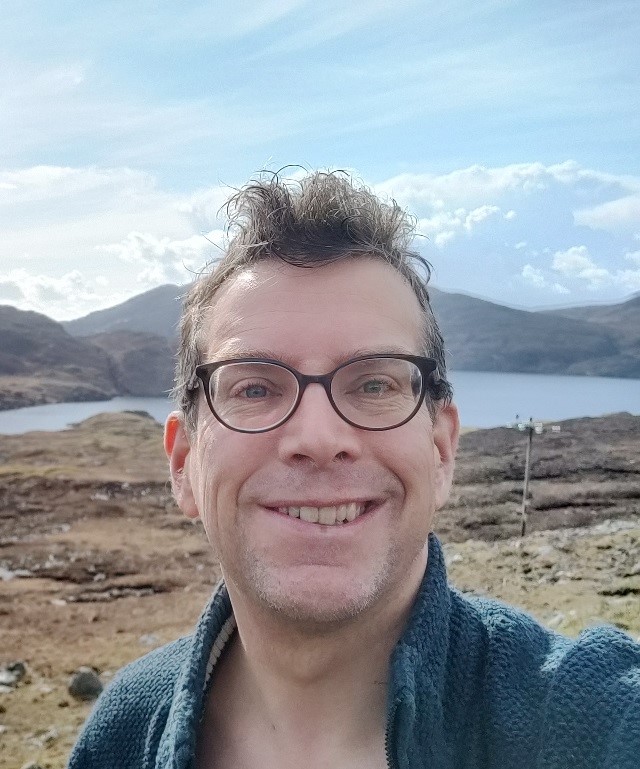
Alec Morton is an Associate Professor (Practice) at the National University of Singapore (NUS) Saw Swee Hock School of Public Health and concurrently holds a Professor of Management Science position at the University of Strathclyde in Glasgow, UK. His career spans multidisciplinary roles across engineering, social science, business, and public health, focusing on evidence-based decision-making in healthcare. Education: PhD in Management Science (University of Strathclyde, 2000), MSc in Operational Research (University of Strathclyde, 1997), BSc in Mathematics and Philosophy (University of Manchester, 1995) Morton’s research integrates decision analysis , health economics , and operations research to address critical questions in health technology assessment , priority-setting in healthcare , and global health governance . His work on antimicrobial resistance, antibiotic reimbursement models, and health system strengthening has influenced international policy frameworks. His recent publications explore economic evaluations for global health challenges, including antimicrobial resistance , assisted dying policies , and health system equity . He is a Fellow of the Royal Society of Public Health and serves as Departmental Editor of Healthcare Management Science . Morton has held advisory roles for organizations such as the UK National Audit Office , NICE , GAVI , and the WHO Global Malaria Programme , with research funded by entities like the Health Foundation and UK Medical Research Council .
Ariella Aïsha Azoulay is a Professor of Comparative Literature and Modern Culture and Media at Brown University. Her work interrogates the intersections of photography, political philosophy, and decolonial praxis. She holds a PhD from Tel Aviv University (1997) and an MA from Université Paris VIII Saint Denis (1986). Her research focuses on photography’s political ontology, colonialism, and human rights discourses. Key works include Potential History: Unlearning Imperialism (2019), Civil Imagination: The Political Ontology of Photography (2012), and The Civil Contract of Photography (2008). She has curated exhibitions such as The Natural History of Rape (2022) and Enough! The Natural Violence of the New World Order (2016). Research Interests: Colonial archives, visual politics, decolonial methodologies, Palestinian liberation, and anti-imperial frameworks. Awards: Infinity Award (2002). Her teaching spans courses on colonialism, migration, and anti-colonial thought, including COLT 1815J: 1492 – Unlearning Single World Order and MCM 2100R: Potential History of Photography . She also directs film essays like Un-Documented: Undoing Imperial Plunder (2019) and The World Like a Jewel in the Hand (2022).
Mark Bailey is a Professor of Late Medieval History at the University of East Anglia's School of History and Art History, working part-time. He previously taught at the University of Cambridge. His research focuses on late medieval England's economic and social history, particularly the socio-economic impact of the Black Death and the decline of serfdom. He is an award-winning scholar, recognized as Ford Lecturer in British History (2019) and a Visiting Fellow at All Souls College, Oxford (2018). Teaching includes organizing the module 'The Catastrophic Fourteenth Century' and contributing to the Medieval History Masters program. His research interests span urban governance, agricultural history, and demographic shifts. He actively participates in professional networks, serving as President of the Suffolk Institute of Archaeology and History and on the Economic History Society's board. Key publications include After the Black Death (2021) and The Decline of Serfdom in Late-Medieval England (2014). His recent work explores labor legislation post-Black Death and gender dynamics in servile migration. He holds leadership roles in academic organizations, shaping policy on manorial documents and medieval archives.
Dr Anthony Faramelli is a Lecturer in Visual Cultures at Goldsmiths, University of London, serving as Programme Leader for the BA in Fine Art and History of Art, and co-Leader of the PhD in Visual Cultures. He holds a PhD in Critical Humanities from The London Graduate School, Kingston University (2014). His research focuses on psychosocial studies, coloniality, institutional analysis, digital cultures, and psychotherapy aesthetics, with notable works including Resistance, Revolution and Fascism: Zapatismo and Assemblage Politics (2018) and The Mass Psychology of Fascism in the Age of Machines (forthcoming). He is affiliated with the Goldsmiths Centre for Migrant Futures and the Psychosocial Studies Association. Faramelli also consults for mental health and housing organizations, applying institutional psychotherapy principles in practice. Education: PhD in Critical Humanities (2014), The London Graduate School, Kingston University Research Interests: Coloniality, institutional psychotherapy, digital surveillance, micro-fascist movements, Fanon’s ethico-aesthetic paradigm, Zapatismo, and decolonial mental health practices. His work bridges psychoanalytic theory, political philosophy, and postcolonial critique. Recent Projects: Refugee Cartographies (mapping Latin American diaspora networks), and critical analyses of the Alt-Right and algorithmic fascism. He has presented at conferences such as the IV Jornadas Deleuze in Buenos Aires and the Université Le Havre-Normandie. Professional Roles: Editor of Deleuze and Guattari Studies , Executive Board member of the Psychosocial Studies Association, and consultant for Southwark Council’s Housing Solutions.
Dr Bhishna Bajracharya is an Associate Professor of Urban Planning at Bond University's Faculty of Society & Design. He previously taught at Queensland University of Technology (QUT) for over 12 years and worked as a post-doctoral fellow at the Australian National University. His research focuses on urban sustainability, disaster resilience, and master-planned communities. Education: PhD in Urban Planning, University of Hawaii (200?) MURP in Urban Planning, University of Hawaii BArch in Architecture, Delhi University Research Interests: Smart cities and infrastructure Disaster management and community resilience Transit-oriented development Climate change adaptation Sustainable campus design Knowledge-based regional economies Recent Research Trends: His recent work emphasizes cross-border planning (e.g., Gold Coast Airport integration), megaproject governance, and innovative disaster management frameworks. He frequently collaborates with governments and NGOs to bridge research and policy gaps. Awards & Grants: Australian Research Council (ARC) Linkage Grant for community narratives in urban planning Emergency Queensland grant for disaster governance research Advising & Partnerships: Supervising PhD students in urban planning Collaborations with QUT's Creative Industries faculty Member of Bond University's Sustainability Committee Labs & Teams: Affiliated with the Centre for Comparative Construction Research at Bond University, focusing on global urban challenges.
Prof. Alexander Geissler holds the position of Full Professor of Health Care Management at the School of Medicine (Med-HSG) within the University of St. Gallen. His research focuses on health systems research, health economics, and health policy, with particular emphasis on digital transformation in healthcare and patient-reported outcomes. He has contributed extensively to studies on healthcare quality improvement, public reporting systems, and the integration of artificial intelligence in medical diagnostics and screening programs. His work spans topics like optimizing hospital digital maturity (e.g., German DigitalRadar project), analyzing surgical outcomes (robotic vs. open prostatectomies), and evaluating patient empowerment through quality information. He has pioneered methodologies for interpreting patient-reported outcomes (e.g., EQ-5D-3L) and designing clinical dashboards to enhance care delivery. Recent research highlights include investigating AI applications in breast cancer screening and cost-effectiveness of remote patient monitoring post-joint replacement surgery. Geissler’s publications demonstrate a strong focus on healthcare policy implications, such as hospital capacity planning, payment systems for specialized care, and cross-country comparisons of healthcare transparency initiatives. His work frequently bridges academic rigor with practical policy recommendations, particularly in Switzerland and Germany. Notably, he has addressed low-value care reduction, price sensitivity in healthcare demand, and the socio-demographic factors influencing healthcare utilization. While no specific awards are listed, his prolific research output reflects sustained leadership in health systems analysis. His academic contributions are disseminated through the Alexandria Research Platform and international peer-reviewed journals.
Dina Le Gall serves as Associate Professor of History at the Graduate Center, City University of New York (CUNY), and concurrently holds the position of Deputy Director and Associate Professor of Middle Eastern Studies at the Middle East and Middle Eastern American Center (MEEMAC). Her research specializes in Middle Eastern and Islamic History with concentrated expertise in Sufism, Ottoman religious dynamics, and the socio-cultural roles of saints in Muslim societies. She has pioneered extensive scholarship on Naqshbandi Sufi brotherhoods within the Ottoman Empire, examining their institutional evolution and spiritual practices from the 15th through 17th centuries. Her publication trajectory reveals deep engagement with pre-modern Islamic mysticism, intra-Sufi theological conflicts, and the adaptation of religious traditions across historical contexts. This scholarly focus bridges rigorous historical analysis with contemporary discourse on religious identity and community formation in Muslim-majority regions. Dr. Le Gall's research excellence has been recognized through prestigious accolades: Annemarie Schimmel Scholarship from the Institute of Ismaili Studies (2011) National Endowment for the Humanities Faculty Research Award (2009/10) Lehman College Faculty Development Award and Scholar Incentive Award (2009/10) Multiple PSC-CUNY Research Awards As Deputy Director of MEEMAC, she advances interdisciplinary Middle Eastern studies through academic programming and research initiatives. Professional service includes editorial advisory roles for the Journal of Sufi Studies and committee positions with the American Research Institute in Turkey and Middle East Studies Association. No graduate student advising details or specific grant projects beyond the listed awards appear in the source materials.
Associate Professor Natalie Courtman-Kalms is a specialist veterinary clinical pathologist at the Sydney School of Veterinary Science, University of Sydney. Her expertise spans clinical pathology research across domestic animals, wildlife, and production species, with a focus on feline, canine, and avian health. She holds qualifications including BVSc, MANZCVS, MVS GCUT, and Dip ACVP. Research interests include diagnostic methodologies in hematology, coagulation studies, and oncological pathology in avian species. She leads the Veterinary Pathology Diagnostic Services (VPDS) and has secured grants such as the 2023 PARR clonality assay project investigating lymphoma and inflammatory bowel disease in cats. Her work bridges clinical practice and research, contributing to improved diagnostic approaches in veterinary medicine. She has published on analytical errors in veterinary diagnostics, species-specific biomarkers, and avian neoplasms.
Dr Fumihito (Fumi) Gotoh is a Lecturer in East Asian Studies at the University of Sheffield, affiliated with the School of Languages, Arts and Societies. He previously served as a Teaching and Research Fellow in the Department of Politics and International Studies at the University of Warwick (2017–21) and completed his PhD in Politics and International Studies there in 2018. His research focuses on Japanese and East Asian politics, international political economy, and comparative capitalism, particularly examining resistance to globalization, financialization, and digitalization. He has extensive experience in corporate credit analysis, having worked at major financial institutions like Industrial Bank of Japan, Merrill Lynch, and UBS Investment Bank for 20 years before academia. Education: PhD in Politics and International Studies, University of Warwick (2018) Master’s in International Political Economy, London School of Economics His research interests delve into the interplay between social norms and global economic systems, analyzing divergent paths of consumer credit, vehicle electrification, and corporate governance models across Japan, China, and Anglo-American countries. Current work emphasizes the globalization-financialization-digitalization nexus and its societal impacts. Notable publications include studies on Japan’s resistance to American financial hegemony and the political economy of credit rating agencies. Scientific Awards: Nikkei Credit Analyst #1 Rank (2004, 2005, 2007, 2008, 2009) Advising and grants details are not explicitly listed, but his research is supported by interdisciplinary collaborations, including co-editing works on US-China rivalry and multilateralism. His career transition from finance to academia brings unique insights into the politics of finance and technology, bridging practical industry experience with theoretical research.
Professor Daniel McCarthy is a Professor in Criminology at the University of Surrey's Department of Sociology, serving as Co-Director of the Centre for Criminology and Director of Impact. He holds a BSc, MSc, and PhD. His research focuses on policing, inter-agency collaboration, and the impact of incarceration on families, particularly mothers of incarcerated youth. He explores cross-national public attitudes toward policing and punishment, including death penalty perspectives. Research interests include penal legitimacy, prisoner-family relationships, and the societal effects of imprisonment. His work emphasizes marginalized populations, such as women in prisons and families of incarcerated individuals. He has supervised PhD students on topics like prison-family dynamics and youth justice systems. McCarthy’s publications span academic books, articles, and policy-oriented research, with recent work addressing food policies in women’s prisons and post-release desistance. Teaching includes courses on youth crime, criminal investigation, and law-society relations at both undergraduate and master’s levels. He collaborates with initiatives like the Doing Porridge project, which amplifies women’s voices in criminal justice contexts. His research bridges theoretical criminology with practical policy implications, emphasizing equity and systemic reform.
John Nemec is a Professor of Religious Studies at the University of Virginia, specializing in Indian religions, Tantric studies, and Sanskrit literature. He holds a PhD from the University of Pennsylvania (2005), an MPhil from the University of Oxford (2000), an MA from the University of California, Santa Barbara (1997), and a BA from the University of Rochester (1994). His research focuses on the philosophy and religious literatures of Kashmir (9th–12th centuries), particularly the non-dual Śaivism of Somānanda and the Pratyabhijñā School. He has authored three books, including *The Ubiquitous Śiva*, and numerous articles on topics such as Sanskrit narrative literatures, religion-politics interfaces, and premodern South Asian intellectual history. His work explores the interplay between religious thought, cultural production, and social institutions in Kashmir, with a focus on textual analysis and historical context. Nemec’s scholarship bridges textual studies, philosophy, and cultural history, emphasizing the legacy of Kashmiri intellectual traditions in broader South Asian contexts.