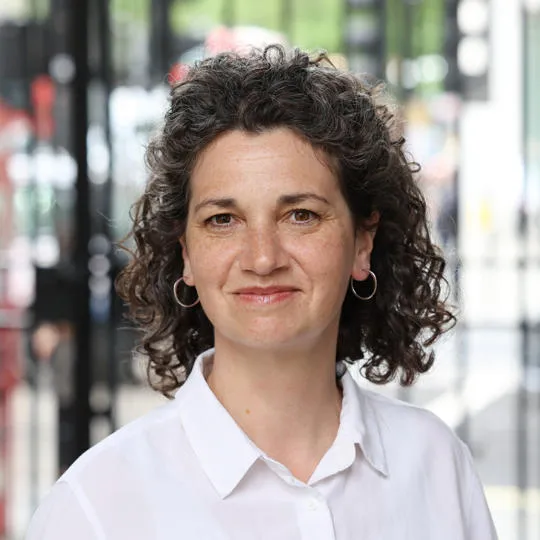
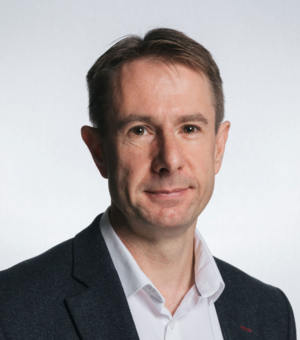
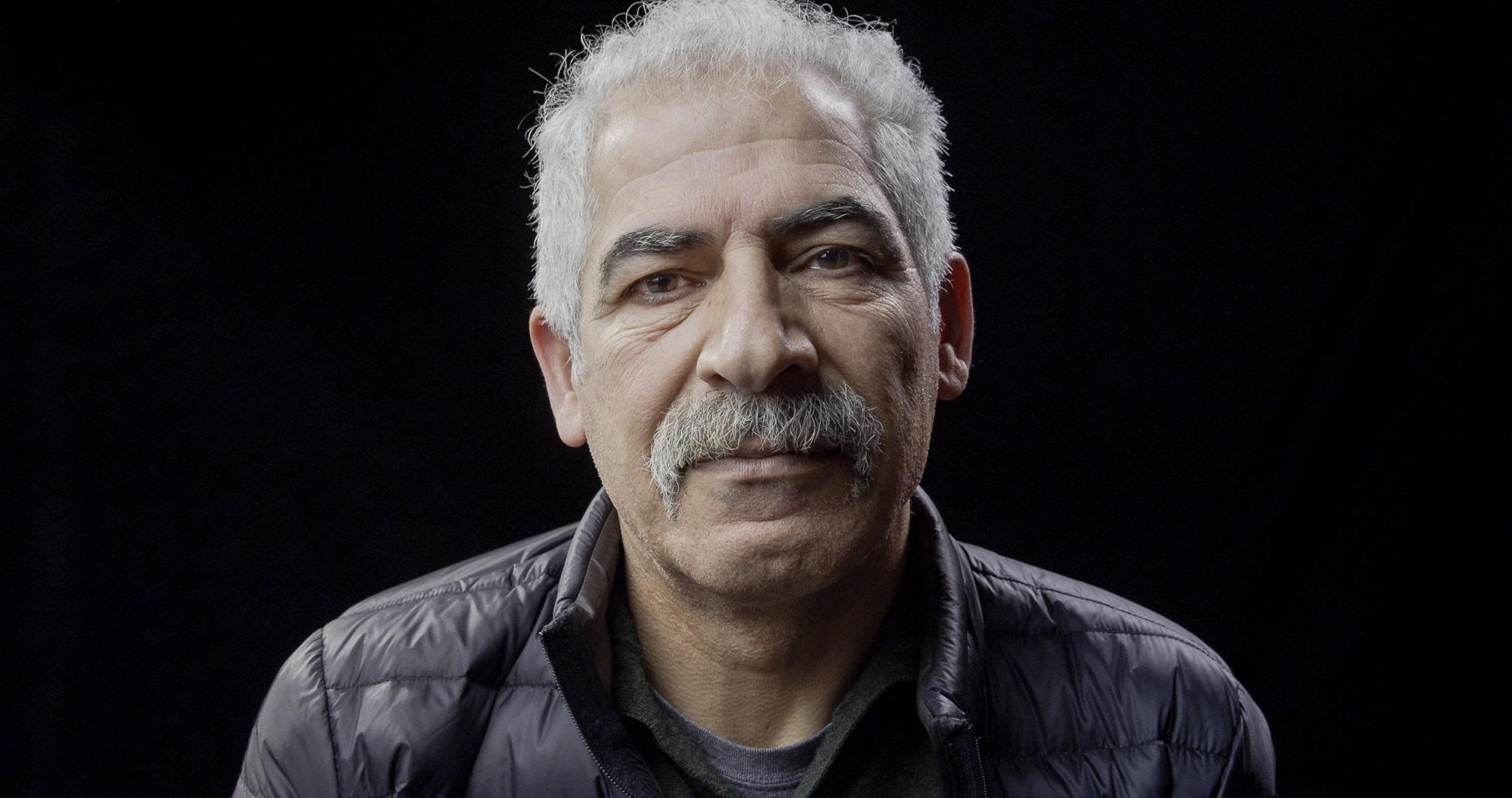
Maryam Alemzadeh is Associate Professor in History and Politics of Iran at the Oxford School of Global and Area Studies (OSGA), University of Oxford, and a Middle East Centre Fellow. She holds a Ph.D. in Sociology from the University of Chicago (2018) and previously held postdoctoral positions at Brandeis University and Princeton University. Education Ph.D. in Sociology, University of Chicago (2018) Research Interests Dr. Alemzadeh specializes in revolutions, state-building, militias, and modern Iran, examining how individual actions shape political structures through micro-level analysis. Her work integrates sociological theory with Middle Eastern studies to explore the interplay of religion, military institutions, and everyday practice in revolutionary contexts, with a current focus on the Islamic Revolutionary Guards Corps (IRGC). Publication Trends Her recent publications analyze Iran's regional dynamics following Soleimani's assassination and review scholarly works on Iranian history. These demonstrate consistent expertise in military institutions, gender dynamics, and post-revolutionary state consolidation, bridging sociology and Middle Eastern studies while emphasizing micro-foundations of political phenomena.
Dr. Jeni Mitchell is a Lecturer in the Department of War Studies at King’s College London, affiliated with the School of Security Studies under the Faculty of Social Science & Public Policy. She specializes in future war studies, space security, and the evolution of rebellion, serving as co-director of the Future Threats Lab within the Centre for Science & Security Studies. Her work emphasizes human-centric approaches to analyzing existential threats and their societal impacts. Her education includes a PhD from King’s College London, where her doctoral research focused on civilian victimization by non-state armed groups. She has held positions at Chatham House, the Brookings Institution, and the Middle East Institute. Teaching responsibilities include MA modules on future warfare, spacepower, and insurgency, while she also directs the MA International Relations and War program. Mitchell’s research explores future threat perceptions (particularly in space), futures research methodologies, and the intersection of war, genocide, and utopian ideologies. Her methodological innovations, termed ‘future-crafting,’ employ creative formats like films and games to model conflict scenarios. Notable collaborations include work with the Freeman Air and Space Institute and King’s Wargaming Network. Recent publications address Ukraine’s apocalyptic imaginary, space-based threat analysis, and refugee-warrior dynamics. Her research group activities include the Environmental Security research group and contributions to widening participation initiatives like the 2024 Summer School in international security.
Professor Amnon Aran is a leading academic in the School of Policy and Global Affairs at City St George's, University of London . His career spans roles at the London School of Economics and Political Science and extensive contributions to Middle East policy forums including the European Union's Middle East Peace Task Force and Oxford Analytica . He provides media commentary for BBC, Bloomberg, and CCTV . Research Focus: International relations of the Middle East, Arab-Israeli conflict, foreign policy analysis, feminist foreign policy, and regional power dynamics. Key Publications: Authored Israeli Foreign Policy since the End of the Cold War (Cambridge University Press, 2021) and co-authored works on foreign policy analysis with Oxford University Press. PhD Supervision: Guided 8 doctoral candidates in topics spanning Israeli peace activism, intercultural dialogue, and Middle Eastern foreign policy shifts. Professional Contributions: Participated in high-level policy discussions with institutions like the European Union and RUSI , and advised on Middle East peace processes. His 15 most recent articles (2011–2025) examine evolving Israeli foreign policy paradigms, including feminist approaches, energy diplomacy, and shifts from adverse asymmetry to equivalence in Turkey relations. He challenges conventional narratives about regional power dynamics and foreign policy frameworks.
Barbara Zanchetta is a Senior Lecturer in the Department of War Studies at King’s College London, affiliated with the Faculty of Social Science & Public Policy. She specializes in Cold War history, American foreign policy, and transatlantic relations. Her work examines US-Soviet détente, nuclear arms control, and the strategic implications of post-Cold War policies. She is the author of The Transformation of American International Power in the 1970's and co-author of Transatlantic Relations since 1945 . Currently, she is researching US policies toward the Persian Gulf and their role in the collapse of the Soviet Union. Her teaching includes courses on international history, US national security, and the War on Terror. She is affiliated with the Sir Michael Howard Centre for the History of War, the Latin American Security Research Group, and the Centre for Grand Strategy. Her research explores the intersections of diplomacy, conflict, and security policy, with a focus on Cold War legacies and modern geopolitical challenges. Zanchetta has organized international conferences, including a hybrid event in Paris on the consequences of the Cold War’s end. Her commentary on contemporary issues, such as NATO’s expansion and Russia’s aggression in Ukraine, reflects her expertise in historical and strategic analysis.
Stuart Croft is Vice-Chancellor & President of the University of Warwick and Professor of International Security in the Department of Politics and International Studies (PAIS). Since joining Warwick in 2007 he has served as Pro-Vice-Chancellor for Research (Arts & Social Sciences), Provost, and since February 2016 as the University’s chief executive, leading 5,500 staff across all disciplines. Education & Career: 18 years at the University of Birmingham, latterly Professor of International Relations and Head of the School of Social Sciences. Appointed Professor of International Security, University of Warwick, January 2007. Pro-Vice-Chancellor for Research (Arts & Social Sciences) 2011-2013. Provost 2013-2016. Vice-Chancellor & President from February 2016. Research Interests: Professor Croft’s scholarship lies at the intersection of security studies and political culture, using constructivist and narrative approaches to analyse how identities and discourses shape security policy. He has published extensively on the War on Terror, NATO transformation, European security governance, and the securitisation of Islam in Britain. His work combines large-scale funded empirical projects with theoretical innovation in International Relations. Publications & Grants Trend: Over the past two decades his output has clustered around three themes—cultural narratives of terrorism and counter-radicalisation, institutional governance of Euro-Atlantic security (NATO/EU), and arms-control regimes—moving from traditional strategic studies toward critical security approaches that foreground identity, discourse and governance. Scientific Awards & Fellowships: Academician, Academy of Social Sciences (2006) Fellow, Royal Society of Arts (2006) International Studies Association – International Security Section Book Award short-list 2007 Doctoral Supervision & Mentoring: He has successfully supervised 21 PhD students at Birmingham and Warwick, examined 25 UK PhDs as external examiner, and currently supervises 6 doctoral researchers. He has mentored 9 ESRC, EU and British Academy post-doctoral fellows. Editorial & Professional Leadership: Editor of the Palgrave ‘New Security Challenges’ book series since 2005; co-editor of Contemporary Security Policy 1989-2004; editorial board member of Critical Studies on Terrorism and Dynamics of Asymmetric Conflict . Chair (2009-2011) and President (2011-2013) of the British International Studies Association.
Dr. Bahar Baser is a Professor in Politics and International Relations at Durham University's School of Government and International Affairs, where she joined in 2021. She is also a member of the Institute for Middle Eastern and Islamic Studies. Previously, she served as Associate Professor at Coventry University's Centre for Trust, Peace and Social Relations, leading the "Peacebuilding and Conflict Transformation Research Group," and was a postdoctoral research fellow at the University of Warwick. Dr. Baser completed her PhD in Social and Political Sciences at the European University Institute in Florence, Italy. During her doctoral studies, she was a Visiting Research Fellow at multiple institutions including Humboldt University in Berlin, REMESO in Sweden, and the Instituto de Ciencias Sociais in Lisbon. Dr. Baser is an expert in diaspora studies, peacebuilding, and conflict transformation with a regional focus on the Middle East. Her research examines diaspora engagement in peace processes, post-conflict reconstruction, and state-building in the Global South. She has extensively studied stateless diaspora activism in Europe, particularly regarding host states' counterterrorism policies, radicalization of diaspora members, and transnationalization of homeland conflicts. Her recent publications demonstrate a strong focus on Kurdish diaspora studies, diaspora governance by authoritarian states, intergenerational trauma in diaspora communities, and peacebuilding processes. Her work spans multiple disciplines including political science, international relations, migration studies, and Middle Eastern studies, with particular attention to how diasporas interact with homeland conflicts and host state policies. Dr. Baser serves as editor of the Kurdish Studies Series published by Lexington Books and co-editor of the Diasporas and Transnationalism Series published by Edinburgh University Press. She is also a senior associate research fellow at the Security Institute for Governance and Leadership in Africa (SIGLA), Stellenbosch University, South Africa, and a visiting professor at Tampere Peace Research Institute, Tampere University, Finland. Dr. Baser has supervised multiple doctoral students including Abdullah Al-Khonaini, Mengqi Sun, Nannan Li, and Shorooq Al Zaabi. She has secured numerous research grants including projects funded by the British Academy, Academy of Finland, Allan and Nesta Ferguson Trust, and Horizon 2020 Marie Curie Fellowship. Her research projects span topics such as diaspora engagement in peace processes, youth violence and conflict transformation, and diasporic identity formation. Dr. Baser is actively involved with the Institute for Middle Eastern and Islamic Studies at Durham University, contributing to research initiatives focused on the Middle East and Islamic studies. Her multilingual capabilities (Turkish, English, Italian, Spanish, French, Portuguese, Azerbaijani) support her extensive fieldwork and collaborative research across multiple countries.
Professor Helen Finch (University of Leeds) is a leading scholar in German Literature , with a focus on Holocaust Studies , Queer Memory , and German-Jewish Cultural Production . Affiliated with the School of Languages, Cultures and Societies and the Centre for Jewish Studies , she co-leads the LCS Queer Area Studies Network and contributes to equality initiatives through the LGBT+ staff network . Research: Holocaust representation in German works, queer identity in postwar literature, transnational memory studies, curriculum design in German studies Awards: Fellow of the Higher Education Academy (2014) Academic Output : Her 15 most recent publications span Holocaust poetics , queer life writing , translation ethics , and Sebaldian intertextuality , with a particular focus on intersections between trauma , identity , and intergenerational testimony . Supervision : Currently guides PhD research on topics including transnational transphobia , queer art practices , and LGBTQ+ cross-cultural representation . Her students explore areas from German exile photography to postcolonial queer narratives .
Inga Kristina Trauthig is a dual-affiliation academic serving as a Research Professor at Florida International University’s Jack D. Gordon Institute for Public Policy and a Visiting Fellow at King’s College London’s Institute of Middle Eastern Studies (IMES). She holds a PhD in War Studies from King’s College London, focusing on Libya, and an MLitt in Middle East Security from the University of St Andrews. Her research spans terrorism, disinformation, emerging technologies, and Middle Eastern political dynamics, with particular expertise in Salafism and security sector analysis. She has authored over 80 peer-reviewed publications and policy-focused articles, including work in Conflict, Security & Development and Political Research Quarterly . Her consulting work addresses causes of war and insecurity for UN bodies, governments, NGOs, and private firms. She has provided oral evidence to the UK Parliament and appeared on platforms like BBC’s Digital Human and Lawfare Blog . Trauthig convenes King’s MENA Research Group within IMES and has held student representation roles across faculty levels. Her research highlights include analyzing generative AI’s political risks, disinformation strategies in MENA, and the role of messaging apps in authoritarian governance.
Dr. Rahul Rao is a Reader in International Political Thought at the University of St Andrews' School of International Relations. Previously, he held Reader positions at SOAS University of London and was a Term Fellow at the University of Oxford. A Rhodes Scholar, he holds a DPhil from Balliol College, Oxford, and an LLB from National Law School of India University. His work focuses on postcolonial and queer theory, South Asian politics, and identity-based global politics. Key publications include Third World Protest (2010), Out of Time: The Queer Politics of Postcoloniality (2020), and The Psychic Lives of Statues (2025). Rao’s research explores intersections of race, caste, and gender, supported by Leverhulme and Netherlands Institute for Advanced Study fellowships. Education: BA, LLB (Hons.), National Law School of India University DPhil in International Relations, Balliol College, Oxford (as Rhodes Scholar) Research Interests: Queer theory and its postcolonial intersections Racial, caste, and gender dynamics in global politics South Asian political movements and nationalism Decolonial thought and monument studies Awards: Rhodes Scholarship Leverhulme Trust Fellowship Netherlands Institute for Advanced Study Fellowship Doctoral Supervision: Current advisees include Gray Black, Marta Fernandez Albuerne, and Anezka Ferreira. Rao welcomes PhD proposals exploring Marxist/post-Marxist approaches to the more-than-human turn in humanities. Labs/Teams: Member of Radical Philosophy editorial collective, engaging in critical political discourse and intellectual curation.
Dr. Anna Bernard is a Senior Lecturer in Comparative Literature and English at King’s College London, part of the Faculty of Arts & Humanities. She holds a BA from UC Berkeley and a PhD from the University of Cambridge. Her research focuses on postcolonial and world literature, decolonization, and solidarity movements, particularly Palestinian activism and international solidarity campaigns. Bernard has held significant fellowships and grants, including the Leverhulme Research Fellowship and an AHRC Research Network Grant. Her recent works include Decolonizing Comparative Literature (2023) and Decolonizing Literature (2023), which explore decolonial methodologies in academia and literature. She currently researches solidarity movements in Nicaragua, South Africa, and Palestine (1975–1990), emphasizing archival activism and transnational cultural networks. Bernard supervises PhD students in anti-colonial literature and cultural activism, and her teaching spans postcolonial theory and solidarity movements in literature. Education: Bachelor of Arts (UC Berkeley) Doctor of Philosophy (University of Cambridge) Research Interests: Postcolonial and world literature Decolonization and cultural activism Palestinian national movement Solidarity movements and internationalism Literature and human rights Recent Articles: Bernard’s work critiques humanitarian frameworks and emphasizes solidarity-based political action. Her 2023 articles Decolonizing Comparative Literature and Decolonizing Literature challenge Eurocentric academic paradigms. Earlier works include analyses of Palestinian solidarity in 1980s literature and critiques of empathy-driven humanitarianism. Awards: Leverhulme Research Fellowship (2016–17) AHRC Research Network Grant (2013–16) University of York Anniversary Lectureship (2010–11) Grants and Projects: Bernard’s research includes collaborations with Algerian universities and involvement in the International Solidarity Action Research Network (ISARN). She organizes events on solidarity, such as Building Usable Pasts and Decolonizing Higher Education . Lab/Team: Bernard contributes to King’s Critical Economic and Political Thought research group, which examines politics and economics through cultural lenses.
London School of Economics and Political Science (LSE)United Kingdom
Elliott Green is a Professor of Development Studies at the London School of Economics (LSE), where he holds a joint appointment in the Department of International Development. He earned a BA from Princeton University and an MSc and PhD from LSE, focusing on nationalism, ethnicity, and African development. His research integrates political science, economics, and sociology, with a focus on ethnic politics, African development trajectories, and national identity formation. Key areas include the political demography of modern Africa, patronage systems, and the impact of industrialization on ethnic assimilation. Green is the author of Industrialization and Assimilation: Understanding Ethnic Change in the Modern World (Cambridge University Press, 2022), which explores how industrialization reshapes ethnic identities. His work has appeared in top journals like the British Journal of Political Science , World Development , and Journal of Development Studies . He currently co-directs the MSc Development Management program and teaches the course 'Democracy and Development' at LSE. His research spans Sub-Saharan Africa, with fieldwork in Uganda, Tanzania, and Botswana. Notable contributions include analyzing ethno-regional favoritism in public goods provision and the role of urbanization in identity transformation. Green serves on editorial boards of prestigious journals and is active in professional organizations like the American Political Science Association. His recent work emphasizes the intersection of demographic trends, political systems, and long-term development outcomes. In addition to academia, Green contributes to public discourse through op-eds and media commentary on issues like immigration, nationalism, and global development challenges. His interdisciplinary approach bridges theoretical scholarship with real-world policy implications, making him a leading voice in African studies and development research.
James McDougall is an Associate Professor of Modern History at the University of Oxford , affiliated with Trinity College . He specializes in: European and French imperial history in Africa Modern/contemporary Middle East and North Africa Global Islam since 1700 Historiography and critical theory Colonial and postcolonial studies His research explores: Colonialism's aftereffects in France and Africa Global Islam's social/political dimensions Comparative imperial histories Arab intellectual and political movements He supervises DPhil students including: Emilia Flack Sara Elizabeth Green Katharine Olson Taylor Christel Arlette Zunneberg Current projects include: "Everyday life of colonialism" studies Global Islamic history since the 18th century He has received funding from the Leverhulme Trust and is a Labour Party member.
Andrea Ruggeri is a Professor of Political Science and International Relations at the University of Oxford, affiliated with Brasenose College and the Department of Politics and International Relations (DPIR). He previously served as Assistant Professor at the University of Amsterdam and earned his PhD from the University of Essex. His research focuses on civil wars, peacekeeping, and collective political violence, with a regional emphasis on Africa and the Middle East. Ruggeri has published in top journals like the British Journal of Political Science and International Security, and his book Composing Peace examines UN peacekeeping mission composition. His academic roles include directing the Centre for International Studies and serving on editorial boards of journals like the Journal of Peace Research. Ruggeri has advised on policy briefs for the UN and NATO, emphasizing data-driven approaches to peacekeeping effectiveness. He has supervised numerous students and contributed to teaching at both undergraduate and graduate levels, integrating quantitative methods through initiatives like the Oxford Q-Step Centre. Ruggeri’s awards include the 2022 Teaching Excellence Award and recognition for Composing Peace being shortlisted for a top literary award. His work bridges quantitative and qualitative methods, exploring themes like conflict management, human rights, and the impact of ideology on political violence.
Dr Anita Hammer is a Reader in International Employment Relations at King’s Business School, King’s College London. She specializes in comparative and international work and employment relations, focusing on the Global South, informal/precarious work, and the impact of technology/climate change on labor markets. Her research addresses socio-economic inequalities, sustainability, and the future of work through interdisciplinary approaches combining history, political economy, and labor process theory. Education: PhD, MSc, PGCHE (University of London); MPhil in History (Jawaharlal Nehru University), MA Area Studies (SOAS), BA History (St Stephen’s College, Delhi University). She is a Senior Fellow of the Higher Education Academy (SFHEA). Research Interests: Automation’s impact on work in India, migrant labor in Saudi Arabia, just transitions for informal workers, and climate change’s labor implications. She collaborates with civil society, trade unions, and policy bodies like ACAS and the ILO. Her recent books include *Global Rupture* (2023) and *The Political Economy of Work in the Global South* (2020). Publications span peer-reviewed journals (*Work, Employment and Society*, *Journal of Labor and Society*) and edited volumes. She leads the CRIMT international research project on work improvement and is affiliated with King’s India Institute and Climate Research Hub. Editor roles include *Work Employment and Society* and *Journal of Industrial Relations*. Awards: 2019 Outstanding Doctoral Supervisor, Thomas Holloway Fellowship (2002). She supervises PhD students and examines theses at Cardiff Business School and SOAS. Labs/Teams: Part of the Critical Global Capitalism Studies Collective at King’s, fostering collaborations on global capitalism research and activism.
Gholam Khiabany is a Reader in Media and Communications at Goldsmiths, University of London, within the Department of Media, Communications and Cultural Studies (MCCS). His academic career spans over two decades with significant contributions to the understanding of media, politics, and cultural practices, particularly in relation to the Middle East. He serves as an editor of the Middle East Journal of Culture and Communication and is a member of the council of management of the Institute of Race Relations. Khiabany's research interests center on the complex relationship between citizenship, political activism, and media and cultural practices. His work critically examines media representation of race, migration, and refugees, with particular attention to anti-Muslim racism and the culturalization of terror. He has extensively studied political communication in Iran and the broader Middle East, analyzing how digital media transforms political engagement in authoritarian contexts. His scholarship also addresses the rise of the security state, multiculturalism debates, and the political economy of media in neoliberal times. His scholarly output demonstrates consistent engagement with contemporary political issues through a critical media studies lens. Recent publications reveal a growing focus on migration securitization, citizenship rights, and the marketization of higher education. His work consistently bridges theoretical rigor with urgent political questions, particularly regarding racialized politics and state power. Khiabany frequently collaborates with scholars like Milly Williamson, Natalie Fenton, and Des Freedman, reflecting his commitment to collective scholarly work. Khiabany has authored influential books including Iranian Media: The Paradox of Modernity (2009), Blogistan: The Internet and Politics in Iran (2010, co-authored with Annabelle Sreberny), and Media, Democracy and Social Change: Re-imagining Political Communications (2020). He has also co-edited significant volumes such as After Charlie Hebdo: Terror, Racism and Free Speech (2017) and The Handbook of Media and Culture in the Middle East (2023). His academic work consistently addresses issues of power, representation, and resistance, with particular attention to how marginalized communities navigate media landscapes. Khiabany's research has evolved to increasingly focus on the intersection of migration politics, security discourses, and racialized state power, while maintaining his foundational interest in Middle Eastern media politics and alternative communication practices.