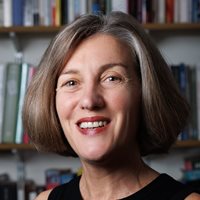
Sara Kazmi is an Assistant Professor of English at the University of Pennsylvania, with affiliations in Comparative Literature and Literary Theory, and Gender, Sexuality, and Women's Studies. Her interdisciplinary research bridges literary studies, performance, and history to examine anticolonial and Marxist literary movements in South Asia. Focuses on Panjabi writers from India/Pakistan (1960s-70s) Co-editor of 'Digital Teaching Tools' for Revolutionary Papers PhD from University of Cambridge in Criticism and Culture Expertise in oral traditions, manuscript studies, and postcolonial resistance Research Interests explore how marginal literary traditions challenge nationalist and capitalist structures. Her work engages: Anticolonial print cultures Queer and trans theory in South Asian contexts Ghadar movement's transnational legacy Language politics and regional autonomy Archival studies and ethnographic methods Her publications demonstrate expertise in: Marxist literary radicalism Gendered reinterpretations of folk narratives Decolonial approaches to epidemiology and spatial studies
Pierre Beaucage is an anthropologist and Professor at the Department of Anthropology, University of Montreal. His work focuses on Indigenous peoples in Mexico, particularly the Nahuas, exploring themes like ethnohistory, cultural preservation, and social movements. He has collaborated extensively with organizations such as the Tosepan Titataniske cooperative and the PRADE A.C. NGO, analyzing issues of land rights, economic development, and cultural autonomy. His research critiques institutional and state interventions in Indigenous communities, emphasizing participatory methodologies and ethical engagement. Beaucage's research interests span economic anthropology, political activism, and the intersection of culture and power. He has authored seminal works on Indigenous oral traditions, cooperative structures, and the impact of global economics on rural communities. Key publications include studies on Nahua ethnohistory, Garifuna-Yanomami cultural exchange, and the ethical dilemmas in applied anthropology. His work highlights the tension between academic research and community-driven initiatives, advocating for Indigenous self-determination. Collaborations with NGOs and grassroots movements have shaped his approach to anthropological practice, emphasizing equitable partnerships and knowledge-sharing.
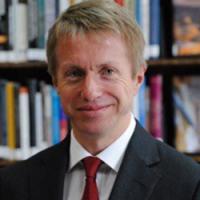
Fran Tonkiss is Professor of Sociology at the London School of Economics and Political Science (LSE), Department of Sociology. She is a key member of the Urban Sociology research cluster and teaches in the MSc City Design and Social Science programme, where she convenes a graduate course on Urban Inequalities. Her academic work bridges urban and economic sociology, with a strong focus on the social life of urban form and spatial divisions. Her research interests include urban inequalities, urban design and development, social and spatial divisions, and the socio-economic organisation of urban space. She explores how economic processes shape urban environments and how spatial arrangements reinforce or challenge social inequalities. Her work also extends into gendered urban space, informal economies, austerity urbanism, and the sonic dimensions of cities, reflecting a broad and interdisciplinary approach to urban life. The trends in her recent publications reveal a sustained engagement with critical urban theory, spatial justice, and the politics of urban form. Her articles frequently address themes such as gentrification, infrastructure, urban protest, and the gendering of public space, often with a comparative or global perspective. She contributes significantly to methodological discussions in qualitative research, particularly in discourse, content, and focus group analysis. Fran Tonkiss is a member of the editorial boards of the British Journal of Sociology , City , and Economy and Society , highlighting her influence in the field. While no specific scientific awards are mentioned in the text, her extensive publication record and editorial roles indicate high scholarly recognition. She supervises doctoral students in urban and spatial sociology, contributing to the next generation of scholars in the field. Though no grants are explicitly listed, her research output suggests active involvement in funded projects. She is part of a vibrant research environment at LSE, particularly within the Urban Sociology cluster, which fosters interdisciplinary collaboration on pressing urban issues.
Kristian Lasslett is a Professor of Criminology at Ulster University , affiliated with the School of Applied Social and Policy Sciences and the Faculty of Arts, Humanities & Social Sciences . He serves on the Executive Board of the International State Crime Initiative and co-founded UzInvestigations , a research center focused on transnational crime analysis. Research Focus: Criminogenic intersections of state and corporate power, elite criminality, land-grabbing, and decolonial theory Media Collaborations: BBC, The Guardian, Radio Free Europe Recent Research Trends include anti-corruption enforcement in Uzbekistan's telecommunications sector, land rights resistance in Bangladesh, and public value creation in forensic science. His work bridges criminology, political economy, and media activism. Scientific Awards: Distinguished Research Fellowship Award (2017) Justice Prize (2017) Editorial & Media Contributions: Joint Editor-in-Chief of State Crime Journal , producer of Ophir documentary, and director of The Colonial Syndrome web-documentary series.
Dr. John Severn is a Research Fellow at Macquarie University's Department of International Studies: Languages and Cultures. His career spans academia, law, and translation, with a focus on theatre internationalization, Shakespearean adaptation, and community engagement. Education: PhD in Theatre Studies and English, University of New South Wales MA(Hons) in Shakespeare and Theatre, University of Birmingham LLB(Hons) in Law and French, University of Edinburgh Postgraduate Diploma in Legal Practice, University of Edinburgh BA(Hons) in Theatre Studies and Opera Studies, University of Manchester/Rose Bruford College CertHE in Scottish Gaelic language and culture, University of the Highlands and Islands His research explores theatre and internationalization through opera, musicals, and Shakespearean adaptation. He investigates how performing arts foster inclusive/exclusive communities and addresses barriers to participation. His work intersects European cultural history, arts policy, and transnational practices. Recent publications highlight trends in Shakespearean operatic adaptation, Australian theatre censorship, and decolonial processes in performance. His co-edited works include The Routledge Companion to Theatre and Internationalization and Theatre and Internationalization: Perspectives from Australia, Germany, and Beyond . Dr. Severn collaborates with institutions like the University of Sydney, University of New South Wales, and the Goethe-Institut Australia. He founded the research cluster 'Staging Migration in Berlin' and co-organizes international conferences on theatre internationalization.
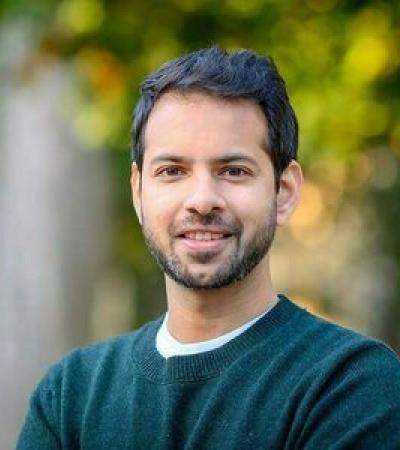
Nikhil Menon is an Associate Professor of History at the University of Notre Dame, specializing in modern South Asia and 20th-century Indian intellectual/political history. He is a Faculty Fellow at the Kellogg Institute for International Studies and the Liu Institute for Asia and Asian Studies. Education: PhD and MA from Princeton University; MPhil from Jawaharlal Nehru University; MA/BA from University of Delhi. His research explores the intersection of technology, economic planning, and Cold War geopolitics in postcolonial India. Key works include Planning Democracy (2022), which won the Joseph W. Elder Prize, and articles on India's early computing history. Menon's publications reveal trends in postcolonial state-building through technological innovation, focusing on institutions like the Indian Statistical Institute and transnational collaborations during the Cold War. His awards include the 2020 Elder Prize, while grants support projects like Status Anxiety: A Transnational History of Indian Soft Power (2024–25).
Professor John Nilsson-Wright is the Fuji Bank University Professor of Modern Japanese Politics and the International Relations of East Asia at the University of Cambridge, and a Fellow of Darwin College. He oversees the Japan and Koreas Programme at Cambridge’s Centre for Geopolitics and holds affiliations with institutions including Chatham House, the Sejong Institute, and the Korea Centre at the National University of Singapore. Read Politics, Philosophy, and Economics (PPE) at Christ Church, Oxford (1984–1987) Obtained an M.A. in International Relations at SAIS, Johns Hopkins University (U.S.) Completed D.Phil. in International Relations at St. Antony’s College, Oxford (1997) His research spans Cold War history, focusing on U.S.-Japan-Korea relations (1945–1960), and contemporary issues like regional security, alliance dynamics, and populism’s impact on East Asian and European politics. Recent publications address South Korean foreign policy innovation , UK Indo-Pacific strategy , and creative minilateralism in Asia . He also directs a monograph project on populism and identity politics across historical and modern contexts. Scientific recognition includes the Nakasone Yasuhiro Prize (2014) and the BIHG annual dissertation prize (1997) . He supervises graduate research on topics including regional diplomacy , multiculturalism in Japan and Korea , and China-North Korea relations . Key affiliations include leadership roles at Chatham House (2014–2016) and non-resident fellowships at the Sejong Institute, Vienna University’s Centre for North Korean Studies, and the Korea Centre at NUS.
Christian Lundahl is Professor of Education at Örebro University, specializing in the history of assessments, evaluation, and Swedish educational research. His work focuses on internationalization of educational data, marketization of schools, and the role of PISA in policy debates. He leads the transnational research project The Global Laboratory – Torsten Husén and the Internationalization of Educational Research (funded by the Swedish Research Council) and co-edited books like Beyond PISA . Lundahl also developed Sweden’s first MOOC for teacher education and serves as scientific leader for the Open Parliament Laboratory (OPaL) . Research Interests : History of educational assessments and evaluations Transnational educational policy flows Marketization and computational analysis in education PISA data utilization and mis/trust Curriculum theory and policy Equity in grading and national tests Recent Trends in Publications include computational analytics in policy data, historical analysis of educational laboratories, and critiques of PISA’s political role. His 2025 articles examine sampling bias in parliamentary data and school marketization. Projects and Leadership : Principal investigator for The Global Laboratory (2020-2024) Co-developer of Sweden’s first MOOC for teacher training (2013) Scientific leader of OPaL – The Open Parliament Laboratory Visiting Professor at Humboldt University (2020)
Sheryl-Ann Simpson is an Associate Professor at Carleton University , affiliated with the Department of Geography and Environmental Studies . Her work bridges the interactions between state policies and community practices, focusing on citizenship, immigration, environmental justice, and urban health. She combines quantitative, qualitative, and spatial methods with feminist and critical perspectives to advance social justice. Education: BSc (Ag) from McGill University, MA from Clark University, PhD from Cornell University. Her research methodologies emphasize participant observation, visual/sensory analysis, archival research, and participatory design. Key themes include climate change resilience, migration policy, and critical praxis in urban planning. Publications span journals like Planning Theory & Practice , Landscape and Urban Planning , and Journal of Ethnic and Migration Studies , often analyzing policy impacts on marginalized communities. Notable collaborative projects include the #OurChangingClimate social media initiative and the New Migrant Cities: An Atlas of Sorts . She maintains a strong commitment to interdisciplinary approaches, integrating political science, biology, and geography in her work.
Prof. Dr. Rachid Ouaissa serves as University Professor and Head of the Department of Middle Eastern Politics at the Center for Near and Middle Eastern Studies (CNMS), Philipps University of Marburg since March 2009. He concurrently holds affiliations with the Center for Interdisciplinary Religious Studies and Center for Conflict Research at the same institution, and maintains active roles in Berlin-based research networks including EUME and the Wissenschaftskolleg zu Berlin. His academic formation includes a PhD from the University of Leipzig (2004) supervised by Prof. Hartmut Elsenhans, preceded by undergraduate studies at Martin-Luther-Universität Halle-Wittenberg (1994-1999) where he received the DAAD-Preis in 1997. His scholarly trajectory includes a Visiting Scholarship at Dalhousie University (2008) and prior research positions at the University of Leipzig. Ouaissa's research program centers on Middle Eastern and North African political dynamics with four interconnected pillars: cultural-identitarian political movements (comparing BJP in India and Algerian parties), moderate Islamist parties as potential EU partners, state-class behavior during resource scarcity (Iraq case study), and fundamentalist movement development (FIS in Algeria vs. Mahdia in Sudan). His conceptual innovation emphasizes blocked middle classes mobilizing religious identity to challenge state power, while his recent work develops 're-configuration' frameworks for understanding post-Arab Spring transformations. His publication trajectory from 1999-2021 reveals evolving scholarly priorities: early work focused on Algerian state formation and political Islam, shifting toward comparative cultural-identitarian movements (2007-2009), then moderate Islamist parties' foreign policy (2009-2012), with contemporary research addressing Hirak protests and theoretical re-configuration models. The corpus demonstrates consistent engagement with Algeria while expanding to regional comparative frameworks, particularly through co-edited volumes on Maghreb entanglements and MENA transformation processes. His scientific recognition includes: DAAD-Preis der Martin-Luther-Universität (1997) Friedrich-Ebert-Stiftung PhD Fellowship (2000-2002) Friedrich-Ebert-Stiftung Scholarship (1998-1999) Professor Ouaissa has secured major research funding including two German Research Foundation (DFG) projects: 'New Cultural-Identitarian Political Movements' (2007-2009) and 'Moderate Islamist Parties as EU Partners' (2009-2012). He actively mentors emerging scholars through the Friedrich-Ebert-Stiftung's doctoral programs and serves on its selection committees, while his policy engagement manifests through frequent media contributions analyzing Algerian protests and regional dynamics for outlets including Le Monde, El Watan, and Deutsche Welle. He leads the Department of Middle Eastern Politics at CNMS while contributing to the university's interdisciplinary research infrastructure through the Center for Interdisciplinary Religious Studies and Center for Conflict Research. His international scholarly integration is evidenced by co-editing the book series 'Politik und Gesellschaft des Nahen Ostens' and 'Studien zur Geschichte und Zeitgeschichte Westasiens und Nordafrikas', alongside editorial leadership of the journal META (Middle East Topics and Arguments).
Leila Kawar is an Associate Professor at the University of Michigan's Residential College , affiliated with the Social Theory and Practice Program , Arab and Muslim American Studies Program , and multiple other interdisciplinary initiatives. She holds a PhD in Law and Society from New York University (2009), an MSc in Social Anthropology from the London School of Economics (2000), and a BA in Economics from Harvard College (1998). Research Focus: Kawar examines the cultural dimensions of legal practice, particularly how law shapes migration, citizenship, and labor governance. Her work bridges legal anthropology, critical border studies, and international labor law. Awards: Co-winner of the Law and Society Association’s Herbert Jacob Book Prize (2016) Migration and Citizenship Section Book Award (2016) Vital Impact Project Award (2024) for a documentary on child labor in agriculture Publications: Her scholarship spans critical analyses of international labor law evolution, legal mobilization in migration governance, and the symbolic politics of immigration jurisprudence. Key works include the monograph Contesting Immigration Policy in Court (Cambridge, 2015) and articles in Global Social Policy , International Migration Review , and Citizenship Studies . Teaching: Kawar instructs courses like Law and Border (AMCULT 356/AMAS 356/RCSTP 350.007) and Contemporary Social and Cultural Theory (AMCULT 302/RCSTP 302/STS 302), emphasizing interdisciplinary frameworks and constructivist legal approaches.
Frédéric Robert-Nicoud is Full Professor of Political Economy at the Geneva School of Economics and Management (GSEM) , University of Geneva. He has held academic positions at HEC Lausanne and the London School of Economics (LSE), with visiting roles at CEMFI, CERAS, CORE, Princeton, and other institutions. His research focuses on Economic Geography, Urban Economics, and International Trade , with significant contributions to agglomeration theory, trade liberalization, and spatial sorting. Education: PhD in Economics, London School of Economics (2002) Master's in Econometrics and Mathematical Economics (Summa Cum Laude, 1999) Master's in International Relations (HEID, 1996) Bachelor's in Economics (University of Geneva, 1994) His research interests explore the interplay between trade liberalization, urban inequality, tech clusters, and labor market dynamics. Recent work analyzes climate change's geographic implications and structural transformation in cities. He has developed frameworks for understanding highway impacts on spatial sorting, agglomeration effects, and trade's role in unemployment. Key scientific awards include: CEPR Fellow Affiliated with Spatial Economic Research Centre (SERC) Former Editor of Journal of Economic Geography (6 years) Former Associate Editor of Review of International Economics (4 years) Member of Conseil scientifique des économistes His grants and fellowships span NBER, CEPR, and SERC affiliations. He has presented at major conferences including the Urban Economics Association Annual Meetings, European Economic Association Congress, and World Trade Institute seminars.
Alan Zarychta is an Associate Professor at the University of Chicago Crown Family School of Social Work, Policy, and Practice , where he focuses on the politics of social services in Central and South America, particularly in public health policy and environmental policy . He investigates how institutional reforms can improve local service delivery and strengthen governance systems toward equity and sustainability . His work has been supported by grants from the National Science Foundation , Social Science Research Council , and Spencer Foundation . Education PhD in Political Science, University of Colorado Boulder MA in Public Policy, University of Colorado Boulder BS in Education and Social Policy, Northwestern University His research spans decentralization in public service delivery, street-level bureaucracy in developing countries, and local governance networks in Honduras. Recent projects include analyzing water scarcity and procedural justice in Honduras and studying policy implementation for refugee populations in Turkey. He has published extensively in journals like Journal of Public Administration Research and Theory , Policy Studies Journal , and Public Administration . Scientific Awards Junior Faculty Research Award (2020) Professor Zarychta collaborates with the Honduran Ministry of Health and organizations like Hombro a Hombro and COCEPRADII . He co-organized the Inaugural Latin American Conference on Subnational Governance (LACSUG) in 2025, highlighting his commitment to advancing governance research and international collaboration in public administration.
Prof. Dr. Ulrike Berendt is a University Professor for Practice-Oriented Social Sciences, specializing in Family and Housing, at the University of Duisburg-Essen's Faculty of Social Sciences. She has held this position since the Summer Semester of 2002, following her appointment at Gerhard-Mercator-University Duisburg (which later became the University of Duisburg-Essen). From SS 2008 to WS 2009/10, she served as Vice Dean for Studies and Teaching at the Department of Social Sciences. Her educational background includes studying social sciences, journalism and communication studies, and law at Ruhr University Bochum from 1989-1995, where she graduated with a degree in applied social research with a specialization in sociology. She received her doctorate in Social Sciences (Dr. rer. soc) from Ruhr University Bochum in 1998, supported by a doctoral scholarship from 1995-1997. Berendt's research focuses on family sociology and social change, urban and housing sociology, policy analysis, and governance. Her work examines generational relations, gender equality policy in Europe, welfare state models, urban development, migration in cities, and civil society. She analyzes policy fields, theoretical foundations, policy processes, actor networks, governance theories, and decision-making mechanisms. Her research consistently bridges academic theory with practical social policy applications. Her publication history reveals a strong emphasis on practical social science applications, particularly in housing policy, social welfare, and urban development. The most recent works show increasing focus on gender-sensitive housing solutions, neighborhood stabilization through cross-sectoral cooperation, and adapting urban environments to demographic changes like aging populations. Her research demonstrates consistent engagement with practical policy challenges faced by municipalities and social service providers. Berendt has held significant administrative roles including Chair of the Examination Board for BA Political Science, Equal Opportunities Officer for the Department of Social Sciences, and membership on the Faculty Council, Tuition Fees Steering Group, and Senate Commission for Teaching, Studies and Continuing Education. She has led numerous research projects funded by government ministries, particularly the Ministry for Health, Social Affairs, Women and Family of North Rhine-Westphalia. Her team includes scientific assistants Martin Krybus and Till Behmenburg, along with secretariat support from Stefanie Schuylen-Matuschek. Her work bridges academic research with practical social policy implementation, focusing on real-world social challenges in urban environments.
Graham T. Allison, Jr. is the Douglas Dillon Professor of Government at Harvard Kennedy School, where he has taught for five decades. He previously served as the Founding Dean of Harvard's John F. Kennedy School of Government and as Director of the Belfer Center for Science and International Affairs until 2017. His career spans academia, government service, and international policy analysis, with significant contributions to national security studies and international relations. Dr. Allison's educational background includes: Davidson College Harvard College (B.A., magna cum laude, in History) Oxford University (B.A. and M.A., First Class Honors in Philosophy, Politics, and Economics) Harvard University (Ph.D. in Political Science) As a leading analyst of national security, Dr. Allison specializes in nuclear weapons policy, US-Russia relations, US-China relations, and decision-making processes in international crises. His research has profoundly influenced how scholars and policymakers understand great power competition and conflict prevention. He is particularly renowned for developing the concept of the "Thucydides Trap" to analyze the historical patterns when a rising power threatens to displace an established power. Dr. Allison's recent scholarly output demonstrates consistent focus on contemporary geopolitical challenges, particularly US-China strategic competition, nuclear weapons policy, and conflicts in the Middle East and Eastern Europe. His publications bridge academic rigor with policy relevance, often providing historical context to current crises while offering concrete recommendations for policymakers. The breadth of his work spans traditional academic journal articles, policy briefs, and commentary in major media outlets, demonstrating his commitment to engaging both scholarly and public audiences. Dr. Allison has received numerous prestigious awards for his contributions to national security: Defense Department's highest civilian award, the Defense Medal for Distinguished Public Service Distinguished Public Service Medal (awarded twice - first by Secretary Cap Weinberger and second by Secretary Bill Perry) Throughout his career, Dr. Allison has advised multiple presidential administrations, serving as Assistant Secretary of Defense in the Clinton Administration and Special Advisor to the Secretary of Defense under President Reagan. He has been a member of the Secretary of Defense's Advisory Board for every Secretary from Weinberger to Mattis. His work has been supported by significant sponsored projects including the "Russia Matters Web Portal" funded by the Carnegie Corporation of New York and programs to help students train for Russia-related jobs funded by the U.S. Russia Foundation. Dr. Allison has maintained strong connections with the Belfer Center for Science and International Affairs, which he directed until 2017 and which remains ranked as the "#1 University Affiliated Think Tank" in the world. Through the Belfer Center, he has fostered relationships with international security experts from around the world, particularly with Israeli security officials and analysts with whom he has collaborated extensively.