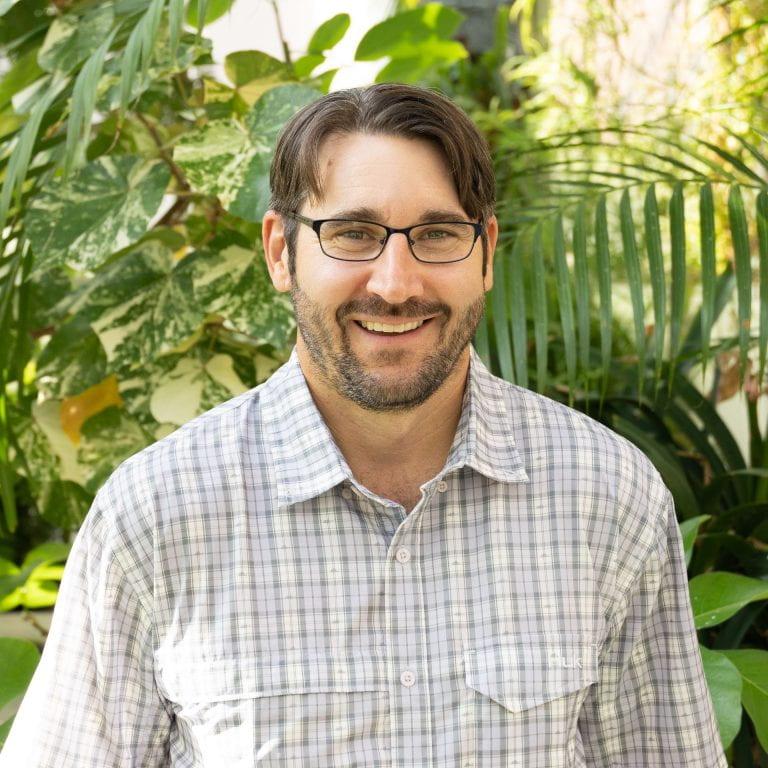
Brian D. Gregory is a Professor of Biology at the University of Pennsylvania's School of Arts & Sciences. His research focuses on RNA modifications, computational biology, and plant genetics, particularly studying how RNA modifications regulate gene expression in plants and animals. He holds a Ph.D. from Harvard University (2005) and a B.S.A. from the University of Arizona (2000). Research Interests: RNA epitranscriptomics (e.g., m6A, NAD+ caps) RNA secondary structure and protein interactions Genomic approaches to study plant stress responses Development of high-throughput sequencing tools like PIP-seq Recent Work Highlights: Recent studies include analyzing pathogen-induced RNA modifications' role in plant immunity (Plant Cell 2023), global RNA structure/protein interaction mapping, and epitranscriptomic dynamics in drought tolerance. His lab's work bridges computational methods with molecular genetics to uncover post-transcriptional regulatory mechanisms. Lab & Collaborations: The Gregory Lab uses Arabidopsis thaliana as a primary model organism but also explores animal systems. They collaborate with institutions like Cornell University and have developed protocols published in Current Protocols in Molecular Biology. Teaching: BIOL 4231: Genome Sciences and Genomic Medicine BIOL 6010: Communication for Biologists
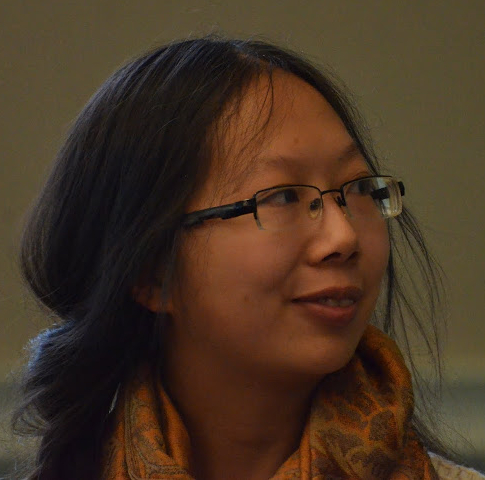
Mai Ha Vu is an Assistant Professor at the University of Toronto Mississauga , split between the Department of Language Studies and the Department of Mathematics, Computer Science, and Statistics . Her work bridges theoretical linguistics, computational methods, and biological data modeling. Ph.D. in Linguistics, University of Delaware (2020) M.A. in Linguistics, University of Delaware (2014) B.A. in Psychology and Linguistics, Grinnell College (2013) Research focuses on applying formal language theory to understand human language patterns and train biologically reliable language models . Recent work includes antibody language modeling (Nature Computational Sciences 2022) and syntax-prosody mapping via logical transductions (SIGMORPHON 2022). Key research trends in publications: interdisciplinary applications of computational linguistics to immunology, psycholinguistic modeling of neural language models, and formal syntactic analysis of negation and wh-questions across languages.
PD Dr. Jens Wolff is a German theologian and researcher at the Faculty of Theology, University of Rostock . His work bridges image theory , cultural hermeneutics , and negative theology , with a focus on Lutheran theology and its intersections with literature and art . Education : Studied at Eberhard-Karls-Universität Tübingen, Martin-Luther-Universität Halle/Wittenberg, Ludwig-Maximilians-Universität München. Academic Timeline : 1995–1998 Heidelberg Academy researcher, 1998–2002 assistant at Münster's Faculty, 2003 PhD, 2005 ordained pastor, 2009–2012 DFG project on Sigmund von Birken, 2012–2015 DFG project on Image Theory, 2015 habilitation. Wolff's research explores image and media theory through theological lenses, interrogating figurative knowledge , religious rhetoric , and intercultural hermeneutics . His work connects Baroque literature (e.g., Klopstock, Hamann) with contemporary philological and deconstructive methods , examining tensions between sacralization and secularization . His recent publications analyze the word of God as performative polysemy in Lutheran thought, death and utopia in Stefan Andres' work, and iconic anthropology in Reformation contexts. He co-edited the two-volume Bild und Tod (2016), a foundational text on image-death relations. Awards: Martin-Luther-Preis für den akademischen Nachwuchs (2005) for his dissertation on Metapher und Kreuz . Wolff's advising and collaborative work focus on interdisciplinary image studies , including DFG-funded projects and symposia like the Image and Sound conference (2014). He maintains links to institutions in Bratislava , Frankfurt , and Brazil .
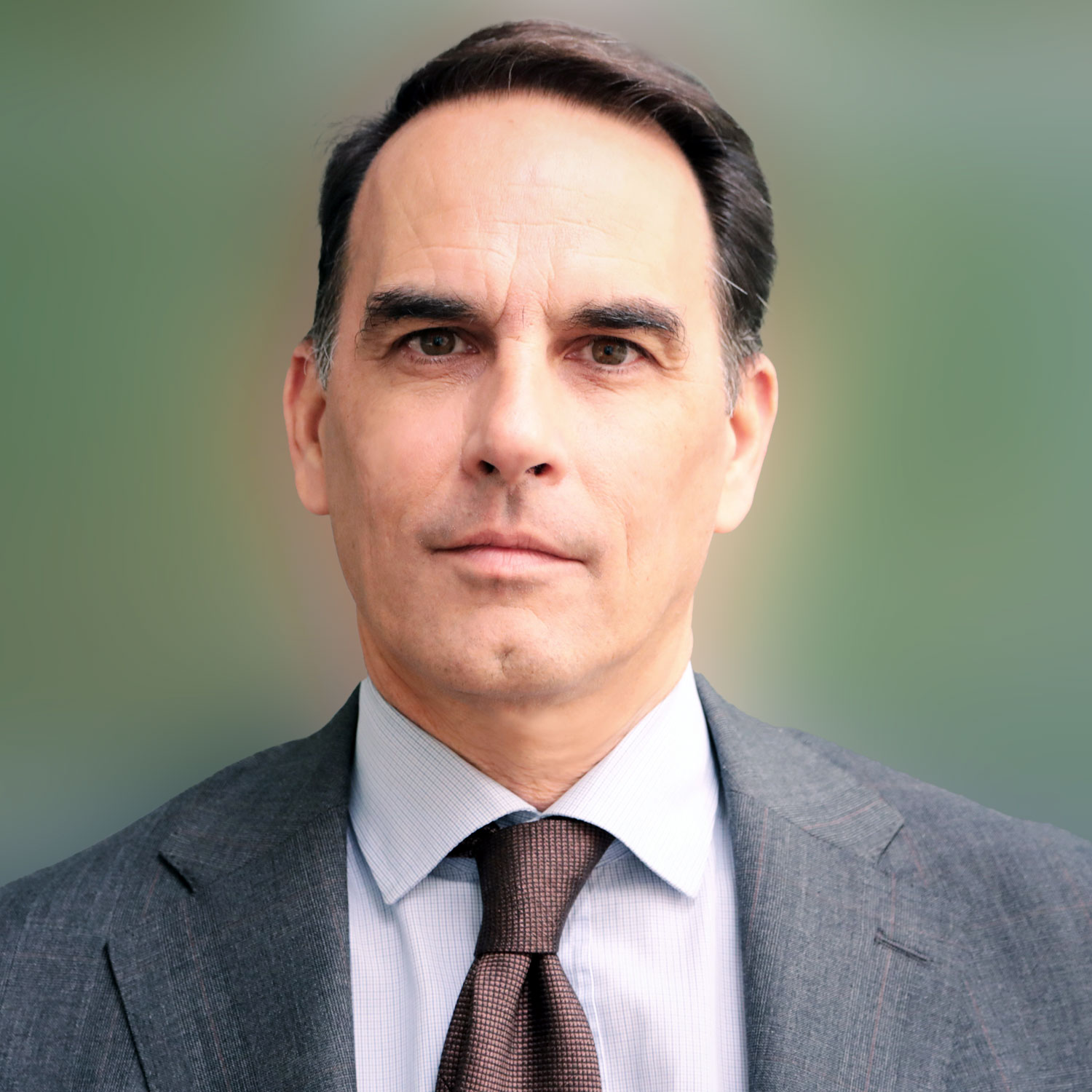
Daniele Caramani is a Full Professor of Comparative Politics at the University of Zurich's Faculty of Philosophy, Institute of Political Science, where he holds the Chair of Comparative Politics since 2014. He also serves as the Ernst B. Haas Chair at the European University Institute in Florence, directing the European Governance and Politics Programme at the Robert Schuman Centre for Advanced Studies (currently on leave from UZH). His teaching includes courses on Comparative Politics, Political Systems and Theories, Political Representation, and Reforming Representative Democracy. His educational background includes a baccalauréat from the Lycée International de Saint-Germain-en-Laye, followed by BA and MA degrees from the University of Geneva, and a Ph.D. from the European University Institute in Florence. He attended methods summer schools at Essex and Michigan. Caramani's research focuses on comparative and historical political science with emphasis on political cleavages, electoral geography, party systems, European integration, and globalization. His work often employs quantitative time series reaching back to the 19th century, examining mass democratization, state formation, nationalism, and industrialization. He is particularly known for analyzing the interplay between territorial and functional cleavages at national, European, and global levels. His recent publications reveal a clear trajectory from national party systems (The Nationalization of Politics, 2004) to European integration (The Europeanization of Politics, 2015) and now to global cleavages (with his ERC Advanced Grant project GLOBAL). His current work examines technocratic representation, populist challenges, and the evolution of global political alignments using automated text analysis of historical documents dating back to 1843. Stein Rokkan Prize for Comparative Social Science Research (2004) Lijphart-Przeworski-Verba Dataset Award from Comparative Politics section of the American Political Science Association (2012) Vincent Wright Memorial Prize for best article in West European Politics (2006) Caramani has directed major research projects including the ERC Advanced Grant project GLOBAL analyzing global cleavages. He has been instrumental in developing significant datasets like the Constituency-Level Elections Archive (CLEA), which received the APSA award in 2012 and now covers over 2,025 elections from 180 countries with GeoReferenced Electoral Districts. His academic leadership extends to editing the comprehensive textbook Comparative Politics (Oxford University Press, sixth edition, 2023). As Director of the European Governance and Politics Programme at the European University Institute, Caramani leads research on European integration and governance. He also co-directs the Constituency-Level Elections Archive (CLEA), a major resource for electoral studies that includes historical maps from 74 countries. His work continues Stein Rokkan's legacy in comparative social science, as evidenced by his 2023 Stein Rokkan Memorial Lecture.
Markku Karjalainen is a Professor in the Department of Architecture at Tampere University's Faculty of Built Environment. With over 80 research publications spanning from 2016 to 2025, he has established himself as a leading expert in timber construction and wooden building systems in Finland. Professor Karjalainen's research primarily focuses on timber construction , particularly multi-story wooden buildings, dovetail wood construction techniques, and sustainable building practices. His work spans architectural design, structural engineering, fire safety, and environmental impact assessment of wooden structures. He has conducted extensive statistical analyses of Finnish timber residential buildings, examining construction practices from 1995 to the present. His research demonstrates a strong commitment to advancing wooden construction technologies while addressing practical challenges in fire safety, structural performance, and building physics. Analysis of his recent publications (2023-2025) reveals a consistent focus on dovetail construction techniques for mass timber elements, with numerous studies examining structural performance, fire properties, and air permeance. His work bridges theoretical research with practical applications in the construction industry, particularly in Finland where wooden multi-story construction has seen significant growth. Karjalainen's research often involves international collaboration, with studies comparing practices across different countries and examining global perspectives on timber construction. His scholarly output demonstrates a methodical progression from basic statistical analysis of building practices to increasingly sophisticated investigations of specific construction techniques and their performance characteristics. This evolution reflects both his growing expertise and the maturation of timber construction as a field of academic inquiry.
Ahmad Al-Hiari is a Lecturer in Leadership and Management at De Montfort University (DMU), affiliated with the Leicester Castle Business School within the Faculty of Business and Law. He also holds a Visiting Research Fellow position at the Centre for the Study of Corruption, University of Sussex. He plays a key leadership role at DMU as Chair of the Staff Assembly and founder of the DMU Policy Unit, an academic-led network designed to mobilize research for urgent policy challenges such as post-crisis recovery and evidence-based policing. PhD in Public Sector Governance, De Montfort University (2018–2022) MA Housing, Development & Urban Management, Leeds Beckett University (2017–2018) BSc Architecture, German-Jordanian University (2011–2017) Ahmad’s research centers on public governance, policy transfer, and anti-corruption, with a regional focus on the Middle East. He investigates how informal practices like Wasta challenge Western governance models and explores the effectiveness of decentralization and collaborative governance in Jordan. His methodological expertise lies in elite interviewing with senior policymakers, enabling deep insights into administrative reform and political stewardship. His recent publications and ongoing projects reflect a strong trend in policy-relevant research, particularly in corruption, informal governance, and crisis-responsive policy frameworks such as CRISP and RCFP. His work bridges academic rigor with real-world policy impact, especially in international anti-corruption and post-conflict recovery contexts. Fellow of the Royal Society of Arts (FRSA) Fellow of The Institute of Leadership (FIoL) Fellow of the Higher Education Academy (FHEA) Chartered Member of the Chartered Institute of Housing (CIHCM) Certified Management & Business Educator (CMBE) Ahmad actively supervises postgraduate research and has led several funded projects, including a Knowledge Exchange Policy Fellowship from Research England to support anti-corruption policy development in Jordan. He has organized high-level policy conferences attended by ambassadors and ministers. He leads the DMU Policy Unit and is involved in initiatives like the Society of Evidence-Based Policing and the Universities Policy Engagement Network (UPEN). His work emphasizes building sustainable, responsive research-policy partnerships across sectors and borders.
Megan Carey is a Researcher at the Champalimaud Foundation , leading the Carey Lab . Her research focuses on understanding how cellular and synaptic mechanisms in the cerebellum influence motor behavior and learning. Key projects include studies on cerebellar neural circuits, locomotor adaptation, and sensory-motor integration. Her recent work highlights cross-species comparisons (mice and flies), zebrafish visual system neurobiology, and pharmacological modulation of motor learning. The lab employs genetic perturbations, optogenetics, and behavioral analysis to dissect neural circuit dynamics. Notable collaborators include senior scientists, postdoctoral researchers, and PhD students. The lab's publications span high-impact journals like J. Neurosci. , eLife , and Neuron , with funding from HHMI and NIH.
Margaret E. L. Renwick serves as Associate Research Professor and Director of Undergraduate Studies in the Department of Cognitive Science at Johns Hopkins University's Krieger School of Arts and Sciences. Previously holding a tenured position in Linguistics at the University of Georgia, she brings extensive expertise in speech variation and phonological systems to her current role. Her academic journey includes affiliation with the Phonetics Laboratory at the University of Oxford. Dr. Renwick's research focuses on sociophonetics and laboratory phonology, examining how speakers manipulate phonetic detail in patterned ways while listeners extract linguistic and social meaning from speech. Her work investigates phonological contrast, regional accents of US English (particularly Southern accents), and linguistic change across generations. A significant portion of her research explores African American vowel systems in Georgia and Italian mid-vowel systems, bridging theoretical linguistics with empirical acoustic analysis. Analysis of her recent publications reveals a strong trend toward computational approaches in phonetics, with increasing use of machine learning techniques like the Phonet library for vowel variation analysis. Her work consistently bridges theoretical phonology with empirical acoustic data, showing particular strength in regional variation studies across multiple language systems including English and Romance languages. Dr. Renwick actively mentors students through the Renwick Lab, welcoming advisees at all levels including PhD and MA candidates in Cognitive Science at JHU. Her teaching portfolio includes courses in Acoustic Phonetics, Sociophonetics, and her First-Year Seminar 'Who Has an Accent?' examines sociolinguistic perceptions of speech variation. The Renwick Lab functions as a comprehensive research environment focused on spoken language analysis, providing resources for phonetic research including tools for IPA transcription, acoustic analysis with Praat, and computational approaches to speech data. The lab supports both theoretical investigations of phonological systems and practical applications of speech technology.
Marija Todorovska is a Full Professor at the Institute of Philosophy, Faculty of Philosophy, Ss. Cyril and Methodius University in Skopje. She teaches undergraduate courses (Introduction to Philosophy, Philosophical Terminology, Ontology, Theories of Religion, Philosophy of Religion) and graduate courses (History of the Notion of God, Theories of the Existence of God). She also co-teaches doctoral electives. Education: BA in Philosophy (2008) MA in Philosophy of Religion (2010) PhD on 'The Diabolical Nature of the Sacred' (2013) Advanced Certificate in Research Ethics (2013) Her research explores: The concepts of divinity across ancient and medieval traditions. Apophatic theology in Hellenistic, Gnostic, and early Christian texts. Ambivalence of the sacred in Mesopotamian, Egyptian, and Byzantine demonology. Philosophy education and curriculum development. Her publications emphasize: Negative theology in Philo of Alexandria and early Church Fathers. Sacred-profane dynamics in contemporary society. Cross-cultural analysis of evil in ancient religions. She serves on editorial boards for Filozofska tribina (Macedonia), Synthesis philosophica (Croatia), and Filozofija (international). As coordinator of the CEEPUS network 'Philosophy and Interdisciplinarity,' she fosters academic collaboration across Europe. No awards or specific grants are noted.
Liv T. Davila is an Associate Professor at the University of Illinois at Urbana-Champaign, with appointments across the College of Education, Center for Global Studies, and European Union Center. Her research focuses on language learning, identity formation, and equity for immigrant and refugee students, particularly in K-12 settings. Education: PhD in Education (University of North Carolina at Chapel Hill), MEd in TESL (University of North Carolina at Charlotte), MA in Comparative Education (University of Minnesota), BA in Anthropology/French (Grinnell College) Her work employs qualitative methods, including ethnography and discourse analysis, to examine multilingual learners’ experiences, teacher education practices, and global migration’s impact on schools. She has received the Outstanding Graduate Teaching Award (2020) and led research on language access during the pandemic. Recent publications highlight co-teaching dynamics, refugee youth resilience, and translanguaging in preschools. She advocates for pedagogies that affirm students’ identities through home languages and multicultural approaches. Scientific Awards: Outstanding Graduate Teaching Award, College of Education (2020)
Dr. Patrick Shane Crawford serves as Assistant Professor in the Department of Civil, Construction and Environmental Engineering at the University of Alabama's College of Engineering. Affiliated with the Center for Sustainable Infrastructure and Alabama Water Institute, his research focuses on enhancing community resilience to tornadoes, floods, and hurricanes through interdisciplinary engineering approaches integrating social science and policy perspectives. His educational background includes: B.S. in Civil Engineering (2012, University of Alabama) M.S. in Civil Engineering (2014, University of Alabama) Ph.D. in Civil Engineering (2018, University of Alabama) Dr. Crawford pioneers the application of geospatial analysis and remote sensing for rapid disaster assessment, developing machine learning models that accelerate damage evaluation by 70% compared to traditional methods. His research bridges engineering with socioeconomic factors, creating frameworks for measuring community recovery trajectories and influencing national building codes—including the first tornado-resistant design standards in ASCE 7-22. Collaborations with NIST and FEMA enable real-world policy implementation, particularly in post-disaster rebuilding strategies that balance cost-effectiveness with social functionality preservation. Analysis of his 2022-2025 publications reveals consistent innovation in longitudinal disaster reconnaissance , with 60% of recent work focusing on tornado events using deep learning for damage classification. Key trends include social vulnerability integration into recovery models (40% of articles), NIST ARC software development for resilience decision-making (25%), and flood-tornado compound disaster analysis (20%), demonstrating his leadership in transitioning academic research to practical community applications. Active in federal partnerships, Dr. Crawford's 2025 feature Confident but Exposed: How Prepared Are U.S. Homeowners for Extreme Weather? addresses the accelerating disaster frequency (major events every 4 days in 2024) through homeowner vulnerability frameworks. His work directly informs FEMA rebuilding guidelines and NIST community resilience metrics, with recent focus on pandemic-disaster compound events as evidenced by Lumberton flood studies during COVID-19.
Joonhyuk Suh is an Assistant Professor in the Department of Food Science & Technology at the University of Georgia's College of Agricultural & Environmental Sciences. His research focuses on applying analytical chemistry and metabolomics/flavoromics to enhance food flavor, quality, and safety. Research Interests : Multidisciplinary food chemistry analysis Metabolite and flavor profiling Nut and fruit quality evaluation Dairy product flavor chemistry Food safety biomarkers Recent Publication Trends (2025-2022) show expertise in: Metabolomic evaluation of agricultural products Flavor chemistry in tropical fruits and nuts Food processing safety and contaminant analysis Plant-based food characterization Microbiome and nutritional interventions
Juho Härkönen is Professor of Sociology, Dean of Postdoctoral Studies, and Director of the Max Weber Program for Postdoctoral Studies at the European University Institute (EUI). He earned his PhD from the EUI in 2007, held a postdoctoral position at Yale, and was based in Stockholm from 2009. He served as visiting professor at the University of Turku (2010-2018). Current Affiliation: European University Institute Roles: Professor of Sociology, Dean of Postdoctoral Studies, Director of Max Weber Program His research focuses on life course research, family dynamics, social stratification, and health. Recent work examines divorce outcomes, health disparities, and educational inequality. He primarily uses quantitative methods but supports qualitative approaches. Juho Härkönen co-directs the Comparative Life Course and Inequality Research Center and Florence Population Studies at EUI, and serves as editor-in-chief of Advances in Life Course Research . His recent publications analyze parental separation’s impact on education and the life course consequences of the COVID-19 pandemic.
Anne G Hoen is an Associate Professor at the Geisel School of Medicine , Dartmouth College, with joint appointments in Epidemiology , Biomedical Data Science , and Microbiology and Immunology . Her research focuses on microbiome development in infants, environmental exposures, and their associations with health outcomes, using interdisciplinary approaches including statistical modeling and bioinformatics. Research Interests: She explores how microbial communities in early life influence disease risk through environmental and dietary factors. Her work integrates microbiome-metabolome interactions, computational methods for microbial network analysis, and epidemiological studies of infectious diseases. Recent Article Trends: 2025-2024 publications highlight maternal diet-microbiome links, microbial interaction networks, ECHO consortium collaborations, and novel computational approaches for microbiome data. Key sub-fields include perinatal exposome, microRNA profiling, and longitudinal metabolomic analysis. Scientific Awards: K01LM011985: Bioinformatics strategies for early life microbiomics R01LM012723: Multi-omic functional integration using networks Advising: Mentors current PhD students in Dartmouth's Quantitative Biomedical Sciences (QBS) program, including Becky Lebeaux and Quang Nguyen, while alumni like Sara Lundgren and Wes Viles hold postdoctoral and academic positions.
Professor Michael J. Gill is Associate Professor of Organisation Studies at the Saïd Business School , University of Oxford, and Tutorial Fellow in Management at St Edmund Hall . He previously served as Assistant then Associate Professor at the University of Bath’s School of Management. Education MA – University of Warwick DPhil – Jesus College, University of Oxford (funded by a scholarship from the Centre for Professional Service Firms) Research Interests Michael’s research centres on the causes and consequences of individuals’ suffering in the workplace , exploring how organisations threaten workers’ mental health and erode their sense of self. He employs qualitative, phenomenological methods to study accountants, chefs, lawyers, consultants, doctors, nurses, police officers and other occupational groups. His work also addresses identity regulation —how organisations shape, constrain and re-define personal identity—and the ethical and methodological challenges of organisational research. Publication Trends Between 2015 and 2025 Michael has produced a steady stream of articles focusing on three broad themes: (1) identity regulation and the phenomenology of self in organisational settings, (2) digital innovation, stigma and professional regulation in healthcare and low- and middle-income countries, and (3) qualitative methodology , including interview design, covert research ethics and phenomenological approaches. Scientific Awards & Fellowships Scholarship from the Centre for Professional Service Firms (doctoral funding) Governing Body Fellow, St Edmund Hall, University of Oxford Tutorial Fellow in Management, St Edmund Hall, University of Oxford Advising & Grants While no specific doctoral students are named, Michael’s roles as Tutorial Fellow and Associate Professor imply active supervision and teaching responsibilities within the Oxford Saïd Business School and St Edmund Hall. Grant funding details beyond his doctoral scholarship are not provided. Laboratories & Teams Michael is affiliated with the Centre for Professional Service Firms and collaborates through the Saïd Business School research community. No dedicated laboratory is mentioned.