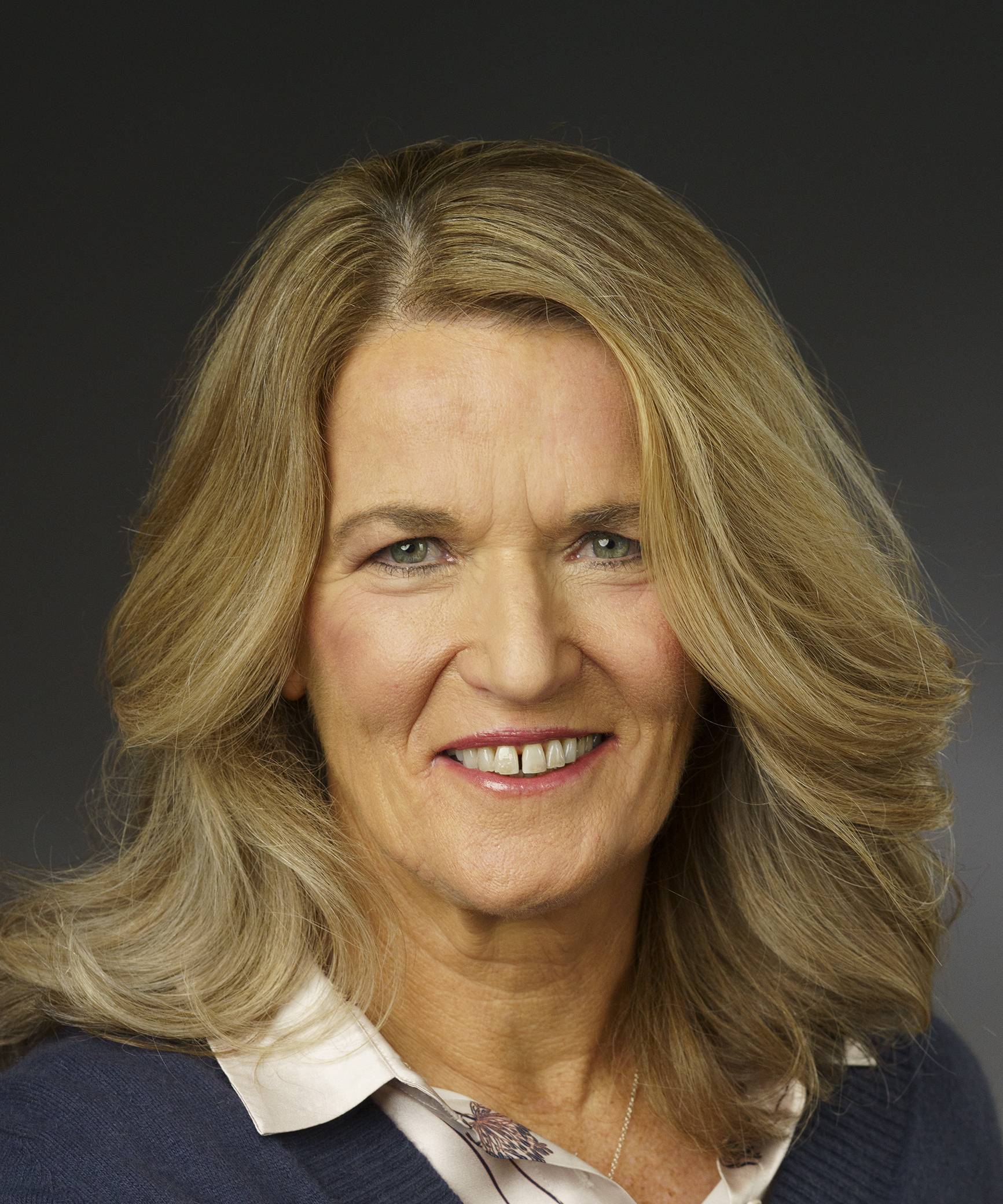
Leonie Huddy is a SUNY Distinguished Professor and Department Chair in the Department of Political Science at Stony Brook University. She holds a PhD in Social Psychology from UCLA. Her research focuses on political behavior, intergroup relations, and gender/race dynamics, with recent work on partisan identities and polarization in the U.S. and Western Europe. Education: PhD in Social Psychology (University of California, Los Angeles). Roles: Co-editor of Political Psychology (2005–2010), Past-President of the International Society of Political Psychology (ISPP), and member of the American National Election Studies Board of Overseers. Research Interests: Explores nationalism, affective polarization, and the impact of emotions on political decisions. Recent work emphasizes the role of group identity in shaping political cohesion and policy preferences. Publications Trends: Recent articles address nationalism's effects on EU support, partisan polarization reduction strategies, and empathy's role in welfare policy advocacy. Her work bridges social psychology and political science, emphasizing identity-driven behavior. Awards: SUNY Distinguished Professor title and leadership roles in professional societies. Labs/Teams: Directs the Political Psychology Lab and collaborates with the Behavioral Political Economy Lab at Stony Brook.
Dr. Laura Mae Jacqueline Herzog is a postdoctoral researcher at the University of Osnabrück, affiliated with the Institute of Geography and the Research Center Institute of Environmental Systems Research. She serves as representative of mid-level faculty staff in the faculty council of Department 1 Cultural and Social Sciences for the term 2024-2026 and is a member of the working group Resource Management. Dr. Herzog received her PhD from the University of Bern, where she worked as a research assistant at the Chair of Policy Analysis and Environmental Governance. Prior to that, she completed her diploma in political science at the Otto-Suhr-Institut (OSI), Free University of Berlin, focusing on common-pool resource problems and environmental conflicts. Her research focuses on transformation pathways towards sustainable interactions between humans and nature in social-ecological systems, with particular emphasis on aquatic ecosystems. She works predominantly inter- and transdisciplinarily, examining sustainable land, water and open space management, participatory processes and co-creation, transformation processes and capacities, and environmental governance. Her methodological approaches include participatory modeling, interviews & surveys, comparative case study analysis, causal loop diagrams, and Social Network Analysis. Dr. Herzog's publications reveal a consistent focus on water resource management, social-ecological systems, and governance of common-pool resources. Her work spans from micro-pollutant regulation in the Rhine River to transformation processes in peatland use and digitalization in water management. She has developed expertise in analyzing cooperation networks, stakeholder engagement, and the emergence of collaborative governance structures in environmental management contexts. Member of the 3rd cohort of the PostDoc Academy for Transformational Leadership of the Robert Bosch Foundation (2020-2022) Founding member of the Working Group on Governance of Social-Ecological Systems of the Earth System Governance network Dr. Herzog actively engages with stakeholders and the public through her work on the Future Water Laboratory, MOOSland project, and LimnoScenES project. She has served on scientific advisory boards for research projects including BaltAqua and "Participatory visioning for collective action in natural resource management." Her commitment to climate action is evident through her involvement with Scientists4Future in Osnabrück. As part of her research on peatlands, Dr. Herzog works with regional stakeholders to investigate transformation processes toward rewetted peatlands and facilitates knowledge transfer of project findings into teaching materials and exhibition modules. She also conducts research on digital applications for sustainable water use within the Future Water Laboratory.
Sean Reardon is the endowed Professor of Poverty and Inequality in Education at Stanford University's Graduate School of Education and Professor (by courtesy) of Sociology. He serves as Director of the Stanford Interdisciplinary Doctoral Training Program in Quantitative Education Policy Analysis and is a Senior Fellow at the Stanford Institute for Economic Policy Research. Reardon is also a member of the National Academy of Education and the American Academy of Arts and Sciences. His educational background includes an Ed.D. in Educational Administration, Planning, and Social Policy from Harvard Graduate School of Education (1997), M.Ed. from Harvard Graduate School of Education (1992), M.A. in International Peace Studies from University of Notre Dame (1991), and B.A. in Program of Liberal Studies with a minor in Honors Mathematics from University of Notre Dame (1986). Reardon's research investigates the causes, patterns, trends, and consequences of social and educational inequality, with particular focus on residential and school segregation and racial/ethnic and socioeconomic disparities in academic achievement. He develops methods for measuring social and educational inequality, including segregation and achievement gaps, and advances causal inference methods in educational research. His work has significantly shaped understanding of how poverty and school segregation impact educational outcomes across America. Analysis of Reardon's 15 most recent publications reveals a consistent focus on educational inequality, with particular emphasis on measuring achievement gaps, school segregation patterns, and the relationship between socioeconomic status and educational outcomes. His research increasingly utilizes large-scale administrative datasets, most notably the Stanford Education Data Archive (SEDA), which he developed based on 300 million standardized test scores to provide measures of educational opportunity across all U.S. public school districts. William T. Grant Foundation Scholar Award National Academy of Education Postdoctoral Fellowship Andrew Carnegie Fellow Member of the National Academy of Education Member of the American Academy of Arts and Sciences Reardon directs the Stanford Interdisciplinary Doctoral Training Program in Quantitative Education Policy Analysis, mentoring the next generation of education researchers. His work has been supported by major research grants that have enabled the development of the Stanford Education Data Archive, a groundbreaking resource that provides detailed metrics on educational opportunity across all U.S. public school districts. This archive has become a critical tool for policymakers and researchers seeking to understand and address educational inequality. As developer of the Stanford Education Data Archive, Reardon leads a significant research initiative that has transformed how educational opportunity is measured and understood across the United States. His work has established new methodologies for analyzing large-scale educational data and has provided policymakers with concrete evidence about the relationship between poverty, school segregation, and academic achievement.
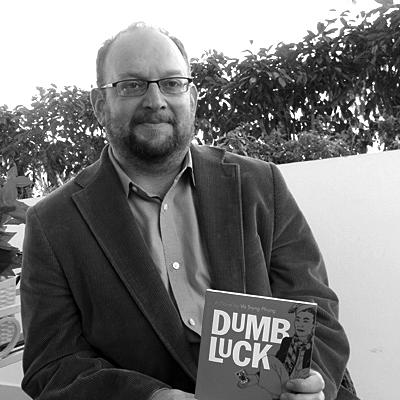
Peter B. Zinoman is a Professor of History at the University of California, Berkeley specializing in Southeast Asian history with primary focus on Vietnam. His academic career spans over two decades with significant contributions to colonial and revolutionary Vietnamese history. His educational background includes a PhD from Cornell University and a BA from Tufts University, establishing foundational expertise in historical methodology and Southeast Asian studies. Zinoman's research centers on Vietnamese colonial history, prison systems, literary history, and Cold War-era political movements. His work critically examines French colonial structures, revolutionary intellectual networks, and the interplay between literature and political dissent. He is renowned for his revisionist interpretations of key historical events including land reform movements and intellectual purges. His publication record spanning 1995-2016 reveals persistent engagement with primary source analysis and interdisciplinary methodology. Articles consistently explore themes of colonial incarceration, literary resistance, and political transformation, with increasing focus on Cold War dynamics and memory politics in later works. His scholarly recognition includes: Association of Asian Studies, Harry J. Benda Prize for Southeast Asia Studies (2003) American Historical Association, John King Fairbank Award for East Asian History (2001) Professional service demonstrates deep institutional commitment through co-editing the Journal of Vietnamese Studies since 2005, co-directing the UC Berkeley History-Social Science Project since 2003, and former leadership roles including Chair of the Center for Southeast Asia Studies (2003-2008) and Resident Director of the UC Education Abroad Program in Vietnam (2001). No public records indicate graduate student advising or grant-funded research projects. His work operates primarily through editorial and institutional frameworks rather than laboratory settings, with significant influence through academic journals and Southeast Asia research centers.
Associate Professor Natalie Courtman-Kalms is a specialist veterinary clinical pathologist at the Sydney School of Veterinary Science, University of Sydney. Her expertise spans clinical pathology research across domestic animals, wildlife, and production species, with a focus on feline, canine, and avian health. She holds qualifications including BVSc, MANZCVS, MVS GCUT, and Dip ACVP. Research interests include diagnostic methodologies in hematology, coagulation studies, and oncological pathology in avian species. She leads the Veterinary Pathology Diagnostic Services (VPDS) and has secured grants such as the 2023 PARR clonality assay project investigating lymphoma and inflammatory bowel disease in cats. Her work bridges clinical practice and research, contributing to improved diagnostic approaches in veterinary medicine. She has published on analytical errors in veterinary diagnostics, species-specific biomarkers, and avian neoplasms.
Professor Daniel McCarthy is a Professor in Criminology at the University of Surrey's Department of Sociology, serving as Co-Director of the Centre for Criminology and Director of Impact. He holds a BSc, MSc, and PhD. His research focuses on policing, inter-agency collaboration, and the impact of incarceration on families, particularly mothers of incarcerated youth. He explores cross-national public attitudes toward policing and punishment, including death penalty perspectives. Research interests include penal legitimacy, prisoner-family relationships, and the societal effects of imprisonment. His work emphasizes marginalized populations, such as women in prisons and families of incarcerated individuals. He has supervised PhD students on topics like prison-family dynamics and youth justice systems. McCarthy’s publications span academic books, articles, and policy-oriented research, with recent work addressing food policies in women’s prisons and post-release desistance. Teaching includes courses on youth crime, criminal investigation, and law-society relations at both undergraduate and master’s levels. He collaborates with initiatives like the Doing Porridge project, which amplifies women’s voices in criminal justice contexts. His research bridges theoretical criminology with practical policy implications, emphasizing equity and systemic reform.
John Nemec is a Professor of Religious Studies at the University of Virginia, specializing in Indian religions, Tantric studies, and Sanskrit literature. He holds a PhD from the University of Pennsylvania (2005), an MPhil from the University of Oxford (2000), an MA from the University of California, Santa Barbara (1997), and a BA from the University of Rochester (1994). His research focuses on the philosophy and religious literatures of Kashmir (9th–12th centuries), particularly the non-dual Śaivism of Somānanda and the Pratyabhijñā School. He has authored three books, including *The Ubiquitous Śiva*, and numerous articles on topics such as Sanskrit narrative literatures, religion-politics interfaces, and premodern South Asian intellectual history. His work explores the interplay between religious thought, cultural production, and social institutions in Kashmir, with a focus on textual analysis and historical context. Nemec’s scholarship bridges textual studies, philosophy, and cultural history, emphasizing the legacy of Kashmiri intellectual traditions in broader South Asian contexts.
Ali Anooshahr is a Professor in the History Department at the University of California, Davis, specializing in early modern Persianate and Mughal Indian history. He holds a Ph.D. from UCLA (2005) and has held academic positions at Saint Xavier University (2007-2008) before joining UC Davis. His research focuses on empires, Indo-Persian culture, historiography, slavery, and economic history, supported by fellowships from the Guggenheim, Mellon, and Hellman Foundations. Education: Ph.D., History, UCLA, 2005 M.A., History, UCLA, 2002 B.A., Humanities, University of Texas at Austin, 1998 Research interests include the political, cultural, and economic dynamics of early modern empires, particularly Mughal India and the Persianate world. He has authored influential works such as Slavery in the Early Mughal World (2025) and Turkestan and the Rise of Eurasian Empires (2018). His articles explore topics like the Arghun state in Qandahar, Safavid campaigns, and the role of elephants in imperial symbolism. Awards and recognitions include the Guggenheim Fellowship (2021), UC Davis Hellman Fellowship (2009-10), and CLIR/Mellon Postdoctoral Fellowship (2005-6). He serves on the editorial board of the Journal of the Economic and Social History of the Orient . Teaching focuses on medieval and Mughal India, Safavid Iran, and Islamic history. His interdisciplinary work bridges economic, social, and cultural approaches to early modern empires, with a particular emphasis on Persianate manuscripts and historiography.
Roderick B. Campbell is a Professor of East Asian Archaeology and History at the Institute for the Study of the Ancient World (ISAW) within New York University. His research focuses on the Chinese Bronze Age, particularly the Anyang period (ca. 1250-1050 BCE), exploring themes such as violence in early complex polities, historiography, visual culture, and ancient economies. He holds a dual PhD from Harvard University in Anthropology (Archaeology) and East Asian Languages and Civilizations (Chinese History). Professor Campbell has held post-doctoral positions at ISAW (NYU), Brown University’s Joukowsky Institute, and Merton College (Oxford University). He has secured grants and fellowships from organizations including the Canadian Social Sciences and Research Council, Luce-ACLS, the Chiang Ching-kuo Foundation, and the Wenner Gren Foundation. His fieldwork involves collaborative archaeological projects in China focusing on reconstructing Shang political economy, with a current emphasis on zooarchaeology and bone-working practices. He serves on NYU’s PhD Admissions Committee and has authored or edited works such as Violence, Kinship and the Early Chinese State (2018) and Archaeology of the Chinese Bronze Age (2014). His research spans interdisciplinary topics including Shang ontology, early Chinese economies, and comparative studies of complex societies. Campbell’s work bridges archaeological material analysis with historical interpretation to illuminate the socio-political dynamics of ancient East Asia.
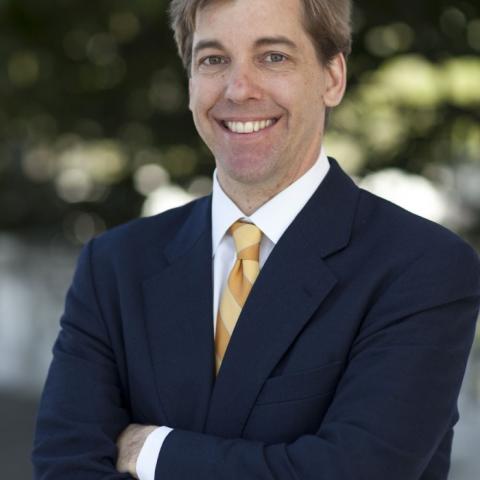
R. Daniel Kelemen is McCourt Chair Professor at Georgetown University's McCourt School of Public Policy, with courtesy appointment at Georgetown Law. His research examines EU law transformation, comparative federalism, and democratic backsliding mechanisms. He received the European Union Studies Association Best Book Award for Eurolegalism: The Transformation of Law and Regulation in the European Union . Publications analyze constitutional crises, EU enforcement deficits, and autocracy dynamics. Recent works investigate funding conditionality for Hungary, judicial guardianship erosion, and geopolitical impacts of Russia's invasion of Ukraine. Article themes show consistent focus on institutional resilience and legal enforcement challenges. He serves on the Council of Foreign Relations and chairs EU policy consultations for risk analysis firms. Previously chaired Rutgers Political Science Department and directed its Center for European Studies.
Ardis Butterfield is the Marie Borroff Professor of English at Yale University, with courtesy appointments in the departments of French and Music. She specializes in medieval French and English literatures (13th–15th centuries), focusing on lyric poetry, word-music relationships, and linguistic identity. Born in Pakistan and educated in India and England, she holds degrees from Trinity College, Cambridge (PhD, M.A.) and the University of Bristol (M.A.). Her research explores medieval manuscripts as sites of intellectual and social practice, emphasizing cross-disciplinary approaches. Notable works include The Familiar Enemy: Chaucer, Language and the Nation in the Hundred Years War (2009) and Poetry and Music in Medieval France (2002). She has held Leverhulme Research Fellowships and visiting roles at institutions like the University of Virginia and All Souls College, Oxford. Education: PhD and BA, Trinity College, Cambridge M.A., University of Bristol Research interests include medieval lyric theory, Chaucerian nationalism, bilingualism, and the materiality of manuscripts. Current projects involve a new Norton edition of medieval English lyrics and a book on medieval song titled Medieval Songlines . Awards: 2010 Society for French Studies R.H. Gapper Prize Choice Outstanding Academic Title (2010) Leverhulme Fellowships (2003–04, 2008–11) Leadership roles include President of the New Chaucer Society (2016–18) and co-founder of the monograph series Oxford Studies in Medieval Literature and Culture . She sits on the Executive Board of the International Network for the Study of Lyric (INSL).
Mimi Yiengpruksawan is a Professor of History of Art at Yale University, affiliated with the Department of East Asian Languages and Literatures, the Council on East Asian Studies, the Council on Southeast Asian Studies, and the Program in Medieval Studies. She holds a Ph.D. from UCLA (1988) and joined Yale in 1990, achieving tenure in 1998. Her research focuses on Buddhist art in nonmodern Japan and Eurasian cultural exchanges, emphasizing cross-regional and interdisciplinary approaches to study contact-driven cultural formation. Her academic work includes two major manuscripts: Michinaga’s Peacocks: A Heian World in Transition (examining exogenous influences on Kyoto’s art) and Kyoto in the Twilight of the Dharma (focusing on eschatological patronage). She also explores early modern Japanese global interactions, analyzing visual production during the 'Nanban' period. Recent research bridges environmental history with art, linking the 1006 supernova and Buddhist prophecies to artistic developments. Key publications include analyses of Buddhist iconography, transnational art networks, and transcultural architecture. She is a leading figure in rethinking Heian Japan’s cultural interconnectedness, challenging isolationist narratives through material evidence and primary sources.
Piotr Winkielman is a Professor of Psychology at the University of California, San Diego (since 2007), with affiliations at Warwick Business School (UK) and the Warsaw School of Social Sciences and Humanities (Poland). His research focuses on the interplay of emotion, cognition, embodiment, and consciousness in social cognition, employing methods from social/cognitive psychology and neuroscience. Key interests include unconscious emotion processing, facial mimicry, decision-making under emotional influence, and the neural basis of social perception. Education: PhD in Social Psychology (1997), University of Michigan MSc in Psychology (1991), University of Bielefeld, Germany BSc in Psychology (1988), University of Warsaw, Poland Research Interests: Winkielman explores how fleeting affective reactions influence behavior without conscious awareness, studying facial feedback mechanisms, emotional contagion, and the role of physiological signals in decision-making. His work bridges theories like Affect-As-Information and Facial Feedback, while challenging assumptions about the necessity of conscious processes in emotion. Grants & Funding: Supported by NSF Grant BCS-0350687 for studies on unconscious emotion and physiological feedback. Collaborations include projects on mimicry, stress effects, and cross-modal perception. Labs & Teams: Leads research at UCSD on embodied cognition and social neuroscience, with studies involving EEG, EMG, and behavioral experiments. International collaborations span UK, Poland, and Germany.
Holger Straßheim is Professor of Political Sociology at Bielefeld University, affiliated with the Faculty of Sociology, Department 4 – Politics and Society. He also holds leadership roles as co-director of the Institute for Interdisciplinary Studies of Science (ISOS) and the Institute for World Society Studies, and is an elected member of the university’s Senate. He coordinates the MA program in Political Communication and serves on multiple examination and ethics committees. University: Bielefeld University School: Faculty of Sociology Department: Department 4 – Politics and Society Research Institutes: ISOS, Institute for World Society Studies Administrative Roles: Program Coordinator MA Political Communication, Member of BA/MA Examination Boards, Habilitation Committee His research centers on the interplay between science and politics, particularly the role of expertise and evidence in public policy. Key areas include behavioral public policy, climate and consumer policy, Arctic geopolitics, and the temporal dimensions of governance. He investigates how knowledge is produced, legitimized, and used in policy-making across transnational contexts. The most recent publications reflect a strong focus on evidence cultures, ethical expertise in crises, and the global spread of behavioral governance. These works analyze how expert advice functions under uncertainty, the paradoxes of evidence-based policy, and the institutionalization of ethical guidance during emergencies like the COVID-19 pandemic. The research often employs comparative and interdisciplinary methods, engaging with science and technology studies, political sociology, and policy analysis. Best Dissertation Award, University of Tübingen (2011) Visiting Fellow, Harvard Kennedy School (2014) Visiting Research Fellow, Collège d’études mondiales, Paris (2018) Visiting Research Fellow, University of Bologna (2022) Straßheim has supervised and advised in various research projects and PhD initiatives, particularly through his leadership in DFG and ESRC-funded programs. He has secured significant third-party funding, including projects on Arctic knowledge co-production and ethics in crisis governance. He is actively involved in academic service, reviewing for major journals and research councils, and shaping policy discourse through editorial roles in Critical Policy Studies and the Advances in Critical Policy Analysis book series. He leads the Straßheim Research Group, fostering interdisciplinary collaboration on science-policy interfaces. He is a key figure in research networks such as the Science and Democracy Network (Harvard) and the International Arctic Science Committee. His work bridges academic inquiry with real-world policy challenges, emphasizing democratic accountability, epistemic pluralism, and the ethical dimensions of expertise.
Dr. Rishita Nandagiri is a feminist researcher and academic currently serving as a Lecturer (Assistant Professor) in the Department of Global Health & Social Medicine at King's College London. She previously held research and teaching positions at the London School of Economics (LSE), including an ESRC Postdoctoral Fellowship and an LSE Fellow in Health and International Development. Her work is deeply rooted in reproductive justice, gender, and global health, with a focus on the Global South. PhD in Social Policy, London School of Economics (2019) ESRC Postdoctoral Fellow, LSE Department of Methodology (2020-2021) LSE Fellow in Health and International Development (2019-2020) Research Assistant, LSE Department of Media and Communications (2018-2019) Dr. Nandagiri’s research centers on reproductive (in)justices, interrogating how power and politics shape abortion access, self-managed abortion, care trajectories, and reproductive governance. Her work is interdisciplinary, drawing on feminist theory, qualitative and participatory methods, policy analysis, and co-production with communities and organizations. She has extended her research to examine the impact of the COVID-19 pandemic on abortion and the role of lay health providers in care delivery. Her methodological interests include multi-method designs that integrate interviews, archival research, and community engagement. The 15 most recent articles reflect a strong trajectory in reproductive justice, with increasing engagement with feminist economics, carceral systems, and global policy. Themes include structural violence, legal pluralism, care ethics, and transnational advocacy. Her publications span high-impact journals in public health, social policy, gender studies, and media, indicating a broad interdisciplinary reach. Scientific awards and recognitions include: ESRC Postdoctoral Fellowship (2020-2021) LSE Class Teacher Award (2020) LSE Research Investment and Infrastructure Funds (2020) Best PhD Poster Prize, British Society for Population Studies (2018) LSE PhD Studentship (2015-2019) Dr. Nandagiri has advised on and contributed to numerous research grants, particularly those related to reproductive health, digital privacy, and pandemic response. She has collaborated with major institutions such as UNFPA, the Women’s Global Network for Reproductive Rights, and FRIDA. She co-founded the Abortion Book Club and serves on editorial and advisory boards, including BMJ Sexual & Reproductive Health and the International Union for the Scientific Study of Population’s Abortion Research panel. She also co-convenes the Development Studies Association’s Women and Development Study Group, demonstrating strong leadership in academic and advocacy networks. She is actively involved in public engagement, contributing to LSE blogs, media outlets like Women's Health Magazine UK, and platforms such as the Oxford Human Rights Hub and Harvard’s Bill of Health. Her lab and team affiliations are not explicitly named, but her collaborative projects suggest strong ties to interdisciplinary research groups focused on global health, reproductive justice, and digital rights.