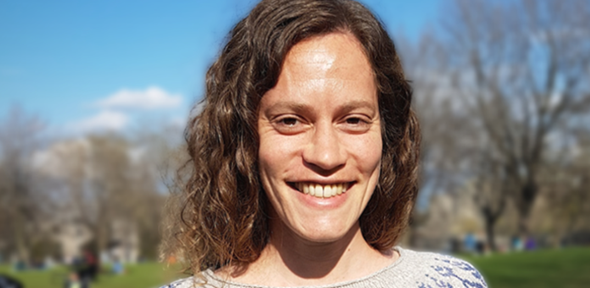
Rachel Morley is an Associate Professor at the School of Slavonic and East European Studies (SSEES), University College London. She holds a BA in French Language and Literature from the University of Oxford (1992), followed by BA, MA, and PhD degrees from UCL (1999, 2001, 2011). Her roles include Academic Director of Education and Student Experience at SSEES (2022–2027) and Co-Convenor of the UCL SSEES Cinema Research Group. Dr. Morley's research focuses on Cinema studies Cultural studies Feminist and queer theory Literary studies with emphasis on Soviet/Russian cinema, gender representation, and film historiography. She held a Leverhulme Trust Research Fellowship (2020–2022) for her project on female subjectivity in contemporary Russian cinema. Her teaching spans Russian cinema, poetry, language, and translation. Past roles include Postgraduate Teaching Assistant at SSEES (1999–2009) and lecturer at the University of Cambridge (2006, 2008). She has also supported international students as SSEES International and Affiliate Tutor (2014–2018). Key Achievements: Leverhulme Trust Research Fellowship Fellow of the Higher Education Academy (2016) Her work bridges film, literature, and cultural history, emphasizing underrepresented narratives and feminist perspectives in Russian and Soviet cinema.
Jennifer Rushworth is an Associate Professor in French and Comparative Literature at University College London (SELCS). She holds a DPhil in Medieval and Modern Languages from the University of Oxford (2010–2013) and previously served as a Junior Research Fellow at St John's College, Oxford (2013–2017). Her research focuses on mourning, medievalism, music, and interdisciplinary studies spanning literary theory, cultural analysis, and philosophy. She has published extensively, including her monograph Proust’s Songbook (Penn Press, 2024). Her work aligns with Sustainable Development Goals 4 (Quality Education), 5 (Gender Equality), and 11 (Sustainable Cities and Communities). Education: DPhil in Medieval and Modern Languages, University of Oxford (2010–2013) Her research integrates musicological, philosophical, and critical-theoretical approaches to modern literature. Recent work explores intersections between memory, aesthetics, and cultural heritage. She teaches courses on comparative literature, medievalism, and French literature. Her academic contributions emphasize interdisciplinary dialogue, with a focus on how literary and musical forms articulate historical and philosophical themes.
Professor Peter John Edgley Robinson is a distinguished academic and poet at the University of Reading, where he holds the position of Professor in the Department of English Literature, part of the School of Humanities. He is renowned for founding the English Literature with Creative Writing joint degree program and the MA in Creative Writing. His research focuses on modern and contemporary poetry, publishing, and translation, with a particular interest in 20th-century literary movements and interdisciplinary studies. Responsibilities include leading the Poetry & Poetics strand of the Modern Studies Centre and supervising doctoral research in creative writing and academic topics such as post-war Japanese poetry, Muriel Rukeyser’s work, and travel writing. He has held roles as poetry editor for Two Rivers Press and contributed to academic publications like The Fortnightly Review . His career includes teaching at Tohoku University in Japan and organizing events like the Reading Poetry Festival. Key awards include the Cheltenham Prize (1988), the John Florio Prize (2008), and Poetry Book Society recommendations. His publications span poetry collections, critical essays, translations, and novels, reflecting his expertise in literary analysis and creative expression. Notable works include The Sound Sense of Poetry (2018), Ravishing Europa (2019), and Retrieved Attachments (2023). Education: BA from University of York (1974), PhD from University of Cambridge (1981). Translations: Includes works by Vittorio Sereni, Pietro De Marchi, and Giorgio Bassani. Editorial Roles: Numbers magazine, Reading Poetry Festival , and The Oxford Handbook of Contemporary British and Irish Poetry . His research explores intersections between poetry, economics, and cultural identity, with a focus on publishing policies and lyrical forms. He remains active in mentoring emerging writers and fostering interdisciplinary collaboration.
Sho Konishi serves as Director of the Nissan Institute of Japanese Studies and Associate Professor in Modern Japanese History at the University of Oxford, holding dual appointments in the Faculty of History and the Oxford School of Global and Area Studies. His interdisciplinary work bridges Japanese studies with transnational intellectual history, focusing on non-imperial connections between Japan, Russia, and global networks. Undergraduate studies completed as a U.S. military school cadet after extensive coursework in Russia Georgetown University: Philosophy and International Affairs University of Chicago: Ph.D. in History (Theology and History) Postdoctoral fellowship at Harvard University Konishi's research centers on intellectual and cultural history with emphases on transnational encounters, anarchist thought, and the history of science. He investigates non-imperial knowledge production across 19th-20th century Japan, Russia, and Eastern Europe, with particular focus on symbiosis theory, linguistic democracy, and the role of nonverbal communication in epistemology. His work challenges Western-centric modernity narratives through examinations of anarchist natural science and transnational emotional histories. His publications reveal consistent engagement with alternative epistemologies and cross-cultural exchanges, spanning transnational history, the history of science, and cultural studies. Key themes include Japan-Russia intellectual networks, anarchist cooperative movements, and non-imperial frameworks that reposition Japan within global knowledge systems rather than colonial paradigms. ICAS Book Prize 2023 – Humanities for Japan’s Russia: Challenging the East-West Paradigm Konishi contributes to international academic governance as Advisory Board Member for the Esperantic Studies Foundation, External Faculty at the University of Chicago Stevanovich Institute on the Formation of Knowledge, and International Advisory Board Member for Manchester University Press's Anarchist Studies Series. His cultural impact extends to architectural projects like the Venice Biennale's Philippine Pavilion through 'Symbiogenesis: The Art of Bayanihan Architecture'.
Dr Ann Lewis is Senior Lecturer in French Studies at Birkbeck, University of London, within the School of Creative Arts, Culture and Communication . Since her appointment in 2008 she has held numerous leadership roles, including Subject Lead for Languages and Linguistics and programme director for several BA and MA programmes. Education: BA Joint Honours in History and French, New College, University of Oxford M.St. in European Literature, University of Oxford PhD in French Literature, Queen Mary, University of London PGC-HE (with distinction), Fellow of the Higher Education Academy Research Interests: Dr Lewis’s scholarship is situated at the intersection of eighteenth-century French literature and visual culture. Her work pursues two complementary strands: the first investigates text–image relations , exploring how eighteenth-century French novels were illustrated, re-imagined and circulated beyond the book through almanacs, extra-illustrated editions and domestic display. The second strand interrogates the representation of prostitution in eighteenth-century France, combining literary analysis with cultural history to illuminate questions of gender, commerce and morality. Both research lines deploy interdisciplinary methodologies that draw on illustration studies, adaptation theory and material bibliography. Publications profile: Across more than two decades, Dr Lewis has produced a monograph, three major edited collections and a series of peer-reviewed articles and book chapters (2004-2021). Her output charts an evolving focus from close readings of illustrated novels toward broader questions of intermediality, adaptation and the social lives of images, culminating in recent work on Rousseau’s Julie as material artefact. Honours & Awards: Leverhulme Early Career Fellowship, Leverhulme Trust (2009) Ronald Tress Prize, Birkbeck, University of London (2012) Haydn Mason Lecture, British Society for Eighteenth-Century Studies (2012) Nominated for Aurora Women into Leadership programme, Advance HE (2016) Doctoral supervision & grants: Dr Lewis welcomes proposals in eighteenth-century French literature and culture. She currently co-supervises two doctoral researchers: Miki Jablkowska – “The Reception and Cultural Adaptation of Voltaire in Eighteenth-Century Poland” Kirsten Tambling – “Watteau and Hogarth: Seduction, Space and Time” (awarded 2019) Laboratories, networks & teams: She is Co-founder and Co-convenor of the Birkbeck Eighteenth-Century Research Group , an interdisciplinary forum spanning French, English, History of Art and Comparative Literature. She additionally serves on the steering group of the Illustr4tio international research network devoted to illustration studies and is a member of the executive committee of AUPHF+ (Association of University Professors and Heads of French +).
Dr. Heather Inwood serves as University Associate Professor in Modern Chinese Literature and Culture within the Faculty of Asian and Middle Eastern Studies at the University of Cambridge. She is also a Fellow and Director of Studies at Trinity Hall, maintaining dual institutional affiliations that support her teaching and research activities across undergraduate and postgraduate programs. Her educational background includes a BA in Chinese Studies from the University of Cambridge (Trinity Hall), followed by advanced studies at Tsinghua University and Peking University, culminating in a PhD in modern Chinese literature from SOAS, University of London in 2008. Prior academic appointments include Assistant Professor at The Ohio State University (2008-2013) and Lecturer in Chinese Cultural Studies at the University of Manchester before returning to Cambridge in 2016. Professor Inwood's research program investigates the dynamic interactions between digital media and literary production in contemporary China, with particular focus on poetry communities, genre fiction, and transmedia storytelling. Her work bridges traditional literary analysis with digital humanities approaches, examining how online platforms transform authorship, reception, and cultural value. She has pioneered scholarship on internet poetry scenes, demonstrating their vitality despite public perceptions of poetry's decline in modern China. Her publication trajectory reveals a clear evolution from early work on poetry communities ( Verse Going Viral: China's New Media Scenes , 2014) toward broader investigations of digital narrative forms, game studies, and Sinophone cyberspace. Recent publications increasingly engage with science fiction, transmedia storytelling, and the algorithmic structures shaping literary production, reflecting both the changing digital landscape and her expanding methodological toolkit. Professor Inwood actively supervises five PhD students working on diverse projects spanning Misty poetry, queer narratives, gender studies, and poetic animality, demonstrating her commitment to nurturing next-generation scholarship in Chinese literary studies. Her research has been supported by British Academy Small Grants and similar funding mechanisms that enable sustained fieldwork and publication. Her teaching responsibilities include undergraduate courses on East Asian media and popular culture, Modern Chinese texts, and Modern Chinese literature, connecting classroom instruction directly to her research expertise. She also maintains public engagement through Chinese-language columns for BBC China and other media outlets, bridging academic and public discourse on contemporary Chinese culture.
Rashmi Varma is a Professor at the University of Warwick, affiliated with the Faculty of Arts. She has previously taught at the University of North Carolina, Chapel Hill, and Jesus and Mary College, University of Delhi. Education: BA in English (Honours) from Lady Shri Ram College, University of Delhi MA in English Literature from University of Delhi PhD in English and Women’s Studies from University of Illinois at Chicago Research interests: Varma specializes in the postcolonial city, postcolonial Indian and African theory, global feminism, representations of indigeneity, and world literature theory. Her work interrogates urban political ecologies, feminist pedagogy, and subaltern politics. Scientific awards: British Academy Mid-Career Fellowship (2011-2012) for Modern Tribal: Representing Indigeneity in Postcolonial India Supervision: She currently supervises PhD students Angel Maria Varghese, Shavena Malvika Nair (Chancellor's International Scholar), Ragesree Roy, and Archana Vinod (Chancellor's International Scholar). Collaborations: Varma co-edited journals like Feminist Dissent and special issues on transnational feminism, urban political ecologies, and postcolonial theory. She was involved in the Tate Exchange workshop on 'Production, Truth and Justice' (2021).
Dr Aaron D. Hornkohl is an Associate Professor in Hebrew and Bye-Fellow at Girton College, University of Cambridge. He serves as Director of Studies in Asian and Middle Eastern Studies at Girton and Homerton Colleges. His academic background includes a BA from Biola University, MA from The Hebrew University of Jerusalem, and PhD (2012) on the linguistic analysis of the Book of Jeremiah. His research focuses on ancient Hebrew philology, linguistic periodization, and exegesis, with a particular interest in the diachronic development of Hebrew and textual criticism of biblical manuscripts. Teaching responsibilities include courses on ancient and modern Hebrew literature, language history, and Middle Eastern culture. He co-organizes initiatives like the Sutton Trust Summer School and leads AHRC-funded research on critical editions of Hebrew texts, including the Kaufmann MS of the Mishna. Recent publications explore Tiberian reading traditions, Masoretic vocalization, and linguistic features in Qumran manuscripts. Research projects include Grammar of Biblical Hebrew Books (2024) and Studies in the Masoretic Tradition (2022). His work bridges linguistic analysis with historical context, addressing questions of language evolution and textual authenticity in Hebrew biblical and rabbinic corpora.
Dr. Charilaos Nikolaidis is a Senior Lecturer at Essex Law School, University of Essex, specializing in international human rights law and the intersection of law and literature. He received his LLB from City, University of London, LLM in International Business Law from University College London, and PhD in Law from King's College London. His research focuses on international human rights law, particularly the theory and implementation of the right to equality, and the relationship between law and literature. Nikolaidis has published extensively on equality jurisprudence, comparative human rights law, and democratic challenges in European contexts. Nikolaidis's publications demonstrate consistent focus on human rights jurisprudence, particularly equality and non-discrimination within European legal frameworks. His work spans theoretical explorations of legal equality, comparative analyses of European and US privacy rights, and practical examinations of democratic challenges in Greece and beyond.
David Friedman is a Researcher affiliated with the Faculty of Classics at the University of Cambridge and serves as Director of Studies in Classics at St Edmund's College. His research focuses on Judaism in the Greco-Roman world, particularly through the lens of ancient historians like Josephus. Fields of Interest: Judaism in the Greco-Roman world, Ancient History, Josephus Studies, Roman Imperialism, Religious Studies, Historiography, Classical Literature, and Cultural Exchange. Email: daf39@cam.ac.uk His recent work includes the 2024 edited volume Looking in, looking out: Jews and non-Jews in mutual contemplation , studies on Dionysius of Halicarnassus and Augustan Rome (2020), and analyses of Josephus's accounts of Jewish origins in Egypt (2017, 2014). No scientific awards or students are mentioned in the provided texts.
Kazuyo Murata is a Senior Lecturer in Islamic Studies at King's College London, based in the Department of Theology & Religious Studies within the Faculty of Arts & Humanities. She specializes in pre-modern Islamic intellectual history with a focus on Sufism, falsafa (Islamic philosophy), and Persianate traditions. Her research bridges theological aesthetics, metaphysics, and comparative philosophy, particularly exploring themes of beauty, love, and human perfection in Sufi thought. Dr. Murata holds a PhD in Islamic Studies (with a joint MPhil in Medieval Studies) from Yale University and a BA (summa cum laude) in Philosophy and Religious Studies from SUNY Stony Brook. She is a Fellow of the Higher Education Academy and a member of the Royal Asiatic Society. Her monograph *Beauty in Sufism: The Teachings of Ruzbihan Baqli* (SUNY Press, 2017) analyzes the role of beauty in the cosmology of the 13th-century Persian mystic Rūzbihān Baqlī. Recent work includes comparative studies of Plotinus and Sufi conceptions of beauty, and analyses of Rūmī's mystical poetry. She teaches undergraduate and graduate courses on Islamic thought, Sufism, and Islamic philosophy. Current research focuses on 'Sufi Recipes for a Life Lived Well,' a Leverhulme-funded project (2025–2026) exploring ethical and spiritual frameworks in classical Sufi literature. She has delivered invited lectures on topics such as Sufi conceptions of beauty and well-being in contemporary contexts.
Professor Alison G. Salvesen (University of Oxford, Asian and Middle Eastern Studies) is a leading scholar in Early Judaism and Christianity, affiliated with the Oxford Centre for Hebrew and Jewish Studies and Mansfield College. Her work bridges textual criticism, translation history, and reception studies. Current Projects: Hexapla Institute Executive Committee (electronic database of Origen's Old Testament), monograph on Jacob of Edessa (d. 708 CE) Teaching: Septuagint studies, Patristic texts, Textual criticism, Syriac literature Specializing in ancient Hebrew Bible interpretations, she examines Greek (Septuagint), Aramaic (Targums), Syriac (Peshitta), and Latin (Vulgate) traditions. Her research spans rabbinic Judaism and early Christian exegesis. Scientific leadership includes co-editing major reference works and directing the Polonsky Fellowship. Current DPhil students include Joel Bell, Yael Krämer, and Paul Ulishney. Key grants/awards: Polonsky Fellow in Early Judaism and Christianity
Dr. Anna A. Berman serves as Associate Professor of Nineteenth-Century Russian Literature and Culture within the Slavonic Studies section of the Faculty of Modern and Medieval Languages and Linguistics at the University of Cambridge, where she is also a Fellow of Clare College. Previously, she held an Associate Professorship at McGill University's Department of Languages, Literatures, and Cultures in Montreal, Canada. Her academic credentials include: B.A. from Brown University M.Phil. from the University of Cambridge Ph.D. from Princeton University Dr. Berman's research centers on nineteenth-century Russian and English novels, with specialized focus on family structures, kinship dynamics, love, and marriage. She extensively examines the intersection of scientific thought (particularly Darwinism and Mechnikov's phagocyte theory) with literary production, alongside operatic adaptations of Russian classics. Her current scholarly mission prioritizes recovering the legacy of marginalized nineteenth-century Russian women novelists, especially Nadezhda Khvoshchinskaya and Evgenia Tur. Her publication trajectory reveals sustained investigation into familial relationships within nineteenth-century literature, with sibling dynamics constituting a dominant theme across both Russian and English novels. She has pioneered critical analysis of science-literature dialogues in Russian contexts while recently shifting toward feminist recovery projects that challenge canonical exclusions in Russian literary history. Dr. Berman actively supervises postgraduate research, welcoming MPhil and PhD candidates pursuing topics aligned with her expertise in nineteenth-century Russian literature, comparative family narratives, and science-literature intersections. Within Cambridge's academic ecosystem, she contributes to the Slavonic Studies research community and participates in the Cambridge Centre for Central and East European Studies (CamCCEEES), advancing collaborative scholarship on Eastern European cultural production.
Professor Stephen Chan is a faculty member at SOAS University of London in the Department of Politics and International Studies (POL) . With a focus on African political thought and international relations, his work critically examines postcolonialism, decoloniality, and global governance. Key research themes include: Decolonizing international relations theory Sino-African political dynamics Election observation and democratic processes Non-Western cosmopolitanism Comparative diplomatic practices His recent publications analyze the ideological ambiguity of decoloniality (2023), pluralist visions for global security (2017), and the legacy of African liberation movements (2021). He has advised multiple theses on topics ranging from parliamentary governance in Kenya/Zimbabwe to China-Africa media interactions. Notably: Critiqued the misuse of 'decoloniality' as ideological rhetoric (2023) Authored a poetic autobiography of political engagement (2022) Traced Africa's intellectual history of freedom (2021) Examined Zimbabwean elections (2017) Explored non-Western modernity (2018)
Matthew V. Novenson is a Professor of Biblical Criticism and Biblical Antiquities at the University of Edinburgh, where he also serves as Director of the Centre for the Study of Christian Origins. He holds honorary fellow status and has held visiting roles at Dartmouth College, Duke University, and Durham University. Novenson specializes in ancient Mediterranean religions, focusing on early Judaism and Christianity within Greco-Roman contexts. His research emphasizes Pauline epistles, early Christology, and the socio-political dimensions of messianic discourse. Qualifications include a BA, MDiv, ThM, and PhD. Teaching responsibilities span undergraduate courses on biblical languages, Second Temple Judaism, and New Testament themes, as well as postgraduate seminars on biblical exegesis and ancient religious texts. He actively supervises PhD students exploring topics like messianism in Pauline letters, ancient Christology, and eschatological frameworks. Novenson’s scholarship is reflected in major publications such as Christ among the Messiahs (2012), The Grammar of Messianism (2017), and Paul, Then and Now (2022), alongside edited volumes like The Oxford Handbook of Pauline Studies . His work interrogates the linguistic and ideological nuances of religious terminology in antiquity, particularly around concepts of messiahship, monotheism, and divine agency. Service roles include Associate Editor of New Testament Studies and co-editor of Edinburgh Studies in Religion in Antiquity . Past and current PhD advisees (listed above) reflect his commitment to mentoring rigorous research in early Christian origins and biblical interpretation.