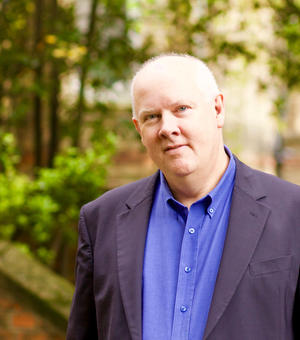
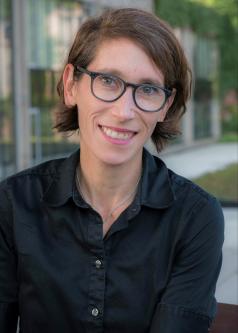
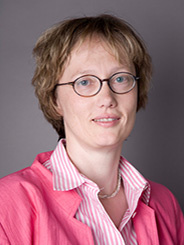
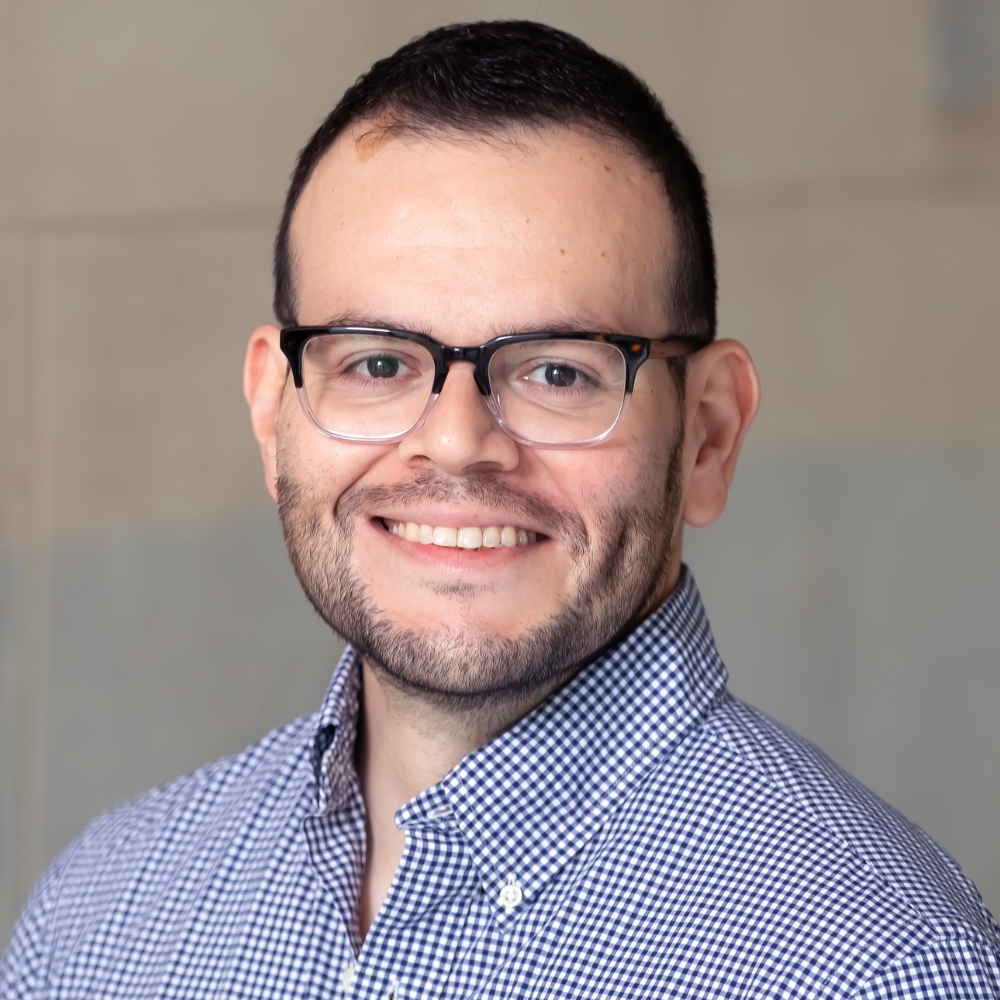
Professor Timothy J. Power is Head of the Social Sciences Division and Professor of Latin American Politics at the University of Oxford, affiliated with the Oxford School of Global and Area Studies (OSGA) and the Department of Politics. He previously directed the Latin American Centre from 2008 to 2012 and has been a leading scholar in comparative politics since 2005. Research Interests: Democratization, political institutions (parties, legislatures, elections), coalitional presidentialism, Brazil, Latin America, new democracies. Awards: None listed in provided text. Advising: No specific students mentioned. Grants: No explicit grants listed, but research involves long-term projects like the Brazilian Legislative Surveys. Labs/Teams: Co-directs the Brazilian Legislative Surveys with Fundação Getúlio Vargas and contributes to cross-regional comparative studies at OSGA. His work analyzes democratization in Latin America, particularly Brazil, focusing on legislative dynamics, coalition governments, and political institutions. Recent articles explore cabinet proportionality, portfolio allocation, and ideological shifts in post-authoritarian settings.
Lyndsay Campbell is a Professor at the University of Calgary, cross-appointed between the Faculty of Law and the Department of History in the Faculty of Arts. Her work bridges Canadian and American legal history, comparative law, and constitutional studies. Ph.D., Jurisprudence and Social Policy, University of California, Berkeley (2008) Master of Law, University of British Columbia (1999) J.D., University of British Columbia (1995) M.A., English Literature, University of Toronto (1991) B.A., English Literature, University of British Columbia (1990) Campbell's research focuses on Canadian and American legal history , libel law , constitutionalism , and imperial legalities . Her work examines intersections between legal and extralegal regulatory strategies, comparative approaches to law, and 19th-century Canadian constitutionalism. Current projects include an edited collection on Legal Histories of Empire with Shaunnagh Dorsett. Her publications analyze legal histories of censorship , racial justice in law , and gender-related legal frameworks . Recent work includes the 2022 monograph Truth and Privilege and the 2020 co-edited open-access volume Canada’s Legal Past . Fellow, Constitutional Law and History Program, University of California, Berkeley (2008) William Nelson Cromwell Fellowship in Legal History (2007) Dean's Normative Time Fellowship, UC Berkeley (2004) Regents Intern Fellowship (2001) Osgoode Society Legal History Prize (1998) SSHRC doctoral fellowship (1997) Campbell teaches courses in Canadian and American history, legal theory, and the undergraduate Law and Society program. She previously practiced law in British Columbia and clerked for justices at the British Columbia Court of Appeal.
Kevin O'Brien is the Jack M. Forcey Professor of Political Science at the University of California, Berkeley. He specializes in Chinese politics, particularly focusing on contentious politics, protest dynamics, and state-society relations in rural China. His research examines mechanisms of protest control, authoritarian governance, and institutional reforms. O'Brien holds a B.A. from Grinnell College (1979) and a Ph.D. from Yale University (1987). Education: B.A., Grinnell College; Ph.D., Yale University Affiliations: Institute of East Asian Studies, UC Berkeley Research interests include rightful resistance, relational repression, and adaptation strategies under autocratic regimes. He has authored/co-authored influential books such as Rightful Resistance in Rural China and edited volumes on popular protest and grassroots elections in China. Books: Reform Without Liberalization , Popular Protest in China , Grassroots Elections in China Awards include the Sage Award for Best Paper in Comparative Politics (2004). His work integrates fieldwork insights with theoretical frameworks, addressing topics like land expropriation, migrant worker rights, and NGO operational challenges in China's evolving political landscape.
Sara Chatfield is an Associate Professor of Political Science at the University of Denver's College of Arts, Humanities and Social Sciences, with additional affiliations in Gender and Women's Studies. Her work bridges American political development, gender politics, and methodological innovation in political science research. Dr. Chatfield earned her Ph.D. and MA in Political Science from the University of California, Berkeley (2014 and 2007 respectively), and her BA in Politics from Oberlin College (2006). Her research focuses on American political development with particular emphasis on gender and politics, public law, and political behavior. American Political Development Gender and Politics Women's Rights History Public Law Political Behavior Methodology and Causal Inference Her recent publications demonstrate a consistent focus on how gender shapes political institutions and processes across historical and contemporary contexts. Early work examined 19th century married women's economic rights reform, while more recent research investigates contemporary issues like bathroom access politics and gender disparities in political campaign staffing. Her scholarship often employs innovative methodological approaches to historical questions, bridging qualitative and quantitative traditions in political science. Dr. Chatfield teaches courses on American politics and law, including Constitutional Law I, Judicial Politics, and a freshman seminar on the politics of bathrooms. Her book In Her Own Name: The Politics of Women's Rights Before Suffrage (Columbia University Press, 2023) and her Cambridge Element The Politics of Bathroom Access and Exclusion in the United States (2024) represent significant contributions to understanding how gender shapes political institutions across historical periods.
Stephen Weymouth is Provost's Distinguished Associate Professor and Dean’s Professor at Georgetown University’s McDonough School of Business. He holds a primary academic appointment as Associate Professor and focuses on the political economy of globalization and technological change. His research bridges international business, political science, and public policy. Weymouth earned his Ph.D. in Political Science and International Affairs from the University of California, San Diego (2010), an M.A. in Latin American Studies from the same institution (2006), and a B.S. in Economics from Arizona State University (1999). His research interests include the political environment of business, digital globalization, trade and exchange rate politics, governance of the digital economy, and the societal implications of artificial intelligence. He investigates how globalization, technological disruption, and economic change influence political behavior, voting, and policy outcomes. His work often employs quantitative methods and large-scale data to analyze firm-level and electoral dynamics. His recent publications, appearing in top journals like American Political Science Review , International Organization , and British Journal of Political Science , reveal a strong thematic focus on the intersection of economic globalization and political behavior. Trends include the impact of deindustrialization on voter backlash, the effects of inflation and pandemics on elections, and the political economy of digital trade and AI. His book Digital Globalization: Politics, Policy, and a Governance Paradox (Cambridge University Press) synthesizes these themes, emphasizing the growing tension between digital innovation and regulatory governance. Weymouth is actively engaged in policy discourse, having authored issue briefs for the Atlantic Council on digital trade policies in India and Bangladesh. He teaches core MBA courses such as Business and Policy in the Global Economy and specialized courses on AI and economic transformation. While no formal awards are listed, his named professorships reflect institutional recognition. He advises students and collaborates widely, though specific advisees are not named. His research contributes significantly to understanding how global economic forces shape political institutions and public sentiment.
Genevieve Lakier is a Professor of Law at the University of Chicago Law School and Senior Visiting Research Scholar at the Knight First Amendment Institute at Columbia University. She holds a JD (cum laude) from New York University School of Law, an MA and PhD in Anthropology from the University of Chicago, and an AB in Anthropology from Princeton University. Previously, she served as an Assistant Professor of Law (2015–2021) and Bigelow Teaching Fellow (2013–2015) at the University of Chicago Law School. Her research focuses on the evolving interpretation of the First Amendment , particularly how social media platforms challenge traditional free speech doctrine. She analyzes the role of legislatures in safeguarding speech values, the rise of anti-classificatory theories , and the tension between laissez-faire constitutionalism and state intervention in digital speech regulation. Recent publications include critiques of platform moderation in the Journal of Free Speech Law and analyses of the First Amendment's Lochner problem . Her work often addresses the intersection of constitutional history and modern tech policy, as seen in contributions to the Harvard Law Review and Yale Law Journal Forum . Scientific Awards: Harry W. Stonecipher Award (2021) Faculty Hooder Teaching Award (2022, 2023) Class Award (2022) She has collaborated with scholars like Evelyn Douek on studies of platform governance and informal government coercion . Her clerkships include Judge Leonard Sand (Southern District of New York) and Judge Martha Daughtrey (Sixth Circuit Court of Appeals).
Prof. Dr. Heike Bungert is a leading scholar in North American History at the Westfälische Wilhelms-Universität Münster , focusing on ethnic migration, cultural history, and civil religion. Habilitation (2004) and Doctorate (1995) from German institutions Extensive teaching career since 2000, including visiting roles at UC Berkeley and Columbia University Her research bridges: German-American identity formation through festivals and cultural practices Transnational university history and academic networks Civil religion in US patriotic holidays Native American representation in film and collective memory Key article trends: 19th-20th century German migration patterns Academic institutions in transnational contexts Civil religion analysis in political rituals Historiography of indigenous peoples Scientific Honors : Heisenberg Fellowship (DFG, 2005) DAAD and DFG research fellowships Stuart L. Bernath Prize (1995) As a supervisor , she has guided doctoral research on topics like: Russian-American periodicals Symbolic communication in colonial legislatures Evangelical responses to immigration
Dr. Sergio Ascencio is a Lecturer in the Department of Government at the University of Essex. He holds a PhD from the University of Rochester (2018). His academic career includes roles as Assistant Professor at the University of New Mexico (2019–2021) and Postdoctoral Associate at NYU Abu Dhabi (2018–2019). His research focuses on comparative politics, electoral systems, and political behavior, with a regional emphasis on Mexico and South Asia. Key themes include primary elections, vote buying, political dynasties, and party strategies. His work employs experimental methods and institutional analysis to explore questions of governance and democratic accountability. Recent publications (2021–2024) examine nomination rules, primary adoption, and voter dynamics across multiple countries. His 2019 study on partisan poll watchers and electoral manipulation highlights expertise in electoral integrity. Earlier work (2015, 2009) addresses issue salience modeling and delegation mechanisms in Mexican state legislatures. Contact: Email at sergio.ascencio@essex.ac.uk or via Zoom during academic support hours (Tuesdays 2–4 PM).
Amy Steigerwalt is a Professor and Department Chair of Political Science at Georgia State University’s College of Arts & Sciences. She also serves as Director of the Georgia Legislative Internship Program. Her research examines federal judicial selection, institutional roles of courts, and electoral dynamics impacting legislative behavior. Research Focus : Steigerwalt’s work bridges American politics, public law, and gender studies, with a particular emphasis on how political institutions (e.g., courts, legislatures) shape policy outcomes and electoral strategies. She has published extensively on judicial confirmations, consensus-building in courts, and the intersection of gender and political vulnerability. Scientific Awards : 2013 Hughes-Gossett Award (Journal of Supreme Court History) Choice Outstanding Academic Title (2014) Media and Public Engagement : A frequent panelist on GPB’s Political Rewind , her expertise has been cited by major outlets including the Washington Post , New York Times , and Bloomberg News .
Hélène Combes is a CNRS Research Professor affiliated with the Center for International Studies (CERI) at Sciences Po Paris. She directs research on political parties and social movements with a specific focus on Latin America, particularly Mexico. Her work bridges comparative politics, urban studies, and political sociology, examining how spatial organization, class dynamics, and gender intersect in political mobilization. Combes specializes in the relationship between political parties and social movements, with extensive fieldwork in Mexico spanning over 15 years. Her research examines political clientelism, urban protest movements, and the spatial dimensions of political mobilization. She has conducted in-depth studies on the emergence of the Morena party in Mexico and the transformation of social movements into political power, culminating in her 2024 book De la rue à la présidence. Foyers contestataires à Mexico . Her work reveals how working-class communities manage political occupations and how family dimensions shape protest movements in Latin America. Combes has served as director of the journal Critique internationale (2017-2023), is a member of the board of the French Political Science Association (AFSP) since 2017, and serves on the scientific committee of Casa de Velázquez since 2018. Her international recognition is evident through her invited professorships at Columbia University, University of Salamanca, Pablo de Olavide University, University of Mar de Plata, University of Chile, and various Mexican institutions. Currently teaching in the Master's research program in political science, university college, and School of International Affairs at Sciences Po Paris, Combes has previously taught at Beaux-Arts de Paris and University of Dauphine. Her work on Mexican politics has gained particular relevance with Claudia Sheinbaum (whom she followed for 15 years) becoming Mexico's presidential candidate. Combes holds a doctorate in engineering with specialization in climate change and ecology, bringing a transnational perspective to her political analysis.
Dr. Jeremy Bowles is a Lecturer in Comparative Politics at the Department of Political Science, University College London (UCL). His research focuses on the political economy of development, particularly in sub-Saharan Africa, examining interactions between state-building processes and distributive politics. Prior to UCL, he held a Postdoctoral Fellowship at Stanford University's King Center on Global Development and earned his Ph.D. from Harvard University. His work has been supported by institutions like J-PAL and USAID. Education: B.A. and M.Sc. from the University of Oxford Ph.D. in Government from Harvard University (2021) Postdoctoral Fellowship at Stanford University His research explores how distributive conflicts shape state-building and electoral accountability in weakly institutionalized contexts. Key themes include taxation systems in Tanzania, elite politics in post-colonial states, and the role of social media in African autocracies. He employs experimental and observational methods to study governance challenges in developing democracies. His publications appear in top journals like the American Political Science Review and American Journal of Political Science . Recent work addresses misinformation dynamics, electoral accountability, and post-pandemic policy responses in Zimbabwe. Teaching focuses on African governance and political economy models. Grants and partnerships include collaborations with the International Growth Centre (IGC) and Stanford Impact Labs.
M. Steven Fish is a Professor of Political Science at the University of California, Berkeley, specializing in democracy and authoritarianism, religion and politics, and constitutional systems and national legislatures. He is a leading comparative political scientist with extensive research experience across Eurasia, East Europe, and Southeast Asia. His educational background includes a B.A. from Cornell University, an M.A. from Johns Hopkins University School of Advanced International Studies, and a Ph.D. in political science from Stanford University. Previously, he has taught at the University of Pennsylvania and universities in Russia, Poland, China, and Indonesia, including serving as a Senior Fulbright Fellow at Airlangga University in Indonesia and the European University at St. Petersburg, Russia. Professor Fish's research explores the relationship between democratic institutions and societal factors, with particular attention to national legislatures' role in sustaining democracy and the connection between religious cultures and political systems. His work demonstrates that strong legislatures are crucial for democratic consolidation, as evidenced by his co-authored 'The Handbook of National Legislatures: A Global Survey'. His publications span decades of scholarly work, with his most recent book 'Comeback: Routing Trumpism, Reclaiming the Nation, and Restoring Democracy's Edge' (2024) analyzing contemporary challenges to American democracy and proposing strategies for renewal. His influential 2011 book 'Are Muslims Distinctive? A Look at the Evidence' challenged prevailing assumptions about Islam's relationship with democracy. Distinguished Social Sciences Teaching Award of the College of Letters and Science at Berkeley Best Book Award of 2006 from the American Political Science Association's Comparative Democratization Section Professor Fish is an active public intellectual who frequently appears on BBC, CNN, and other major networks. His commentary has been published in The New York Times, The Washington Post, Los Angeles Times, and Foreign Policy. He has served as an expert consultant to U.S. federal agencies and international organizations including the European Commission for Democracy through Law, bridging academic research with practical policy applications. His teaching includes courses on comparative politics, Russian politics, democracy's global crisis, and foundations of political thought, reflecting his broad expertise across multiple subfields of political science.
Jon Taylor is a Professor of Political Science and Chair of the Department of Political Science and Geography at the University of Texas at San Antonio (UTSA), where he also serves as Associate Dean for Faculty Success within the College of Liberal and Fine Arts. His academic career focuses on Chinese politics and public policy, Chinese and U.S. urban politics and urbanization, and comparative public sector ethics. Taylor received his academic training at the University of Oklahoma, where he earned his B.A. in Political Science and History (1983) M.A. in Political Science (1987) Ph.D. in Political Science (1993) Dr. Taylor's research spans several interconnected areas with a strong emphasis on comparative politics. His primary research interests include Chinese politics and public policy, with particular focus on urban development in Western China, China's national urbanization plan, the Communist Party's online accountability system, and provincial-level public corruption in China. He has made significant contributions to understanding the role of indigenous Chinese political science within the global discipline. As a native Texan, he also maintains an active research agenda on Texas and San Antonio politics and government, frequently contributing opinion and analysis pieces to both Chinese and U.S. media. His scholarly work demonstrates a consistent engagement with questions of governance, political development, and the interplay between global academic trends and local political contexts. Taylor's publication record reveals a consistent trajectory of scholarly engagement with Chinese political development, particularly focusing on urbanization, governance, and the evolution of political science as a discipline within China. His work often bridges theoretical frameworks with practical policy analysis, demonstrating expertise in both Chinese political systems and American politics, particularly at the state and local levels. A notable pattern in his scholarship is the examination of how Chinese political institutions adapt and evolve while maintaining distinctive characteristics. While specific major awards are not listed in the available information, Dr. Taylor has been an active participant in academic discourse through numerous presentations at prestigious venues including the Asia Society Texas, the Naoko Shirane Foundation Leadership Lecture Series, and the UTSA Model UN. His presentations often address timely topics in U.S.-China relations and contemporary political developments. As Department Chair and Associate Dean for Faculty Success, Dr. Taylor plays a significant leadership role in mentoring junior faculty and shaping the academic direction of his department. His teaching portfolio includes courses on Texas Politics and Society, Foreign Policy Analysis, Democracy and World Politics, Current Issues in World Politics, Seminar in Chinese Foreign Policy, and Urban Planning and Development, reflecting the breadth of his expertise across American politics, comparative politics, and international relations.
Mala Htun is a Professor of Political Science at the University of New Mexico, specializing in comparative politics, women’s rights, and social inequalities. She holds a Ph.D. from Harvard University and an A.B. from Stanford University. Her research focuses on gender justice, policy analysis, and strategies to promote inclusive environments in STEM. Education: PhD in Political Science (Harvard University, 2000), A.B. in International Relations (Stanford University, 1994). Research Interests: Gender equality policies and their implementation Comparative analysis of women’s rights legislation Impact of feminist activism on policy change STEM inclusion and institutional accountability Awards and Recognition: Best Book Award (Human Rights Section, ISA, 2019) Andrew Carnegie Fellow (2015) Recognized by New Mexico legislature for scholarly contributions (2016) Leadership Roles: Vice President of the American Political Science Association (APSA) Chair of APSA’s Committee on the Status of Women in the Profession Co-chair of APSA’s Presidential Task Force on Women’s Advancement Key Contributions: Authored three influential books, including The Logics of Gender Justice (2018) and Inclusion Without Representation in Latin America (2016). Her work bridges theory and practice, analyzing how states respond to gender justice demands globally.
Dr. Sarah Bütikofer is a political scientist affiliated with the University of Zurich , where she serves as a Research Associate and Editor at the Policy Analysis & Evaluation Research Department . She is also a project partner at Sotomo and collaborates with the PEGO Research Group (University of Bern/Eawag) on environmental governance and policy analysis projects. Her academic work focuses on Swiss political systems, legislative professionalization, gender representation, and direct democracy. Her research spans parliamentary studies, including voting behavior in the Zurich Cantonal Council and Swiss Federalism, and the professionalization of cantonal legislatures. She has contributed to environmental policy analysis through collaborations on plastic governance in Bhutan and climate action frameworks. Recent publications address gender equality in Swiss politics, Green Party dynamics, and institutional responses to climate disasters. 2024: Gender and parenting in Swiss Parliament 2023: Green Party impact in Swiss federalism 2022: Women's electoral surge in Switzerland 2020: Institutional peculiarities of Swiss Council of States 2015: Strategic voting and political professionalization Bütikofer actively participates in public debates as an editor for DeFacto and through media engagements with Swiss outlets like SRF and 20 Minuten. She contributes to policy discussions on climate governance, plastic regulation, and Swiss political reform.