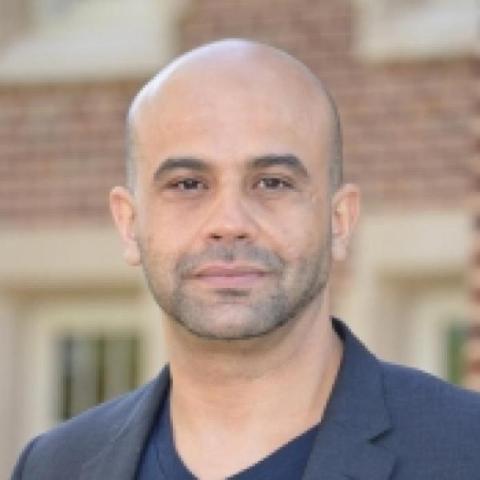
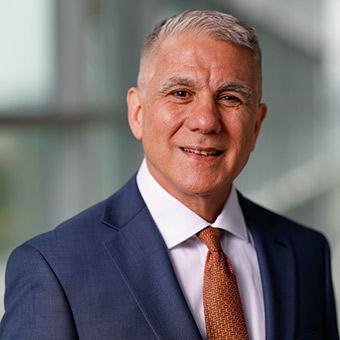
Cesar Dominguez Prieto is an Associate Professor at the University of Santiago de Compostela. His research focuses on comparative literature, including Transatlantic Studies, Comparative European Literature, and the methodology of comparative literary analysis. He holds a Bachelor of Arts from the University of Valencia (1994) and a Doctorate from the University of Santiago de Compostela (2000-2001), both with Excellence Awards. He has received significant recognition, including the Jean Monnet Chair (2012) for his work on European Integration's cultural dimensions and membership in the prestigious Academia Europaea (2010). His academic career emphasizes interdisciplinary approaches to literary studies across Iberian and European contexts. Key Awards: Jean Monnet Chair (European Commission) Academia Europaea Membership Galician Government Academic Excellence Award (2009) His work bridges theoretical frameworks in comparative literature with practical applications in translation studies and world literature, reflecting a commitment to transnational cultural analysis.
Cesar Dominguez Prieto is an Associate Professor at the University of Santiago de Compostela. His academic work focuses on transatlantic studies, comparative literature, and translation studies across European and Iberian contexts. Fields of Interest: Transatlantic Studies, Comparative European Literature, Translation Studies, World Literature, Comparative Iberian Literatures, Comparative Literature Theory Scientific Recognition: Jean Monnet Chair (2012) Member of Academia Europaea (2010) Academic Excellence Award (Galician Government, 2009) Doctoral & Bachelor Excellence Awards (2000-01, 1994)
University of California , Santa Barbara (UCSB)United States
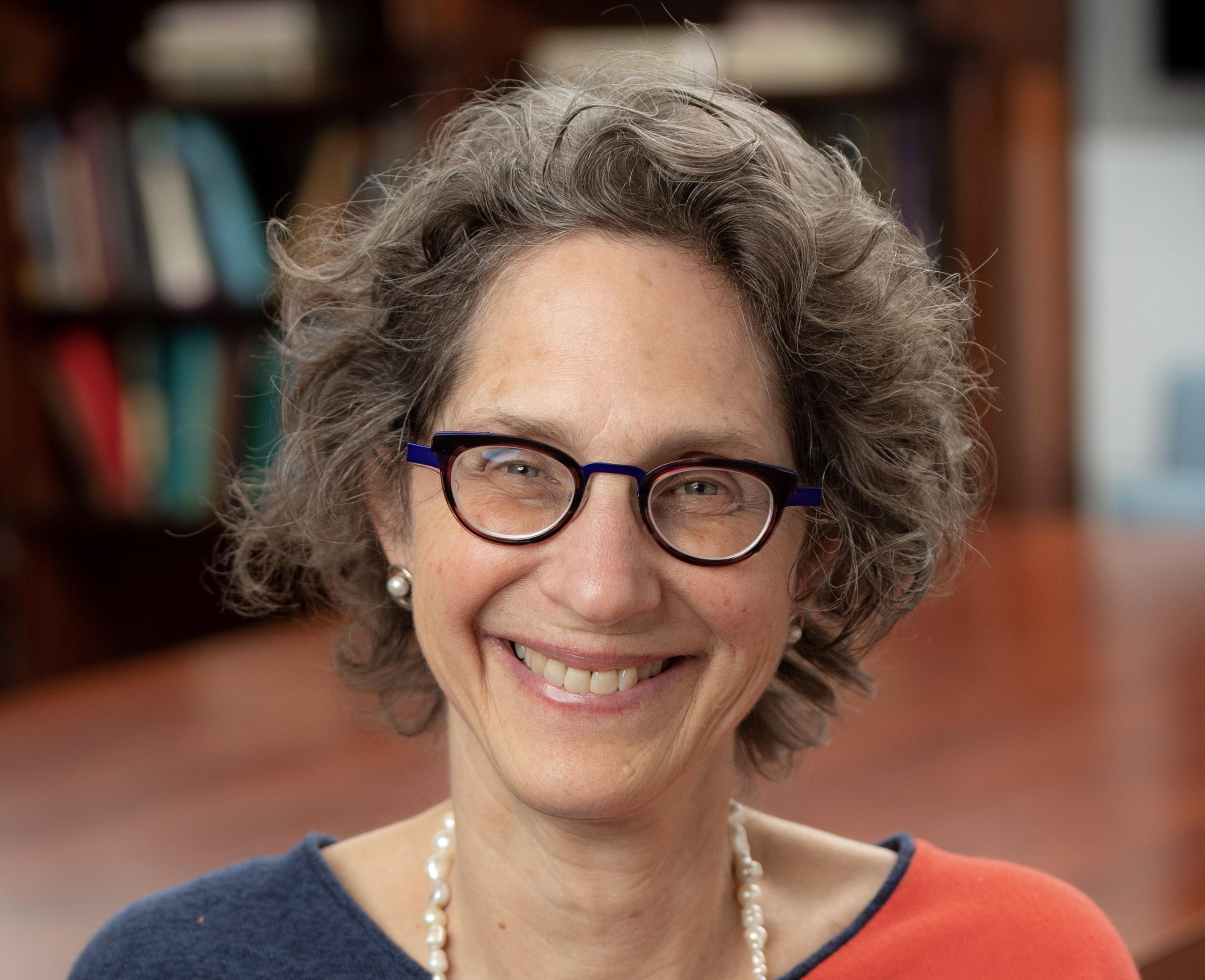
Mary Bucholtz is a Professor in the Department of Linguistics at the University of California, Santa Barbara (UCSB). She holds affiliations with multiple departments including Anthropology, Feminist Studies, Spanish and Portuguese, the Gevirtz Graduate School of Education, Comparative Literature, and Latin American and Iberian Studies. Her research integrates sociocultural linguistics with anthropological, gender, and social justice frameworks. Education: PhD in Linguistics, University of California, Berkeley (1997) Bucholtz's work examines how language shapes and is shaped by social identities, particularly among youth, through dimensions like race, gender, and cultural practices. She emphasizes community-centered research , linguistic activism , and interdisciplinary methodologies to address systemic inequalities. Recent publications explore affective agency in Latinx youth, educational equity, and antiracist linguistics. Her collaborative projects often involve partnerships with educational institutions and youth communities in California, focusing on translanguaging , Black language justice , and raciolinguistic ideologies . Grants from the National Science Foundation, Spencer Foundation, and Wenner-Gren Foundation support her research. She co-edited the open-access volumes Decolonizing Linguistics and Inclusion in Linguistics (Oxford University Press, 2024), alongside authoring White Kids: Language, Race, and Styles of Youth Identity (Cambridge, 2011) and Talking College: Making Space for Black Language Practices in Higher Education (Teachers College Press, 2022).
Cynthia Gabbay is a researcher at the Institute of Cultural History and Theory, Humboldt University of Berlin, and is completing her Habilitation at the University of Orléans, France. She is a multilingual poet, translator, and editor specializing in Jewish and Romance languages with primary affiliations in Jewish studies and Latin American research. Her educational background includes a Ph.D. from the Hebrew University of Jerusalem and ongoing Habilitation research at the University of Orléans. Ph.D.: Hebrew University of Jerusalem Habilitation: Rémélice Laboratory, University of Orléans Gabbay's research explores Jewish diaspora experiences in Latin America through interdisciplinary lenses of translation studies, multilingualism, and historical memory. She investigates how cultural legacies are preserved through literature and bibliographic projects, with particular focus on Argentina's Jewish communities and transnational connections to Iberian history. Her work bridges literary analysis, archival research, and creative practice as a poet and translator. Recent publications demonstrate a trend toward examining traumatic historical events through Jewish cultural frameworks, connecting Argentine Jewish settlements with Spanish Civil War narratives. This reflects growing scholarly interest in comparative diaspora studies and the role of literature in reconstructing fragmented histories. Scientific recognition includes: Maurice Amado Foundation Fellowship at University of Pennsylvania German Research Foundation Project Grant for 'The Jewish Library in Argentina' New Frontiers in Contemporary Jewish Life Fellowship (2025-2026) Gabbay coordinates the Network for the Study of Jewish Translation and Multilingualism and serves on the administrative board of the Latin American Jewish Studies Association (LAJSA). As editor-in-chief of the Latin American Jewish Studies Series (De Gruyter), she oversees scholarly publications while co-editing the journal Lingua Franca: The History of the Book in Translation . Her upcoming event 'Figuring Dystopia in 'Ho! Literary Magazine' (November 2025) continues her exploration of literary responses to historical trauma. She founded and coordinates Simania: Salon Readings, creating platforms for multilingual literary exchange within the Latin American Jewish Studies Association framework.
David Arbesú is Professor of Spanish at the University of South Florida, serving as Head of the Spanish Section and Graduate Program Director for the MA in Spanish within the Department of World Languages. He has presented at over 70 national and international conferences on medieval and Golden Age Spanish literature. His research specializes in manuscript studies, codicology, and palaeography, with significant contributions to Golden Age textual scholarship and Florida colonial history. Arbesú has discovered key historical manuscripts including Pedro Menéndez de Avilés' conquest records and legal proceedings concerning colonial Florida, demonstrating interdisciplinary expertise in literary analysis and historical documentation. Recent publications (2018-2023) reveal sustained focus on critical editions of medieval Spanish texts like Sendebar and Libro de los gatos , alongside colonial Florida manuscripts. His work consistently bridges philological precision with historical context, producing authoritative editions that illuminate textual transmission and cultural frameworks of Iberian literature. Arbesú serves on the Editorial Board of Harvard UP’s Dumbarton Oaks’ Medieval Library Spanish Series and as Book Review Editor for La corónica: A Journal of Medieval Hispanic Languages, Literatures, and Cultures , maintaining active leadership in scholarly publication standards.
Lynn S. Meskill is a Professor at Toulouse Jean-Jaurès University, affiliated with the Center for Anglophone Studies (CAS). Her academic work bridges literature, history of ideas, and translation, with a strong focus on early modern British culture. She teaches Medieval and Early Modern Literature and Translation. Her research interests include: 16th and 17th Century Theatre Stuart and Caroline Court Masque History of the Book History of Ideas Translation Studies Authorship in Early Modernity Ben Jonson and Shakespearean Drama Her publications reveal a deep engagement with themes of authorship, fame, religious symbolism, and cultural representation in Renaissance literature. She frequently explores the intersections of performance, politics, and print culture, particularly in court masques and tragedies. Her work often combines literary analysis with intellectual and cultural history. Her scholarly contributions include a monograph on Ben Jonson and numerous articles in leading journals such as Huntington Library Quarterly and English Studies . She has also contributed chapters to authoritative handbooks and translated significant works in print culture. She has supervised doctoral research and holds an HDR (Habilitation à Diriger des Recherches), qualifying her to direct research in France. While no specific grants are listed, her involvement in structured research axes at CAS suggests active participation in collaborative projects. Lynn S. Meskill is a core member of the Center for Anglophone Studies (CAS), contributing to its seminars, research programs (such as AXIS 1–3), and academic events. The center fosters interdisciplinary research in Anglophone cultures, and she plays a vital role in its scholarly community.
Prof. Dr. Thomas Duve is a Director at the Max Planck Institute for Legal History and Legal Theory and holds the Professorship for Comparative Legal History at Goethe University Frankfurt am Main. His research focuses on global legal history, particularly the interplay between secular and religious knowledge in the Iberian empires of the early modern period, and the method of legal history and comparative law. Director, Max Planck Institute for Legal History and Legal Theory Professor of Comparative Legal History, Goethe University Frankfurt Co-editor of 'The School of Salamanca Working Paper Series' Duve’s research explores normative knowledge production, colonial law, and the glocalization of legal norms. He has led projects such as 'Glocalizing Normativities' and 'Mapping Conflicts in Iberian Worlds', emphasizing cross-cultural legal exchange and historical normativity regimes. His recent publications (2018–2025) address global legal history, transnational legal practices, and the role of canon law in colonial settings. Key themes include legal pluralism, indigenous rights, and the translation of legal norms across cultures, with methodological innovations in comparative and transnational legal studies. Duve collaborates extensively with international scholars and institutions, including the Max Planck Partner Group and the Oxford Handbook of Legal History. His work bridges European and Latin American legal traditions, offering critical insights into legal globalization and postcolonial legal analysis.
Nizar F. Hermes serves as Associate Professor and Department Chair in the Department of Middle Eastern and South Asian Studies at the University of Virginia, concurrently holding the position of Director of Graduate Studies. His office is located in 141 New Cabell Hall, with Spring 2025 office hours held Tuesdays from 12:00-3:00 PM. He maintains dual professional email contacts through the university system. His academic foundation includes: PhD in Comparative Literature, University of Toronto Dr. Hermes' research program centers on North African and Mediterranean literary traditions, with deep specialization in premodern Arabic-Islamic cultural production. His work investigates poetic representations of urban spaces, cross-cultural encounters between the Islamic world and Europe, and the transmission of literary heritage across the Mediterranean. Particular attention is given to Maghribī poetic imagination, elegiac traditions, and the intersection of literature with food history and refugee experiences. His methodological approach combines close textual analysis with historical contextualization to reveal continuities in Arab literary consciousness. Analysis of his recent publications (2014-2025) reveals three dominant scholarly trajectories: 1) The literary reconstruction of North African cities through poetic elegies, 2) Cross-cultural encounters documented in Arabic travel literature and folk poetry, and 3) The representation of European 'others' in medieval Arabic texts. His 2024 monograph 'Of Lost Cities' synthesizes these threads while his edited volume 'The City in Arabic Literature' (2018) establishes foundational frameworks for urban studies in Arabic literary criticism. No scientific awards or fellowships were documented in the source materials. While his role as Director of Graduate Studies indicates active mentorship responsibilities, specific student advisees and grant funding details were not provided in the available documentation. His scholarly output demonstrates sustained engagement with graduate education through publications on teaching methodologies for Arabic humanistic literature. No dedicated research laboratories or formal collaborative teams were referenced, though his co-edited volumes and multi-author publications suggest active participation in scholarly communities focused on Mediterranean studies and comparative literature.
Irene Albers is a full Professor at Free University of Berlin's Department of Philosophy and Humanities, holding dual appointments at the Peter Szondi Institute for General and Comparative Literature and Institute for Romance Philology since 2004. She chairs both the Examination Board and Doctoral Committee for General and Comparative Literature, serves as Trustee of Studienstiftung des deutschen Volkes since 2004/05, and has been Principal Investigator for the Friedrich-Schlegel Graduate School for Literary Studies and Cluster Languages of Emotion since 2007. Her research bridges comparative literature, anthropology, and visual culture with institutional leadership spanning editorial projects and international conferences. Her educational background includes: Born in Bremen (1967) Romance Studies, Philosophy, and German Studies at Universities of Tübingen, Tours, and Konstanz M.A. from University of Konstanz (1993) Ph.D. from University of Konstanz (1999) on literature and photography in Émile Zola, Proust, and Claude Simon Albers' core research examines literary anthropology through colonial/postcolonial lenses, focusing on French literary engagement with Africa, surrealism, and literature-photography intersections. She pioneered studies on Michel Leiris' ethnological poetics and Claude Simon's photographic techniques, extending to historical emotion research (anatomy of affects, body language) and romance novella traditions. Her work consistently challenges Eurocentric literary canons through primitivism critique and heteronomy aesthetics, emphasizing textual restitution and cultural reclamation. Recent publications (2018-2025) reveal a sharp turn toward colonial restitution ethics, particularly in oral literature provenance. Articles increasingly analyze literature as colonial loot, connecting French modernism with African/Caribbean contexts through collaborative projects with anthropologists like Eléonore Devevey. This trajectory builds from earlier surrealist studies to concrete frameworks for decolonizing literary scholarship, spotlighting institutional complicity in cultural appropriation while advancing symmetrized modernity revisions. Scientific awards include: Senior Fellow and Prize Winner of the Zukunftskolleg, University of Konstanz (2009) Albers supervises master's and doctoral students through dedicated AVL colloquia while securing major research funding as Principal Investigator for Friedrich-Schlegel Graduate School (2007-present) and Cluster Languages of Emotion (2007-2012). Her current DFG-funded project 'Literature as Colonial Loot?' with Andreas Schmid pioneers philological provenance research. Earlier, she contributed to Collaborative Research Center 511 'Literature and Anthropology' (Konstanz, 1999-2002) and DFG-funded conferences on Claude Simon. She leads the DramaNet research project and co-edits the 'machina' series at transcript Verlag since 2010. As board member (2007-2009) and deputy (2008-2012) of Cluster Languages of Emotion, she coordinates Area D 'Cultural Codings of Emotions'. Her Zukunftskolleg fellowship (2012-2013) and Marcel Proust Society collaborations underscore sustained engagement with literary anthropology networks.
Prof. Dr. Henning Klöter is Professor of Modern Chinese Languages and Literatures at Humboldt University of Berlin (HU Berlin) and serves as Dean of the Faculty of Culture, Language and Education. He is affiliated with the Institute of Asian and African Studies and the Department of East Asian Studies. He has been a faculty member since 2015 and leads significant research in sociolinguistics, language planning, and Sinophone studies. His educational background includes studies in Sinology, German Studies, and Linguistics at the University of Trier, Capital Normal University (Beijing), Leiden University, and National Taiwan University. He earned his doctorate from Leiden University in 2003 and completed his habilitation at Ruhr University Bochum in 2010. Henning Klöter's research focuses on multilingualism, language planning, the history of Chinese linguistics in Europe—especially missionary and colonial linguistics—historical sociolinguistics, Overseas Chinese communities, and Taiwan Studies, with regional interests spanning the PRC, Hong Kong, Macao, Singapore, the Philippines, and Taiwan. His work often explores the ideological and political dimensions of language standardization and visibility in public space. Since 2023, he has been Chief Editor of the Journal of Asian Pacific Communication. His recent scholarly output reveals a strong trend in historical and sociopolitical aspects of Chinese language use, particularly across Sinophone regions. Themes include language policy divergence between Taiwan and the PRC, linguistic landscape analysis in Taipei, missionary lexicography, and the evolution of Chinese linguistic standards. His publications bridge historical documentation with contemporary sociolinguistic theory, emphasizing pluricentricity and ideological influences on language. Chief Editor, Journal of Asian Pacific Communication (since 2023) Principal Investigator, ChinGram (Erasmus+ project) Principal Investigator, EMHo (DFG Weave project) He has not received any explicitly mentioned scientific awards in the provided texts. Prof. Klöter is actively engaged in major research initiatives and editorial leadership, contributing significantly to the academic understanding of language in Chinese-speaking societies. He is involved in the Mori-Ōgai Memorial and contributes to the academic community through research projects, publications, and institutional leadership. His work often intersects with cultural memory, colonial history, and linguistic identity in East Asia.
Amy G. Remensnyder is Professor of History and Giancarlo Family Provost's Professor of History at Brown University, where she has taught since 1993. She also holds the Royce Family Professor of Teaching Excellence title, reflecting her commitment to pedagogy. Her research focuses on medieval Europe, particularly the cultural and religious history of the Mediterranean, with emphasis on Muslim-Christian relations, monastic memory, and the global history of captivity. PhD, University of California, Berkeley (1992) A.B. summa cum laude, Harvard University (1983) Additional studies at Cambridge University and École des Hautes Études, Paris Her research interests include medieval Iberia, colonial Mexico, religious symbolism, transcultural history, and the role of memory in identity formation. She explores how religious figures like the Virgin Mary functioned as symbols of conquest, conversion, and interfaith entanglement. Her work bridges medieval and early modern periods, challenging disciplinary boundaries and incorporating insights from art history, anthropology, and literary studies. Her recent articles reveal a sustained engagement with themes of religious coexistence, sacred space, and cross-cultural devotion in the Mediterranean world. She examines how Muslim and Christian sailors shared shrines, how Moriscos developed their own Marian scriptures, and how Mary symbolized both war and diplomacy. Her scholarship combines deep archival research with theoretical sophistication, contributing to fields such as oceanic history, borderland studies, and the history of emotion. Van Courtland Elliott Prize (Medieval Academy of America) Fellow, Medieval Academy of America Berlin Prize, American Academy in Berlin Guggenheim Fellowship ACLS/SSRC/NEH Fellowship William G. McLoughlin Award for Teaching Excellence Remensnyder has directed major research initiatives and served on editorial boards, including Al-Masāq: Journal of the Medieval Mediterranean . She founded and directs the Brown History Education Prison Project, reflecting her commitment to engaged scholarship. She has received funding from the Swearer Center and has developed innovative courses on captivity and medieval lyric. Her leadership includes directing Brown’s Program in Medieval Studies (2010–2012) and serving on the Medieval Academy of America’s council. She is currently working on three book projects: Island of Trust in a Sea of Danger: Lampedusa , a maritime microhistory; Neighbors: Life in a Medieval Borderland , an archival study of Muslim-Christian relations in Iberia; and A Global History of Captivity , a synthetic overview of captivity across time and space.
Dr. Immo Warntjes is the Ussher Associate Professor in Early Medieval Irish History at Trinity College Dublin's Department of History. His research focuses on early medieval scientific thought, particularly computus (time-reckoning), the transition from Latin to Arabic science, and the role of vernacular languages in monastic education. He also examines Irish kingship, hagiography, and medieval burial practices, including the separate burial of organs in European nobility. Warntjes has held academic positions at the University of Greifswald (2007–2013) and Queen’s University Belfast. He teaches courses on early Irish Christian history, medieval chronology, and palaeography. His edited volumes include key works on computus scholarship and medieval burial practices. His research outputs include monographs and articles analyzing manuscripts like the Munich Computus and Computus Einsidlensis, exploring their impact on Carolingian science and Irish-Frankish intellectual exchanges. He emphasizes the continuity of late antique learning into the early medieval period, particularly through Irish scholarly milieus influencing Bede and the Carolingian Renaissance. Warntjes' work bridges multiple disciplines: history of science, cultural history, and textual analysis. His studies on Visigothic scientifica and the transmission of Easter tables reveal cross-cultural knowledge transfer mechanisms in pre-modern Europe.
Joan Ramon Resina is a Professor at Stanford University in both the Department of Iberian and Latin American Cultures and the Department of Comparative Literature. He serves as Director of the Iberian Studies Program under the Freeman Spogli Institute. Ph.D., University of Barcelona (1988) Ph.D., UC Berkeley (1986) Research interests include Catalan cultural studies, modernism, historical memory, philosophy of language, and urban modernity. His work interrogates the intersections of literature with political and cultural transformation. Recent publications focus on Iberian transnationalism, the Catalan independence movement, and Visconti’s cinematic philosophy. These works span interdisciplinary methodologies in cultural critique and historical analysis. Scientific awards include prestigious Alexander von Humboldt and Fulbright fellowships, reflecting his international scholarly recognition. Contact : jrresina@stanford.edu | Office: Pigott Hall, Bldg 260, Rm 224 | Office Hours: Tu/Th 12-1PM
Brian A. Catlos is Professor of Religious Studies at the University of Colorado Boulder and Research Associate in Humanities at the University of California Santa Cruz. He serves as Director of the CU Mediterranean Studies Group and Co-Director of The Mediterranean Seminar, an international scholarly forum with over 1,900 members worldwide. His academic appointments span multiple disciplines including Religious Studies, History, Ethnic Studies, Asian Languages and Civilizations, and Jewish Studies. Dr. Catlos specializes in Christian-Muslim-Jewish relations, Medieval Mediterranean history, and ethno-religious minorities in pre-modern contexts. His research focuses on the complex dynamics of religious and ethnic identity in medieval Europe and the Islamic world, particularly in the Iberian Peninsula. He explores how religious minorities navigated political power structures while maintaining cultural and religious identities under majority rule. His publications reveal a consistent focus on challenging simplistic narratives about religious conflict in medieval Mediterranean societies. Rather than portraying these societies as defined primarily by religious division, his work emphasizes the practical accommodations, economic interdependencies, and complex identities that characterized daily life across religious boundaries. His research demonstrates how religious identity often functioned alongside other social markers like language, profession, and regional affiliation. Catlos has received numerous prestigious awards including the Medieval Academy of America's Charles Homer Haskins Medal (2018), the Middle East Studies Association's Albert Hourani Book Prize (2014), and a 2024 Guggenheim Fellowship. His books have been translated into numerous languages including Spanish, German, Polish, Korean, Russian, and Chinese. 2024 Guggenheim Fellow Medieval Academy of America's Charles Homer Haskins Medal (2018) Middle East Studies Association's Albert Hourani Book Prize (2014) American Historical Association's James A. Rawley Prize American Historical Association's Premio del Rey Boulder Faculty Association Award for Excellence in Research (2015) As an educator, Catlos mentors MA students interested in Mediterranean Studies and Christian-Muslim-Jewish relations, with recent students securing fully-funded PhD positions at Princeton, Brown, and Rochester. He has received multiple teaching and leadership awards from the Boulder Faculty Association. His current research includes 'An Age of Convergence: Christians, Muslims and Jews in the Pre-Modern Mediterranean' and 'James the Conqueror: A Crusader King in an Age of Faith and Reason.'
Jeffrey Shoulson is Professor of English at Brandeis University, serving concurrently as Vice Provost for Undergraduate Affairs and Dean of Undergraduate Studies. His academic career spans roles at the University of Connecticut, Middlebury College, and University of Pennsylvania. Ph.D., Yale University M.Phil., University of Cambridge B.A., Princeton University Specializing in early modern literature and culture, Shoulson's research examines Jewish-Christian intellectual encounters (16th-17th centuries), Bible translation history, and religious cultural intersections. His work bridges literary analysis with historical research on cultural intermediaries. Recent publications analyze early modern moral frameworks (2025), Renaissance global networks (2019), and comparative inquisitorial practices (2023). Articles demonstrate expertise spanning religious ritual (2022), diasporic identity (2017), and Hebraic influence on English literature (2015). Doris and Simon Konover Chair of Judaic Studies (2012-2017) Ruth and Lillian Marino Chair (2014) Salo W. Baron Prize (2002) Fulbright Fellowship (1989-1990) Shoulson's administrative leadership includes directing undergraduate studies while maintaining active research. He has held prestigious fellowships at the Katz Center for Judaic Studies and Fulbright programs.