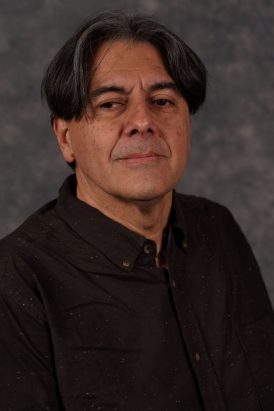
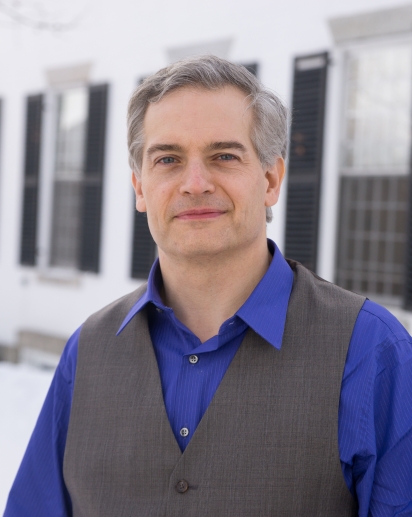
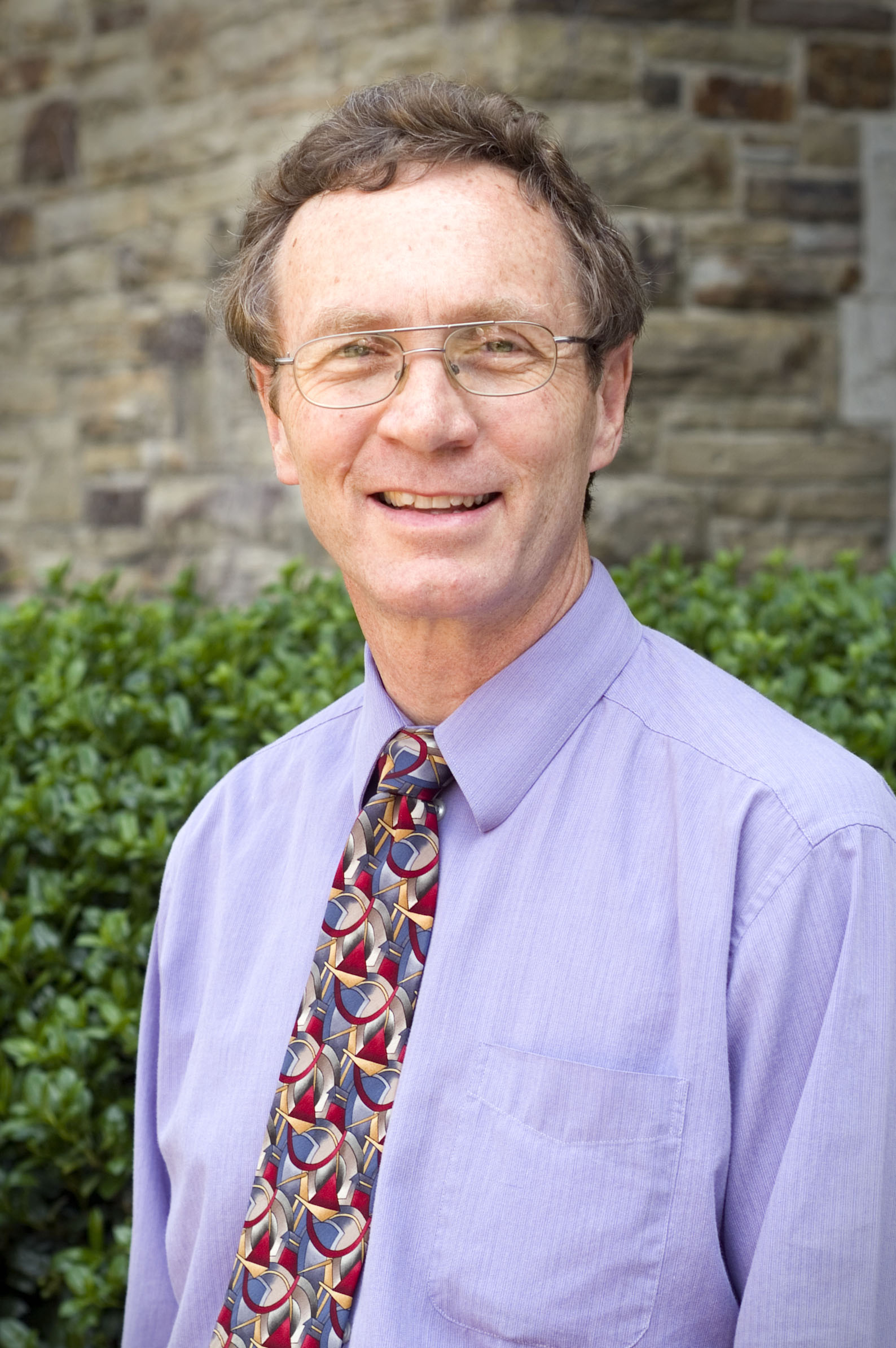
Steven Chung is an Associate Professor at the Department of East Asian Studies and affiliated faculty in Comparative Literature at Princeton University. He currently serves as Director of Graduate Studies and Acting Chair of the University Committee for Film Studies. Education : Ph.D. in East Asian Languages and Literatures (University of California, Irvine), M.A. in English Literature (University of British Columbia), B.A. in English Literature (University of Toronto) Research Interests span Korean and East Asian film/media, Cold War cultural histories, political/religious conversion, and film/critical theory. His work examines transnational media flows, postcolonial cinema, and ideological representations. Recent Courses : Cinematic Translation, Contemporary Korean Media Cultures, North Korean Imaginaries, Conversion Media in Asia, and graduate seminars in East Asian Film Studies. Awards : Association for Asian Studies Prize for Best Book in Korean Studies (2014)
University of California, Los AngelesUnited States
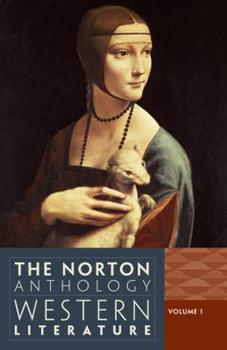
Barbara Fuchs is a Professor in the Department of English at the University of California, Los Angeles, specializing in early modern European literature across Spanish, English, French, and Italian traditions from the 15th to 17th centuries. Her work emphasizes transnational contexts, theater and performance studies, and cultural production within imperial frameworks, with significant contributions to Mediterranean and transatlantic studies. Education Ph.D. in Comparative Literature, Stanford University (1997) B.A./M.A. in Comparative Literature (English, French, Spanish), summa cum laude, Yale University (1992) Research Interests Professor Fuchs' scholarship centers on transnationalism in early modern literature, examining how theater and performance negotiated imperial identities across Mediterranean and transatlantic contexts. Her work critically engages with race and religion in the early modern world, picaresque traditions, and Cervantes studies, revealing how cultural encounters shaped literary production. She bridges historical analysis with contemporary relevance through public humanities initiatives focused on classical Hispanic theater. Publication Trends Her recent publications demonstrate interdisciplinary innovation, merging literary analysis with performance studies and material culture. Recurring themes include transnational exchange mechanisms, racial formation processes, and textual materiality, while recent work addresses pandemic-era digital performance and modern adaptations of classical works. This trajectory highlights her commitment to connecting historical scholarship with current social and artistic practices. Scientific Awards Premio Ñ from the Instituto Cervantes (inaugural award) for promotion of Spanish language and culture Advising and Leadership Professor Fuchs mentors undergraduate and graduate students in early modern studies, translation, and performance. She leads the UCLA "Diversifying the Classics" initiative and LA Escena festival, securing institutional support for these collaborative projects. Her editorial leadership includes serving as articles editor for Renaissance Quarterly and co-editing the Norton Anthology of World Literature , demonstrating field-wide influence. Projects and Teams She directs the "Diversifying the Classics" initiative, which collaborates with theater professionals to adapt Hispanic classical works for contemporary Los Angeles audiences, and founded LA Escena—the biennial festival of Hispanic classical theater. These projects unite scholars, artists, and communities to explore historical texts through modern performance lenses, emphasizing accessibility and cultural relevance.
Gustavo Verdesio serves as an Associate Professor of Spanish within the Department of Romance Languages & Literatures at the University of Michigan. He maintains significant interdisciplinary affiliations as a faculty member of the Program in Native American Studies and as a Faculty Associate for Latina/o Studies. His academic credentials include: Ph.D. in Hispanic Studies or Latin American Studies from Northwestern University (1992) Verdesio's research critically engages with Colonial Studies, Native American Studies, and Material Culture, focusing on Indigenous materialities in Uruguayan history. His current project examines the re-emergence of Indigenous groups previously declared extinct in Uruguay and non-Indigenous responses to Indigenous bodies within settler colonial structures. He investigates objects, agricultural practices, monumentality, and the political implications of Indigenous bodily recognition. Analysis of his 2018-2021 publications reveals consistent thematic focus on settler colonialism in Latin America, Indigenous rights frameworks, and decolonial approaches to archaeology and historical knowledge, with concentrated attention on Southern Cone nations including Uruguay and Argentina. Scientific Awards: No awards, fellowships, or medals were documented in available materials No information regarding graduate student advising, dissertation supervision, or specific research grants was provided in the source documentation. His academic activities appear centered on independent research and interdisciplinary collaboration rather than directed mentorship or externally funded projects as described. The available texts contain no references to laboratories, research centers, or formal collaborative teams associated with Professor Verdesio's work.
Crytal Lee is an Assistant Professor in Computational Media and Design at MIT, with a joint appointment in the Schwarzman College of Computing and Comparative Media Studies/Writing. She is also a Faculty Associate at Harvard's Berkman Klein Center for Internet & Society, co-leading the Ethical Tech Working Group, and a Senior Fellow at Mozilla's Responsible Computing Challenge. Her research focuses on data visualization, disability studies, and ethical technology, emphasizing the 'life-cycle of data representations.' Education: PhD in History, Anthropology, Science, Technology, and Society from MIT (2022); MA and BA (High Honors) in History of Science from Stanford University (2016 and 2015). Research Interests : Crystal examines how data is curated, visualized, and contested, with a particular lens on disability justice and accessible design. Her work bridges STS, HCI, and critical data studies, addressing issues like misinformation, algorithmic bias, and inclusive technology. Awards & Grants : Honorable Mentions at EuroVis 2022 and CHI 2021; NSF Dissertation Improvement Grant; SSRC Social Data Fellowship. Advising & Mentorship : Advised projects on accessible visualization, participatory AI, and disability inclusion. Current book project: Crip Computation . Labs & Teams : Co-leads Ethical Tech Working Group at Berkman Klein; involved in MIT's Data + Feminism Lab and Accessible Interactions projects.
Vincent Brown serves as the Charles Warren Professor of American History and Professor of African and African American Studies at Harvard University, based in the Center for Government and International Studies (CGIS) South Building. His academic work centers on Atlantic history with a focus on the African diaspora and slavery in the Americas. His research expertise spans Atlantic History, African Diaspora Studies, and Slavery, with deep engagement in Digital History methodologies, Early American History, Imperial History, and Race studies. Brown examines power dynamics, resistance movements, and cultural identity formation within 17th-18th century Atlantic contexts, particularly in the Caribbean. His interdisciplinary approach integrates spatial analysis and digital tools to reinterpret historical narratives of slavery and empire. Analysis of his publications (2011-2024) reveals sustained focus on slave revolts as transnational phenomena, spatial history through digital mapping, and multimedia scholarship. His work demonstrates evolution from textual analysis in The Reaper's Garden (2008) to immersive cartographic projects like the Jamaican slave revolt mapping (2012-2016), culminating in documentary production ( Herskovits at the Heart of Blackness , 2009; The Bigger Picture , 2022). Recent outputs show increasing engagement with public history and interdisciplinary connections between political geography, racial terror, and cultural memory. The source materials do not specify details regarding student advising, grant funding, or laboratory teams.
Noel Lenski is the Dunham Professor of Classics and History and Chair of the Classics Department at Yale University. His work focuses on Roman history, particularly the later Roman Empire, with an emphasis on power dynamics, slavery, and migration. He holds a BA from The Colorado College (1989) and MA and PhD from Princeton University (1995). Education: BA in Classics, Colorado College (1989) MA in Classics and Ancient History, Princeton University (1995) PhD in Classics and Ancient History, Princeton University (1995) His research spans political, military, social, economic, religious, and cultural history. Key interests include the limits of imperial power, slavery in antiquity, and human migration. Lenski has authored/co-authored influential books such as Failure of Empire: Valens and the Roman State and Constantine and the Cities , and edited volumes like What is a Slave Society? . He is currently working on monographs on Late Antique slavery and global premodern slavery. Recent scholarship includes studies on the Arch of Constantine, Visigothic law, and the Collectio Avellana. His work bridges archaeological and textual evidence, offering interdisciplinary insights into Roman governance and societal structures. Lenski’s contributions extend to collaborative projects, such as co-editing From East to West in Late Antiquity , and translating/analyzing ancient legal texts like the Liber Iudiciorum .
Roderick B. Campbell is a Professor of East Asian Archaeology and History at the Institute for the Study of the Ancient World (ISAW) within New York University. His research focuses on the Chinese Bronze Age, particularly the Anyang period (ca. 1250-1050 BCE), exploring themes such as violence in early complex polities, historiography, visual culture, and ancient economies. He holds a dual PhD from Harvard University in Anthropology (Archaeology) and East Asian Languages and Civilizations (Chinese History). Professor Campbell has held post-doctoral positions at ISAW (NYU), Brown University’s Joukowsky Institute, and Merton College (Oxford University). He has secured grants and fellowships from organizations including the Canadian Social Sciences and Research Council, Luce-ACLS, the Chiang Ching-kuo Foundation, and the Wenner Gren Foundation. His fieldwork involves collaborative archaeological projects in China focusing on reconstructing Shang political economy, with a current emphasis on zooarchaeology and bone-working practices. He serves on NYU’s PhD Admissions Committee and has authored or edited works such as Violence, Kinship and the Early Chinese State (2018) and Archaeology of the Chinese Bronze Age (2014). His research spans interdisciplinary topics including Shang ontology, early Chinese economies, and comparative studies of complex societies. Campbell’s work bridges archaeological material analysis with historical interpretation to illuminate the socio-political dynamics of ancient East Asia.
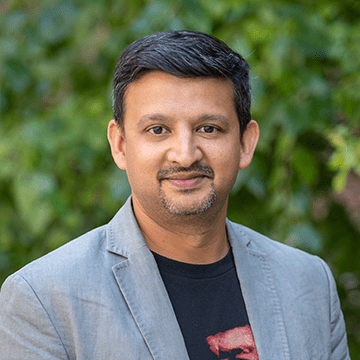
Aswin Punathambekar is a Professor of Communication at the Annenberg School for Communication, University of Pennsylvania, and Director of the Center for Advanced Research in Global Communication (CARGC). His work focuses on media and cultural change in postcolonial and diasporic contexts, particularly in South Asia and its global diasporas. He has held previous academic positions at the University of Michigan, University of Virginia, and a British Academy Global Professorship at Loughborough University (U.K.). Education includes a B.Tech from University of Allahabad (1995), M.A. from University of Georgia (2001), M.S. from MIT (2003), and Ph.D. from University of Wisconsin-Madison (2007). His research integrates media industries, cultural politics, and technological histories, with emphasis on how digital platforms reshape identity, citizenship, and cultural expression. Major publications include From Bombay to Bollywood (2013), Global Digital Cultures (2019), and Media Industry Studies (2020). Current projects explore digital media in India, South Asian diasporic media histories, and global media industries. He serves on editorial boards for journals like Media, Culture & Society and is a Peabody Awards juror. Awards include the Katherine Singer Kovacs Award (2013) and ICA's Outstanding Young Scholar Award (2015). His teaching covers global digital cultures, media theory, and methods in cultural studies, with courses like 'India on Screen' and 'Global Media Industries.' His work bridges academic rigor with public engagement, addressing intersections between media, technology, and societal transformation in transnational contexts.
Massachusetts Institute of TechnologyUnited States
Richard Eberhardt serves as Program Manager for the MIT Game Lab and instructor for MIT Game Lab classes at the Massachusetts Institute of Technology, where he aligns research projects with staff, equipment, and funding while mentoring student game development initiatives. His operational leadership supports the lab's mission to advance game literacy through interdisciplinary collaboration. His academic credentials include: Bachelor of Arts from the College of William & Mary Serious Games MA Certificate from Michigan State University Professional certifications: Certified Scrum Master PMI Agile Certified Practitioner Eberhardt's research investigates historical representation in games, analyzing how mechanics model historical systems and which narratives are amplified or marginalized in gaming communities. His scholarship spans serious games for mental health awareness, educational applications of VR/AR technologies, and inclusive game jam methodologies, consistently addressing public literacies through civic systems and emotional intelligence frameworks. Analysis of his 2013-2023 publications reveals sustained focus on game-based educational tools across STEM and humanities domains. His work pioneers VR simulations for photonics education, examines historical accuracy in commercial games, and develops inclusive frameworks for collaborative design events. This output demonstrates strategic integration of game mechanics with learning objectives while addressing representation gaps in historical gaming. Notable recognition includes an award for elude , the depression awareness game developed in 2010 for patients' support networks. As a mentor, Eberhardt directs student projects like elude and hosts game jams fostering community collaboration. His Agile-certified project management approach facilitates resource allocation across educational initiatives, though specific grant details remain undisclosed in available materials. The MIT Game Lab operates as his primary research ecosystem, connecting students, faculty, and community partners to explore games' transformative potential in education and social contexts through its Civic Systems, Media & Emotional Intelligence pillar.
Paul Christesen serves as the William R. Kenan Professor of Ancient Greek History in the Department of Classics at Dartmouth College and holds a Life Fellowship at Clare Hall, University of Cambridge. His academic leadership includes chairing the Classics Department while maintaining active research and editorial commitments. Education B.A. from Dartmouth College M.A. from Columbia University M. Phil. from Columbia University Ph.D. from Columbia University His research integrates ancient Greek political systems with sport historiography , featuring groundbreaking work on Spartan society and Olympic victor lists. He pioneers geospatial methodologies through Geographic Information Systems to analyze archaeological settlement patterns, bridging traditional philology with digital humanities. Current projects examine sport's relationship to democratic development across historical eras. Christesen's publications reveal evolving focus from foundational Olympic chronology studies toward interdisciplinary analyses of sport's societal impact, increasingly incorporating digital archaeological approaches and comparative political frameworks. His editorial work shapes contemporary discourse in classical reception studies. Scientific Awards William R. Kenan Professorship (prestigious endowed chair) Life Fellowship at Clare Hall, University of Cambridge As an educator, Christesen teaches core courses including Classical Studies 1: Antiquity Today and specialized seminars on Greek athletics and Archaic history. His departmental leadership and editorial projects demonstrate significant institutional impact, though specific grant details and student mentorship records aren't provided in source materials.
Anne A. Cheng is a Professor of English at Princeton University, affiliated with the Program in Gender and Sexuality Studies and the Committee on Film Studies. She is an interdisciplinary scholar focusing on aesthetics, politics, and race, with expertise in literary theory, critical race studies, film theory, feminist theory, and psychoanalysis. Her work bridges 20th-century American literature, visual culture, and Asian/African American literatures. She holds a Ph.D. in Comparative Literature from UC Berkeley, an M.A. from Stanford, and a B.A. from Princeton. B.A., English & Creative Writing, Princeton University M.A., English & Creative Writing, Stanford University Ph.D., Comparative Literature, UC Berkeley Her research explores racial grief, modernist aesthetics, and the intersections of race, gender, and visual culture. Her books include The Melancholy of Race (2001), Second Skin (2013), and Ornamentalism (2019). Current projects address race, food studies, and animal studies. Cheng leads initiatives like Critical Encounters—a series fostering art-theory dialogues—and the American Studies Collaboratory, a cross-disciplinary lab examining identity, citizenship, and cultural dynamics through law, arts, and social sciences.
Steven L. McKenzie is Professor of Religious Studies and Spence L. Wilson Senior Research Fellow at Rhodes College, specializing in Hebrew Bible (Old Testament) studies, biblical archaeology, and the Dead Sea Scrolls. His academic career spans decades of influential scholarship and editorial leadership. His educational background includes: Th.D. from Harvard University B.A. and M.Div. from Abilene Christian University McKenzie's research focuses on the history of ancient Israel, Hebrew Bible literature, Hebrew language and grammar, biblical interpretation methods, and the intersection of archaeology with biblical studies. He pioneered work on the Deuteronomistic History and Chronicler's literature, establishing foundational frameworks still referenced today. His interdisciplinary approach bridges textual analysis with historical context, making complex scholarship accessible to broader audiences. His publication trajectory reveals consistent engagement with biblical historiography and interpretation, evolving from technical studies like The Chronicler's Use of the Deuteronomistic History (1985) to accessible works such as How to Read the Bible (2005), and culminating in major reference works including the Oxford Encyclopedia of Biblical Interpretation (2013). Recent projects focus on editorial leadership for the Oxford Bible Commentary series. Key honors include: Spence L. Wilson Senior Research Fellowship McKenzie's academic service demonstrates exceptional commitment: founding the Deuteronomistic History Section at the Society of Biblical Literature, serving as associate editor of Vetus Testamentum (2010-2019), and contributing to editorial boards of Journal of Biblical Literature and Catholic Biblical Quarterly . His decade-long leadership of academic tours through the Middle East and Greece with the Middle East Travel Seminar extended his scholarship into experiential education, while media appearances on Discovery and History channels brought biblical scholarship to public audiences.
Jason Ur is the Stephen Phillips Professor of Archaeology and Ethnology at Harvard University, specializing in early urbanism, landscape archaeology, and remote sensing. He directs the Erbil Plain Archaeological Survey (EPAS) in Iraqi Kurdistan and has conducted fieldwork in Syria, Turkey, and Iran. His work leverages declassified satellite imagery and geospatial technologies to study ancient settlement patterns, irrigation systems, and transportation networks. Research Focus: Early urban development in Mesopotamia, GIS-based landscape analysis, qanat systems, and postmortem segregation in colonial New England cemeteries. Field Projects: EPAS (2012–present), Tell Hamoukar Survey (1999–2001), and studies of colonial-era burying grounds since 2020. Methodology: Remote sensing (CORONA, HEXAGON, U2 imagery), UAV photogrammetry, 3D visualization, and intensive ground surveys. Key Findings: Discovery of undocumented urban centers, mapping of ancient canals and hollow ways, and analysis of rural Assyrian landscapes.
Sudhir Mahadevan is an Associate Professor at the University of Washington in the departments of Comparative History of Ideas and Cinema & Media Studies . He holds a PhD in Cinema and Media Studies and is affiliated with the Jackson School of International Studies , Social Sciences , and South Asia Center . Education: PhD in Cinema and Media Studies His research explores the origins of Indian cinema, focusing on intermediality between photography, print, and film, and the commercial practices that shaped its development. He is working on a project titled Iconic Images , analyzing thematic and formal elements in post-Independence Hindi cinema. Recent publications address topics such as queer cinema in India, the interplay between Hindi novels and films, and the legal history of cinema as an art form. His work spans journals like Framework , Screen , and TransAsia Photography , with a focus on visual culture, medium specificity, and historical analysis.
Brian Larkin is Professor of Anthropology at Barnard College, Columbia University, and Codirector of Columbia's Center for Comparative Media. He holds a PhD from NYU (1998) and studies media technologies through anthropological frameworks. Research examines media infrastructures in Nigeria: Religious media in Islamic and Christian contexts Nigerian film (Nollywood) circulation Urban soundscapes and loudspeaker culture Infrastructure politics and colonial legacies Authored Signal and Noise: Media, Infrastructure, and Urban Culture in Nigeria (Duke, 2008) and co-edited Media Worlds: Anthropology on New Terrain (California, 2002). Current work explores the relationship between media forms, religious transformations, and urban experience in postcolonial contexts.