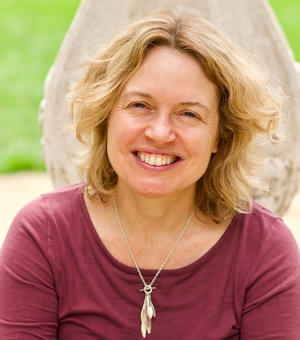
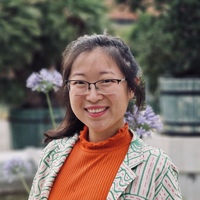
Rachel Murphy is a Professor of Chinese Development and Society at the University of Oxford. She holds a PhD in Sociology from the University of Cambridge (1999) and has extensive experience in institution-building through roles such as former Research Director of OSGA (2019-2023) and former Head of OSGA (2014-2018). Her research focuses on migration, rural transformation, and gender imbalances in China, leveraging ethnographic and qualitative methodologies. Her monograph The Children of China’s Great Migration (2020) explores migrant families’ dynamics, supported by a British Academy Mid-Career Fellowship. Additional expertise includes media studies and sociological demography. She co-leads the Global Gender in an Era of Care Crises network and served as President of the British Association for Chinese Studies (2019–2022). Rachel’s work spans over 20 years with six years of fieldwork in mainland China and Taiwan. Current projects include urbanization’s impact on migrant families and Taiwan studies through Oxford’s Taiwan Programme. She sits on editorial boards for Modern China and The China Quarterly .
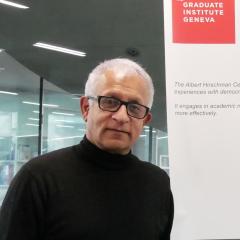
Gopalan Balachandran is a Professor of International History and Politics at the Graduate Institute of International and Development Studies in Geneva, where he also serves as Co-Director of the Albert Hirschman Centre on Democracy. He joined the Institute in 2000 from the Delhi School of Economics. Balachandran holds a Master's and MPhil in International Economics from Jawaharlal Nehru University (JNU), New Delhi, and a PhD in Economic History from the University of London. His research focuses on South Asia and the Indian Ocean within global contexts, examining labor, capital, entrepreneurship, and development. Key themes include colonialism, decolonization, and their contemporary legacies. Current research emphasizes commercial cultures in the Indian Ocean and Atlantic worlds. He supervises studies on modern South Asian history, cultural/intellectual history, and oceanic history. Thematic expertise spans central banking, emerging economies, globalization, and diaspora studies. Geographically, he specialises in India and broader Asian regions. His publications include seminal works like John Bullion’s Empire (1996) and India and the World Economy, 1850-1950 (2003). As Managing Editor of the Indian Economic and Social History Review , he contributes to academic discourse on economic historiography.
Priya Satia is the Raymond A. Spruance Professor of International History and Professor of History at Stanford University. She specializes in modern British and British Empire history, with a focus on the cultural, material, and intellectual foundations of colonialism. Her work examines how imperial pasts shape contemporary global issues, including state secrecy, military technology, and development policies. Education: Ph.D., UC Berkeley (History, 2004) M.A., UC Berkeley (History, 2004) M.Sc., London School of Economics (Development Economics) B.A. and B.S., Stanford University (International Relations and Chemistry) Research Interests: Satia’s research bridges cultural, economic, and military history. She explores topics like the industrial revolution’s violent origins, the legacy of British air control in Iraq, and the historiography of empire. Her work emphasizes anticolonial perspectives and the ethical dimensions of historical narratives. Awards and Recognition: 2009 AHA-Herbert Baxter Adams Book Prize (Spies in Arabia) 2019 Wadsworth Prize in Business History (Empire of Guns) 2021 Bronze Prize in History (World) (Time’s Monster) Public Engagement: Satia contributes to public debates through op-eds in mainstream media (e.g., The New York Times, BBC) and commentaries on topics like drone warfare, gun control, and colonial legacies. She collaborates with the 1947 Partition Archive to document oral histories of partition. Current Projects: A new book on British colonialism in Punjab and its legacies, alongside explorations of historical agency and the role of poets in anticolonial movements.
Luke Cooper is an Associate Professorial Research Fellow in the Department of International Relations at the London School of Economics and Political Science (LSE), where he is affiliated with the Conflict and Civicness Research Group. He serves as Director of PeaceRep’s Ukraine programme, leading interdisciplinary research teams across six global institutions and a broader network of scholars in Ukraine and the region. His academic work sits at the intersection of historical sociology, political theory, and international relations. His research interests include nationalism, authoritarianism, democracy, uneven and combined development, conflict, and systemic societal transformation. Dr Cooper’s work combines theoretical innovation with empirical analysis, drawing on both historical and contemporary case studies to examine processes of social and political change. His recent publications explore themes such as the global threat of authoritarian contagion, the historical evolution of national identity in the British Atlantic, and the political imaginaries in science fiction literature. These works reflect a consistent engagement with macro-historical processes and structural transformations in global politics. Authoritarian Contagion; the Global Threat to Democracy (2021) Imagined communities: from subjecthood to nationality in the British Atlantic (2022) Worlds beyond capitalism: images of uneven and combined development in Kim Stanley Robinson’s Mars trilogy (2021) Dr Cooper has been involved in significant policy advocacy and public engagement, co-founding the campaign group Another Europe Is Possible and co-hosting the Another Europe podcast. He has led projects on Brexit impacts and international solidarity with Ukraine. He previously served as a visiting fellow at the Institute of Human Sciences (IWM) in Vienna and has taught at Anglia Ruskin University, Richmond American University London, and the University of Sussex. He leads multiple funded research initiatives, including PeaceRep’s Ukraine programme, which conducts evidence-based policy analysis on Ukraine’s war economy and investigates the broader phenomenon of global fragmentation beyond traditional geopolitics. His work emphasizes transnational interconnections in the defense of national sovereignty. Dr Cooper completed his PhD in International Relations at the University of Sussex, holds an MSc in Comparative Politics from LSE, and a BA in Political Studies from the University of Leeds.
Mathew Frith is a Lecturer at the University of New England (UNE), affiliated with the UNE Business School. He holds a PhD from Federation University Australia and specializes in the history of economic thought, particularly the 19th-century American Protectionist School associated with figures such as Alexander Hamilton and Henry Charles Carey. PhD, Federation University Australia (2024) Bachelor of Economics (Honours), University of New England His research focuses on the economic philosophy and theory of American Protectionists, emphasizing the dynamic, inventive nature of the economy and the role of individuality, invention, and talent diversity. He explores how this school of thought challenges classical and Marxist economic assumptions and offers a coherent, systematic alternative that has been historically underappreciated. His recent publications and presentations analyze key figures like Van Buren Denslow and Henry Charles Carey, reconstructing their theoretical contributions and highlighting the sophistication of the American Protectionist tradition. His work demonstrates that this school rivals and in some aspects surpasses other 19th-century economic doctrines, arguing against linear progress in economic knowledge and advocating for the recovery of lost insights to inform modern analysis. Scientific awards include: 2024 Prize for Best Doctoral Thesis, awarded by the History of Economic Thought Society of Australia (HETSA) Frith teaches International Political Economy (ECON320/420/520) and International Business (BUS202/502). He is a member of several academic societies, including the History of Economic Thought Society of Australia (HETSA), the History of Economics Society (HES), and the Economic Society of Australia (NSW Branch). He is actively engaged in research dissemination through platforms such as ResearchGate, Academia.edu, and Google Scholar, and maintains a personal website and Linktree for updates on his scholarly activities. There is no indication of lab or research team leadership at this stage.
Ida Zilio-Grandi is an Associate Professor in the Department of Asian and North African Studies at Ca' Foscari University of Venice, where she specializes in Arabic Language and Literature (SSD L/OR-12). She also holds teaching responsibilities in Islamic Thought and Theology (SSD L/OR-10) and has been actively involved in multiple interdisciplinary programs, including Master’s degrees in Interfaith Dialogue, Islamic Philosophy, and Mediterranean Studies. From 2019 to 2023, she served as Director of the Italian Cultural Institute in Abu Dhabi under the Ministry of Foreign Affairs, reflecting her deep engagement with cultural diplomacy. Education Graduated in Oriental Languages and Literatures (Arabic) from Ca' Foscari University of Venice. PhD in “Studies on the Middle East and the Maghreb from the founding of Islam to the Present day” at the University of Naples “L’Orientale”. Research Interests Her scholarly work centers on Quranic studies, Islamic ethics, and Arabic literature. She investigates religious figures in the Quran (e.g., Mary, Cain, Pharaoh, Jonah), Islamic moral concepts such as gratitude (šukr), patience (ṣabr), tolerance, and mercy, and the ethical dimensions of employment, speech, and hospitality. Her research draws on classical exegesis, adab literature, and contemporary Islamic thought, bridging historical analysis with modern applications. She also explores interfaith dialogue, particularly between Islam, Christianity, and Judaism, and cultural relations between the Islamic world and the West. Publication Trends Her recent publications (2020–2025) reflect a sustained focus on Islamic virtues, ethics, and Quranic interpretation. These include monographs on the moral life of Muslims, studies on Sufism in the UAE, Abraham’s legacy, and environmental ethics in Islam. Her work combines rigorous philological analysis with philosophical insight, often published in high-impact journals and academic volumes. Scientific Service and Recognition Member of the “Committee for Islam in Italy” at the Ministry of Interior (since 2015). Member of the Scientific Committee of the “Dialogue méditerranéen sur la modernité et le religieux” at Collège des Bernardins, Paris. Sits on the editorial boards of Annali di Ca’ Foscari , Islamo-Christiana , and L’opera Comune . Invited Researcher at the Pontificio Istituto di Studi Arabi e d’Islamistica (PISAI), Rome (since 2017). Advising, Grants, and Leadership She has coordinated several Master’s programs at Ca' Foscari, including the LM “Languages, Economies and Societies of Asia and Mediterranean Africa (LEISAAM)” and the international LM “MIM – Crossing the Mediterranean.” She is the Erasmus+ Coordinator for partnerships with the University of Jordan and Mohammed V University in Rabat. She led the research project The Languages of the Absolute (2011–2015), funded by Ca' Foscari University. Though no formal students are listed, her mentorship is evident through her academic leadership and editorial roles. Labs and Research Groups She is affiliated with several research centers, including the Ca' Foscari Center for Studies on Human Rights (CESTUDIR), the Center for Contemporary Middle East Studies (CEM), and the Religion, Law and Economy in the Mediterranean Area Center (REDESM). She is also a member of the Arab-Christian Research Group (GRAC) and the Lay Association for Biblical Culture “Biblia.”
Dr Jasem Tarawneh serves as an Honorary Senior Lecturer in Commercial and Intellectual Property Law at the University of Manchester's School of Law, combining academic work with his role as Legal Academic Associate at Kings Chambers. His career bridges corporate law practice and scholarly research, focusing on global commercial legal frameworks. His educational foundation includes: Doctor of Philosophy (PhD) specializing in legal and economic justifications for trade marks protection under European Law Tarawneh's research interrogates Intellectual Property Law through interdisciplinary lenses, emphasizing Trade Marks' economic dimensions, Branding in globalization contexts, and Regulatory impacts on market access. His scholarship consistently integrates Law and Economics methodologies while advancing Alternative Dispute Resolution mechanisms, particularly International Commercial Arbitration, within commercial law frameworks. Publication trends reveal sustained focus on trade mark theory evolution, functional classifications, and European system evaluations, with recent work examining software protection nuances and historical trademark law development. His output demonstrates methodological consistency in applying economic analysis to intellectual property challenges. Recognition includes: Humanities Strategic Investment Fund (HSIF): Internationalisation award (2018) As a supervisor, Tarawneh has overseen 7 PhD completions and chaired examination committees internationally. His external examiner roles span UK and global institutions for undergraduate and postgraduate programs, reflecting substantial contribution to academic quality assurance. His Kings Chambers affiliation facilitates practitioner-academic synergy, particularly in commercial law applications and dispute resolution contexts.
Dr Lisa Mardikian is a Senior Lecturer in Property Law at Brunel Law School, College of Business, Arts and Social Sciences, Brunel University London. She holds a PhD in International Law (University of Bristol, 2015) without corrections, an LLM in International Law (University of Nottingham), and an LLB in Law (University of Nottingham). Her academic career includes prior roles as a Lecturer at the University of Portsmouth and a Teaching Assistant at the University of Bristol. Lisa's research focuses on the intersection of global economic governance human rights international law socio-economic relations climate change law European integration She has served as a visiting research fellow at the Max Planck Institute for Comparative Public Law and International Law and as a visiting lecturer at European Business School, Autonomous University of Barcelona, and Panteion University. Her recent publications (2021-2025) emphasize international adjudication mechanisms socio-economic rights enforcement climate change impacts on indigenous communities EU constitutional developments property rights frameworks post-conflict reconstruction These works bridge comparative law, systems theory, and constitutional analysis. Scientific awards include Fellowship of the Higher Education Academy (HEA) Co-convenor of the Socio-Legal Jurisprudence stream at the Socio-Legal Studies Association Lisa supervises PhD projects on public international law and human rights, with particular expertise in the Inter-American and European human rights systems. She contributes to public discourse through media engagement, including features in The Guardian . Her teaching portfolio includes UG Law of Trusts, UG Land Law, and PG International Dispute Settlement modules.
Christian Flachsland is Professor of Climate Policy and Director of the Centre for Sustainability at the Hertie School. He also serves as a Research Fellow at the Mercator Research Institute on Global Commons and Climate Change (MCC) , where he previously led the Governance working group. His research focuses on climate policy design, energy governance, and the political economy of sustainability transitions, with particular emphasis on Germany and the European Union. Flachsland's recent publications analyze climate institutions across Germany, UK, Sweden, and Australia, and develop frameworks for anticipatory policy mix construction in road transport. His work combines machine learning literature mapping with comparative institutional analysis , appearing in top journals like Science and Nature Climate Change . Current projects examine EU carbon border adjustment mechanisms and reflexive governance in climate policy evaluation. As co-coordinator of Governance research in the BMBF-funded Kopernikus-Ariadne project , he assesses climate policy options for Germany and Europe through multi-country institutional comparisons and policy pathway assessments . His work bridges academic research with policy advice, including participation in the IPCC Scoping Meeting for its Sixth Assessment Report.
Dr. Wannasarn Noonsuk is an Associate Professor in the Department of Art, Design, and Art History at California State University, Fresno, where she has taught courses like Asian Art, Southeast Asian Art, and South Asian Art since 2018. Her research focuses on the archaeology of Peninsular Thailand , early maritime trans-Asiatic trade , state formation in Southeast Asia , and the social roles of Hindu-Buddhist art . Education : Post-Doctoral Study (2013), École Française d'Extrême-Orient; Ph.D. (2012), M.A. (2009) in Art History, Cornell University; M.A. (2005) in Anthropology, University of Hawai'i; B.A. (2001) in Archaeology, Silpakorn University. Her recent publications analyze Hindu elements in Southeast Asian art (2024), Srivijaya network dynamics (2024), and employ scientific analyses of ceramics (2019-2020) to trace trade and cultural exchange. She has presented at institutions including SOAS (2021), National University of Singapore (2019), and Cornell University (2010), and serves as Vice President of Programs for the Fresno County Archaeological Society (2021-present). Her work spans archaeological science , cultural heritage management , and cross-cultural interactions between South and Southeast Asia, particularly in pre-modern trade and religious networks.
Dr. Mingyuan Zhang Betancourt is a socio-cultural anthropologist affiliated with the University of Oslo's Institute of Community Medicine and Global Health. Specializing in cross-cultural analysis between China and Africa, her work examines pharmaceutical supply chains and postcolonial development dynamics. PhD in Anthropology, University of Western Ontario (2018) Former Writing Fellow, University of Toronto Scarborough Her research spans multiple disciplines: Pharmaceutical Anthropology : Analyzing antibiotic shortages across India/China production networks China-Africa Relations : Investigating cultural identity formation through historic sugar plantations and Confucius Institute operations Political Ecology : Documenting resource conflicts in Malagasy agrarian systems Recent publications demonstrate: 2024 study on pharmaceutical production history 2023 comparative analysis of China-India trade disputes 2022 critique of cultural standardization in educational programs 2021 pandemic discourse analysis She actively explores: Global antibiotic accessibility Postcolonial development paradigms Transnational identity politics
Marie-Claude Desjardins is a Full Professor at the Faculty of Law , Université de Sherbrooke, where she has been affiliated since 2011. She specializes in interdisciplinary legal research at the intersection of Consumer Law , Environmental Law , Agri-Food Systems , and Blockchain Regulation , with a focus on heteronomy between state law and private norms , eco-social justice , and fair trade certification . PhD in Law (Université Montesquieu-Bordeaux IV, 2015) LL.D. (Université Laval, 2015) LL.M. (Université Laval, 2005) B.C.L./LL.B. (McGill University, 2003) Her research explores normative interactions between state law and private standards in fair trade certification, particularly in viticulture and agri-food sectors. She examines how certification systems address labor rights, environmental protection, and consumer empowerment, with fieldwork in Chile, South Africa, and Argentina. Recent publications and presentations highlight her work on data transparency in telecommunications, blockchain applications for sustainable claims, and food labeling regulations . She co-directs the Centre de recherche sur la régulation et le droit de la gouvernance (CrRDG) and has secured grants from SSHRC, FRQSC, and the Desjardins Foundation. Key awards: Minerve Thesis Prize (2014), Best Cotutelle Thesis (France-Québec), and Best Thesis in Humanities/Social Sciences (Québec)
Julia Behrman serves as an Associate Professor of Sociology at Northwestern University, where she conducts internationally recognized research on family change in global contexts. Her work examines how family structures interact with major societal forces including educational expansion, environmental change, women's labor force participation, and migration patterns, with particular attention to power dynamics within households and their implications for social inequality. Dr. Behrman earned her PhD from New York University in 2017 following a Postdoctoral Prize Research Fellowship at Nuffield College, University of Oxford. Her methodological expertise combines advanced quantitative techniques with comparative demographic analysis across diverse geographical settings. Her research program centers on family sociology, gender studies, and demography, with significant contributions to understanding how events like natural disasters, migration, and policy changes alter family power structures. She investigates whether evolving family forms mitigate or reinforce inequalities both between and within households, addressing critical questions about who holds decision-making authority in families and how crises reshape these dynamics. Analysis of her recent publications reveals a strong methodological emphasis on quantitative analysis of large-scale datasets, with thematic focus on reproductive health preferences, migration impacts, and family size norms across the United States, France, and Sub-Saharan Africa. Her work consistently bridges demographic trends with sociological theory to explain household-level responses to macro-level social changes. Her scholarly excellence has been recognized through multiple prestigious awards: American Sociological Association Section on Education Award American Sociological Association Section on Population Award American Sociological Association Section on Development Award Society for the Study of Social Problems Award Population Association of America Award Sociologist AIDS Network Award Dr. Behrman has secured competitive research funding from the National Science Foundation and South African Medical Research Council to support her investigations into family and demographic change. As an educator, she teaches undergraduate courses including "Gender and Society" and graduate-level courses in "Research Design" and "Regression II," while actively mentoring PhD students through a structured advising process that emphasizes methodological rigor and theoretical innovation.
Prof. Dr.-Ing. Udo Fiedler is a faculty member at the Technical University of Central Hesse (THM), Department of Business Administration and Economics, where he serves as Head of the Production Engineering Laboratory and Member of the Senate. His academic work focuses on manufacturing engineering with specialization in high-speed machining, production processes, and machine tools. His research interests include: High-Speed Machining (HSC) and precision manufacturing Green machining of sintered parts in the green state Process optimization using statistical experimental design Machine tool technology and NC programming Industry 4.0 applications in manufacturing education Process monitoring and control for increased manufacturing safety Prof. Fiedler's publication record demonstrates an evolution from fundamental machining processes toward integrating AI with traditional manufacturing. His recent work shows strong emphasis on applying artificial intelligence to quality prediction, optimizing green machining processes, and implementing Industry 4.0 concepts through learning factory approaches, bridging traditional manufacturing engineering with modern digital technologies. His significant scientific contributions include: Development of methods for NC programming of complex workpieces Research on stability lobe diagrams for milling processes Studies comparing different production methods including HSC, EDM, and generative processes Work on mechatronic tool holders for process monitoring Applications in the ophthalmic industry for precision machining of spectacle lenses Prof. Fiedler teaches multiple courses at THM including Factory Planning/Ergonomics, Handling and Assembly Technology, Innovative Manufacturing Processes, and Machine Tools at the bachelor's level, and Learning Factory 1 and 2 at the master's level. He leads current research projects including Klag-Robotics (2023-2025), Loewe Project OST (2018-2021), and GrünSpan (2014-2015), demonstrating sustained research activity across multiple manufacturing domains.
Lucila de Almeida is an Associate Professor at NOVA School of Law, Universidade NOVA de Lisboa, holding the prestigious Abreu Chair in ESG Impact, Climate and Energy Law. She concurrently serves as coordinator of the NOVA Green Lab and the Master's in International and European Law, while maintaining a part-time Full Professor position at the European University Institute's Florence School of Regulation. Her academic leadership spans energy regulation, climate policy, and European legal frameworks. Her educational foundation includes: PhD in European Law from the European University Institute LL.M. in Comparative, European and International Law from the European University Institute Master's in Law and Development from FGV São Paulo Law Degree from the Federal University of Rio Grande do Norte Professor de Almeida's research confronts urgent energy-climate intersections through critical analysis of regulatory frameworks. She pioneers studies on peer-to-peer energy trading, consumer protection in digitalized markets, and the legal architecture of sustainable consumption. Her work dissects the European Green Deal's implementation challenges, examining how securitization narratives impact energy, food, and climate policies while advocating for equitable regulatory solutions in energy democratization. Her publication trajectory reveals deepening engagement with energy market transformation, shifting from foundational contract law analyses toward systemic examinations of digitalization, community energy models, and Green Deal stress-testing. Recent works increasingly integrate consumer protection with energy democratization frameworks, highlighting regulatory gaps in peer-to-peer platforms and sustainability reporting. Her scholarly recognition includes: Abreu Chair in ESG Impact, Climate and Energy Law Edmond J. Safra Research Fellowship at Tel Aviv University Finnish Distinguished Professorship by the Academy of Finland As principal investigator for major EU-funded initiatives including Horizon Europe's U2Demo project and International Energy Agency's UserTCP Observatory, she directs cutting-edge research on P2P energy sharing and consumer rights. Her editorial leadership spans Competition and Regulation in Network Industries (Sage) and Energy Research & Social Science (Elsevier), shaping discourse on regulatory innovation. Through the NOVA Green Lab, she cultivates interdisciplinary collaboration on climate law implementation and energy justice, developing practical ESG training frameworks for Portuguese SMEs while advancing theoretical foundations of regulatory private law.