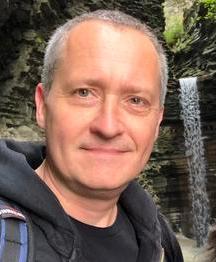
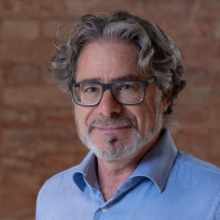
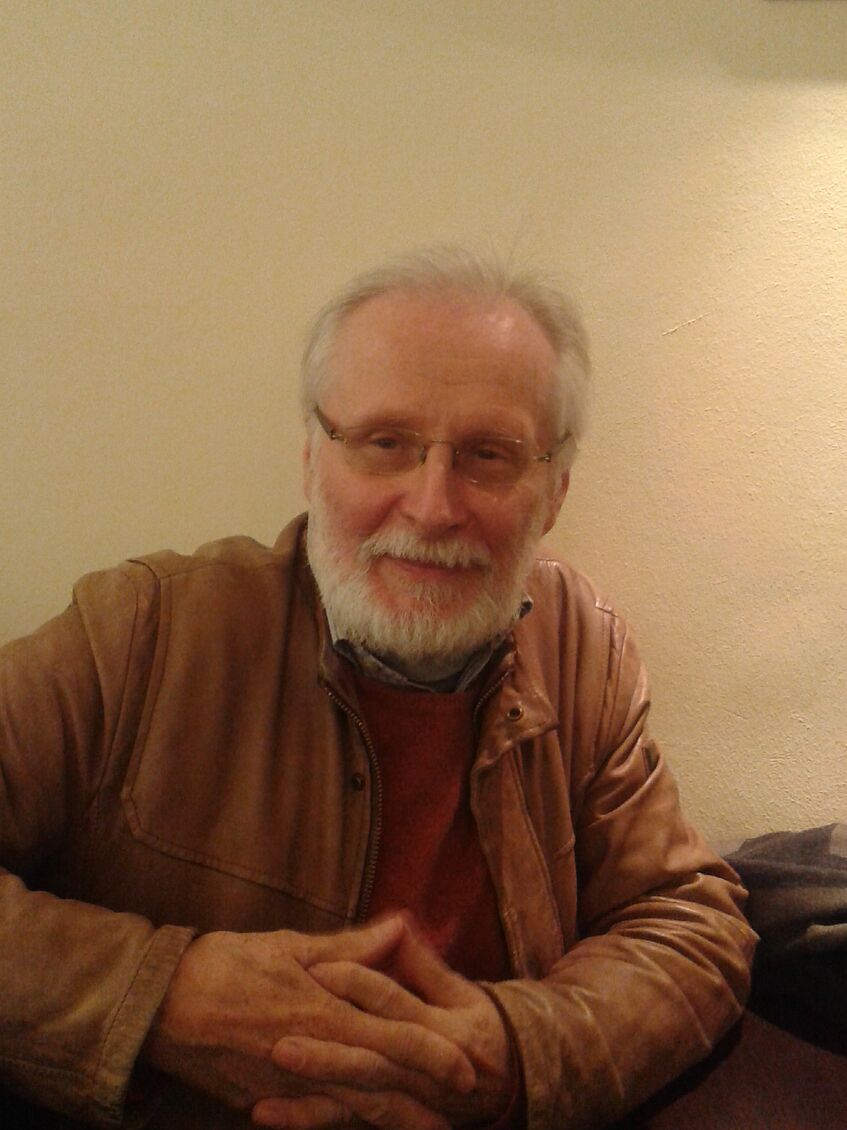
Karrie J. Koesel is an Associate Professor of Political Science at the University of Notre Dame, specializing in contemporary Chinese and Russian politics, authoritarianism, and religion-politics dynamics. She is a Wilson China Fellow (2025-26), Public Intellectuals Program Fellow, and recipient of the Aaron Wildavsky Award for best religion-politics dissertation. Her research explores how authoritarian regimes cultivate legitimacy through religious management and political education. Ph.D. in Government, Cornell University (2009) Former faculty member at University of Oregon Her work examines: Authoritarian resilience through religious cooperation/conflict Political education strategies for youth loyalty State responses to political mobilization Comparative China-Russia regime dynamics Recent publications focus on authoritarian toolkits, political socialization, and religious regulation. She is currently writing a book about political education in authoritarian regimes. Her research has received support from Minerva Research Initiative, Spencer Foundation, and Fulbright program. Scientific awards include: Wilson China Fellowship (2025-26) Ted Jelen Best Article Award (2025) Minerva Research Initiative grant (2024-26) Chiang Ching-Kuo Foundation grant (2021) Spencer Foundation grant (2016) Aaron Wildavsky Award (2010) Koesel participates in several research networks including the International Diffusion and Cooperation of Authoritarian Regimes (IDCAR) and is affiliated with Notre Dame's Keough School of Global Affairs, Kellogg Institute, and Ansari Institute for Global Engagement with Religion.
Jordan A. Sand is a Professor of Japanese History at Georgetown University's College, with a joint appointment in the Department of East Asian Languages and Cultures. He holds a Ph.D. in History from Columbia University and a Master's in Architectural History from the University of Tokyo. His research explores Japanese modernity through the lens of urbanism, material culture, and everyday life. Key works include House and Home in Modern Japan (2004), Tokyo Vernacular (2013), and Teikoku Nihon no seikatsu kūkan (2015). His interdisciplinary research spans urban fires, food history (notably sushi and miso), and colonialism's material legacies. He co-directs the Asian Cities: Urban Settlers project, focusing on marginalized communities in Asian megacities. Recent publications address pandemic resilience, urban displacement, and the cultural history of mask-wearing. Education: Columbia University: Ph.D. in History (Year unspecified) University of Tokyo: M.E. in Architectural History Columbia University: B.A. (Year unspecified) Research Interests: Colonial urban spaces and material culture Comparative urban studies and informality Food as cultural and historical artifact His work bridges global and local histories, emphasizing interdisciplinary methods and collaborative urban studies. Current projects include analyzing Tokyo's postindustrial landscapes and rethinking Pacific historiography through trans-imperial networks.
Evan Davies is a Professor in the Civil and Environmental Engineering Department at the University of Alberta's Faculty of Engineering. He has been a Full Professor since July 2021, following his promotion from Associate Professor (2015-2021) and Assistant Professor (2009-2015) positions at the same institution. Education: Ph.D. (Civil and Environmental Engineering), The University of Western Ontario, London, Ontario (2003-2007) M.E.S. (Environment and Resource Studies), The University of Waterloo, Waterloo, Ontario with field research in China and India (2001-2003) B.A.Sc. (Systems Design Engineering), The University of Waterloo, Waterloo, Ontario, including a year-long exchange at Technical University of Hamburg-Harburg, Germany (1995-2001) Evan Davies' primary research focuses on water resources planning and management, systems thinking and modeling, and sustainable development. His work develops and applies hydrological, water use, and water quality models to understand complex feedbacks among water availability, use, and quality within their social, economic, and environmental contexts. His research spans municipal to global spatial scales and daily to decadal time scales, aiming to provide decision-makers with tools to compare structural, management, and policy alternatives for sustainable water planning. His recent projects include global and regional-scale modeling of water security and the water-energy-food nexus, irrigation reservoir management, municipal water demand projections, flood risk management, and chloramine dissipation in stormwater pipes. Recent research trends show a strong focus on: Integrated assessment modeling of water-energy-food systems Climate change impacts on water resources Machine learning applications in hydrology Water security under decarbonization scenarios Flood risk assessment and management Sustainable urban water systems Scientific Awards: Faculty of Engineering Graduate Teaching Award, University of Alberta (2020-2021) Faculty of Engineering Undergraduate Teaching Award, University of Alberta (2018-2019) Doctoral Fellowship (CGS), Natural Sciences and Engineering Research Council (2005-2007) University of Western Ontario Graduate Tuition Scholarship (2005-2007) Ontario Graduate Scholarship in Science and Technology (2004-2005) Masters/Doctoral Fellowship (PGS A/B), Natural Sciences and Engineering Research Council (2002-2004) Davies has supervised numerous graduate students working on projects related to water resources planning and management. His research has been supported by various grants, including funding from the Natural Sciences and Engineering Research Council. He collaborates extensively with researchers at the Joint Global Change Research Institute (JGCRI) in College Park, MD, and with government agencies and industry partners on water management projects across Canada, particularly in Alberta's Bow River basin. Davies leads a research group focused on water resources systems modeling, which employs system dynamics, optimization techniques, and machine learning approaches to address complex water management challenges. His team collaborates with decision-makers and stakeholders to ensure research outcomes are directly applicable to real-world water management problems.
Hailiang Chen serves as Professor in Innovation and Information Management, Assistant Dean (Taught Postgraduate), and Director of the Artificial Intelligence Research Institute at HKU Business School, The University of Hong Kong. His academic journey includes a PhD and MS from Purdue University and a BM from Tsinghua University. Doctoral Degree: Management Information Systems, Purdue University Master Degree: Economics, Purdue University Bachelor Degree: Information Management and Information Systems, Tsinghua University Professor Chen's research spans artificial intelligence, FinTech, social media analytics, and platform economics, with significant contributions to understanding how digital interactions shape financial markets and consumer behavior. His work frequently examines the intersection of technology adoption and economic outcomes, particularly in cryptocurrency markets, live-stream commerce, and venture capital decision-making. His research methodology combines large-scale data analysis with experimental designs to uncover causal relationships in digital ecosystems. His publications in elite journals like Journal of Financial Economics and Management Science demonstrate consistent impact, with multiple ESI Highly Cited Papers. Current projects include Gov-RAG for e-government services and comparative studies of AI search tools. His research has received continuous funding from Hong Kong's Research Grants Council for five consecutive years (2019-2023). Faculty Outstanding Researcher Award, HKU Business School (2022-23) INFORMS ISS Sandra A. Slaughter Early Career Award (2022) Association for Information Systems Early Career Award (2019) Three ESI Highly Cited Papers (Top 1% in field) Professor Chen actively contributes to academic service as Associate Editor for Journal of Management Information Systems and MIS Quarterly , and serves as Program Chair for the International Conference on Smart Finance. His industry collaborations include Alibaba, HSBC, and China Construction Bank, bridging academic research with real-world business applications in AI implementation and digital transformation.
Stanley Huey is a Professor of Psychology and American Studies & Ethnicity at the University of Southern California (USC), affiliated with the College of Letters, Arts and Sciences. He holds a Ph.D. in Clinical Psychology from UCLA (1998) and joined USC in 2000. His research focuses on psychotherapy outcomes, culturally responsive treatments for ethnic minorities, and interventions targeting gang-involved youth and criminal justice populations. Dr. Huey’s educational background includes a B.A. in Psychology and Anthropology from UC Berkeley (1990), an M.A. in Clinical Psychology from UCLA (1994), and a Ph.D. in Clinical Psychology from UCLA (1998). His work bridges clinical practice, cultural competence, and community-based interventions. Key research areas include: Culture’s role in psychotherapy efficacy Mental health disparities among Asian Americans and African Americans Adverse effects of gang-focused interventions Cognitive-behavioral therapy adaptations for diverse populations Psychosocial interventions for youth violence prevention His publications span over 60 peer-reviewed articles and chapters, emphasizing meta-analyses of intervention effectiveness and culturally tailored treatments. Notable works include a 2018 meta-analysis of Asian American mental health interventions and a 2019 review of evidence-based practices for ethnic minority youth. Awards and grants: While specific awards aren’t listed, his sustained research output indicates recognition in clinical psychology and cultural competence domains. His lab focuses on translational research, partnering with community organizations for intervention development. Dr. Huey leads USC’s clinical psychology training programs, emphasizing culturally responsive practice. His lab collaborates with criminal justice agencies and schools to implement evidence-based interventions in high-risk communities.
Maria Pereira Lopez is a Professor in the Department of Political Science and Sociology at the University of Santiago de Compostela's Faculty of Political and Social Sciences. She earned her doctorate from USC in 2013 with a thesis on indicator development for public service evaluation, establishing the Service Coverage Index methodology. Her current research investigates emotional dimensions of political behavior, examining how affective responses shape voting patterns, party identification, and responses to political communication. She has developed innovative methodologies for measuring emotional responses to political stimuli across different media environments. Recent publications analyze the emotional foundations of partisan identification in Spain, affective polarization in Latin American politics, and credibility assessment of social media news. Her work has contributed methodological tools for studying political emotions in electoral contexts across different cultural settings.
Katažyna Bogdzevič is a Professor at Mykolas Romeris University (MRU) Law School, specializing in Private International Law , European Law , Human Rights , and Environmental Law . She leads the MRU Human Rights LAB and contributes to the Environmental Management Research LAB, focusing on legal frameworks for ecosystem services, climate change mitigation, and stakeholder engagement. Key Research Themes: Integration of Private International Law with Environmental Law , analysis of legal conflicts in nature-based solutions, and name rights under international human rights conventions. Policy Engagement: Serves as advisor to Lithuania's Minister of Justice Ewelina Dobrowolska , emphasizing knowledge transfer to legislative and judicial practices. Email: roffice@mruni.eu
Xavier Desjardins is a University Professor in the Department of Geography and Planning at Sorbonne University and co-head of the Landscapes, Resources and Construction Know-How axis within the Mediations UR research group. His work bridges urban planning, mobility, and territorial policy, with a regional focus on Western Europe. He serves on the editorial boards of the International Journal of Urban Planning , Flux , Town Planning Review , and Urbanisme . Desjardins specializes in ecological planning, sustainable development, and the interplay between territorial policies and urban mobility. His recent research explores zero net artificialization strategies, European territorial sobriety, and climate-resilient infrastructure, reflecting a broader agenda to reconcile strategic planning with environmental imperatives. He frequently consults for businesses, local authorities, and government departments on urban development and directs the Master's program in Urban Planning and Development at Sorbonne University in Abu Dhabi, emphasizing cross-border planning insights.
Mark Mazower is the Ira D. Wallach Professor of History at Columbia University, where he has established himself as a leading historian specializing in modern Greece, 20th-century Europe, and international history. He also serves as the Stavros Niarchos Foundation Director of the Columbia Institute for Ideas and Imagination in Paris, which brings together scholars with leading artists, writers, composers and filmmakers from around the world to foster innovative interdisciplinary collaboration. His educational background includes a D.Phil. from Oxford University (1988), an M.A. from Johns Hopkins University (1983), and a B.A. from Oxford University (1981). This strong academic foundation has positioned him as a preeminent historian with expertise spanning multiple historical periods and geographical regions. Mazower's research focuses on modern Greek history, 20th-century European history, and international history, with recent work examining the historical evolution of the Greek islands over the very long term. His scholarship bridges academic rigor with public engagement, as he frequently contributes commentary on international affairs and book reviews to major publications including the Financial Times , The Nation , the London Review of Books , and the New York Review of Books . In 2016, he expanded his public engagement through the film Techniques of the Body , a meditation on the refugee crisis in Greek history created with director Constantine Giannaris. His publications reveal a consistent focus on understanding the complex interplay between national histories and broader international frameworks. Mazower's work often examines how local experiences intersect with global forces, particularly in the context of war, occupation, state formation, and the development of international institutions. His approach combines deep archival research with conceptual innovation, making significant contributions to our understanding of European history, Greek history, and international relations. Mazower's scholarly achievements have been recognized with numerous prestigious awards: Gennadius Prize (2023) Honorary Citizenship from the Republic of Greece (2022) Fellow of the British Academy (2019) D. Litt., honoris causa , Catholic University of Leuven (2019) D. Litt., honoris causa , University of Athens (2015) Dido Sotiriou Award of the Hellenic Authors Society (2012) Society of Columbia Graduates Great Teacher Award (2011) Fellow, American Academy of Arts and Sciences Hitler's Empire: Trilling Award and LA Times Book Prize for History (2009) Salonica, City of Ghosts: Duff Cooper Prize (2005) As an educator at Columbia University, Mazower has mentored numerous students in the Department of History, guiding research in modern European history, Greek history, and international history. His leadership extends to directing the Columbia Institute for Ideas and Imagination in Paris, which has received significant funding from the Stavros Niarchos Foundation to support interdisciplinary collaboration between scholars and creative artists from around the world. At the Columbia Institute for Ideas and Imagination, Mazower has created a unique intellectual environment where historians work alongside artists, writers, and filmmakers to explore new approaches to understanding complex historical and contemporary issues. This innovative space reflects his commitment to bridging academic scholarship with creative expression and public engagement, fostering dialogue across disciplinary boundaries to address pressing global challenges.
Laura Dugan is the Ralph D. Mershon Professor of Human Security and Professor of Sociology at The Ohio State University. She co-leads the Global Terrorism Database (GTD) and Government Actions in Terrorist Environments (GATE) project, which are foundational datasets for understanding terrorism and government responses. Her work focuses on violence prevention policies, methodological innovation for overcoming data limitations, and the intersection of terrorism with political and social contexts. Education includes a Ph.D. and M.S. in Public Policy and Management from Carnegie Mellon University (1995–1999), an M.S. in Statistics (1998), and a B.F.A. in Applied Media Arts from Edinboro University (1987). Research interests span terrorism studies, criminological explanations for violence, government counterterrorism strategies, and methodological approaches to analyzing large-scale datasets. Her work bridges criminology, political science, and sociology, with a focus on empirically grounded analyses of terrorism’s causes and consequences. Publications emphasize terrorism’s global patterns, the efficacy of interventions, and interdisciplinary methodological advancements. Key works include analyses of the GTD’s insights into terrorism’s evolution and GATE’s revelations about government actions’ impact on terrorism. Her grants and advising involve leading large-scale projects like GTD and GATE, which are pivotal for academic and policy communities. She collaborates extensively on datasets and policy-oriented research, influencing both scholarly discourse and practical counterterrorism measures. Laura Dugan’s research teams and labs focus on maintaining and expanding these databases while exploring their applications in policy contexts, ensuring data accessibility for global researchers and practitioners.
Jeffrey M. Timberlake serves as Professor of Sociology and Director of Graduate Studies in the Department of Sociology at the University of Cincinnati. His academic career centers on population dynamics, urban structures, and racial inequality, employing rigorous quantitative methodologies to examine systemic patterns across American metropolitan areas. His leadership in graduate education shapes emerging scholars in sociological research. Dr. Timberlake's educational foundation includes: PhD in Sociology from the University of Chicago (2003) MS in Sociology from the University of Wisconsin-Madison (1998) BA in Social Sciences from the University of Michigan-Ann Arbor (1991) His research program investigates the sociology of population, urban sociology, race and ethnicity, and quantitative methods. Recent work analyzes racial residential segregation, housing discrimination, children's exposure to neighborhood poverty and violence, and demographic shifts from 1970-2020. His publications reveal consistent focus on spatial inequality, ethnoracial dynamics, and policy impacts in housing markets. Analysis of his 15 most recent publications shows dominant themes in residential segregation measurement, racial steering mechanisms, and urban demographic change. Methodologically, he combines longitudinal data analysis with spatial statistics to document evolving patterns of inequality, particularly examining how neighborhood contexts shape life outcomes across racial groups. As Principal Investigator, Dr. Timberlake manages multiple active grants: CDC IPA Agreement w/ NIOSH (2021-2022): $50,000 federal grant Ohio Department of Medicaid Assessment Survey (2022): $45,210 state grant Ohio State University sub-award (2022): $45,210 higher education grant Medicaid Assessment Survey Year Two (2022-2023): $78,904 federal award Medicaid Assessment Survey Years Three-Four (2023-2025): $106,736 state grant and $59,107 federal award His research program demonstrates sustained federal and state funding for empirical studies of housing markets and population dynamics, with current work focused on Ohio Medicaid assessment systems.
Stefano CAMPOSTRINI is a Full Professor in the Department of Economics at Ca' Foscari University of Venice, specializing in Social Statistics (STAT-03/B). He serves as a Member of the technical-scientific Committee of the Ca' Foscari Challenge School and the Department of Economics' Committee. His research activities are supported by affiliations with the Research Institute for Social Innovation and the Research Institute for Innovation Management. Professor CAMPOSTRINI's research spans the intersection of statistical methodology, public health, and social policy. His work demonstrates expertise in advanced statistical techniques including Bayesian modeling, spatial analysis, and complex survey methodology. His primary focus areas include healthcare systems analysis, social innovation, public administration, and the economic aspects of health policy. He frequently addresses issues related to comorbidity patterns, healthcare service accessibility, and the application of artificial intelligence in healthcare settings. His publication record from 2021-2025 reveals significant trends in healthcare innovation, with particular emphasis on virtual hospital systems, AI applications in medicine, sustainable healthcare practices, and the statistical analysis of social services like early childhood education. His methodological contributions include novel approaches to analyzing regional health disparities and developing web-based tools for disease prevalence estimation. His research often employs expert consensus methods like Delphi techniques to address complex healthcare organizational challenges. Professor CAMPOSTRINI maintains active involvement in research initiatives through the Research Institute for Social Innovation and the Research Institute for Innovation Management. His work bridges advanced statistical methodology with practical applications in healthcare policy and social service delivery, making significant contributions to evidence-based decision making in public health and social policy domains across Italy and European contexts.
Gottfried Liedl is a Senior Lecturer (Univ.-Doz.) in the Department of Economic and Social History at the University of Vienna. He holds a Dr. phil. (1984) and Habilitation (2007) from the University of Vienna, and was appointed docent for social and economic history in 2007. His research focuses on the social and economic history of the Late Middle Ages and Early Modern period, global history, Mediterranean and Islamic World studies, physical culture, and ecological history. Key research areas include the interplay between economic systems and social structures in historical contexts, with a particular emphasis on the Mediterranean region and Islamic civilizations. His work explores themes such as minority policies, maritime trade, agricultural practices in Islamic societies, and the environmental dimensions of historical change. Liedl’s publications include monographs like Islamische Korsaren im Mittelmeer (2012) and Ökologiegeschichte (2018), which reflect his interdisciplinary approach to history. His recent work integrates ecological perspectives with traditional historical analysis, emphasizing the Anthropocene and sustainability. Notably, Liedl collaborates with scholars like Peter Feldbauer on comparative studies of Islamic and European societies. His academic contributions bridge medieval and early modern eras, offering insights into global interconnectedness and cultural dynamics.
Dr Mark J. Hill is a Lecturer in Cultural Computation at King's College London's Department of Digital Humanities within the Faculty of Arts & Humanities. He holds a DPhil from the University of Oxford, an M.Sc. in Political Theory from the London School of Economics, and a B.A. in Political Science from Concordia University. His interdisciplinary work bridges digital humanities, computational social science, and intellectual history. Research Focus: Social network analysis, public discourse analysis via large datasets, quantitative text analysis, and critical evaluation of digital methods. Current Projects: Investigating discourse patterns across historical and contemporary contexts, including Early Modern Nonconformist networks and digital discourse around football fandom. He collaborates with institutions like the University of Helsinki and engages with public sectors on digital research projects. Teaching includes digital research methods and critical thinking in the digital age. His affiliations include the Computational Humanities Research Group and the Centre for Digital Culture at King's College London.
Stijn Baert is a Full-Time Professor of Empirical Labor Economics at Ghent University and a Part-Time Professor at the University of Antwerp. He leads UGent@Work, a research network of 30 professors analyzing labor market dynamics. Affiliated with institutions like Université catholique de Louvain, GLO, IMISCOE, and IZA, Baert's work bridges academic rigor with policy impact. Doctorate in Economics (2013), Ghent University Master's in Economics (2008), Ghent University Civil Engineering Degree (2006), Ghent University His research focuses on labor market discrimination , unemployment consequences , and work-health intersections . He has published in European Economic Review , Health Economics , and Social Science & Medicine , with over 1,000 annual citations. Baert's policy work includes proposals for degressive unemployment benefits and sector-specific practical tests to address discrimination. Key articles highlight AI's labor market impact, parenthood's career effects, and compressed work schedules. His awards include the Rotary Science Award (2020) and multiple recognitions for doctoral research. He is a frequent media commentator, with over 7,500 citations in national/international outlets, and a top 1% globally influential economist. 2020: Ranked Second Among Flemish Thought Leaders 2019: Included in Trends Magazine’s Top 30 Belgian Thirty-Somethings 2014: Charles Ullens Prize 2013: P&V Foundation Prize Baert's advocacy includes evidence-based labor market reforms, participation in Flemish recovery committees, and public engagement through YouTube videos and media interviews. His work on AI in the workplace (2025) reveals that 52% of men but only 40% of women use AI, with 21% finding AI brainstorming more productive than human collaboration.