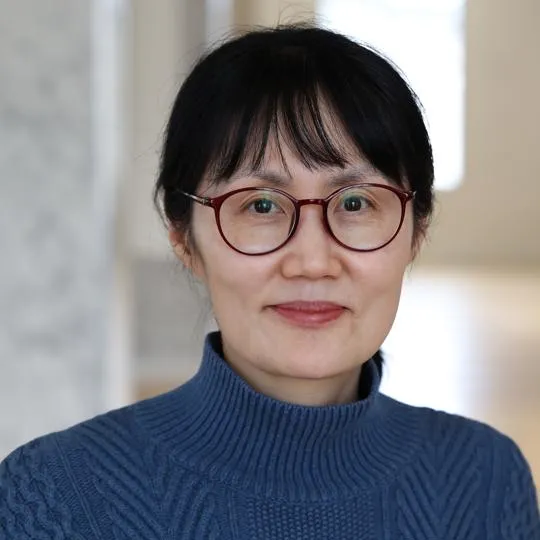
Professor Hye-Kyung Lee is Professor of Cultural Policy at King's College London's Department of Culture, Media & Creative Industries. She obtained her PhD from the University of Warwick and specializes in state policies for culture, arts, and creative industries, with particular expertise in Korean cultural policy and East Asian cultural flows. Her research examines institutional frameworks of cultural policy, de-Westernization of cultural policy paradigms, and new justifications for cultural subsidies. Current investigations focus on the impact of generative AI on cultural labor and creativity. Professor Lee recently led the UK-Japan collaborative project 'Sustainable Cultural Futures' examining digital transformations in the cultural sector. Recent publications analyze venture capital approaches in cultural industries, pandemic-era cultural policy responses across East Asia, and the reformulation of cultural work in the AI era. Her extensive body of work includes foundational studies of the Korean Wave's policy implications and comparative analyses of creative industries governance. Professor Lee teaches cultural policy and creative industries courses in CMCI's BA and MA programs and welcomes PhD candidates researching cultural policy, creative industries, and cultural labor.
Christophe Duigou serves as an Adjunct Senior Lecturer at The University of Western Australia's Dental School in Perth, contributing to orthodontic education and research within Australia's academic dental community. His research program centers on Class III Malocclusion management, with specialized expertise in surgical-orthodontic integration , cephalometric analysis , and craniofacial growth modification . Key investigations include comparative effectiveness of treatment protocols across healthcare systems and long-term outcomes of maxillary expansion techniques. Analysis of his 2020-2021 publications reveals consistent focus on orthognathic surgery optimization within Australasian contexts. His work bridges clinical orthodontics , health services research , and craniofacial biology , with particular attention to treatment duration variables and growth modification efficacy in Class III cases.
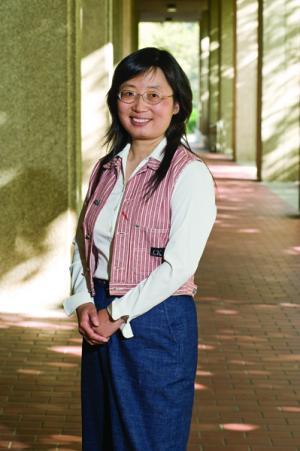
Guanglei Hong is a Professor at the University of Chicago, holding tenure in the Comparative Human Development Department and the Committee on Education. She chairs the University-wide Committee on Quantitative Methods in Social, Behavioral, and Health Sciences and the Committee on Education. Her research focuses on causal inference methodologies for evaluating educational and social policies, particularly mediation and moderation effects in multi-level longitudinal studies. She developed the RMPW and MMWS methods, widely used in causal mediation analysis. Hong holds a Master’s in Applied Statistics and a Ph.D. in Education from the University of Michigan. Education: Ph.D. in Education, University of Michigan, 2004 Master's in Applied Statistics, University of Michigan, 2002 Research Interests: Hong’s work centers on causal moderation and mediation, spillover effects, and sensitivity analysis in policy evaluation. She applies these methods to assess impacts of educational programs, contextual changes, and socioeconomic factors on child/youth development. Her monograph *Causality in a Social World* (2015) is a foundational text in the field. Awards: John Simon Guggenheim Fellowship (2021–2022) William T. Grant Scholar Award (2009–2014) NAE/Spencer Postdoctoral Fellowship (2006–2007) AERA Mary Catherine Ellwein Dissertation Award (2005) Teaching & Training: Hong teaches advanced quantitative methods courses, including causal inference and mediation analysis. She leads the NSF-funded SIARM for STEM institute, training researchers in computational methods for education research. Notable courses include *Advanced Topics in Causal Inference* and *Mediation, Moderation, and Spillover Effects*. Grants & Leadership: Hong leads major grants from NSF, IES, and private foundations. Her current projects include methodological advancements for multisite trials and sensitivity analysis in mediation. She has co-authored over 60 peer-reviewed articles and edited volumes, and serves on editorial boards of leading journals. Labs/Teams: Hong directs the Quantitative Methods Group at the University of Chicago, fostering interdisciplinary collaborations in causal inference and policy evaluation. Her work integrates statistical innovation with real-world applications in education and health sciences.
Eileen A. Lacey is the Class of 1933 Chair in Biological Sciences and Professor in the Department of Integrative Biology at UC Berkeley. She leads the Lacey Lab based at the Museum of Vertebrate Zoology, focusing on vertebrate social behavior and population biology. Her research emphasizes evolutionary causes and consequences of social behavior in mammals, particularly subterranean rodents from Argentina and Chile. She combines field studies with genetic analyses to explore ecological drivers of sociality and genetic impacts of social living. Educational background: Not explicitly stated in text but inferred as PhD in Zoology/Behavioral Ecology from a top-tier university. Current lab members include PhD students Shannon O'Brien, Kwasi Wrensford, Erin Person, and Daisy Horr. Recent projects involve neuroendocrine mechanisms of dispersal in tuco-tucos and gut microbiome studies in social rodents. Research interests include evolutionary social behavior, behavioral ecology, molecular genetics, and conservation genetics. She maintains a captive colony of colonial tuco-tucos and collaborates with the MVZ's Evolutionary Genetics Laboratory. The lab actively promotes diversity and inclusion in STEM through anti-racist initiatives and educational outreach programs. Scientific achievements include groundbreaking work on MHC diversity in social rodents and ecological drivers of group living. Recent recognition includes NSF postdoctoral fellowships for lab members and awards like the Ford Foundation Dissertation Fellowship. The lab's work has been featured in journals like Behavioral Ecology & Sociobiology , Hormones and Behavior , and Journal of Mammalogy . Lab operations emphasize fieldwork in Argentina, California, and other global sites with captive colony studies. Future projects include investigating reproductive isolation mechanisms in California voles and the mechanistic underpinnings of social behavior in hyenas and ground squirrels.
Aglaia McClintock is an Associate Professor of Roman and Ancient Law (IUS/18) in the Department of Law, Economics, Management and Quantitative Methods at the University of Sannio. Her research examines Roman legal institutions through interdisciplinary lenses including anthropology, gender studies, and symbolic analysis. Research Focus: She specializes in archaic Roman criminal law, gender dynamics in legal systems, the evolution of punitive practices, and cross-cultural juridical symbolism. Her work frequently intersects with: Anthropological interpretations of legal concepts Historical analysis of women's rights and social weapons Ritual aspects of justice administration Comparative Indo-European legal traditions Publication Trends: Her recent articles (2016-2024) demonstrate concentrated scholarship on: 1) deconstruction of archaic penal systems and social control mechanisms, 2) gender-focused reexamination of Roman legal anthropology, and 3) symbolic analysis of justice iconography in classical civilizations. Methodologically, she employs textual analysis, linguistic etymology, and socio-legal contextualization. Awards & Recognition: No scientific awards or fellowships are documented in available sources. Academic Service: She has contributed to international conferences on Roman law and authored commemorative works for legal scholars like Francesco Salerno. No information regarding student advising, grants, or laboratory leadership is present.
Ed Petkus is an Adjunct Professor at the Anisfield School of Business (ASB), Ramapo College of New Jersey, where he has been teaching since 2006. He holds a Ph.D. in Marketing from the University of Tennessee, an M.B.A. in Marketing from Virginia Tech, and a B.S. in Biochemistry & Nutrition from Virginia Tech. Education Ph.D., Marketing, University of Tennessee M.B.A., Marketing, Virginia Tech B.S., Biochemistry & Nutrition, Virginia Tech Research Interests Dr. Petkus focuses on Marketing Education , Marketing History , Non-Profit Marketing , and Sustainability Issues . His work explores innovative pedagogical approaches, cross-cultural learning dynamics, and the integration of sustainability and aesthetics into marketing practices. Publications & Contributions His recent publications examine the role of natural environments in teaching, cross-cultural learning styles, historical marketing case studies, and the application of holistic marketing in nonprofit contexts. He has presented research at international conferences including the Academy of Marketing Science and Global Business Development Institute.
Ju Hui Judy Han is an Associate Professor in Gender Studies at the University of California, Los Angeles, with additional affiliations at the Center for Korean Studies, Center for the Study of Women, and Asia Pacific Center. Her office is located in 1117 Rolfe Hall at UCLA. As a cultural geographer, Professor Han is committed to building critical and transnational conversations concerning gender, sexuality, and activism, regularly contributing to community-based projects and public events both on campus and beyond. Professor Han received her Ph.D. in Geography from UC Berkeley and her B.A. in English and Women's Studies from UC Berkeley. Her educational background bridges humanities and social sciences, providing a strong foundation for her interdisciplinary research. Her research interests span (Im)mobilities, Religion and difference, conservatism, LGBTQ/queer politics and activism, Comics and graphic novels, Korean studies, and Cultural geography. Professor Han approaches these topics through a critical lens that emphasizes transnational perspectives, particularly focusing on South Korea and the Korean diaspora. Her work often examines how power operates through spatial arrangements and how marginalized communities navigate and resist dominant structures. She has developed innovative approaches to studying activism through comics and graphic nonfiction, creating accessible yet theoretically rich analyses of complex social phenomena. Professor Han's publications reveal consistent engagement with queer politics in South Korea, religious movements, and transnational activism. Her work shows a progression from analyzing specific case studies to developing broader theoretical frameworks about resistance, solidarity, and spatial politics. The recurring themes across her publications include the intersection of religion and queer politics, the spatial dimensions of activism, and the transnational connections between social movements. UCLA Center for the Study of Women/Barbra Streisand Center, inaugural Barbra Streisand Fellowship on Truth in the Public Sphere Podcast Support Grant, University of California Humanities Research Institute (UCHRI), 2021-22 Society of Hellman Fellows Award, UCLA, 2021-22 UCLA Faculty Career Development Award, 2018-2019 Co-Applicant, 'Protesting Publics in South Korea,' SSHRC Insight Grant (PI: Jennifer Jihye Chun), 2015-2020 Co-Investigator, 'Urban Aspirations in Seoul: Religion and Megacities in Comparative Studies,' Max Planck Institute, 2011-2017 Professor Han actively contributes to public discourse through media appearances and community engagement. She has received significant research funding supporting her work on South Korean protest movements and urban religious dynamics. Her teaching portfolio is diverse, including the Gender Studies undergraduate core class on power (102), senior capstone seminars (187), elective courses on transnational feminist politics (131) and comics and graphic nonfiction (185), as well as graduate seminars on feminist geographies, queer temporalities, and research design.
Pierette Appasamy is a Lecturer in the Department of Biology at Chatham University’s College of Arts & Sciences. With a Ph.D. in Anatomy & Developmental Biology from Thomas Jefferson University, she has over three decades of experience in immunology research and education. Her career spans roles at the University of Pittsburgh School of Medicine, NIH-funded research, and current work at Chatham since 2007. B.S., Biology, cum laude, Xavier University (1982) Ph.D., Anatomy & Developmental Biology, Thomas Jefferson University (1988) Post-Doctoral Fellowship, Immunology, University of Pennsylvania (1987-1990) Her research focuses on the evolution and development of gamma delta T cells , IL-7 signaling pathways in amphibians, and psychosocial-immune interactions in college students . She employs Xenopus frogs as a model organism to study non-conventional lymphocyte biology and wound healing immunology. Recent publications highlight her work on cytokine evolution and stress-immune-microbiome dynamics , with collaborations at the University of Pittsburgh’s Center for Medicine and the Microbiome. Her pedagogical innovations include role-playing and analogies to enhance immunology education. NIH R29 Grant (Principal Investigator) NIH R01 Grant (Co-Investigator) MacArthur Foundation Grant (Yale Subcontract) American Cancer Society Grant Chatham University Technology Fellowship Award American Association of Immunologists Travel Grant She mentors students in laboratory research and serves as Chatham’s Pre-Med Advisor. Her lab combines molecular techniques, tadpole thymus microsurgery, and behavioral studies to explore immunological questions with clinical relevance.
Dr. Nemanja Stanišić is a Full Professor at Singidunum University's Faculty of Business, with a distinguished academic career spanning over 15 years. He holds a Ph.D. in Corporate Finance from Singidunum University (2010), an MBA in Finance from Lincoln University (2007), and a Bachelor's in Accounting from the University of Belgrade (2005). His expertise focuses on Corporate Finance, Banking, Audit, and Applied Statistical Analysis. His research integrates quantitative methods with economic theory, addressing topics such as audit opinion prediction using AI, tourism destination competitiveness, financial distress dynamics, and air pollution health impacts. He co-authored textbooks including Contemporary Exchange and E-business (2010) and Financial Statement Analysis (2024), and served as Editor-in-Chief of The European Journal of Applied Economics . He teaches courses from Financial Accounting to Advanced Financial Engineering at undergraduate, master's, and Ph.D. levels. The 15 most recent publications highlight his interdisciplinary approach: 7 in Finance/Audit, 5 in Tourism/Hospitality, and 3 in Environmental Health. Key trends include applying machine learning to audit quality (2023), multilevel modeling for hospitality satisfaction (2015-2019), and air pollution mortality analysis (2016). His work appears in high-impact journals like Tourism Management (IF 10.125) and Environmental Health (IF 4.986). He held administrative roles including Rector (2020-2021) and Vice President of Singidunum University. He served as Vice Dean for Student Affairs (2010-2011) and participated in TEMPUS projects for educational reform. He mentors graduate students extensively, advising 100+ bachelor's, 57 master's, and 4 doctoral theses, including international candidates. His visiting professorship at Bangkok's ICO NIDA and teaching in Austria-Singidunum joint programs reflect global engagement. Professional development includes advanced training at Utrecht University (Bayesian Modeling, 2019), Stanford (Mentoring, 2010), and NYU (Valuation, 2012). He reviews for top journals like Annals of Tourism Research and Cornell Hospitality Quarterly , with 1017 Google Scholar citations and 349 Scopus citations. Current research involves the Science Fund of Serbia's TOURCOMSERBIA project evaluating tourism competitiveness models.
Steffen Patzold is a Professor for Medieval History and Auxiliary Sciences at the Department of History, Faculty of Philosophy, University of Tübingen, since 2008. He previously held research and teaching positions at the University of Hamburg (1999–2006), Max Planck Institute for European Legal History (2007), and University of Kassel (2007–2008). His research focuses include the Carolingian period, political and ecclesiastical history, monasticism, perception patterns in the Middle Ages, and interdisciplinary projects like the DFG-funded 'Migration and Mobility in Late Antiquity' and Collaborative Research Center SFB 923 'Threatened Orders.' Education: University of Hamburg (History, Art History, Journalism, 1996–1999; PhD, 2000) Affiliations: Heidelberg Academy of Sciences, SFB 923 subprojects E02/F02, DFG Centre for Advanced Study in Humanities His recent publications analyze Carolingian political structures, feudal systems, historical semantics, and interdisciplinary topics like archaeogenetics. Key projects examine local societies in Carolingian Europe, bishop networks, and crisis management in early medieval orders. He collaborates extensively in edited volumes and international journals, particularly on comparative medieval studies.
Professor Emma Mason is a leading academic in the Department of English and Comparative Literary Studies at the University of Warwick . Her career spans roles as an educator, editor, and researcher with a focus on poetry, Christianity and literature, Catholic theology, and ecological themes in the long nineteenth-century . Editor of the Bloomsbury monograph series New Directions in Religion and Literature Co-editor of the Year's Work in Critical and Cultural Theory Director of the Comparative Religions and Literatures group at Warwick Her research explores spiritual materialism and ecological transformation , particularly through figures like Christina Rossetti. She is currently working on a study of Catholic mysticism in late 19th- to early 20th-century Europe. Mason's publications include Christina Rossetti: Poetry, Ecology, Faith (OUP, 2018) and co-edited volumes addressing religion in literary contexts. Recent Publications (2025-2027): Analysis of Newman's novels as ecological narratives Contributions to Cambridge and Oxford handbooks on religion and literature Editorial work on William Barnes' dialect poetry Studies on Victorian theological ecology and contemplation Scientific Awards: British Academy Postdoctoral Fellowship Mason supervises postgraduate research in poetry, religion, and affect theory . She is on study leave until Easter 2026 but remains active in editorial and collaborative projects.
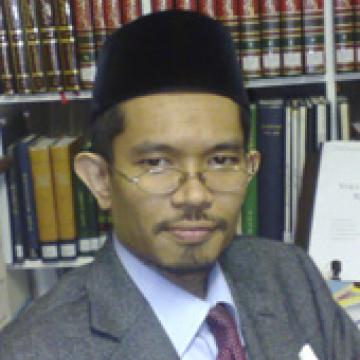
Afifi al-Akiti serves as University Research Lecturer in Islamic Studies at the University of Oxford's Faculty of Theology and Worcester College, holding additionally the KFAS Fellowship in Islamic Studies at the Oxford Centre for Islamic Studies. His academic profile centers on medieval Islamic intellectual traditions with institutional ties spanning Oxford's theological faculty, constituent college, and specialized research centers. His research investigates Islamic theology (kalam), philosophy (falsafa), and science through analysis of al-Ghazali's engagement with Greek philosophy—particularly Avicenna—and explores science-religion dynamics in Islamic civilization. Specialized interests include medieval Arabic manuscripts, Moroccan religious lithographs (Hajariyyat), Islamic astronomy (ilm al-falak), and Shafi'i jurisprudence. Current editorial projects focus on al-Ghazali's Madnun corpus and a 9th-century astronomical manuscript by Nastulus concerning Byzantine lunar-solar gearing mechanisms. Publication trends reveal consistent scholarly engagement with medieval Islamic philosophy's contemporary relevance, particularly through al-Ghazali's works addressing modernity, ethics of war, and prophethood concepts. His output bridges historical textual analysis with current debates in Islamic thought, demonstrating methodological rigor in manuscript studies while maintaining applied relevance to modern theological discourse. Key recognition includes: KFAS Fellowship in Islamic Studies Al-Akiti actively shapes academic discourse through convening the 'Islam and Science' seminar series (2009) and the Islamic Studies panel for the International Society for Religion, Literature and Culture conference (2010). His public engagement includes BBC documentaries on 'Science and Islam' and 'The Muslim Tommies' (2009), preparation of the 'Sciences and Arts in Early Islam' exhibition at Oxford's Museum of the History of Science (2010-11), and participation in the Oxford Scriptural Reasoning Group—demonstrating commitment to interdisciplinary knowledge translation beyond traditional academic boundaries.
Jonas Tallberg is a Professor of Political Science at Stockholm University and Co-Director of the Stockholm Center on Global Governance . His research focuses on global governance, European Union politics, and legitimacy dynamics in international organizations. Primary Affiliation: Department of Political Science, Stockholm University Research Leadership: Directs DemCoop (European Research Council-funded) and GGAI (Marianne and Marcus Wallenberg Foundation-funded) Editorial Roles: Serves on editorial boards of International Organization , European Political Science Review , Cooperation and Conflict , and Political Research Exchange Key Research Areas: Legitimacy in Global Governance EU Institutional Dynamics Artificial Intelligence Governance International Organization Performance Transnational Actor Participation Comparative Global Governance Frameworks Publications Trends: Focus on legitimacy-building mechanisms in international institutions Analysis of EU decision-making and institutional design Emerging AI governance frameworks Methodological contributions to content analysis Comparative studies of democratic and autocratic regimes Performance indicators in international organizations Scientific Recognition: Wallenberg Scholar (2024) Friedrich Wilhelm Bessel Research Award (2012) Distinguished Mentor Award (2023) Multiple grants from European Research Council, Swedish Research Council, and Wallenberg Foundations Academic Leadership: Former Chair of SNS Democracy Council (2009-2011, 2023) Executive Committee of European Consortium for Political Research (2009-2015) Recipient of research grants from Riksbankens Jubileumsfond, Fulbright Commission, and other major institutions
Jan Dijkstra is an Associate Professor at Wageningen University specializing in Animal Nutrition . His research focuses on dairy cattle nutrition, methane emissions, and nutrient efficiency. Academic Rank: Associate Professor Department: Animal Nutrition His work emphasizes: Mathematical modelling of methane production Phosphorus and nitrogen balance optimization Feed supplementation strategies for reduced emissions Genotype-environment interactions in dairy systems Recent publications highlight advancements in methane mitigation , nutrient cycling , and rumen microbiome dynamics . He serves as a promotor for multiple PhD projects and contributes to datasets on equine microbiomes and rumen metabolites. Scientific Awards American Feed Industry Association Award (2015) Publicatieprijs ASG (2013) Supervision PhD candidates: Kozorezov, Henry, Koning, Vivares Martinez EngD candidate: Holshof
Prof. Tine De Moor is a leading scholar at Rotterdam School of Management, Erasmus University Rotterdam , holding the Chair of Social Enterprise and Institutions for Collective Action . With a PhD in History from Ghent University (2003), she specializes in long-term institutional analysis of collective action across historical and modern contexts. Department of Business-Society Management ERIM Research Member Former Utrecht University Professor (2012-2020) Research Focus: Her work examines institutions for collective action from medieval commons to modern cooperatives, with key contributions to understanding energy cooperatives, citizen collectives, and social enterprises. She leads innovative citizen science projects and investigates labor market participation patterns over the past millennium. Publication Trends: Recent articles focus on platform cooperatives in the gig economy , energy prosumerism motivations , and institutional grammar applications . She explores paradoxes in cooperative governance and develops computational models for historical institutional analysis. Awards & Grants: Recipient of prestigious honors including ERC Starting Grant NWO-VIDI Grant International Association for Study of the Commons Leadership Advising & Collaboration: She has co-authored with scholars like Daan van Weeren and David Bunders, with significant citations in environmental and social science domains. Her work informs policy on collective resource management and sustainable transitions. Labs & Teams: Founding editor of the International Journal of the Commons , she leads the CollectieveKracht knowledge platform and collaborates with Triodos Bank stakeholders. Her research integrates GIS, archival analysis, and agent-based modeling.