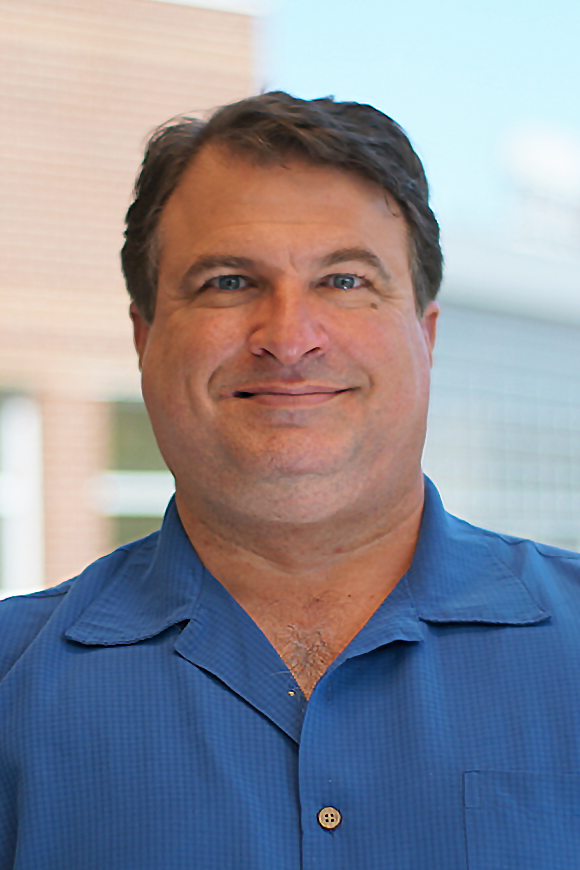
Dr. Andrew L. Miller is a postdoctoral researcher at Utrecht University and the National Institute for Subatomic Physics (Nikhef), focusing on gravitational wave detection and dark matter studies. His work bridges theoretical physics and computational methods within the LIGO/Virgo collaborations. PhD from Sapienza University of Rome and University of Florida MS in Physics from University of Florida BS in Physics from The College of New Jersey Andrew's research centers on gravitational waves from neutron stars , primordial black holes , and dark matter interactions . His methodological innovations include: Machine learning algorithms for detector noise classification Pattern-recognition techniques for continuous wave detection Semicoherent analysis for ultralight boson clouds Frequency-Hough transforms for binary inspirals His publications cover LIGO/Virgo data analysis, Einstein Telescope design, and LISA Pathfinder applications for dark matter detection. He has delivered tutorials on: Machine learning classification Parameter estimation in gravitational waves Frequency-Hough transforms Generalized search frameworks
Stephen Eikenberry is a Professor of Optics & Photonics Physics at CREOL, The College of Optics and Photonics, University of Central Florida. His academic journey includes a Ph.D. in Astronomy from Harvard University (1997), a Sherman Fairchild Postdoctoral Prize Fellowship at Caltech, and prior tenured roles at Cornell University and the University of Florida. His research focuses on black holes, neutron stars, gravitational waves, and astronomical instrumentation, with applications in biomedical imaging and spectroscopy. Key professional milestones include the 2016 Breakthrough Prize in Fundamental Physics (as part of the LIGO Science Consortium), the NSF CAREER Award (2000), and multiple University of Florida Research Foundation Professorships. He has designed advanced optical instruments and contributed to LIGO's gravitational wave discoveries. Eikenberry's research group explores astrophotonics, dark energy, and extrasolar planets. His recent work includes analyzing gravitational wave data from LIGO/Virgo and developing lunar occultation missions. He advises multiple graduate students and collaborates on international projects like the PolyOculus Array (OPA!). Education: Ph.D. in Astronomy, Harvard University (1997) Postdoctoral Fellowship at Caltech (Sherman Fairchild Prize) Awards: Breakthrough Prize in Fundamental Physics (2016) Gruber Prize for Cosmology (2016) UK Royal Astronomical Society Team Achievement Award (2016) His publications emphasize gravitational wave astronomy, cosmology, and instrument design. He has pioneered methods to constrain cosmic expansion using gravitational wave 'standard sirens' and studies correlations between fast radio bursts and gravitational wave events.
James M. Lattimer is a Distinguished Professor of Astronomy at Stony Brook University, affiliated with the Department of Physics & Astronomy. He specializes in neutron star structure, dense matter equation of state, core-collapse supernovae, and nuclear astrophysics. His research integrates observational data from missions like NICER with theoretical models rooted in nuclear physics. B.S. in Physics (University of Notre Dame, 19XX) Ph.D. in Astronomy (University of Texas at Austin, 19XX) His work focuses on constraining neutron star properties via X-ray observations and gravitational wave events. Key projects include NASA's Binary Neutron Star Mergers Grand Challenge and analyses of pulsar data (e.g., PSR J0740+6620, PSR J0030+0451). He teaches advanced courses like PHY 521 (Stars) and CEN 511 (Recent Discoveries in Astronomy), emphasizing stellar structure, compact objects, and cosmic phenomena. Recent research highlights include studies of symmetry energy constraints, universal neutron star relations, and implications of NICER/XMM-Newton measurements for dense matter physics. His work bridges nuclear theory, astrophysical observations, and computational modeling to address fundamental questions about matter under extreme conditions.
Janet Dong is a Professor in Mechanical and Materials Engineering at the University of Cincinnati and Director of the UC Center for Robotics Research. Her work spans robotics, autonomous systems, and advanced manufacturing with applications in healthcare, space exploration, and urban infrastructure. She holds a PhD in Mechanical Engineering from Columbia University. Her research integrates: Autonomous vehicles and mobile robots Dynamic systems control Medical device innovation Industry 4.0/5.0 technologies Robotic exoskeletons and augmentation Her recent publications focus on practical robotics applications including lunar rovers, tick collection robots, medical exoskeletons, and urban maintenance systems. Research trends emphasize autonomous navigation, human-robot collaboration, space exploration technologies, and biomechanical augmentation. She leads multiple funded projects including a $1.29M Department of Energy grant for waste sorting automation and Ohio Bureau of Workers Compensation grants for human-robot safety. Her lab develops robotic solutions for lunar infrastructure, medical devices, and industrial automation.
Nadia Zakamska is a Professor in the Department of Physics & Astronomy at Johns Hopkins University and serves as Vice Chair for Academics. She holds a PhD from Princeton University and has held fellowships at the Institute for Advanced Study and Stanford University. Her research focuses on observational and theoretical astrophysics, including quasar-driven galactic winds, stellar variability, binary systems, and the co-evolution of supermassive black holes and galaxies. Her work leverages cutting-edge facilities like the James Webb Space Telescope (JWST) and the Atacama Large Millimeter/submillimeter Array (ALMA). Key research areas include: (1) Discovery of galactic winds powered by supermassive black holes, which influence galaxy formation and star formation suppression. (2) Exploration of variable astrophysical phenomena using surveys like LSST and WISE, with a focus on binary stars, white dwarfs, and neutron star mergers. (3) Analysis of dual quasars and their role in galaxy mergers. Recent achievements include detecting extreme outflows in 'extremely red quasars' and using JWST to study starburst galaxies. Zakamska has mentored over 30 graduate and undergraduate students, many of whom have pursued postdoctoral roles at prestigious institutions. She leads the JWST Early Release Science Program Q3D and collaborates on projects like the Sloan Digital Sky Survey (SDSS-V). Awards include the Newton Lacy Pierce Prize (2014), Alfred P. Sloan Fellowship (2011–2013), and JHU Catalyst Award (2016).
Professor Tara Murphy serves as the Head of School of Physics at the University of Sydney and is a Chief Investigator in the ARC Centre of Excellence for Gravitational Wave Discovery. Her leadership position within one of Australia's premier academic institutions places her at the forefront of astronomical research and academic administration in the field of physics. Professor Murphy's research focuses on extreme astronomical objects that change rapidly on human timescales, specifically in the domain of radio transients. She leads the Variables and Slow Transients (VAST) project on the Australian SKA Pathfinder Telescope, where her team aims to detect radio emission from distant explosive events such as supernovae and gamma-ray bursts, as well as objects in our local neighborhood like flaring stars and potentially exoplanets. Her work aligns with the Faculty of Science Research Strengths in Understanding the Universe, Fundamental Laws of Nature, Earth and Space Exploration and Technologies, and Data and Decisions. She has pioneered radio follow-up of gravitational wave events detected by LIGO, achieving the first detection of radio emission from a binary neutron star merger GW170817. Analysis of Professor Murphy's recent publications reveals a strong emphasis on radio transient phenomena, gravitational wave follow-up observations, and the development of survey techniques using the Australian SKA Pathfinder (ASKAP). Her work spans multiple astronomical subfields including pulsar astronomy, tidal disruption events, fast radio bursts, and gamma-ray burst afterglows. The VAST survey and RACS (Rapid ASKAP Continuum Survey) projects form the backbone of her observational work, with numerous publications detailing discoveries of new radio transients, pulsars, and other variable phenomena. Professor Murphy actively mentors the next generation of astronomers, currently supervising multiple PhD students including Ashna GULATI, Qichen HUANG, Mali LAND-STRYKOWSKI, Joshua LEE, Vasudev MITTAL, Oliver OAYDA, Kovi ROSE, and Kavya SHAJI. Her students work on diverse projects ranging from radio follow-up of gravitational wave events to testing the cosmological principle and searching for unusual radio transients. Her research program is closely tied to major astronomical facilities including the Australian SKA Pathfinder telescope and the ARC Centre of Excellence for Gravitational Wave Discovery. Through her leadership of the VAST project and Australian efforts in gravitational wave follow-up, she has established a significant research team focused on time-domain radio astronomy, contributing substantially to our understanding of the dynamic radio sky.
Janna Levin is a Professor of Physics and Astronomy at Barnard College, Columbia University, where she has been a faculty member since January 2004. Her office is located in Pupin Hall, and she is deeply involved in both theoretical research and science communication. She holds a Ph.D. from the Massachusetts Institute of Technology and a B.A. from Barnard College. B.A., Barnard College Ph.D., Massachusetts Institute of Technology Her research lies at the intersection of cosmology, theoretical physics, and gravitation. Key interests include the early universe, black hole dynamics, chaos in gravitational systems, the topology of space, string cosmology, and extra dimensions. She has conducted research at the Center for Particle Astrophysics at UC Berkeley and the Department of Applied Mathematics and Theoretical Physics at Cambridge University. She also served as the first scientist-in-residence at the Ruskin School of Fine Art and Drawing at Oxford, supported by a NESTA award. The 15 most recent publications reflect a consistent focus on black hole orbital dynamics, gravitational waves, cosmic topology, and chaos. Her work combines deep theoretical insight with computational and mathematical rigor, often exploring how fundamental physics manifests in observable phenomena. Trends include the classification of black hole orbits, the role of chaos in binary systems, and the observational implications of a finite or multiply connected universe. PEN/Bingham Fellowship for Writers Mary Shelley Award for Outstanding Fictional Work Runner-up for the PEN/Hemingway Award Levin is a dedicated mentor and science communicator. While specific advisees are not listed, her leadership at Pioneer Works as Director of Science indicates active engagement in guiding young scientists and interdisciplinary thinkers. She has not publicly listed grants, but her research has clearly been supported through institutional affiliations and fellowships. Her work bridges science and the humanities, emphasizing the human dimension of scientific discovery. She is the founder and director of the 'Scientific Controversies' series at Pioneer Works, a cultural center in Brooklyn where she serves as Director of Sciences. This initiative fosters public dialogue on open scientific questions, promoting a culture of curiosity, vulnerability, and collaborative inquiry. Her programming emphasizes the process of science over definitive answers, reflecting her belief in the value of uncertainty and intellectual struggle.
Ertan Güdekli is a researcher at Istanbul University, focusing on theoretical physics and astrophysics. His work spans modified gravity theories, dark energy models, black hole thermodynamics, and cosmological frameworks. He frequently collaborates on interdisciplinary studies involving particle dynamics, quantum corrections, and observational constraints. Research Focus: Modified gravity (f(R,T), Rastall, Horndeski), dark energy, black hole physics, wormhole solutions, and cosmological models. Methodology: Utilizes quasi-periodic oscillations (QPOs), trajectory analysis, and thermodynamic principles to test gravitational theories. Recent Contributions: Investigates anisotropic stellar models, tidal effects in rotating black holes, and holographic inflation scenarios. Collaborations: Active in international research networks, co-authoring studies with physicists from Turkey, Pakistan, India, and Germany. Academic Output: Over 148 publications (WoS), 76 citations (WoS), and 13 thesis advisories. His work appears in high-impact journals like Annals of Physics , Physics of the Dark Universe , and Nuclear Physics B . He also contributes to educational literature, editing a Temel Fizik textbook series.
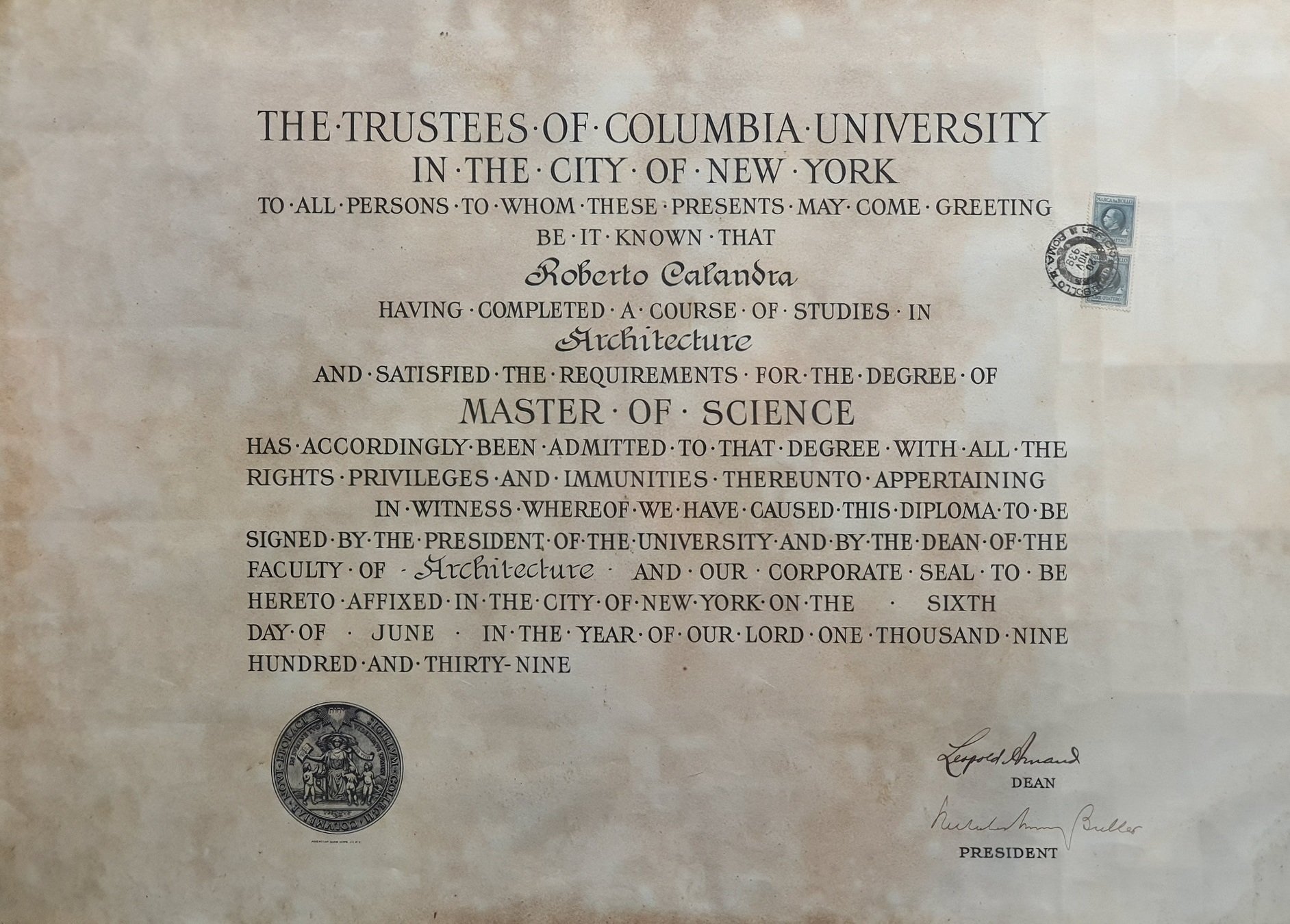
Roberto Calandra is a Full (W3) Professor at Technische Universität Dresden, where he leads the Learning, Adaptive Systems and Robotics (LASR) Lab. Previously, he served as a Research Scientist at Meta AI (formerly Facebook AI Research) and a Postdoctoral Scholar at UC Berkeley’s BAIR Lab under Sergey Levine. His academic journey includes a PhD in Robotics from TU Darmstadt, an M.Sc. in Machine Learning from Aalto University, and a B.Sc. in Computer Science from Università di Palermo. His research bridges Robotics and Machine Learning, focusing on tactile sensing, Bayesian Optimization, and model-based reinforcement learning. He pioneered the DIGIT tactile sensor , now the most widely used tactile sensor in robotics, and advocates for a computational field of Touch Processing to advance haptic understanding. His work emphasizes data-efficient learning, real-world dexterous manipulation, and multimodal perception. Recent publications highlight breakthroughs in tactile sensor design, in-hand object manipulation, and multimodal integration. He organizes workshops on robotics and machine learning (e.g., at NeurIPS, ICRA) and promotes open-source tools like PyTouch and TACTO .
Sylvia Biscoveanu is a NASA Einstein Fellow at Northwestern University's Center for Interdisciplinary Exploration and Research in Astrophysics (CIERA), working in the research group of Professor Vicky Kalogera. Dr. Biscoveanu received her PhD in Physics from MIT in June 2023 under Associate Professor Salvatore Vitale. She completed undergraduate studies at Pennsylvania State University's Schreyer Honors College, majoring in Physics and Spanish with minors in Mathematics and Violin/Viola performance, and was previously a Fulbright Postgraduate Scholar at Monash University. Her research focuses on gravitational-wave data analysis to understand compact-object mergers and their electromagnetic counterparts. Specific interests include parameter estimation for compact binary coalescences, multimessenger astronomy involving kilonovae and gamma-ray bursts, and stochastic gravitational-wave backgrounds. She is also a developer of the gravitational-wave analysis software bilby. Dr. Biscoveanu has received significant recognition including: GWIC-Braccini Thesis Prize (2023) for her thesis "From Black Holes to the Big Bang: Astrophysics and Cosmology with Gravitational Waves and their Electromagnetic Counterparts" Forbes 30 Under 30 in Science (December 2024) NASA Einstein Fellowship Paul and Daisy Soros Fellowship National Science Foundation Graduate Research Fellowship In Fall 2025, Dr. Biscoveanu will join Princeton University as an Assistant Professor in Physics, where she plans to establish her research group in gravitational-wave astronomy. Beyond research, she is an avid musician performing with the Chicago Metropolitan Symphony Orchestra.
Emmanouil Zachariadis serves as an Associate Professor at the Department of Management Science and Technology (DMST) within the School of Business at Athens University of Economics and Business (AUEB). He specializes in operational research and computational optimization, focusing on transportation logistics, supply chain systems, and environmental impact minimization. Education : BSc in Chemical Engineering from National Technical University of Athens (NTUA) MSc in Computing Science from Imperial College London PhD in Chemical Engineering from NTUA His research integrates mathematical programming with optimization algorithms for operational challenges in transportation and production systems. He has published 26 articles in top-tier journals, accumulating over 1200 Scopus citations by June 2024. Recent scholarly trends emphasize vehicle routing problems with complex constraints (cross-docking, loading, time windows) and optimization methods for logistics sustainability. His work spans production-routing integration, emergency evacuation planning (EVITA project), and hybrid metaheuristics. Scientific Awards : Teaching excellence award for undergraduate course 'Optimization Methods in Management Science', Dept. of Management Science & Technology AUEB (2021-22) Teaching excellence awards for postgraduate course 'Large Scale Optimization', MSc in Business Analytics AUEB (2020-21, 2021-22, 2022-23) He has participated in European and National research projects, applying his expertise in supply chain optimization and sustainability. His teaching portfolio covers quantitative methods, operational research, and supply chain optimization at both undergraduate and postgraduate levels.
Prof. Bing Zhang is a Chair Professor and Global STEM Scholar at the Department of Physics, Faculty of Science, The University of Hong Kong. His research focuses on theoretical astrophysics, particularly high-energy phenomena such as Gamma-ray bursts (GRBs), fast radio bursts (FRBs), neutron stars, and black holes, with an emphasis on understanding the physical mechanisms behind relativistic jets and multi-messenger signals. Primary Research Themes : High-energy astrophysics, Gamma-ray bursts, Fast radio bursts, Multi-messenger astronomy, Magnetic reconnection, Relativistic jets Affiliation : Department of Physics, Faculty of Science, The University of Hong Kong His publications reveal a trajectory from foundational work on GRBs to pioneering studies on FRBs. Key contributions include monographs on GRB physics (2018) and FRBs (2023), alongside seminal papers on jet dynamics, magnetic reconnection models, and neutrino emission mechanisms. The work bridges theoretical modeling with multi-messenger observations, particularly through Swift satellite data analysis.
Massimo Zucchetti is a Full Professor at Politecnico di Torino, Department of Energy (DENERG), where he has been teaching Radiation Protection and Nuclear Power Plants. He maintains a significant international presence as a Research Affiliate at the Plasma Science and Fusion Center at MIT, a position he has held since 2005. His academic journey began at Politecnico di Torino, where he graduated in Nuclear Engineering in 1986 and completed his PhD in Energetica between 1986-1990. He progressed through the academic ranks at Politecnico di Torino from Associate Professor (1998-2002) to Full Professor (2002-present), with prior research experience at the European Commission Joint Research Centre. Zucchetti's research spans nuclear fusion engineering, radioactive waste management, and energy policy. His work focuses particularly on controlled thermonuclear fusion, nuclear safety, and radioactive waste management, with emphasis on tritium transport in fusion reactors, safety analysis of fusion power plants, and environmental impact assessment. He has led multiple significant research projects including TITANS (Tritium Impact and Transfer in Advanced Nuclear reactorS, 2022-2025), components for ITER (2008-2010), and innovative materials for fusion reactors (2004-2006). As coordinator of the IEA Program on Environmental, Safety and Economic Aspects of Fusion Power, he plays a key role in international fusion research collaboration. His recent publications show a clear trend toward practical applications of fusion technology, particularly in the ARC (Affordable Robust Compact) reactor design. These works emphasize neutronics, thermal-hydraulics, tritium management, and safety analysis for compact fusion systems. His research demonstrates increasing focus on making fusion energy more commercially viable through innovative engineering solutions while maintaining rigorous safety standards. The interdisciplinary nature of his work connects nuclear engineering with environmental science and energy policy. Fellow of Plasma Science and Fusion Center, MIT (2015-present) Research Affiliate Fellow at Laboratory for Nuclear Science, MIT (2005-2015) Nomination for 2015 Nobel Prize in Physics for research on advanced fuel nuclear fusion Editor-in-Chief of multiple journals including International Journal of Ecosystems and Ecology Science and Journal of International Environmental Application & Science Zucchetti actively mentors PhD students in the Energetica program at Politecnico di Torino, with current advisees working on topics ranging from multiphysics modeling in ARC-class reactors to innovative materials for next-generation nuclear reactors. He coordinates significant research grants from competitive funding programs including EURATOM and PRIN. His laboratory work focuses on fusion reactor components, particularly breeding blankets and tritium management systems. The TESIN research group within DENERG serves as his primary research team, working on thermal-hydraulic analysis, neutronics, and safety assessments for advanced nuclear systems.
Artem Kaznatcheev is an Assistant Professor at Utrecht University in the Department of Mathematics and Department of Information and Computing Sciences within the Science faculty. His research bridges theoretical computer science and evolutionary biology to analyze biological and social systems through an algorithmic lens. Current role since January 2023 Recruiting PhD students and postdocs Previously: James S. McDonnell postdoctoral fellow at University of Pennsylvania His work focuses on: Computational complexity of evolution Evolutionary game theory Algorithmic biology Mathematical modeling of cancer dynamics Cultural evolution of science Selected article trends show: Interdisciplinary integration of computer science and cancer biology Key themes: fitness landscapes, evolutionary games, treatment optimization 2021-2020 publications dominate Mathematical formalisms applied to biological and social phenomena Scientific contributions include: James S. McDonnell Foundation Independent Postdoctoral Fellowship 2019 Genetics paper on computational complexity as evolutionary constraint 2017 Nature Ecology & Evolution study on fibroblast-drug interactions in cancer Collaborative environments: Worked with Theory, Evolution and Games Group Previous affiliations: Oxford University, University of Pennsylvania, Moffitt Cancer Center, McGill University Developed teaching roles at Oriel College (Oxford)
Prof. Marek Rogatko is affiliated with the Department of Theoretical Physics at the Faculty of Mathematics, Physics and Computer Science of Maria Curie-Skłodowska University (UMCS) in Lublin, Poland. His research spans theoretical physics , focusing on gravity , black holes , holography , and dark matter . Research Themes : Uniqueness theorems in modified gravity, holographic superconductors, phase transitions, and anisotropic superfluids. Collaborations : Regularly works with Karol I. Wysokinski and Łukasz Nakonieczny. Recent publications (2014-2018) explore wormhole geometries , holographic models of graphene , and dark matter interactions in gravitational and condensed matter systems. Topics include Einstein-Maxwell-dilaton solutions, viscosity bounds, and photon sphere dynamics.