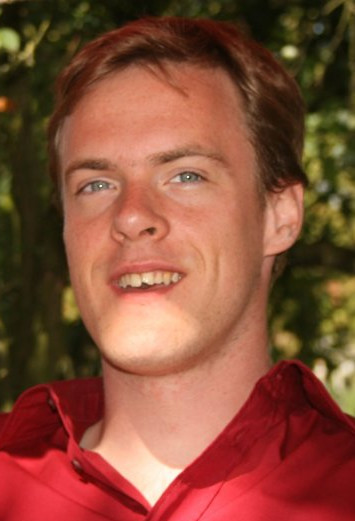
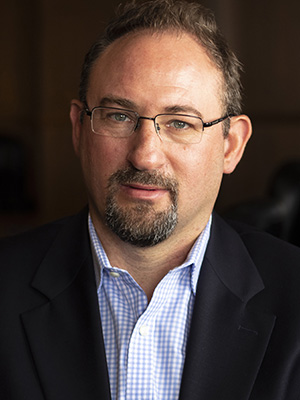
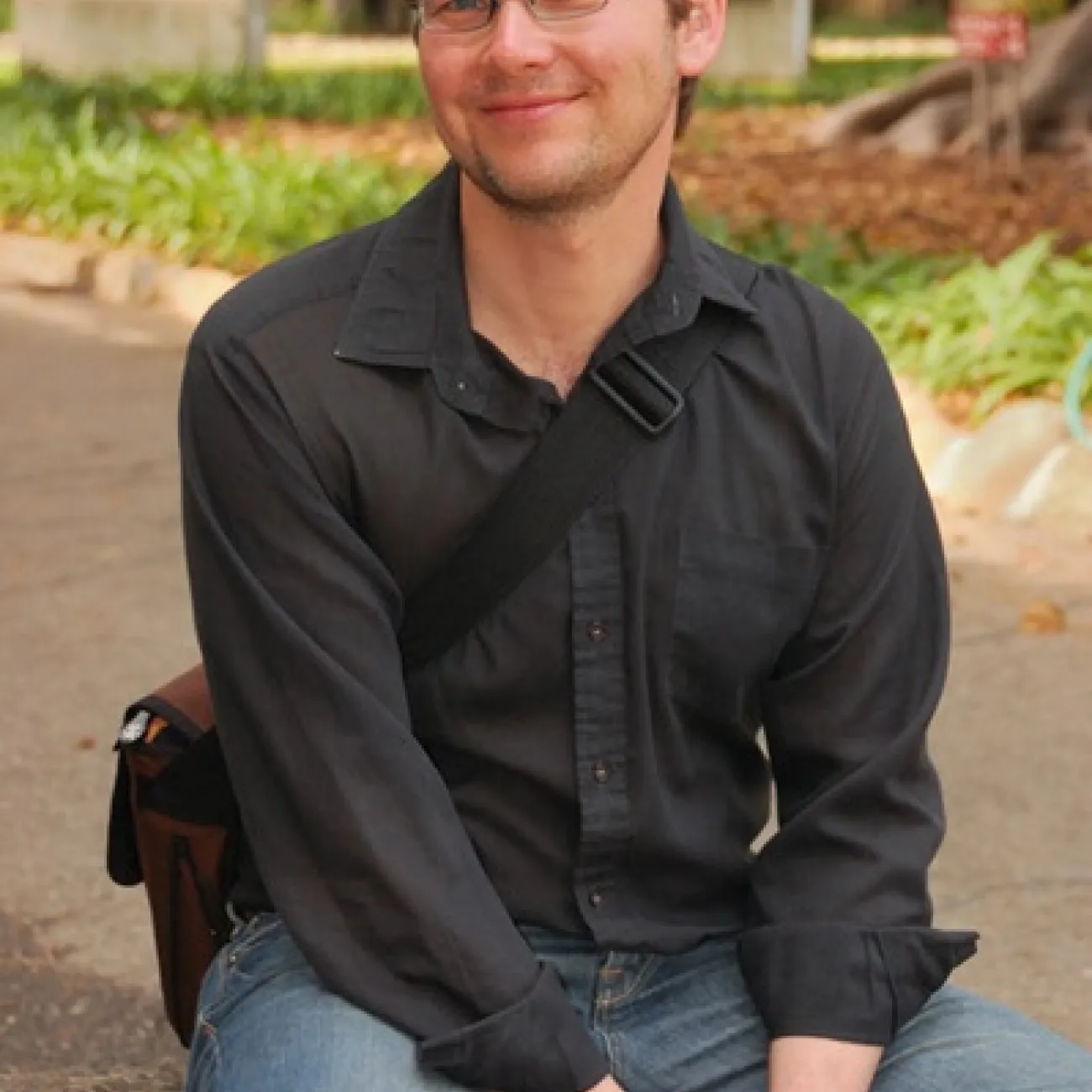
Will Smith is a Professor in Computer Vision at the University of York, leading the Vision, Graphics and Learning (VGL) research group. He previously held a Royal Academy of Engineering/The Leverhulme Trust Senior Research Fellow (2019-2020) and serves as Associate Editor of Pattern Recognition . PhD in Computer Vision (2007) and BSc in Computer Science (2002), both from University of York His research bridges computer vision, graphics, and machine learning, focusing on physics-based 3D vision , shape/appearance modeling , and statistical/machine learning applications in areas like face/body analysis, surveying, object capture, and inverse rendering. Methodologically, he works with convex/nonlinear optimization, manifold learning, and computational geometry. Recent publications emphasize neural rendering (ECCV 2024), document symbol detection (ICDAR 2023), and rotation-equivariant spherical neural fields (NeurIPS 2022). These works reflect trends in 3D-aware machine learning, outdoor scene modeling, and geometrically constrained optimization. Royal Academy of Engineering/The Leverhulme Trust Senior Research Fellow (2019-2020) Associate Editor, Pattern Recognition (2019–Present) Smith supervises nine PhD students including Evgenii Kashin, James Gardner, and Tejas Pandey. He has participated in numerous service roles: Area Chair for ICCV 2023, Programme Chair for BMVC 2020, and long-term reviewer for CVPR/ICCV/ECCV conferences since 2008. His lab engages in projects like Branching Out (historic tree mapping) and Google Daydream collaborations on VR/AR head modeling.
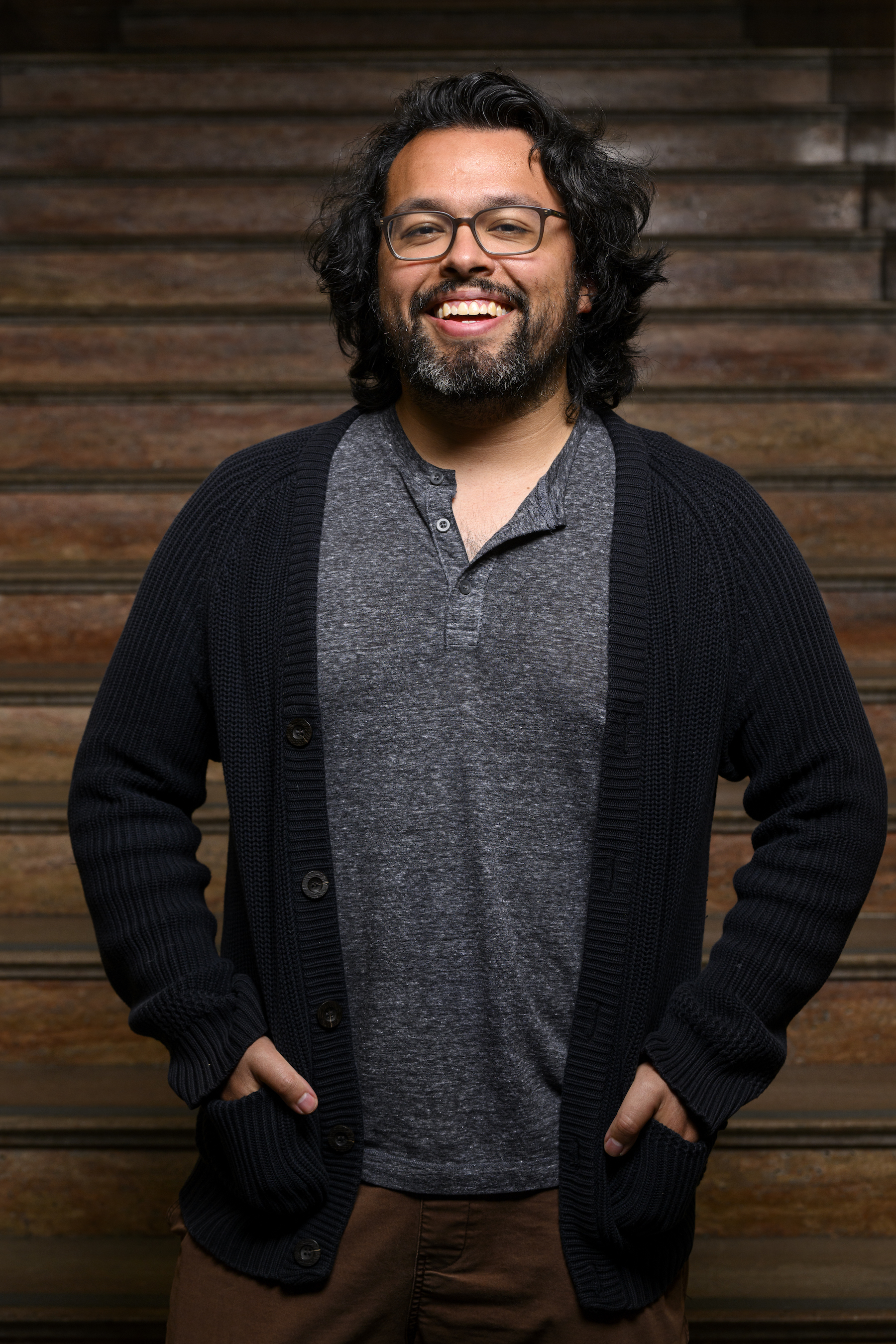
Professor Yngve Karl Frøyen works at the Department of Architecture and Planning, Faculty of Architecture and Design, Norwegian University of Science and Technology (NTNU). With expertise in sustainable transport solutions, urban spatial modeling, and GIS applications for planning, he has taught and supervised urban and regional planning topics since 2010. His work spans multiple master programs and involves improving transport modeling tools for walking, transit, and bicycling modes. Research Focus: Sustainable urban transport (walking, bicycling, public transit), urban density, GIS methods, land use-transport interactions, and urban logistics. Teaching: Courses in GIS methods, land use-transport integration, regional planning, and master thesis supervision. Publications: 15+ works on transport modeling, urban density impacts, bicycle infrastructure, and planning methodology. Outreach: Regularly presents at conferences and seminars on topics like urban logistics, walking modeling, and transport policy. His academic career spans from 1981 civil engineer graduation to current professorship, with prior roles at Norwegian Institute of Urban and Regional Research (NIBR) and SINTEF. He combines technical GIS proficiency with policy-oriented planning expertise.
Hakan Basarir is a Professor in the Department of Mining Engineering at the Norwegian University of Science and Technology (NTNU), Trondheim, Norway. His research and teaching focus on mining rock mechanics, rock mass characterization, underground support systems, and the application of soft computing methods in mining engineering. PhD in Mining Engineering (2002) 20+ years of research and teaching experience 60+ publications in journals and conferences Research Interests include rock mass property prediction using measurement while drilling (MWD) techniques, numerical modeling of mining structures, optimization of mine support systems, and sustainable material development. His work integrates machine learning and computational methods to address challenges in mining geomechanics and backfill design. Recent Publications highlight advancements in AI-driven lithology prediction, eco-concrete formulation, and backfill mixture optimization. He has also contributed to tunnel stability analysis and seismic rock slope modeling. Teaching includes advanced courses in mining engineering, mineral production modeling, and specialization projects in geotechnology.
Elias R. Most is an Assistant Professor of Theoretical Astrophysics at the California Institute of Technology (Caltech), affiliated with the Division of Physics, Mathematics and Astronomy. He specializes in computational and theoretical studies of compact objects, including neutron stars and black holes, focusing on gravitational, nuclear, and plasma astrophysics. His research bridges fundamental physics and multi-messenger astronomy. Education: B.S., Georg-August University Göttingen (2013) M.S., Johann-Wolfgang von Goethe University Frankfurt (2017) Ph.D., 2020 Research Interests: Dr. Most explores extreme astrophysical phenomena, such as gravitational waves from neutron star mergers and black hole dynamics. He investigates nuclear matter properties, plasma dynamics in relativistic environments, and the interplay between numerical relativity and observational astronomy. His work contributes to collaborative projects like the MUSES and Simulating Extreme Spacetimes collaborations, and he is a member of the TAPIR research group at Caltech. Awards: No specific awards listed. Advising & Grants: Offers research opportunities for undergraduates, graduate students, and postdocs, but no specific grants or advisees are mentioned. Labs & Teams: Active in the TAPIR group and collaborates with MUSES and the Simulating Extreme Spacetimes network.
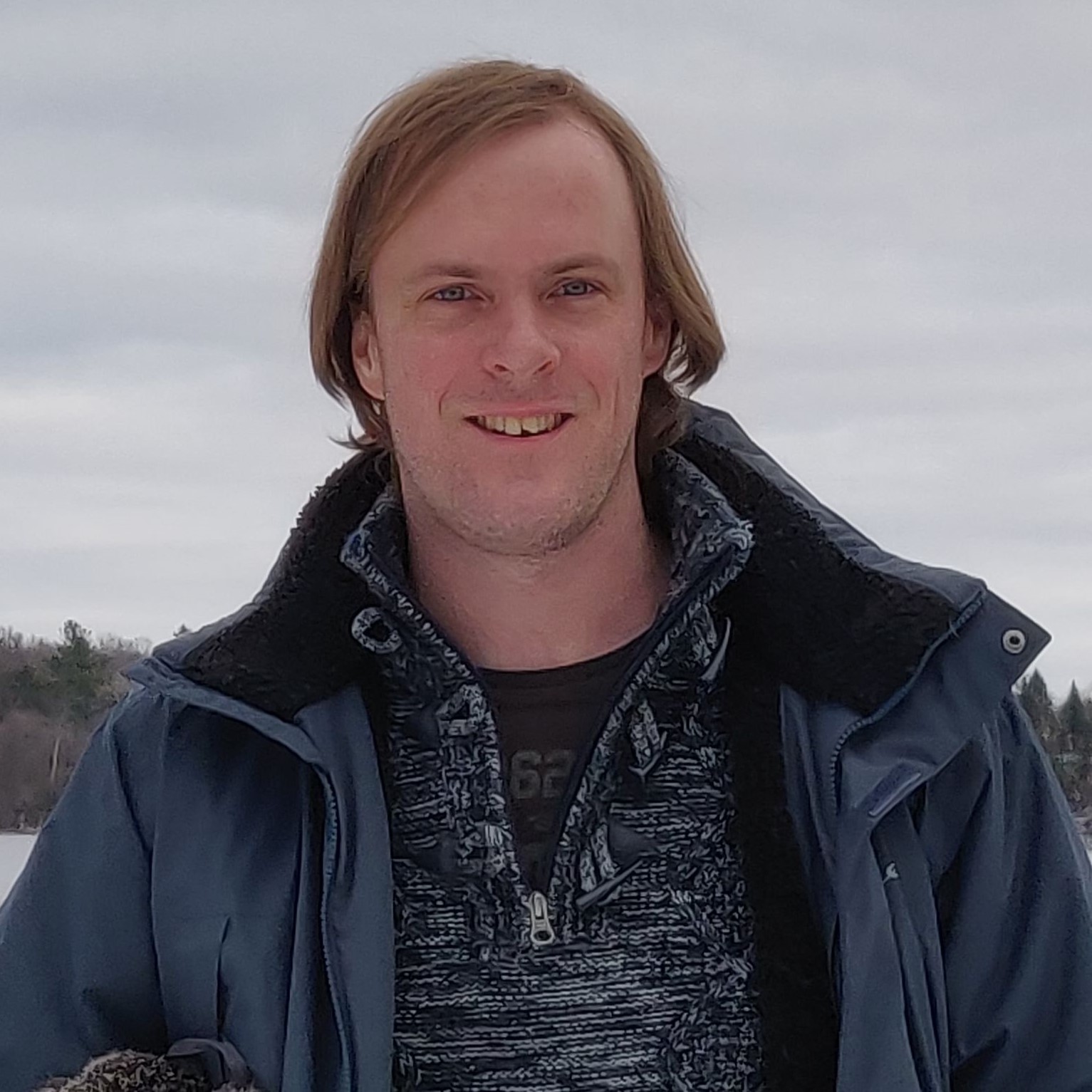
Simon Henry is an Assistant Professor at the University of Ottawa since 2019, specializing in Category Theory and Higher Structures. His research bridges abstract mathematics with applications in homotopy theory, topos theory, and constructive mathematics. University: University of Ottawa Academic Rank: Assistant Professor Henry completed his PhD under Alain Connes, focusing on connections between topos theory and noncommutative geometry. His work explores continuous Hilbert spaces over toposes and C*-algebraic structures. Research interests include: Higher Category Theory and Homotopy Type Theory Strictification Theorems and Model Comparisons Topos Theory and Pointfree Topology Constructive Mathematics and Internal Logic His recent publications emphasize inductive model structures, weak model categories, and algebraically cofibrant objects. Collaborations include work on classifying groupoids and ∞-groupoid models. Henry actively contributes to mathematical discourse via MathOverflow and open-access research statements, encouraging graduate students (MSc/PhD) to reach him via email.
Simon Henry is an Associate Professor in the Department of Mathematics and Statistics at the University of Ottawa, Faculty of Science. His research focuses on category theory, higher category theory, topos theory, and their applications in non-commutative geometry and constructive mathematics. He earned his PhD under Alain Connes (2010–2014), studying the interplay between topos theory and operator algebras. Since 2015, his work has expanded into higher category theory, including strictification theorems and the Simpson conjecture. Active on MathOverflow, he contributes to categorical logic, homotopy type theory, and foundational mathematics. Research interests include categorical homotopy theory, model categories, and the Grothendieck homotopy hypothesis. His publications explore inductive model structures, locale theory, and constructive approaches to metric spaces. He supervises students in these areas and maintains an arXiv profile with over 20 papers. Key contributions include work on ∞-categories, topos-based non-commutative geometry, and categorical foundations for univalent foundations. He also explores connections between Feynman diagrams and category theory, reflecting his interdisciplinary approach to mathematical structures.
Emmanuel Fonseca is an Assistant Professor in the Department of Physics and Astronomy at West Virginia University (WVU), joining in Fall 2021. Previously, he was a postdoctoral researcher at McGill University (2016–2021) and completed his Ph.D. in Astronomy at the University of British Columbia (2016). His research focuses on radio astronomy, particularly pulsars and fast radio bursts (FRBs), leveraging facilities like CHIME, the Green Bank Telescope, and NANOGrav. He specializes in using pulsars as laboratories for testing fundamental physics and detecting gravitational waves via pulsar timing arrays. Education: Ph.D. in Astronomy, University of British Columbia (2016) M.Sc. in Astronomy, University of British Columbia (2012) B.Sc. in Physics and Astronomy, Pennsylvania State University (2010) Research Interests: Emmanuel’s work spans three key areas: Compact Objects: Investigating neutron stars and extreme environments using pulsar binaries and relativistic dynamics. CHIME Pulsar/FRB Science: Developing instrumentation and analyzing data from the Canadian Hydrogen Intensity Mapping Experiment to study FRBs and pulsars. Gravitational Waves: Contributing to NANOGrav’s efforts to detect nanohertz gravitational waves via millisecond pulsar timing arrays. Collaborations: He is a core member of NANOGrav and instrumental in maintaining CHIME’s pulsar and FRB backend systems. His work bridges hardware/software development with observational astronomy. Labs/Teams: Involved with the CHIME/FRB Collaboration and the NANOGrav Collaboration, advancing both observational infrastructure and theoretical astrophysics.
Chris Matzner is a Professor and Associate Graduate Chair at the University of Toronto's Department of Astronomy and Astrophysics, affiliated with the Dunlap Institute for Astronomy & Astrophysics. He earned his Ph.D. from UC Berkeley in 1999. His research focuses on astrophysical fluid dynamics, particularly star formation processes (protostellar disks, molecular clouds, energy feedback) and stellar explosions (supernovae, gamma-ray bursts), employing analytical, numerical, and observational approaches. His research encompasses: Dynamics of protostellar outflows and molecular cloud interactions Models for supernova shocks and gamma-ray burst mechanisms Fragmentation in star and planet formation Massive black hole accretion processes Evolution of giant molecular clouds Stellar feedback in galactic environments Analysis of his 15 most recent publications reveals strong emphasis on supernova dynamics (particularly Type Ia explosions), star formation mechanisms in clusters and molecular clouds, shock wave physics in astrophysical contexts, and the development of astronomical instrumentation. The works demonstrate consistent focus on explosive transients, fluid dynamics in cosmic environments, and observational constraints on theoretical models. As Associate Graduate Chair, he oversees academic programs and student development. His laboratory affiliations include the Dunlap Institute's computational astrophysics and instrumentation groups. Current work involves modeling star cluster-galaxy interactions, tidal disruption events, and developing next-generation UV/IR detectors.
Eduardo Gildin is a Professor of Petroleum Engineering and Associate Department Head for Graduate Studies at Texas A&M University's College of Engineering. He holds the L.F. Peterson '36 Professorship and directs the university's graduate studies in petroleum engineering. His research focuses on reservoir modeling, control optimization, model reduction techniques, and CO2 sequestration. Gildin has pioneered data-driven approaches for reservoir simulation, integrating machine learning and physics-based models to enhance efficiency and accuracy. Education: Ph.D. in Aerospace Engineering, University of Texas at Austin (2006) M.S. in Mechanical Engineering, University of São Paulo, Brazil (1998) B.S. in Mechanical Engineering, Faculdade de Engenharia Industrial, Brazil (1995) Research Interests: Model reduction of large-scale dynamical systems Control and optimization of reservoir operations CO2 storage and geological carbon sequestration Machine learning applications in reservoir engineering and drilling automation Geomechanics and compaction damage evaluation Key Awards: 2020: William O. and Montine P. Head Memorial Research Award 2017-2018: Dean of Engineering Excellence Award 2013-2019: Energi Simulation Chair in Robust Reduced Complexity Modeling 2021: Distinguished Membership in Society of Petroleum Engineers Grants and Advising: Gildin has secured major funding for projects on reservoir simulation, drilling automation, and CO2 storage. He advises graduate students on topics such as surrogate modeling and reinforcement learning applications in petroleum systems. His lab collaborates with industry partners to translate research into practical tools for reservoir management and subsurface operations. Labs and Teams: He leads the Reservoir Simulation and Control Lab, focusing on advanced computational methods for reservoir optimization. His team develops open-source drilling models and collaborates globally on projects like the DREAMS (Drilling and Extraction Automated System) initiative.
Rana Adhikari is a Professor of Physics at the California Institute of Technology (Caltech). Holding a B.S. from the University of Florida (1998) and a Ph.D. from MIT (2004), he has been at Caltech since 2006, progressing from Assistant Professor to full Professor in 2012. His research focuses on advancing detector technologies for fundamental physics experiments in gravitational waves, dark matter, and near-field gravity studies. Education: B.S. in Physics, University of Florida (1998); Ph.D. in Physics, MIT (2004) Caltech Faculty: Assistant Professor (2006-12), Professor (2012-present) Adhikari's group specializes in precision measurements at the intersection of classical and quantum physics. Key research areas include: Mechanical oscillators and their thermodynamic limits Nonlinear optics for interferometric applications Quantum information constraints in classical sensors Adaptive optics using thermal actuation Cryogenic silicon interferometers for cosmological observations High-quality silicon opto-mechanical systems for LIGO applications Laser gyroscope technology for rotation sensing The group's work on gravitational wave detection has produced numerous publications in leading journals like Physical Review X , Physical Review D , and Optics Express . Their research often combines experimental physics with machine learning techniques for noise cancellation in laser interferometers. Adhikari's team also engages with undergraduate researchers through programs like the International LIGO SURF students, creating opportunities for young scientists in gravitational physics. His publications reveal a consistent focus on gravitational wave detector optimization, quantum metrology, and cosmological observations through advanced instrumentation.
Mari Kaarina Vaattovaara is Professor of Urban Geography at the University of Helsinki, where she serves as Director of both the Helsinki Institute of Urban and Regional Studies (Urbaria) and the Helsinki Institute of Sustainability Science (HELSUS). Affiliated with the Department of Geosciences and Geography within the Faculty of Science, she supervises doctoral students in two doctoral programs: the Doctoral Programme in Political, Societal and Regional Change and the Doctoral Programme in Social Sciences. Professor Vaattovaara's research spans social and economic geography, urban studies, and sustainability science, with particular focus on neighborhood dynamics, housing policy, and urban development patterns. Her work examines how physical environments interact with social structures to shape community outcomes, with special attention to vulnerable populations and sustainable urban transitions. She frequently investigates the relationship between urban density, service accessibility, and quality of life in metropolitan contexts. Her recent publications reveal a consistent trajectory examining sustainable urban development through multiple lenses, including neighborhood sustainability indicators, housing policy challenges, and the impacts of urban form on social outcomes. While deeply rooted in the Finnish context, her research connects to broader European and global urban debates, with increasing attention to post-pandemic urban challenges and the implications of tourism for sustainable city development. Among her notable recognitions are: J.V. Snellman Prize (2013) Knight, First Class, of the White Rose of Finland (2016) Helsinki Medal for distinguished service to the city (2015) Ragnar Hult Medal (2014) Election to the Finnish Academy of Science (2016) Professor Vaattovaara leads multiple significant research initiatives including the MSCA-DN SUNSET project (2024-2028) funded by the European Commission, The Future of Diverse and Disadvantaged project (2022-2026) funded by Svenska Litteratursällskapet i Finland, and the Urban Academy initiative connecting academic research with practical urban development challenges. Her work bridges academic research with policy impact through external positions including External Research Fellow at University College London (since 2014), Member of the Supervisory Board at Hypoteekkiyhdistys (since 2014), and Auntosäätiö Board Member (since 2012). As Director of Urbaria and HELSUS, Professor Vaattovaara oversees interdisciplinary research hubs that bring together scholars from across the university to address complex urban and sustainability challenges. These institutes facilitate collaboration between academic researchers, municipal authorities, and community organizations to develop evidence-based approaches to urban development and sustainability transitions.
Professor Christian Knigge serves as Professor of Astrophysics at the University of Southampton and is a core member of the Southampton Theory Astrophysics and Gravity (STAG) Research Centre within the Institute for Life Sciences. His research program investigates accretion phenomena across diverse cosmic scales, from stellar-mass compact objects to supermassive black holes. Knigge's primary research focuses on accretion phenomena and associated outflows, cataclysmic variables, close binaries, globular clusters, and active galactic nuclei. He examines the physical mechanisms driving accretion disk instabilities, outflow generation, and explosive events in binary systems, with particular emphasis on white dwarf and black hole accretors. His work integrates observational data with theoretical modeling to unravel the complex physics of these high-energy environments. Recent publications (2024-2025) reveal a strong emphasis on multi-wavelength observational campaigns, especially leveraging JWST capabilities, alongside theoretical code development. Key research threads include characterizing disk winds in active galactic nuclei, identifying quasi-periodic oscillations in white dwarf systems, classifying optical outbursts in cataclysmic variables, and developing computational tools like the SIROCCO radiative transfer code. These studies demonstrate his leadership in connecting observational signatures with fundamental accretion physics across different astrophysical regimes. Supervision: Currently guides six PhD students in Physics (Austen George William Wallis, Cordelia Brown, Brian Luff, Zackery Alexander Irving, Arianna Clarissa Albayati, Pornisara Nuchvanichakul) Grants: Leads STFC-funded projects including 'Line-Driven Disk Winds in Active Galactic Nuclei', 'C Knigge - Astrophysics at Southampton', and previously held a Leverhulme Trust Research Fellowship for 'The Universal Nature of Accreting Compact Objects' As an integral member of the STAG Research Centre, Knigge collaborates within a multidisciplinary team investigating gravity-dominated systems, contributing to Southampton's prominence in theoretical and observational astrophysics through both individual research initiatives and institutional consolidation grants.
Dr. Thangavel Thevar is a Senior Lecturer in the School of Engineering at the University of Aberdeen, where he has been teaching since 2005. He completed both his undergraduate degree (First Class Honours in Electrical Engineering) and PhD (in Laser Engineering) at the University of Aberdeen in 1989 and 1993 respectively. Prior to his academic career, he accumulated approximately 10 years of industrial R&D experience in the USA, working on solid-state laser development and holographic applications. Dr. Thevar's research focuses on several key areas: Digital holography for imaging of marine plankton and micro-particles Laser Induced Breakdown Spectroscopy (LIBS) for subsea applications Laser-based instrumentation development Development of solid-state lasers for scientific, industrial, and medical applications Engineering applications of holography His most notable recent achievement is leading a team that developed the weeHoloCam, a state-of-the-art ultracompact underwater holographic camera for imaging microorganisms. Weighing just 3.5 kg, this system is the lightest and most compact of its kind, capable of imaging 240 ml/s and continuously recording up to 200,000 holograms. The system incorporates a rapid hologram processor and an AI-based image classifier. This technology has significant applications in marine studies including spatial and temporal monitoring of plankton species, monitoring harmful plankton & micro-jellyfish, study of vertical transport of floc, and monitoring microplastic pollution in the ocean. Dr. Thevar has secured numerous research grants as Principal Investigator, including projects funded by Sustainable Aquaculture Innovation Centre (SAIC), BBSRC, DEFRA, and Defence & Security Accelerator (DSTL). His current research portfolio demonstrates strong interdisciplinary connections between optical engineering, marine science, and environmental monitoring. His scientific contributions include: Royal Academy of Engineering Visiting Teaching Fellow Award (2010-2013) US patent 8,494,012 B2 for Raman converters Development of alexandrite lasers and ruby holographic lasers during his industrial R&D period Work on US government contracts for non-destructive inspection methods for military aircraft and the space shuttle Sabbatical work at NASA Langley Research Centre developing diode pumped Thulium YALO lasers As an educator, Dr. Thevar has served as Coordinator of MSc Oil & Gas Engineering (2007-2020), Undergraduate Level 1 Coordinator, and has contributed to various committees including Quality Assurance and Students' Progression. He currently teaches courses including Principles of Electronics, Electrical & Mechanical Systems, Control Systems, and supervises individual projects at both undergraduate and postgraduate levels. He is accepting PhD students interested in Engineering research. Dr. Thevar is actively involved in professional organizations, serving as Technical Programme Chair for IEEE/OES Oceans Conference 2007, on organizing committees for various conferences, as a committee member of the Instrument Science and Technology Group (Institute of Physics), and as a member of both IET and IEEE. He also serves as a reviewer for optics-based journals.
Carl Fields is an Assistant Professor at the Department of Astronomy, University of Arizona, and an Assistant Astronomer at Steward Observatory. His research focuses on computational and nuclear astrophysics, particularly the evolution and explosions of massive stars, their gravitational wave signatures, and multi-messenger signals. He previously held a Distinguished Postdoctoral Fellowship at Los Alamos National Laboratory in the Computational Physics and Methods (CCS-2) and Eulerian Codes (XCP-2) Divisions. He is actively involved in developing MESA-Web , a widely used educational tool for stellar evolution modeling. Extreme Astrophysics & Gravity Stars and Stellar Astrophysics Theoretical and Computational Astrophysics Transient and Time Domain Astronomy Scientific recognition includes being named to Forbes' 30 Under 30 in Science and receiving the RPF Distinguished Postdoctoral Fellowship. His work bridges theoretical astrophysics with advanced computational methods for modeling supernovae and compact object formation. Carl Fields leads the Theory, Data and Computation Group at Steward Observatory, contributing to cutting-edge research in gravitational collapse and stellar evolution. He maintains collaborative ties with Los Alamos National Laboratory and the stellar astrophysics community at UW-Madison through his work on MESA-Web .
Dr. Steven Parsons is a Lecturer in Astrophysics and an Ernest Rutherford Fellow at the University of Sheffield's School of Mathematical and Physical Sciences. His research focuses on white dwarf stars and their binary systems, particularly eclipsing binaries that provide precise measurements of stellar properties. As part of the astronomy group, he contributes to understanding stellar evolution, binary star interactions, and the progenitors of Type Ia supernovae. Dr. Parsons received his academic training at: MPhys in Physics with Astrophysics at the University of Kent (2008) PhD at the University of Warwick under Professor Tom Marsh Dr. Parsons specializes in the study of white dwarfs - the incredibly dense remnants of dead stars that have masses similar to the Sun but are only Earth-sized. His research particularly focuses on white dwarfs in binary systems, especially those that eclipse, allowing precise measurements of their properties. He uses telescopes worldwide to investigate these systems to better understand stellar structure, composition, and evolution. A key aspect of his work involves searching for progenitors of Type Ia supernovae in our Galaxy to determine how these white dwarfs gain mass to reach the Chandrasekhar limit and explode, which has implications for cosmological distance measurements. Dr. Parsons' publication record demonstrates a consistent focus on white dwarf binary systems, with particular emphasis on eclipsing binaries that allow precise mass and radius measurements. His work spans observational studies using ground-based and space telescopes, theoretical modeling of binary evolution, and large-scale surveys to identify and characterize white dwarf systems. Recent work shows increasing involvement with major astronomical surveys like Gaia and TESS, expanding the scope of his research to larger stellar populations and connecting observational data with theoretical models of stellar evolution. Dr. Parsons has received several prestigious fellowships supporting his research: ESO/Comite Mixto Post Doctoral fellowship at Universidad de Valparaiso FONDECYT Post Doctoral fellowship Leverhulme Early Career Fellowship STFC Ernest Rutherford Fellowship As an active researcher in the astronomy group at Sheffield, Dr. Parsons collaborates extensively with international teams on white dwarf research. His work with the HiPERCAM project demonstrates his involvement in cutting-edge instrumentation for high-speed astronomy. While specific student advisement details aren't provided, his role as Astronomy L2 Year Tutor indicates significant involvement in undergraduate education and mentorship. His research connects with broader efforts to understand stellar evolution and the role of binary systems in shaping the final stages of stellar life. Dr. Parsons is a key contributor to the 'white dwarf binary pathways survey' which systematically investigates the evolution of white dwarf binary systems. His work connects observational astronomy with theoretical models of binary star evolution, particularly focusing on post-common envelope binaries and systems that may lead to Type Ia supernovae. The team utilizes data from major observatories worldwide and space-based missions to build comprehensive understanding of these stellar systems, with implications for fundamental astrophysics and cosmology.