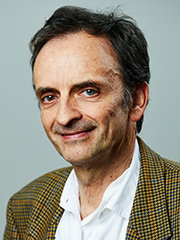
Dr. Björn Klaes is a Scientific Employee in the Department of Geology at the University of Trier , Germany. His research focuses on geochemical processes in diverse environments. Research Areas: Rock weathering biogeochemistry, fjord nutrient export dynamics, paleoclimate reconstructions, and environmental impacts of forestry operations. Key Projects: Investigated element transport in Patagonian fjords, analyzed stalagmite records for Holocene climate variability, and participated in multi-proxy studies of South African and Mongolian lake sediments. His recent publications (2022-2025) emphasize soil formation mechanisms , climate-soil interactions , and methodological developments in 3D geological modeling. Fieldwork spans from Patagonian Andes to Mongolian steppes. Contact: klaesb@uni-trier.de | Office: University of Trier, Campus II, Behringstraße 21, Trier
Christian Fendt is a Senior Scientist at the Max Planck Institute for Astronomy (MPIA) in Heidelberg, Germany, and an Adjunct Professor at Heidelberg University. He serves as Scientific Coordinator of the International Max Planck Research School (IMPRS) for Astronomy and Cosmic Physics. His research focuses on astrophysical jets and magnetohydrodynamic processes across cosmic environments, from young stars to active galactic nuclei. Dr. Fendt completed his physics education at the University of Tübingen (Vordiplom 1986) and the University of Heidelberg (Diplom in Physics 1990, Dissertation in Astronomy 1994). His academic path includes postdoctoral positions at Lund Observatory (1994-1996), Max Planck Institute for Radioastronomy (1996-1997), and Astrophysikalisches Institut Potsdam (1997-2001), before joining MPIA in 2004. He was appointed Privatdozent at Heidelberg University in 2005 and promoted to Adjunct Professor in 2018. Professor Fendt's research centers on magnetohydrodynamic (MHD) processes in astrophysical environments. His work investigates jet formation mechanisms through both analytical approaches and advanced numerical simulations. His group at MPIA has made significant contributions to understanding how magnetic fields, accretion disks, and outflows interact to produce jets. Current research includes investigations into general relativistic effects, particle acceleration mechanisms, and the connection between theoretical models and multi-wavelength observational data. Analysis of his recent publications (2022-2025) reveals a continued focus on MHD simulations of astrophysical jets, with increasing attention to relativistic effects, non-ideal MHD processes like resistivity and dynamo action, and multi-wavelength observational signatures. His work spans from protostellar jets to relativistic jets from supermassive black holes, demonstrating universal jet formation mechanisms across different astrophysical scales. Throughout his career, Professor Fendt has mentored numerous PhD and Master's students who have gone on to successful academic positions and careers in industry. His research has been supported by various funding agencies including the German Science Foundation (DFG), the Klaus Tschira Foundation, and the Heidelberg Graduate School for Physics. Current projects include investigations into relativistic jet dynamics, particle acceleration mechanisms, and the connection between accretion disk physics and jet launching. At MPIA, Dr. Fendt leads the Astrophysical Jets research group within the Galaxies and Cosmology department. His team utilizes advanced computational resources to conduct magnetohydrodynamic simulations using codes like PLUTO, HARM, and ZEUS. The group maintains close connections with observational astronomers to ensure their theoretical work remains relevant to current and future observational facilities.
Prof. Dr. Günter Sigl is a full Professor of Theoretical Physics and Managing Director of the Astroparticle Physics Group at the II. Institute for Theoretical Physics , University of Hamburg . He is also a Principal Investigator in the Quantum Universe Cluster , a collaboration between Universität Hamburg and DESY, and serves on the executive board of PIER (Partnership for Innovation, Education and Research). His academic career spans prestigious institutions including CNRS (France), University of Chicago, and Ludwig-Maximilians-Universität München. Education & Career Path: 1984–1990: Diploma in Physics, Ludwig-Maximilians-Universität München 1993: Doctorate in Physics (supervisors: Georg Raffelt, Leo Stodolsky), Ludwig-Maximilians-Universität München 1993–1996: Feodor Lynen Fellow (Alexander von Humboldt Foundation), University of Chicago 1997–1999: Research Scientist, University of Chicago 1999–2005: Chargé de Recherche, CNRS (IAP, Paris) 2005–2007: Directeur de Recherche, CNRS (APC, Paris) Since 2007: Professor, University of Hamburg Research Focus: The Sigl group tackles fundamental questions at the intersection of particle physics and astrophysics. Their work includes understanding the role of neutrinos in supernovae and the early Universe, deciphering dark matter signatures across radio to gamma-ray bands, and exploring the origin and propagation of cosmic rays up to the highest observed energies (~10 20 eV). The group actively contributes to the Pierre Auger Observatory and investigates links between astroparticle physics, gravitational wave astronomy, and collider physics (e.g., LHC). Key Research Themes: Ultra-High-Energy Cosmic Rays: Production mechanisms, propagation in magnetic fields, and multi-messenger signatures. Dark Matter: Non-thermal relics, axion-like particles, and indirect detection strategies. Neutrino Astrophysics: Supernova dynamics, early Universe cosmology, and beyond-Standard-Model interactions. Gravitational Waves: Sources from early Universe phase transitions and astrophysical backgrounds. Computational Tools: Development of CRPropa, a public code for cosmic ray and neutrino propagation. Recent Publication Trends: Since 2021, Prof. Sigl has co-authored 15+ papers focusing on (1) advanced simulations of cosmic ray air showers and their muon content, (2) axion/ALP stars and their gravitational wave signatures, (3) next-generation CRPropa frameworks for multi-messenger astronomy, and (4) kinetic theory applications to neutrino physics. Notable venues include Physical Review D , Astroparticle Physics , and Journal of Cosmology and Astroparticle Physics . Institutional Leadership & Service: 2020–2022: Chair, Department of Physics, University of Hamburg 2014–2022: Deputy Spokesperson, Wolfgang Pauli Centre (WPC) for Theoretical Physics 2011–2016: Coordinator, Helmholtz Alliance for Astroparticle Physics (HAP) Theory Working Package Since 2022: Executive Board Member, PIER (Hamburg/DESY) 2005–2009: Coordinator, EU Network N6 (Theoretical Astroparticle Physics) Laboratory & Collaborations: The Astroparticle Physics Group operates within the II. Institute for Theoretical Physics, leveraging synergies with DESY and the Quantum Universe Cluster. While specific student lists aren’t provided, the group actively mentors graduate researchers and postdocs, as reflected in multi-author publications. The group’s infrastructure includes access to supercomputing resources for Monte Carlo simulations and close ties to observational collaborations like Auger.
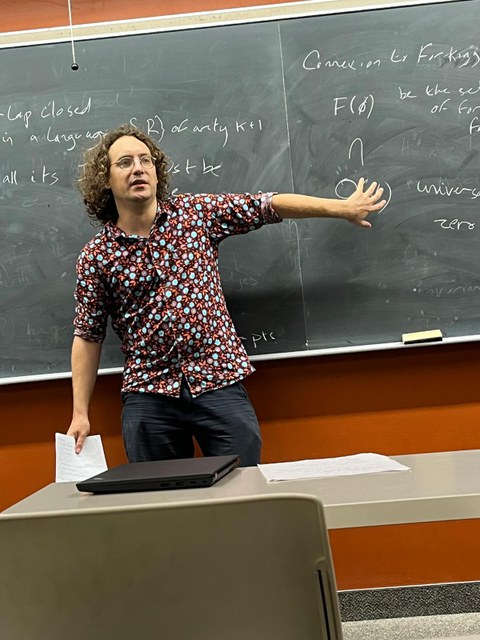
Colin Jahel is a Research Fellow at Technische Universität Dresden, specializing in mathematical research at the intersection of Model Theory, Dynamics, and Probability Theory. He completed his PhD in 2021 at the University of Lyon, France, under the supervision of Lionel Nguyen Van Thé and Todor Tsankov. Prior to his current position, he was a postdoctoral researcher at Carnegie Mellon University. His research explores connections between model-theoretic methods and dynamical systems, with emphasis on invariant measures, automorphism groups, and structural properties of mathematical objects. Key themes include ergodic theory applications to countable structures, topological dynamics of Polish groups, and probabilistic aspects of mathematical logic. Jahel's publications demonstrate consistent focus on interactions between model theory and dynamics, with recurrent themes of invariant measures, group actions, and classification of infinite structures. His collaborative work frequently addresses problems in geometric group theory, combinatorial limit theory, and measurable dynamics. He maintains active research collaborations with mathematicians across institutions, including co-authors from Carnegie Mellon University, Charles University, and other European universities.
Victoria Grinberg, Dr. rer. nat., is a Lecturer at the Institute for Astronomy and Astrophysics (IAAT) within the University of Tuebingen, Germany, affiliated with the Department of Astronomy. She contributed to the course Endpoints of Stellar Evolution: Supernovae, White Dwarfs, Neutron Stars, Black Holes during the WS 19/20 semester. Her research and teaching focus on astrophysical phenomena, including stellar evolution endpoints supernovae dynamics compact objects (white dwarfs, neutron stars, black holes) These interests align with the event she co-teaches, emphasizing high-energy astrophysical processes.
Prof. Dr. Stefan Jordan is an Außerplanmäßiger Professor (Apl.-Prof.) at the Astronomisches Rechen-Institut, Zentrum für Astronomie, University of Heidelberg. His research focuses on stellar astrophysics with specialized expertise in white dwarfs, magnetic stellar objects, and spectroscopic analysis. Research Interests: Primary research areas include magnetic white dwarfs, stellar convection modeling, symbiotic star systems, and Gaia mission-related studies. His work extensively utilizes space-based observatories like ROSAT, EUVE, HST, and ORFEUS for ultraviolet and X-ray spectroscopy of compact objects. Publication Trends: Analysis of 15 recent publications reveals consistent focus on magnetic white dwarf characterization, stellar atmosphere modeling, and spectroscopic surveys. Key methodologies include phase-resolved spectroscopy, Zeeman effect analysis, and numerical simulations of stellar convection. Research frequently involves international collaborations and survey data from Hamburg/ESO and Hamburg Quasar surveys. Scientific Awards: No awards mentioned in available sources. Professional Activities: Engaged in multiple space telescope observation programs (ROSAT, EUVE, HST) and contributes to the Gaia mission through the Astronomisches Rechen-Institut. No specific information about student advising or research grants is available in provided materials.
Dr. Hao-Jui Kuan is a Junior Scientist/Postdoc at the Max Planck Institute for Gravitational Physics (Albert Einstein Institute) in Potsdam, Germany. He has been a member of the Computational Relativistic Astrophysics Department led by Masaru Shibata since October 2022. His educational background includes: Bachelor's degree in Physics and Mathematics (2017) PhD in Physics from Tübingen University (2022) with thesis titled "Tidal Effects in Pre-merger Neutron Stars and Dynamics of Scalarized Compact Objects" Dr. Kuan's research focuses on gravitational physics and astrophysics, particularly on tidal phenomena in coalescing binary stars with at least one neutron star involved. His work investigates how resonance of low-frequency modes in such systems may result in crustal fracture, potentially leading to pre-emission of short gamma-ray bursts in neutron stars with strong magnetic fields. He also studies how excitation of high-frequency modes can affect gravitational waveforms when neutron stars spin at appreciable rates. His notable recognition includes: Dr. Friedrich Förster Prize for his outstanding doctoral dissertation (2023) As a postdoctoral researcher, Dr. Kuan works within the Computational Relativistic Astrophysics Department at the Max Planck Institute for Gravitational Physics, contributing to cutting-edge research in gravitational wave astronomy and relativistic astrophysics.
Dr. Melanie Ast is a Junior Scientist/Postdoc at the Max Planck Institute for Gravitational Physics (AEI) in Hannover, Germany. Her research focuses on gravitational wave astronomy, laser interferometry, and space-based interferometry. She contributes to advanced detector technologies like LISA and analyzes gravitational wave signals from compact binary mergers. Her work involves improving interferometric techniques to suppress noise and enhance detection capabilities. Her research areas include testing general relativity through gravitational wave observations, studying neutron star mergers and their electromagnetic counterparts, and developing methods for multi-messenger astronomy. She has collaborated on projects analyzing data from Advanced LIGO, Virgo, and KAGRA detectors, contributing to key studies of GW170817 and other historic gravitational wave events. Dr. Ast's publications emphasize high-precision measurement techniques, such as stray light suppression in interferometers and phase-reference distribution systems. Her work bridges experimental physics with theoretical astrophysics, advancing the field of gravitational wave detection and its applications to cosmology and fundamental physics.
Dr. Alexander Wanner holds management roles at several institutions within Leibniz University Hannover, including the QUEST-Leibniz Research School, Quest Centre for Quantum Engineering and Space-Time Research, QuantumFrontiers, and the HITec Institute of Technology. His email is alexander.wanner@quest.uni-hannover.de . His research focuses on gravitational wave detection, quantum engineering, and detector technology. He contributes to projects like the Einstein-Elevator facility and the AEI 10m prototype interferometer, emphasizing precision measurement and noise reduction in gravitational wave observatories. Wanner's work bridges astrophysics and experimental physics, addressing topics such as binary coalescence modeling, cosmic string constraints, and multi-messenger observations. He collaborates with LIGO-Virgo and ANTARES networks, advancing understanding of gravitational wave sources and their astrophysical implications. His role in managing interdisciplinary research initiatives highlights expertise in coordinating large-scale projects and integrating cutting-edge technologies for fundamental physics research.
Rafael Porto is a Lead Scientist at DESY (Deutsches Elektronen-Synchrotron) since 2020 and Principal Investigator in the Cluster of Excellence 'Quantum Universe' at the University of Hamburg. His research focuses on theoretical astroparticle physics, cosmology, and gravitational waves, applying particle physics tools to study gravitational dynamics of compact objects, large-scale structures, and early universe physics. He holds a PhD from Carnegie Mellon University (2007) and has held positions at the Kavli Institute, Institute for Advanced Study (Princeton), Columbia University, and the ICTP South American Institute for Fundamental Research (São Paulo), where he was a faculty member and Simons/FAPESP Young Investigator. His academic career includes ERC Consolidator Grant awards for 'Precision Gravity: From the LHC to LISA' and extensive postdoctoral training across prestigious institutions. Research interests span gravitational wave science (e.g., Einstein Telescope), black hole dynamics, neutron star physics, and probing physics beyond the Standard Model using precision data. Education: PhD in Physics, Carnegie Mellon University (2007); BSc/MSc in Physics, Universidad de la República (Uruguay, 2003). Awards: Simons/FAPESP Young Investigator (2015-2018), ERC Consolidator Grant (2019). Grants/Projects: Leading 'Precision Gravity' ERC project and collaborations with LISA/Einstein Telescope initiatives. His work bridges particle physics and cosmology, addressing foundational questions like spacetime structure, quantum gravity signatures, and gravitational wave sources. Active in international collaborations, he contributes to theoretical frameworks for interpreting gravitational wave observations and advancing multi-messenger astrophysics.
Dr. Yong Gao is a Research Fellow at the Max Planck Institute for Gravitational Physics (Albert Einstein Institute) in Potsdam, Germany, specializing in Computational Relativistic Astrophysics. His position involves research in high-energy astrophysical phenomena through computational modeling. Research Focus: His work spans theoretical and computational approaches to relativistic astrophysics, with core interests in: Black hole dynamics and gravitational wave modeling Numerical relativity and high-performance computing applications Compact object astrophysics and accretion physics No scientific awards, student advisories, or grant activities are mentioned in available records. He operates within the institute's Computational Relativistic Astrophysics research group, collaborating on numerical simulations of extreme cosmic events.
Dr. Takami Kuroda is a Researcher at the Max Planck Institute for Gravitational Physics (Albert Einstein Institute) in Potsdam, Germany, specializing in the Computational Relativistic Astrophysics group. His research centers on computational modeling of relativistic astrophysical phenomena, with emphasis on numerical relativity simulations for gravitational wave sources, black hole mergers, and neutron star dynamics. This work leverages high-performance computing to solve Einstein's field equations under extreme conditions, contributing to multi-messenger astronomy initiatives. Dr. Kuroda operates within the Computational Relativistic Astrophysics division, collaborating on cutting-edge gravitational physics research aligned with the institute's mission to advance fundamental understanding of spacetime and compact objects.
Christoph Gellhaus is a Professor of Mathematics at the Georg Agricola University of Applied Sciences, specifically within the School of Electrical and Information Technology and Industrial Engineering. His academic career spans both theoretical research and industrial application, with a focus on complex manifolds and symplectic geometry. He has also contributed to telecommunications software development at Siemens AG. Dr. Gellhaus' research interests include Complex Analysis, Symplectic Geometry, and Mathematical Physics, particularly the study of (almost-)complex manifolds and their applications. His publications reflect this, covering topics like Holomorphic Group Actions, DECT Protocols, and Hamiltonian Vector Fields. His recent work trends include interdisciplinary applications of mathematics in telecommunications and wireless communication protocols. Notable areas include DECT protocol design, network protocols, and interface specification. He is actively involved in teaching, covering subjects such as Higher Mathematics and Object-Oriented Programming in Java. His academic journey began with a diploma in Complex Analysis at Ruhr University Bochum, followed by a 1988 PhD in the theory of compact complex manifolds with holomorphic vector fields.
Frans Pretorius is a South African-Canadian physicist specializing in computational physics and numerical relativity. He currently serves as a professor at Princeton University and directs the Princeton Gravity Initiative , focusing on gravitational wave simulations and black hole dynamics. Education : B.Sc. in Computer Engineering (University of Victoria, 1996) M.Sc. in Physics (University of Victoria, 1999) Ph.D. in Physics (University of British Columbia, 2002) His research centers on numerical simulations of gravitational collapse, black hole mergers, and high-energy collisions, contributing foundational work to gravitational wave detection. He has developed adaptive mesh refinement algorithms for solving coupled elliptic-hyperbolic systems in general relativity. His publications focus on black hole formation in particle accelerators, evaporation of 2D black holes, and high-energy black hole collisions, with keywords spanning numerical relativity, gravitational radiation, and quantum gravity effects. Scientific Awards : Sloan Fellowship (2010) Aneesur Rahman Prize for Computational Physics (2010) Breakthrough Prize in Fundamental Physics (2016) New Horizons in Physics Prize (2017) Dirac Medal of the ICTP (2021) Galileo Galilei Medal (2021) He has held positions at the California Institute of Technology (Tolman Fellow, 2002–2005), University of Alberta (Assistant Professor, 2005), and Princeton University (Assistant Professor, 2007). His work bridges computational methods with fundamental physics.
Devika Bhatnagar is a doctoral student affiliated with the COMPACT Research Group at the Max Planck Institute for Radio Astronomy , where she works in the Department of Radio Astronomical Fundamental Physics . Her research interests include Radio Astronomy Fundamental Physics Astrophysics , focusing on compact objects and related phenomena. Contact details: dbhatnagar@mpifr.de , phone +49 (0)228-525-181.