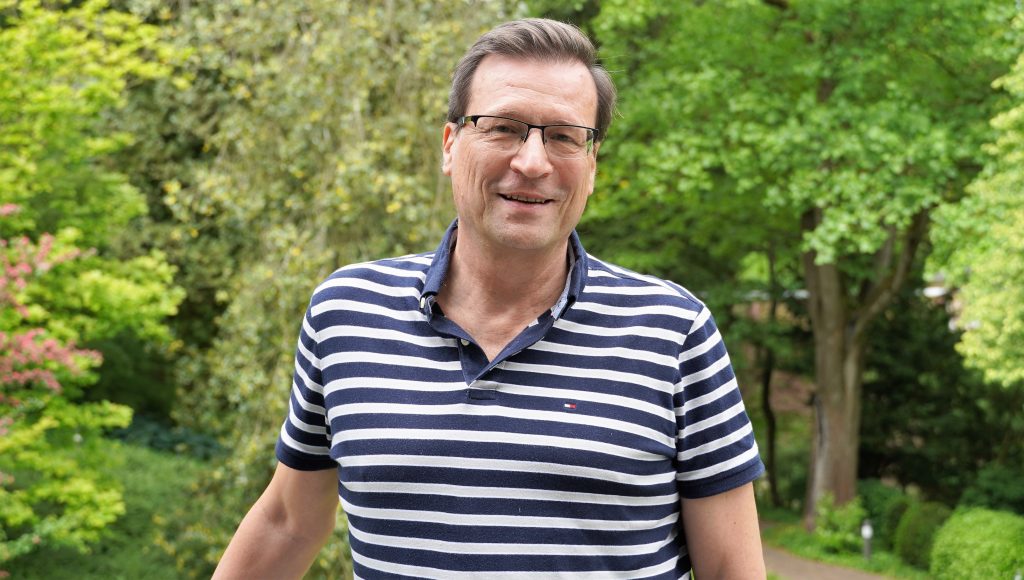
Philipp Podsiadlowski is a Professor of Physics in the Astrophysics sub-department at the University of Oxford and a Tutorial Fellow at St Edmund Hall. He holds the Klaus Tschira Visiting Professorship at the Heidelberg Institute for Theoretical Studies (HITS) from May to December 2023. His research focuses on theoretical astrophysics, including stellar evolution, binary systems, supernovae, gamma-ray bursts, and gravitational wave sources. He leads the Fireworks Initiative, an international collaboration studying cosmic explosions and their implications for galaxy evolution. Notable awards include the Humboldt Prize Fellowship (since 2015). Research interests span binary star dynamics, common-envelope evolution, and progenitors of supernovae and gamma-ray bursts. Collaborations include work with HITS groups (SET and PSO) and international networks. Teaching includes advanced astrophysics courses and doctoral supervision. His work on SN 1987A and gravitational wave sources highlights contributions to understanding stellar mergers and compact object formation.
Michael Pajkos is a Researcher in Theoretical Astrophysics at the California Institute of Technology (Caltech), affiliated with the Division of Physics, Mathematics and Astronomy. His work focuses on gravitational wave astrophysics, core-collapse supernovae, and relativistic multiphysics simulations. He contributes to projects like Flash-X and SpECTRE, advancing computational tools for modeling stellar explosions and neutron star mergers. His research explores the interplay between nuclear physics, magnetic fields, and relativistic dynamics in extreme astrophysical environments. Pajkos collaborates on developing methods to interpret gravitational wave signals from stellar events, with particular attention to core-collapse mechanisms and rotational effects.
Violetta Sagun is a Senior Researcher in Theoretical Astrophysics at the University of Southampton, affiliated with the Gravity Group within the STAG Research Centre and the Faculty of Mathematical Sciences. She has previously held postdoctoral positions at Coimbra University (2019–2024) and Lisbon’s CENTRA (2016–2018), establishing a strong international research profile. Her research focuses on compact stars , multi-messenger astrophysics , and the properties of strongly interacting matter under extreme conditions. She specializes in the effects of dark matter on neutron stars , including their structure, thermal evolution, and merger dynamics. A key aspect of her work involves numerical relativity simulations of dark matter-admixed compact star binaries, contributing to the science case for next-generation detectors like the Einstein Telescope. Her recent publications demonstrate a strong trend in modeling dark matter interactions in neutron stars, probing the equation of state, phase transitions, and gravitational wave signatures. She frequently collaborates with leading groups in Portugal, Germany, Poland, and beyond, with work published in journals such as Physical Review D , Astrophysical Journal , and Monthly Notices of the Royal Astronomical Society . Among her scientific contributions are studies on: Thermal evolution of neutron stars with dark matter Tidal deformability as a probe of dark matter Constraints on fermionic and bosonic dark matter from observations Quasiequilibrium configurations of dark matter admixed binaries The nature of compact objects like HESS J1731-347 She advises no publicly listed students and has not been noted to receive specific scientific awards in the provided text. Her research is conducted within the Gravity Group at Southampton, a leading center for gravitational physics and astrophysics.
Dr. Karl Wette is a Research Fellow at the Centre for Gravitational Astrophysics at the Australian National University (ANU). He holds a B.Sc. from the University of Auckland and a Ph.D. from ANU. His research focuses on gravitational waves, neutron stars, pulsars, and data analysis theory, with a particular emphasis on detecting and interpreting gravitational wave signals from compact objects like black holes and neutron stars. Dr. Wette is actively involved in the LIGO Scientific Collaboration, Virgo Collaboration, and KAGRA Collaboration, contributing to the analysis of gravitational wave data from the third observing run. His work bridges theoretical astrophysics with experimental data analysis, aiming to uncover insights into extreme astrophysical phenomena. Research Interests: Gravitational waves, neutron star dynamics, pulsar physics, and data-driven methods for gravitational wave astronomy. Dr. Wette's projects include studying postmerger remnants of black hole-neutron star binaries, constraining ultralight vector boson models, and developing advanced search algorithms for continuous gravitational waves. Collaborations: Engaged with international teams to analyze multi-messenger data from gravitational wave observatories and gamma-ray satellites like Fermi-GBM and Swift-BAT. His contributions have advanced techniques for detecting transient gravitational wave signals and interpreting their astrophysical implications. Education: B.Sc. (University of Auckland), Ph.D. (ANU).
Pablo Cerda Duran is an Associate Professor at the Universitat de València, affiliated with the Faculty of Physics, Department of Astronomy and Astrophysics. He is a member of the Computational Astrophysics and Cosmology (CompAC) research group and previously contributed to the Computer Aided Modeling of Astrophysical Plasma (CAMAP) group. He earned his PhD in 2006 with a thesis on the general relativistic collapse of rotating stellar cores under the supervision of Dr. José Antonio Font Roda. His research lies at the intersection of numerical relativity, computational astrophysics, and high-performance computing. He specializes in developing and applying numerical methods to simulate extreme astrophysical phenomena, particularly involving compact objects such as neutron stars and black holes. His work includes general relativistic hydrodynamics and magnetohydrodynamics, Einstein’s equations, and instabilities in rotating stars. The body of his recent publications reveals a strong focus on algorithmic innovation in numerical relativity—such as implicit time integration schemes, constrained evolution formulations, and iterative solvers—applied to problems in relativistic astrophysics. His simulations span core collapse, neutron star instabilities, and boson star dynamics, often in the context of gravitational wave sources. Email: pablo.cerda@uv.es His scientific contributions appear in leading journals like Classical and Quantum Gravity , Journal of Computational Physics , and Astronomy & Astrophysics . Although no formal awards are listed, his sustained publication record and collaborative network indicate significant recognition in the field. He has co-authored works with prominent figures such as José Antonio Font, Miguel-Ángel Aloy, and Eric Gourgoulhon. Pablo Cerda Duran leads and contributes to advanced computational modeling efforts, advancing the simulation capabilities of relativistic systems. His work continues to support the theoretical interpretation of gravitational wave signals and high-energy astrophysical events.
Dr. Deborah Lynn Ferguson is a computational gravitational-wave astrophysicist who will join the University of Rhode Island (URI) Department of Physics as Assistant Professor of Astrophysics in Fall 2025. Currently a Postdoctoral Research Associate at the University of Illinois Urbana-Champaign, she is an active member of the UMass-URI Gravity Research Consortium, the LIGO Scientific Collaboration, the LISA Consortium, the Cosmic Explorer Consortium, and the Einstein Toolkit Community. Education Ph.D. Physics (2020) – Georgia Institute of Technology, Advisor: Deirdre Shoemaker M.S. Physics (2017) – Georgia Institute of Technology B.S. Physics (2016), Minors in Mathematics & Computer Science – University of Kentucky Research Focus Dr. Ferguson develops and analyzes large-scale numerical relativity simulations to model the inspiral and merger of compact-object binaries in full General Relativity. Her work targets accurate gravitational-wave predictions required by current and future detectors such as LIGO, Virgo, KAGRA, LISA, and Cosmic Explorer. Recently, she has expanded into testing extensions of General Relativity using merger waveforms and optimizing simulation placement with machine-learning techniques. Scientific Awards & Honors Visualizing Science Competition Winner (2022, UT Austin) Visualizing Science Competition 3rd Place (2021, UT Austin) Larry S. O'Hara Graduate Student Fellowship (2020, Georgia Tech) Amelio Award for Research Excellence (2020, Georgia Tech) Participant, Lindau Nobel Laureate Meeting (2019) Georgia Tech Institute Fellowship (2016) Outstanding Senior in Physics (2016, University of Kentucky) Summer Research Grant (2015, University of Kentucky) Outstanding Junior in Physics (2015, University of Kentucky) Singletary Scholarship (2013, University of Kentucky) National Merit Finalist (2013) Leadership & Service Co-Chair, LISA Early Career Scientists (2024–present) Member at Large, APS Division of Gravity Executive Committee (2023–present); Chair of Seminar Committee Software & Open Science Dr. Ferguson leads the development of Mayawaves , an open-source Python library facilitating interaction with the Einstein Toolkit and the MAYA catalog of numerical relativity waveforms, promoting reproducibility and community access to state-of-the-art waveforms.
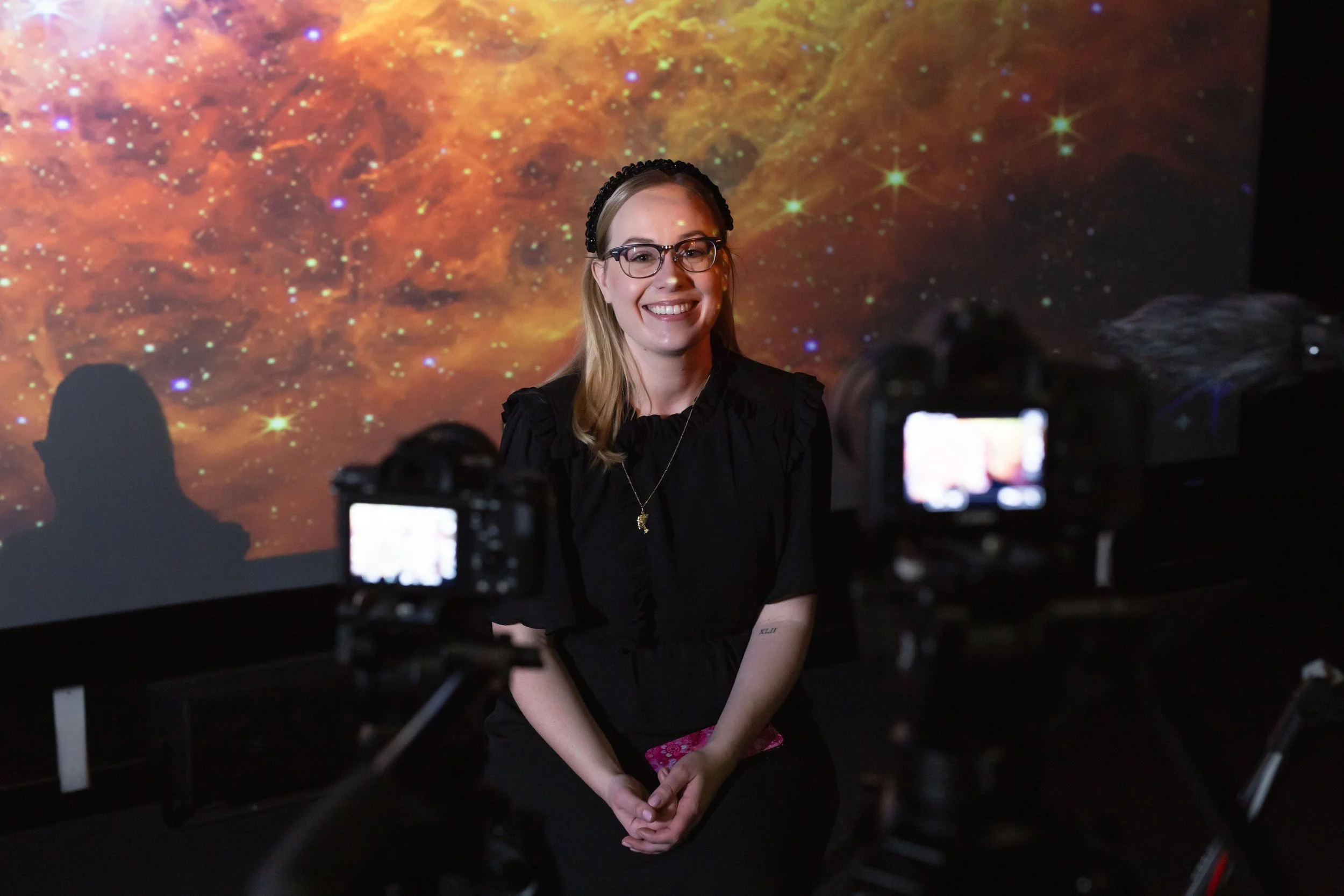
Dr. Sara Webb is a Lecturer at Swinburne University of Technology's School of Science, Computing and Emerging Technologies , where she serves as: Course Director for Swinburne Astronomy Online Microgravity Program Lead Program Mission Director for SHINE and the Swinburne Space Innovation Challenge Her research integrates observational astronomy, artificial intelligence, and space science , focusing on transient astrophysical phenomena using machine learning. Key research areas include: Gamma-ray burst detection and classification Interstellar object analysis Space debris tracking systems Microgravity experiment development Human-machine teaming for cosmic discovery Recent publications demonstrate expertise in fast transient detection (7 papers 2021-2025) and machine learning applications in astronomy (3 publications). Her work has been cited 48 times across these papers. Scientific recognition includes: Forbes 30 Under 30 Asia (2025) Space Domain Awareness Leadership AI & Anomaly Detection Innovation International Collaboration Network As a science communicator , she supervises 5+ doctoral students, authors The Conversation pieces (20+ 2021-2025), and has written The Little Book of Cosmic Catastrophes . Grants include funding from University of Melbourne and Swinburne internal programs for space research initiatives.
Dr. Anuradha Samajdar is an Assistant Professor at the Faculty of Science, Utrecht University , specializing in Gravitational and Subatomic Physics (GRASP) . Her research focuses on Gravitational Waves , Binary Black Holes , Neutron Star Mergers , and Gravitational Wave Detection using advanced detectors like LIGO, Virgo, and KAGRA. Key Research Areas: Gravitational Wave Astronomy, Astrophysics of Compact Objects, Quantum Gravity, and Einstein Telescope Design. Recent Work Trends: Analysis of overlapping gravitational wave signals, detector calibration, constraints on cosmic strings, and pulsar timing array biases.
Lilia Ferrario is a Professor and Director of the Mathematical Sciences Institute at the Australian National University (ANU). She holds a PhD in Theoretical Astrophysics from ANU (awarded April 20, 1990) and has established herself as a leading researcher in compact stellar objects and magnetic phenomena in stars. Her research focuses on white dwarf physics (100% fingerprint match), magnetic field physics (45%), neutron stars (23%), cataclysmic variables (15%), and millisecond pulsars (15%). She specializes in compact stars including white dwarfs, neutron stars, pulsars and magnetars, with particular expertise in fluid mechanical problems related to accretion in binary stars, radiation transfer effects, and modeling of cyclotron radiation from magnetic cataclysmic variables. Her recent publications show consistent focus on white dwarf systems, magnetic field origins, and binary star evolution. She has published in top journals including Nature, Nature Astronomy, and Monthly Notices of the Royal Astronomical Society, with significant citation impact (h-index of 32, 3378 total citations). Magnetic White Dwarfs review (2015) - 310 citations Binary star origin of high field magnetic white dwarfs (2008) - 200 citations Magnetism in isolated and binary white dwarfs review (2000) - 337 citations Professor Ferrario has supervised numerous research projects, including theoretical modeling of spectropolarimetric observations of magnetic white dwarfs and computational research infrastructure for mathematical sciences. Her work bridges theoretical astrophysics with observational constraints, contributing significantly to our understanding of stellar magnetism and compact object evolution.
Laura Cadonati is a Professor at the School of Physics and Center for Relativistic Astrophysics at the Georgia Institute of Technology, serving as Associate Dean for Research in the College of Science. Her research focuses on gravitational wave astrophysics and particle astrophysics, with long-term involvement in the LIGO Scientific Collaboration since 2002 and prior contributions to the Borexino and DarkSide collaborations. Current research spans gravitational wave detection, compact binary coalescences, and multi-messenger astrophysics Key contributions to gravitational wave transient catalogs (GWTC-3, GWTC-4.0) and detector noise mitigation techniques Active in open science initiatives, promoting data accessibility and collaborative verification Recent publications highlight advancements in gravitational wave parameter estimation, post-merger signal analysis, and astrophysical implications of black hole interactions in AGN disks. She coordinates cross-institutional collaborations like the LIGO-Virgo-KAGRA network and contributes to next-generation detector methodologies.
Thomas Tauris is a Professor in the Department of Materials and Production at Aalborg University, within The Faculty of Engineering and Science. His research focuses on theoretical astrophysics, particularly compact objects, gravitational waves, and binary star evolution. He maintains an active research group and collaborates internationally, including with the Max-Planck-Institute for Radio Astronomy in Bonn. PhD in Astrophysics, Aarhus University (1997) Dr. rer.nat.habil in Astrophysics, University of Bonn (2015) His research interests span neutron stars, black holes, white dwarfs, X-ray binaries, millisecond pulsars, supernovae, and stellar evolution in binary systems. He is particularly known for modeling the formation and evolution of compact binaries and their role as gravitational wave sources. His work bridges theoretical modeling with observational astrophysics, especially in multi-messenger contexts. The recent articles highlight trends in neutron star and black hole formation, pulsar-binary systems, gravitational wave progenitors, and supernova mechanisms. Key themes include mass-gap objects, natal kicks, kilonovae, and binary evolution in low-metallicity environments. His 2023 textbook Physics of Binary Star Evolution (with Ed van den Heuvel) is a major contribution to the field. He has supervised numerous PhD, MSc, and BSc students, with recent advisees working on topics such as merging neutron stars, recycled pulsars, and ultra-luminous X-ray binaries. He teaches courses in astrophysics, mechanics, and physics of compact objects. Thomas Tauris leads a research group focused on compact objects and has hosted postdoctoral researchers from institutions in China. He is involved in major collaborative efforts such as the Einstein Telescope and LISA science consortia, contributing to the future of gravitational wave astrophysics.
James R. Beattie is a Postdoctoral Research Fellow jointly appointed at Princeton University's Department of Astrophysical Sciences (Bhattacharjee group) and the Canadian Institute for Theoretical Astrophysics (Ripperda plasma-astro group). He completed his Ph.D. in theoretical astrophysics at the Australian National University in January 2024 under the supervision of Christoph Federrath. He maintains dual residences between Toronto, Canada and Princeton, United States to accommodate his joint appointments. His educational background includes: Ph.D. (theoretical astrophysics), Australian National University, Canberra, Australia (2024) Honours (Astrophysics), Australian National University (2019) B.Sc. (physics), Queensland University of Technology, Brisbane, Australia (2018) B.Math. (applied and computational), Queensland University of Technology, Brisbane, Australia (2018) B.Ed. (secondary education), Queensland University of Technology, Brisbane, Australia (2013) Dr. Beattie's research focuses on magnetized turbulence and dynamo processes across multiple scales in the Universe. His work spans from Earth's magnetosheath and the interstellar medium to the intracluster medium and plasma environments around compact objects. He employs theoretical frameworks of stochastic, fluctuating fluids and plasmas to investigate fundamental turbulence phenomena. His recent work includes the world's largest MHD turbulence simulation (10,080 3 cells), reaching Reynolds numbers over a million, which has provided new insights into the energy spectra of magnetized turbulence in the interstellar medium. Analysis of his recent publications reveals several key research trends. He has identified two coexisting kinetic energy cascades in magnetized interstellar medium turbulence, separating the plasma into scales that are non-locally interacting, supersonic and weakly magnetized (with spectrum n = 2.01) and locally interacting, subsonic and highly magnetized (n = 1.465). His work on supernova-driven turbulence has demonstrated fundamentally different energy cascades compared to classical Kolmogorov turbulence. He has also made significant contributions to understanding the supersonic turbulent dynamo, relativistic reconnection, and cosmic ray-plasma coupling mechanisms across diverse astrophysical environments. Dr. Beattie has received recognition for his work, including: Publication in Nature Astronomy for "The spectrum of magnetized turbulence in the interstellar medium" Feature in New Scientist for the world's largest MHD turbulence simulation Feature in the Leibniz Supercomputing Centre newsletter Commentary in CNN on the turbulence properties of Van Gogh's Starry Night Dr. Beattie actively mentors students and collaborators, including Matt Sampson at Princeton and Neco Kriel at ANU, who have led published studies under his guidance. His research is supported through his postdoctoral fellowships at CITA and Princeton, which have enabled him to conduct large-scale numerical simulations and theoretical investigations using advanced computational resources at institutions like the Leibniz Supercomputing Centre. He is a member of several collaborative research teams: The Bhattacharjee group at Princeton University The Ripperda plasma-astro group at CITA International collaborations with researchers from ANU, UC Santa Cruz, Imperial College, Caltech, and others French ISM astrophysicists consortium
Dr. Jan Steinhoff is a Group Leader leading the research group Astrophysical and Cosmological Relativity at the Max Planck Institute for Gravitational Physics (Albert Einstein Institute) in Potsdam. He holds a diploma in Physics (2006) and PhD (2010) from Friedrich-Schiller-Universität Jena, with doctoral research on canonical formulations of spin in general relativity under Prof. Gerhard Schäfer. Following postdoctoral positions at Instituto Superior Técnico (Lisbon) and AEI, he established his independent research group in 2019. His primary research focuses on analytical predictions for compact binary dynamics and gravitational wave emissions. Key areas include: Spin-induced spacetime twisting and orbital precession effects Tidal deformation and oscillation modes in neutron stars Deviations from Einstein's gravity in gravitational wave signatures Effective field theory frameworks for binary systems Waveform modeling (especially effective-one-body approaches) Steinhoff's publications demonstrate consistent focus on analytical relativity methods applied to gravitational wave astrophysics. Recent work emphasizes: Tidal interactions in neutron stars within modified gravity theories High-precision post-Newtonian calculations Waveform development for next-generation detectors Tests of general relativity using LIGO-Virgo observations He leads the AEI's efforts in developing perturbative solutions to gravitational two-body problems, leveraging synergies with high-energy physics techniques including scattering amplitudes and effective field theories.
Tauris Thomas is a Professor at Aalborg University since 2022. Previously, he held professorships at Aarhus University (2018–2022, Honorary Professor since 2016) and the University of Bonn/Max Planck Institute for Radio Astronomy (2010–2018). Earlier positions include External Associate Professor at the Niels Bohr Institute, Assistant Professor at the same institution, and fellowships at NORDITA and the University of Amsterdam. Education highlights include a Ph.D. from Aarhus University (1997) and habilitation at the University of Bonn (2015). Thomas's research focuses on compact objects (neutron stars, black holes, white dwarfs) and their binary systems. He investigates gravitational wave sources, supernovae, and stellar evolution. His work bridges theoretical modeling with observational astrophysics, particularly in pulsar systems and population synthesis. Selected publications emphasize binary evolution, gravitational wave detection, and supernova dynamics. Notable collaborations include studies on LISA mission targets and ultra-stripped supernovae. Scientific Awards: AIAS Senior Fellowship (2019) Lehrpreisträger for best teaching (2016) Honorary Professor at Aarhus University (2016) NORDITA Fellow (2000) Marie Curie Research Fellow (1997)
Prof. Dr. Alessandra Buonanno serves as Director at the Max Planck Institute for Gravitational Physics (Albert-Einstein-Institut) in Potsdam and Research Professor at the Department of Physics, University of Maryland. She also holds Honorary Professor positions at Humboldt University and Potsdam University, and is a Scientific Member of the Max Planck Society. Her educational background includes: Ph.D. in Physics, University of Pisa, Italy (1993-1996) Master in Physics (Laurea), University of Pisa, Italy (1993) Prof. Buonanno specializes in gravitational physics with expertise in analytical solutions to the two-body problem in General Relativity, modeling gravitational waves from compact object mergers, and testing fundamental physics through gravitational-wave observations. Her research integrates analytical and numerical relativity approaches to study black holes, neutron stars, and early universe cosmology. She has received numerous prestigious awards including the Oskar Klein Medal (2023), Gottfried Wilhelm Leibniz Prize (2018), Dirac Medal (2021), and election to multiple national academies. Her work on gravitational wave modeling was instrumental for the LIGO-Virgo detections. Prof. Buonanno's publications, including her notable 2017 article 'The dawn of a new era' in CERN courier, highlight the transformative impact of gravitational wave astronomy on fundamental physics and cosmology. As Principal Investigator of the LIGO Scientific Collaboration and member of various international committees including the Kavli Prize Committee and Solvay International Scientific Committee, she plays a pivotal role in advancing gravitational physics research globally.