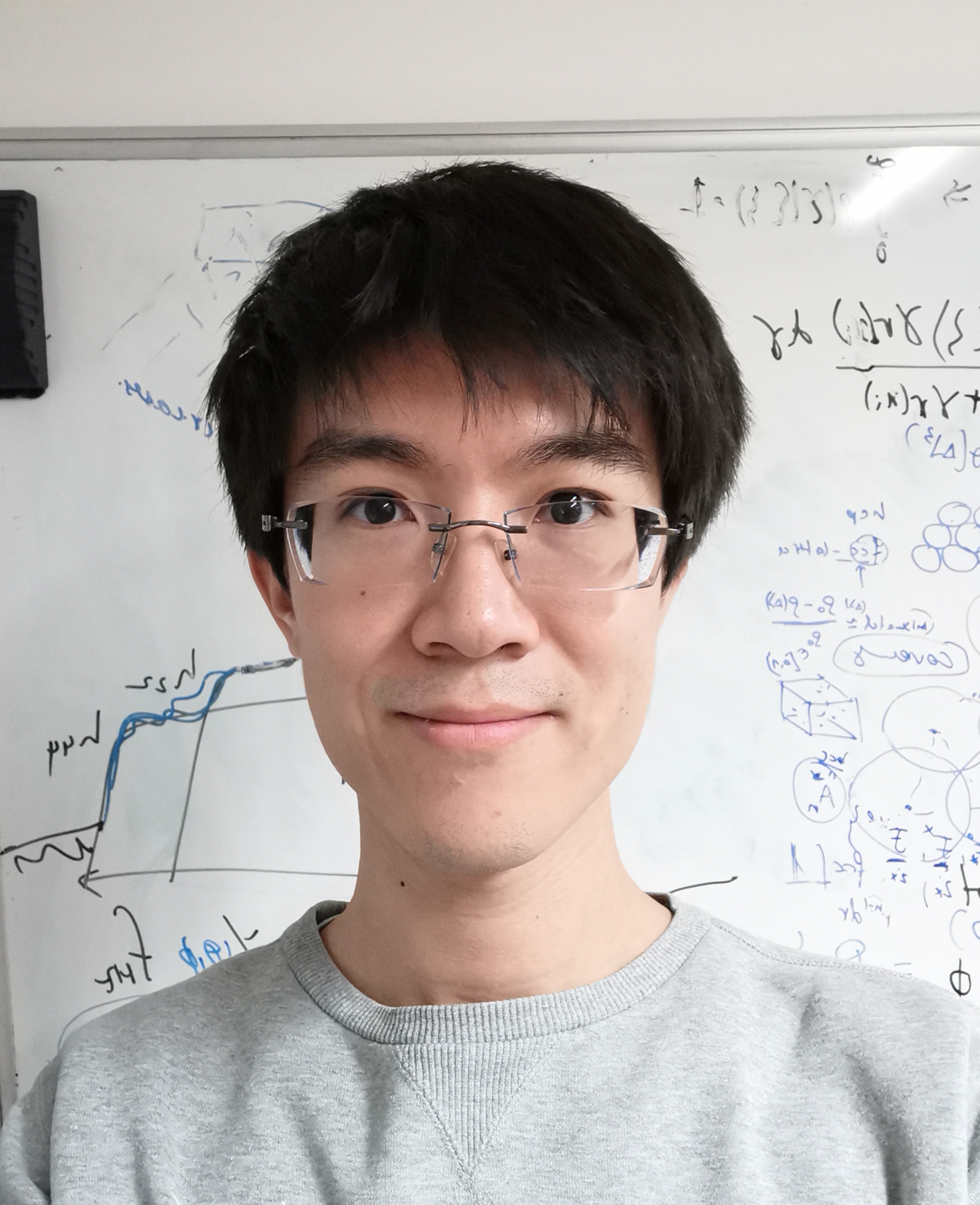
Dr. Andrew L. Miller is a postdoctoral researcher at Utrecht University and the National Institute for Subatomic Physics (Nikhef), focusing on gravitational wave detection and dark matter studies. His work bridges theoretical physics and computational methods within the LIGO/Virgo collaborations. PhD from Sapienza University of Rome and University of Florida MS in Physics from University of Florida BS in Physics from The College of New Jersey Andrew's research centers on gravitational waves from neutron stars , primordial black holes , and dark matter interactions . His methodological innovations include: Machine learning algorithms for detector noise classification Pattern-recognition techniques for continuous wave detection Semicoherent analysis for ultralight boson clouds Frequency-Hough transforms for binary inspirals His publications cover LIGO/Virgo data analysis, Einstein Telescope design, and LISA Pathfinder applications for dark matter detection. He has delivered tutorials on: Machine learning classification Parameter estimation in gravitational waves Frequency-Hough transforms Generalized search frameworks
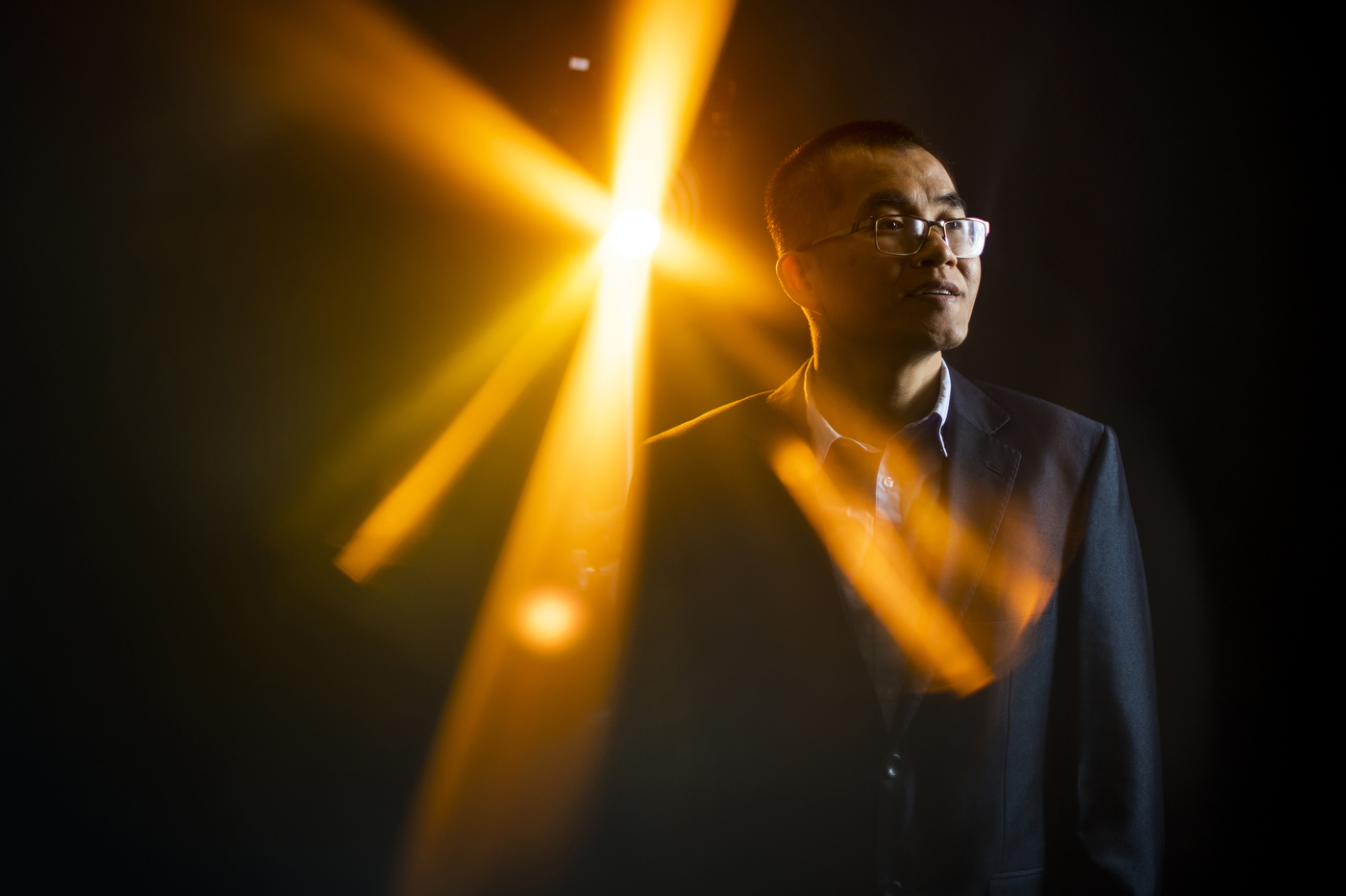
Stephen Eikenberry is a Professor of Optics & Photonics Physics at CREOL, The College of Optics and Photonics, University of Central Florida. His academic journey includes a Ph.D. in Astronomy from Harvard University (1997), a Sherman Fairchild Postdoctoral Prize Fellowship at Caltech, and prior tenured roles at Cornell University and the University of Florida. His research focuses on black holes, neutron stars, gravitational waves, and astronomical instrumentation, with applications in biomedical imaging and spectroscopy. Key professional milestones include the 2016 Breakthrough Prize in Fundamental Physics (as part of the LIGO Science Consortium), the NSF CAREER Award (2000), and multiple University of Florida Research Foundation Professorships. He has designed advanced optical instruments and contributed to LIGO's gravitational wave discoveries. Eikenberry's research group explores astrophotonics, dark energy, and extrasolar planets. His recent work includes analyzing gravitational wave data from LIGO/Virgo and developing lunar occultation missions. He advises multiple graduate students and collaborates on international projects like the PolyOculus Array (OPA!). Education: Ph.D. in Astronomy, Harvard University (1997) Postdoctoral Fellowship at Caltech (Sherman Fairchild Prize) Awards: Breakthrough Prize in Fundamental Physics (2016) Gruber Prize for Cosmology (2016) UK Royal Astronomical Society Team Achievement Award (2016) His publications emphasize gravitational wave astronomy, cosmology, and instrument design. He has pioneered methods to constrain cosmic expansion using gravitational wave 'standard sirens' and studies correlations between fast radio bursts and gravitational wave events.
James M. Lattimer is a Distinguished Professor of Astronomy at Stony Brook University, affiliated with the Department of Physics & Astronomy. He specializes in neutron star structure, dense matter equation of state, core-collapse supernovae, and nuclear astrophysics. His research integrates observational data from missions like NICER with theoretical models rooted in nuclear physics. B.S. in Physics (University of Notre Dame, 19XX) Ph.D. in Astronomy (University of Texas at Austin, 19XX) His work focuses on constraining neutron star properties via X-ray observations and gravitational wave events. Key projects include NASA's Binary Neutron Star Mergers Grand Challenge and analyses of pulsar data (e.g., PSR J0740+6620, PSR J0030+0451). He teaches advanced courses like PHY 521 (Stars) and CEN 511 (Recent Discoveries in Astronomy), emphasizing stellar structure, compact objects, and cosmic phenomena. Recent research highlights include studies of symmetry energy constraints, universal neutron star relations, and implications of NICER/XMM-Newton measurements for dense matter physics. His work bridges nuclear theory, astrophysical observations, and computational modeling to address fundamental questions about matter under extreme conditions.
Nadia Zakamska is a Professor in the Department of Physics & Astronomy at Johns Hopkins University and serves as Vice Chair for Academics. She holds a PhD from Princeton University and has held fellowships at the Institute for Advanced Study and Stanford University. Her research focuses on observational and theoretical astrophysics, including quasar-driven galactic winds, stellar variability, binary systems, and the co-evolution of supermassive black holes and galaxies. Her work leverages cutting-edge facilities like the James Webb Space Telescope (JWST) and the Atacama Large Millimeter/submillimeter Array (ALMA). Key research areas include: (1) Discovery of galactic winds powered by supermassive black holes, which influence galaxy formation and star formation suppression. (2) Exploration of variable astrophysical phenomena using surveys like LSST and WISE, with a focus on binary stars, white dwarfs, and neutron star mergers. (3) Analysis of dual quasars and their role in galaxy mergers. Recent achievements include detecting extreme outflows in 'extremely red quasars' and using JWST to study starburst galaxies. Zakamska has mentored over 30 graduate and undergraduate students, many of whom have pursued postdoctoral roles at prestigious institutions. She leads the JWST Early Release Science Program Q3D and collaborates on projects like the Sloan Digital Sky Survey (SDSS-V). Awards include the Newton Lacy Pierce Prize (2014), Alfred P. Sloan Fellowship (2011–2013), and JHU Catalyst Award (2016).
Professor Tara Murphy serves as the Head of School of Physics at the University of Sydney and is a Chief Investigator in the ARC Centre of Excellence for Gravitational Wave Discovery. Her leadership position within one of Australia's premier academic institutions places her at the forefront of astronomical research and academic administration in the field of physics. Professor Murphy's research focuses on extreme astronomical objects that change rapidly on human timescales, specifically in the domain of radio transients. She leads the Variables and Slow Transients (VAST) project on the Australian SKA Pathfinder Telescope, where her team aims to detect radio emission from distant explosive events such as supernovae and gamma-ray bursts, as well as objects in our local neighborhood like flaring stars and potentially exoplanets. Her work aligns with the Faculty of Science Research Strengths in Understanding the Universe, Fundamental Laws of Nature, Earth and Space Exploration and Technologies, and Data and Decisions. She has pioneered radio follow-up of gravitational wave events detected by LIGO, achieving the first detection of radio emission from a binary neutron star merger GW170817. Analysis of Professor Murphy's recent publications reveals a strong emphasis on radio transient phenomena, gravitational wave follow-up observations, and the development of survey techniques using the Australian SKA Pathfinder (ASKAP). Her work spans multiple astronomical subfields including pulsar astronomy, tidal disruption events, fast radio bursts, and gamma-ray burst afterglows. The VAST survey and RACS (Rapid ASKAP Continuum Survey) projects form the backbone of her observational work, with numerous publications detailing discoveries of new radio transients, pulsars, and other variable phenomena. Professor Murphy actively mentors the next generation of astronomers, currently supervising multiple PhD students including Ashna GULATI, Qichen HUANG, Mali LAND-STRYKOWSKI, Joshua LEE, Vasudev MITTAL, Oliver OAYDA, Kovi ROSE, and Kavya SHAJI. Her students work on diverse projects ranging from radio follow-up of gravitational wave events to testing the cosmological principle and searching for unusual radio transients. Her research program is closely tied to major astronomical facilities including the Australian SKA Pathfinder telescope and the ARC Centre of Excellence for Gravitational Wave Discovery. Through her leadership of the VAST project and Australian efforts in gravitational wave follow-up, she has established a significant research team focused on time-domain radio astronomy, contributing substantially to our understanding of the dynamic radio sky.
Sylvia Biscoveanu is a NASA Einstein Fellow at Northwestern University's Center for Interdisciplinary Exploration and Research in Astrophysics (CIERA), working in the research group of Professor Vicky Kalogera. Dr. Biscoveanu received her PhD in Physics from MIT in June 2023 under Associate Professor Salvatore Vitale. She completed undergraduate studies at Pennsylvania State University's Schreyer Honors College, majoring in Physics and Spanish with minors in Mathematics and Violin/Viola performance, and was previously a Fulbright Postgraduate Scholar at Monash University. Her research focuses on gravitational-wave data analysis to understand compact-object mergers and their electromagnetic counterparts. Specific interests include parameter estimation for compact binary coalescences, multimessenger astronomy involving kilonovae and gamma-ray bursts, and stochastic gravitational-wave backgrounds. She is also a developer of the gravitational-wave analysis software bilby. Dr. Biscoveanu has received significant recognition including: GWIC-Braccini Thesis Prize (2023) for her thesis "From Black Holes to the Big Bang: Astrophysics and Cosmology with Gravitational Waves and their Electromagnetic Counterparts" Forbes 30 Under 30 in Science (December 2024) NASA Einstein Fellowship Paul and Daisy Soros Fellowship National Science Foundation Graduate Research Fellowship In Fall 2025, Dr. Biscoveanu will join Princeton University as an Assistant Professor in Physics, where she plans to establish her research group in gravitational-wave astronomy. Beyond research, she is an avid musician performing with the Chicago Metropolitan Symphony Orchestra.
Prof. Bing Zhang is a Chair Professor and Global STEM Scholar at the Department of Physics, Faculty of Science, The University of Hong Kong. His research focuses on theoretical astrophysics, particularly high-energy phenomena such as Gamma-ray bursts (GRBs), fast radio bursts (FRBs), neutron stars, and black holes, with an emphasis on understanding the physical mechanisms behind relativistic jets and multi-messenger signals. Primary Research Themes : High-energy astrophysics, Gamma-ray bursts, Fast radio bursts, Multi-messenger astronomy, Magnetic reconnection, Relativistic jets Affiliation : Department of Physics, Faculty of Science, The University of Hong Kong His publications reveal a trajectory from foundational work on GRBs to pioneering studies on FRBs. Key contributions include monographs on GRB physics (2018) and FRBs (2023), alongside seminal papers on jet dynamics, magnetic reconnection models, and neutrino emission mechanisms. The work bridges theoretical modeling with multi-messenger observations, particularly through Swift satellite data analysis.
Yifan Wang is a Postdoc/Research Fellow at the Department of Astrophysical and Cosmological Relativity , Max Planck Institute for Gravitational Physics (Albert Einstein Institute) in Potsdam, Germany. He obtained his B.S. (2015) from the University of Science and Technology of China and his Ph.D. (2019) from the Chinese University of Hong Kong. From 2019-2023, he worked at the Observational Relativity and Cosmology department in AEI Hannover. Research Focus : Data analysis of gravitational waves from compact binary coalescence, multi-messenger astronomy, testing general relativity, and black hole ringdown phenomena. Publications : His recent work (2025-2019) spans gravitational wave detection, compact binary systems (black holes/neutron stars), waveform modeling, multi-messenger correlations (gamma-ray bursts, FRBs), and tests of general relativity using open catalogs. Key subfields include eccentric binary black holes, quasi-normal modes, parity symmetry, and subsolar mass binaries. He collaborates with Alexander H. Nitz, Collin D. Capano, and others, contributing to LIGO/Virgo collaborations and catalogs like 4-OGC. Tools & Collaborations : Actively develops Python-based gravitational wave analysis tools (e.g., pycbc, pycbc-plugin-seobnr) and contributes to open-source projects. His GitHub activity reflects commits, pull requests, and code reviews in gravitational wave software repositories.
Daniela Doneva, Ph.D., is a Lecturer at the Institute for Astronomy and Astrophysics (IAAT) , University of Tübingen. Her work spans theoretical and computational astrophysics, focusing on nonlinear gravitational phenomena in modified theories of gravity. Key affiliations: Institute for Astronomy and Astrophysics (IAAT), University of Tübingen Degree: Ph.D. in Physics Research interests include: Black Hole Scalarization : Spin-induced and curvature-induced scalarization mechanisms in black holes and neutron stars. Modified Gravity Theories : Einstein-Gauss-Bonnet, scalar-tensor theories, and teleparallel gravity extensions. Gravitational Wave Physics : Modeling waveforms, stability analysis, and LISA mission applications. Numerical Relativity : Simulations of compact object mergers and nonlinear evolutions. Her publications emphasize computational methods (e.g., neural network surrogates), stability analysis, and observational constraints from gravitational wave detectors like LISA. No scientific awards or student advisement details were found in the provided texts.
Irene Tamborra is a Professor at the Niels Bohr Institute (University of Copenhagen) and leads the Particle Astrophysics group . She holds the Mercator Fellow visiting professorship at the Max Planck Institutes for Physics and Astrophysics in Garching, Germany. Her research bridges astrophysics and particle physics, focusing on multi-messenger astronomy through neutrinos , gravitational waves , and photons . Current research themes include: Stellar explosions (supernovae, gamma-ray bursts) Neutrino flavor evolution in extreme environments Physics beyond the Standard Model using astrophysical probes Nucleosynthesis of heavy elements Recent work (2024-2025) explores neutrino production mechanisms in compact transients, fast flavor instabilities , and multi-messenger signatures of stellar collapses. She collaborates extensively with institutions in Germany, Spain, and the US. Scientific awards: MERAC Prize (European Astronomical Society) Duggal Award (IUPAP) ERC Consolidator Award She leads the Particle Astrophysics group at the Niels Bohr Institute and contributes to supernova neutrino theory , neutrino quantum kinetics , and cosmic accelerators analysis.
Assoc. Prof. Ondřej Pejcha is an active researcher at the Institute of Theoretical Physics, Faculty of Mathematics and Physics, Charles University in Prague. His work focuses on connecting theoretical modeling, observational astronomy, and data science to understand time-domain phenomena in stellar systems, particularly binary stars and their evolution. Dr. Pejcha's research spans computational astrophysics, with emphasis on (radiation)(magneto)hydrodynamics simulations of binary star systems, common envelope evolution, and stellar mergers. His group develops advanced numerical methods to study transients such as stellar mergers and core-collapse supernovae, persistent variable sources including eclipsing binaries and pulsating stars, and stellar dynamics. They combine supercomputer simulations with semi-analytic models and machine learning techniques applied to astronomical data from surveys like ASAS-SN. The analysis of Dr. Pejcha's recent publications reveals a strong focus on computational approaches to binary star evolution, with increasing integration of machine learning methods in the latest works. His research addresses fundamental questions about common envelope evolution, mass transfer processes, and the connection between theoretical models and observational signatures in time-domain astronomy. ERC Consolidator grant for ROGALLO project (developing new simulation methods for binary stars) ERC Starting grant for Cat-In-hAT project (computational methods for binary star mergers) Czech Science Foundation grant for studying mass transfer in binaries Czech-American collaboration grant for ASAS-SN survey participation Primus award PRIMUS/SCI/17 from Charles University Dr. Pejcha actively mentors PhD students and postdocs, with recent advisees including Jakub Cehula and Milan Pešta. His group has secured substantial funding that supports internationally competitive salaries, dedicated computing resources including a specialized cluster with upcoming GPU enhancements, and travel funds. Alumni from his group have successfully obtained competitive postdoctoral positions and national/international fellowships. The group maintains strong international connections, regularly collaborating with institutions including Princeton University, Brown University, MPA Garching, and Warsaw University Observatory.
Dan Wik is an Associate Professor in the Department of Physics & Astronomy at the University of Utah . His research focuses on observational X-ray astronomy, particularly galaxy clusters, inverse Compton scattering, X-ray binaries, and the X-ray background. He has extensive experience in data calibration, analysis tool development, and mission collaborations such as NuSTAR, Chandra, and XRISM. Wik holds a PhD in Astronomy from the University of Virginia (2010) and a BS in Astrophysics from Ohio University . His research interests span galaxy cluster mergers, nonthermal emission processes, high-energy astrophysics, and cross-calibration studies between X-ray observatories. Recent articles highlight his work on NuSTAR observations of galaxy clusters, X-ray binary populations in M31 and M33, inverse Compton emission constraints, and stray light background analysis techniques. His studies often integrate multiwavelength data and address cosmological implications of X-ray observations. Wik has received multiple grants from NASA for projects like Time Domain X-ray Studies of AGN and Hard Bandpass Extension of XRISM Cluster Observations . He supervises undergraduate and graduate researchers and teaches courses from general education to advanced graduate levels, including Foundations of Astronomy and High Energy Astrophysics .
Dacheng Lin is a Research Professor in the Department of Physics at Northeastern University (NU), where he has held this position since December 2020. Previously, he served as a Research Scientist at the University of New Hampshire (UNH) from 2014 to 2017, later becoming a Research Assistant Professor with a joint appointment in the Department of Physics and the Space Science Center within the Institute for the Study of Earth, Oceans, and Space. His academic journey includes a PhD in Physics from the Massachusetts Institute of Technology (2009) and an undergraduate degree from the University of Science and Technology of China. Dr. Lin specializes in high-energy astrophysics, focusing on black hole candidates, neutron star accretion processes, tidal disruption events, and X-ray astronomy. His research leverages multiwavelength observations and advanced spectroscopic techniques to study phenomena such as ultraluminous X-ray sources, magnetar-powered transients, and stellar disruption dynamics. Notable contributions include identifying intermediate-mass black hole candidates in dwarf galaxies and analyzing prolonged tidal disruption events. His work integrates cutting-edge telescopes like Chandra and XMM-Newton, emphasizing transient event detection and source classification. While no formal awards are listed, his research has garnered attention, including a feature in Northeastern’s news for discovering high-energy signals from billions of light years away. Dr. Lin’s advising and grant activities remain unspecified in the provided texts, though his prior roles at UNH suggest involvement in collaborative research teams and observational projects. Dr. Lin’s affiliations and research reflect a deep engagement with extragalactic phenomena and compact object astrophysics, contributing to our understanding of accretion physics and high-energy transients in the universe.
Jorge Pullin is a Professor and Horace C. Hearne, Jr. Chair of Theoretical Physics at Louisiana State University (LSU), affiliated with the Department of Physics & Astronomy within the College of Science. He holds a Ph.D. from the Instituto Balseiro, Argentina (1988). His research focuses on quantum gravity and general relativity, particularly canonical quantization methods and loop quantum gravity. Collaborating with Rodolfo Gambini since 1990, Pullin has co-authored influential works like the book Loops, knots, gauge theories and quantum gravity (1996). He challenges mainstream string theory by advocating for quantization of general relativity itself. His work also explores black hole collisions, leveraging LSU's access to the world's fastest university-controlled supercomputer for numerical relativity simulations, and contributes to gravitational wave detection via LIGO collaborations. Recent articles highlight interdisciplinary efforts in quantum foundations, including interpretations of quantum mechanics and consciousness theories, alongside advancements in dark matter searches and scalar field interactions with quantum black holes. Pullin's group has pioneered the Lazarus Project and developed novel lattice-based quantum gravity approaches. Awards: Hearne Chair of Theoretical Physics His advising and grants activities reflect no listed students but significant collaborative efforts. Research is anchored at the Hearne Institute of Theoretical Physics, where he leads investigations into quantum gravity's implications for spacetime and black hole physics.
Samuel Patrone is a Researcher in the Department of Physics at the California Institute of Technology (Caltech), part of the Division of Physics, Mathematics and Astronomy. His work focuses on gravitational wave astronomy, particle physics, and cosmology, with active involvement in the LIGO-Virgo collaboration. He specializes in analyzing gravitational wave data from compact binary coalescences, dark matter constraints, and multi-messenger astrophysics. Patrone's research includes contributions to the GWTC-2.1 catalog of gravitational wave events, studies on dark photon dark matter, and searches for gravitational wave signals associated with fast radio bursts and gamma-ray bursts. His theoretical work explores quark-lepton unification and regularization schemes in cosmological models. He collaborates with major observatories including LIGO, Virgo, CHIME/FRB, Fermi, and Swift. Though not explicitly mentioned in the provided texts, his work likely contributes to Caltech's initiatives in the Institute for Quantum Information and Matter (IQIM) and the Infrared Processing and Analysis Center (IPAC).