Luka Vujeva is a Research Fellow at the University of Copenhagen , affiliated with the Theoretical High Energy, Astroparticle and Gravitational Physics research group. His work focuses on gravitational wave lensing and high-energy astrophysical phenomena. His research interests include: Gravitational Wave Propagation Strong and Microlensing Effects Wave Optics in General Relativity Multi-Messenger Astronomy High-Redshift Galaxy Surveys Interstellar Medium Dynamics Recent publications highlight trends in gravitational lensing of transient phenomena, detector network optimization for lensed signals, and cosmological applications of wave optics. Collaborations span international teams in gravitational wave astronomy and astrophysics.
Martin Elias Pessah is a Professor of Theoretical Astrophysics and the leader of the Theoretical Astrophysics Group at the Niels Bohr International Academy in the Niels Bohr Institute at the University of Copenhagen. He holds positions in both the Niels Bohr Institute and the Astrophysics and Planetary Research division. His academic journey began at the Facultad de Ciencias Astronomicas y Geofisicas at the Universidad Nacional de La Plata, continued with a PhD from the University of Arizona's Astronomy and Physics Departments, and included a membership at the Institute for Advanced Study in Princeton. Professor Pessah's research focuses on theoretical astrophysics with specific interests in accretion physics, magnetohydrodynamics, galaxy clusters, and black hole dynamics. His work bridges theoretical modeling with observational constraints, particularly in understanding the complex dynamics of astrophysical fluids and gravitational systems. His recent publications demonstrate a strong research trajectory in multiple areas of astrophysics, with notable contributions to understanding magnetic field amplification in accretion disks, gravitational-wave mergers in active galactic nuclei, and planet formation dynamics. The 2022 Nature publication on AGN as factories for eccentric black hole mergers represents a particularly significant contribution with 139 citations and coverage by 132 news outlets. Scientific Recognition: Published in Nature (2022) with 139 citations Research picked up by 132 news outlets Professor Pessah leads the Theoretical Astrophysics Group at the Niels Bohr International Academy, supervising research projects related to astrophysical fluid dynamics, black hole physics, and planetary formation. His research has attracted significant attention in the scientific community and broader media, indicating the importance and impact of his work in contemporary astrophysics. His laboratory and research environment at the Niels Bohr Institute provides a collaborative space for theoretical investigations into fundamental astrophysical processes, with connections to observational astronomy and computational physics.
Pankaj Saini is a postdoctoral researcher at the Niels Bohr Institute , University of Copenhagen, affiliated with the Astrophysics and Planetary Research department. His work focuses on gravitational wave physics and black hole dynamics. Research Interests: Theoretical astrophysics with emphasis on gravitational waves, orbital eccentricity in binary systems, and waveform modeling. His studies explore systematic biases in general relativity tests and constraints on dark compact objects. Recent Publications: Analyzing binary black hole mergers in active galactic nuclei, tidal deformability measurements, and eccentricity effects on gravitational wave detectors (e.g., LISA, Athena, LSST). His research bridges waveform modeling with observational constraints. Contact: Email: pankaj.saini@nbi.ku.dk
Johan Georg Mulvad Samsing is an Assistant Professor at the Niels Bohr Institute , University of Copenhagen, specializing in Astrophysics and Planetary Research . He is affiliated with the Niels Bohr International Academy and conducts research in gravitational wave astronomy and astrophysical dynamics. Email: jsamsing@nbi.ku.dk Phone: +4535320370 Work Address: Jagtvej 155A, 2200 Copenhagen N. His research focuses on gravitational wave physics , black hole binary dynamics , and active galactic nucleus (AGN) interactions , with particular emphasis on eccentric orbital mechanics, gas-assisted mergers, and environmental perturbations in compact object systems. He utilizes numerical simulations to model gravitational wave signatures and study the outcomes of stellar evolution in extreme astrophysical environments. Recent publications highlight trends in gravitational wave astronomy , including studies on: Eccentric features in dynamically formed black hole binaries Gas-driven mergers in AGN discs Environmental effects on gravitational wave signals Proper motion constraints for lensed neutron star mergers He collaborates extensively on topics such as three-body gravitational interactions , mini-AGN disc formation , and dynamical friction in elliptical orbits , with a strong focus on connecting observational gravitational wave data to theoretical astrophysical models. His work is published in leading journals like Astrophysical Journal , Monthly Notices of the Royal Astronomical Society , and Physical Review D , demonstrating expertise in both theoretical and computational astrophysics.
Lorenz Zwick is a Postdoctoral Fellow at the Astrophysics and Planetary Research section of the Niels Bohr Institute, University of Copenhagen, specializing in gravitational-wave astronomy and black hole binary systems. His research focuses on dynamical formation channels, environmental perturbations, and observational signatures of compact object mergers. His research interests span gravitational-wave astronomy, black hole binary dynamics, and cosmological implications of gravitational-wave signals. Key areas include eccentric orbital evolution, gravitational-wave memory effects, and multi-messenger signatures from lensed events. His work bridges theoretical modeling with observational constraints from LIGO/Virgo/KAGRA and future detectors like TianQin. Recent publications reveal a strong emphasis on environmental effects in gravitational-wave sources, particularly galactic tidal interactions, accretion disk perturbations, and resonant phenomena. His work frequently addresses waveform modeling challenges and novel detection strategies across multiple gravitational-wave frequency bands. Zwick actively collaborates with international research groups across Europe and Asia, contributing to major gravitational-wave initiatives. His work demonstrates significant impact through high citation rates and media coverage, particularly for studies on gravitational-wave memory and lensed binary systems. He operates within the Astrophysics and Planetary Research group at the Niels Bohr Institute, utilizing advanced computational resources for numerical relativity simulations and gravitational-wave data analysis. His research contributes to the institute's leadership in gravitational-wave astrophysics and cosmology.
Andrew MacFadyen is a Professor of Physics at New York University , affiliated with the Center for Cosmology and Particle Physics . He is a leading theoretical astrophysicist specializing in computational modeling of high-energy cosmic phenomena. His research focuses on: Formation of black holes through stellar collapse and galactic mergers Dynamics of relativistic jets and shock waves Magnetic field evolution in astrophysical environments Nuclear reactions in extreme conditions Numerical simulations of gas flow using parallel computing Recent work (2025) examines: Accretion suppression in black hole binaries Thermal X-ray signatures in unequal-mass mergers Relativistic precession effects on binary dynamics Gravitational wave decoupling in retrograde disks GPU-accelerated gas dynamics simulations Contact: am193@nyu.edu | macfadyen@nyu.edu
Christine Done is a Professor in the Department of Physics at the University of Durham, specializing in high-energy astrophysics. She earned her PhD from the University of Cambridge, followed by an NRC fellowship at NASA/Goddard Space Flight Center and senior research fellowships in the UK. She joined Durham in 2000 and was promoted to full Professor in 2006. She holds a Visiting Professor position at the Kavli Institute for Physics and Mathematics of the Universe (University of Tokyo) and chairs Science Working Groups for the XRISM and Athena X-ray missions. Her research explores black hole accretion processes, X-ray emissions from galactic and supermassive black holes, and relativistic environments. Key interests include radiation mechanisms in extreme gravity, accretion disk dynamics, and AGN/quasar variability. She utilizes space-based observatories like XRISM, IXPE, and Suzaku to study phenomena inaccessible from Earth. Her publications focus on X-ray spectroscopy, accretion disk instabilities, AGN winds, and black hole spin measurements. Recent work emphasizes polarization studies, disk-corona interactions, and multi-wavelength correlations in quasars. She has contributed to understanding thermal winds in X-ray binaries and developed models for AGN variability and feedback. Awards & Honors: Royal Astronomical Society George Darwin Lectureship (2019) Stephen Murray Distinguished Visitor Program, Harvard (2018) She teaches Special Relativity, Quantum Mechanics, and General Relativity at Durham. She directs research initiatives and advises on international space missions, including XRISM and Athena. Her lab collaborations span NASA, JAXA, and ESA projects, focusing on next-generation X-ray telescopes.
Sarah Caudill is a Researcher in the Gravitational and Subatomic Physics (GRASP) group within the Faculty of Science at Utrecht University. Her work focuses on gravitational wave astronomy, particularly in analyzing data from the LIGO, Virgo, and KAGRA detectors. She is an active contributor to major gravitational wave collaborations and has co-authored numerous significant publications in the field. Dr. Caudill's research spans multiple areas of gravitational wave physics, with a particular emphasis on data analysis techniques, detector characterization, and the search for various gravitational wave sources. Her work contributes to our understanding of compact binary systems, neutron stars, black holes, and other astrophysical phenomena detectable through gravitational waves. She has made significant contributions to the development of analysis methods for gravitational wave detection, including machine learning approaches and novel signal processing techniques. The recent publications by Dr. Caudill demonstrate a strong focus on improving gravitational wave detection capabilities, developing advanced analysis methods, and searching for diverse gravitational wave sources. Her work spans from detector characterization to the analysis of specific astrophysical events, showing both breadth and depth in gravitational wave research. Current trends in her research include the application of machine learning to gravitational wave data analysis, the development of more efficient waveform generation methods, and the search for exotic gravitational wave sources such as cosmic strings. Dr. Caudill has been involved in major gravitational wave discovery efforts, contributing to catalogs of detected events and analyses of detector performance. Her work helps advance the field of gravitational wave astronomy and contributes to our understanding of the universe through this new observational window.
Dong Lai is the Benson Jay Simon '59 MBA '62 and Mary Ellen Simon MA '63 Professor and Professor of Astrophysics at Cornell University, currently on leave for Academic Year 2025-26. He also holds the T.-D. Lee Chair Professor position at Tsung-Dao Lee Institute in Shanghai. His primary affiliation is with the Astronomy Department within the College of Arts and Sciences at Cornell. Undergraduate: University of Science and Technology of China Ph.D. in Theoretical Physics: Cornell University, 1994 Professor Lai's research focuses on theoretical astrophysics with three main pillars: (1) Compact Objects including neutron stars, black holes, white dwarfs, and gravitational waves; (2) Astrophysics of Exoplanets covering dynamics, formation, and protoplanetary disks; and (3) Astrophysical Fluid Dynamics involving disks, waves, instabilities, tides, and celestial mechanics. His approach combines analytical theory with numerical investigations to address fundamental questions in these areas, often focusing on binary and multiple systems where complex dynamical interactions occur. Analysis of Professor Lai's recent publications reveals a consistent focus on dynamical interactions in multi-body systems, particularly examining spin-orbit dynamics, tidal evolution, and orbital architecture. His work frequently addresses the formation mechanisms of misaligned planetary systems and compact object mergers, with significant contributions to understanding the Lidov-Kozai mechanism and its applications across different astrophysical contexts. The research spans from solar system scales to extragalactic phenomena, demonstrating remarkable breadth within theoretical astrophysics. Benson Jay Simon '59 MBA '62 and Mary Ellen Simon MA '63 Professorship (endowed chair) Initial graduate, professional teaching prize (with Mish) Professor Lai maintains an active research group as evidenced by his regularly updated group meeting papers list, which covers cutting-edge topics in theoretical astrophysics. His students and postdocs have contributed significantly to publications in leading journals. His research has likely been supported by competitive grants from NSF Astronomy and NASA research programs, given the alignment with current priorities in gravitational wave astronomy and exoplanet science. Professor Lai is affiliated with the Carl Sagan Institute and CCAPS at Cornell, indicating involvement in interdisciplinary research related to planetary science, astrobiology, and comparative planetology. His group meetings cover diverse topics from compact object mergers to exoplanet dynamics, reflecting the breadth of his research interests and collaborative network.
K-Ryan Hinds is a Graduate Trainee Tutor and aspiring PhD candidate at the Astrophysics Research Institute of Liverpool John Moores University . His research focuses on exploding transients, including supernovae, gamma-ray bursts, and tidal disruption events, primarily utilizing data from the Zwicky Transient Facility (ZTF). Since October 2021, he has pursued his PhD while contributing to teaching and studying for a PGCAP qualification through the Graduate Trainee Tutor program, which emphasizes diversity and inclusivity in higher education. Research Interests: Supernovae (Type IIP, Ibc, superluminous) Tidal Disruption Events Gamma-Ray Bursts Circumstellar Material Analysis Binary Star Interaction ZTF-Based Transient Studies Scientific Contributions: His recent work includes analyses of supernova progenitors, tidal disruption event environments, and ZTF-discovered transients. Collaborations span international teams, and his publications highlight multi-wavelength observations and theoretical implications of explosive stellar phenomena.
Dr. Carles Bona Garcia serves as a Full Professor in the Department of Physics at the University of the Balearic Islands (UIB), Palma de Mallorca, Spain, where he maintains an active research and teaching profile. His academic home is the Mateu Orfila i Rotger Physics building (Room F313), and he is the principal investigator for the Gravitation, Relativistic Astrophysics and Computing (GRAC) research group—a consolidated R&D unit at UIB. His research spans theoretical and computational physics with emphasis on: Numerical relativity and high-performance computing frameworks General relativity, cosmology, and gravitational wave modeling Complexity theory in dynamical systems Development of scientific simulation platforms (notably the Simflowny ecosystem) Analytical mechanics and numerical differentiation techniques Professor Bona Garcia's publication trajectory reveals a consistent focus on advancing computational methodologies for Einstein's equations while bridging theoretical physics with practical applications. His work on Simflowny (versions 2-3) demonstrates cross-disciplinary impact, extending from numerical relativity to biomedical fluid dynamics. Recent publications emphasize cosmological modeling, black hole physics, and complexity metrics in spatio-temporal systems, reflecting both depth in gravitational physics and breadth across computational science. He actively teaches Analytical Mechanics for the Physics degree program (2020-2025), maintaining structured office hours requiring student appointments. His scholarly presence is documented through ORCID, ResearcherID, Scopus, and Dialnet profiles, underscoring his integration into the international physics community.
Caroline B. Owen is a postdoctoral researcher at the University of Milan-Bicocca's Department of Physics 'Giuseppe Occhialini', where she collaborates with Professor Davide Gerosa to advance gravitational wave astrophysics. Previously, she earned her Ph.D. in Physics from the University of Illinois under Professor Nicolás Yunes, focusing on gravitational waves as tools for exploring fundamental physics. Her research bridges gravitational wave astronomy , dark matter constraints , and modified gravity theories . She investigates how neutron stars accumulate dark matter through galactic motion, using gravitational wave observations of compact binaries to indirectly characterize dark matter properties. Additionally, she studies systematic biases in parameter estimation caused by waveform model inaccuracies and mathematical structures of black holes in non-Einsteinian gravity frameworks. Caroline's teaching experience spans graduate and undergraduate courses, including Electricity and Magnetism (calculus and algebra-based) at the University of Illinois and Montana State University. While no scientific awards are documented, her work on waveform modeling and dark sector constraints exemplifies rigorous contributions to gravitational wave data analysis and theoretical cosmology .
Eric Perlman is a Professor in the College of Engineering and Science at Florida Institute of Technology, specializing in high-energy astrophysics and cosmology. His research spans active galactic nuclei (AGN), relativistic jets, galaxy clusters, and astrobiology, with a focus on quantum gravity implications. Institution: Florida Tech Department: Aerospace, Physics and Space Sciences Dr. Perlman's work employs multiwavelength approaches, including radio through gamma-ray observations. His recent publications highlight studies of AGN jets' orientation, polarization imaging with Hubble, and JWST observations of outflows in quasars like Cygnus A. He has secured significant funding through NASA Long-Term Space Astrophysics grants, NSF Astronomy & Astrophysics grants, and numerous telescope proposals for Hubble, Chandra, and James Webb. Currently, Dr. Perlman contributes to the MIRADAS instrument team at Gran Telescopio Canarias and the AXIS satellite development. He leads a research group with 3-4 graduate students and 10-15 undergraduates, while overseeing Florida Tech's Physics Resource Center.
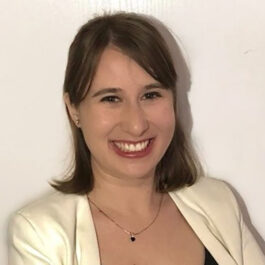
Ariadna Murguia Berthier is a NASA Hubble Fellow at the Center for Interdisciplinary Exploration and Research in Astrophysics (CIERA) at Northwestern University. Her research focuses on understanding the formation and evolution of compact object binaries through numerical simulations, with a particular emphasis on neutron star mergers and their remnants. Current Affiliation: CIERA, Northwestern University Academic Role: Research Fellow Contact: arimurguia@northwestern.edu Research Interests : Binary Neutron Star Mergers Common Envelope Evolution Gravitational Wave Astrophysics Multi-Messenger Astronomy Stellar Dynamics and Populations Scientific Achievements : Recipient of the 2022 Robert J. Trumpler Award for outstanding PhD research Finalist for the 2022 AAS HEAD Dissertation Prize 18 peer-reviewed publications cited over 4,500 times by the completion of her doctorate She collaborates with Sasha Tchekovskoy on astrophysical simulations and participated in the 19th HEAD meeting in March 2022 to present her work.
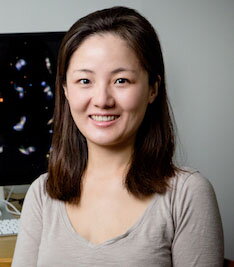
Xin Liu is an Associate Professor in the Department of Astronomy at the University of Illinois Urbana-Champaign and holds a joint appointment at the National Center for Supercomputing Applications (NCSA). Her research bridges astronomy and data science, focusing on multi-messenger astrophysics, time-domain phenomena, and AI-driven scientific discovery through large-scale astronomical surveys. Her educational background includes: Ph.D. in Astrophysical Sciences, Princeton University (2010) M.A. in Astrophysical Sciences, Princeton University (2008) M.S. in Physics, Tsinghua University (2006) B.S. in Physics, Tsinghua University (2004) Liu's research centers on three interconnected domains: physics-informed machine learning for astronomical data, statistical learning with probabilistic frameworks for uncertainty quantification, and transparent AI models for scientific interpretation. She pioneers methodologies where machine learning integrates with principled astrophysical analysis rather than serving as black-box tools, addressing challenges in big data astronomy through innovative computational approaches. Her recent publications reveal a strong emphasis on dual supermassive black hole systems, active galactic nuclei variability, and time-domain astrophysics. Key themes include leveraging JWST and multi-wavelength observations to identify dual quasars, developing machine learning techniques for survey data analysis, and exploring the connection between black hole growth and galaxy evolution during cosmic noon. Her work frequently combines large datasets from SDSS, Rubin Observatory, and space telescopes with advanced computational methods. Her awards and honors include: Norman P. Jones Professorial Scholar (2023-2026) Excellent Teacher Ranked by Students (2023) NCSA Faculty Fellow (2020, 2023) Liu has secured prestigious fellowships including the NASA Einstein Fellowship and Hubble Fellowship. She teaches advanced courses like ASTR 596 (AI and Big Data in Astronomy) and has received recognition for her teaching excellence. Her research receives support through institutional appointments and competitive fellowships enabling high-impact work in data-intensive astrophysics. As an NCSA Faculty Fellow, Liu leverages world-class supercomputing resources to develop and apply machine learning frameworks for astronomical datasets. Her group fosters interdisciplinary collaboration between astronomy, computer science, and statistics, focusing on creating interpretable AI tools that advance fundamental astrophysical understanding while pushing computational boundaries.