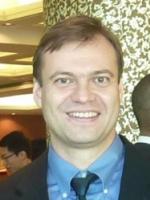
Archisman Ghosh is an Associate Professor at the Faculty of Sciences , Ghent University , specializing in gravitational waves , cosmology , and general relativity . His research spans experimental particle physics, astrophysics, and gravitational wave cosmology. His key research areas include: Gravitational Wave Detection Binary Black Hole Mergers Dark Standard Siren Cosmology Quantum Noise in Detectors Fast Radio Burst Correlation Recent publications focus on constraining the Hubble constant, analyzing eccentric binary coalescences, improving detector sensitivity with squeezed vacuum states, and developing Python packages like ICAROGW for population inference. His collaborations with the LIGO-Virgo-KAGRA Consortium highlight his role in multi-messenger astronomy. Notable projects include dark siren cosmology using galaxy catalogs and gravitational wave transient analysis.
Paul Manns is an Assistant Professor of Optimization at TU Dortmund University's Department of Mathematics, appointed in 2021. His research specializes in mathematical optimization involving partial differential equations and integer constraints, with emphasis on regularization techniques and trust-region algorithms. Education includes: Ph.D. in Mathematics, TU Braunschweig (2019) Computational Engineering studies, TU Darmstadt Prior research experience includes positions at Heidelberg University, TU Braunschweig, and Argonne National Laboratory (USA), including a James H Wilkinson Fellowship. Recent publications develop novel methods for mixed-integer control problems, domain decomposition, and convergence analysis in non-convex optimization spaces.
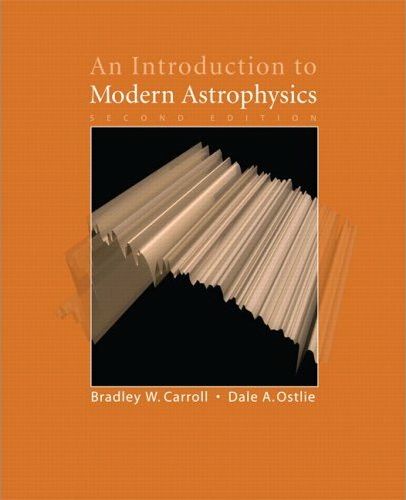
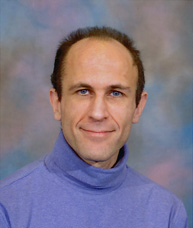
Bradley W. Carroll is a Professor in the Department of Physics at Weber State University. His primary affiliations include academic leadership in astrophysics education and research, with significant contributions to theoretical astrophysics and physics pedagogy. He has co-authored seminal textbooks in astrophysics and developed educational software used in physics instruction globally. Carroll's research spans stellar pulsations, neutron star physics, accretion disk dynamics, and computational astrophysics. He maintains active interests in physics education innovation, particularly through multimedia tools and simulations. His work consistently bridges theoretical astrophysics with practical teaching methodologies, enhancing astronomy education at multiple levels. His publication portfolio demonstrates a strong focus on stellar phenomena, pedagogical advancements, and computational applications. Recent works emphasize integrating technology into physics education while maintaining foundational research in variable stars and compact objects. The interdisciplinary nature of his output connects astrophysics, computational modeling, and educational theory. Carroll actively contributes to academic outreach through public lectures on topics ranging from Archimedes' achievements to modern astrophysics. He maintains collaborations with educational software developers and participates in physics education research conferences.
Alex Chen is an Assistant Professor in the Department of Physics at Washington University in St. Louis. He is affiliated with the McDonnell Center for the Space Sciences and leads a research group focused on astrophysical plasma dynamics. His work involves GPU-based supercomputer simulations to study radiative processes and plasma physics near compact objects like neutron stars and black holes. Alex holds a PhD in Physics from Columbia University (2017) and has held postdoctoral positions at Princeton University’s Department of Astrophysical Sciences and JILA at the University of Colorado Boulder. His research expertise spans multi-wavelength pulsar emission mechanisms, fast radio bursts (FRBs), magnetic reconnection in extreme environments, and gamma-ray flares from active galactic nuclei (AGN). Research interests include: High Energy Astrophysics Neutron Stars and Magnetars Black Hole Magnetospheres Relativistic Plasma Simulations Radiation Physics in Strong Magnetic Fields AI Applications in Medicine and Astronomy Notable grants include a 2023 NSF award co-led with Yuan to simulate pulsar magnetospheres. His recent studies highlight interdisciplinary efforts, such as evaluating AI systems in medicine and developing open-source tools like the CompactObject package for neutron star analysis. Alex also contributes to the HEX-P X-ray probe project targeting magnetars. Labs/Teams: His research group collaborates with the McDonnell Center for the Space Sciences, leveraging advanced computational frameworks like APERTURE and Gemini 1.5 to tackle complex astrophysical problems. He emphasizes mentorship through initiatives like undergraduate research programs.
Associate Professor Christian Wolf is an astronomer at the Australian National University (ANU), affiliated with the Research School of Astronomy and Astrophysics within ANU College of Science. He holds a PhD from the Max-Planck-Institute for Astronomy (1999) and has held roles at the University of Oxford until 2013. His research focuses on supermassive black hole growth, accretion discs, wide-field surveys (LSST, eROSITA, SkyMapper), and gravitational-wave counterpart detection. He leads the SkyMapper Group and has contributed to projects like the COMBO-17 survey and All-sky Astrophysics (CAASTRO). His work includes discovering ultra-luminous quasars and studying galaxy evolution. Supervised students include Neelesh Amrutha, Zachary Steyn, and Ashley Hai Tung Tan. Over 130 publications span quasar studies, black hole dynamics, and survey methodologies. Education: PhD (1999), Max-Planck-Institute for Astronomy; Postdoctoral roles at MPIA Heidelberg (until 2001) and University of Oxford (STFC Fellow 2004-2009). Research interests emphasize observational cosmology, quasar variability, and multi-wavelength surveys. Key projects include the SkyMapper Southern Survey (DR2/4) and the AllBRICQS quasar survey. His publications often address black hole accretion, galaxy evolution, and survey techniques.
Roman Rafikov is Professor of Astrophysics at the Department of Applied Mathematics and Theoretical Physics (DAMTP) within the Faculty of Mathematics at the University of Cambridge. He has held this position since 2021, after serving as Reader in Astrophysics (2018-2021) and University Lecturer in Astrophysics (2016-2018) at DAMTP. Prior to his Cambridge appointments, he was Assistant Professor at Princeton University (2007-2015) and the Canadian Institute for Theoretical Astrophysics at the University of Toronto (2005-2007). He was also a Visiting Faculty Member at the Institute for Advanced Study in Princeton (2015-2016). Rafikov's research focuses on exoplanets (around single and binary stars; young, main sequence, and evolved stars), planet formation and dynamics, astrophysical fluid dynamics, accretion disks (protoplanetary, disks in binaries, quasars), N-body and galactic dynamics, and high-energy astrophysics. His work spans theoretical modeling of planetary systems, fluid dynamics in astrophysical contexts, and gravitational wave sources. He is a member of the Geophysical and Astrophysical Fluid Dynamics research group at DAMTP. Rafikov's recent publications demonstrate his expertise in planet-disk interactions, protoplanetary and circumbinary disk structures, gravitational wave sources in stellar clusters, and the dynamics of compact object binaries. His research combines theoretical modeling with observational constraints, particularly using data from instruments like ALMA. His work has significant implications for understanding planet formation mechanisms and the evolution of binary systems that produce gravitational waves detectable by LIGO/Virgo. Rafikov maintains active collaborations with researchers across multiple institutions and has contributed to numerous studies in leading astrophysical journals including The Astrophysical Journal and Monthly Notices of the Royal Astronomical Society.
Eric G. Blackman is a Professor of Physics and Astronomy at the University of Rochester and a Senior Scientist at the Laboratory for Laser Energetics. His research focuses on theoretical astrophysics and plasma physics, with interdisciplinary interests in planetary and geophysical systems. He holds a BS from MIT, a Part III Tripos from Cambridge, and a PhD from Harvard. Blackman has pioneered studies on accretion disks, jets, magnetic fields, and common envelope evolution. He collaborates extensively with experimentalists at the Laboratory for Laser Energetics to bridge astrophysical and laboratory plasmas. His awards include a DOE Faculty Development Award (2000–2003) and APS Fellow (2005). Blackman has mentored numerous students and postdocs across astrophysics and related fields. Education: MIT (BS Physics/Math, 1990), Cambridge (M.A.S., 1991), Harvard (PhD Theoretical Astrophysics, 1995) Research Themes: Plasma astrophysics, stellar dynamics, planetary magnetization, and laboratory astrophysics. Labs & Collaborations: Laboratory for Laser Energetics (Inertial Confinement Fusion), interdisciplinary projects on brain injury physics.
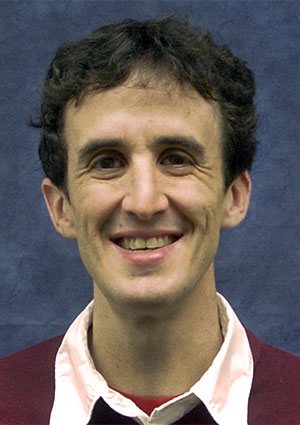
John M. Blondin is an Alumni Distinguished Undergraduate Professor of Physics at North Carolina State University (NC State), where he has held roles including Department Head of Physics (2012-2016) and Associate Dean for Research (2016-2018). He earned his Ph.D. in Astronomy & Astrophysics from the University of Chicago in 1987 and has been a faculty member at NC State since 1993. His research focuses on computational gas dynamics applied to astrophysical phenomena such as supernovae, accretion disks, and shock wave instabilities. Blondin's notable achievements include discovering the Non-linear Thin-Shell Instability (NTSI) and the Spherical Accretion Shock Instability (SASI), which are critical to understanding supernova explosions. He co-developed the widely used hydrodynamics code VH-1. His honors include Fellowships from the American Association for the Advancement of Science (AAAS) and the American Physical Society (APS), an NSF CAREER Award, and recognition as an Outstanding Teacher at NC State. His research group emphasizes undergraduate involvement through programs like the NSF-funded URCA (Undergraduate Research in Computational Astrophysics). Blondin has advised numerous graduate and undergraduate students, many of whom have published peer-reviewed papers under his mentorship. His work spans computational modeling of supernova remnants, high-mass X-ray binaries, and pulsar wind nebulae, leveraging supercomputing resources at Oak Ridge, NASA, and Texas Advanced Computing Center. Blondin has also held administrative roles such as Interim Dean of the College of Sciences (2023) and Senior Associate Dean for Administration (2018-2024), returning to full-time faculty in 2024. He is affiliated with the Astrophysical Group at NC State and collaborates with institutions like NASA Goddard and the American Astronomical Society.
Ali Sepas is a Research Assistant at Aalborg University's Department of Materials and Production within the Faculty of Engineering and Science, specializing in interdisciplinary research spanning astrophysics, social media psychology, and healthcare data security. His work appears in high-impact journals including New Astronomy , CyberPsychology, Behavior and Social Networking , and Frontiers in Bioinformatics . His research integrates computational physics with psychological and medical data analysis. Key interests include black hole spin dynamics, problematic social media usage patterns, and medical data anonymization frameworks. The fingerprint analysis of his work reveals dominant themes in Black Hole Spin (40%), Problematic Instagram Use (100%), Meta-Analysis methodology (100%), and Diagnosis Code handling (80%). His publication trends show increasing interdisciplinary reach, with recent work on black hole mergers gaining significant media attention through 3 news outlets and social media coverage. The 2025 black hole research was highlighted in Danish media as an "Aalborg-studerendes projekt om sorte huller" (Aalborg student project on black holes). No scientific awards are documented in the available records. Research supervision and grant activities are not explicitly mentioned, though collaborative work with senior researchers like Tauris T.M. and El-Hussuna A. indicates team-based project involvement. The press coverage of his astrophysics work demonstrates public engagement with his research outputs. Lab affiliations are implied through departmental context in Physics and Mechanics within Materials and Production, but no specific laboratory names are provided in the source material.
Alexey Bobrick is a Research Fellow at the School of Physics and Astronomy at Monash University, actively contributing to the fields of astronomy and astrophysics with a publication record spanning from 2010 to 2025. His research profile shows consistent scholarly output with 26 documented research outputs to date. Dr. Bobrick's research interests include: Astronomy and Astrophysics Gravitational Waves and Space-based Detection Theoretical Physics, particularly spacetime geometries Stellar Evolution in Globular Clusters X-ray and Optical Astronomy Binary Star Systems and Compact Objects His recent publications demonstrate interdisciplinary work connecting observational astronomy with theoretical physics. The 2025 papers show particular focus on gravitational wave detection concepts (including lunar-based antenna proposals) and detailed studies of stellar phenomena in globular clusters. His research has garnered significant attention in the scientific community and media. Dr. Bobrick's scholarly impact is evident from his work being: Picked up by 10 news outlets Blogged about by 2 sources Posted by 38 X users Referenced in 1 Wikipedia page Reddited by 5 users His collaborative network spans multiple countries as indicated by the international collaboration metrics in his research profile.
Paolo Manfredi is a Full Professor at the Department of Electronics and Telecommunications (DET) of Politecnico di Torino, Italy. He actively contributes to the EMC Group (Electromagnetic Compatibility) and serves as an Associate Editor for journals including IEEE Journal on Multiscale and Multiphysics Computational Techniques and International Journal of Circuit Theory and Applications. His research focuses on uncertainty quantification in circuits, surrogate modeling , machine learning applications, and signal integrity analysis . He leads projects on compact dynamical modeling of complex systems and stochastic analysis of interconnects. Recent publications highlight advancements in active learning for PCB line uncertainty quantification, connector degradation impacts on microwave signals , and SPICE-compliant IC model compression , reflecting his expertise at the intersection of electrical engineering and data science . Scientific Awards: Best Paper Award EPEPS (2010, 2013) Premio Optime (2010) URSI Young Scientist Award (2011) Honorable Mention - IMS (2011) He supervises PhD students in projects spanning 5G/6G metasurfaces , power cable corrosion assessment , and neural network applications in circuit design.
Meng Sun is an Associate Professor at The National Astronomical Observatories, Chinese Academy of Sciences. Previously, they served as a CIERA Postdoctoral Fellow at Northwestern University from 2021 to 2024, focusing on stellar astrophysics and gravitational wave astronomy. Their research spans diverse topics including exoplanets, massive stars, and compact objects. University: The National Astronomical Observatories, Chinese Academy of Sciences Role: Associate Professor Research Interests: Dr. Sun specializes in stellar astrophysics, investigating phenomena ranging from the life cycles of stars to gravitational wave sources in galaxies. Their work bridges observational astronomy and theoretical modeling. Recent Publications: A 2023 study on merging black holes in Milky Way-like galaxies highlights their focus on gravitational wave origins and galactic dynamics. Outreach & Observational Work: Dr. Sun has actively contributed to public science engagement, including capturing aurorae and solar eclipses via photography during astronomical events in 2024.
Victoria Grinberg (she/her) is a Researcher and Project Scientist at the European Space Agency (ESA), with a focus on space science and high-energy astrophysics. She serves as the Research Fellows Coordinator and co-organizes the X-Wind collaboration, which integrates X-ray astronomy with stellar wind theory. Grinberg's expertise spans spectral and timing analysis of X-ray binaries, accretion/ejection processes around black holes and neutron stars, and the study of clumpy winds from massive supergiant stars. Her research combines multi-energy range observations and innovative methodologies to probe accretion geometry in extreme relativistic environments. She also bridges astronomy with climate science, assessing the carbon footprint of large astronomy meetings and advocating for sustainable practices in academia. Grinberg is actively involved in public outreach, delivering talks in English and German, contributing to educational initiatives like ARTÉ twitch streams, and creating scientific illustrations and academia-themed cartoons. Victoria Grinberg's recent publications highlight her ongoing work in X-ray binaries, black hole and neutron star environments, and stellar wind dynamics. Her articles often integrate spectral-timing techniques, polarization studies, and multi-mission data from NICER, Chandra, and INTEGRAL. Key trends include the analysis of accretion disk geometry, wind density structures, and the impact of stellar wind variability on X-ray emission mechanisms.
David Kaplan is an Associate Professor of Physics at the University of Wisconsin-Milwaukee (UWM) and holds a Visiting Professor position at the University of Wisconsin-Madison. His primary research focuses on multi-wavelength observations of neutron stars, including isolated thermally emitting neutron stars and magnetars, as well as radio transient detection using facilities like the Murchison Widefield Array (MWA) and the Australia Square Kilometre Array Pathfinder (ASKAP). He currently chairs the MWA Transient Science Team and serves as a peer reviewer for journals such as the Astrophysical Journal and Astronomy & Astrophysics . Education: PhD in Astrophysics from California Institute of Technology (2004) Pappalardo Fellow at MIT Kavli Institute (2004-2007) Hubble Postdoctoral Fellow at MIT Kavli Institute and KITP (2007-2010) His research interests span astrophysical transients, pulsar astronomy, and the development of radio instrumentation. He is particularly known for studies of neutron star systems and the application of widefield radio surveys to discover new astrophysical phenomena. His work with the MWA has expanded our understanding of low-frequency radio sources, including contributions to space debris detection and polarization surveys. Kaplan’s research bridges observational astronomy with theoretical astrophysics, leveraging large-scale observational facilities to explore extreme astrophysical environments. While no formal student advisement is listed, his involvement in major observational projects suggests an active role in training graduate students and postdocs through collaborative research teams. His grants and funding are tied to his roles in leading large-scale telescope initiatives like the MWA. Kaplan leads the Murchison Widefield Array Transient Science Team, fostering interdisciplinary collaboration in radio astronomy. His website ( http://www.gravity.phys.uwm.edu/~kaplan/ ) provides further details on his research activities and publications.
John A. J. Matthews is a Professor in the Department of Physics and Astronomy at the University of New Mexico. He serves as Director of the New Mexico Center for Particle Physics and leads research in high-energy astrophysics, cosmic rays, and dark matter searches. His work primarily utilizes the High Altitude Water Cherenkov (HAWC) Observatory for studying TeV gamma-ray sources and cosmic ray phenomena. Education: PhD in Physics from the University of Toronto (1971). Research Interests: Particle Astrophysics and Dark Matter Searches TeV Gamma-Ray Emission from Pulsars, Supernova Remnants, and Blazars Cosmic Ray Composition and Energy Spectra Instrumentation for High-Energy Astrophysics Recent studies focus on TeV halos around pulsars, multiwavelength analyses of blazars, and neutrino searches with HAWC. His contributions include pioneering work on the detection of TeV emission from the quiescent Sun and the discovery of gamma-ray sources in the Galactic Plane. Labs/Teams: Directs the New Mexico Center for Particle Physics, collaborating with international teams on HAWC and related experiments.