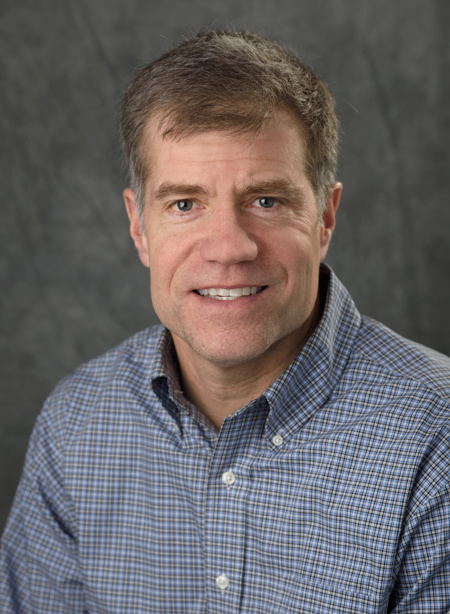
Stephen E Zepf is Professor and Chairperson of the Department of Physics and Astronomy at Michigan State University, with significant leadership roles including President of the SOAR Telescope Board of Directors. His research focuses on black holes, neutron stars, and multiple stellar populations in globular clusters, utilizing major telescopes like Hubble and Chandra. His academic career spans institutions such as Yale University, UC Berkeley, and Durham University (UK), and he holds a PhD from Johns Hopkins University. He has contributed extensively to multiwavelength studies of extragalactic systems. 2024 American Astronomical Society Fellow 2013 University Distinguished Faculty Award 2014 College of Natural Science Faculty Mentoring Award 2015/2016 Department of Physics and Astronomy Osgood Teaching Award Hubble Fellowship at UC Berkeley His recent publications highlight studies of ultraluminous X-ray sources in globular clusters, galaxy evolution through globular cluster kinematics, and helium-enriched stellar populations. He leads a research group involving students and postdocs and serves as a faculty liaison for Abrams Planetarium.
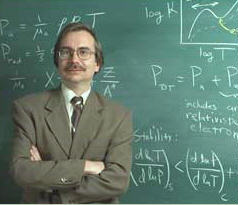
Lorne A. Nelson is a Professor of Physics at Bishop's University, where he joined as an Assistant Professor in 1988 and was promoted to full Professor in 1998. He has served as Chair of the Physics Department during two separate terms (1996-1998 & 1999-2001). His research focuses on the theoretical aspects of stellar evolution, particularly in binary systems containing compact objects such as white dwarfs, neutron stars, and black holes. Nelson received his Ph.D. from Queen's University in 1984. He subsequently held a postdoctoral fellowship at MIT's Center for Space Research, where he conducted pioneering work on brown dwarfs. From 1986-1988, he was a research fellow at CITA (Canadian Institute of Theoretical Astrophysics). Professor Nelson's research interests center on interacting binary stars, Type Ia supernovae, millisecond pulsars, and brown dwarfs. His work provides insights into the formation and evolution of binary systems, with applications to understanding dark matter, testing general relativity, and explaining exotic astronomical phenomena. He employs population synthesis and stellar evolution techniques to develop self-consistent models of binary evolution that can be tested against observational data from instruments like HST, Chandra, and Keck. Analysis of Nelson's publication record reveals a consistent focus on binary stellar evolution across four decades. His work demonstrates progression from foundational studies of brown dwarfs and very low-mass stars to sophisticated modeling of binary millisecond pulsars, cataclysmic variables, and Type Ia supernova progenitors. A recurring theme is the development of theoretical frameworks that connect stellar evolution with observable phenomena, particularly through population synthesis techniques that bridge theoretical predictions with observational constraints. Canada Research Chair in Astrophysics (2002) William & Nancy Turner (Chancellor's) Teaching Award (1996) Invited Contributor to Nature's News & Views (1995) Reinhardt Fellowship from CITA (1999) Invited Review Speaker at multiple international conferences Professor Nelson has advised numerous graduate students who have gone on to successful careers in academia and industry, including Kirk Buckley (NSERC PDF at Berkeley), Chris Burns (Assistant Professor at Swarthmore), and Drew MacCannell (PhD student at UCSD). His research has been supported by significant grants including the Canada Foundation for Innovation, NSERC, and the Ministère de la Recherche, de la Science et de la Technologie of Quebec. Nelson collaborates extensively with researchers at MIT, UCSB, Northwestern, and other institutions worldwide. Nelson leads the Bishop's University Interacting Binary Evolution Server, a valuable resource for the international astrophysics community that provides evolutionary tracks for low-mass interacting binaries. He also co-developed the Elix2 Beowulf cluster in collaboration with the Université de Sherbrooke, creating a high-performance computing environment for theoretical astrophysics research. His team produces detailed animations of binary evolution that serve both research and educational purposes.
Dr. Rosanne Di Stefano is Lecturer in Astronomy and Senior Astrophysicist at the Harvard-Smithsonian Center for Astrophysics. Her research investigates exoplanet detection, compact objects, and stellar systems. Affiliated with the Center for Astrophysics | Harvard & Smithsonian, conducting research on planetary formation, binary systems, and high-energy astrophysical phenomena. Office located at the Harvard-Smithsonian Center for Astrophysics where she mentors graduate students and conducts observational astrophysics research.
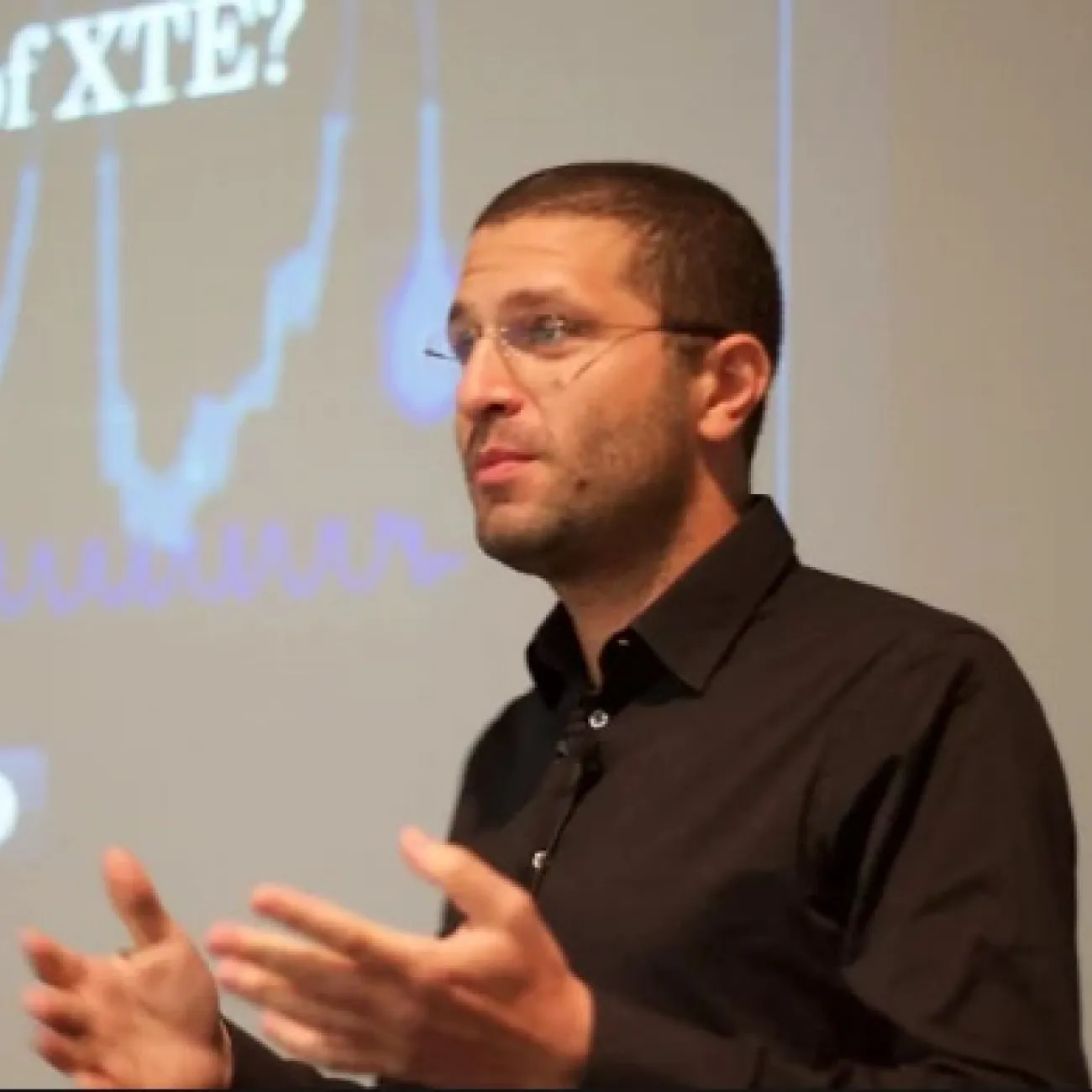
Professor Diego Altamirano is a faculty member at the University of Southampton, affiliated with the Department of Physics and Astronomy within the Faculty of Physical Sciences and Engineering. His research focuses on high-energy astrophysics, particularly X-ray binaries, black holes, and accreting compact objects. He leads or co-leads multiple research projects funded by the Royal Society and STFC, including studies of black hole X-ray binaries and accretion processes. His work utilizes advanced facilities like NICER, JWST, and XMM-Newton. Professor Altamirano has supervised numerous PhD students in areas such as astrophysics and physics. He holds a Royal Society University Research Fellowship and has published extensively in journals like Monthly Notices of the Royal Astronomical Society and The Astrophysical Journal. His research group collaborates with institutions globally, contributing to cutting-edge studies of accretion disk dynamics and compact object behavior.
Charles R. Evans is the Agnew H. Bahnson, Jr. Professor of Physics at the University of North Carolina, Chapel Hill. He holds a PhD from the University of Texas at Austin (1984) and a B.A. from Vanderbilt University (1976). His research focuses on gravitational physics, relativistic astrophysics, and numerical relativity, with particular emphasis on gravitational waves, black hole dynamics, and extreme-mass-ratio inspirals. Evans has served as Associate Department Chair (2006-2009, 2012-2017), Director of Graduate Studies (2006-2009), and Visiting Full Professor at University College Dublin (2023-2028). He has advised numerous PhD students who now hold positions at institutions like MIT, Los Alamos National Laboratory, and Cardiff University. Evans' awards include Fellow of the American Physical Society (2017), Agnew H. Bahnson Jr. Distinguished Professor (2015), and the Presidential Young Investigator Award (1990). His work spans computational fluid dynamics, magnetohydrodynamics, and the theoretical modeling of stellar tidal disruptions by massive black holes. Key contributions include pioneering constrained transport methods for magnetohydrodynamic simulations and foundational studies in critical phenomena during gravitational collapse. His recent publications explore post-Newtonian expansions for eccentric-orbit systems, self-force effects in extreme-mass-ratio binaries, and relativistic tidal interactions. Collaborations include projects at the Max Planck Institute and NASA, with ongoing research into gravitational wave physics and numerical relativity.
Hao Zhang is a Distinguished Professor and IEEE Fellow at Simon Fraser University's School of Computing Science, leading the GrUVi (Graphics & Vision) Lab. He holds a Ph.D. from the University of Toronto's Dynamic Graphics Project and degrees from the University of Waterloo. His research focuses on computer graphics, geometric modeling, and visual computing, with over 200 publications, including 70+ in SIGGRAPH/TOG. He directs research in 3D representation learning, generative models, and fabrication-aware design. Awards include the ACM SIGGRAPH Academy induction (2025) and IEEE Fellow (2024). He advises numerous students, many of whom have become professors or industry leaders. His work spans theoretical contributions (e.g., Test of Time Award for 2013 paper) and applied innovations like Slice3D and ArcPro. He is Technical Papers Chair for SIGGRAPH 2025 and has held roles at Amazon as an Amazon Scholar. Education: Ph.D., Dynamic Graphics Project, University of Toronto MMath and BMath, University of Waterloo Research Interests: Geometric deep learning, 3D vision, CAD representation, spatial AI, computational fabrication. Key projects include neural implicit fields (IM-Net), structured 3D synthesis (BSP-Net), and generative models (LOGAN). Collaborations include Adobe, Autodesk, and Amazon.
Dr. Karelle Siellez is a Lecturer in Physics at the University of Tasmania's School of Natural Sciences. Her research focuses on gravitational-wave physics, high-energy astrophysics, and time-domain astronomy, particularly in studying explosive cosmic events like gamma-ray bursts and neutron star mergers through multi-messenger approaches. She is a key member of the LIGO/Virgo/KAGRA collaboration and Associate Investigator at OzGrav. Academic Rank: Lecturer University: University of Tasmania School: School of Natural Sciences Department: Department of Physics Email: Karelle.Siellez@utas.edu.au Dr. Siellez's research encompasses: Gravitational-wave physics High-energy astrophysics Multi-messenger astrophysics Time-domain astronomy Gamma-ray bursts Kilonovae Neutron star mergers Cosmology Dark sky preservation Her academic contributions include: Over 130 refereed publications 2017 Breakthrough Prize in Fundamental Physics Leadership in citizen science platform development Collaboration with Tahitian institutions on French Polynesian telescope installation Advocacy for dark sky preservation in Tasmania Development of real-time pipelines for southern-hemisphere observatories Teaching & Supervision: Lecturer in first- to third-year physics Focus on multi-messenger astrophysics and time-domain astronomy Coordinator of "Electromagnetism and Thermodynamics" unit Honours and Doctoral supervision in gamma-ray bursts and neutron star mergers Pioneer in Aboriginisation of physics curriculum Planned 2026 course on General Relativity's astrophysical impact
Stephen Chi Yung Ng is an Associate Professor in the Department of Physics at The University of Hong Kong's Faculty of Science. His office is located in Room 517 of the Chong Yuet Ming Physics Building. He has been actively teaching undergraduate and graduate courses in astrophysics, including Stellar Physics, Advanced Astrophysics, and Astronomy Laboratory courses from 2018-2022. B.Sc. (1st class honors) in Maths/Physics, The University of Hong Kong (1996-1999) M.Phil. in Physics, The University of Hong Kong (1999-2001) Ph.D. in Physics, Stanford University (2001-2006) Professor Ng is a high energy astrophysicist specializing in radio and X-ray observations of neutron stars, pulsar wind nebulae, and supernova remnants. His research focuses on understanding these extreme objects as laboratories for physics under conditions unattainable on Earth. He studies the remarkable properties of neutron stars, which are ultra-dense objects with masses greater than the Sun but smaller than a city, rotating rapidly with the strongest magnetic fields in the Universe. His recent publications reveal a strong focus on X-ray polarimetry using missions like IXPE to study magnetic field structures in pulsar wind nebulae and supernova remnants. His work also examines particle acceleration mechanisms and the physics of neutron stars in various environments, including galactic centers and binary systems. Early Career Award: University Grants Committee (2013) Professor Ng has supervised numerous research students, including 7 PhD candidates and 3 MPhil students. He has secured significant research funding as Principal Investigator for 11 projects since 2013, with recent grants including 'Unveiling the Nature of PeVatron' (2023) and 'Exploratory Study of the Impact of Artificial Light at Night on Birds at Mai Po Nature Reserve' (2022). He also serves as Co-Investigator on projects studying high-energy emission from pulsars. He is an active member of several professional societies including the American Astronomical Society and multiple satellite mission science working groups, demonstrating his leadership in the international high-energy astrophysics community.
Dr. Abhimanyu Susobhanan is a Research Fellow in the Observational Relativity and Cosmology department at the Max Planck Institute for Gravitational Physics (Albert Einstein Institute) in Hannover, Germany. His research focuses on Pulsar Timing Arrays , Gravitational Waves , and Compact Binary Coalescence , leveraging the Atlas computing cluster for data-intensive astrophysical studies. He is actively involved in the Einstein@Home project, which searches for gravitational waves using distributed computing resources. Dr. Susobhanan is based at Callinstraße 38, 30167 Hannover, and can be reached at +49 511 762-17173.
Dr. Andrew Wade is a Postdoctoral Fellow at the Centre for Gravitational Astrophysics, The Australian National University (ANU). His research focuses on gravitational wave detection, quantum optics, precision metrology, and weak light interferometry. He has contributed to projects like the Laser Interferometer Space Antenna (LISA), developing critical technologies such as arm- and cavity-locking systems for gravitational wave detectors. His work emphasizes improving interferometric sensitivity through innovations like subfemtowatt laser phase tracking and thermal noise mitigation in mirror coatings. Wade has collaborated across international detector networks including LIGO, Virgo, and KAGRA, publishing over 178 peer-reviewed articles. His research spans topics from binary black hole mergers (e.g., GW150914, GW170817) to cosmic string constraints and Hubble constant measurements using gravitational wave standard sirens. Notably, his team's work on LISA's locking systems addresses challenges for future space-based gravitational wave observatories. His technical expertise includes cavity frequency stabilization for geodesy applications and optimizing laser interferometers for low-noise operation. While no specific student names are listed, he is registered to supervise research students at ANU. His publications highlight interdisciplinary strengths in both experimental and theoretical gravitational wave physics, with implications for multi-messenger astronomy and fundamental physics tests.
Dr. Djuna Lize Croon serves as an Associate Professor in the Department of Physics, conducting cutting-edge research at the intersection of particle physics, cosmology, and astrophysics. Her work focuses on dark matter phenomenology, gravitational wave signatures, and early universe cosmology, with significant contributions to understanding extended dark matter structures and their observational consequences. Her research program investigates extended dark matter objects through cosmic microwave background constraints, microlensing surveys, and gravitational wave observations. She explores dark matter's role in leptogenesis and baryogenesis, its thermal effects on planetary and stellar systems, and develops machine learning techniques for astrophysical data analysis. Current projects examine dark matter interactions in supernovae, black hole formation mechanisms, and axion physics in compact object environments. Analysis of her 2021-2025 publications reveals a dominant focus on dark matter phenomenology, particularly extended structures and their multi-messenger signatures. Her work consistently bridges theoretical particle physics with observational astrophysics, addressing fundamental questions about dark matter composition, early universe dynamics, and gravitational wave source populations through innovative computational approaches. No scientific awards or honors were documented in the provided profile. Dr. Croon actively mentors postgraduate researchers, currently supervising: Ansh Bhatnagar (PGR Student) Ben Crossey
Jaime Redondo Yuste is a PhD Fellow at the Niels Bohr Institute , University of Copenhagen , specializing in Theoretical High Energy, Astroparticle and Gravitational Physics . His research focuses on Gravitational wave dynamics Black hole entropy and turbulence Quantum field theory in curved spacetime Nonlinear spacetime phenomena . Recent work includes analyses of black hole ringdown nonlinearities, superradiant amplification, and gravitational wave interactions with viscous objects. Article trends indicate strong emphasis on high-energy gravitational physics , with collaborations spanning General Relativity , Quantum Field Theory , and Astrophysics . Key co-authors include Cardoso, Gaiotto, and Platania .
Peter T.H. Pang is a Researcher in the Gravitational and Subatomic Physics (GRASP) group within the Physics Department at the Faculty of Science, Utrecht University. His work focuses on gravitational wave astronomy, neutron star physics, and multimessenger astrophysics, contributing significantly to the LIGO-Virgo-KAGRA scientific collaborations. Dr. Pang's research interests span gravitational wave data analysis, neutron star equation of state, multimessenger astronomy, nuclear physics constraints from gravitational wave observations, and gravitational wave detector characterization. His work often involves developing and applying Bayesian frameworks to extract physical information from gravitational wave signals, particularly related to binary neutron star mergers and their electromagnetic counterparts. Analysis of his recent publications reveals a strong emphasis on connecting gravitational wave observations with nuclear physics through the study of neutron star properties. His research frequently addresses the equation of state of dense matter, parameter estimation techniques for gravitational wave signals, and the development of frameworks that combine nuclear physics with multimessenger astrophysical observations. His work contributes to understanding compact object mergers, gravitational wave detector performance, and cosmological measurements using gravitational waves as standard sirens. Dr. Pang is an active contributor to major gravitational wave collaborations, particularly the LIGO Scientific Collaboration, Virgo Collaboration, and KAGRA Collaboration. His research demonstrates strong interdisciplinary connections between nuclear physics, astrophysics, and gravitational wave astronomy, with numerous publications in high-impact journals including Physical Review D, Physical Review X, Nature Communications, and Astrophysical Journal.
Antonios Tsokaros is a Research Professor in the Department of Physics at the University of Illinois at Urbana-Champaign (UIUC), affiliated with the Grainger College of Engineering. He is also a Faculty Fellow at the National Center for Supercomputing Applications (NCSA) and a Senior Researcher at the Research Center for Astronomy and Applied Mathematics in the Academy of Athens, Greece. His research focuses on general relativity, neutron stars, black holes, gravitational waves, and computational astrophysics, leveraging supercomputers to explore phenomena such as binary neutron star mergers and magnetized compact objects. Key research interests include the dynamics of self-gravitating systems, multimessenger astronomy, and the interplay between magnetic fields and gravitational wave emission. Tsokaros develops advanced numerical tools, such as the Parallel Compact Object CALculator (COCAL), to solve relativistic initial data problems and simulate extreme astrophysical scenarios. His work contributes to understanding strong-field gravity, compact object physics, and the potential for discoveries with observatories like LIGO and the Laser Interferometer Space Antenna (LISA). Funding is available for PhD candidates interested in numerical relativity and computational astrophysics. Tsokaros collaborates across institutions to advance theoretical and computational methods, emphasizing interdisciplinary approaches to decode gravitational wave signals, jet formation, and the properties of dense matter in neutron stars.
Archisman Ghosh is an Associate Professor at the Faculty of Sciences , Ghent University , specializing in gravitational waves , cosmology , and general relativity . His research spans experimental particle physics, astrophysics, and gravitational wave cosmology. His key research areas include: Gravitational Wave Detection Binary Black Hole Mergers Dark Standard Siren Cosmology Quantum Noise in Detectors Fast Radio Burst Correlation Recent publications focus on constraining the Hubble constant, analyzing eccentric binary coalescences, improving detector sensitivity with squeezed vacuum states, and developing Python packages like ICAROGW for population inference. His collaborations with the LIGO-Virgo-KAGRA Consortium highlight his role in multi-messenger astronomy. Notable projects include dark siren cosmology using galaxy catalogs and gravitational wave transient analysis.