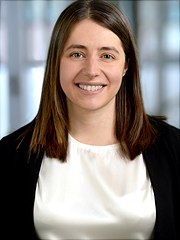
Prof. Dr. Biliana Yontcheva is Professor of Economics at the University of Hamburg's Faculty of Business, Economics and Social Sciences, specializing in Health Economics and Empirical Methods. Her research explores market outcomes through spatial econometrics, price transmission dynamics, and competition analysis across diverse sectors including healthcare, gasoline markets, and professional services. Focus on empirical modeling of market structures Expertise in spatial competition and entry models Key contributions to understanding asymmetric cost pass-through Analyzes consumer information effects on pricing Recent publications examine market delineation methodologies , vertical integration impacts , and income inequality-product variety relationships . Collaborates with researchers across Europe on topics like transition economy dynamics and regulatory frameworks. The team includes academic assistant Birte Stadtlich at the Economics Department.
Sebastian Willen is a Researcher at the Chair of Empirical Social Research at the University of Duisburg-Essen. He is affiliated with the working group of Prof. Dr. Stein and contributes to interdisciplinary projects like ATMo² and InnaMoRuhr , focusing on sustainable mobility and social dynamics. Research Interests include family sociology, transport sociology, dyadic modeling, and empirical methods. His work examines partnership negotiation in family expansion, mobility behavior transformation, and plagiarism dynamics through advanced statistical analysis. Recent Publications highlight family formation processes, sustainable urban mobility, and ethical decision-making. Articles span journals like Kölner Zeitschrift für Soziologie und Sozialpsychologie , Demographic Research , and edited volumes on mobility. His work integrates quantitative methods with theoretical frameworks in social research. Scientific Activities involve empirical social research, teaching advanced statistical analysis, and presenting at conferences such as the Wissenschaftsforum Mobilität . He has contributed to projects addressing mobility transitions and social inequality.
Dr. Jan Keller serves as a Visiting Professor and Head of the AMBER Junior Research Group 'Active Mobility to Promote Health and Environmental Protection' at the Department of Health Psychology, Freie Universität Berlin. With extensive experience in health psychology research and teaching, Dr. Keller leads innovative projects at the intersection of behavioral science, environmental sustainability, and digital health interventions. Dr. Keller earned both Bachelor of Science (2007-2010) and Master of Science (2010-2013) degrees in Psychology from Freie Universität Berlin, followed by doctoral studies in the same institution from 2013-2018. Research interests center on social exchange processes in health promotion, particularly dyadic planning approaches, self-regulatory strategies for health behavior change, habit formation processes, and the critical intersection between environmental sustainability and health. Recent work explores digital interventions for smartphone usage, active commuting behaviors, and climate change education. Dr. Keller's research demonstrates how environmental health psychology can address both individual well-being and planetary health challenges through innovative behavioral approaches. Analysis of recent publications reveals strong thematic trends in digital health interventions, climate-health connections, and dyadic approaches to behavior change. The work spans methodological approaches from randomized controlled trials to longitudinal studies and systematic reviews, with increasing emphasis on environmental health psychology as a critical domain for intervention development. Herman Schaalma Award (2019) from European Health Psychology Society for dissertation Graduate Student Achievement Award (2018) from International Association of Applied Psychology FUB Climate Challenge funding (2022) through FUturist Program Joint doctoral program funding (2021) between University of Melbourne and Berlin University Alliance Quinn Exchange Fellowship (2017) from University of British Columbia CREATE Tandem Stipendium (2016) from European Health Psychology Society Dr. Keller leads the AMBER Junior Research Group (2023-2028) focused on active mobility, and has secured multiple research grants including the FUB Climate Challenge project. As Consulting Editorial Board member for Applied Psychology: Health and Well-being since 2020, Dr. Keller contributes to advancing the field through scholarly review and mentorship. The research program integrates theoretical frameworks with practical interventions addressing contemporary health challenges. The AMBER Junior Research Group serves as the primary research laboratory, focusing on 'Active Mobility to Promote Health and Environmental Protection.' This initiative operates within the broader context of the Department of Health Psychology's research ecosystem, collaborating with international partners including University of British Columbia and Columbia University. Dr. Keller also participates in the Open Digital Health Initiative and the Special Interest Group 'Equity, Global Health and Sustainability' of the European Health Psychology Society.
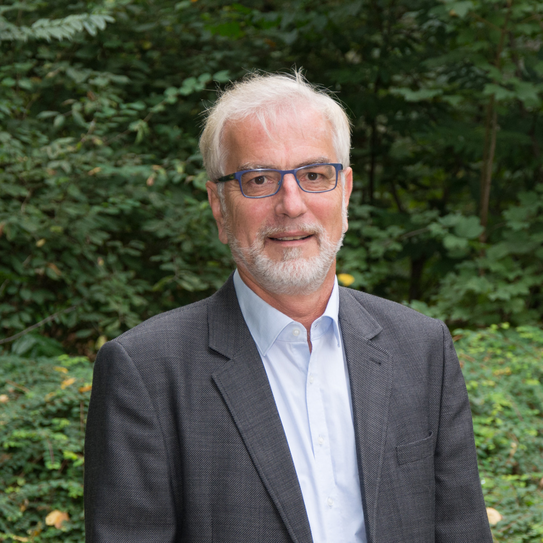
Rupert Frank is a Professor of Mathematics at the University of Munich (LMU Munich) . He has held academic positions at Caltech (2013–2021) and Princeton University (2009–2013). His research spans Mathematical Physics , Spectral Theory , and Functional Inequalities , with a focus on quantum many-body systems, stability of matter, and nonlocal operators. Research Themes : Analysis of eigenvalues for Schrödinger and Pauli operators with complex potentials Semi-classical spectral asymptotics and effective theories for quantum systems Matrix inequalities and quantum information theory Calculus of variations in models like the liquid drop problem Geometric inequalities and their applications to quantum mechanics Magnetic field effects on spectral properties Recent Publications : 2025: Sharp stability for Sobolev/log-Sobolev inequalities with dimensional dependence 2025: Endpoint Schatten class properties of commutators 2024: Degenerate stability of Caffarelli-Kohn-Nirenberg inequality 2024: Hardy inequalities for large fermionic systems 2023: Review on Scott conjecture for Coulomb systems Scientific Awards : Young Scientist Prize in Mathematical Physics (2009) Grants and Collaborations : Principal Investigator in CRC TRR 352 (2023–) PI in Munich Center for Quantum Science and Technology (2019–) Multiple NSF grants (2009–2020) DFG and DAAD grants Editorial and Conference Leadership : Editorial boards: Communications in Mathematical Physics , Journal in Mathematical Physics , Journal of Spectral Theory , SIAM Journal on Mathematical Analysis , Springer Lecture Notes Organized conferences/workshops on quantum many-body systems, spectral methods, and functional inequalities (2018–2025)
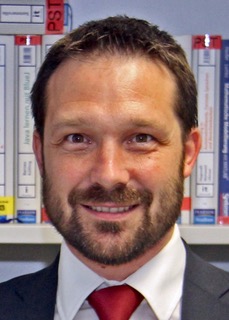
Prof. Dr.-Ing. Tobias Kuhnimhof is a Professor at the Chair of Urban and Transport Planning within RWTH Aachen University. His research focuses on Travel Surveys , Modelling Travel Behaviour , Electric Mobility , and Allocation of Urban Space . He leads the Institute for Urban and Transport Planning since 2019, following leadership roles at the German Aerospace Center (DLR) and BMW Group's Institute for Mobility Research. Doctoral Degree (2002-2007): Institute of Transport Studies, Karlsruhe University MSc in Civil Engineering & Applied Cultural Science (Karlsruhe University/University of Connecticut, 1994-2001) His recent work examines bicycle parking economics , EV charging infrastructure , and autonomous transit systems , with publications in journals like Transportation Research Part A . Collaborators include David Kohlrautz (E-Bike studies) and Fabian Kühnel (public transport accessibility). He teaches courses on Transport Planning Methodology , Financing Transport Infrastructure , and Mobility Research . Key contributions include developing the German national PKT-Model and co-authoring studies on on-demand transit simulations in Aachen. His research emphasizes data fusion techniques to enhance survey accuracy and logsum analysis for infrastructure prioritization. Tobias Kuhnimhof's work bridges academic analysis with real-world urban mobility challenges.
Dr. Weert Canzler is a senior researcher and head of the Research Group "Digital Mobility and Social Differentiation" at the Berlin Social Science Center (WZB), where he has been affiliated since 1994. His career spans leadership roles including Deputy Chair of WZB's Academic Council (2000-2007), Senior Researcher in Science Policy (2009-2019), and current Speaker of the Leibniz Research Alliance "Energiewende" since 2013. His work critically examines mobility transitions through social science lenses, integrating energy policy, technological innovation, and societal transformation. Dr. Canzler's academic credentials include: Diploma in Political Science (minor in Economics and Law) from the Free University of Berlin (1985) Ph.D. in Sociology from the Technical University of Berlin (1995) Habilitation in Social Science Based Mobility Research from the Technical University of Dresden (2015) His research centers on the societal dimensions of mobility systems, with particular focus on the Energiewende 's impact on transportation. He investigates how digitalization reshapes travel behavior, the cultural entrenchment of automobility, and policy frameworks for equitable mobility transitions. His approach bridges sociology, urban planning, and technology assessment, emphasizing that sustainable mobility requires reimagining social practices alongside infrastructure. Current work analyzes autonomous vehicle fleets, parking policy reforms, and the psychological dimensions of driving freedom in congested cities. Analysis of Dr. Canzler's 2022-2025 publications reveals intensifying focus on post-pandemic mobility patterns and multi-crisis contexts (climate, energy, geopolitical). His scholarship increasingly addresses implementation barriers for autonomous shuttles, the political economy of parking reform, and narrative-building for mobility transitions. A distinctive thread examines winners/losers dynamics in public space reallocation, with growing attention to educational outreach for future mobility literacy. His interdisciplinary methodology combines qualitative analysis with policy evaluation. While specific grant awards aren't documented in available sources, Dr. Canzler's leadership of major research initiatives implies significant funding oversight. As head of a WZB research group and Leibniz Alliance speaker, he directs collaborative projects involving multiple institutions. His extensive co-authorship patterns suggest active mentorship of junior researchers, though formal student advising isn't explicitly referenced in his public profile. Dr. Canzler co-founded WZB's mobility research group in 1998 with Andreas Knie and currently leads the "Digital Mobility and Social Differentiation" team. Through the Leibniz Research Alliance, he coordinates nationwide energy transition research across 18 institutes. His teams maintain strong policy linkages with German federal ministries and international bodies, frequently translating research into practical guidance for urban planners and transport authorities.
Prof. Johannes Weyer is a faculty member at the Technical University of Dortmund , affiliated with the Faculty of Social Sciences . His research focuses on the intersection of sociology, technology, and mobility, particularly in the context of sustainable urban systems and human-machine interaction. Email: johannes.weyer@tu-dortmund.de Phone: +49 231 755 3281 Key research areas include agent-based modeling , socio-technical systems , sustainable mobility , and the implications of digital society on governance and behavior. His recent publications emphasize simulation frameworks like SimCo, mobility transitions in the Ruhr region, and participatory methods for sustainable policy design. Notable trends in his 15 most recent articles (2023-2025) include: Agent-based modeling of transportation systems Human-AI interaction in real-time society Living lab experiments for sustainable mobility Behavioral analysis of mode choice Multi-level governance of technological discontinuation
Heiko Gewald is a Professor in the Department of Information Systems at Technical University of Munich's School of Management, with a distinguished research career spanning over two decades. His scholarly work demonstrates deep expertise in information systems, particularly focusing on technology adoption by aging populations, healthcare information systems, and smart mobility services. Dr. Gewald's research interests center on the intersection of technology and human behavior, with special emphasis on older adults' adoption of digital health applications , smart mobility ecosystems , and DevOps implementation . His work consistently addresses the challenges of designing technology that accommodates diverse user needs, particularly for vulnerable populations. Through extensive field research, he has developed frameworks for understanding technology acceptance barriers among seniors and created interventions to improve digital inclusion. Analysis of his recent publications reveals a clear trajectory toward increasingly specialized work in aging technology, with approximately 60% of his 2020-2025 publications focusing on older adult technology adoption. His research employs diverse methodologies including qualitative case studies, cross-cultural surveys, and experimental designs, often with international collaborations spanning Germany, Australia, and Thailand. Principal investigator for multiple German research projects on digital health for elderly populations Co-organizer of the annual HICSS minitrack on 'Seniors' Use of Digital Resources' since 2018 Active contributor to the Association for Information Systems (AIS) special interest groups Dr. Gewald has mentored numerous doctoral students who have become active researchers in information systems, with several now holding faculty positions. His research has been supported by German research funding agencies and industry partnerships with healthcare technology companies. He maintains strong collaborative relationships with researchers across Europe and Australia, particularly in the healthcare IT domain.
Professor Danny Ben-Shahar is a faculty member at the Coller School of Management, Tel Aviv University, where he serves as the Director of the Alrov Institute for Real Estate Research. His academic career spans over two decades with significant contributions to real estate economics and urban studies. Ben-Shahar earned his B.A. in economics from Tel Aviv University followed by an MBA and Ph.D. in finance and real estate from the University of California at Berkeley, establishing a strong foundation for his interdisciplinary research approach. His research primarily focuses on the analysis of rational and irrational decision-making in real estate markets, with particular attention to housing affordability, behavioral aspects of property transactions, and socio-economic factors influencing housing markets. Ben-Shahar's work bridges theoretical economic models with practical real-world applications, often employing natural experiments to examine market behaviors. Analysis of his publication record reveals a consistent trajectory from foundational real estate economic theories toward increasingly behavioral and socio-political dimensions of housing markets. His early work focused on technical aspects of real estate transactions, while recent publications explore intersections with political beliefs, diversity in corporate governance, and psychological factors affecting property decisions. This evolution demonstrates his adaptability to emerging market dynamics and broader societal influences on real estate. Weimer School Fellow at the Homer Hoyt Institute in Florida, USA Ben-Shahar serves on the editorial boards of several leading academic journals in real estate and management, contributing to scholarly discourse in his field. His research has been recognized with reprints in significant collections and media coverage, including a review in The Wall Street Journal. Beyond academia, he applies his expertise as a board member for several corporate entities in Israel, demonstrating the practical relevance of his research. As Director of the Alrov Institute for Real Estate Research, Ben-Shahar leads a research center dedicated to advancing knowledge in real estate economics and providing evidence-based insights for industry practitioners and policymakers. His work connects academic research with real-world applications in the rapidly evolving Israeli and global real estate markets.
Prof. Monika Sester is a distinguished Professor and Executive Director of the Institute of Cartography and Geoinformatics at Leibniz University Hannover, within the Faculty of Civil Engineering and Geodetic Science. She also serves as Spokesperson for the Leibniz Research Center FZ:GEO and holds multiple leadership roles including Faculty Information Officer (FIO) for the Faculty of Civil Engineering and Geodetic Science, Ombudsman for Good Scientific Practice, and Exchange Coordinator for Geodetic Science and Geoinformatics. Her research focuses on the intersection of geospatial information science, cartography, and urban mobility. Prof. Sester's work spans several key areas: Geospatial data processing and analysis Cartographic representation and visualization Urban mobility and transportation systems Spatial data uncertainty and quality Digital mapping technologies and applications Historical map analysis and interpretation Prof. Sester's recent publications demonstrate a strong focus on applying advanced computational techniques to geospatial problems. Her work shows increasing emphasis on machine learning applications for map analysis, urban mobility optimization, and 3D spatial modeling. She has been particularly active in researching applications of deep learning for historical map interpretation, urban mobility patterns, and spatial uncertainty visualization. Her contributions to the field have been recognized through leadership positions in major research initiatives: Executive Director, Institute of Cartography and Geoinformatics Spokesperson, Leibniz Research Center FZ:GEO Faculty Information Officer, Faculty of Civil Engineering and Geodetic Science Ombudsman for Good Scientific Practice Member of multiple academic committees including the Admissions and Examination Board Prof. Sester actively collaborates with students and researchers across multiple projects focused on geospatial information systems, urban mobility, and cartographic visualization. Her leadership extends to guiding research directions within the Leibniz Research Center FZ:GEO, which brings together interdisciplinary expertise to address complex spatial challenges.
Prof. Dr. Frank Hechtner is a Professor of Business Taxation at Friedrich-Alexander University Erlangen-Nuremberg (FAU) , where he has held the chair since 2020. He previously held academic positions at the Free University of Berlin, including a junior professorship (2012-2017) and research assistant roles (2005-2010). His research focuses on tax impact analysis , economic analysis of tax law , tax compliance costs , and tax complexity . Current affiliation: FAU Erlangen-Nuremberg Previous: Free University Berlin Education: Ruhr University Bochum economics graduate Research Interests: Tax policy economic analysis Compliance cost measurement Gender equality in taxation Sustainability tax disclosures Digitalization in tax research Corporate tax avoidance deterrence Article Trends: Recent work combines tax economics , compliance behavior , and digital tax research , with notable studies on the 'Tampon Tax' , Digital Services Taxes , and AI applications for tax analysis . Publications appear in journals like European Economic Review , Public Finance Review , and Steuer und Wirtschaft . Collaborations: Frequently collaborates with researchers like Prof. Dr. Michael Fochmann, Prof. Dr. Christiane Nickel, and institutions including the German Federal Ministry of Finance.
Dr. Conny Louen serves as Senior Engineer and Head of the Urban Transport Planning research group at RWTH Aachen University's Institute of Urban and Transport Planning (ISB), where she has contributed since 2007. Her work bridges academic research and practical policy development in German and international urban mobility contexts, with emphasis on evidence-based transport planning solutions. She earned her Civil Engineering degree from RWTH Aachen (2000-2006) with specialization in Transport and Urban Planning, completed a diploma thesis on adolescent multi-modal traffic behavior (2006), and received her doctorate in 2013 for research on mobility management's modal shift effects. Her educational journey included an Erasmus year at Universidad Politècnica de València (2005-2006). Louen's research centers on urban traffic systems, impact analyses, and mobility management, investigating how policy interventions like fare-free public transport during pandemics influence travel behavior. She employs simulation models and case studies in cities like Aachen to address parking optimization, electric bus integration, and equitable transport planning, emphasizing actionable outcomes for policymakers through handbooks like 'Planungsinstrumente für eine nachhaltige Mobilität' (2020). Her recent publications (2022-2025) reveal growing focus on automated public transport scenarios (NAIXTransit project), pandemic-era mobility shifts, and transport equity evaluation. She actively contributes to European initiatives like WISE-ACT COST Action while analyzing real-world implementations from Jakarta's BRT to Aachen's electric bus networks. No scientific awards or fellowships were documented in available sources. Louen has secured significant grant funding including the NAIXTransit project (German Federal Ministry grant 01MM20007A, 2020-2021) and participation in European WISE-ACT research. While she teaches Transport Planning I and Public Transport Organization courses, no formal PhD/Master's students were listed in provided materials despite her supervisory role in diploma/doctoral theses. As leader of the Urban Transport Planning research group, she directs applied studies on sustainable mobility solutions, with current work emphasizing automated transit integration, mobility equity frameworks, and charging infrastructure optimization for zero-emission public transport systems.
Dr. Katrin Steinvoord is a Research Fellow at the University of Hamburg's Faculty of Education, specializing in Didactics of Linguistic and Aesthetic Subjects (EW 4). She currently fills the academic role of Prof. Dr. Claus Krieger and leads post-doctoral research in Movement, Play, and Sport. Her work focuses on promoting youth physical activity, active school initiatives, and qualitative research methods in pedagogical interventions. Education: Magister in Sports Science (2011), with minors in Nutrition Science and Psychology Research Interests: Designing movement-based interventions in schools Qualitative evaluation of educational programs Integration of physical activity into urban youth mobility Inclusive sports education through projects like INCLUSAIL Key Projects: "läuft." (2013-2015): Pedometer-based intervention to increase youth physical activity "Spiel dich stark" (2016-2018): Football-based program improving student well-being and academic performance "INCLUSAIL" (2021-present): Inclusive sailing as an educational opportunity Collaborations: Co-founder of the "Fit durch die Schule" initiative with AOK Rheinland/Hamburg Lead author for the 2024 "Bewegte Schule" journal issue
Professor Matthias Wrede holds the Chair of Economics, especially Social Policy at Friedrich-Alexander University Erlangen-Nuremberg (FAU) within the Department of Business, Economics, and Social Sciences. Previously, he served as Professor of General Economics and Public Finance at RWTH Aachen University (2002-2007) and held the Chair of Economics with a focus on Public Finance at the University of Marburg (2007-2010). He is an active researcher with numerous international collaborations and affiliations including CESifo Research Fellow and membership in committees for Public Finance, Regional Theory and Policy, and Social Policy of the Association for Social Policy. University of Heidelberg (Economics studies) University of Bamberg (Doctorate 1993, Habilitation 1998) Research visits to Oklahoma State University, ifo Institute, University of Alberta, Barcelona Economics Institute, University of Exeter, and University of Tokyo Professor Wrede's research focuses on social policy, public finance, and regional and urban economics, with particular emphasis on housing policy, fiscal federalism, and regional redistribution mechanisms. His work bridges theoretical economic analysis with practical policy applications, examining issues such as housing cooperatives, regional disparities in living conditions, and the political economy of fiscal transfers. His interdisciplinary approach connects economics with political science and sociology to address complex societal challenges. His recent publications (2019-2024) demonstrate consistent scholarly output across multiple high-impact journals, with research trending toward increasingly applied policy questions related to housing markets, regional development, and social equity. His work shows strong methodological diversity, employing both theoretical modeling and empirical approaches including survey experiments and large-scale data analysis. As an active member of FAU's research community, Professor Wrede contributes to multiple interdisciplinary research focuses including 'Taxes and tax policy' and 'Work in transition,' collaborating with colleagues across economics, business administration, and social sciences to address pressing societal challenges. Member of committees for Public Finance, Regional Theory and Policy, and Social Policy of the Association for Social Policy CESifo Research Fellow Active participant in international research networks Professor Wrede maintains strong connections with policy institutions and regularly contributes to policy debates through publications in both academic and practitioner-oriented outlets. His research has practical implications for housing policy, regional development strategies, and social welfare systems.
Angela Francke is a Professor of Cycling and Urban Mobility at the University of Kassel since 2021, following her Professorship in Cycling at Hochschule Karlsruhe . Her research bridges transport psychology and sustainable mobility , focusing on cycling infrastructure , differentiated pricing systems , and big data applications in bicycle planning. Education : Diplom in Transport Economics (2004) and PhD in Traffic Psychology (2019) from TU Dresden Key Collaborations : Heinrich-Böll-Stiftung, Alexander von Humboldt Foundation, Volkswagen Group Forum Her work examines user reactions to transport pricing , GPS data for infrastructure planning , and mobility shifts during crises . Recent publications address winter cycling safety , migrant cycling challenges , and post-pandemic mobility . She leads research on smartphone data for cyclist behavior analysis and equitable transport systems . Scientific contributions include: Best Poster Award (2018) and Nomination (2019) She actively engages in public discourse through interviews and lectures across Germany, Finland, Ukraine, and Brazil, emphasizing urban sustainability and transport policy reform .