Alexandra BELIBOU is a PhD Lecturer at the Department of Music Performance and Pedagogy, Faculty of Music, Transilvania University of Brașov. Her work bridges musicology with modern interdisciplinary approaches, focusing on music education technology, therapeutic applications, and 20th-century compositional analysis. She holds a prominent position in advancing digital pedagogy through software integration. Research Interests: Music therapy methodologies emphasizing pluralistic approaches in clinical settings AI applications in music composition and education Analysis of 20th-century composers like Schoenberg, Reich, and Pärt Cultural studies of folk music traditions (e.g., Irish dance music, Romanian psalmic liturgy) Publications Trends: Recent work explores pandemic-era musician well-being, AI-assisted composition tools, and the intersection of music with medicine/physics. Earlier research delves deeply into psalmic text settings across centuries, minimalist techniques, and numerical symbolism in atonal music. Her teaching and research emphasize bridging traditional musicology with emerging technologies, as seen in proposals for software-based creativity workshops and interdisciplinary curricula.
Mark D. Gross is a Professor of Computer Science and Director of the ATLAS Institute at the University of Colorado Boulder, where he leads an interdisciplinary hub for creativity and invention. His academic journey began at MIT with BS and PhD degrees, followed by faculty roles at Carnegie Mellon University (2004-2013), University of Washington Seattle (1999-2004), and CU-Boulder (1990-1999, 2014-present). As co-founder of Modular Robotics Incorporated and Blank Slate Systems LLC, he bridges academia and entrepreneurship. Education: BS and PhD in Computer Science from MIT Gross’ research spans design methods, modular robotics, computational design tools, and tangible interaction. He pioneered sketch recognition software like 'The Electronic Cocktail Napkin' and explores physical computing through projects such as shape-changing interfaces, interactive construction kits, and augmented reality systems. His work integrates IoT, digital fabrication, and educational technology. Recent publications highlight innovations in AR/VR collaboration, shape-changing robotics, and interactive fabrication. Key themes include climate communication through data physicalization, AI-driven creative systems, and soft robotics for dynamic interfaces. Despite no explicit awards listed, his career demonstrates sustained impact through ACM conference leadership (Creativity and Cognition 2009, TEI 2011) and industry partnerships. Gross’ prior industry experience includes positions at Atari Cambridge Research and Logo Computer Systems. His lab at ATLAS fosters radical creativity through projects like PaperMech, DynaBlock, and WearAir, emphasizing hands-on learning and cross-disciplinary experimentation.
Gail Henderson is an Associate Professor at Queen's University's Faculty of Law, where she directs the Business Law Program. Her expertise spans corporate law, financial regulation, and consumer protection, with a focus on vulnerable populations. She previously held roles including Assistant Professor at the University of Alberta and law clerk to Supreme Court Justice Louise Charron. Education: Hons. BA (Toronto), LLB (Osgoode Hall Law School), LLM and SJD (University of Toronto). Notable achievements include being a Gold Medalist at Osgoode Hall and securing SSHRC grants for research on financial literacy and consumer protection. Research interests emphasize financial literacy in education, corporate governance ethics, and regulatory responses to crises. She advises on national committees like the Financial Consumer Agency of Canada and the Canadian CED Network Board. Recent work includes analyzing conflicts of interest in financial education materials and exploring pandemic impacts on alternative financial services. Her publications address criminal interest rates, banking sector governance, and Indigenous entrepreneurship.
Professor Gabriel Kuperminc is a faculty member at Georgia State University’s College of Arts & Sciences, Department of Psychology, with a secondary appointment in the School of Public Health. He serves as Chair of the Community Psychology Program and a member of the Developmental Psychology Program. His research focuses on resilience in adolescence, community-based prevention programs, and cultural factors influencing health and development. He collaborates with non-profits to evaluate youth programs and has expertise in mentoring interventions, substance abuse prevention, and immigrant youth studies. Education: Ph.D., University of Virginia, 1994. Research interests include understanding how cultural contexts shape youth development and health behaviors. His work emphasizes collaboration with marginalized communities, including immigrant families and organizations addressing systemic inequities. Notable projects include studies on group mentoring effectiveness (funded by DOJ), photovoice methodologies for trauma recovery, and interventions targeting acculturative stress among Latino youth. Key affiliations include the Center for Latin American and Latino Studies, Center for Human Rights and Democracy, and Center for Research on School Safety. Since 2009, he leads a Maymester Study Abroad Program on Human Rights in Argentina. Grants and collaborations include DOJ-funded research on juvenile justice system interventions and CDC evaluations of public health programs. He directs the Social Ecology and Adolescent Development Lab, focusing on youth resilience and community health interventions.
Regina Fabry is a Lecturer in the Department of Philosophy at Macquarie University, Australia, affiliated with the School of Humanities Ethics and Agency Research Centre. Previously, she held positions at Ruhr University Bochum (Lecturer, 2018–2021) and Justus Liebig University Giessen (Postdoctoral Researcher, 2016–2018). Her research focuses on situated cognition, affectivity, and the socio-cultural influences on self-narration and grief, particularly in the context of emerging technologies like deathbots. She holds a PhD in Philosophy (summa cum laude) from Johannes Gutenberg University Mainz (2015), awarded the Barbara Wengeler Prize for her work on enculturated predictive processing. Fabry’s research is funded by grants including an ARC DECRA (2021–2024) and explores interdisciplinary themes in AI ethics, cognitive science, and literary studies. **Education**: PhD in Philosophy, Johannes Gutenberg University Mainz (2012–2015) MA in Comparative Literary Studies, Philosophy, and Theatre Studies, Johannes Gutenberg University Mainz (2007–2012) **Research Interests**: Combines empirical cognitive science with feminist theory to study narrative practices, grief, and AI ethics. Current projects include analyzing deathbots’ impact on grief dynamics and the socio-cultural situatedness of self-narration as tools of oppression or resistance. Her work bridges philosophy, psychology, and technology studies. **Articles Trends**: Recent publications address grief in digital contexts (deathbots), narrative ethics (e.g., gaslighting), and cognitive frameworks like predictive processing. Her work frequently intersects with technology’s role in shaping human experiences. **Awards**: Barbara Wengeler Prize 2016 for doctoral dissertation on enculturated cognition. **Teaching & Grants**: Teaches courses on AI ethics, including PHIL8400 (Rights, Responsibilities, and AI). Supervises postgraduate research in philosophy of mind and AI. Leads projects like “Living to tell, telling to live” (2021–present) and co-leads “A lone or lonely life?” (2025–2028) on autism and loneliness. **Labs/Teams**: Engaged in interdisciplinary collaborations on grief, narrative theory, and AI ethics, leveraging her background in philosophy, psychology, and literary studies.
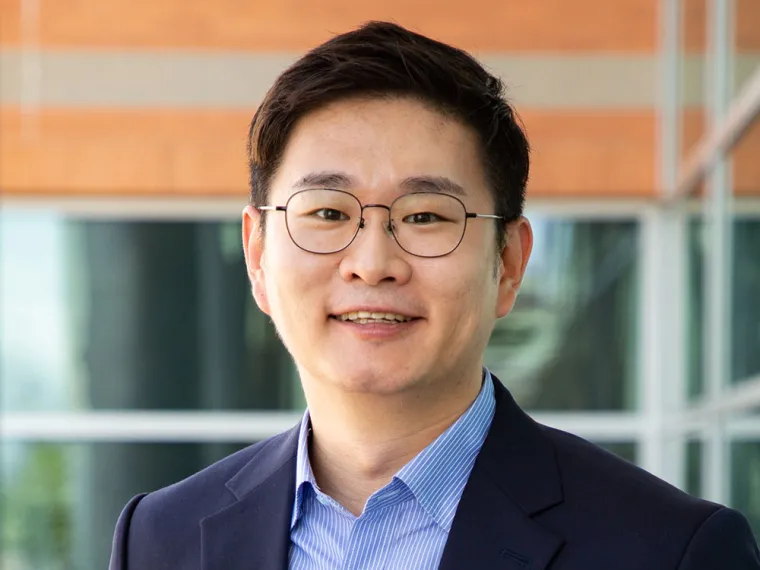
Eun Kyoung Choe is an Associate Professor in the College of Information at the University of Maryland, College Park. She returned to UMD in Fall 2024 after a year-long sabbatical at Seoul National University’s Computer Science Department. Her research bridges Human-Computer Interaction (HCI), Health Informatics, and Ubiquitous Computing, with a focus on designing inclusive and accessible health technologies for marginalized populations such as blind and low-vision individuals, older adults, and stroke survivors. She earned her BS from KAIST, MIMS from the University of California, Berkeley, and PhD in Information Science from the University of Washington, where she received the Distinguished Alumni Award in 2024. Her research focuses on creating technologies that empower individuals to manage their health through personalized and accessible systems. Key areas include personal informatics, semi-automated tracking, teachable interfaces, and mobile data visualization. She investigates how people reflect on personal data and how visualizations can support insight generation, particularly on mobile devices. Her work emphasizes inclusive design, addressing health disparities through accessible technologies. The trends in her recent publications reveal a strong focus on health equity, aging, and rehabilitation. Her research spans activity tracking for older adults, stroke recovery systems, and inclusive health technologies for people with disabilities. She leverages mixed-methods approaches, co-design, and user-centered development to build systems that are both technically sound and socially impactful. Distinguished Alumni Award, University of Washington, 2024 Dr. Choe has advised several students and researchers, including Young-Ho Kim, Diana Chou, and Sabahat Fatima, and leads interdisciplinary teams on projects funded by NSF, NIH, and Microsoft Research. Her major projects include MyMove (personalized activity tracking for older adults), mHealth platforms for stroke survivors, and OmniTrack (flexible self-tracking tools). She has served on editorial boards of PACM IMWUT and Foundations and Trends in HCI and co-chaired the Health Subcommittee for CHI (2021–2023). Her work continues to advance the frontiers of accessible and human-centered health technologies. She leads the Inclusive and Accessible Health Tracking Lab, where her team develops technologies in collaboration with users from marginalized communities. The lab emphasizes participatory design, real-world deployment, and ethical considerations in health technology development.
Don Lafreniere is Professor of Geography and GIS at Michigan Technological University, where he also serves as Graduate Director and Director of the Geospatial Research Facility. He is affiliated with the Department of Social Sciences in the College of Sciences and Arts. His interdisciplinary research integrates GIS, historical data, and community engagement to study urban environments, population health, and postindustrial landscapes. PhD, Geography, University of Western Ontario BS, History, Eastern Michigan University BS, Geography, Eastern Michigan University His research interests include Historical GIS, Deep Mapping, Public Participatory GIS, children's health and lifecourse epidemiology, deindustrialization, and urban health. He leads the Keweenaw Time Traveler and Historical Environments Spatial Analytics Lab (HESAL), focusing on creating spatiotemporal models of historical urban change. His recent publications (2016–2023) reflect a strong trend in integrating GIS with historical, archaeological, and public health data, particularly in industrial and postindustrial cities. Themes include environmental justice, cumulative hazards, community heritage, and spatial narratives, often using deep mapping and historical spatial data infrastructures. He has received major funding from the National Endowment for the Humanities (NEH), National Science Foundation (NSF), and Social Sciences and Humanities Research Council (SSHRC), serving as Principal Investigator or Co-PI on projects such as the Keweenaw Time Traveler, GRACE, and Three Centuries of Francophone Migration. These grants support transdisciplinary, community-engaged, and public-facing scholarship in the spatial humanities. Labs and initiatives include the Geospatial Research Facility, HESAL, and the Keweenaw Time Traveler, which combine geospatial technologies with historical research and public education.
Shona McIntosh is a Senior Lecturer in the Department of Education at the University of Bath, affiliated with the Centre for Qualitative Research. She holds a PhD in Education and is actively supervising doctoral students. Her work bridges theory and practice in education, with a strong commitment to social and epistemic justice. Research Interests: Climate and Sustainability Education Decolonising Education and Research Methods Global Citizenship and International Education Teacher and Professional Learning Participatory and Feminist Qualitative Research Teaching-Research Nexus in Higher Education Her research is grounded in decolonial, feminist, and sociocultural theories, emphasizing co-construction of knowledge with participants. She employs experimental and mixed methods to explore equity in educational contexts. Recent Research Trends: Her recent publications (2022–2025) reflect a sustained focus on justice-oriented education, particularly in climate change, teacher development during crises (e.g., school closures), and methodological innovation in collaborative and reflexive research. There is a clear trajectory toward developing frameworks for epistemically-just and equitable research practices, often in international and interdisciplinary contexts. Scientific Awards: Jeff Thompson Research Award from the International Baccalaureate Organization (2017) Grants and Supervision: She has secured funding from the British Academy and the British Council for projects on the teaching-research nexus and youth climate concerns. She is Principal Investigator (PI) on multiple projects and a Co-Investigator on international collaborations. She currently accepts doctoral students and has supervised several research outputs and theses. Labs and Research Groups: She is a core member of the Centre for Qualitative Research at the University of Bath, where she contributes to advancing innovative qualitative methodologies and fostering equitable research practices.
Samuel Brazys is Associate Professor in the School of Politics and International Relations (SPIRe) at University College Dublin (UCD), where he also serves as Vice Principal for Research, Impact & Innovation in the College of Social Science & Law. He is the Editor of the Journal of International Development and has a strong research profile in international political economy and development. BA in Political Science/Economics, Marquette University MA in Economics, Indiana University MSc in Politics of the World Economy, London School of Economics PhD in Political Science, Indiana University Professional Certificate in University Teaching & Learning, UCD His research focuses on the political economy of development, with emphasis on foreign aid, foreign direct investment, Chinese development finance, and governance. He employs sub-national and spatial analysis methods, often using geo-referenced data to assess local-level impacts of development interventions in Africa, South Asia, and the Pacific. His work bridges comparative and international political economy, international organizations, and development studies. Recent publications reveal a consistent trend in analyzing the spatial and political dimensions of development finance, particularly Chinese aid and FDI, and their effects on conflict, governance, and public perceptions. His work increasingly engages with public diplomacy, as seen in studies on mask diplomacy and wolf warrior rhetoric, using large-scale text analysis of media and social media. Irish Research Council Grant: Trade Related Assistance for Development. Evidence from Micro-Level Evaluations (2018) UCD College of Human Sciences Research Funding Scheme (2015–2016) His research has had significant policy impact, notably cited by the U.S. State Department in decisions regarding Confucius Institutes. He is a member of major professional associations including the American Political Science Association and the International Studies Association. He teaches core modules in International Political Economy, Research Methods, and Governance and Development, and has coordinated thesis and internship programs. He leads a research agenda that critically examines donor behavior, recipient agency, and the political economy of global development, contributing to both academic discourse and policy debates.
Dr. Lesley Batty is a Reader in Ecological Education at the School of Geography, Earth and Environmental Sciences, University of Birmingham. She plays key leadership roles as Head of Wellbeing and Head of Employability and Placements within the School, reflecting her strong commitment to student development and inclusive education. Her educational background includes a PhD from the University of Sheffield, an MRes and BSc from the University of Reading, and a Postgraduate Certificate in Learning and Teaching from the University of Birmingham. She is a Senior Fellow of the Higher Education Academy and a HEFi Scholar, underscoring her excellence in teaching. Dr. Batty's research centers on the ecology of industrial pollution, particularly in post-mining landscapes. She investigates phytoremediation techniques for contaminated soils, focusing on heavy metals and polycyclic aromatic hydrocarbons (PAHs). Her work extends to ecological education, where she explores inclusive teaching practices, barriers in STEM laboratories, and the integration of employability skills into the curriculum. She is actively involved in national educational policy through her role as Lead Secretary of the British Ecological Society Special Interest Group in Teaching and Learning and as an Associate Editor for the Journal of Geochemical Exploration. Her recent publications reveal a dual focus: one stream on environmental contamination and remediation (e.g., metal and PAH pollution in brownfield sites, phytoremediation with bacteria and chelates), and another on innovative pedagogy in geography and ecology (e.g., virtual field trips, inclusive lab practices, and the future of fieldwork education). This reflects her unique position at the intersection of environmental science and educational leadership. Senior Fellow of the Higher Education Academy (HEA) HEFi Scholar Lead Secretary, British Ecological Society Special Interest Group in Teaching and Learning Dr. Batty is a dedicated educator and researcher who bridges the gap between environmental science and pedagogical innovation. She has made significant contributions to both her field of research and the national discourse on ecological education. Her leadership in student wellbeing and employability, combined with her research on pollution and inclusive learning, demonstrates a holistic approach to academic life. She actively supervises research, as evidenced by her co-authorship with doctoral researchers, and welcomes PhD applications in her areas of expertise. She is a key member of several research groups, including those focused on Physical Geography, Global Biogeochemistry, and Environmental Health Sciences at the University of Birmingham. Her collaborative work, especially in large consortia on conservation education, highlights her strong network and impact in the academic community.
Kerstin Nilsson is a Professor of Public Health Sciences at Kristianstad University , Faculty of Health Sciences, and holds associate professorships in Public Health Epidemiology at Lund University and Work Science at the Swedish University of Agricultural Sciences (SLU). Her research focuses on creating healthy workplaces , sustainable working lives , and person-centered healthcare practices . Key Research Areas: Aging workforce, salutogenesis, nature-assisted rehabilitation, pandemic response in healthcare, and sustainable work environments. Leadership: Developer of the SwAge model for sustainable working life across ages. Scientific Contributions: Over 188 publications, with recent projects analyzing nurses' mental health during the pandemic, workplace relationships in healthcare, and nature-based interventions. Collaborates with international networks like the EU COST Action 'DIGI-net' and the Pufendorf Advanced Study Group. Awards: No explicit awards listed, but recognized through leadership roles and interdisciplinary research. Students: Supervises doctoral candidates like Cicilia Nagel and Sophie Schön Persson, focusing on person-centered care and staff well-being. External Affiliation: Associate Professor at Lund University (2007–present) and SLU (until 2007).
Dr Melanie Cooke is a Senior Lecturer in ESOL and Applied Linguistics at King's College London, working within the School of Education, Communication and Society and the Centre for Language, Discourse and Communication. She has been with King's since 2003, following prior teaching experience teaching EFL in Spain and ESOL to adult migrants in London. Cooke serves as convenor of the Hub for Education and Language Diversity (HELD), a collaboration between the Centre for LDC and English for Action, and co-organized the ESRC-funded 'Queering ESOL' seminar series. Her research focuses on teaching and learning in adult ESOL classrooms in the UK, particularly examining the social and political contexts of migrant language education. Cooke's work explores linguistic citizenship, participatory pedagogy in ESOL, and the relationship between language education and citizenship policies. She has made significant contributions to understanding how language is used as a political tool in immigration policy and integration debates. Her recent publications demonstrate a consistent focus on linguistic citizenship, with major works including 'Localising linguistic citizenship in England' (2024), 'Working papers for a more open academy' (2023), and 'Brokering Britain, Educating Citizens' (2019) with Rob Peutrell. These works explore the intersection of language education, migration policy, and citizenship frameworks. Elsevier Outstanding PhD Thesis Prize for Exceptional Doctoral Work (2016) Cooke teaches across multiple programs including BA English Language & Linguistics, MA Applied Linguistics and ELT, MA Language and Cultural Diversity, and MA TESOL. Her courses cover sociolinguistics, qualitative research methods, language and migration, and communicative language teaching. She also actively supervises PhD students in areas related to ESOL teaching and learning, language and citizenship, and language and migration. Notably, Cooke maintains active engagement with ESOL practice, regularly teaching in an ESOL class in East London that uses the participatory ESOL approach, creating a valuable connection between her research and practice.
Kristiina Kumpulainen is a Professor at the University of Helsinki's Faculty of Educational Sciences, leading the Learning, Culture & Interventions (LECI) research group. Currently on leave but actively engaged in research, she supervises doctoral students in both the Doctoral Program in Cognition, Learning, Teaching and Communication and the Doctoral Program in School, Education, Society and Culture. Her scholarly contributions include 270 research outputs and leadership of 27 research projects, with recent work focusing on children's digital experiences and early childhood education systems. Her research interests center on educational sciences with emphasis on early childhood education, digital literacy development, learning environments, and educational change processes. She examines how children interact with technology, develop ecological imagination, and build multiliteracy skills across different contexts. Her work bridges theoretical frameworks with practical educational interventions, particularly examining agency-structure dynamics in educational settings and the implementation of child-centric educational systems. Analysis of her recent publications reveals consistent focus on digital childhoods, educational interventions, and comparative early childhood education systems. Her work spans multiple methodologies including qualitative case studies, comparative analyses, and theoretical explorations of learning across contexts. The research demonstrates strong international collaboration, particularly within Nordic countries and global comparative studies. Member of the Finnish Academy of Science and Letters (2019) 2020 Editor's Choice Award from British Educational Research Association (2021) Nomination for Outstanding Publication Award from EARLI (2002) Nomination for best paper award at THE POWER OF MEDIA IN EDUCATION Conference (2007) Professor Kumpulainen has supervised numerous doctoral students and served on dissertation committees. Her research has been supported by significant grants including the Australian Research Council, Finnish Academy of Science, and Nordic research networks. She actively participates in academic service through editorial boards, peer review activities (over 90 manuscript reviews), and professional committees. She directs the Playful Learning Center research laboratory, which focuses on innovative approaches to children's learning through play and technology integration.
Seokjun Youn is an Assistant Professor in the Department of Management Information Systems at the Eller College of Management, University of Arizona . His research focuses on improving healthcare delivery systems through technological innovations and operational strategies, with additional expertise in supply chain logistics and platform business models. Education: PhD in Operations and Supply Chain Management from Texas A&M University; MS and BS in Industrial Engineering from Texas A&M University and Seoul National University, respectively. Research Areas: Healthcare operational efficiency, patient flow, health IT, human-AI collaboration, and supply chain management. Scientific Awards: DSI Best Theory-Driven Empirical Research Paper Award (2024) CMIH Grant (2020, 2021, 2023, 2024, 2025) POMS Emerging Scholars Program (2021, 2023) Professional Service: Editorial board member for Production and Operations Management and Decision Sciences journals; track chair for conferences like CHITA and DSI. His work combines econometric methods and optimization techniques to address challenges in healthcare systems, with findings published in top journals including Manufacturing & Service Operations Management and Journal of Operations Management .
Barak Ariel is a Professor of Experimental Criminology at the Institute of Criminology, University of Cambridge. He holds a PhD in Criminology from Hebrew University of Jerusalem, an LLM (Hebrew University), LLB (Academic Centre of Law & Business), MA in Criminology (Hebrew University), and BA in Psychology (University of New York). Since 2008, he has been affiliated with the Jerry Lee Centre of Experimental Criminology and teaches on the MSt in Applied Criminology and Police Management. Academic Rank: Professor of Experimental Criminology Key Affiliations: University of Cambridge, Jerry Lee Centre of Experimental Criminology Education: PhD, LLM, MA, LLB, BA Dr. Ariel specializes in experimental criminology, evidence-based policing, and the role of technology in crime prevention. His research focuses on evaluating policing strategies through randomized controlled trials (RCTs), particularly in areas such as body-worn cameras, domestic abuse hotspots, and interventions to reduce violence against women. He has advised police departments and governments across the UK, USA, Latin America, and Europe. His recent publications highlight trends in global crime dynamics, the impact of police interventions on offender behavior, and the use of machine learning for crime forecasting. These works span subfields including hot spots policing, procedural justice, victim-offender overlaps, and network analysis of organized crime. Scientific Awards : Academy of Experimental Criminology Young Experimental Scholar Award European Society of Criminology Young Criminologist Award Fellow of the Division of Experimental Criminology As Chair of the Division of Experimental Criminology (2019–2021), Dr. Ariel has contributed to advancing methodological rigor in criminological research. He has conducted extensive evaluations of police-led interventions, including trials on body-worn cameras, victim communication strategies, and data-driven approaches to domestic homicide prevention. His work bridges academic research with practical policing reforms, emphasizing the importance of empirical evidence in criminal justice policy.