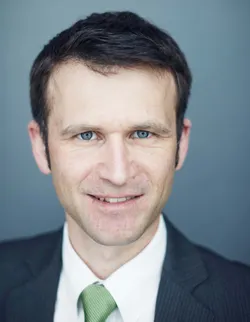
Halvard Buhaug is a Professor II in Political Science at the Norwegian University of Science and Technology (NTNU) and a Researcher I at the Peace Research Institute Oslo (PRIO). His work focuses on the security implications of climate change, including food security, economic shocks, forced migration, and natural disasters. Affiliations: NTNU (Political Science), PRIO (Researcher I) Research Areas: Climate-conflict nexus, environmental security, migration dynamics, peace research Expertise: Quantitative conflict analysis, climate risk modeling, policy-relevant research Buhaug's recent publications analyze climate-induced displacement, conflict risk projections, and the limitations of climate migration models. His interdisciplinary work bridges climate science, political geography, and security studies. Methodologically, Buhaug employs statistical modeling, geospatial analysis, and comparative case studies. He contributes to policy debates through accessible publications in outlets like The Conversation and Political Violence @ A Glance .
Mike Perkins is an Associate Professor and Head of the Centre for Research & Innovation at the British University Vietnam (BUV). He holds a PhD in Management from the University of York, UK, with research on performance management in local police service delivery. His current research focuses on generative AI (GenAI) in education, academic integrity, and performance management. Education: PhD in Management (University of York, UK, 2013), Senior Fellow of Higher Education Academy (2019) Research Interests: GenAI in education, AI ethics, academic integrity, and public sector management. His work bridges technology, education, and academic ethics, with a focus on AI assessment tools and synthetic media challenges. Scientific Awards: St Andrew’s Global Research Fellow (2025–2026) Visiting Scholar at Werklund School of Education, University of Calgary (2026) 2024 Paper of the Year – Journal of University Teaching and Learning Practice Prof. Tracey Bretag Academic Integrity Award (2024 Honored, 2025 Shortlisted) BUV President's Research Award (2023) BUV President's Teaching Award (2019) Grants: Led the International Science Partnership Fund (£80,000, 2024–2026) for GenAI integration in Vietnamese higher education. Co-led Going Global Partnerships (£80,000, 2023–2025) for digital transformation in Vietnamese universities.
Dr Maria Balta is a Senior Lecturer in Human Resource Management and Organisational Behaviour at Kent Business School, University of Kent. She serves as the Departmental Research and Innovation Lead and has held leadership roles including Director of the MSc in Human Resource Management, TEF Coordinator, and Chief Examiner. PhD in Management Studies (Brunel University London, funded by Leventis Foundation) MSc in Human Resources and Employment Relations (Brunel University London) Maria Balta’s research focuses on digital technologies in business model pivoting, human resource management systems, climate change adaptation, and leadership styles in supply chain management. Her work aims to develop organizational resilience and effective crisis response strategies through empirical studies in diverse sectors. Her recent publications highlight trends in supply chain agility amid geopolitical shocks, digital transformation in SMEs during crises, and the role of big data analytics in sustainability. She has secured significant funding from organizations like ESRC, Innovate UK, and the European Commission. Graduate and Researcher College Prize for Programme Academic Lead (University of Kent, 2023) Nominated for Brilliant Research-Based Education Award (Kent Union, 2023) Maria supervises PhD students in topics spanning organizational change, entrepreneurship, talent management, and supply chain dynamics. She has acted as an external examiner for PhD/DBA programs at King’s College London, Brunel University, and others.
Professor Neil Berry is a distinguished academic and researcher in the Department of Chemistry at the University of Liverpool's School of Physical Sciences. He currently serves as Head of Department (2018-2024) and has held various significant administrative roles including Director of Post Graduate Research for the School of Physical Sciences (2015-2018) and Departmental PGR Lead. His academic journey began at Exeter College, University of Oxford where he earned his MChem in Chemistry (1999) followed by a DPhil (2002) under the supervision of Professor Paul Beer. Professor Berry's research expertise spans computational chemistry with a focus on applying AI, machine learning, and molecular modeling to solve complex problems in chemistry. His work primarily centers on four key areas: medicinal chemistry (particularly antimalarial and antiparasitic drug discovery), materials chemistry (including metal-organic frameworks and supramolecular gels), reaction mechanisms, and chemoinformatics. His group adopts a rational approach to research through molecular and material design, integrating computational modeling with experimental validation through close collaborations with the Liverpool School of Tropical Medicine, University of Washington, and industry partners including GSK, Bayer, and Unilever. His publication record demonstrates a strong focus on applying computational methods to drug discovery for neglected tropical diseases and advanced materials science. Recent work shows increasing integration of machine learning techniques across all research areas, with significant contributions to antimalarial drug development, snakebite treatment, and materials science applications. His research consistently bridges computational prediction with experimental validation, demonstrating the practical impact of his work. Treasurer - Royal Society of Chemistry Chemical Information and Computer Applications Group (2021 - present) Invited committee member - Royal Society of Chemistry Chemical Information and Computer Applications Group (2015 - present) Fellow of Higher Education Academy (2012 - present) Member of Royal Society of Chemistry (2005 - present) Referee for journals including Nature Communications, Journal of Medicinal Chemistry, and Journal of Computer Aided Molecular Design As an educator, Professor Berry has supervised numerous PhD students and postdoctoral researchers, with a particular emphasis on integrating computational approaches with experimental chemistry. His teaching innovations include Chemtube3D (web-based interactive 3D simulations of organic reactions), lecture recording systems, and ChemPreLab (a pre-lab interactive tutoring system). His research group operates at the intersection of chemistry, biology, and computer science, securing substantial funding from EPSRC, MRC, Wellcome Trust, and industry partners.
Adilson Motter is the Charles E. and Emma H. Morrison Professor of Physics and Astronomy and (by courtesy) Engineering Sciences and Applied Mathematics at Northwestern University. He serves as Director of the Center for Network Dynamics (CND) and has been a faculty member since March 2006. His academic appointments include affiliations with the Chemistry of Life Processes Institute (CLP), Molecular Biophysics Program, NSF-Simons National Institute for Theory and Mathematics in Biology (NITMB), Paula M. Trienens Institute for Sustainability and Energy, Graduate Program in Applied Physics, Center for Interdisciplinary Exploration and Research in Astrophysics (CIERA), Institute for Quantum Information Research and Engineering (INQUIRE), and Northwestern Institute on Complex Systems (NICO). Professor Motter received his Ph.D. in 2002 from UNICAMP (University of Campinas), Brazil, where he worked with Professor Patricio S. Letelier. Prior to joining Northwestern, he held positions as Guest Scientist at the Max Planck Institute for the Physics of Complex Systems in Germany and as Director's Funded Postdoctoral Fellow at the Center for Nonlinear Studies at Los Alamos National Laboratory. Professor Motter's research focuses on the dynamical behavior and control of complex systems and networks. His work spans theoretical and computational approaches to understanding phenomena in physical, biological, and engineered systems. Key research areas include: Cascading dynamics and network resilience Spontaneous synchronization and symmetry phenomena Network control theory and applications Quantum networks and information transfer Machine learning applications to network science Data-driven discovery in complex systems Applications to quantitative biology, biomedical research, renewable energy, smart power grids, microfluidics, and metamaterials Analysis of Professor Motter's recent publications reveals a strong interdisciplinary focus spanning physics, engineering, biology, and computer science. His work demonstrates consistent innovation in network science, with recent contributions advancing quantum networking architectures, understanding power grid limitations for electric vehicle integration, developing machine learning approaches for genetic analysis, and exploring fundamental synchronization phenomena. A notable trend is the increasing application of his theoretical frameworks to real-world challenges in energy systems, biomedical research, and quantum information technology. Professor Motter has received numerous prestigious awards and honors: Alfred P. Sloan Research Fellowship (2009) Weinberg Award for Excellence in Mentoring Undergraduate Research (2009) Northwestern-Argonne Early Career Investigator Award for Energy Research (2010) NSF Faculty Early Career Development (CAREER) Award (2011) Erdös-Rényi Prize in Network Science (2013) Fellow of the American Physical Society (2013) Simons Foundation Fellowship in Theoretical Physics (2015) Fellow of the American Association for the Advancement of Science (2015) Scialog Fellow (2015) Outstanding Referee, American Physical Society (2016) Fellow of the Network Science Society (2020) Senior Scientific Award, Complex Systems Society (2022) Professor Motter has demonstrated exceptional commitment to mentoring, as evidenced by the Weinberg Award for Excellence in Mentoring Undergraduate Research. His research group has received significant funding through multiple NSF grants, including his CAREER award, and collaborations with Argonne National Laboratory. Current research directions include mechanical metamaterial networks, quantum network science, and other areas of complex systems. The group has been actively recruiting postdoctoral researchers and has seen students recognized with awards and research grants. As Director of the Center for Network Dynamics (established September 2023), Professor Motter leads a multidisciplinary team exploring network phenomena across various domains. The Center has hosted significant events including the 'Brain Architecture and Computing 2024' workshop and is organizing the 2025 CDC Workshop on Neurocomputation and Dynamics in Rio de Janeiro. The Motter Group maintains active collaborations with experimentalists and researchers from diverse disciplines, facilitating the translation of theoretical insights into practical applications.
Elizabeth "Beth" Mayer-Davis is the Dean of The Graduate School and the Cary C. Boshamer Distinguished Professor of Nutrition and Medicine at the University of North Carolina at Chapel Hill. She holds joint appointments in the Gillings School of Global Public Health and the School of Medicine, where she previously served as Chair of the Department of Nutrition for eight years. As Dean of The Graduate School, she oversees more than 160 degree-offering programs and over 10,000 graduate students at UNC Chapel Hill. Dr. Mayer-Davis earned her educational credentials from prestigious institutions: Ph.D. in Epidemiology from the University of California, Berkeley (1992) Master of Public Health with honors from the University of Colorado School of Medicine (1986) B.S. in Dietetics from the University of Tennessee (1980) Dr. Mayer-Davis is an internationally recognized expert in diabetes research with a career focused on the epidemiology and natural history of type 1 and type 2 diabetes in children and adults. Her research addresses how nutrition impacts diabetes risk and complications, with particular emphasis on culturally and regionally diverse populations. Her primary current focus is on type 1 diabetes in youth and young adults, examining diabetes self-management and energy balance/weight management for individuals with type 1 diabetes. She employs innovative methodologies including large epidemiological studies, clinical trials, and adaptive intervention designs, often incorporating communication technologies to enhance patient-centered care. Analysis of Dr. Mayer-Davis's recent publications reveals consistent focus on diabetes epidemiology across diverse populations, with particular attention to youth-onset diabetes, health disparities by race and ethnicity, and innovative interventions for diabetes management. Her work frequently addresses the intersection of obesity and diabetes, particularly in type 1 diabetes where this comorbidity has been historically understudied. The research demonstrates methodological sophistication through the use of advanced statistical techniques, continuous glucose monitoring data, and adaptive trial designs to address complex questions in diabetes care. Dr. Mayer-Davis has received numerous professional honors and appointments: Cary C. Boshamer Distinguished Professorship at UNC President for Health Care and Education for the American Diabetes Association (2011) Member of the 2020 Dietary Guidelines Advisory Committee Appointee to President Obama's Advisory Group on Prevention, Health Promotion and Integrative and Public Health Co-director of the Nutrition Obesity Research Center funded by NIH Throughout her career, Dr. Mayer-Davis has been deeply committed to mentoring the next generation of researchers, having supervised dozens of graduate students. She has secured over $45 million in research funding, including as Principal Investigator for the Carolina site of the landmark SEARCH for Diabetes in Youth study and the Nutrition for Precision Health Consortium initiative. Her leadership extends to national scientific committees and professional organizations, where she has shaped diabetes research and care standards. She is particularly dedicated to promoting diversity, equity, and inclusion in graduate education and research. Dr. Mayer-Davis co-directs the UNC Nutrition Obesity Research Center, a NIH-funded center that has received continued support through multiple funding cycles. She also leads the Carolina site of the SEARCH for Diabetes in Youth study, a large multi-center national study that has been tracking diabetes incidence and trends in youth for over two decades. Her research team includes epidemiologists, nutritionists, statisticians, and clinicians working collaboratively to address critical questions in diabetes prevention and management.
Heidi Aarum Hansen is an Associate Professor at the Department of Welfare, Management and Organisation, Oslo Metropolitan University. She holds a PhD in Social Work with extensive practical experience in child welfare. Her research focuses on child welfare practices, digitalization challenges, children’s rights, and social media’s impact on social work. Education: PhD in Social Work. Research interests include competence development in child welfare, digital transformation of welfare services, and methods for teaching practical social work. Current projects explore how children's social media usage challenges traditional social work practices. Key research areas span child welfare policy analysis, family contact preservation strategies, and judicial decision-making processes involving children. Her work emphasizes ethical considerations in digital age practices and improving communication in high-conflict cases. Affiliated with the Social Work Research Group and Psychosocial Work Research Group. Active in publishing Nordic Social Work Research and Children and Youth Services Review. No awards explicitly listed, though her work demonstrates significant contributions to child welfare scholarship. Teaches courses related to child welfare practice and digitalization impacts. Advising activities not detailed here. Research focuses on developing practical frameworks for integrating digital tools while maintaining ethical standards in social work.
Yue Li is the Leonard Case Jr. Professor in the Department of Civil and Environmental Engineering at Case Western Reserve University. He specializes in resilient and sustainable infrastructure systems, focusing on structural reliability, probabilistic design, and climate change adaptation. His research addresses risk assessment for infrastructure under extreme events, including earthquakes, hurricanes, and climate impacts. Education: PhD in Civil Engineering, Georgia Institute of Technology, 2005 Research Interests: Dr. Li’s work integrates advanced statistical methods and data-driven approaches to enhance infrastructure resilience. Key areas include: Probabilistic modeling of structural systems Risk-informed decision-making for multi-hazard mitigation Climate change impacts on material durability and performance Asset management and lifecycle cost analysis Notable Contributions: His recent publications emphasize data-driven resilience metrics for water systems and seismic risk assessment for bridges. He has pioneered frameworks for evaluating infrastructure vulnerability under climate change, including corrosion effects and extreme weather adaptation. Awards: ABSE Outstanding Paper Award (2023) Case School of Engineering Teaching Award (2020) Nomination for John S. Diekhoff Award (2019) Leadership Roles: Dr. Li serves as Section Editor for the ASCE Journal of Structural Engineering and chairs multiple technical committees on safety and reliability. He leads initiatives to standardize multi-hazard design practices and resilience evaluation methodologies.
Sebastien Nicolas Gros is a Professor at the Department of Engineering Cybernetics, Norwegian University of Science and Technology (NTNU). His research focuses on safe reinforcement learning (RL) and data-driven model predictive control (MPC), with applications in energy systems, biomedical engineering, and autonomous vehicles. Institution: Norwegian University of Science and Technology Department: Engineering Cybernetics His work emphasizes AI-driven optimization for domestic energy storage, battery integration, and smart building management. Collaborations include Equinor, DNV, Kongsberg, Volvo, and CorPower Ocean. Key themes in his publications include: Control theory for renewable energy systems (wave energy converters, buildings) Biomedical applications (artificial pancreas, glucose monitoring) Transportation systems (electric vehicles, autonomous ships) Machine learning integration with physical models He supervises 6 PhD students and co-supervises projects on multi-rotor wind turbines and industrial PhD collaborations. The articles demonstrate a convergence of RL, MPC, and uncertainty quantification across energy, biomedical, and transportation domains.
Dr. Christoph Trinkl serves as Head of the Institute of new Energy Systems (InES) at Technische Hochschule Ingolstadt, a position he has held since 2008. His work focuses on renewable energy technologies and sustainable energy systems development, with particular expertise in solar thermal applications and system integration. His research interests include: Green Technologies Renewable Energy Technologies Solar Energy Engineering Solar Heating and Cooling Renewable Energy Systems for Industrial, Domestic and Mobility Applications Technology Transfer and Network Management Dr. Trinkl's educational background includes a PhD in Engineering from De Montfort University Leicester's Institute of Energy and Sustainable Development (UK) in 2007, following his work as a researcher at Technische Hochschule Ingolstadt from 2001-2007. His degree course in Mechanical Engineering and Business (1997-2001) provided the foundation for his interdisciplinary approach to energy systems. His recent publications demonstrate a strong focus on practical applications of renewable energy technologies, particularly in solar thermal systems, heat pump integration, and district heating networks. His research spans from fundamental engineering analysis of collector technologies to large-scale system integration and optimization, with increasing emphasis on real-world implementation challenges and optimization techniques including AI-driven approaches. Dr. Trinkl's extensive publication record spanning over two decades shows an evolution from fundamental collector technology research to broader energy system integration, addressing both technical and practical implementation considerations across diverse contexts from industrial applications to rural energy access solutions.
Thomas Ploetz is an Adjunct Professor in the School of Electrical and Computer Engineering at Georgia Institute of Technology. His work focuses on sensor-based human activity recognition, wearable computing, and computational behavior analysis with applications in healthcare, smart homes, and education. He leads interdisciplinary research integrating machine learning, IoT systems, and human-centered design. His research interests include improving activity recognition robustness through synthetic data generation, developing explainable AI for time-series analysis, and advancing healthcare technologies like diabetic foot ulcer monitoring systems. He explores ethical implications of wearable sensing in diverse populations, including underrepresented groups. Key contributions include IMUTube (virtual sensor data generation), ProxiCycle (cyclist safety monitoring), and DISCOVER (smart home activity recognition framework). His work addresses challenges in data scarcity, domain adaptation, and long-term system maintenance in pervasive computing environments. He has been awarded grants such as the GVU/IPaT Research and Engagement Grant (2020), and his research appears in top venues like UbiComp and ISWC. He actively contributes to the wearable computing community through conference organization and editorial work.
David Caron is the Captain Allan Hancock Chair in Marine Science and Professor of Biological Sciences at the University of Southern California (USC), affiliated with the USC Dornsife College of Letters, Arts and Sciences. He co-founded the Center for Integrated Networked Aquatic Platforms (CINAPS) and is part of the Wrigley Institute for Environmental Studies. His research focuses on marine and freshwater microbial ecology, particularly protist trophic relationships and harmful algal blooms. Caron holds a Ph.D. from the MIT-Woods Hole Oceanographic Institution Joint Program in Biological Oceanography (1984), an M.S. (1977) and B.S. (1975) in Oceanography and Microbiology from the University of Rhode Island. Research Interests: His work spans protistan ecology, mixotrophic microalgae physiology, Antarctic protist adaptations, and molecular approaches to microbial ecology. He investigates harmful algal bloom dynamics, protist grazing impacts, and the role of environmental drivers in planktonic communities. His studies often integrate field observations, experimental work, and advanced technologies like robotic sampling platforms. Key Achievements: Caron has authored over 100 peer-reviewed publications and pioneered methods in protistan diversity assessment. He received the AAAS Fellowship (2011), American Academy of Microbiology Fellowship (2007), and the USC Raubenheimer Outstanding Senior Faculty Award (2010–2011). He served as President of the International Society of Protistologists (2004–2005). Grants & Labs: He leads CINAPS, which uses autonomous systems to monitor coastal ecosystems. His lab studies microbial communities in the Southern California Bight, focusing on harmful algal toxins (e.g., domoic acid) and their ecological impacts. Collaborations with engineers and roboticists enhance data collection and environmental modeling efforts.
Professor Akram Hourani is a Discipline Leader and Professor in the Department of Electrical & Electronic Engineering at RMIT University's School of Engineering. He holds roles as Program Manager for the Master of Engineering (Telecom & Network Eng.) and Deputy Director of the Centre for Opto-electronic Materials and Sensors (COMAS). Prior to academia, he was an ICT Program Manager in the telecommunications industry, leading projects in satellite and telecommunications infrastructure. His research focuses on advanced signal processing, satellite communications, radar systems (including SAR), neuromorphic hardware, and IoT. He has secured grants from ARC, CRC, government departments, and DSTG, with over 130 publications. His work aligns with UN Sustainable Development Goals 9 (Industry, Innovation & Infrastructure), 11 (Sustainable Cities), and 10 (Reduced Inequalities). Education: PhD in Electronics & Telecommunications (2016, RMIT University) Non-academic roles: R&D Engineering Program Manager at Inteltec Emirates (2006–2013) Key research themes include interference mitigation, 5G/6G networks, neuromorphic sensing, and AI-driven satellite IoT. He is listed in Stanford's top 2% scientists for career-long and single-year impact. His teaching includes courses on satellite communications and wireless sensor networks. Grants & Funding: ARC, CRC, DSTG, and government-funded projects since 2017 Collaborations: CSIRO, industry partners in telecommunications and aerospace His lab focuses on next-generation communication systems, with active projects in mega satellite networks, neuromorphic hardware, and AI for IoT sensing. He supervises PhD/Masters research in areas like satellite connectivity and machine learning applications.
Valentijn Visch is a researcher and academic at Delft University of Technology's Faculty of Industrial Design Engineering, specializing in Human-Centered Design and Society, Culture, and Critique. His work focuses on eHealth interventions, gamification in healthcare, and reducing health-related stigmas through innovative design solutions. He teaches courses such as 'eHealth Design for a Healthy Society' and 'Understanding Humans,' emphasizing interdisciplinary approaches to healthcare challenges. His research projects include developing embodied coaches for stroke rehabilitation, AI-driven healthcare decision-making frameworks, and inclusive eHealth tools for low socioeconomic populations. He has been recognized with awards like the Rehabilitation Year Award 2024 for his work on cardiac rehabilitation interventions and a CHI 2024 Best Paper Honourable Mention for studies on patient preferences in AI autonomy. Visch collaborates on initiatives like the 'Emotion Aware Car Seat' project, exploring human-technology interaction. His work bridges academic research with real-world applications, addressing gaps in healthcare accessibility and patient empowerment through technology.
Dr. Mohsin Malik is an Associate Professor of Project Management at Swinburne University of Technology (since 2023) in Melbourne, Australia. Previously, he held roles as Senior Lecturer (2018–2022) at Swinburne and Lecturer (2016–2018) at the University of Melbourne. He earned his PhD in Technology Management from the University of Western Australia (2012). His research focuses on organizational dynamics for innovative outcomes in digital contexts, sustainability in supply chains, and project management practices aligned with UN Sustainable Development Goals (SDG-9, SDG-12, SDG-3). Key areas include digital transformation, lean management, agile project management, and supply chain resilience. Dr. Malik’s work has been published in top-tier journals like the International Journal of Project Management, Information & Management, and IEEE Transactions on Engineering Management. He currently serves as Senior Associate Editor of the International Journal of Physical Distribution & Logistics Management and has secured grants totaling over AUD 1M, including a 2025–2028 project on digital transformation in Indian/Australian organizations funded by DFAT. His research explores topics such as socio-cognitive dynamics in digital transformation, lean socio-technical systems, and agency theory in international development projects. Recent projects include analyzing digital platform interactions for Australian artists and evaluating virtual healthcare barriers during the pandemic. He actively supervises doctoral and master’s students focusing on digital governance, social sustainability, and project monitoring frameworks. Dr. Malik is a globally recognized scholar, with over 23 years of academic and industry experience. He collaborates with organizations like the Victorian Music Development Office and the Australian Academy of Science, emphasizing real-world impact through research.