Roger Boltshauser is a Full Professor and Deputy Head at the Department of Architecture, ETH Zurich. His practice and academic work emphasize tectonic building culture, proportion, and material experimentation, diverging from mainstream German-Swiss architectural trends. He combines teaching with active architectural practice, influencing younger generations at ETH and TU Wien. Key themes: Tectonic structures, grid-based order, social responsibility in architecture, critique of modernist canons Notable projects: Hochhaus H1 Zwhatt-Areal (2025), Masterplan Zoo Basel (2025), Centre for Dental Medicine Zurich (2025) His buildings prioritize mass and permanence , evident in projects like the Kopfholz School and Rauch House . Recent works at the EPFL Solar Biennale (2025) and Architecture of Memory exhibition (2025) explore sustainable design and cultural narratives. Boltshauser’s studio on Dubsstrasse exemplifies research into load-bearing structures and urban spatial relationships.
Yaojun Zhang is an Assistant Professor in the Department of Physics & Astronomy and the Department of Biophysics at Johns Hopkins University. She earned her PhD in Physics from the University of California, San Diego (2015), followed by postdoctoral fellowships at the Princeton Center for Theoretical Science (2015-2018) and the Princeton Center for the Physics of Biological Function (2018-2021). Her research focuses on biological physics, particularly the complex behaviors of biomolecules and their assemblies across scales—from single-molecule folding to intracellular transport and biomolecular phase separation. She employs theoretical, mathematical, and computational tools to bridge biological questions with physical principles. Education PhD in Physics, University of California, San Diego (2015) Postdoctoral Fellowships: Princeton University (2015-2021) Research Interests Her group studies biomolecular condensates and liquid-liquid phase separation, exploring how microscopic interactions determine macroscopic properties of cellular compartments. Key areas include: Biomolecular condensate formation and dynamics Phase separation in cellular environments Interactions between biomolecules and cellular components Biophysics of intracellular transport Collaborations & Tools Zhang collaborates with experimentalists to validate theoretical models and develops frameworks for understanding condensate functions, such as surface tension, stoichiometry, and phase diagrams. Her work addresses challenges like condensate stability, molecular exclusion, and biological function regulation. Labs & Resources She leads the Zhang Lab , which integrates experimental and computational approaches. Her team’s research is supported by resources at the Bloomberg Center for Physics and Astronomy.
Matteo Cagnoni is a Researcher at the Department of Electronics and Telecommunications (DET) of Politecnico di Torino . His research focuses on Density Functional Theory , Quantum Chemistry , and Thermoelectric Materials for Solar Cells . He is actively involved in the European Union’s MIRACLE project , developing photonic meta-concrete for radiative cooling solutions. Research Interests: Development of cement-based radiative coolers for solar cell thermal management Computational discovery of intermediate-band solar cell materials Electronic properties of semiconductors and insulators Teaching: Electronic transport in crystalline and organic semiconductors Advanced experimental physics Scientific Contributions: Matteo has published extensively on radiative cooling, perovskite/silicon tandem solar cells, and thermoelectric materials. His work spans journals like Nature Communications , Advanced Functional Materials , and Progress in Photovoltaics , with a focus on simulation engineering , photonic devices , and energy-efficient materials . Labs & Collaborations: He works within the Microwave and Optoelectronics Group (MOG) at DET, collaborating with international institutions on EU-funded projects.
Karthik R. Narasimhan is a Professor at Princeton University's School of Engineering and Applied Science in the Department of Computer Science. Previously, he earned his PhD from MIT under Regina Barzilay and served as a visiting research scientist at OpenAI during 2017-18. His research focuses on the intersection of language and decision-making, building autonomous agents that learn from both experience and human knowledge. His research spans multiple high-impact areas including language agents (Text-DQN, CALM, ReAct, Tree of Thoughts), reinforcement learning (h-DQN, Multi-Objective RL), and AI safety (Toxicity in ChatGPT, DataMUX). He has developed critical datasets and benchmarks such as WebShop, InterCode, SWE-bench, and SILG that have become standard evaluation tools in the field. Current work emphasizes agent capabilities, software engineering automation, and multimodal interaction. His publication trends show strong focus on practical agent deployment (SWE-agent, Tree of Thoughts), safety evaluation (Probing AI Safety), and efficiency improvements (DataMUX). Recent work increasingly addresses real-world challenges in software engineering, security, and human-AI collaboration through rigorous benchmarking. Co-author of foundational GPT (2018) paper Key developer of Text-DQN (2015), CALM (2020), ReAct (2022), Tree of Thoughts (2023) Creator of influential benchmarks: WebShop (2022), SWE-bench (2023), InterCode (2023) He actively advises students through Princeton's computer science program, with research supported by multiple grants focused on autonomous agent development and language-based decision systems. His GitHub repositories (nlp-datasets, text-world-player) demonstrate strong community engagement in open-source research tools. Current projects include advancing language agent capabilities through Reflexion (2023) and Tree of Thoughts (2023) frameworks while addressing critical safety and efficiency challenges.
Genesea M. Carter serves as the Associate Director of Composition and Associate Professor in the English and University Composition Program at Colorado State University. She holds a PhD from the University of New Mexico. Her research focuses on administrative systems in higher education, including curriculum design, teacher training, and workload equity, and their impact on instructors’ well-being. She also investigates how students from diverse backgrounds navigate academia, with a focus on working-class pedagogy and identity development. Her recent co-edited collection Systems Shift: Creating and Navigating Change in Rhetoric and Composition Administration (2023) addresses institutional transformation. Earlier work includes Class in the Composition Classroom: Pedagogy and the Working Class (2017), exploring socioeconomic diversity in education. Her articles span topics like digital literacy, interdisciplinary pedagogy, and critical theory in composition studies. Dr. Carter’s scholarship emphasizes equity, intersectionality, and dismantling neoliberal structures in academia. She has contributed to journals such as Composition Studies , Journal of Teaching Writing , and Open Words , and her work bridges practical administration with theoretical frameworks in rhetoric and composition.
Jörg Bohlmann is a Professor in the Department of Forest and Conservation Sciences at the University of British Columbia , affiliated with the Michael Smith Laboratories, Botany Department (Faculty of Science), and Wine Research Centre. His research spans genomics, biochemistry, and chemical ecology of plant specialized metabolism, focusing on terpenoids and phenolics for applications in forest health and bioproducts. Research Streams : Plant defense against insects/pathogens, metabolic engineering of bioproducts, forest genomics, and molecular evolution of terpenoid pathways. Collaborations : National and international partnerships with academia, government, and biotech industries. Recent Publications highlight genomic insights into Western Redcedar (2023), including its low genetic diversity and adaptation mechanisms despite self-fertilization. Earlier work (2001–2022) covers conifer defense systems, Arabidopsis terpenoid pathways, cannabis flavor genetics, and mass spectrometry infrastructure. Scientific Awards include: NSERC E.W.R. Steacie Fellow (2015), Fellow of the Royal Society of Canada (2015), Feodor Lynen Postdoctoral Fellowship (1995–1998), and Distinguished University Scholar (UBC). Funding Sources : NSERC (Discovery/Strategic grants), CFI, Genome Canada/BC, provincial/federal agencies. Labs & Facilities : Michael Smith Laboratories (UBC), National Centre of Excellence, Forest Sciences Centre, and a dedicated mass spectrometry lab for metabolite analysis.
Michaela Bürger-Koftis serves as Associate Professor in the Department of Modern Languages and Cultures at the University of Genoa's School of Humanities. Her teaching portfolio includes advanced courses such as German Literature and Culture III , German Linguistics (LM) , and Cultures of German-speaking Countries across undergraduate and master's programs focused on teaching, publishing, and intercultural communication. Her research investigates polyphonic structures in multilingual literature, with emphasis on German-Russian linguistic intersections and autobiographical narratives. Key projects explore lyrical diary forms and creative writing through the lens of polyphony, examining how multilingual expression shapes narrative identity and literary innovation in contemporary works. Recent publications demonstrate consistent focus on the Polyphony research initiative, revealing evolving methodologies in multilingual creativity and writing. This work establishes frameworks for analyzing cross-linguistic literary production while documenting the project's development from 2018-2023. No scientific awards are documented in available sources. While specific student advisees remain unlisted, Bürger-Koftis contributes to academic governance as a member of the School of Humanities Library Board. Her collaborative research with institutions like Catania University demonstrates institutional partnership development within multilingual literary studies. The Polyphony project functions as an interdisciplinary research hub with dedicated web infrastructure, facilitating scholarly exchange on multilingual writing practices and serving as a model for digital humanities collaboration in literary studies.
Ben Eischens is an Assistant Professor in the Department of Linguistics at UCLA. His work focuses on the intersection of phonology and phonetics, particularly in San Martín Peras Mixtec, an Otomanguean language spoken in Oaxaca, Mexico and diaspora communities. He holds a Ph.D. from UC Santa Cruz (2022) and collaborates extensively with Indigenous communities on language documentation and description. His research explores tone systems, laryngeal features, speech rate effects, and negative nominal structures, emphasizing empirical fieldwork and community partnerships. Recent work includes studies on vowel reduction, polar question formation, and the phonetic grounding of phonological theories. Eischens has presented at major conferences such as the International Congress of Phonetic Sciences (ICPhS), Annual Meeting on Phonology (AMP), and workshops on Languages of the Americas. His publications appear in journals like the International Journal of American Linguistics and Phonological Data & Analysis. He teaches courses in linguistic theory and field methods at UCLA, maintaining active research partnerships with San Martín Peras Mixtec community members. His work bridges theoretical linguistics with applied documentation, prioritizing Indigenous language revitalization efforts.
Michael Baldea is an Associate Professor in the Department of Chemical Engineering at the University of Texas at Austin . He holds a Ph.D. in Chemical Engineering from the University of Minnesota (2006), with prior degrees from 'Babeş-Bolyai' University in Romania (M.Sc. 2001, Diploma 2000). His research group develops theoretical and computational methods for Process and Energy Systems Engineering , focusing on integrated decision-making, performance optimization, and process intensification with industrial validation. Education: Ph.D., Chemical Engineering, University of Minnesota (2006) M.Sc., Interface Process Engineering, 'Babeş-Bolyai' University (2001) Diploma, Chemical Engineering, 'Babeş-Bolyai' University (2000) Research Thrusts: Integrated decision-making in chemical/energy supply chains Process performance monitoring and optimization Process integration and intensification Key applications include grid-responsive chemical plants, intensified distillation/column designs, and renewable energy integration for building systems. Scientific Awards: Frank A. Liddell, Jr. Fellowship NSF CAREER Award (2015-2020) Moncrief Grand Challenges Faculty Award (2014) AIChE Outstanding Young Researcher Award (2017) Implementation : His group has translated research into commercial tools through partnerships with industrial test beds and is working to integrate methods into commercial simulators. They explore predictive approaches for building energy management and strategic capital investment analysis in next-generation energy systems.
Justin Russell Greene serves as an Advanced Instructor in the Department of English within Virginia Tech's College of Liberal Arts and Human Sciences. With over 15 years of teaching experience across multiple institutions, he currently teaches courses in film, literature, and writing at Virginia Tech, where he has been employed since 2019. His academic journey spans various teaching positions at Virginia Tech, Hampden-Sydney College, Virginia Commonwealth University, and several community colleges. Greene earned his BA, MA, and PhD in English and Media, Art, and Text from Virginia Commonwealth University. His educational background reflects his interdisciplinary approach that bridges traditional literary studies with contemporary media and cultural analysis. He has also completed professional development certifications in Anti-Racist Teaching and Foundations of Online Teaching at Virginia Tech. His research focuses on the intersections of cinema, media, and cultural studies, with particular attention to authorship, celebrity, and gender performance. Greene examines how authors and celebrities construct their identities across various media platforms, exploring topics ranging from Quentin Tarantino's cinematic masculinity to Roxane Gay's digital presence. His work often analyzes the performative aspects of identity in contemporary culture, particularly through fashion, social media, and visual storytelling. Greene's scholarly output demonstrates a consistent focus on authorial identity construction across media platforms. His publications reveal a trajectory from examining literary authors' fashion choices to analyzing digital performances of identity on social media, and more recently to cinematic studies of directors like Quentin Tarantino and Jordan Peele. The evolution of his work reflects broader cultural shifts toward digital and visual media while maintaining a consistent theoretical framework centered on performance and identity construction. Joyce Gentry Smoot Award (2025) for Excellence in Teaching by an Instructor As an educator, Greene has served as a reader on graduate student capstones and has been actively involved in curriculum development and pedagogical innovation. He has participated in numerous professional development activities focused on writing instruction, anti-racist pedagogy, and the integration of AI in teaching. His teaching philosophy emphasizes building student confidence in writing abilities, recognizing diverse student backgrounds, and providing individualized feedback to help students develop their unique voices. Greene is currently working on projects examining Jordan Peele's Nope (2022) regarding point-of-view and gore, as well as speculative adaptations in contemporary US media. His research interests continue to evolve with cultural trends while maintaining his core focus on performance, identity, and media representation.
Reza Shokri is a Dean's Chair Associate Professor in the Department of Computer Science at the National University of Singapore (NUS), School of Computing. His research lies at the intersection of data privacy, security, and trustworthy machine learning, with a focus on quantifying privacy risks and developing robust, fair, and interpretable models. PhD in Computer Science, EPFL His research interests center on data privacy and trustworthy machine learning , particularly in the context of deep learning and federated systems. He investigates how machine learning models memorize training data, leading to privacy leakage, and designs frameworks to audit and mitigate such risks. His work bridges theoretical guarantees with practical applications, emphasizing the trade-offs among privacy, fairness, robustness, and utility. His recent publications (2023–2025) reveal a strong trend in analyzing privacy in large language models (LLMs), membership inference attacks, federated learning, and fairness. These works are published in top venues such as NeurIPS, ICML, ICLR, CCS, and FAccT, highlighting his leadership in both AI and security communities. Notable scientific awards include: Asian Young Scientist Fellowship (2023) Intel Outstanding Researcher Award (2023) Best Paper Award, ACM FAccT (2023) IEEE S&P Test-of-Time Award (2021) Caspar Bowden Award for Privacy Enhancing Technologies (2018) NUS Presidential Young Professorship (2019–2023) VMware Early Career Faculty Award (2021) He has advised numerous PhD and Master’s students, many of whom have contributed to high-impact publications. He has also received research grants from major industry partners including Meta, Google, Intel, and VMware. He leads the Data Privacy and Trustworthy Machine Learning Lab at NUS and has served on program committees for top conferences such as IEEE S&P, ACM CCS, and FAccT, including co-chairing roles at HotPETs and Shadow PC of IEEE S&P. He has delivered tutorials at ICML and CCS on privacy auditing in machine learning. His lab focuses on developing tools and frameworks—such as the ML Privacy Meter—for assessing and improving the privacy properties of machine learning models, with applications in regulatory compliance and secure AI deployment.
Robert J. Hamers is a Professor of Chemistry and the Steenbock Professor of Physical Science at the University of Wisconsin-Madison . He serves as the Director of the Center for Sustainable Nanotechnology , a multi-institutional collaboration, and is a Senior Editor for Accounts of Chemical Research . Additionally, he co-founded the startup Silatronix, Inc. and leads the ACS/UW-Madison Bridge to the Chemistry Doctorate Program . B.S. in Chemistry, University of Wisconsin-Madison (1980) Ph.D. in Chemistry, Cornell University (1986) Hamers' research focuses on surface chemistry, nanotechnology, and renewable energy , with specific interests in electrochemical energy storage, photoelectron emission mechanisms, and environmental impacts of nanomaterials . His group develops ultra-stable surface chemistries for energy devices and investigates charge-transfer processes at material interfaces . Recent publications highlight advances in diamond-based materials , organosilicon electrolyte additives , and environmental fate of nanomaterials . Scientific recognitions include the Wisconsin Distinguished Professor title. His work bridges fundamental surface science with applied technologies through collaborations with academic institutions, national laboratories, and industry partners like Dow Chemical . The Hamers Group actively trains graduate students and postdoctoral researchers in multidisciplinary approaches.
You-il (Chris) Park is an Associate Professor of Accounting at the University of Hawaii at Manoa’s Shidler College of Business, serving as Co-Chair of the Hawaii Accounting Research Conference (HARC) and Hawaii Accounting Research Doctoral Institute (HARDI). He holds the Accuity LLP Accounting Faculty Fellowship and coordinates the Accounting Ph.D. program. His research focuses on archival, economics-based studies examining how accounting standards, regulations, and corporate governance influence financial reporting, capital markets, and managerial decisions. Professor Park holds a Ph.D. in Business Administration (Accounting) from Duke University’s Fuqua School of Business, an M.A. in Economics from Duke University, and a B.S. in Management with Highest Honor and an Accounting Certificate from Georgia Institute of Technology’s Scheller College of Business. Prior to academia, he worked as an internal auditor at Georgia Power & Southern Company and as a computer programmer in the Republic of Korea Air Force. His research interests span topics such as IFRS impact on macroeconomics, credit rating affirmations, audit quality, and data analytics in operational efficiency. His work appears in top journals like The Accounting Review and Contemporary Accounting Research. Professor Park has received numerous accolades for teaching excellence, including the Presidential Citation for Meritorious Teaching (2025), Shidler College Professor of the Semester awards (2022–2025), and multiple nominations for the Board of Regents Medal for Teaching. His professional service includes roles as a doctoral consortium fellow and reviewer for prestigious journals. He actively contributes to academic communities through HARC and HARDI, fostering research collaboration and mentoring doctoral students. His curriculum development includes courses such as Accounting Capstone and Ph.D. seminars, emphasizing practical and theoretical mastery.
Ana Marques is a Visiting Professor at Norwich Business School (University of East Anglia), specializing in accounting and quantitative methods. She previously served as head of research at the Nova School of Business and Economics in Lisbon and held visiting roles at the Indian Institute of Management Bangalore. Her academic background includes a PhD in Accounting from the University of Texas at Austin, a Master's in Management from Instituto Superior de Gestão (Portugal), and a 5-year Licenciatura in Management from the same institution. Her research focuses on non-GAAP earnings disclosures, corporate governance, ESG/CSR, and voluntary disclosures. Key funding includes a €80,000 Marie Curie grant and over €120,000 from Portugal's Foundation for Science and Technology. She has published in top journals like Review of Accounting Studies and European Accounting Review . Marques holds editorial roles at European Accounting Review and Accounting in Europe , and serves as Editor-in-Chief of the EAA's Accounting Research Center. She has organized major conferences like JIAR 2023 and the Lisbon Accounting Conference, and contributes to professional bodies such as the American Accounting Association (AAA) and European Accounting Association (EAA). Her work addresses disclosure strategies, sustainability assurance, and regulatory impacts, with recent focus on gender diversity policies and ESG-investment linkages. Research outputs emphasize global accounting practices and regulatory effectiveness across diverse sectors.
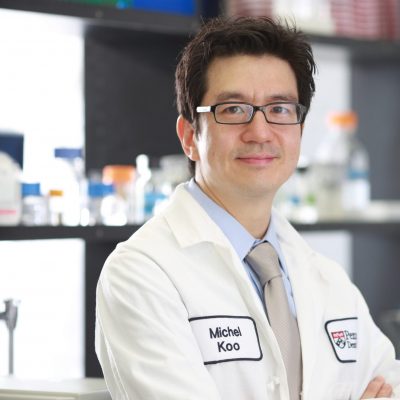
Hyun (Michel) Koo is a Professor at the University of Pennsylvania School of Dental Medicine , with affiliations in the Department of Orthodontics , Division of Community Oral Health , and Division of Pediatric Dentistry . As Co-Founder and Co-Director of the Center for Innovation & Precision Dentistry (CiPD) , he leads interdisciplinary efforts merging bioengineering, nanotechnology, and oral health research. Education : DDS and PhD Research Focus : Biofilms, bacterial-fungal interactions, and nanotechnology for oral disease prevention Leadership : Co-Director of CiPD; key roles in training programs like NIDCR-sponsored R90 and T90/R90 Dr. Koo’s research explores biofilm mechanisms in oral infectious diseases, particularly childhood caries, through engineering methods and microrobotics . His team developed micron-scale robots for automated biofilm eradication and FDA-approved nanoparticles for caries prevention. Collaborations with Penn Engineering, including Dr. Daeyeon Lee and Dr. Kacy Cullen, emphasize translational approaches. The 15 most recent publications highlight his work in nanorobotics , interkingdom biofilms , and precision diagnostics . Articles span 2025–2024 and address topics like adaptive micromotors , biofilm matrix degradation , and single-cell microbial interactions . These emphasize his focus on targeted therapies and biofilm microenvironment engineering . Key Awards : Elected Fellow, American Association for the Advancement of Science (AAAS) IADR Distinguished Scientist Award for innovative dental research Dr. Koo trains next-generation researchers through the CiPD NIDCR T90/R90 Postdoctoral Training Program , mentoring fellows like Smruti Nair (ACE2 Chewing Gum development) and Zhi Ren (K99 awardee). His work intersects with Penn Health-Tech, CT3N , and Penn Institute for Biomedical Informatics , fostering transdisciplinary innovation.