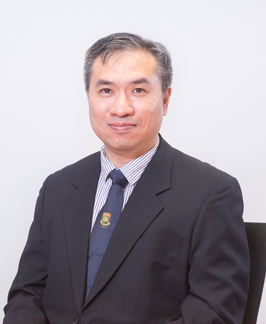
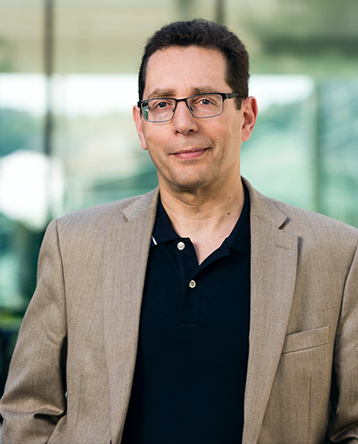
Ahmed Ferhadi is a Clinical Professor of Middle Eastern & Islamic Studies at New York University (NYU), specializing in linguistics with a focus on Second Language Acquisition, Sociolinguistics, and Language Testing. He holds a PhD in Linguistics from the University of Michigan (1990), an MA in Teaching Arabic as a Foreign Language (TAFL) from the same institution, and an M.S. in Applied Linguistics from the University of Edinburgh. His teaching career spans institutions like Princeton University, Columbia University, and Kurdish universities such as Salahuddin and Suleimaniyya Universities. He pioneered video-based language performance evaluation methods during his tenure at Middlebury College in 1991, which became a standard practice. Ferhadi has also served in high-level advisory roles, including President of the Association of American Teachers of Arabic (AATA) since 2017 and Distinguished Global Scholar of Kurdish Studies at American University (2010). Research interests include Kurdish language standardization, advanced Arabic pedagogy, and the sociopolitical dimensions of language. His projects include a Kurdish standardization initiative and curriculum development for advanced Arabic learners. Ferhadi has received numerous accolades, including the Golden Teaching Award (NYU 2000) and Top Language Award (U.S. Department of State 2006). His publications span linguistic theory, pedagogical techniques, and cultural studies, with recent works addressing Arabic dialect dynamics and Kurdish language policy. Ferhadi’s work bridges academic rigor with practical applications, emphasizing technology’s role in modern language education.
Dr Stella Bolaki is Reader in American Literature and Medical Humanities at the School of English, University of Kent, and Co-Director of the Centre for Health and Medical Humanities. She has been a faculty member since 2011, after holding positions at the University of Glasgow and the University of Edinburgh, where she also held a postdoctoral fellowship at the Institute for Advanced Studies in the Humanities (IASH). Her educational background includes a BA from Athens and an MSc and PhD from the University of Edinburgh. BA, Athens MSc, University of Edinburgh PhD, University of Edinburgh Stella’s research spans interdisciplinary fields including contemporary American literature, medical humanities, disability studies, and Black feminist theory. Her work critically examines narratives of illness, chronic conditions, self-care, and the intersection of art and health. She has pioneered research on artists’ books as tools for wellbeing, testimony, and community engagement, particularly in contexts of trauma and social injustice. Her recent publications and projects reveal a consistent focus on expanding narrative forms in medical humanities—moving beyond traditional literary modes to include photography, performance, film, and digital storytelling. Themes of inequality, mental health, climate anxiety, and embodiment recur across her work, especially in her ongoing monograph on self-care. Fellow of the Higher Education Academy Wellcome Trust funding recipient British Academy funding recipient Research England grant awardee Kent’s AHRC Impact Acceleration Account funding Stella supervises doctoral research across a wide range of interdisciplinary topics and has co-supervised a CHASE-funded project on health zines. She contributes to teaching in American literature and medical humanities at the Kent and Medway Medical School. Her professional service includes editorial roles for Contemporary Cultural Studies in Illness, Health and Medicine and the Journal of Literary & Cultural Disability Studies , and leadership in the Eastern Arc Medical and Health Humanities Network and the Kent Medical Humanities Network. She leads public-facing research through creative workshops, exhibitions, and events such as ‘Artists’ Books and the Medical Humanities’ and ‘Mending the Psyche: Art as Reparation’, often in collaboration with NHS partners and community organizations.
Professor Maria H.A. Jaschok is a Senior Research Associate at the Contemporary China Studies Programme in the Oxford School of Global and Area Studies (OSGA), University of Oxford. Formerly Director of the International Gender Studies Centre at Lady Margaret Hall (2000–2018), she also held a Visiting Professorship at King’s College London (2019–2021). A Life Fellow of the Global China Academy, her work focuses on Chinese Muslim women’s mosques, gendered religious practices, and feminist ethnography. Education: PhD from the School of Oriental and African Studies (SOAS), University of London. Extensive fieldwork in China, including prolonged residence in Shunde County, Guangdong, and collaborations with scholars like Shui Jingjun. Research Interests: Anthropology of religion (Islam), feminist methodologies, oral history, gendered identity, and the sociology of the body. Her studies explore marginalized voices in Chinese Muslim communities, particularly women’s agency through religious institutions and oral traditions. Recent Work: Co-editing a volume on Islam in China and ethnography, and leading research on sensory anthropology of women’s mosques. Current projects include a monograph on feminist debates around voice and silence in Chinese Muslim traditions, and a study of the Beijing World Women’s Congress (1995). Awards: Life Fellowship at the Global China Academy, London. Supervision: Advising four students on topics like queer identity in Chinese cyberspace, generational marital conflicts, and homonationalism in the Middle East (2023–2025). Labs/Teams: Collaborates with ethnomusicologists and Islamic studies researchers on projects funded by the Leverhulme Trust and King’s College London, focusing on cross-cultural feminist research and soundscapes in religious spaces.
Professor Reynold Cheng is a faculty member at the University of Hong Kong (HKU), specifically within the Department of Computer Science in the School of Computing and Data Science (CDS). He currently serves as the Division Head of the AI & Data Science Division at CDS and is part of the Steering Committee of the Musketers Foundation Institute of Data Science. His academic journey includes a BEng and MPhil from HKU (1998–2000) and an MSc and PhD from Purdue University (2003–2005). Prior to HKU, he was an Assistant Professor at the Hong Kong Polytechnic University (HKPU) from 2005 to 2008. Cheng’s research focuses on data science, big graph analytics, and uncertain data management. He has received numerous awards, including the SIGMOD Research Highlights Reward 2020, HKICT Awards 2021, and HKU Knowledge Exchange Award (Engineering) 2021. His work has been recognized through grants such as the HKU-TCL Joint Research Centre for AI-funded project (HKD 1M, 2020–2022) and a CRF-funded project for real-time monitoring of infectious diseases (HKD 6.5M, 2021–2022). Cheng actively contributes to academic service, including serving as PC co-chair for IEEE ICDE 2021 and editorial roles in journals like IS and DAPD. His publications span top venues like SIGMOD, VLDB, and KDD, emphasizing algorithm design for large graphs and probabilistic data systems.
Nancy Kass is a Professor in the Department of Health Policy and Management at the Johns Hopkins Bloomberg School of Public Health, where she also holds the Phoebe R. Berman Professorship in Bioethics and Public Health. She serves as Vice Provost for Graduate and Professional Education at Johns Hopkins University and is the Interim Chair of the Department of Health Policy and Management. Additionally, she is Deputy Director for Public Health at the Johns Hopkins Berman Institute of Bioethics and co-directs the Johns Hopkins Fogarty African Bioethics Training Program. ScD, Johns Hopkins University, 1989 BA, Stanford University Postdoctoral Fellowship, Kennedy Institute of Ethics, Georgetown University Dr. Kass’s research focuses on the ethical dimensions of public health policy and research, with particular expertise in bioethics, research ethics, public health ethics, informed consent, learning health systems, and global health ethics . Her work addresses ethical challenges in HIV/AIDS, obesity prevention, genetics, and international research. She has developed influential frameworks for ethical oversight in public health and clinical research. Her recent publications (2024–2025) reflect a strong focus on modernizing clinical research ethics, including optimizing informed consent, integrating clinical trials with medical practice, and enhancing data infrastructure. These works emphasize ethical governance, patient-centered decision-making, and the alignment of research with real-world healthcare delivery. Her scholarship spans high-impact journals such as JAMA and Implementation Science , demonstrating sustained scholarly leadership. GBFFR Annual Award, Global Forum on Bioethics in Research, 2016 Member, National Academy of Medicine (formerly Institute of Medicine), 2008 Fellow, Hastings Center, 2007 Delta Omega Honorary Society in Public Health, 1996 AMTRA (Advising, Mentoring, and Teaching Award), Johns Hopkins, 1996 Dr. Kass has played a pivotal role in education and mentorship, having directed the PhD program in Bioethics and Health Policy for 15 years. She currently leads the Fogarty-funded African Bioethics Training Program, advancing global bioethics capacity. She has served on numerous national and international advisory bodies, including the National Cancer Institute’s central IRB, the National Academy of Medicine, and the WHO Ethics Review Committee. Her leadership extends to chairing the national Precision Medicine Initiative central IRB. She is actively involved in research projects such as the CDC Informed Consent Project, Bioethics of Quality Improvement, and Demonstrating Respect and Acceptable Consent Strategies in patient-centered outcomes research. These initiatives underscore her commitment to ethical innovation in public health and clinical practice.
Olof Bälter is a Professor in Computer Science at KTH Royal Institute of Technology, affiliated with the Division of Media Technology and Interaction Design within the School of Electrical Engineering and Computer Science. He is the founder of the Technology-Enhanced Learning research group and holds a focus on learning engineering and human-computer interaction. His research interests center on technology-enhanced learning , question-based learning , learning analytics , AI in education , and inclusive pedagogy . A consistent theme in his work is improving efficiency in education and daily life through digital tools. He developed the Pure Question-Based Learning (Pure QBL) methodology, a digital Socratic approach that enhances student engagement and learning outcomes. His work extends to wellness in education through initiatives like walking seminars, and he investigates digital interventions for mental health, such as online Cognitive Behavioral Therapy (CBT) courses. His recent publications highlight trends in AI-generated educational content , learning efficiency , digital pedagogy , and inclusive course design , with applications in computer science education, language instruction, and global development. His research often employs experimental and data-driven methods, including randomized controlled trials and learning analytics. Teacher of the Year at the Surveying program KTH's Pedagogical Prize Higher Education Hero STINT Excellence in Teaching Scholarship (2008 and 2013) Olof Bälter has supervised numerous courses in programming, computer science, media technology, and learning engineering. He has collaborated with institutions such as Stanford University, Williams College, Region Stockholm, Stockholm University, and organizations like Promobilia and Begripsam. His projects aim to scale effective learning methods globally and make education more accessible and efficient. He leads research on the effectiveness of Pure QBL for students with ADHD and is involved in developing digital tools for health literacy and professional development in Ethiopia and Rwanda. His work bridges theory and practice, aiming to transform educational delivery through innovation and evidence-based design.
Yashar Ganjali is a Professor in the Department of Computer Science at the University of Toronto , leading the Systems and Networking Group . His research spans computer networks , with a focus on data center networking , software-defined networking (SDN) , and congestion control . Education : Not explicitly detailed, but inferred from academic rank as a Professor. His work on flow consolidation , load migration in SDN controllers , and machine learning for network management has been influential. Recent projects include FORESIGHT (2025) for ML-driven scheduling and Meta-Migration (2023) to reduce switch migration latency. Scientific Awards include the IFIP Networking 2025 Best Paper Award . Collaborations with institutions like Google (2024) and Facebook (2019) highlight his industry impact. Advisees include Sepehr Abbasi Zadeh (PhD, 2024). Current projects integrate optical packet switching and eBPF-based network augmentation , aiming to address scalability, micro-bursts, and resource allocation efficiency in cloud environments.
William Reno is Professor and Chair of the Department of Political Science at Northwestern University's Weinberg College of Arts and Sciences. With a PhD from the University of Wisconsin (1992), he has established himself as a leading scholar in African politics, conflict studies, and international relations. His career spans over three decades of research on state collapse, insurgency, and security assistance in fragile states, with particular expertise in West Africa and the Horn of Africa. His educational background includes a B.A. from Haverford College (1984), M.A. from the University of Chicago (1985), and Ph.D. from the University of Wisconsin (1992). Reno has held significant administrative roles including Director of the Program of African Studies (2012-2018) and currently serves as Department Chair since 2019. He previously served as non-resident Fellow at the Modern War Institute of the US Military Academy and has extensive experience as the department's graduate director. Reno's research focuses on the comparative politics of Africa, politics of violent conflict, political effects of foreign military assistance, and asymmetrical warfare. His work examines how patronage-based regimes operate in weak states, the evolution of insurgency in Africa, and security assistance strategies in fragile contexts. He has conducted extensive field research in Sierra Leone, Liberia, Nigeria, and Congo, with particular attention to how state collapse reshapes political authority and armed group behavior. His scholarship reveals critical insights about why contemporary African insurgencies differ from earlier anti-colonial movements in their organizational capacity and political programs. Reno has supervised numerous doctoral students who have gone on to prominent positions in academia, government, and military institutions. His advisees include scholars examining topics ranging from minority communities in conflict zones to military effectiveness in African states. Many of his students have military backgrounds or policy experience, reflecting Reno's own engagement with practical security challenges. He has secured significant research funding including Fulbright-Hays Fellowships, Boren Fellowships, and support from organizations like the Social Science Research Council. Reno maintains active research collaborations with scholars globally, particularly through his work with the Program of African Studies. His current projects focus on the politics of security force assistance, political economy of jihadism, and armed groups in contexts of state collapse. His scholarly approach combines deep area expertise with theoretical innovation, often challenging conventional wisdom about conflict dynamics in fragile states.
Dr. Isaias Fanlo serves as University Lecturer in Modern Iberian Literary and Cultural Studies within the Spanish & Portuguese Department of the Faculty of Modern and Medieval Languages and Linguistics at the University of Cambridge. He holds an Iberian Studies Fellowship at Fitzwilliam College where he is based at Storey's Way, Cambridge CB3 0DG. His research specializes in contemporary Iberian cultures with emphases on: Queer theory applied to theatrical and performative events in Spain Intersections of race, class, citizenship and HIV status in urban spaces Catalan and Spanish literatures from the 19th century to present Toponormativity and resistance against gentrification Archival studies of HIV/AIDS through performance Analysis of his 15 most recent publications reveals dominant trends in spatial politics and queer resistance, with 60% focusing on theatrical responses to urban gentrification and normative space usage. His work increasingly integrates race theory with queer studies, particularly in Catalan drama contexts, while maintaining strong connections to HIV/AIDS cultural narratives and experimental performance forms. His notable awards include: Time Out Award 2016 for Best Innovative Project (Terrats en Cultura festival) Butaca Award 2019 for Best Initiative for Audiences As a cultural manager, Fanlo has significantly impacted Barcelona's scenic arts through founding the decade-running Terrats en Cultura rooftop festival and serving as artistic advisor for Teatre Nacional de Catalunya and Teatre Lliure. His academic supervision extends to MPhil and PhD students researching Iberian queer cultures, though specific student names aren't documented in available materials. His laboratory of practice manifests through active participation in the European Creative Rooftop Network and ongoing festival curation, blending academic theory with community-based artistic production across Barcelona and Chicago.
Norman Sadeh is a Professor in the School of Computer Science at Carnegie Mellon University (CMU), where he has made significant contributions to cybersecurity, privacy, and AI research. He has co-founded and co-directed several groundbreaking graduate programs at CMU, including the Privacy Engineering Program (2012-present), the Ph.D. Program in Societal Computing (2003-2013), and the MBA track in Technology Strategy and Product Management (2005-2017). Carnegie Mellon University, School of Computer Science Software and Societal Systems Department CyLab Security and Privacy Institute Manufacturing Futures Institute Dr. Sadeh received his Ph.D. in Computer Science at CMU with a major in Artificial Intelligence and a minor in Operations Research. He holds an M.Sc. in computer science from the University of Southern California and a BS/MS degree in electrical engineering and applied physics from the Free University of Brussels (Belgium) as 'Ingénieur Civil Physicien.' Professor Sadeh's research spans cybersecurity, online privacy, Human-AI Interaction, AI governance, mobile computing, the Internet of Things, user-oriented machine learning, and language technologies. He is particularly known for his pioneering work on AI-based privacy enhancing technologies, including privacy assistants, automated privacy compliance tools, and NLP-based privacy solutions. His work has influenced the design of privacy features at major technology companies including Apple, Google, and Facebook/Meta, as well as privacy policies at regulatory agencies like the Federal Trade Commission and the California Office of the Attorney General. Analysis of his recent publications shows a strong focus on practical privacy solutions, particularly in mobile and IoT contexts, with an emphasis on making privacy more usable and understandable for end users. His work bridges technical innovation with policy implications, addressing both the technological and human aspects of privacy protection. 2018 Outstanding Entrepreneur of the Year award from the Pittsburgh Venture Capital Association Test of time award by the AAAI Conference on Web and Social Media (ICWSM) Gartner Group's Magic Quadrant leader in Security Awareness Computer-Based Training for 4 consecutive years Deloitte's Technology Fast 500 recognition for 3 consecutive years Professor Sadeh has advised numerous students, including PhD candidates like Aerin (Shikhun) Zhang, whose dissertation focused on understanding diverse privacy attitudes. His research has been funded through various grants, including NSF SaTC projects, and has resulted in technologies that protect tens of millions of users worldwide. He also founded Wombat Security Technologies, which was acquired by Proofpoint in 2018 and whose technologies are used by over 75% of Fortune 100 companies. Professor Sadeh leads several research initiatives including the Privacy Engineering Program, the Usable Privacy Policy Project, the Personalized Privacy Assistant Project, and CMU's Privacy Infrastructure for the Internet of Things. His Mobile Commerce Lab and E-Supply Chain Management Lab have produced influential research that has been commercialized by major organizations including IBM, Raytheon, Boeing, and the U.S. Army.
Tom Schrijvers is a Professor at the Department of Computer Science in the Faculty of Engineering Science at KU Leuven, Belgium. He leads the Programming Languages Group within the Declarative Languages and Artificial Intelligence (DTAI) research group. His research focuses on programming languages, particularly functional and logic programming, with special emphasis on Haskell, type systems, and algebraic effects. His research interests include: Functional Programming, especially Haskell Type Systems and Type Theory Algebraic Effects and Handlers Logic Programming, particularly Prolog Constraint Programming Domain-Specific Languages Programming Language Theory Prof. Schrijvers' recent research has focused on effect systems, staged programming, and language composition. His work on algebraic effect handlers has been particularly influential, providing new insights into how effects can be modularly composed and handled in functional languages. He has also made significant contributions to the understanding of type classes and their implementation in Haskell. His publications demonstrate a consistent focus on practical applications of programming language theory, with work spanning from foundational type theory to applied domain-specific languages for areas like fluorescence microscopy. His research often bridges the gap between theoretical programming language concepts and practical implementation concerns. Prof. Schrijvers has supervised numerous PhD students to completion, including Pieter Wuille, Benoit Desouter, George Karachalias, Steven Keuchel, Amr Saleh, Alexander Vandenbroucke, and Ruben Pieters. He currently supervises PhD students Klara Mardirosian, César Santos, Gert-Jan Bottu, Koen Pauwels, Birthe van den Berg, and Roger Bosman. His research group has received funding from various sources including EU projects like GRACeFUL. The Programming Languages Group at KU Leuven, which he leads, focuses on functional (Haskell) and logic (Prolog, Datalog, CLP) programming languages, as well as general programming language theory. The group has been active in numerous research projects and collaborations across Europe.
Olga Kokshagina serves as an Associate Professor in Innovation & Entrepreneurship at The University of Sydney, with adjunct research appointments at Monash University's Emerging Technology Lab and the UNU Hub - Learning Planet Institute. She is also an active member of the French Digital Council. Her research program investigates technology-mediated collaboration in complex innovation systems, focusing on healthcare transformation, deep tech commercialization, and co-design methodologies. Kokshagina has led high-impact projects with global institutions including the World Health Organization, OECD, STMicroelectronics, Vall d’Hebron Hospital, and Roche, demonstrating strong translational research capabilities. Her scholarly work centers on value-based healthcare innovation, digital platform governance, and AI-enhanced collaborative systems. She examines how organizational capabilities evolve during technological transitions, particularly in healthcare ecosystems, and investigates regulatory frameworks for algorithmic control in digital markets. Kokshagina's research bridges theoretical innovation management with practical applications, evidenced by her co-founding of Ninti—an initiative advancing women's health in workplace environments—and her Open Covid-19 crowdsourcing campaign that mobilized global expertise during the pandemic. Analysis of her 2021-2025 publications reveals a cohesive trajectory examining innovation in socio-technical systems. Key themes include value digitalization in healthcare, mission-oriented interdisciplinary collaboration, and the impact of big data on technology management. Her work consistently addresses grand challenges through mixed-methods approaches, spanning conceptual frameworks in journals like Research Policy to applied studies in Technovation and R&D Management, with increasing focus on quantum readiness and AI-augmented learning systems. No scientific awards are documented in the provided materials. Kokshagina currently holds a 2025 research grant for "Co-designing societal readiness and scenario building for quantum" through the University of Sydney Nano Institute/Catalyst program. While no student supervision activities are mentioned, her collaborative projects involve multi-institutional teams across industry, government, and academic sectors. Kokshagina maintains active roles within the University of Sydney Nano Institute and contributes to international policy discourse through the French Digital Council. Her Ninti initiative exemplifies her commitment to human-centered innovation, while ongoing collaborations with healthcare providers like Roche and Vall d’Hebron Hospital demonstrate sustained engagement with real-world implementation challenges in value-based care systems.
Alison Galvani is the Burnett and Stender Families Professor of Epidemiology at Yale School of Public Health and Yale School of Medicine, where she serves as founding director of the Center for Infectious Disease Modeling and Analysis (CIDMA). Her interdisciplinary work bridges epidemiology, evolutionary ecology, and health economics to inform public health policies for diseases including HIV, Ebola, influenza, and COVID-19. Her research focuses on optimizing vaccination strategies and healthcare interventions through mathematical modeling. Recent studies examine SARS-CoV-2 transmission dynamics, RSV vaccine impact, and integration of social determinants into infectious disease models. She has pioneered frameworks for conflict-induced migration analysis and pharmaceutical policy evaluations. Notable scientific awards include the Bellman Prize, Blavatnik Award for Young Scientists, and Guggenheim Fellowship. Her publications span top journals like The Lancet , Nature Communications , and PNAS , with media coverage in major outlets and policy references.
Naomi Rogers, Ph.D. (She/Her) is Professor of the History of Medicine in the Section of the History of Medicine and the Program in the History of Science and Medicine at Yale University. She holds courtesy appointments in the History Department and the Women's, Gender and Sexuality Studies Program, and serves on Yale's Dean's Advisory Council for LGBTQI Affairs. Professor Rogers teaches undergraduate, graduate, and medical students, regularly lecturing on the history of AIDS, reproduction, health economics, eugenics, nutrition, disability, and health activism. Professor Rogers' educational background includes: PhD in History from University of Pennsylvania (1986) MA from University of Pennsylvania (1986) BA in Music from Melbourne University (1980) BA with Honors from Melbourne University (1979) Her research focuses on 20th and 21st century history of medicine with emphasis on health inequities and social justice. Professor Rogers' historical interests span gender and health, disease and public health, disability studies, feminism, alternative medicine, health policy, and health activism. Her work critically examines the intersection of medical practices with social movements, particularly how marginalized communities have challenged medical orthodoxy throughout American history. She has published extensively in journals such as American Journal of Public Health, Bulletin of the History of Medicine, Journal of Medical Humanities, Radical History Review, Social History of Medicine, and Women and Health. Professor Rogers' recent scholarship demonstrates a consistent focus on the historical dimensions of contemporary health issues, particularly vaccine politics, abortion history, and community health activism. Her publications reveal patterns of resistance to medical authority, the role of race and gender in shaping health outcomes, and the historical roots of current health justice movements. Her work bridges academic history with public engagement, as evidenced by her frequent media commentary on COVID-19 and other health issues in outlets including BBC Radio, CNN, Huffington Post, National Public Radio, New York Times, Wall Street Journal, and Washington Post. Among her notable recognitions: AAHN's Lavinia L. Dock Award for Exemplary Historical Research for 'Polio Wars: Sister Kenny and the Golden Age of American Medicine' (2014) Presenter of the AAHM's Garrison Lecture: 'Radical Visions of American Medicine: Politics and Activism in the History of Medicine' (2017) Professor Rogers has been actively involved in academic leadership and mentoring. She has served as Director of Graduate Studies for the 2022-23 academic year, Chair of the Women's Faculty Forum, and Liaison to the Committee on Status of Women in Medicine. Her service extends to editorial boards including the Journal of the History of Medicine and Allied Sciences since 2018. She has also contributed to public understanding of medicine through consultations for documentaries including 'The Polio Crusade' (PBS), 'On the Basis of Sex' (Focus Features), and 'War on Science' (in process). Currently, Professor Rogers serves on the Medical School's OBGYN 'Dobbs' Sessions Planning Committee, which has organized webinars for the Yale community, and was co-organizer of the history-themed session 'Rooted in History: Abortion, Law and American Health Care.' She is working on her book project 'Health Radicalism and the Humanization of American Medicine' (under contract with Oxford), examining critics of medical orthodoxy since 1945 including civil rights, consumer, and feminist activists. She also conducts ongoing research on antisemitism in American medicine in the decades before and after World War II.
Prof. Dr. Johanna Heitzer is a University Professor for Mathematics Education at RWTH Aachen University since 2011. She leads the Teaching and Research Area of Mathematics Education within the university's mathematics department. Her office is located in Room 352 of the Kreuzherrenstraße 2 building in Aachen. She serves as co-editor of the journal 'mathematik lehren,' co-author of the 'Mathematics - New Ways' textbook series, and holds numerous committee positions including membership in the Faculty Advisory Board and Structural Commission of the Center Council. 1989: High school diploma 1989-1994: Mathematics and Physics Teacher Training at RWTH Aachen 1994-1996: Traineeship at Aachen Teacher Training College 1997: Research assistant at University of Münster 1998-2007: Mathematics and Physics teacher at Korschenbroich Gymnasium 2007-2010: Scientific assistant and doctorate at RWTH Aachen 2011-present: University Professor at RWTH Aachen Professor Heitzer's research focuses on the training and further education of mathematics teachers, development of contemporary teaching materials, applied and interdisciplinary mathematics, and the transition from school to university. Her work emphasizes concept formation, linguistic communication in mathematics, and the historical development of mathematical ideas as teaching resources. She investigates mathematics-specific learning and cognitive processes through multiple research projects including the Aachen school-university project iMPACt. Her recent scholarly output demonstrates a strong trend toward integrating digital technologies in mathematics education, particularly 3D printing and e-learning tools. She has increasingly focused on the social relevance of mathematics, exploring concepts of fairness, sustainability, and citizen empowerment through mathematical modeling. Her work bridges theoretical mathematics education with practical classroom applications, maintaining a strong connection to both historical perspectives and contemporary educational challenges. Special prize from Sparkasse Bad Hersfeld-Rotenburg for best mathematics Abitur (1989) Borchers Plaque for doctoral examinations passed with distinction (2011) DMV honor as Mathemaker of the Month (2013) Brigitte Gilles Prize 2013 for the MINT-L4 Center Professor Heitzer has supervised numerous doctoral students, serving as primary or secondary advisor for at least nine PhD dissertations between 2016-2021. Her research projects include the School-University Project MathePlus Aachen (iMPACt), e-Learning 'Mathematics for Civil Engineers,' and the development of mathematics items for StudiChecks NRW. She has secured funding through the Quality Initiative for Teacher Education (both phases) and participates in the ComeIn project focused on digitalization in teacher training. Her grants consistently emphasize practical applications of mathematics education research with direct impact on classroom practice. As a founding member of the MINT-L4@RWTH center and initiator of the working group Mathematical Education for Sustainable Development, Professor Heitzer has established significant collaborative structures. She participates in the Subject Didactics Forum at the Teacher Training Center of RWTH Aachen and has served in leadership roles including Chair of the Center Council (2014-2016) and Board member of the Teacher Training Center (2014-2017). Her work connects with national and international networks through her membership in the Society for Mathematics Education (GDM), the German Association for Mathematics and Science Education (MNU), and the German Mathematical Society (DMV).