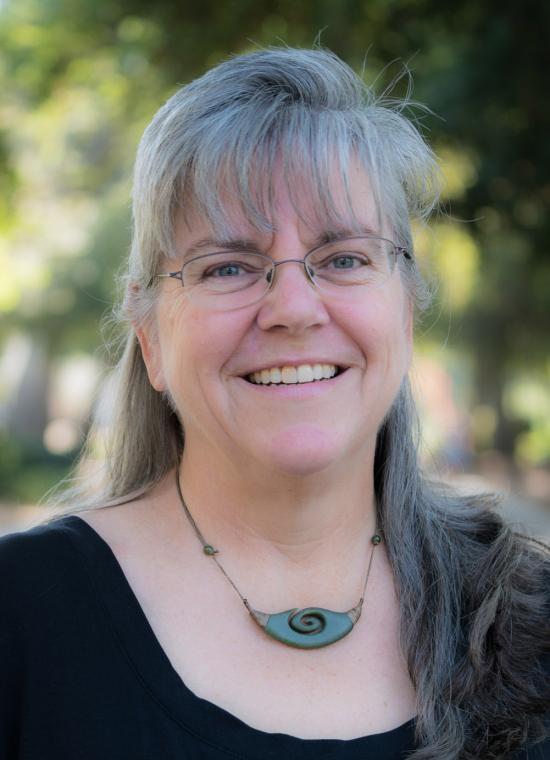
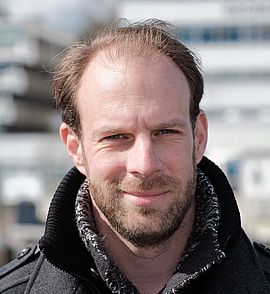
Dr. Heather Petcovic is Chair and Professor in the Department of Geological and Environmental Sciences at Western Michigan University, with a joint appointment in the Mallinson Institute for Science Education. Her research bridges geoscience and education, focusing on field-based learning, cognitive development, and K-12 teacher training. Ph.D., Oregon State University (2004) M.S., Oregon State University (2000) B.A., Smith College (1995) Her research explores how field experiences shape geoscientists' cognition, integrating mixed methods to study spatial reasoning, mental models, and instructional design. She leads NSF-funded initiatives to democratize geoscience education at two-year and minority-serving institutions. Recent publications highlight her expertise in spatial thinking, virtual field experiences, and hydrogeology pedagogy. Awards include the National Association of Geoscience Teachers' Distinguished Lecturer. She mentors graduate students and contributes to geoscience education policy through roles like former associate editor for the Journal of Geoscience Education .
Sara Barsotti is a researcher at the National Institute of Geophysics and Volcanology (INGV) specializing in volcanology and volcanic hazard assessment. Her key roles include: Associate Editor for Volcanology at Frontiers in Earth Science Review Editor for Geohazards and Georisks at Frontiers in Earth Science Contributor to the EU Center of Excellence for Exascale in Solid Earth (ChEESE) Member of the EUROVOLC citizen-science initiative Collaborator with European volcano observatories Her research focuses on computational geophysics, volcanic hazard modeling, and operational monitoring systems. She investigates tephra dispersion dynamics, lava flow behavior, and probabilistic hazard assessment using high-performance computing. Her work emphasizes European volcanic systems—particularly Icelandic eruptions—and integrates multidisciplinary approaches to improve crisis management protocols and public safety during volcanic events. Analysis of her recent publications reveals a strong trend toward operationalizing advanced computational methods for real-time hazard assessment. Key developments include exascale computing applications for solid earth simulations, refinement of the Aviation Colour Code system for aviation safety, and citizen-science data integration for eruption monitoring. These efforts consistently target practical risk mitigation strategies during active volcanic crises like the 2021 Fagradalsfjall eruption. Scientific awards: None mentioned in the provided text. While specific advised students or individual grants aren't documented, her leadership in major European projects (ChEESE, EUROVOLC) demonstrates substantial involvement in funded research initiatives. These projects coordinate transnational collaborations involving observatories, research centers, and emergency management agencies across Europe. Barsotti actively participates in integrated European volcano infrastructure teams, contributing to standardized monitoring protocols, hazard communication frameworks, and crisis response systems. Her work bridges institutional observatories (e.g., Icelandic Meteorological Office, INGV sections) with community-based monitoring tools, enhancing data collection and public engagement during volcanic unrest.
David Fletcher Wright is an Assistant Professor of Paleobiology in the School of Geosciences at the University of Oklahoma and Assistant Curator of Invertebrate Paleontology at the Sam Noble Museum of Natural History. He also holds research associate appointments at the National Museum of Natural History and the American Museum of Natural History. Wright combines specimen-based fossil data with statistical phylogenetics to study biological diversity through Earth's history, focusing on echinoderms and their evolutionary radiations. Ph.D., The Ohio State University (2016) M.S., Ohio University (2012) B.S., University of Kansas (2010) His research intersects macroevolution , phylogenetic comparative methods , and the evolutionary history of marine invertebrates , particularly crinoids (sea lilies, feather stars). He applies Bayesian techniques to fossil phylogeny reconstruction and investigates how ecological vs. geological changes drive diversification and mass extinctions. His work often leverages the ~500-million-year echinoderm fossil record as a natural experiment for testing evolutionary theories. Wright's 15 most recent publications span topics like crinoid systematics, Jurassic sea star origins, and the impact of seawater chemistry on echinoderm evolution. Common themes include phylogenetic uncertainty, character evolution modeling, and integrating fossil data with molecular phylogenies. Notable journals include Nature Communications Biology , Papers in Palaeontology , and Biological Reviews . 2025 Junior Faculty Fellowship, University of Oklahoma 2024 NSF grant ($1.17M) for Late Ordovician extinction research 2018–2020 Gerstner Scholar & Lerner-Gray Fellow, American Museum of Natural History 2017–2018 Peter Buck Postdoctoral Fellow, National Museum of Natural History 2016 Presidential Fellow, The Ohio State University Wright advises students in phylogenetic paleobiology, including Phifer, E.J. His lab collaborates globally on projects like the Anticosti Island biodiversity initiative and systematic revisions of Paleozoic echinoderms. He has authored or co-authored 35 peer-reviewed publications, describing 26 new species and 20 higher taxa, with over 878 citations and an h-index of 17.
Dr. Maria Pregnolato is an Assistant Professor in the Hydraulic Structures and Flood Risk department within the Civil Engineering and Geosciences faculty at Delft University of Technology. She also holds the position of Honorary Associate Professor at the University of Bristol. Her research focuses on infrastructure resilience and risk management from natural hazards, with particular expertise in flood impacts on transportation networks and structural systems. Dr. Pregnolato earned her PhD in Civil Engineering from Newcastle University in 2017, an MSc in Building Engineering and Architecture from the University of Pavia and Tongji University in 2012, and an MSc in Strategy, Leadership and Change from the University of Bristol in 2022. Her educational background reflects a strong foundation in both technical engineering and strategic leadership. Her research interests span infrastructure resilience, flood risk management, bridge engineering, structural health monitoring, and Digital Twins for civil infrastructure. A significant portion of her work explores the integration of digital technologies with traditional civil engineering practices, particularly in the context of climate change adaptation and natural hazard risk management. She has pioneered approaches to bridge scour management and developed novel frameworks for assessing flood impacts on critical infrastructure networks. Analysis of her recent publications (2019-2025) reveals a clear evolution in her research focus, with increasing emphasis on digital solutions for infrastructure resilience. Her work has expanded from traditional flood risk assessment to incorporate Digital Twins, sensor technologies, and nature-based solutions. The publications demonstrate strong international collaboration, with research spanning multiple continents and addressing both developed and developing world contexts. Dr. Pregnolato has received several prestigious awards recognizing her contributions to the field: EGU Outstanding Early Career Award (2021) EPSRC Fellowship (2018) EPSRC RISE Award (2018) Fellow of the Women in Engineering Society (2019) She actively supervises MSc students and has secured competitive research funding, including an EPSRC Fellowship to investigate extreme flooding impacts on bridges. Her research program integrates hydrodynamic modeling, structural analysis, and digital monitoring technologies to develop comprehensive risk management frameworks for critical infrastructure. Dr. Pregnolato maintains strong international collaborations, with visiting researcher positions at Politecnico di Milano (2022) and the University of Washington (2019), demonstrating her global impact in the field of civil infrastructure resilience.
Kyle T Spikes is an Associate Professor in the Department of Earth and Planetary Sciences at the Jackson School of Geosciences, The University of Texas at Austin. His research focuses on integrating geologic data with quantitative tools for seismic reservoir characterization, emphasizing forward and inverse problems in rock physics, stochastic modeling, and seismic inversion. He works across scales from sub-micron rock samples to surface seismic data, developing effective medium models and numerical techniques to estimate heterogeneous and anisotropic rock properties. His work spans applications in carbonates, shales, and fractured reservoirs, with a strong emphasis on Bayesian methods, stochastic inversion, and machine learning for data analysis. Recent studies include fluid flow effects in porous media, distributed acoustic sensing (DAS), and rock physics modeling of unconventional reservoirs like the Haynesville Shale. He has contributed to CO2 sequestration monitoring through inversion of 3D VSP data at the Cranfield site. Notable trends in his publications include advancements in Bayesian-based rock physics modeling, integration of multi-scale data (laboratory to field scale), and innovative applications of DAS technology for seismic monitoring. His research bridges geophysics, petrophysics, and reservoir engineering, addressing challenges in reservoir characterization and monitoring under varying fluid and stress conditions. Dr. Spikes advises postdoctoral researchers and graduate students in the Jackson School, though specific advisee names are not listed. His work is supported by collaborative projects with industry and academic partners, focusing on practical solutions for subsurface reservoir challenges.
Bradley S. Singer is a Vilas Distinguished Professor in the Department of Geoscience at the University of Wisconsin-Madison. His research focuses on geochronology to address volcanic evolution, geomagnetic field history, and sedimentary basin chronostratigraphy. He leads the WiscAr Geochronology Laboratory and an international project investigating ice-magma interactions in the Southern Andes. His work integrates field studies, lab-based geochronology, and numerical modeling to understand magmatic processes and their environmental influences. Research interests include volcanic hazards, magma storage dynamics, and the interplay between glacial cycles and volcanic activity. Recent projects explore the Patagonian Ice Sheet's impact on Andean volcanism and the geochemical evolution of igneous systems. Singer teaches courses on petrology, geochronology, and natural disasters. Scientific awards include the Vilas Distinguished Professorship. Current graduate students include Pablo Moreno-Yaeger and Jack Stalla. Collaborative grants focus on ice-forcing mechanisms in magma systems and Cretaceous chronostratigraphy. The WiscAr Lab is a hub for interdisciplinary geochronology research, supporting both internal and external projects.
Anirban Mondal is an Associate Professor and Director of Graduate Studies at Case Western Reserve University's Department of Mathematics, Applied Mathematics and Statistics, specializing in Bayesian Inference, Markov Chain Monte Carlo Methods, and Uncertainty Quantification. Holding a Ph.D. in Statistics from Texas A&M University, his research spans spatial statistics, inverse problems, and data mining applications across biomedical, materials science, and public health domains. Education: Ph.D. in Statistics, Texas A&M University His recent publications (2022-2024) demonstrate interdisciplinary applications including heart disease prediction via optimized machine learning, additive manufacturing defect analysis, and pandemic transmission modeling. While primarily focused on Bayesian frameworks and computational statistics, his work extends to geomechanics, remote sensing, and environmental risk assessment. Current research explores advanced sampling algorithms, functional data emulation, and multiscale hierarchical modeling for complex systems. Key trends include uncertainty quantification in machine learning systems (2024), Bayesian calibration methods (2023), and pandemic modeling (2022). His work balances methodological innovation with real-world applications in medical diagnostics, materials science, and climate science. Contact: anirban.mondal@case.edu
Dr. Christopher Gilliam is an Assistant Professor in Applied Signal Processing at the University of Birmingham's Department of Electronic, Electrical and Systems Engineering. He holds an MEng (1st Class Hons) in Electrical & Electronic Engineering (2008) and a Ph.D. in Signal Processing (2013), both from Imperial College London. Prior to joining Birmingham in 2022, he was a Postdoctoral Fellow at The Chinese University of Hong Kong (2013–2017) and a Research Fellow at RMIT University, Australia (2017–2022). Research Interests: Sensor signal processing, radar imaging, sampling theory, motion estimation, quantum navigation, and medical imaging. Labs: Microwave Integrated Systems Laboratory (MISL). Committees: Member of IEEE Signal Processing Society and APSIPA Technical Committees. His work focuses on advancing signal processing techniques for radar systems, navigation, and medical imaging. Recent research highlights include drone-based SAR imaging, motion correction in MRI, and fusion of classical/quantum sensors for inertial navigation. He is actively supervising PhD students and contributes to projects sponsored by DSTG. Publications span radar SLAM, probabilistic navigation algorithms, and deep learning-driven medical imaging solutions. His research bridges theoretical signal processing with practical applications in autonomous systems and healthcare.
Dr. Judith Verstegen is an Assistant Professor in the Department of Human Geography and Spatial Planning at Utrecht University's Faculty of Geosciences. Her research focuses on geosimulation modeling and spatial optimization, with applications in urban planning, environmental vulnerability assessment, and policy analysis. She leads projects such as HEADS 4 Health (2023-2024), which integrates agent-based models into urban digital twins, and coordinates the GeoSIM research group. Her work emphasizes interdisciplinary collaboration, including projects analyzing linguistic diversity in South America and environmental threats to Amazonian indigenous lands. She is the Program Chair of the MSc Geographical Information Management and Applications (GIMA) program and serves as Editor-in-Chief of the Journal of Spatial Information Science. Notable contributions include methodologies for spatial optimization under uncertainty and agent-based modeling of pedestrian behavior in urban environments. Key research areas include applied data science, complex systems analysis, and the PtS - Transforming Cities initiative. She has advised PhD students on topics ranging from fire prevention optimization to indigenous land vulnerability. Her lab at the University of Münster previously focused on spatial modeling frameworks, and she collaborates internationally with institutions like Leiden University and the PBL Netherlands Environmental Assessment Agency. Recent projects highlight innovation in computational methods, such as Python-based open-source tools for land-use modeling (IMAGE-land) and immersive video experiments for behavioral studies. Her work bridges theoretical modeling with practical policy applications, addressing challenges in sustainable urban development and environmental conservation.
Brandon Karchewski is an Associate Head (Undergraduate) and Teaching Professor in the Department of Earth, Energy and Environment at the University of Calgary. He earned his PhD in Civil Engineering from McMaster University and teaches courses including Engineering Geology, Computational Methods, and Natural Disasters. His research program focuses on: Computational methods in geophysics and geomechanics Geoscience education innovation Climate change impacts on frozen soils Inverse modeling applications Karchewski has pioneered virtual field experiences and developed open-source tools for modeling climate impacts on permafrost. His educational research examines metaphor use in geoscience communication and field pedagogy. Recent computational work includes Python-based permafrost modeling and stochastic inversion methods for biogeochemical transport. He leads the geophysics field school program emphasizing team-based learning. Award recognition includes: Geoscience Teaching Award (2019) Best Poster Award for teaching innovation research (2018) Team Teaching Excellence award (2016) Multiple teaching assistant awards
Linda A. Reinen is Professor of Geology at Pomona College, where she has been a faculty member since 1995. She is currently on leave for Fall 2025. Her work bridges structural geology, rock mechanics, and earthquake science, with a focus on fault system behavior and earthquake initiation processes. Education: Ph.D., Brown University M.S., University of Massachusetts B.S., University of Massachusetts Her research centers on understanding how tectonic slip is accommodated on faults—either through earthquakes or stable creep—with a particular focus on serpentinite, a key rock in fault zones. She combines numerical modeling , laboratory friction experiments , and field studies to investigate the physical processes behind earthquake generation. Her recent work, supported by an NSF grant, explores serpentinite’s role in deep-focus earthquakes within subducting plates. The trends in her publications reflect a long-standing commitment to fault mechanics and rock friction , particularly in serpentinite-rich environments. Her work spans seismology , tectonics , and geohazards , with applications to major faults like the San Andreas. She employs both theoretical models (e.g., spring-slider systems) and empirical data to understand slip styles, precursory signals, and aseismic behavior. Scientific Awards and Honors: Geological Society of America, Biggs Award for Excellence in Earth Science Teaching (2003) Invited Speaker, International Symposium on Slip and Flow Processes, Sendai, Japan (2001) Counselor, Council on Undergraduate Research, Geology Division (1999–present) Steering Committee Member, Physical Properties of Earth Materials (AGU) (1998–2001) Linda Reinen is deeply committed to undergraduate research education , regularly supervising independent research and senior projects. She has taught courses such as Structural Geology, Tectonics, and Geohazards. Her grant funding, including from the NSF, supports experimental and modeling work on fault processes. She plays an active role in professional service and mentoring within the geoscience education and research communities. She leads a research program integrating computational, experimental, and field-based approaches, often involving undergraduate collaborators. Her lab and research team focus on rock friction testing and numerical simulation of fault behavior, contributing to broader understanding of earthquake hazards and fault zone evolution.
Professor Rainer Kiko is a Heisenberg Professor and Make Our Planet Great Again Laureate at GEOMAR Helmholtz Centre for Ocean Research Kiel, where he leads research in Marine Biogeochemistry. His work focuses on understanding how global change impacts marine life distribution and activity, with significant implications for oceanic oxygen dynamics, nutrient cycles, and carbon dioxide transfer from the atmosphere to the deep sea. Kiko's research integrates augmented image observations that combine autonomous camera and environmental sensor systems with state-of-the-art artificial intelligence solutions and ecophysiological approaches to study zooplankton and detrital particle dynamics in a changing ocean. His primary research areas include marine carbon cycling, oxygen minimum zones, zooplankton dynamics, and the development of imaging technologies for marine observations. He leads several major projects including Imaging Marine life in an Ocean of Change (IOChange) funded by the Heisenberg Program of the German Research Foundation, and the Tropical Atlantic Deoxygenation project as part of the Make Our Planet Great Again initiative. His recent publications reveal a strong focus on marine particle dynamics, carbon export mechanisms, and the role of zooplankton in biogeochemical cycles, with particular attention to oxygen minimum zones and the impacts of climate change on marine ecosystems. Kiko employs advanced imaging technologies and machine learning approaches to address fundamental questions about the biological pump and ocean carbon sequestration. Among his notable recognitions are the prestigious Heisenberg Professorship from the German Research Foundation and the Make Our Planet Great Again Laureate award. His work has been published in high-impact journals including Nature Geoscience, Nature Communications, and Global Biogeochemical Cycles. Kiko mentors several researchers including Dr. Joelle Habib (Postdoc at Laboratoire d'Océanographie de Villefranche), Dr. Xiangyu Weng (Machine Vision specialist), Simon-Martin Schröder (computer scientist), and Claudeilton "Claus" Santana (PhD student). His research group develops innovative approaches combining deep learning, in situ imaging, and citizen science to resolve marine ecological questions across multiple scales.
Navid Constantinou is a Senior Lecturer at The University of Melbourne, specializing in Climate & Ocean Geoscience. His research focuses on physical oceanography, geophysical fluid dynamics, and climate modeling, with a particular emphasis on machine learning applications in these fields. He is affiliated with the University of Melbourne and contributes to collaborative projects like Oceananigans.jl and regional-mom6. Research Interests: His work explores ocean circulation dynamics, fluid mechanics, and the interplay between atmospheric and oceanic systems. Key areas include surface wave effects, turbulence decay, and parameterization of ocean mixing processes. He actively develops computational tools to enhance climate modeling accuracy and resolution. Publications: His recent work addresses topics like meridional heat transport in the Atlantic, GPU-based ocean modeling, and the impact of climate change on Antarctic currents. These studies often involve interdisciplinary collaborations with institutions like MIT and the Scripps Institution of Oceanography. Awards: While no explicit awards are listed, his research has been highlighted in prominent journals and media outlets like The Conversation and Nature Climate Change . Advising & Grants: He supervises students such as Dhruv Bhagtani and collaborates on projects funded by initiatives like the Australian Research Council. His software contributions, including OceanBioME.jl and SpeedyWeather.jl, underscore his commitment to advancing computational methods in geosciences. Labs/Teams: Involved in global climate modeling teams and open-source software development communities focused on ocean and atmospheric dynamics.
Jason C. Woodworth is a researcher affiliated with the University of Louisiana at Lafayette, LA, USA. His work primarily focuses on Virtual Reality (VR) and Secure Data Search technologies. Through extensive collaborations, he has explored innovative applications of VR in education, emotion tracking, and cross-reality interfaces, while contributing to methods for secure semantic search over encrypted cloud data. Research Interests: VR for attention guidance, emotion recognition in immersive environments, collaborative VR tools, and secure search architectures. Publication Trends: His recent studies emphasize Visual Cues in VR for attention management, Transformer-based Emotion Recognition , and Time-Continuous Emotion Rating systems. Collaborations: Frequent co-authorship with Christoph W. Borst and Mohsen Amini Salehi, indicating strong partnerships in VR and cybersecurity domains. Contributions: Pioneering work in Teacher-Guided Educational VR , Avatar Redirection for cross-reality communication, and privacy-preserving Secure Semantic Search frameworks.
Lorna Philip is a Professor in the Department of Geography and Environment within the School of Geosciences at the University of Aberdeen, where she holds a Personal Chair and continues to be an active academic leader. She has been a faculty member since 1998, progressing through academic ranks to her current position, and serves as a key supervisor for PhD students in human geography and rural studies. Education: MA (Social Science) with First Class Honours in Geography, University of Glasgow, 1993 PhD in Human Geography, University of Glasgow, 2000 Research Interests: Professor Philip's research focuses on rural socio-economic change, with particular emphasis on rural social exclusion, population ageing in rural communities, digital divides, and the long-term impacts of environmental events such as flooding. Her work often explores how policy can better address the unique challenges faced by rural and island populations. She is currently co-investigator on the BRUCES programme grant, a five-year interdisciplinary study on rural-urban healthcare equity in Scotland. Her research is funded by major bodies including the Chief Scientist Office, ESRC, and RCUK. Publication Trends: Her recent publications (2022–2025) demonstrate a strong focus on rural policy, islandness, civic participation among older adults, and the value of qualitative longitudinal methods. She frequently publishes in leading geographical journals such as Scottish Geographical Journal and The Geographical Journal , and produces policy-oriented reports for government and advisory bodies like SEFARI. Scientific Awards: Winner of the Royal Scottish Geographical Society Newbiggin Prize (2002) Advising and Grants: Professor Philip has supervised 11 PhD students to successful completion and currently supervises four doctoral candidates working on topics including Scotland’s National Islands Plan, community land ownership, and intergenerational communication. She has led and contributed to numerous funded research projects, including those funded by CREW, ESRC, and the RCUK dot.rural hub, focusing on rural digital economy, flooding impacts, and retirement migration. Labs and Research Groups: While not directly affiliated with a specific lab, Professor Philip is closely associated with interdisciplinary research initiatives such as the Just Transition Lab and contributes to the broader research culture of the School of Geosciences. Her work often involves collaboration with clinicians, policymakers, and community stakeholders, particularly in health and rural development contexts.