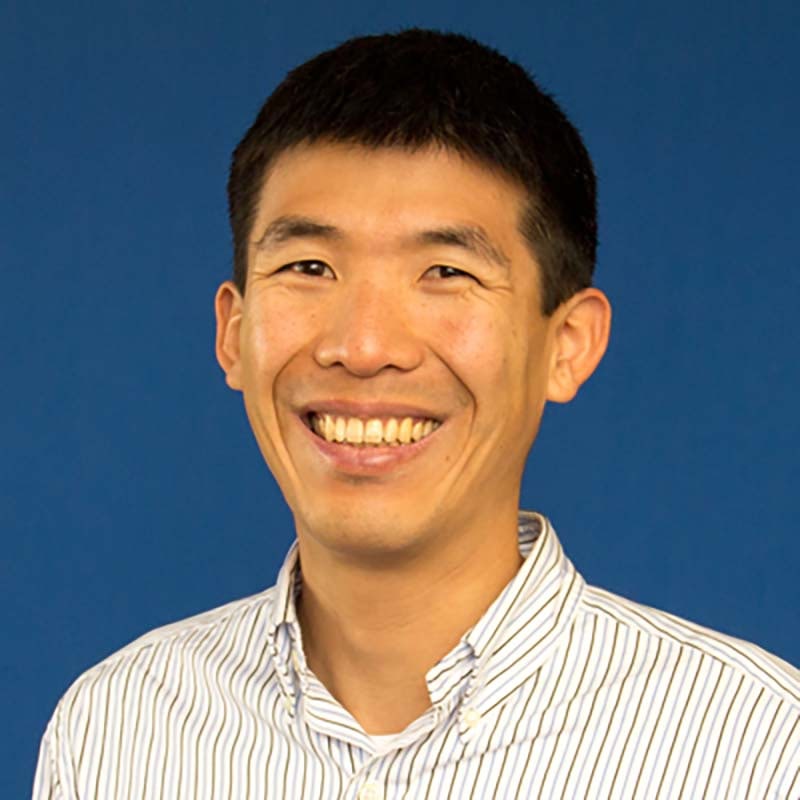
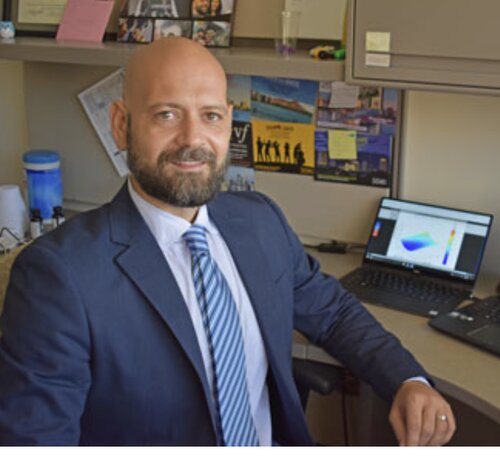
Byron Yu is a Professor in Electrical & Computer Engineering and Biomedical Engineering at Carnegie Mellon University, with affiliations to the Neuroscience Institute and Robotics Institute. He is a core faculty member of the Center for the Neural Basis of Cognition. Research focuses on computational neuroscience , neural dynamics , and brain-machine interfaces . Key contributions include dimensionality reduction techniques and neural population activity analysis. Recent publications explore topics such as neural dynamics during motor imagery, BCI optimization, and attentional processing. His work has appeared in Nature Neuroscience , Neuron , and eLife , often as cover articles. Awardees include the Gerard G. Elia Career Development Professorship and AIMBE Fellowship . His lab has mentored numerous PhD and postdoctoral researchers, many now in academic and industry leadership roles.
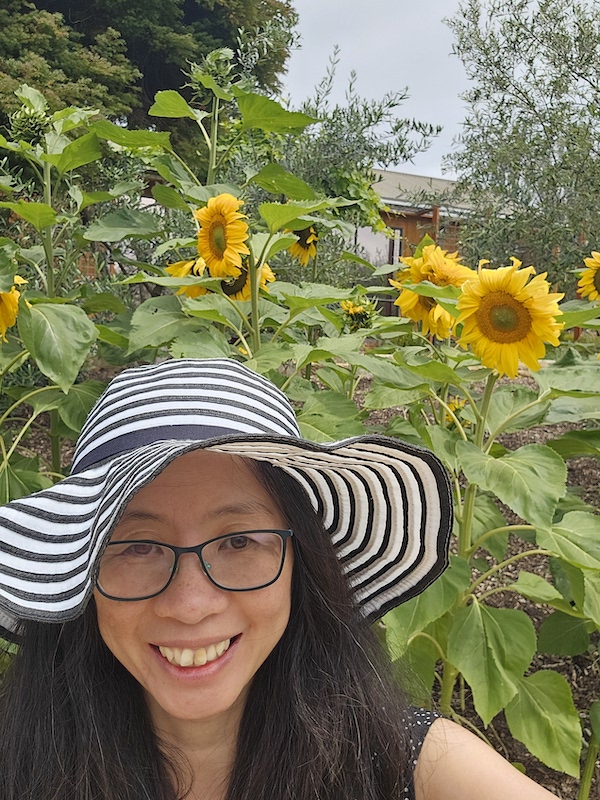
Dr. Yamin Zhang (张亚敏) holds a Presidential Young Professorship as an Assistant Professor in the Department of Chemical & Biomolecular Engineering at the National University of Singapore (NUS), College of Engineering. She leads the Zhang Group which focuses on interdisciplinary research at the intersection of electrochemistry, materials science, and biomedical engineering. 07/2023 – 01/2024: Research Associate, Northwestern University 02/2021 – 06/2023: Postdoctoral Fellow, Northwestern University 08/2016 – 12/2020: Ph.D., Chemical Engineering, Georgia Institute of Technology 09/2012 – 07/2016: B.S., Chemical Engineering, Tianjin University; B.S., Finance (Double Major), Nankai University Dr. Zhang's research centers on developing advanced electrochemical strategies for next-generation medical devices (implantable, bioresorbable, and wearable) and sustainable energy solutions. Her work bridges bioelectronics , battery technology , and medical therapeutics , with particular emphasis on creating devices that can safely dissolve in the body after serving their purpose. Key areas include bioresorbable optoelectronic systems for electrotherapy, self-powered drug delivery platforms, and eco-safe battery technologies that can harmlessly resorb in biological environments. Analysis of Dr. Zhang's publication record reveals a clear trajectory from fundamental battery chemistry (2021-2022) toward increasingly sophisticated medical applications (2023-2025). Her recent work demonstrates mastery in integrating multiple functionalities into single bioresorbable platforms, as evidenced by her Nature (2025) paper on millimeter-scale optoelectronic systems for electrotherapy and Cell Biomaterials (2025) paper on wireless bioelectronic devices. The research shows strong interdisciplinary collaboration with leading institutions including Northwestern University and Georgia Tech. AHA Early Faculty Independence Award (2023) MIT ChemE Rising Stars (2022) Sigma Xi Best PhD Thesis Award (2021) Chinese Government Award for Outstanding Students Abroad (2021) A*STAR MTC Young Individual Research Grants (YIRG) (2025) Early Career Board Member for ACS Applied Materials & Interfaces (2025) Dr. Zhang has secured significant research funding including the AHA's Second Century Early Faculty Independence Award as Principal Investigator (2023) and the A*STAR MTC Young Individual Research Grant (2025). Her group serves on advisory boards for Cell Biomaterials and ACS Applied Materials & Interfaces. The Zhang Group at NUS maintains active collaborations with Northwestern University researchers including the Rogers group, with whom she has co-authored multiple high-impact publications in Nature, Science, and PNAS. Current research focuses on advancing battery technology and developing sophisticated electrochemical strategies for medical devices with an overarching focus on healthcare innovation and environmental sustainability.
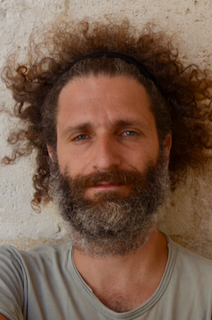
Jon Simon is the Joan Reinhart Professor and Professor of Applied Physics at Stanford University . He leads the Simon Lab , which explores the convergence of condensed matter physics , quantum optics , and quantum information science , focusing on creating synthetic materials from light and investigating topological and strongly correlated quantum systems. His research spans constructing photonic materials in quantum circuits, studying small quantum systems with strong correlations, and applying Hamiltonian engineering to realize exotic states of matter. The lab has achieved milestones like the first Mott insulator of photons and topologically insulating circuits . Collaborative projects with the Schuster Lab leverage superconducting quantum circuits for synthetic matter studies. Jon's students include Adam Shaw (PhD, now at Stony Brook) Lavanya Taneja (PhD, now at Atom Computing) Ruichao Ma (Postdoc, now faculty at Purdue) among others. The lab's recent publications focus on cavity arrays, hybrid quantum systems, and topological photonics. Research is supported by grants and affiliations with Stanford's Department of Applied Physics and interdisciplinary institutes.
Kaiyuan Yang is an Associate Professor in the Department of Electrical and Computer Engineering at Rice University, leading the Secure and Intelligent Micro-Systems (SIMS) Lab. His research focuses on low-power integrated circuits and bioelectronic implants for applications like the Internet of Everything and medical devices. He holds a B.S. from Tsinghua University (2012) and M.S./Ph.D. degrees from the University of Michigan (2017). Research Interests: Low-power digital/analog/mixed-signal systems Bioelectronics and implantable devices Hardware security and PUF design Mixed-signal computing and emerging materials Recent work emphasizes magnetoelectric-powered implants, secure backscatter communication, and in-memory computing architectures. His publications span top venues like IEEE ISSCC, IEDM, and ACM MobiCom. Awards: 2022 NSF CAREER Award 2022 IEEE Top Picks in Hardware Security 2016 IEEE SSCS Predoctoral Achievement Award Dr. Yang serves on editorial boards for IEEE TVLSI and program committees for ISSCC/CICC. His lab develops miniature, secure, and energy-efficient systems for healthcare and IoT applications.
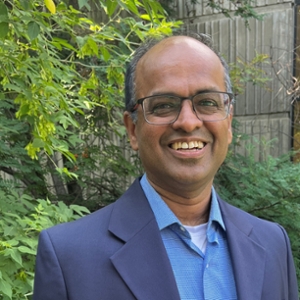
Prof. Ramakrishna Gokaraju is a Professor and Graduate Chair in the Department of Electrical and Computer Engineering at the University of Saskatchewan. His academic journey includes roles as Assistant Professor (2003), Associate Professor (2009), and full Professor (2015). He holds a B.E. from NIT Trichy (1992), M.Sc. and Ph.D. from the University of Calgary (1996, 2000). His research focuses on power system protection, smart grids, and sustainable energy systems, including small modular reactors (SMRs) and renewable integration. He has advised 8 PhD and 25+ Master’s students, with over 80 publications in top journals/conferences. Dr. Gokaraju’s honors include the Izaak Walton Killam Memorial Scholarship (1998–2000) and the Professor of the Year Award (2008). He has held visiting roles at the University of Manitoba (2009–2010), IIT Kanpur (2018), and institutions in Australia and India. His work emphasizes high-speed digital relaying, PMU-based solutions, and transient stability protection. Current research includes wind generator modeling, SMR integration, and energy storage systems for remote communities. His technical contributions span fault location algorithms, grid resilience enhancement, and GPU-based optimization for transport systems. Ongoing projects explore hybrid energy systems combining SMRs with renewables. Lab affiliations include the Power Systems Research Group at the University of Saskatchewan, focusing on smart grid innovation and sustainable energy solutions.
Andreas Vlachos is a Professor of Natural Language Processing and Machine Learning at the Department of Computer Science and Technology, University of Cambridge, and holds the Dinesh Dhamija Fellowship at Fitzwilliam College. His research spans dialogue modeling, automated fact-checking, imitation learning, semantic parsing, biomedical text mining, and trustworthiness in AI systems. PhD in Computer Science, University of Cambridge (supervised by Ted Briscoe and Zoubin Ghahramani) Lecturer at University of Sheffield Postdoctoral roles at UCL, University of Cambridge (NLIP group, Stephen Clark), and University of Wisconsin-Madison (Mark Craven) Current research focuses on evaluating and mitigating biases in language models, advancing fact-checking methodologies, and improving model robustness through interpolation, reinforcement learning, and causal reasoning. His work integrates natural logic, knowledge graphs, and multimodal evidence for verification tasks. Recent publications address uncertainty quantification, temporal planning benchmarks, and ethical framing of NLP artifacts. Grants from ERC, EPSRC, Facebook, Google, and the Alan Turing Institute fund his research team. Collaborations include Sebastian Riedel, Stephen Clark, and Mark Craven. Key projects explore disinformation detection, long-form generation, and confidence calibration in AI systems.
Min Yen Kan is an Associate Professor and Vice Dean of Undergraduate Studies at the National University of Singapore's School of Computing, Department of Computer Science. With a PhD from Columbia University (2002), he leads the Web Information Retrieval / Natural Language Processing Group (WING.NUS) and serves as ACL Ethics Committee co-chair. His research spans Natural Language Processing , Large Language Models , Digital Libraries , and Information Retrieval , with specific focus on scientific discourse analysis, fact verification, and multimodal systems. Current projects include Scholarly Document Information Extraction (TRL 6), Task-Oriented Dialogue Systems (TRL 4), and Recommendation Systems (TRL 5). Recent publications reveal strong trends in LLM limitations (bias, hallucination, evaluation), conversational recommendation systems , and misinformation detection . His work consistently bridges theoretical NLP with real-world applications in digital libraries and scientific communication. Award highlights include: CIKM 2019 Best Paper Award ACL Distinguished Service Awards Vannevar Bush Best Paper Award (JCDL 2012) ACM Distinguished Speaker designation Kan mentors PhD students with placements at Google and USTC, and serves as associate editor for Information Retrieval and survey editor for Journal of AI Research . His lab WING.NUS develops practical tools like SciWING for scientific document processing and FANG for fake news detection. Media engagements include commentary on AI regulations in Southeast Asia and workforce implications in the AI era.
Christopher Potts is Professor and Chair of Linguistics at Stanford University, with a courtesy appointment as Professor of Computer Science. He serves as Director Emeritus of the Stanford Center for the Study of Language and Information (CSLI) and leads the Pragmatic Enrichment & Contextual Interface Lab. His work bridges theoretical linguistics and computational approaches to language understanding. Education: B.A. in Linguistics from New York University (1999) Ph.D. in Linguistics from University of California, Santa Cruz (2003) Potts' research focuses on how computational methods can illuminate linguistic phenomena, particularly in the areas of semantics, pragmatics, and sentiment analysis. His work explores how emotion is expressed in language and how linguistic production and interpretation are influenced by context. He has made significant contributions to understanding conventional implicatures, sentiment analysis frameworks, and the application of neural networks to linguistic problems. His recent work has increasingly focused on the interpretability of large language models and the development of frameworks like DSPy for building reliable AI systems. An analysis of Potts' recent publications reveals a strong trend toward the intersection of linguistic theory and practical AI applications. His work spans theoretical linguistics (e.g., compositionality, preposing constructions), neural network interpretability, and practical NLP systems (e.g., ColBERT, DSPy). The research demonstrates consistent focus on making language models more transparent, controllable, and linguistically informed, with particular attention to how context shapes meaning. Scientific Awards: Best Paper Award at 2024 ACL for 'Mission: Impossible Language Models' Outstanding Paper Award at 2024 ACL for 'CausalGym' ACL Test of Time Award 2023 Dean's Award for Distinguished Teaching (2015-2016) Best New Data Set or Resource Award at 2015 EMNLP Potts has secured numerous research grants as PI or Co-PI from major organizations including Google, Amazon, NSF, Office of Naval Research, and Stanford's HAI institute. His current projects focus on evaluation of retrieval-augmented generation systems, LLM-mediated communication in organizations, interpretability techniques for language models, and frameworks like DSPy for building next-generation AI systems. He has mentored numerous researchers who have gone on to make significant contributions in NLP and computational linguistics. As Director of CSLI (2013-2020) and current Chair of Linguistics at Stanford, Potts has played a key leadership role in shaping interdisciplinary research at the intersection of language, computation, and cognition. His Pragmatic Enrichment & Contextual Interface Lab continues to be a hub for innovative research combining formal linguistic theory with cutting-edge computational methods.
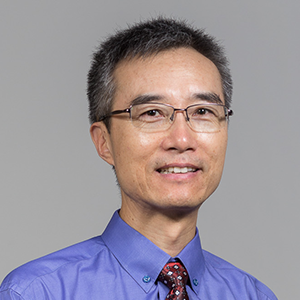
WANG Ye is an Associate Professor in the Department of Computer Science at the School of Computing, National University of Singapore (NUS). He holds a PhD in Information Technology from Tampere University of Technology, Finland, and has been a tenured faculty member at NUS since 2002, following his industry research role at Nokia Research Center. He is the director of the Sound and Music Computing Lab at NUS, leading cutting-edge research in AI-driven music and health technologies. PhD, Information Technology, Tampere University of Technology, Finland (2002) MSc, Telecommunications, Braunschweig University of Technology, Germany (1993) BSc, Telecommunications, South China University of Technology, China (1983) His research is centered on Sound and Music Computing for Human Health and Potential (SMC4HHP) , with a focus on eHealth, eLearning, mobile/wearable computing, and music information retrieval. His work spans AI for stroke rehabilitation, language learning through singing, singing voice synthesis, and automatic music transcription. He has pioneered systems like SLIONS (language learning via karaoke), CocoLyricist (AI co-creation for stroke recovery), and SinTechSVS (expressive singing voice synthesis). The latest articles highlight a strong trend in AI-driven music and health technologies , particularly in controllable lyric generation, singing voice synthesis, automatic pronunciation assessment, and multimodal music transcription. The research increasingly integrates large language models, explainable AI, fairness, and real-world deployment, reflecting a shift from theoretical exploration to practical, human-centered applications in healthcare and education. Dr. Wang has received numerous scientific honors, including: Best Paper Awards at ACM MM, ISMIR, IEEE ISM, and CHI First Prize, Asia Pacific Assistive, Rehabilitative, and Therapeutic Technologies Challenge (2015) Faculty Teaching Excellence Award, NUS School of Computing (2024) Top Paper Award, ACM Multimedia 2022 AI in Medicine Collaborative Grant for CocoLyricist project He has supervised over 11 PhD and 20 MComp students and is currently guiding six PhD candidates. His grants come from MOE, NRF, A*STAR, Nokia, and Smule. He has served as General Chair of ISMIR2017 and TPC Co-Chair of ICOT2017, and is on the editorial boards of IEEE Transactions on Multimedia and Journal of New Music Research. He has also developed and taught the first course on Sound and Music Computing in Singapore. Dr. Wang leads the Sound and Music Computing Lab (SMC Lab) , a multidisciplinary team exploring the synergy of music computing, AI, mobile technology, and cloud systems for health and education. The lab actively collaborates with medical institutions such as NUS Yong Loo Lin School of Medicine, Singapore General Hospital, and Harvard Medical School, and is currently working on projects in AI-supported language learning, stroke rehabilitation, and intelligent music interfaces.
Dr. K. Max Zhang is a Professor in the Sibley School of Mechanical and Aerospace Engineering at Cornell University. He is the director of the Energy and the Environment Research Laboratory (EERL) and a fellow at the Atkinson Center for a Sustainable Future. His research is deeply interdisciplinary, focusing on sustainable energy systems, air quality, and environmental justice, with significant impacts on policy and community development in New York and beyond. Ph.D., Mechanical Engineering, University of California-Davis, 2004 B.S., Thermal Engineering, Tianjin University, 1998 B.A., English Language, Tianjin University, 1998 Dr. Zhang’s research centers on the integration of energy and environmental systems. He investigates air pollution dynamics using advanced numerical models like CTAG, with applications in near-source pollution, indoor air quality, and environmental justice. His work on renewable energy systems includes designing sustainable solar farms and managing distributed energy resources such as heat pumps to enhance grid flexibility. He also leads a pioneering initiative to create the first statewide public IoT network in the U.S., enabling hyperlocal weather forecasting and microclimate monitoring. His recent publications reflect a strong trend toward agrivoltaics, peer-to-peer energy markets, and IoT-based environmental monitoring. These works demonstrate a consistent focus on data-driven modeling, community-scale energy solutions, and the integration of social considerations into technical systems. The keywords across his articles highlight expertise in sustainability, machine learning, air quality, and energy transition. Cornell Town-Gown Achievement Award (2022) Engaged Scholar Prize, Cornell University (2017) People's Choice Sign of Sustainability Award, Sustainable Tompkins (2016) Scientific and Technological Achievement Award, Environmental Protection Agency (2015) Fellow of the American Society of Mechanical Engineers Dr. Zhang is actively involved in mentoring students and securing research grants from agencies such as the National Science Foundation (NSF) and the New York State Energy Research and Development Authority (NYSERDA). His projects often involve interdisciplinary collaboration across eight Cornell colleges and 16 academic departments. He has led initiatives such as the Cornell Atkinson Academic Venture Fund projects and the development of a county-level energy roadmap for Tompkins County. He also teaches courses in engineering thermodynamics, future energy systems, and air quality, emphasizing experiential and community-based learning. Dr. Zhang leads the Energy and the Environment Research Laboratory (EERL) and collaborates with the Atkinson Center for a Sustainable Future. His lab functions as a hub for innovation in sustainable communities, combining advanced modeling with real-world applications. Through partnerships with community organizations, government agencies, and industry, his team develops science-driven solutions to urban and rural sustainability challenges.
Catherine Lai is a Reader (~Associate Professor) in the Department of Linguistics and English Language at the University of Edinburgh, with strong affiliations to the Centre for Speech Technology Research (CSTR) and the Institute for Language, Cognition and Computation (ILCC) in the School of Informatics. She is based in the School of Philosophy, Psychology and Language Sciences and is actively involved in research, teaching, and academic service. Department: Department of Linguistics and English Language School: School of Philosophy, Psychology and Language Sciences Research Institutes: Centre for Speech Technology Research, Institute for Language, Cognition and Computation Email: C.Lai@ed.ac.uk Her research centers on the role of prosody—non-lexical aspects of speech—in spoken communication. She investigates how prosody contributes to discourse structure, information structure, and affect in dialogue, using interdisciplinary methods from linguistics and machine learning. Her work bridges theoretical linguistics and practical speech technology, aiming to improve spoken language understanding and synthesis systems. She is particularly interested in how prosody shapes listener expectations and how affect and topic are expressed and perceived in conversation. Her recent publications reflect a strong focus on self-supervised learning in speech models, emotion recognition, ASR error correction using large language models, cognitive state classification, and ethical considerations in language technology. She explores topics such as the uncanny valley in synthetic speech, gender expression through voice, and community-centered development of language technologies. Prize from Scopus Profile Catherine Lai has supervised several PhD students, including Leimin Tian and Yuanchao Li, and has been involved in significant research projects, such as a Toyota-funded initiative on spoken dialogue for robot companions. She has secured multiple grants and leads a research agenda that integrates theoretical inquiry with real-world applications in assistive technologies and social science. Her academic service includes organizing major conferences like Interspeech and UK and Ireland Speech. She is a key member of research teams at CSTR and ILCC, collaborating across disciplines to advance the understanding of spoken communication and the development of robust, ethical speech technologies.
Adriana Tapus is a Full Professor at ENSTA Paris, affiliated with Institut Polytechnique de Paris, leading the Autonomous Systems and Robotics Laboratory (SAR) within the Computer Science and Systems Engineering Unit (U2IS). She holds an HDR (Habilitation) and a PhD from EPFL, Switzerland, with postdoctoral experience at USC. Her research focuses on socially assistive robotics, human-robot interaction (HRI), and personalized therapy for individuals with physical/cognitive impairments. She directs the IP Paris Doctoral School and coordinates national/international projects like the EU-funded ENRICHME and SWEET. Education: PhD in Mobile Robotics, EPFL (2005) Habilitation (HDR), ENSTA Paris (2011) M.S. Computer Science, University Joseph Fourier Engineer, Politehnica University of Bucharest Research Interests: Tapus pioneers socially assistive robotics, integrating machine learning, human modeling, and multimodal communication (verbal/non-verbal/para-verbal). Her work addresses adaptive therapies for vulnerable populations using robotics, physiological data interpretation, and context-aware interaction. Key themes include: Human-robot cooperation and trust Emotion recognition and expression Personalized rehabilitation systems AI ethics and human-centered design Publications: Over 150 articles, with recent work exploring humor in HRI, teleoperation trust models, and cross-cultural intelligent vehicles. Notable 2025 contributions include studies on robot laughter efficacy and multimodal facial expression frameworks. Awards: 2025: 4 IROS papers accepted 2016: 25 Women in Robotics recognition 2010: Romanian Academy Award Multiple conference best paper awards (RO-MAN, ICRA, etc.) Advising & Grants: Supervised over 20 PhD students and led projects like EU Horizon 2020 ENRICHME. Current students focus on teleoperation dynamics, robot humor, and haptic interfaces. Active in editorial roles (IJSR, THRI) and conference organization (HRI General Chair 2019). Labs/Teams: Founder of RoboticsByDesign lab and co-initiator of the Hi! Paris interdisciplinary AI center. The SAR lab develops systems for healthcare, education, and human-robot collaboration.
Pasquale Bottalico serves as Associate Professor in the Department of Speech and Hearing Science at the University of Illinois, with dual appointments as Associate Professor at the Center for Latin American and Caribbean Studies and Affiliate Faculty in the School of Music. His unique interdisciplinary profile bridges engineering, music performance, and speech science, reflecting his dual academic training and professional artistry. His educational foundation includes: Bachelor's in Telecommunications Engineering from Univeristà Mediterranea di Reggio Calabria, Italy Concurrent Opera Singing degree from F. Cilea Music Academy, Reggio Calabria Master's in Telecommunications Engineering from Politecnico di Torino, Italy Ph.D. in Metrology specializing in acoustics measurement uncertainty and classroom acoustics Dr. Bottalico's research centers on vocal load quantification and professional voice techniques , with significant contributions to understanding vocal fatigue in teachers and singers. His work spans Speech Intelligibility in educational environments, Room Acoustics for performance and learning spaces, and Musical Acoustics of historical vocal styles. A distinctive thread throughout his research examines how acoustic conditions modulate voice production and perception, increasingly incorporating virtual reality and bone conduction technologies for innovative assessment and intervention approaches. His Colombian vocal health study demonstrates cross-cultural applications of his work. Analysis of his 2023-2025 publications reveals three dominant research trajectories: (1) The impact of noise and dysphonia on children's speech processing in educational settings, using multimodal assessment including EEG; (2) Virtual reality applications for voice production research and therapeutic intervention; (3) Cross-cultural validation of vocal fatigue metrics and development of biofeedback systems. His work consistently bridges engineering precision with clinical applicability, particularly for professional voice users in challenging acoustic environments. No scientific awards were documented in the available information. While specific advising relationships aren't detailed, his research collaborations span international institutions including Colombian and Italian universities, suggesting graduate mentorship in interdisciplinary projects. No grant information was provided, though his systematic reviews and cross-cultural studies imply externally funded research activities. Though no dedicated laboratory is specified, his virtual reality voice studies and acoustic parameter assessments suggest affiliations with audio engineering facilities and voice clinics, likely through the Speech and Hearing Science department's research infrastructure.
Vesna Terzic is a Professor in the Department of Civil Engineering and Construction Engineering Management at California State University Long Beach's College of Engineering. Her research specializes in seismic performance assessment, infrastructure resilience, and probabilistic risk analysis of structures. Education includes a PhD in Structural Engineering from UC Berkeley, MS in Earthquake Engineering from Ss. Cyril and Methodius University, and BS in Structural Engineering from University of Belgrade. Research focuses on developing advanced computational frameworks for evaluating post-earthquake functionality of buildings and bridges. Her work integrates performance-based engineering with resilience quantification, emphasizing practical applications for seismic design and retrofitting. Recent publications demonstrate consistent focus on functional recovery modeling, structural health monitoring, and optimization of protective systems. Research trends show progression from component-level analysis to regional recovery simulation frameworks. Major awards: ACI Chester Paul Siess Award for Excellence in Structural Research (2017) Popert Fellowship, UC Berkeley (2009) Professional service includes membership on FEMA P-58 project committees and contributions to OpenSees development. Current projects investigate soil-structure interaction effects on tall buildings and recovery-based design methodologies.
Craig Davis is a Professor and holds the Bollenbach Chair in Wildlife Management at Oklahoma State University's Department of Natural Resource Ecology & Management. He has been a faculty member since 2001, advancing from Assistant Professor (2001-2007) to Associate Professor (2007-2012), and has served as Bollenbach Chair since 2014. Davis earned his PhD in Wildlife Science from Texas Tech University (1996), an MS from Iowa State University (1991), and a BS from Ohio State University (1988). He is also a Certified Wildlife Biologist through The Wildlife Society. His research focuses on avian ecology, wetland restoration, and gamebird management, with specific interests in fire-grazing interactions, invertebrate communities, and climate change impacts on ecosystems. Key areas include grassland bird survival, wetland classification systems, and the effects of anthropogenic development on wildlife habitats. Davis actively collaborates with conservation organizations and agencies, addressing challenges like invasive species management and water infrastructure resilience. Teaching responsibilities include undergraduate courses on Wildlife Management Techniques and Wetland Ecology, as well as graduate courses like Advanced Wetland Ecology. His grants emphasize wetland restoration outreach, climate adaptation strategies, and studies on northern bobwhite and wild turkey populations. Notable projects include evaluating cellular transmission technology in wildlife monitoring and assessing the impact of extreme weather on gamebird survival. Grants (Selected): Expansion of potential wetland restoration opportunities in Oklahoma (2024-2027) Linking Research and Stakeholder Engagement for Wetland Conservation (2024-2026) Effects of Extreme Weather and Hunting on Northern Bobwhite (2023-2025) Research Themes: Aligns with UN Sustainable Development Goals 15 (Life on Land), 13 (Climate Action), 6 (Clean Water), 11 (Sustainable Cities), 14 (Life Below Water), and 9 (Industry/Infrastructure).