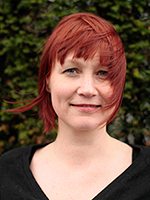
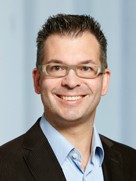
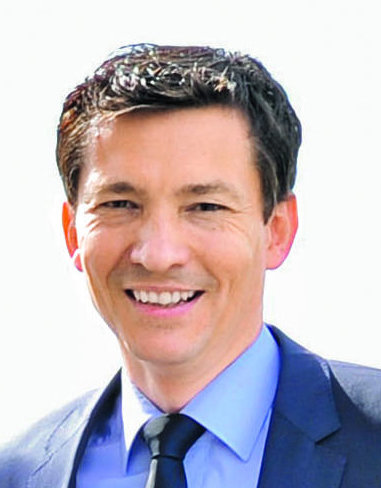
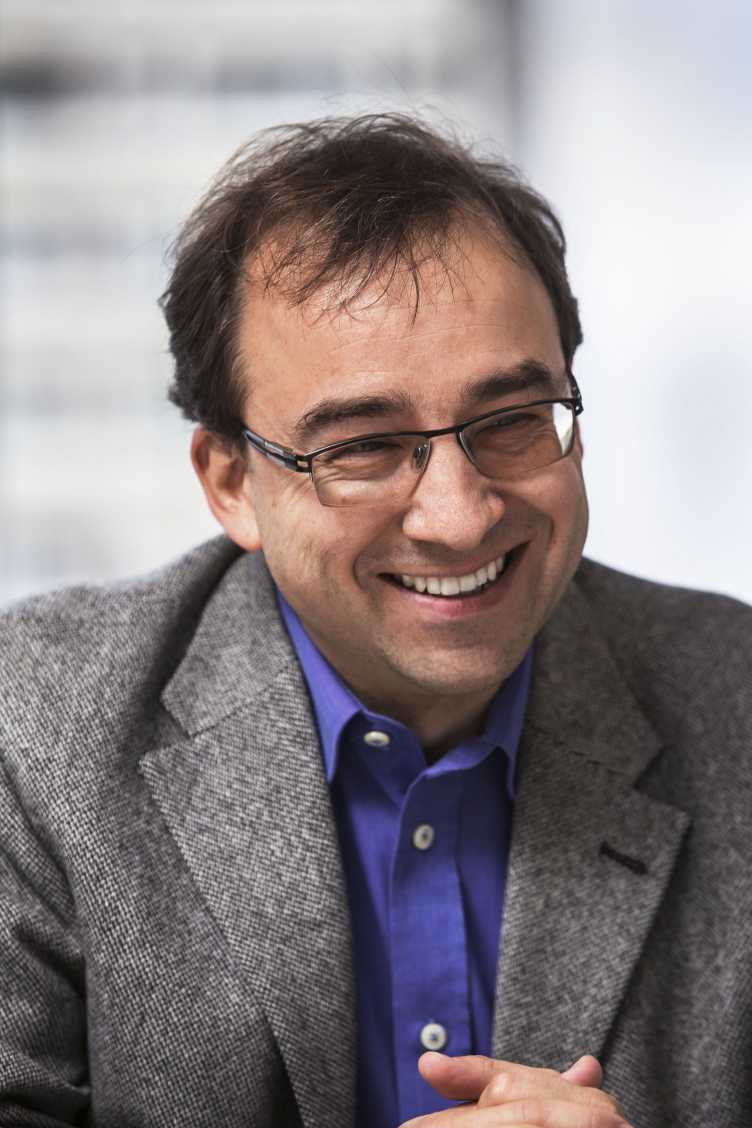
Cecilia Boschini is a Researcher affiliated with the Institute for Theoretische Informatik (Theoretical Computer Science) at ETH Zürich. Her work focuses on advanced cryptographic systems, particularly in post-quantum cryptography, lattice-based protocols, and privacy-preserving technologies. She contributes to developing secure digital signature schemes, threshold cryptography, and efficient cryptographic algorithms resistant to quantum computing threats. Her research bridges theoretical foundations with practical applications in cybersecurity and distributed systems. Key contributions include innovations in fail-stop signatures, two-round threshold signatures (Ringtail), and lattice-based multi-signature systems (MuSig-L). Boschini’s work emphasizes balancing security with efficiency, often addressing challenges in mobile device security and memory encryption. She has published extensively in top-tier venues, with a focus on cryptographic protocols that enhance privacy and data integrity without compromising usability.
Prof. Peter Müller is a Full Professor at the Department of Computer Science at ETH Zurich since 2008. Previously, he held positions as Assistant Professor at ETH Zurich (2003-2008), Researcher at Microsoft Research Redmond (2007-2008), and IT project manager at Deutsche Bank. He earned his Diploma in Computer Science from Technical University of Munich (1996) and his Dr. rer. nat. from University of Hagen (2001) with a dissertation on modular verification of object-oriented programs. His research focuses on enabling correct software development through programming languages, verification methods, and tools. Key areas include formal verification for Rust and Go programs (Prusti and Gobra projects), separation logic, security protocols, and distributed systems verification. Müller's work emphasizes practical verification techniques for real-world systems, including secure router implementations and smart contract verification. Recent research trends highlight advancements in hyperproperties, modular reasoning for iterators and closures in Rust, and formal validation of verification tools. His methodologies bridge theoretical foundations with industrial applications, addressing challenges in concurrency, memory safety, and security assurance. Notable contributions include the SCION internet architecture, the Prusti verifier for Rust, and formal verification frameworks for distributed systems. His work often integrates rigorous mathematical foundations with scalable software engineering practices.
Daniel Sage is a Lecturer and Scientific Advisor at École polytechnique fédérale de Lausanne (EPFL) , affiliated with the Biomedical Imaging Laboratory (LIB) under the College of Engineering (STI) and School of Life Sciences (SV) . He specializes in bioimage informatics , structured-illumination microscopy , and deep learning applications for biomedical imaging. His work spans algorithm development for single-molecule localization microscopy (SMLM) , fluorescence imaging , and 3D reconstruction . His research group has developed open-source tools like FlexSIM for light inhomogeneity correction, DeepImageJ for integrating deep learning in ImageJ, and Steer'n'Detect for orientation-accurate template detection. His publications focus on correcting multiple-blinking artifacts in PALM, optimal transport metrics for SMLM evaluation, and contextual feature analysis for xenograft cell classification. He mentors PhD students and contributes to interdisciplinary education through courses such as Bioimage Informatics and Fundamentals of Image Analysis , emphasizing practical software solutions and Java programming for bioimage processing. His collaborations include institutions like Howard Hughes Medical Institute and Centre National de la Recherche Scientifique (CNRS) .
Harald C. Gall is a Professor of Software Engineering and Dean of the Faculty of Business, Economics, and Informatics at the University of Zurich (UZH). He leads the Software Evolution and Architecture Lab, focusing on software evolution analysis, mining software repositories, and cloud-based software engineering. His research emphasizes improving software development productivity through data-driven insights. He has held visiting positions at Microsoft Research and the University of Washington. Education: PhD (Dr. techn.) and Master's (Dipl.-Ing.) in Informatics from TU Vienna Research Interests: Software evolution, mining software archives, cloud-based tools, developer productivity, and empirical software engineering. Notable contributions include the Evolizer , ChangeDistiller , and SOFAS systems. Key Contributions: Established the Mining Software Repositories (MSR) research area, program chair for ICSE 2011 and ESEC/FSE 2005, associate editor of leading journals like Empirical Software Engineering and IEEE Software. Awards: Most Influential Paper Award, Test of Time Award, and multiple Best Paper Awards. Recognized for contributions to SE research methodologies and tool development. Professional Activities: ACM SIGSOFT awards chair, board member of Informatics Europe, and executive committee member of CHOOSE (Swiss SIG for OO Systems). Labs/Teams: Director of the Software Evolution and Architecture Lab at UZH, leading projects like SURF-MobileAppsData (SNSF-funded) and DevCloud (Hasler Foundation).
Oskari Ville Pakari is a Lecturer at the School of Basic Sciences, École polytechnique fédérale de Lausanne (EPFL), affiliated with both the Institute of Physics (IPHYS) and the Swiss Plasma Center (SPH-ENS). He contributes to teaching and research, particularly in reactor physics and radiation detection. His research focuses on nuclear reactor diagnostics , gamma noise analysis , and neutron spectroscopy . He actively develops mixed reality visualization tools for radiation detection data and participates in the European CORTEX project for reactor monitoring. Selected publications highlight his work in gamma-ray imaging , neutron noise simulations , and detector system validation using advanced statistical methods like bootstrapping and Welch's technique. Teaching activities include courses on Radiation biology, protection, and applications Radiation and reactor experiments He advises PhD student Saliba Michel and collaborates with international institutions such as CEA, KIT, and LRS (Laboratory of Reactor Physics and Systems Behaviour) at EPFL.
Juerg Leuthold is a Full Professor and Head of the Department of Information Technology and Electrical Engineering (D-ITET) at ETH Zürich, Switzerland. He also leads the Institute of Electromagnetic Fields (IEF) at the same institution. His academic career spans leadership roles at ETH Zürich, Karlsruhe Institute of Technology (KIT), and Bell Labs, with expertise in photonics, plasmonics, and THz technology for communication and sensing applications. Research Interests Photonics for high-speed communication Plasmonics and nonlinear optical signal processing Terahertz technology Applications in sensing and network systems Scientific Awards Optica Fellow IEEE Fellow ERC Advanced Grant (2015) Landesforschungspreis (Baden-Württemberg, 2009) Leadership & Committees Head of D-ITET (2023–present) General Chair of ECOC 2022 Board of Directors, OSA/Optica
Sarah Ebling is a Full Professor of Language, Technology and Accessibility at the University of Zurich's Faculty of Arts and Social Sciences. She leads the Language, Technology and Accessibility research group within the Institute for Computational Linguistics. Her work focuses on computational linguistics applications for assistive technologies targeting disabilities such as hearing impairments, visual impairments, and cognitive disorders. Key areas include sign language technologies, automatic text simplification, and audio description systems. She directs the large-scale Swiss innovation project 'Inclusive Information and Communication Technologies' (2022-2026, CHF12 million budget) and collaborates on EU H2020 and SNSF Sinergia projects. Education: Holds a doctoral degree (summa cum laude, 2016) from the University of Zurich with research on automatic translation to Swiss German Sign Language. Completed studies in German Linguistics, Computational Linguistics, and English Linguistics at Universities of Zurich and Heidelberg, with research stays in Dublin, Chicago, and Rochester. Research emphasizes multimodal accessibility solutions, including sign language fluency assessment, gesture-based interaction, and AI-driven text adaptation. Current projects explore audio description translation systems (SwissADT), sign language corpus development (SwissSLi), and digital tools for comprehensibility assessment in simplified texts. Her work bridges computational linguistics with ethical considerations in assistive technology deployment. Grants and Leadership: Principal Investigator on major accessibility-focused grants, including the CHF12M Swiss innovation project. Supervises PhD candidates in areas like sign language assessment tools and text simplification algorithms. Active in international collaborations, publishing extensively in computational linguistics and accessibility journals/conferences. Technology Development: Created the 'DigiSpon' benchmark for language sample analysis and developed open-source tools for sign language translation baselines. Her team's innovations include the SignCLIP model connecting text and sign language via contrastive learning, and pose estimation frameworks for sign language recognition.
Yuning Jiang is a Visiting Professor at the École Polytechnique Fédérale de Lausanne (EPFL), affiliated with the Automatic Control Laboratory (LA3) within the School of Engineering (STI). He teaches the doctoral course Optimal Control for Dynamic Systems and contributes to research in distributed optimization, model predictive control (MPC), and smart grid technologies. His work bridges theoretical advancements in control systems with practical applications in power networks and autonomous systems. Current research emphasizes scalable solutions for AC optimal power flow, real-time MPC for embedded systems, and robust optimization under uncertainty. His research interests span Optimal Control , Power Systems , Smart Grids , and Federated Learning . Notable contributions include distributed algorithms for large-scale power systems and privacy-preserving co-simulation frameworks. Recent publications focus on microservice deployment in satellite-terrestrial networks and real-time pricing mechanisms for vehicle-to-grid (V2G) integration. Yuning holds a position in the EDEE-ENS unit under EPFL’s Academic Affairs division (VPA-AVP-DLE), reflecting his role in academic administration and teaching infrastructure. His lab, the Automatic Control Laboratory, focuses on cutting-edge research in control theory and its interdisciplinary applications.
Rachid Guerraoui is a Full Professor at the École polytechnique fédérale de Lausanne (EPFL) where he leads the Distributed Computing Laboratory (DCL) within the School of Computer and Communication Sciences. He holds appointments in multiple departments including IC-SSC and IC-SIN for teaching, and serves on the IC Academic Evaluation Committee. A Moroccan/Swiss/French researcher, Guerraoui has previously been affiliated with Commissariat à l'Energie Atomique in Saclay, Hewlett-Packard Labs in Palo Alto, the Massachusetts Institute of Technology in Boston, and Collège de France in Paris. Guerraoui's research focuses on distributed and concurrent computing across various scales, from multiprocessors to wide-area networks. His work spans Byzantine fault tolerance, distributed machine learning, blockchain technologies, transactional memory, and consensus algorithms. His recent publications reveal a strong emphasis on Byzantine-resistant machine learning, decentralized learning systems, and the theoretical foundations of distributed consensus. The research demonstrates significant contributions to making distributed systems more robust, efficient, and secure against adversarial conditions. Guerraoui has received numerous prestigious awards including ACM Fellow (2012), Professor at College de France (2018), Nygaard-Dahl Award (2024), and Barroso Award (2025). His work has earned multiple best paper awards at top conferences including DISC, ICDCS, IPDPS, and ACM Middleware. He serves as Associate Editor of the Journal of the ACM (2010-2025) and has chaired program committees for major conferences such as PODC, DISC, and Middleware. As an educator, Guerraoui supervises numerous doctoral students and has mentored many successful researchers who now work at leading institutions and companies including Meta, Oracle Labs, Chainlink Labs, and Protocol Labs. He teaches courses on Distributed Algorithms and Concurrent Algorithms at EPFL, emphasizing both theoretical foundations and practical implementations. His educational initiatives include Wandida, a library of scientific e-synopses, and Zettabytes, projects aimed at making computer science accessible to broader audiences.
Andreas Peter Burg is a Tenured Associate Professor at the École Polytechnique Fédérale de Lausanne (EPFL), where he leads the Telecommunications Circuits Laboratory (TCL) within the School of Engineering. He holds multiple academic and administrative roles at EPFL including Associate Professor in Teaching (SEL, EDMI, EDEE), Director of SEL Management, and Member of the Doctoral Program Committee for Electrical Engineering. Dr. Burg received his Dipl.-Ing. degree in 2000 and Dr. sc. techn. degree in 2006 from ETH Zurich. His academic career includes positions as SNF Assistant Professor at ETH Zurich (2009-2011) before joining EPFL in January 2011 as a Tenure Track Assistant Professor, where he was promoted to Tenured Associate Professor in June 2018. His research focuses on circuits and systems for telecommunications , with particular expertise in silicon implementation of communication technologies, communication algorithms optimization for hardware, low-power VLSI signal processing, and digital integrated circuits. His work bridges theoretical communication concepts with practical circuit implementations, addressing challenges in wireless and wired communication systems. His recent publications (2024-2025) demonstrate a strong focus on next-generation communication technologies including 6G systems, advanced error correction coding, wireless sensing applications, and ultra-low power circuit design. These works span multiple subfields from LDPC and polar code decoding to RF signal processing and machine learning applications in wireless systems. Willi Studer Award (2000) ETH Medal for diploma thesis (2000) ETH Medal for Ph.D. dissertation (2006) Swiss National Science Foundation Assistant Professorship grant (2008) Dr. Burg has been involved in the development of more than 25 ASICs throughout his career and co-founded Celestrius, an ETH spinoff in MIMO wireless communication. His laboratory work focuses on practical implementations of communication algorithms with emphasis on power efficiency and hardware optimization. Current research directions include 6G technologies, wireless sensing applications, and novel error correction techniques for next-generation communication systems.
Dr. Hongwei Wang is a Senior Researcher at Tencent AI Lab Seattle , specializing in applied machine learning for Natural Language Processing and Interconnected Systems . His work bridges Knowledge Graphs , Recommender Systems , and Graph Neural Networks , with a focus on large language models and retrieval-augmented generation. Ph.D. (2018), B.E. (2014) in Computer Science from Shanghai Jiao Tong University Postdoctoral Researcher : Stanford University (2019-2021), University of Illinois Urbana-Champaign (2021-2022) Dr. Wang’s research explores integrating Knowledge Graphs with Graph Neural Networks to enhance recommendation systems, language models, and information retrieval. His work spans Retrieval-Augmented Generation , Representation Learning , and GAN-based Graph Modeling , with recent papers on State-Space Exploration for LLM agents and Semantic Watermarking . His 15 most recent publications (2022-2024) focus on Retrieval Granularity , Interactive Memory , and Agent Systems , with keywords spanning Computer Science , Machine Learning , and Knowledge Graphs . Trends highlight advancements in Token-Level Semantic Matching , Schema-Guided Event Prediction , and Multi-Document Summarization . Scientific Awards: 2020 CCF Outstanding Doctoral Dissertation Award 2018 Google Ph.D. Fellowship Dr. Wang contributes to open-source projects like DKN and RippleNet , with 11 repositories on GitHub. He actively engages in Knowledge Graph Conferences (KDD, WWW, AAAI) and studies Chinese Classical Poetry and Film Arts .
Vesa Pursiainen is an Associate Professor at the School of Business and Economics , University of St. Gallen (SBF-HSG). His research focuses on corporate finance, fintech, environmental economics, crowdfunding, and behavioral finance, with a particular emphasis on how technology, social dynamics, and crises impact financial decisions and market behavior.
Prof. Valentina Boeva is an Assistant Professor at the Department of Computer Science, ETH Zürich, specializing in biomedical informatics. Her research focuses on integrating machine learning and computational methods to address challenges in genomics, oncology, and precision medicine. She holds a position in the Professur für Biomedizininformatik (Biomedical Informatics) and is based at CAB G32.2, Universitätstrasse 6, Zürich, Switzerland. Her work emphasizes applications such as cancer biomarker discovery, tumor heterogeneity analysis, and epigenetic profiling. She teaches courses including Machine Learning Seminar, Data Science Lab, and Machine Learning for Genomics. Her research group develops computational tools like CDState and UniversalEPI to decode complex biological systems. She actively publishes in top-tier journals, with recent work on exosome-driven diagnostics and chromatin interaction modeling. Her scientific contributions span methodologies for single-cell data analysis, survival modeling, and drug response prediction. She collaborates across disciplines to bridge computational science with clinical applications in cancer research.
Dr. Maren Boese is a Senior Research Scientist at the Swiss Seismological Service (SED) and Seismology and Geodynamics (SEG) groups at ETH Zurich. Her expertise spans seismology, earthquake early warning systems, and planetary seismology. She leads projects like the CISN ShakeAlert system for California and contributed to NASA's InSight mission to Mars. She earned her Ph.D. from Karlsruhe Institute of Technology (2006) and a Master's from Kiel University (2002). Research Focus: Real-time seismic event detection, finite-fault rupture analysis, ground-motion simulation, and Marsquake seismology. Key contributions include developing the FinDer algorithm for the ShakeAlert system and advancing early warning methodologies in Central America and Switzerland. Awards: 2011: Outstanding Publication Award (Luxembourg National Research Fund) 2010: Ausgewählter Ort im Land der Ideen (BMBF Project EWS Transport) 2006: European IST Prize (Early Warning for Strong Earthquakes) Grants & Leadership: Led the CISN ShakeAlert team (2009–2014), managed the German CRC 461 project, and coordinated international collaborations like the InSight Marsquake Service. Labs/Teams: Swiss Seismological Service (ETH Zurich), NASA InSight Mission, and the CHEAP smartphone network project in Chile.
David Steurer is an Associate Professor in the Department of Computer Science at ETH Zurich, where he leads the Institute for Theoretical Computer Science. His research bridges theoretical computer science, mathematics, and practical applications in machine learning and statistics. Steurer has made significant contributions to the understanding of sum-of-squares methods, semidefinite programming, and high-dimensional estimation problems. Steurer earned his B.Sc. & M.Sc. in Computer Science from Saarland University in 2006, followed by a Ph.D. in Computer Science from Princeton University in 2010 under the supervision of Sanjeev Arora. His doctoral dissertation, "On the Complexity of Unique Games and Graph Expansion," received an Honorable Mention for the ACM Doctoral Dissertation Award in 2011. Steurer's research focuses on algorithm design through mathematical programming relaxations, particularly semidefinite programming and the sum-of-squares method. His work addresses computational complexity of high-dimensional estimation problems including tensor decomposition, clustering, Gaussian mixture models, and stochastic block models. He also investigates algorithmic aspects of robustness and differential privacy, especially for estimation tasks. His theoretical contributions have practical implications for machine learning and data analysis in the presence of noise and adversarial conditions. Analysis of Steurer's recent publications reveals a consistent trajectory in advancing the sum-of-squares framework for high-dimensional estimation and robust statistics. His work demonstrates how sophisticated mathematical programming techniques can provide certifiable guarantees for challenging problems in machine learning. The research spans theoretical foundations while maintaining relevance to practical applications, particularly in scenarios involving corrupted or noisy data. A notable trend is the extension of sum-of-squares methods to handle increasingly complex statistical models while providing rigorous performance guarantees. ERC Consolidator Grant (2019) Michael and Sheila Held prize (2018, with Raghavendra) Invited speaker at International Congress of Mathematicians (2018) STOC Best Paper Award (2015) Alfred P. Sloan Research Fellowship (2014) NSF CAREER Award (2014) Microsoft Research Faculty Fellowship (2014) FOCS Best Paper Award (2010) Steurer has advised numerous PhD students and postdocs who have gone on to prominent positions, including Sam Hopkins (now faculty at MIT), Jonathan Shi, and Aaron Potechin. His research is supported by multiple prestigious grants, including an ERC Consolidator Grant, an NSF CAREER Award, and a Microsoft Research Faculty Fellowship. He has served on numerous program committees for top theoretical computer science conferences and has been recognized for his service to the community through roles such as internal member of the Scientific Advisory Committee of the Institute for Theoretical Studies at ETH Zurich. As head of the Institute for Theoretical Computer Science at ETH Zurich, Steurer leads a research group focused on advancing the theoretical foundations of computer science with particular emphasis on mathematical optimization methods. His team explores the boundaries of what can be efficiently computed in high-dimensional settings, with applications spanning machine learning, statistics, and data science. The group maintains strong connections with both theoretical and applied researchers across ETH and the broader academic community.