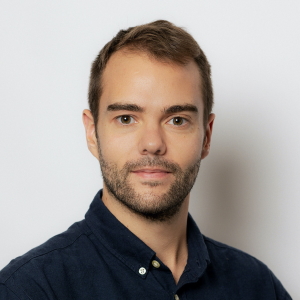
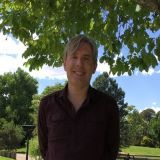
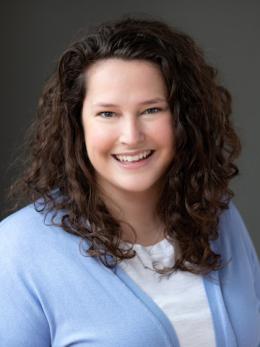
Dr Shawn McLaren is a Senior Lecturer in Dietetics at the University of Winchester, part of the Faculty of Health and Wellbeing. He holds a BSc and PG Dip in Dietetics from the University of KwaZulu-Natal, an MSc from Nelson Mandela University, and a PhD completed in 2023. His expertise spans lifecycle nutrition, anthropometry, and global health challenges. He has worked in community dietetics in South Africa and the NHS in London, focusing on home enteral feeding. Research interests include the double burden of malnutrition in low-resource settings, anthropometric indicators, and maternal/child health. His textbook Nutrition and Global Health (2022) is a key contribution to the field. He is a Fellow of the Higher Education Academy and serves on the editorial board of the Journal of Human Nutrition and Dietetics . Key awards include the British Dietetic Association’s Elizabeth Washington Award 2023 for educational contributions. His publications explore topics like vitamin A supplementation in children, MUAC screening techniques, and vitamin D’s role in pandemic health risks. He actively engages with NGOs and international health systems to address nutritional disparities.
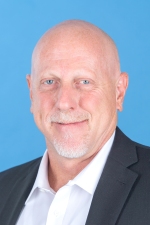
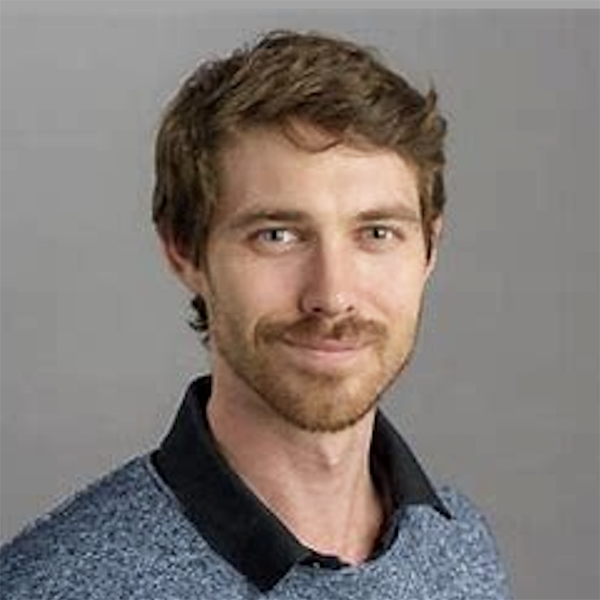
Ebuka Anieto is a Lecturer in Physiotherapy and Researcher at the University of Suffolk’s School of Allied Health Sciences. He concurrently holds a part-time role as a Specialist Community Physiotherapist in the NHS. Previously, he served as an Academic Tutor and Research Fellow at another UK higher education institution. His academic journey includes a PhD (in progress) at Glasgow Caledonian University, a master’s in Physiotherapy (University of Cape Town), and a Bachelor of Medical Rehabilitation (University of Nigeria, Nsukka). Ebuka’s research focuses on co-creating interventions for chronic conditions like peripheral arterial disease, paediatric oncology rehabilitation, and ageing research. Notable projects include the CREATE study targeting physical activity in intermittent claudication patients and mapping global paediatric cancer rehabilitation programs. His methodological expertise spans quantitative, qualitative, and mixed-methods approaches, including systematic reviews and participatory health research. Research Interests: Chronic disease management, co-creation methodologies, non-communicable diseases, global health equity. Awards: Nominated for the ‘Super Support (Teaching)’ award in 2023 for his student-centric teaching style. Ebuka co-founded the Centre for Entrepreneurship and Human Development, empowering African youth with digital skills, and serves as Assistant Administrator for the Emerging Researchers and Professionals in Ageing-African Network (ERPAAN). He is a member of professional bodies including the Chartered Society of Physiotherapy and International Physical Therapists for HIV/AIDS.
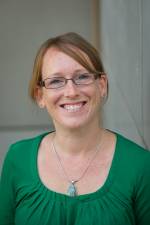
Professor Heidi Larson is a leading academic in the Department of Infectious Disease Epidemiology and Dynamics at the London School of Hygiene & Tropical Medicine (LSHTM), holding a Professorship in Anthropology - Risk and Decision Science. Her work focuses on vaccine confidence, public health communication, and the social dimensions of health policy. She holds additional academic positions at the University of Washington and Imperial College London, and has served in senior advisory roles at UNICEF and the World Health Organization. Education includes a BA from Harvard College, followed by MA and PhD in Anthropology from the University of California, Berkeley. Her research spans vaccine hesitancy, health communication strategies, and the intersection of technology with public health, with recent emphasis on chatbots and AI for improving vaccination uptake. Key grants include funding from the Bill & Melinda Gates Foundation and the National Institute of Health. Major awards include an Honorary Doctorate from the University of Antwerp (2019). Her publications in 2025 emphasize crisis trust-building, HPV vaccine interventions, and AI-driven health surveillance. She leads multidisciplinary teams addressing global health challenges through innovative communication and policy frameworks.
Marie Hatem is a Full Professor (Professeure titulaire) at the Université de Montréal's École de santé publique, holding a joint affiliation with the Faculté de droit through the CRDP. She leads the International Center for Advanced Research and Training (ICART) at the Panzi Foundation (Nobel Peace Prize laureate Dr. Denis Mukwege) in the Democratic Republic of Congo (DRC). Her work focuses on reproductive health, gender-based violence, and global health equity, particularly in Francophone regions. She directs the Hygeia Observatory, a network supporting women's health and legal rights in Francophone communities. Research interests include maternal health systems, violence prevention, health workforce development, and the intersection of health and human rights. Notable projects include the TUMAINI initiative (supporting Congolese and West African women's health rights) and the CAMCCO-L training platform for maternal-child health research. Key achievements: Organized Dr. Mukwege's 2019 visit to UdeM for his honorary doctorate, received multiple teaching awards, and led over 20 funded research projects. Authored 40+ peer-reviewed articles on global health, gender violence, and health systems. Serves on 50+ institutional committees and international networks, including the WHO and Women in Global Health. Recognitions include the Canadian Women in Global Health List (2018), Prix du professeur engagé (2011), and leadership roles in over 30 international collaborations across Africa and the Middle East.
Gert Jan Hofstede is a Professor of Artificial Sociality at Wageningen University & Research, affiliated with the Urban Economics Group. His career spans population biology, information systems, and cultural studies, culminating in his appointment as a personal professor in 2018. He focuses on modeling human social behavior through agent-based simulations, emphasizing interdisciplinary integration to address complex societal challenges. His research explores cultural evolution, intergroup dynamics, and decision-making in socio-ecological systems. Education: PhD in Production Planning, backgrounds in Population Biology and Information Systems. Key Projects: Led the SESAM project on sustainable agroforestry management and co-founded SiLiCo (Wageningen Centre for Simulating Life Science’s Complexity). Research Interests: Agent-based modelling, cultural psychology, complex systems, and policy design. Advising: Supervised international PhD candidates, particularly in agent-based modeling applications. Publications: Over 100 articles focusing on agent-based models for sustainability transitions, cultural dynamics, and policy analysis. Awards: Recognition through his personal professorship and contributions to interdisciplinary methodologies. Labs/Teams: Urban Economics Group and SiLiCo, emphasizing collaborative modeling approaches.
Dr. Charles E. Creissen is a Lecturer in Physical Chemistry at Keele University's Lennard-Jones School of Chemical and Physical Sciences, where he joined in July 2022. He leads the CreissenLab, which focuses on sustainable electrocatalysis research targeting greenhouse gas conversion and waste valorization using renewable electricity. His work bridges chemistry, materials science, and environmental engineering to develop practical solutions for climate change mitigation. Dr. Creissen's educational background includes an MChem in Chemistry from the University of Sussex (2014), followed by an MRes in Physics (2015) and PhD in Chemistry (2019) from the University of Cambridge, where he developed solar-driven devices for hydrogen evolution. He then completed postdoctoral work at the Collège de France in Paris (2019-2022), exploring heterogeneous catalysts for carbon dioxide conversion and water oxidation. His research interests center on converting waste materials and greenhouse gases into valuable chemicals and fuels using renewable electricity. The lab specializes in developing sustainable catalysts for CO 2 conversion, with particular focus on producing ethylene, ethanol, methane, formic acid, and syngas. Their approach involves modifying catalysts, devices, and reaction conditions to improve activity and selectivity, with the goal of demonstrating commercial feasibility through full-cell assemblies. The group also investigates complementary oxidation reactions at the anode, including water oxidation and waste material conversion. Analysis of Dr. Creissen's publication record reveals a strong trajectory in electrocatalysis and CO 2 conversion research. His work demonstrates progression from fundamental solar fuel generation during his PhD to increasingly sophisticated CO 2 electrolysis systems. Recent publications highlight innovations in acidic CO 2 reduction, tandem electrolysis systems, and catalyst design for selective product formation. His research spans both fundamental catalyst development and practical engineering considerations for commercial implementation. Royal Society Research Grant for developing catalysts for electrochemical carbon dioxide conversion Royal Society of Chemistry Enablement grant to kickstart research into alternative anode reactions Featured in Editors' Highlights of Nature Communications for commentary on single-atom catalysts Dr. Creissen actively mentors a diverse research team including PhD students, postdoctoral researchers, and undergraduate project students. His group has secured multiple external funding sources and collaborates with international partners. The CreissenLab is positioned at the forefront of sustainable electrocatalysis research, with ongoing projects focused on improving CO 2 utilization efficiency and developing novel oxidation reactions for waste valorization. The research group operates within Keele University's state-of-the-art facilities in the Lennard-Jones Building, with dedicated laboratory space for electrocatalysis research. The team collaborates with international partners including the Collège de France and participates in major conferences such as #ECat23 hosted at Keele in December 2023.
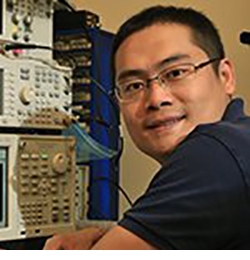
Bo Tan is an Associate Professor in Communications Engineering and Signal Processing at the Department of Electronic and Electrical Engineering, University College London (UCL). He previously held positions as Associate and Assistant Professor at Tampere University, Finland, where he retains a Docent title. His research focuses on radio signal processing, wireless communications, integrated sensing and communication (ISAC), machine learning applications in healthcare, and radar systems. He has coordinated major projects such as ANCHOR (Horizon Europe MSCA Doctoral Networks) and SPHERE-DNA (Finland Research Council), and serves as an Associate Editor for IEEE Wireless Communications Letters. Education: PhD in Engineering, University of Edinburgh (United Kingdom) Postdoctoral Researcher roles at: University College London (Computer Science & Electronic Engineering) University of Bristol (Electrical and Electronic Engineering) Research Interests: Wireless communication systems (5G/6G, THz, mmWave) Radar-communication integration and dual-functional systems Machine learning for signal processing and healthcare Integrated sensing and communication (ISAC) architectures Non-invasive healthcare monitoring via passive sensing Key Projects (2021–2025): ANCHOR (2025–2029): Research Coordination Committee lead SPHERE-DNA (2021–2024): PI focusing on federated learning for eHealth ACCESS (2021–2025): PI on wireless network security DIOR (2022–2027): Coordinator for H2020 MSCA Professional Roles: Vice Chair, IEEE Finland AP/ED/MTT Chapter Reviewer for IEEE/ACM/IET journals Labs/Teams: Leading the SPHERE-DNA initiative on privacy-preserving healthcare systems Active contributor to the IEEE's wireless communication standards
Dr. Senthorun (Sen) Raj is a Reader in Human Rights Law and Deputy Faculty Head of the Doctoral College at Manchester Law School. He holds editorial roles for Palgrave’s Socio-Legal Studies Book Series, leading the Queer Law sub-series and Feminist Legal Studies as a Reflections Editor. His interdisciplinary work bridges cultural studies and law, focusing on LGBTIQ+ rights, emotion, and legal reform. Dr. Raj earned a BA (Hons), LLB (Hons), and PhD from the University of Sydney, where his Honours thesis on sexual orientation asylum claims won prestigious awards. He completed a PGCert in Learning and Teaching in Higher Education and is a UK Higher Education Academy Fellow. His research explores emotions in legal judgments, particularly how they shape LGBT rights globally. Major works include The Emotions of LGBT Rights and Reforms (2025) and Feeling Queer Jurisprudence (2020). He co-leads the Queer Judgments Project , reimagining legal rulings to better serve marginalized communities. Teaching focuses on Criminal Law, Equality Law, and International Human Rights Law. He supervises PhD students researching LGBTQI rights in the Caribbean, queer stereotypes, and creative-critical methodologies. His professional service includes UKRI Interdisciplinary Assessment College membership and prior roles with the QAA and Amnesty International UK. Key awards include the Australian Lesbian & Gay Archives Thesis Prize and University of Sydney Medal. He has held visiting positions at NYU’s Center for Human Rights and Global Justice and is a Churchill Fellow. His media contributions span The Conversation , The Guardian , and BBC Radio 3.
Ogbochi McKinney is an Adjunct Faculty member in the Department of Social Work at Saybrook University. With over 17 years of experience in public health and non-profit organizations, she specializes in epidemiology, biostatistics, nutrition, and health policy. Her work spans program development, community engagement, and global health initiatives, including HIV/AIDS research in Sub-Saharan Africa and food security programs in California. Research interests include HIV/AIDS, antiretroviral therapy (ART), maternal/child health, mental health disparities, and the intersection of religion and health. She annually organizes health screenings in West Africa and consults on fundraising and program evaluation for non-profits. Her publications focus on public health challenges such as homelessness, disaster mental health, and pandemic response. Key contributions include evaluating healthcare access for marginalized populations and assessing interventions in faith-based settings. Her interdisciplinary approach combines quantitative and qualitative methods to address health equity and systemic barriers.
Dr. Rusty Karst is an Associate Professor of Management at the College of Business, Texas A&M University-Corpus Christi. He joined the faculty in 2018 after earning a Ph.D. in Business Administration (Strategic Management) from the University of North Texas in 2016, an MBA from Our Lady of the Lake University in 2005, and a BBA from Texas State University in 1990. His research focuses on multinational internationalization, institutional theory, and strategic human resource management, with notable publications in journals like International Business Review and International Trade Journal . Dr. Karst’s research explores the interplay between institutions and multinational enterprises’ global strategies, including cross-border acquisitions, political institutions’ impact on investment, and regional governance effects. His recent work addresses topics such as sub-national political institutions’ influence on innovation, institutional alignment in global HRM, and post-conflict economic recovery in Colombia. His publications often analyze Latin American markets and emphasize systemic complexity in internationalization processes. He has contributed over 14 peer-reviewed articles since 2014, with recent trends emphasizing political institutions, localized innovation, and cross-border strategy evolution. His research bridges theoretical frameworks with practical insights for multinational firms navigating institutional environments. No awards or grants are explicitly listed, but his extensive publication record reflects sustained academic engagement. Dr. Karst has no listed advisees or lab affiliations, focusing primarily on teaching and research. His teaching spans multinational management, strategic planning, entrepreneurship, and organizational behavior, aligning with his research expertise in global business dynamics.
Professor Leah East holds a dual appointment as Professor in Nursing at the University of Southern Queensland (since 2022) and Adjunct Professor at the University of New England. She leads research in primary health care with a focus on vulnerable populations, women’s health, sexual and reproductive health, and intimate partner violence. Her educational background includes a PhD from Western Sydney University and a Graduate Certificate in Academic Practice from Southern Cross University. Research Interests: Professor East’s work addresses health disparities in disaster-affected regions, nursing workforce challenges, and patient safety. Her interdisciplinary approach integrates qualitative and quantitative methods to explore systemic issues in healthcare delivery. Key themes include gender-based vulnerabilities during natural disasters, food security during pandemics, and the mental health impacts of violence on women. Professional Contributions: She has led international research teams and presented at major conferences, with over 40 peer-reviewed publications. Her recent work highlights the need for tailored health strategies in low-income countries post-disaster and the critical role of nurse-led interventions in correctional healthcare settings. She also investigates early career nurse retention and rural placement impacts on career trajectories. Awards & Grants: While no specific awards are listed, her sustained leadership in nursing academia and research output demonstrate significant recognition in the field. Her work is supported by grants addressing primary healthcare innovation and disaster resilience. Academic Leadership: As a key contributor to nursing education reform, she co-authored national guidelines on domestic violence training in nursing curricula and developed frameworks for advanced practice roles. She also leads initiatives to enhance nursing academic leadership through programs like the Aspiring Deans Leadership Development Program.
Ben Wu, Ph.D., is an Associate Professor in the Department of Electrical & Computer Engineering at Rowan University’s Henry M. Rowan College of Engineering. He holds a B.S. from Nankai University (2008) and a Ph.D. from Princeton University (2015). His research focuses on photonics, including photonic neuromorphic computing, free-space optical communication, and optical imaging. Dr. Wu’s work emphasizes high-speed, low-latency photonic systems for applications in communication and artificial intelligence. He leads the Ben Wu Lab, which explores photonic neural networks, lidar signal processing, and secure optical communication systems. His research has been supported by grants from organizations like the National Science Foundation and NEC Laboratories America. Notable awards include the 2018 Inspira Health Award. Dr. Wu actively advises graduate students and postdoctoral researchers, with openings for scholars interested in optics, photonics, and wireless communication. His lab collaborates on projects such as noninvasive 3D medical imaging and secure key distribution systems.
Stephen Bishop is a Professor of French at the University of New Mexico (UNM), where he has served since 2000. His academic journey includes roles as Associate Professor (2007–2022), Visiting Professor at the University of Yaoundé I (2014–2015), and holds a Ph.D. in French and Francophone Literature from the University of Michigan. His research focuses on postcolonial African identities, child soldiers, law and literature in African contexts, and Cameroonian culture. Notable awards include the Fulbright award (2014–2015). Education highlights include a J.D. in Law and a B.S. in Biology, reflecting interdisciplinary interests. He teaches courses such as African Folktales and Proverbs, Law and Literature, and Cameroonian Politics. His publications include Scripting Shame in African Literature (2021) and Legal Oppositional Narrative: A Case Study in Cameroon (2008). Presentations span international venues like the CIEF conferences and the Children and War Conference in Salzburg. Research interests emphasize interdisciplinary work, particularly the intersection of shame, guilt, and legal frameworks in African narratives. He has advised on grants related to refugee assistance and diversity in French curricula, and his advocacy extends to child soldier reintegration and feminist movements in Africa. His work bridges literary analysis with socio-political critique, contributing to global understandings of African cultures and postcolonial dynamics.
Rachel Eveleth is an Assistant Professor of Geology at Oberlin College's College of Arts and Sciences , specializing in interdisciplinary oceanography and Earth system science. She teaches courses such as Oceans and Climate and Great Lakes Limnology , integrating computational analysis and remote sensing into her research. Education: PhD, Duke University (2016) BA, Bowdoin College (2011) Her research focuses on physical and biological drivers of biogeochemical cycles in Polar Oceans and the Great Lakes , particularly examining dissolved gas tracers, ice-melt effects, and climate change. She leads projects like the Great Lakes Winter Grab and leverages data from the Ocean Observatories Initiative , including machine learning approaches to carbon cycling. Recent publications highlight her work on microbial interactions in the Antarctic, seasonal carbon budgets in Lake Erie, and sensor data best practices. She collaborates with over a dozen universities and utilizes Argo floats, remote sensing, and computational models to study aquatic-climate connections. Contact: Email: Rachel.Eveleth@oberlin.edu, reveleth@oberlin.edu Phone: 440-775-8938
Andrea Ballo is an Assistant Professor at the Department of Electrical Electronic Engineering and Computer Science (DIEEI) at the University of Catania, specializing in low-voltage analog and mixed-signal circuit design. With over 40 publications spanning from 2018 to 2025, Dr. Ballo has established a strong research profile in ultra-low-power circuit design, particularly focusing on charge pumps, energy harvesting systems, and circuits for medical implantable devices. Dr. Ballo's research interests center around Low-Voltage Circuit Design , Charge Pumps , Energy Harvesting Systems , Ultra-Low-Power Circuits , and CMOS Circuit Design . Their work addresses critical challenges in powering next-generation IoT devices and medical implants where energy efficiency and miniaturization are paramount. Recent publications demonstrate innovative approaches to Dickson charge pumps, ultra-low-voltage operational transconductance amplifiers, and active rectifiers for energy harvesting applications. Analysis of recent publications (2023-2025) reveals a strong focus on pushing the boundaries of ultra-low-voltage operation (down to 0.3V), minimizing power consumption (reaching nanoampere current levels), and improving efficiency in charge pump circuits. Dr. Ballo's research bridges theoretical circuit analysis with practical implementations in modern CMOS technologies (down to 28nm), making significant contributions to the field of energy-constrained electronic systems. Dr. Ballo has collaborated extensively with researchers including Alfio Dario Grasso, Gaetano Palumbo, Marco Privitera, and Salvatore Pennisi, indicating strong integration within the University of Catania's research ecosystem. The collaborative nature of their work spans both theoretical analysis and practical circuit implementations, with numerous publications in IEEE journals including IEEE Journal of Solid-State Circuits, IEEE Transactions on Circuits and Systems, and IEEE Access. The research trajectory shows consistent progression from fundamental charge pump analysis (2018-2020) to increasingly sophisticated implementations for specific applications like medical implants and IoT devices (2021-2025), demonstrating growing expertise and impact in the field of low-power circuit design.

/prod01/channel_2/media/uniofsuffolk/website/content-assets/images/staff-profile-photos/allied-health-sciences/Ebuka-Anieto-2.jpg)