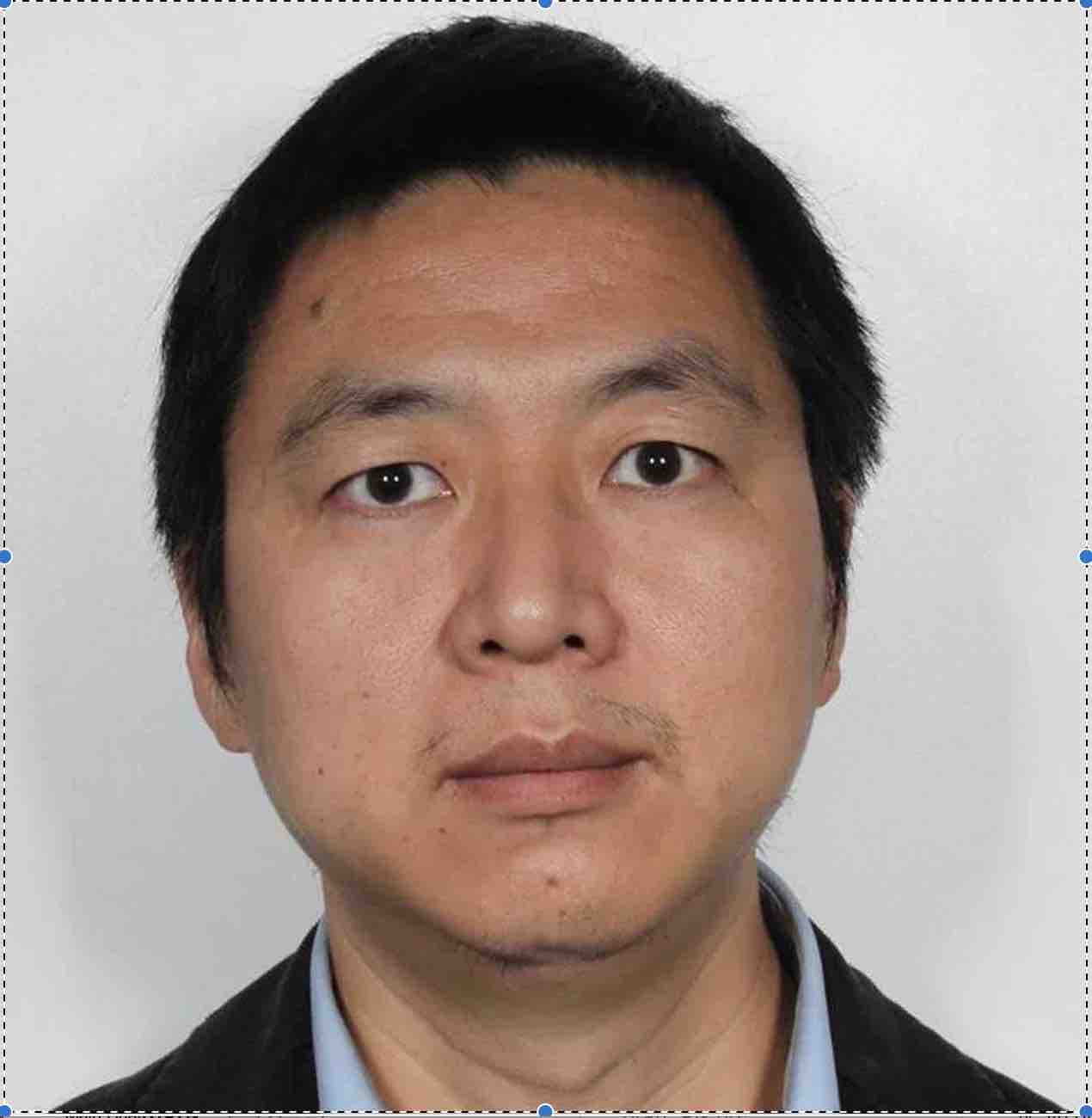
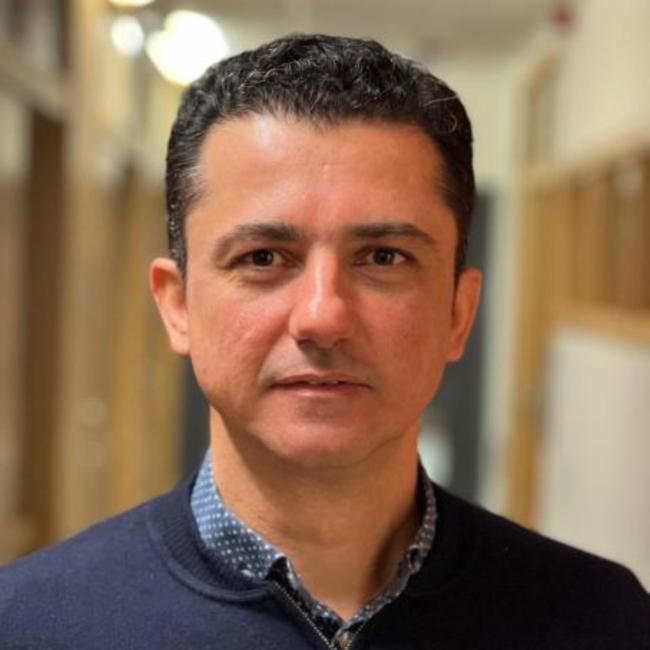
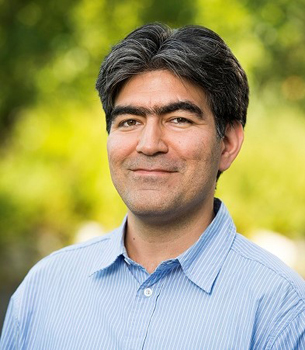
Bengt Jonsson is a Professor at the Division of Computer Systems, Department of Information Technology, Uppsala University. His research focuses on formal methods, real-time and distributed systems, semantics and verification of concurrent systems, and IoT security. Current Projects: UPMARC (Software Technology for Multicore Programming), aSSIsT (Secure Software for IoT), and Designed for UPDATE (Safe Embedded Software Updates) Past Projects: CoDeR-MP (Multicore Real-Time Applications), ProFun (Wireless Sensor Networks), CONNECT (Networked Component Synthesis) His work includes automated verification, model checking, and symbolic execution for concurrent systems. Recent publications address dynamic partial order reduction, IoT protocol testing, and lock-free data structures. Scientific Awards : CAV Award 2017 He advises PhD students and teaches courses like Model-Based Development of Embedded Systems and graduate-level symbolic execution. Personal interests include piano playing and orienteering.
Anna Lukina is an Assistant Professor in the Department of Intelligent Systems at Delft University of Technology's Faculty of Electrical Engineering, Mathematics and Computer Science. She leads the Sequential Uncertainty Monitoring and Interpretability (SUMI) Lab, focusing on improving safety and interpretability of artificial intelligence through formal methods with applications in engineering, transportation, health, and finance. Her research spans the critical intersection of formal verification and machine learning, particularly in developing techniques for runtime monitoring of neural networks, safety verification of decision-tree policies, and creating verifiable reinforcement learning systems. She has established strong international collaborations with researchers across the US, Europe, Japan, and Australia. Lukina's recent publications (2021-2025) demonstrate consistent output in top AI venues including AAAI, NeurIPS, and IJCAI, with a clear trajectory toward increasingly sophisticated verification techniques for complex AI systems. Her work shows strong emphasis on practical applications while maintaining theoretical rigor, particularly in creating methods that provide formal guarantees for black-box AI systems. As part of her service commitment, she leads initiatives promoting junior computer scientists from underrepresented communities, reflecting her dedication to diversity in the field as highlighted in her DerStandard interview "Warum so wenige Frauen Den Code knacken wollen" and university magazine Delta. She currently supervises multiple PhD researchers including Sterre Lutz, Daniël Vos, Aaron Berger, and Johannes Koch, along with numerous successful MSc graduates who have completed theses on topics ranging from anomaly detection to genetic programming for explainable AI.
Cresantus Biamba is a Senior Lecturer at the University of Gävle, specializing in Educational Science. His research bridges education theory with technological advancements, focusing on teacher training, sustainability in education, and inclusive pedagogy. Researcher at University of Gävle (Education, Educational Science) Research interests include: Education for Sustainable Development (ESD) in global contexts Teacher education reform and policy analysis Inclusive classroom practices in the Global South Technological integration in educational systems Curriculum development for post-pandemic resilience Publication trends reveal interdisciplinary work combining AI, cloud computing, and IoT applications with educational challenges, particularly in African institutions. His articles address security optimization, healthcare technology, and sustainability frameworks. Academic activities involve collaborations with researchers in cybersecurity, AI, and energy systems, though specific grants or mentoring roles are not explicitly documented here.
Cristian R. Rojas is a Professor at the Division of Decision and Control Systems within the School of Electrical Engineering and Computer Science at Kungliga Tekniska Högskolan (KTH Royal Institute of Technology) in Stockholm, Sweden. He has been affiliated with KTH since October 2008, advancing from his initial position to his current professorship. His academic career focuses on control theory, system identification, and related fields. Dr. Rojas received his M.S. degree in electronics engineering from the Universidad Técnica Federico Santa María in Valparaíso, Chile, in 2004, followed by his Ph.D. in electrical engineering from The University of Newcastle, NSW, Australia, in 2008. Professor Rojas's research spans system identification, signal processing, and machine learning, with particular emphasis on developing methods for optimal input design, sparse system identification, and continuous-time system modeling. His work bridges theoretical foundations with practical applications in control systems engineering, focusing on creating efficient algorithms for system identification that balance computational complexity with estimation accuracy. He has made significant contributions to understanding coherence properties in system identification and developing methods for unstable system identification in closed-loop configurations. An analysis of Professor Rojas's recent publications reveals a strong focus on sparse system identification techniques, continuous-time system modeling, and application-oriented input design. His work consistently addresses the challenge of balancing theoretical rigor with practical implementation constraints, particularly in the areas of coherence minimization, computational efficiency, and closed-loop system identification. The research demonstrates a clear evolution toward increasingly sophisticated methods for handling nonlinear systems and unstable dynamics while maintaining statistical consistency. Associate Editor for IFAC journal Automatica Associate Editor for IEEE Control Systems Letters (L-CSS) Member of IEEE Technical Committee on System Identification and Adaptive Processing (since 2013) Member of IFAC Technical Committee TC1.1. on Modelling, Identification, and Signal Processing (since 2013) As an educator, Professor Rojas supervises numerous degree projects across various specializations including Machine Learning, Systems Control and Robotics, and ICT Innovation. He teaches core courses such as Machine Learning Theory (EL2810) and Modelling of Dynamical Systems (EL2820), demonstrating his commitment to both theoretical foundations and practical applications in control systems education. His academic leadership extends to course development and examination responsibilities across multiple engineering programs. Professor Rojas is embedded within the Division of Decision and Control Systems at KTH, a research environment dedicated to advancing the theoretical and practical aspects of control theory, system identification, and decision-making systems. His collaborative work with researchers like Håkan Hjalmarsson, James S. Welsh, and others has established him as a key contributor to the international control systems community.
Christiane Schmidt is a Senior Associate Professor at Linköping University's Department of Science and Technology (ITN), affiliated with the Communications and Transport Systems (KTS) research group. Her work focuses on algorithm design, air traffic management, railway optimization, and computational geometry. She contributes to both academic research and practical solutions for transportation systems. Education and Research: While specific educational details are not provided, her research emphasizes algorithmic solutions for complex transportation challenges. Her team develops models for air traffic controller workload prediction using machine learning and explores late train-crew rescheduling via heuristic approaches. Research Interests: Key areas include railway traffic optimization, air traffic management systems, and computational geometry applications. Recent projects involve guard route optimization for polygons, multi-agent path planning, and automated aircraft arrival scheduling. Publications: Her 2025 work highlights advancements in tabu-search-based scheduling, machine learning for air traffic analysis, and train path insertion methods. Earlier papers address workforce scheduling and disaster recovery in transportation networks. Labs and Teams: Active within the Communications and Transport Systems group, she collaborates on projects like the Flight Logistics Unit (FL) and contributes to initiatives like B-PREPARED for disaster preparedness.
Slawomir Nowaczyk is a Professor at the School of Information Technology , Halmstad University. His research focuses on Artificial Intelligence , Machine Learning , and Data Mining , particularly for Streaming Big Data and Knowledge Representation with Weakly-Supervised Models . Practical applications: Predictive maintenance, healthcare informatics, smart industry, and energy systems Developing interestingness metrics for distributed data analysis and self-organization in AI systems Publication Trends : Recent work spans Explainable AI , spatiotemporal forecasting , feature selection , and smart city applications. Key areas include healthcare diagnostics , transportation optimization , and industrial fault detection . Academic Leadership : Serves as Research Leader for the School of Information Technology. Supervises six PhD students and co-supervises one additional student across academic and industrial domains.
Alp Yurtsever serves as an Assistant Professor in the Department of Mathematics and Mathematical Statistics at Umeå University, Sweden, where his research pioneers end-to-end optimization frameworks bridging theoretical modeling and practical algorithm design for data science challenges. His work fundamentally rethinks traditional black-box system approaches by integrating problem formulation with solution methodologies. His academic journey includes: PhD in Computer and Communication Sciences from École Polytechnique Fédérale de Lausanne (EPFL) under Prof. Volkan Cevher Postdoctoral fellowship at MIT's Laboratory for Information and Decision Systems (LIDS) with Prof. Suvrit Sra Dual BSc in Electrical and Electronics Engineering and Physics from Middle East Technical University Yurtsever's research centers on optimization theory for machine learning, with groundbreaking contributions in federated learning systems, convex programming, and scalable semidefinite solvers. He champions a unified perspective where modeling and algorithmic development inform each other, yielding methods with proven theoretical guarantees and real-world efficiency. His work particularly addresses communication bottlenecks in distributed systems and non-convex landscapes in neural network training, with applications spanning privacy-preserving AI and edge computing. Analysis of his publication trajectory reveals dominant themes in federated optimization and Frank-Wolfe variants, where he consistently develops communication-efficient algorithms for heterogeneous device networks. His recent work demonstrates increasing sophistication in handling multi-tier architectures and personalized learning objectives, while maintaining rigorous convergence guarantees. The integration of quantum-classical hybrid approaches in his 2022 ECCV paper signals expanding methodological boundaries. His scientific recognition includes: Thesis Distinction for PhD dissertation "Scalable Convex Optimization Methods for Semidefinite Programming" (EDIC program committee) Yurtsever actively contributes to Umeå University's Mathematical Programming Group and Statistical Learning for Spatio-Temporal Data initiative, though specific grant awards remain undisclosed in available materials. His collaborative network spans EPFL, MIT, and multiple European institutions as evidenced by co-authorship patterns. While no formal advisees are listed, his publications show mentorship of junior researchers through joint conference presentations. His laboratory operations are embedded within Umeå University's Department of Mathematics and Mathematical Statistics in the MIT-huset building, leveraging institutional resources for high-performance optimization research while maintaining strong international connections through his post-PhD affiliations.
Masoumeh Ebrahimi is an Associate Professor at KTH Royal Institute of Technology, Division of Electronics and Embedded Systems, and holds an Adjunct Professor position at the University of Turku, Finland. She leads research in hardware acceleration, neural architecture search, and fault-tolerant systems. Her work bridges machine learning, embedded systems, and network-on-chip (NoC) design. Research Interests: Hardware-Accelerated Machine Learning 6G Network Architectures Fault-Tolerant Computing High-Performance GPU Systems Network-on-Chip (NoC) Design Federated Learning Key Projects: Co-supervisor of Hui Chen’s postdoc project Generalizing hardware acceleration for nonlinear functions . Active in Digital Futures, a cross-disciplinary center focusing on societal challenges using digital tech. Collaborates on edge computing, 6G networks, and resilient embedded systems. Labs & Teams: Core member of KTH’s Digital Futures initiative, advancing AI accelerators and next-gen communication systems. Engaged in EU-funded projects on NoC reliability and federated learning frameworks.
Ming Xiao is an Associate Professor in the Division of Information Science and Engineering at KTH Royal Institute of Technology's School of Electrical Engineering and Computer Science (EECS). He is affiliated with the Digital Futures Faculty and leads research in wireless communications, machine learning, and network coding. His work focuses on 6G networks, distributed learning, and secure communications. Affiliations: KTH EECS, Digital Futures, Swedish Research Council, EU Horizon Europe projects Roles: Editor for IEEE Transactions on Wireless Communications, TPC Co-Chair for VTC Fall Research Interests: Dr. Xiao's expertise spans wireless communication systems (e.g., mmWave, NOMA), network coding, machine learning applications in communications, and energy-efficient distributed systems. He has pioneered work on intelligent reconfigurable surfaces (RIS), federated learning in edge computing, and integrated sensing-communications (ISAC). Projects: Ongoing EU-funded projects include ASCENT (autonomous vehicular networks) and COVER (unmanned aerial vehicles for emergency response). Past projects include 6G channel coding and intelligent energy management in smart communities. Grants: Over 12 active grants from VR, EU Horizon Europe, FORMAS, STINT, and VINNOVA Awards: IEEE Vehicular Technologies Society Best Paper Award (2023), World Top 2% Researcher (2020–2023), Highly Cited Researcher in Computer Science/Engineering. Labs/Teams: Leads the KTH Digital Futures initiative, collaborates with RISE Research Institutes, and manages a team of 12 PhD students/postdocs focusing on 6G, distributed ML, and secure IoT.
Andreas Theocharis is an Assistant Professor in Electrical Engineering at Karlstad University, specializing in Electrical Power Systems and Renewable Energy Systems Research. His research focuses on renewable energy integration, smart grid technologies, and advanced modelling of electrical components like transformers and photovoltaic systems. He collaborates with institutions such as Ellevio, KTH, Delft University of Technology, and industry partners like Siemens and Vestas. Teaching responsibilities include courses on electric circuits, power systems operation, renewable energy applications, and grid integration. His work bridges academia and industry, addressing challenges in sustainable energy systems through advancements in AI, machine learning, and IoT. Research contributions span photovoltaic generator modelling, battery storage optimization, and electromagnetic compatibility. Key publications address generative AI for renewable energy communities, uncertainty quantification in solar forecasting, and robust energy management strategies. Collaborations involve global networks with universities in the Netherlands, Norway, Greece, and industry leaders in energy sectors. His expertise in transformer dynamics and smart grid solutions supports practical implementations of sustainable energy frameworks.
Seyed Jalaleddin Mousavirad (Jalal) serves as a Postdoctoral researcher at Mid Sweden University in Sundsvall, Sweden, within the Department of Computer and Electrical Engineering (DET) and affiliated with the STC Research Centre. His research focuses on advancing AI-driven solutions for sustainable technologies and complex optimization problems. He earned his PhD in Computer Engineering specializing in Artificial Intelligence from the University of Kashan, Iran. Previous academic appointments include Assistant Professor at Hakim Sabzevari University (Iran), instructor roles at the University of Tehran (2018-2019) and Azad University (2019-2020), and a Research Fellow position at the University of Beira Interior (Portugal) where he contributed to the European GreenStamp project on sustainable Android applications. Dr. Mousavirad's research spans Image Processing and Computer Vision, Machine Learning, Evolutionary Computation, and Applied Artificial Intelligence, with significant contributions in pattern recognition, metaheuristic algorithms, and neural network optimization. His work demonstrates strong interdisciplinary applications in healthcare diagnostics, power systems, and medical imaging. Recent publications reveal a pronounced trend toward federated learning frameworks for privacy-preserving medical analysis, adversarial robustness in diffusion models, and hybrid optimization techniques for ECG classification and brain tumor detection. This reflects a strategic focus on translating AI innovations into practical healthcare and sustainability solutions. He actively contributes to the academic community as a guest editor for journals including Computational Intelligence and Neuroscience, Entropy, and Mathematical Biosciences and Engineering. His editorial leadership extends to organizing special sessions at IEEE CEC and EvoApplications conferences. Dr. Mousavirad maintains extensive peer-review commitments across 50+ prestigious venues including IEEE Transactions on Evolutionary Computation and IEEE Transactions on Cybernetics. His collaborative research includes international engagements at Xi'an Jiaotong-Liverpool University (China) and current work within Mid Sweden University's STC Research Centre on energy-aware computing and neural network optimization.
Aamir Mahmood is an Associate Professor at the Department of Computer and Electrical Engineering at Mid Sweden University and an Adjunct Professor at NUST, Pakistan. His research focuses on 5G/6G wireless communication , Industrial IoT , RF interference management , and time synchronization . Education: B.Sc. NUST (2002), M.Sc. and Ph.D. Aalto University (2008, 2014) Collaborations: Nokia Research Center, IEEE Sweden VT-COM-IT His recent work explores STAR-RIS for 6G IoT, NOMA for industrial networks, and deep reinforcement learning in MEC systems. Key trends include ultra-reliable communication for industrial automation and interference management in heterogeneous networks. Awards : IEEE WCNC’13 Best Paper Ericsson Research Foundation Grant Nokia Foundation grant STINT grants IEEE Sweden VT-COM-IT Best Student Journal Paper Award Swedish Institute funding Interreg Aurora funding Awarded 80+ peer-reviewed publications and active in IEEE leadership roles.
Professor Balázs Adam Kulcsár is a faculty member in the Automatic Control research group at the School of Electrical Engineering and Computer Science, Chalmers University of Technology. With 104 publications and involvement in 34 research projects, he is a prominent researcher in intelligent transportation systems. His work spans multiple domains within transportation engineering and control theory, with significant contributions to traffic flow modeling, electric vehicle routing, and advanced control systems. Professor Kulcsár's research primarily focuses on intelligent transportation systems design, traffic flow modeling for control, Linear Parameter Varying systems, and failure diagnostics. His work demonstrates a strong integration of control theory with practical transportation challenges, particularly in the context of electric mobility and sustainable transportation. Recent research shows a growing emphasis on machine learning applications for transportation optimization, electric vehicle infrastructure, and urban traffic management. Analysis of his recent publications reveals a clear trajectory toward sustainable transportation solutions, with electric vehicle charging infrastructure, fleet management, and public transit optimization as dominant themes. His work increasingly incorporates machine learning techniques, particularly graph neural networks and reinforcement learning, to address complex transportation challenges. The research demonstrates strong interdisciplinary collaboration across engineering disciplines, with a focus on practical implementation of theoretical advances. Professor Kulcsár leads and participates in numerous research projects focused on future transportation systems, including projects on electric mobility, traffic optimization, and intelligent transportation infrastructure. His research group collaborates extensively with industry partners like Volvo and Heart Aerospace, as well as with other academic institutions. Current projects include Rethinking the Sustainability of V2G, Quantum computing for future mobility solutions, and Digital Twin for Energy Prediction. His research group maintains strong connections with transportation industry stakeholders and contributes to major initiatives such as the Transport Area on Advance project, which aims to achieve leading competence in future green, safe, and efficient transport systems. The team operates at the intersection of theoretical control systems and practical transportation applications, with particular expertise in modeling complex traffic phenomena and developing implementable control solutions.
Mats Lindegarth is a Professor at the Department of Marine Sciences, University of Gothenburg, and serves as scientific coordinator at the Swedish Institute for the Marine Environment. Based at the Tjärnö Marine Laboratory, his work focuses on coastal ecology and environmental assessment. Role: Professor & Scientific Coordinator Location: Tjärnö Marine Laboratory (Strömstad, Sweden) Collaborations: Works with Swedish Institute for the Marine Environment and international researchers Research Interests: Coastal zone management Aquaculture sustainability Benthic ecology Statistical and GIS-based ecological modelling Marine biodiversity mapping (PREHAB project) Environmental indicator development Scientific Contributions: Mats has published extensively on bivalve ecology, aquaculture impacts, and marine monitoring methods. His work includes species distribution models for oyster conservation, nutrient flux studies in mussel farms, and uncertainty analysis for ecological indicators. Current research focuses on policy-driven marine environmental assessment, particularly through the PREHAB and WATERS programs.
Masoud Daneshtalab is a Professor at Mälardalen University, leading the Heterogeneous System research group (HERO). He previously held roles as a European Marie Curie Fellow at KTH Royal Institute of Technology (2014) and as a university lecturer and group leader at the University of Turku, Finland (2012-2014). His research focuses on interconnection networks, hardware/software co-design, deep learning acceleration, and evolutionary optimization. He specializes in fault-tolerant DNN accelerators, time-sensitive networking (TSN), and embedded systems. His work bridges theoretical advancements with practical implementations, emphasizing reliability and efficiency in edge computing and AI applications. Research interests include: Network-on-Chip (NoC) architectures and congestion prediction Fault resilience in deep neural networks (DNNs) Optimization of federated learning and homomorphic encryption for edge AI Integration of TSN with 5G and automotive systems Hardware acceleration techniques for computational efficiency Recent publications emphasize advancements in robust AI architectures, fault tolerance mechanisms, and TSN-based communication protocols. His work often addresses practical challenges in deploying machine learning models on resource-constrained devices. He actively contributes to interdisciplinary projects in autonomous systems, healthcare monitoring via FMCW radar, and neural architecture search for embedded applications. Labs/Teams: Leads the HERO group at Mälardalen University, focusing on heterogeneous computing systems and real-time embedded systems.