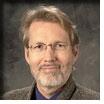
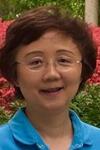
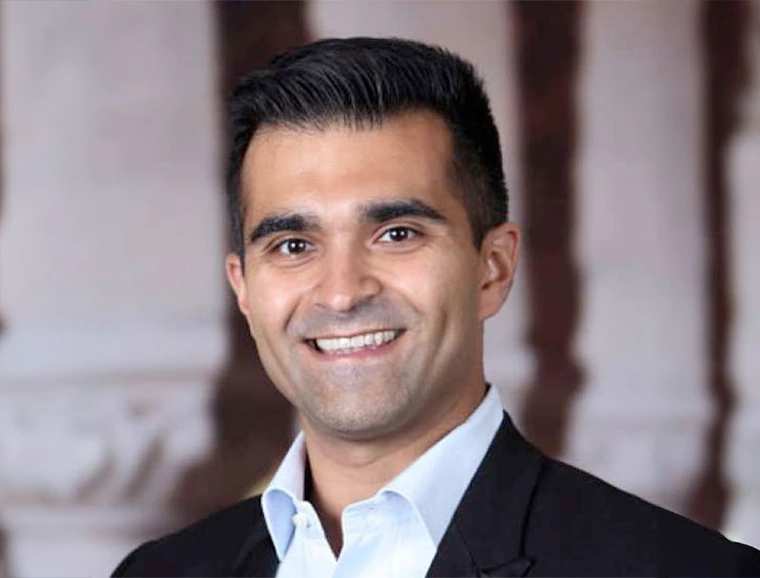
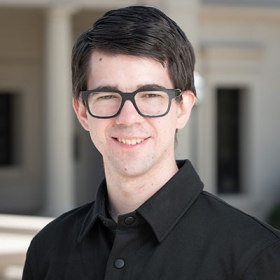
John W. Du Bois is a Professor in the Department of Linguistics at the University of California, Santa Barbara (UCSB), within the College of Letters and Science. His work focuses on the interplay between discourse, grammar, and sociocultural contexts. Specializing in dialogic syntax, he explores how linguistic structures emerge from interactional dynamics, particularly in conversational coherence and stance-taking mechanisms. His research integrates corpus linguistics, computational methods, and ethnographic approaches to study languages like Mayan and Kazakh. Key research areas include: Discourse and grammar integration Dialogic resonance and affective alignment Corpus design and analysis Ritual language and cognitive models Mayan linguistic systems Recent studies emphasize computational tools like Rezonator for dialogue coherence visualization and remote corpus development methodologies. His work bridges theoretical linguistics with applied research in language documentation and education. Du Bois has contributed to foundational texts on discourse transcription standards and maintains active involvement in the Santa Barbara Corpus of Spoken American English project. His publications span over four decades, reflecting sustained engagement with linguistic complexity across multiple levels—from micro-level syntactic interactions to macro-level sociocultural frameworks. Current projects investigate dialogic syntax in autism and the evolutionary niche of language within social interaction.
Fabio Sabatini is a Full Professor of Political Economy at Sapienza University of Rome and a Research Fellow at the Institute of Labor Economics (IZA). His work focuses on the intersection of communication technologies, social capital, and political behavior. He teaches Political Economy and Economics of Sustainable Development, and actively engages in public discourse through Substack newsletters like The Civic Economist . His research explores how digital media shapes societal values, economic outcomes, and political preferences. Notable themes include the behavioral impacts of social media, the role of social capital in crises, and the geopolitical tensions between the US and EU under Trump's administration. Sabatini critiques policies that undermine academic freedom and democratic institutions, frequently analyzing authoritarian trends in global governance. He maintains an extensive publication record with over 50 papers in peer-reviewed journals, focusing on topics like terrorism radicalization, disaster politics, and digital economy effects. His work bridges theoretical frameworks with empirical analysis, often addressing contemporary policy challenges. Sabatini's academic networks include collaborations with institutions like the European Commission and IZA. His Substack articles and social media activity reflect a commitment to public engagement, translating complex economic concepts for broader audiences while critiquing populist policies and advocating for evidence-based governance.
Hui Cao is the John C. Malone Professor of Applied Physics, Professor of Physics, and Professor of Electrical Engineering at Yale University. Her research focuses on mesoscopic physics, complex photonic materials, nanophotonics, and biophotonics, with experimental investigations into unconventional lasers, coherent light control, and disordered photonic systems. She leads a lab exploring applications in speckle-based imaging, deep-tissue optics, and chip-scale spectrometers. Education: Ph.D. in Physics from Stanford University (1997). Awards include the William E. Lamb Medal (2015), Guggenheim Fellowship (2013), and fellowships from the American Physical Society and Optical Society of America (2007). Research emphasizes random lasers, microcavity lasers, and wavefront shaping to control light in diffusive media. Key innovations include a disordered photonic chip spectrometer and methods to suppress nonlinear instabilities in fiber amplifiers. Awards: 12 major honors including AAAS Fellowship and multiple endowed professorships Patents: 3 core photonic technologies including random laser imaging and fiber amplifier control systems Lab Activities: Developing novel optical devices leveraging disorder and nonlinear effects
Qiongxiu Li is a Tenure-Track Assistant Professor in the Cyber Security group at Aalborg University's Copenhagen campus, part of the Technical Faculty of IT and Design. Her research focuses on cybersecurity, distributed optimization, privacy/security, and federated learning. She has authored/co-authored 38 papers in top-tier venues including IEEE Transactions on Information Forensics and Security, ICLR, and EUSIPCO. Education: PhD in Privacy and Security from Aalborg University (2018-2021). Notable achievements include winning the EUSIPCO 2020 3MT Contest and co-delivering a tutorial on privacy-preserving distributed optimization at EUSIPCO 2024. She actively reviews for conferences like NeurIPS, ICLR, and journals such as TPAMI and TIFS. Research Themes: Privacy-preserving distributed algorithms, federated learning security, differential privacy, and adversarial machine learning. Recent Trends: Focus on securing AI systems (e.g., LLM vulnerabilities, federated clustering privacy), quantization for privacy, and theoretical bounds in decentralized learning. Awards: 2020 EUSIPCO 3MT Winner (outstanding finalist in EURASIP's annual doctoral research competition). Grants/Projects: Co-PI of the AI:SECURITY project (2025-2029) addressing AI security threats like phishing and malicious actors. Labs/Teams: Leads the Cyber Security group at Aalborg's Copenhagen campus, focusing on theoretical and applied research in secure distributed systems.
Professor Jason Dykes is a leading figure in the field of information and geovisualization at City, University of London, where he holds the position of Professor in the Department of Computer Science and co-directs the giCentre , a renowned research centre in visualization. He is affiliated with the School of Mathematics, Computer Science and Engineering and maintains an active research and teaching profile. His academic journey includes a PhD in Geography from the University of Leicester and extensive leadership in both research and education. Education: PhD in Geography, University of Leicester, 2000 MSc in Geographic Information Systems, University of Leicester, 1991 BA/MA in Geography, University of Oxford, 1989 Jason Dykes' research is centered on designing visual methods and tools for exploring, analyzing, and presenting information, with a strong emphasis on geographic data. His work integrates cartography, information visualization, GIScience, and human-computer interaction , leading to the development of innovative techniques such as geowigs, ODmaps, BallotMaps, and AttributeSignatures. He has published extensively in top-tier journals like IEEE Transactions on Visualization & Computer Graphics, with over 20 papers in the last decade, and co-authored the seminal book Exploring Geovisualization (2005). His research is supported by major funders including EPSRC and the EU, with projects like RAMP VIS (Covid-19 response) and VALCRI (criminal intelligence). The most recent articles highlight a consistent trend in applied and human-centered visualization , focusing on responsive design, education, pandemic modeling, and novel visual metaphors for complex data. His work increasingly emphasizes methodological rigor, design exposition, and the role of visualization in interdisciplinary and emergency contexts. Scientific Awards and Recognition: National Teaching Fellow, Higher Education Academy (2005) Best Paper Awards at GIS Research UK (consecutive years) Honorable Mentions, IEEE InfoVis (2009, 2010, 2016, 2018) Security Innovation Commercialisation Award (EU, 2022) Research Supervisor of the Year, City Student Union (2020) Innovations in Teaching Award and multiple teaching grants at City Jason Dykes has supervised eight PhD students to completion and advised many others, including notable researchers like Roger Beecham, Sarah Goodwin, and Susanne Bleisch. His teaching includes modules such as Visualizing Society and Data Presentation. He has received significant grant funding from UK research councils and the EU for projects like DIVA, VALCRI, and RAMP VIS. His service to the community includes leadership roles in IEEE VIS, ICA Commission on GeoVisualization, and editorial positions at IEEE TVCG and the Journal of Visualization and Interaction. He leads the giCentre , a dynamic research group that fosters innovation in visualization, and has been instrumental in establishing the field’s educational and methodological foundations through participation in Dagstuhl seminars and publications on visualization pedagogy.
Charles Gomez is an Associate Professor in the School of Sociology at the University of Arizona. He is affiliated with the College of Information Science and the Applied Math Graduate Interdisciplinary Program (GIDP), reflecting his interdisciplinary focus. His work centers on computational and mathematical sociology, particularly the study of inequality in global scientific knowledge production, diffusion, and diversity. Dr. Gomez received his Ph.D. from Stanford University, master’s degrees from Harvard Kennedy School and Columbia University, and a B.Sc.Eng. from Duke University. Ph.D., Stanford University M.A., Harvard Kennedy School M.S., Columbia University B.Sc.Eng., Duke University His research integrates natural language processing, social network analysis, survey experiments, simulations, and interviews to explore hierarchies, complexity, and diversity in science. He is particularly interested in how political and institutional forces shape AI research and global knowledge systems. The recent publications reflect a strong focus on global science, AI, knowledge diffusion, and inequality. His work employs both computational and qualitative methods to analyze large-scale scientific networks, epistemic diversity, and the structural biases in research collaboration and dissemination. Themes include international politics in AI, peer review bias, simulation of knowledge spread, and the role of elite institutions in shaping scientific agendas. His scientific recognition includes the prestigious National Science Foundation (NSF) CAREER Award (2024–2029). He has secured over $1 million in research funding as PI or co-PI. National Science Foundation (NSF) CAREER Award (2024–2029) Dr. Gomez leads the Global Knowledge Lab and Observatory ("The Global Lab"), an interdisciplinary research group dedicated to studying science, knowledge, and innovation at a global scale. He is actively involved in mentoring and welcomes Ph.D. students and collaborators. He has published in top journals including Nature Human Behaviour , Nature Communications , Research Policy , Social Networks , and Sociological Science .
Nicola Paltrinieri is a Professor of Risk Assessment at the Department of Mechanical and Industrial Engineering, NTNU (Norway), and an Adjunct Professor at the University of Bologna (Italy). His expertise spans risk assessment, hydrogen technologies, process safety, and data-driven safety management. He holds Chartered Engineer and Chartered Scientist certifications and has served on editorial boards for journals like Safety Science and Journal of Risk Research . Education: PhD in Environmental, Safety and Chemical Engineering (University of Bologna, 2012) Master’s in Chemical and Process Engineering (University of Bologna, 2008) Research Interests: Focuses on hydrogen infrastructure safety, Natech accident analysis, risk-based inspection strategies, and AI integration in safety systems. His work emphasizes sustainable energy transitions and mitigating risks in emerging technologies like hydrogen. Key Projects (2022-2026): H2Glass : Decarbonizing glass and aluminum sectors via hydrogen HyInHeat : Hydrogen technologies for industrial heating HYDROGENi : Norwegian research center for hydrogen/ammonia Awards: Onsager Fellowship (2016–2021) Frank Lees Medal (2012) for safety-related publications Grants & Leadership: Head of NTNU Energy Team Hydrogen, coordinator for EU-funded projects like SUSHy , and active in international risk committees (e.g., EFCE, ESRA). His work bridges academia and industry, with over 8 PhD examinations supervised. Labs/Teams: Leads the NTNU Energy Team Hydrogen and collaborates on initiatives like SH2IFT-2 for safe hydrogen fuel handling. His research group focuses on AI-driven risk analysis and hydrogen infrastructure resilience.
Dr. John Shepherd is an Associate Professor in the School of Science at RMIT University, specializing in applied mathematics, numerical and computational mathematics, and their applications in engineering and environmental systems. His research focuses on analyzing nonlinear problems, particularly in bioreactor dynamics, fluid mechanics, and nuclear energy policy. He has contributed to studies on anaerobic digestion models, reactor stability, and the role of nuclear energy in climate change mitigation. Education: Doctorate in Applied Mathematics (not explicitly stated in text, inferred from title). His work bridges theoretical analysis and real-world applications, such as optimizing methane production in waste digesters and evaluating environmental policies for nuclear energy. He actively supervises research projects, including the analysis of anaerobic digester dynamics. Dr. Shepherd’s publications span interdisciplinary topics, emphasizing the intersection of mathematics, engineering, and environmental science. He engages with policy discussions on nuclear energy’s role in decarbonization, advocating for its integration into clean energy strategies. His research highlights the importance of multiscale analysis in understanding complex systems like bioreactors and fluid flows. Collaborations involve industry and international institutions, reflecting his commitment to practical solutions for sustainability challenges.
Karen Bandeen-Roche is a Professor and the Hurley-Dorrier Professor and Chair of the Department of Biostatistics at the Johns Hopkins Bloomberg School of Public Health, with joint affiliations in the School of Medicine and the School of Nursing. She is a leading expert in biostatistical methodology, particularly in latent variable models, longitudinal analysis, and multivariate survival methods applied to aging and gerontology. Her research focuses on developing statistical models for unobservable processes such as frailty, resilience, and functional status in older adults. She has made significant contributions to the measurement of aging-related constructs and has extensive collaborative work in ophthalmology and neurology. Her methodological work includes mixture models, measurement error correction, and latent class modeling. The recent publications highlight a strong trend in gerontological biostatistics, with a focus on frailty, dementia risk, resilience, and multisystem physiological responses in aging. Her work integrates complex data from observational cohorts and clinical studies, often employing innovative latent variable frameworks to address measurement challenges in health outcomes. Scientific Awards and Honors: Marvin Zelen Leadership Award in Statistical Science (2016) Fellow of the American Statistical Association (2001) Brookdale National Fellow (1997) Golden Apple Award for Excellence in Teaching (2010) Garland Clay Award (1999) Chair, NIH BMRD Study Section (2006–2008) President, Eastern North American Region, International Biometric Society (2011–2013) Executive Board, International Biometric Society (2015–2022) Board of Directors, National Institute of Statistical Sciences (2020–2023) Karen Bandeen-Roche has been deeply involved in advising and training the next generation of researchers. She co-directs a training program in Biostatistics and Epidemiology of Aging and has received multiple teaching and mentoring awards. She has served on numerous academic committees, including appointments and promotions, faculty senate, and ethics committees at Johns Hopkins. Her grants and collaborative research span aging, dementia, ophthalmology, and cardiovascular health, often supported by NIH and other federal agencies. She leads the Center on Aging and Health and is actively involved in interdisciplinary research initiatives that bridge biostatistics, medicine, and public health. Her lab and research team focus on developing and applying advanced statistical methods to understand the biological and social determinants of healthy aging.
Jasmine Travers Altizer is an Assistant Professor at NYU Rory Meyers College of Nursing, where she conducts research to improve health outcomes and reduce disparities among vulnerable older adults. Her work spans long-term care systems, aging, and health equity, with a focus on both quantitative and qualitative approaches. Education: PhD, Columbia University School of Nursing MHS, Yale University MSN, Stony Brook University (Adult-Gerontological Health) BSN, Adelphi University Her research interests include gerontology, health disparities, workforce diversity, infection control, and policy in long-term care. She investigates how neighborhood disadvantage, staffing levels, and systemic inequities affect care quality in nursing homes and home-based settings. Her recent work has explored antipsychotic medication use, caregiver coping strategies, and the impact of federal programs like the Paycheck Protection Program on staffing. The 15 most recent publications reflect a strong trajectory in health services research, with recurring themes in equity, workforce well-being, and policy evaluation. Her studies frequently use large national datasets and mixed methods to address structural barriers in care delivery for underserved populations, particularly Black and Latino older adults. Scientific Awards and Honors: Rising Star Research Award, Eastern Nursing Research Society (2022) Health in Aging Foundation New Investigator Award (2022) NASEM Committee Member on Quality of Care in Nursing Homes (2020) Scholar, National Clinician Scholars Program, Yale (2020) Jonas Policy Scholar (2019) Douglas Holmes Emerging Scholar Paper Award (2018) Travers is actively involved in mentoring and accepting PhD students. She leads multiple federally funded research projects, including a Robert Wood Johnson Foundation Career Development Award and a National Institute on Aging K76 Beeson Award. She has served on national committees and contributed to high-impact policy reports, demonstrating leadership in translating research into action. Her work is frequently covered in media outlets such as Scientific American , AARP , and Crain's New York . Laboratories and Research Teams: She is affiliated with several active research initiatives, including the NH Explanatory Trials Network and projects examining dementia care workforce experiences, health equity in nursing home quality measures, and culturally sensitive interventions for Black adults with chronic conditions.
Victor Liu is a Research Professor and Lecturer in the Department of Computer Science and Engineering at the University of Michigan, affiliated with the College of Engineering. His work bridges complex systems analysis, software-defined networking (SDN), and telecommunications. Ph.D. in Computer Science from the University of Pittsburgh M.E. in Computer Science from Tsinghua University B.E. in Computer Science from Xi'an Jiaotong University Dr. Liu specializes in network survivability and optimization , with a focus on: Intent-Based Networking Self-Operating Networks Packet-Optical Integration Cross-Layer Network Resilience His publications from the last decade reveal a consistent focus on network reliability , spare capacity allocation , and SDN applications . Key themes include: Protection algorithms for dual-failure scenarios Optimization of packet-optical integrated networks Routing strategies for fiber-cut recovery SDN-driven network automation Telecom infrastructure resilience Failure recovery in multi-layer systems
Dr. Kyle Parker serves as a Research Fellow at the University of Edinburgh within the School of Social and Political Science, affiliated with the Global Center for Biofoundry Applications. His current research focuses on socioeconomic dimensions of industrial decarbonisation through the TransFIRe (Transforming the Foundation Industries Research Hub) project under Professor Steve Yearley. Previously, from 2020-2022, he contributed to ClimateXChange's 'Energy Policy Effectiveness' project, producing systematic evidence reviews for the Scottish Government on green industrial strategy and low-carbon heating deployment. Parker's research spans decarbonisation, industrial strategy, renewable energy policy, Net-Zero transition, and innovation policy effectiveness. His work bridges a decade of academic chemistry experience with contemporary policy analysis, specializing in accelerating technology development for Scotland's marine renewable energy sector and evaluating policy mechanisms for energy efficiency. He emphasizes evidence-based approaches to bridge technical and social dimensions of sustainability transitions. His publication portfolio reveals a consistent focus on policy-practice interfaces, with the 2025 Nature Communications review examining engineering biology solutions for environmental challenges, while his 2021-2022 ClimateXChange reports critically analyze innovation agencies and cluster-based industrial strategies. Collectively, his work establishes expertise in translating complex research into actionable policy frameworks for decarbonisation and green economic growth. Dr. Parker actively collaborates with ClimateXChange and the Scottish Government through interdisciplinary teams integrating engineering, social sciences, and policy expertise. His research hubs include the TransFIRe project and Global Center for Biofoundry Applications, where he examines socioeconomic transformations in foundation industries and bio-based environmental solutions.
Stephen S. Hudson is an Assistant Professor of Music Theory at Occidental College. He holds a B.A. from the University of California, Davis, and a Ph.D. from Northwestern University. Appointed in 2022, he specializes in metal music studies and R&B/Soul harmony. Education: B.A., University of California, Davis; Ph.D., Northwestern University Hudson’s research focuses on embodied experiences of rhythm, timbre, and song form in metal music, as well as harmonic complexity in R&B and Soul. His work has been featured in Music Theory Spectrum , Metal Music Studies , and Current Musicology . Recent publications include articles on Drake’s harmonic loops and Meshuggah’s groove structures. He is authoring two books: Heaviness in Metal Music (Oxford University Press) and a study of Meshuggah’s riffs (Lever Press). As Vice President of the Pacific Southwest chapter of the American Musicological Society, he advocates for inclusive music theory pedagogy that extends beyond classical traditions. His teaching emphasizes tools for songwriters and producers. Hudson maintains an active interest in classical and baroque cello performance, reflecting his engagement with both historical and contemporary music practices.
Sara Toth is an Associate Professor at the Department of English Literatures and Cultures within the Faculty of Humanities and Social Sciences at Károli Gáspár Reformed University in Budapest, Hungary. With a PhD in Literary Studies from ELTE (2004), her academic career spans decades of research at the intersection of literature, religion, and cultural studies. Prior to her academic appointment, she served as Editor-in-Chief at Harmat Publishing House, bringing practical editorial experience to her scholarly work. Dr. Toth earned her MA in English Language and Literature from ELTE in 1991 before completing her doctoral studies there in 2004. Her dissertation, The Other Side of Imagination: Literature and Religion in the Critical Work of Northrop Frye , established the foundation for her ongoing research into the relationship between literary theory and religious thought. Her research focuses on the intricate connections between 18th-20th century British literature, literary theory, and religious studies, with particular expertise in Northrop Frye's critical framework, Protestant spirituality, and the works of contemporary American author Marilynne Robinson. Dr. Toth has made significant contributions to understanding how religious experience manifests in literary form, exploring themes of sacramentality, transcendence, and the sacred-profane dialectic. Her scholarship demonstrates how literary works can serve as vehicles for theological reflection and spiritual exploration, particularly within the Protestant tradition. Analysis of Dr. Toth's recent publications (2020-2025) reveals a sustained engagement with Protestant spirituality, particularly through the lens of North American literature. Her work consistently examines the interplay between literary narrative and theological concepts, with a strong emphasis on Marilynne Robinson's fiction and Paul Tillich's theology. The publications demonstrate increasing sophistication in analyzing how literary form conveys religious experience, with growing attention to specific religious practices (baptism, preaching) and theological concepts (forgiveness, restoration, the sacred). Publication of the Year (shared) - Gaspar Karoli Reformed University (2015) Dr. Toth has served as an opponent at doctoral defenses, including for Palatinus David Levente's dissertation on "Framing the Body, Staging the Gaze" (PPKE, 2009) and Ruth Karin Lévai's work on "The Concept of Truth in Four Works" (ELTE BTK, 2020). She participates in the Fundamentalism research group (2020-present) and the Canadianist research group, contributing to interdisciplinary scholarly conversations. Her language proficiency in English and Spanish supports her international scholarly collaborations and research. As a member of the Central European Association for Canadian Studies, Dr. Toth contributes to cross-cultural academic dialogue. Her current research activities within the Fundamentalism research group demonstrate her ongoing commitment to understanding the complex relationship between religion, literature, and contemporary cultural phenomena. Her work bridges literary scholarship with theological reflection, creating a distinctive interdisciplinary approach to studying the spiritual dimensions of literature.
Dr. Michael Philben is an Associate Professor of Chemistry and Geological and Environmental Science at Hope College, where he joined in 2019 after postdoctoral positions at Memorial University (Canada) and Oak Ridge National Laboratory. His research focuses on climate-carbon cycle feedbacks in vulnerable ecosystems, particularly peatlands and Arctic tundra. His educational background includes a Ph.D. in Marine Science from the University of South Carolina (2014) and a B.A. in Earth and Planetary Science from Northwestern University (2010). At Hope College, he teaches Environmental Science courses and contributes to the Day1: Watershed program. Philben's research centers on carbon and nitrogen cycling in ecosystems containing vast organic carbon stocks. He leads an NSF CAREER-funded project investigating Michigan peat bogs as natural laboratories for climate change impacts, using a north-south transect from Portage to Newberry as a 'space-for-time' experiment. His work examines methane emissions, nitrogen availability, and net carbon balance under warming conditions, with particular attention to Sphagnum-dominated peatlands at the southern edge of their climate range. His 15 most recent publications (2020-2024) reveal a strong focus on peatland biogeochemistry, with increasing emphasis on methane dynamics, nitrogen cycling, and the role of specific biochemical compounds like sphagnan. The research combines field measurements across climate gradients with laboratory experiments, often involving Hope College students in all project phases. NSF CAREER Award for peatland climate research Philben actively mentors undergraduate researchers through the Philben Research Group, which investigates how warming impacts carbon cycling in peatlands. His projects involve interdisciplinary work spanning analytical chemistry, geology, and ecology. The group maintains a network of seven Michigan peat bog field sites and collaborates on international research, including Arctic studies in Alaska and Canada. His laboratory focuses on using analytical chemistry tools to predict climate-carbon cycle feedbacks, with particular attention to southern Michigan peatlands as sentinels for larger northern peatland complexes. The research group employs techniques including greenhouse gas flux measurements, radiometric dating of peat cores, and analysis of organic matter composition.