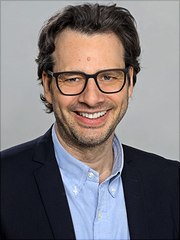
PD Dr. Felix Roth is a Senior Lecturer at the Department of Economics , University of Hamburg , where he has been affiliated since 2021. His research focuses on the interplay between intangible capital and productivity growth, as well as the political economy of the European Monetary Union (EMU) and the euro. He has published extensively in leading international journals such as Journal of Common Market Studies , Review of Income and Wealth , and Science and Public Policy . University of Hamburg (2021–present) Centre for European Policy Studies (2007–2014) DG ECFIN Research Fellow (2014–2015) Research Interests include quantifying intangible capital's impact on productivity across macro, meso, and microeconomic levels, analyzing trust dynamics in economic systems, and evaluating EU competitiveness through digital innovation. His work spans theoretical modeling and empirical analyses of EU institutions. Advisory Roles and Grants are not explicitly mentioned in the provided texts. He has contributed to academic discussions via presentations at institutions like Pennsylvania State University and the European Commission's DG RTD.
Lorenzo Carlos Quesada Ruiz is an Associate Professor in the Department of Geography at the University of Las Palmas de Gran Canaria, Spain. His academic profile falls under the Branch of Knowledge 'Arts and Humanities' and the Area of Knowledge 'Manufacturing Process Engineering'. Ph.D. in Geography Master of GIS and Remote Sensing His research focuses on environmental geography, particularly spatiotemporal modeling of illegal landfills in Canary Islands. He applies geostatistical analysis and remote sensing techniques to study ecosystem dynamics, land use conflicts, and anthropization processes in island environments. Recent publications highlight trends in environmental crime mapping, CO2 sink identification, and land surface phenology analysis using Sentinel-2 data. His methodological contributions include novel machine learning frameworks for spatial prediction models. He collaborates with researchers like José A. Caparrós-Santiago and Victor F. Rodriguez-Galiano, publishing in high-impact journals such as Science of The Total Environment and Waste Management (SJR Q1 journals). While no explicit awards are listed, his work addresses critical sustainability issues in Macaronesian ecosystems.
Dr. Lexi Neame is a Visiting Assistant Professor of Political Science at Reed College , specializing in the history of political thought , contemporary democratic and feminist theory , and the politics of science, technology, and the environment . Her research interrogates public epistemic authority through Hannah Arendt’s philosophy and interdisciplinary science and technology studies, supported by grants from Humanities Without Walls Consortium and the Mellon Foundation . She teaches courses like The Human Condition , Democracy and Data , and Body Politics , emphasizing critical reading, thinking, and writing . Education : PhD in Political Science and Graduate Certificate in Science in Human Culture from Northwestern University Prior Positions : Postdoctoral Fellow/Lecturer at Stanford University , Dissertation Fellow at University of California, Santa Barbara Research Focus : Explores how scientific knowledge circulates in democratic societies , analyzing climate science , data politics , and epistemic breakdowns . Her book Common Knowledge: Public Epistemic Authority and Democratic Faith critiques technocratic and educative responses to “post-truth” crises, advocating for knowledge infrastructures as sites of democratic world-building. Scientific Awards : Finalist, Review of Politics Prize 2018 Teaching Innovation : Co-designed interdisciplinary courses such as Earth, Nature, World (with Mellon Environmental Humanities Incubator) and Democracy and Data , blending political theory with empirical research and digital media analysis . She advises senior thesis students and organizes workshops like Provocations at UC Santa Barbara’s Center for Humanities and Social Change.
Dr. Paulina Dobroć is a Researcher at the Institute for Technology Assessment and Systems Analysis (ITAS) at Karlsruhe Institute of Technology (KIT), where she serves as a Scientific Associate in the Research Group "Sociotechnical Futures and Policies". She has taught courses on discourse analysis and linguistics at KIT's Institute for Technology Futures and Department of Science Communication. Her educational background includes a Master of Arts in Comparative Literature from Johannes Gutenberg University Mainz (specializing in post-structuralism, semiotics, and literary theory), a Bachelor of Arts in German from Karlsruhe Institute of Technology (specializing in literary theory), and a Licentiate degree in Polish Philology from Angelus Silesius University of Applied Sciences in Poland (majoring in literary theory and pedagogy). Dr. Dobroć's research focuses on the intersection of cultural semiotics, technology assessment, and sociotechnical futures. She examines how visions and narratives shape technological development and societal transformation, with particular attention to sustainability assessment, digitalization (especially open source and blockchain technologies), and vision assessment methodologies. Her work applies cultural semiotic analysis to understand the social consequences of technological concepts like "openness" in open source movements. Her publications reveal consistent engagement with transformative vision assessment, exploring how cultural semiotics can improve the assessment of sociotechnical futures. She has made significant contributions to analyzing 3D printing technologies, open government initiatives, and sustainability transitions, often examining how narratives influence technological futures across multiple disciplines including semiotics, science and technology studies, and sustainability research. Dr. Dobroć has received a doctoral scholarship from the Hans Böckler Foundation (2017-2020) and completed her dissertation titled "Open Source, Open Government, Blockchain: A cultural semiotic study of the Openness vision" in 2023. She maintains professional connections through ORCID, ResearchGate, and LinkedIn, and actively participates in international conferences on technology assessment and future studies.
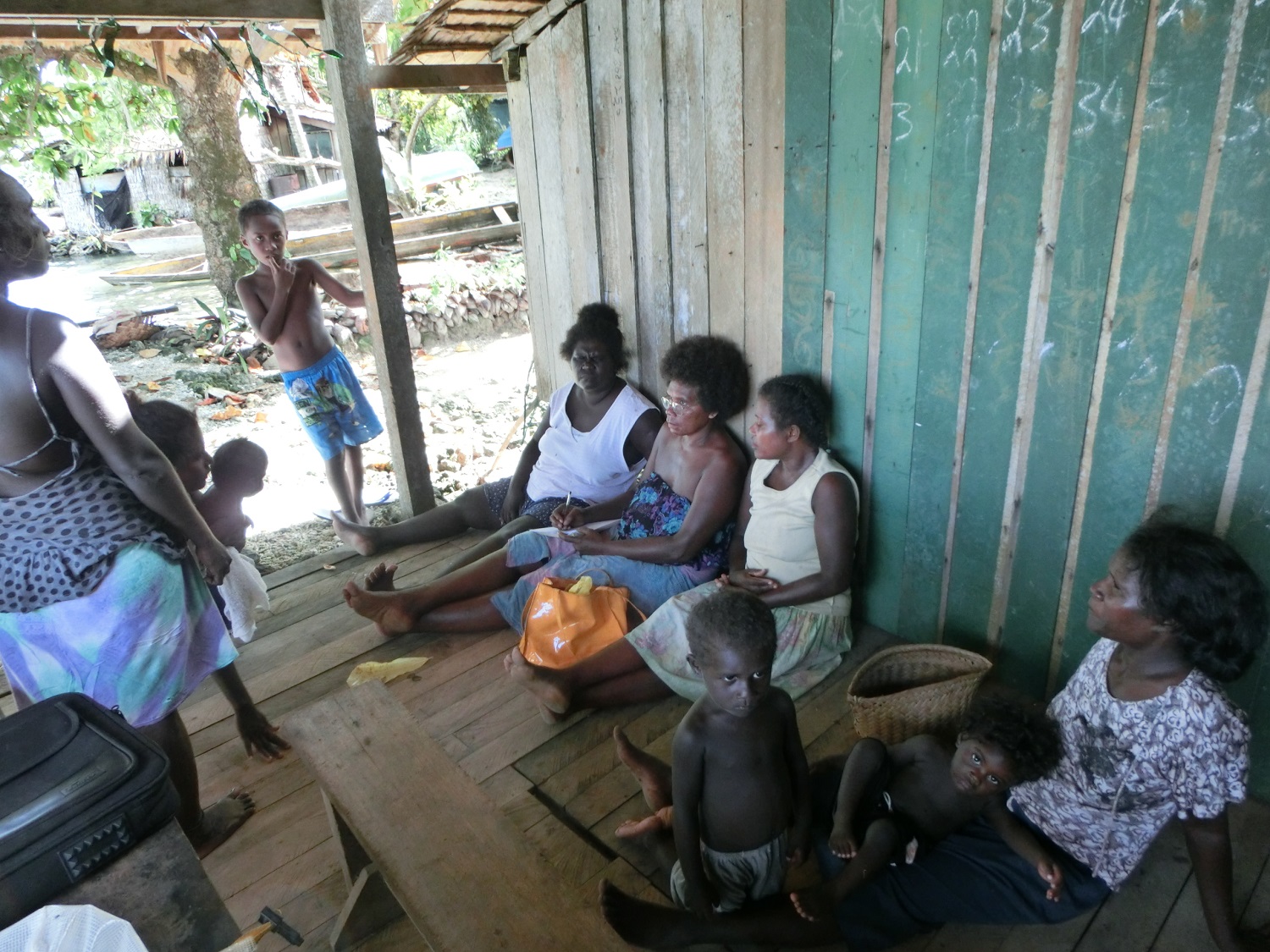
Professor Shankar Aswani is affiliated with Rhodes University in the College of Anthropology . His academic rank is Professor , and he has been actively engaged in research spanning the Western Solomon Islands, Madagascar, and South Africa. Current research focuses on marine indigenous environmental knowledge , climate change adaptation , community-based resource management , and anthropological methods . He leads the Western Solomons Conservation Program (WSCP) and has secured funding from organizations such as the MacArthur and Packard Foundations , Conservation International (CI) , National Science Foundation (NSF) , and Pew Charitable Trusts . His work has resulted in the establishment of 30 locally managed Marine Protected Areas (MPAs) and small-scale rural development initiatives. Article Trends: Recent publications emphasize coastal vulnerability assessments , governance mapping , local ecological knowledge , and marine conservation strategies . Methodologies include interdisciplinary collaboration, ethnographic studies, and policy frameworks. Scientific Awards: Pew Fellowship in Marine Conservation (2005) NRF B1 rating (2015–2020) Grants and Projects: Aswani has received funding for initiatives such as Sandisa Imbewu (2015–2018), a NRF grant on human dynamics in South Africa’s fisheries, and long-term projects in the Solomon Islands (1999–present) and Madagascar (2016–2018).
Prof. Dr. Maria Backhouse is Chair of Environmental Sociology with focus on social-ecological transformation, resilience design and climate at the University of Augsburg's Faculty of Humanities and Social Sciences. She directs the Center for Climate Resilience and leads research on global socio-ecological inequalities. Education includes: PhD in Sociology (FU Berlin, 2014) Diplom in Sociology (FU Berlin, 2006) Her research examines intersections of political ecology, climate resilience, and global inequalities through decolonial frameworks. Key focuses include bioeconomy impacts, land conflicts, and renewable energy transitions. Publications emphasize critical analysis of bioeconomy models, socio-ecological inequalities in agricultural systems, and property rights in biodiversity governance. Recent work explores tensions between green transition policies and social justice. Currently advises doctoral candidates on topics including sugarcane agribusiness, technology in the Anthropocene, and EU green recovery policies. Leads DFG/BMBF-funded projects on climate resilience and bioeconomy inequalities. Heads research team at Center for Climate Resilience with focus on transnational environmental governance and transformation design.
Michael J. Madison is a Professor of Law at the University of Pittsburgh , with secondary appointments at the Clinical and Translational Science Institute (CTSI) and affiliations with Pitt Cyber , Ostrom Workshop , EDHEC Business School Augmented Law Institute , and Center for Governance and Markets . He co-founded the Workshop on Governing Knowledge Commons and Future Law Works , and serves as Faculty Director of the Future Law Project . His research spans knowledge commons governance , data and AI policy , intellectual property law , and smart city frameworks . Recent work explores blockchain governance, biomedical knowledge sharing, and the intersection of law and technology. He received the 2025 Chancellor’s Distinguished Research Award and 2014 Chancellor’s Distinguished Teaching Award , and was elected to the American Law Institute in 2016. Key Projects : Governing Smart Cities as Knowledge Commons (2023), Governing Medical Knowledge Commons (2017) Awards : Yale Medal (2016), IAALS Fellowship (2014) Professor Madison teaches Copyright Law , Trademark Law , and Leadership courses. He co-hosts Your Leadership Podcast and writes for Substack newsletter Everything in Between , focusing on institutional design and post-industrial societies.
Sanne Sprenger MA serves as a Practical Lecturer in the Department of Media and Culture Studies within the Faculty of Humanities at Utrecht University. Her position focuses specifically on Media and Performance Studies, where she contributes to undergraduate programs including Communication and Information Sciences, Media and Culture, and Language and Cultural Studies. Her research interests center around Media Literacy , Critical Media Studies , and Participatory Action Research , with particular emphasis on applications for marginalized communities and young migrants. Her interdisciplinary approach combines community engagement with media production methodologies. Her scholarly output demonstrates a consistent focus on critical media literacy education with marginalized populations, particularly young migrants. The publications show an evolution from examining media production as a pathway to participation (2018), to analyzing lessons learned from participatory action research projects (2021), and most recently addressing collaborative knowledge production frameworks with marginalized communities (2024). Sanne Sprenger teaches courses including Community Art: Practice and Theory , Audiovisual Media Practice , and Audiovisual Media Workshop , applying her expertise in transmedia storytelling and community engagement. She is also the founder/creator of audiovisual stories at Common Frames (www.commonframes.nl), demonstrating her commitment to practical applications of media theory and production outside the academic setting.
Inte Gloerich is a PhD researcher and lecturer specializing in media studies, technology culture, and blockchain imaginaries. She holds positions at Utrecht University where she is part of the Transmission in Motion research group in the Department of Media and Culture Studies, and at the Amsterdam University of Applied Sciences where she serves as a philosophy lecturer in the Faculty of Digital Media and Creative Industries. She also teaches in the New Media and Digital Cultures program at the University of Amsterdam. Her research focuses on sociotechnical imaginaries in blockchain art, design, and products, examining the politics, artistic imagination, and (counter)cultures surrounding digital technology, digital economy, and online identity. Her work integrates feminist, decolonial, and ecological theory to analyze power structures in technology culture. She is particularly interested in how technologies make promises about truthfulness and objectivity, and how these promises relate to historical knowledge production and power relations. Gloerich's recent publications and presentations demonstrate a strong focus on blockchain culture, NFTs, DAOs, and the intersection of technology with social justice issues. Her work spans academic publications, edited volumes including MoneyLab Reader 2 and State Machines, and numerous conference presentations across Europe. She has co-founded initiatives like the Feminist Economies Collective and has been actively involved in organizing events around blockchain, digital culture, and alternative economic models. PhD Dissertation: Reimagining the Truth Machine: Blockchain Imaginaries Between the Rational and the More-than-Rational (2025) Co-edited volumes: MoneyLab Reader 2: Overcoming the Hype and State Machines: Reflections and Actions at the Edge of Digital Citizenship Current research projects include Artists, Activists, and Worldbuilders on Decentralised Autonomous Organisations (2025) As an educator, Gloerich teaches courses on blockchain, digital culture, and media theory at multiple institutions. Her teaching portfolio includes Blockchain: Imaginaries, Economics, and Cultures; Analysing Digital Culture; and New Media Research Practices. Her academic trajectory began with a Masters in New Media and Digital Cultures from the University of Amsterdam, and she has since established herself as a significant voice in critical blockchain studies and media theory.
Alex Villas Boas is Principal Investigator and executive coordinator of CITER - Research Center in Theology and Religious Studies at the Catholic University of Portugal (UCP) in Lisbon. He serves as Professor of Theology and Literature in the Doctoral Program in Theology and of Hermeneutics of Religious Texts in the Master's in Religious Studies, both at the Catholic University of Portugal. His education includes an Aggregation in Ethics and Theological Language from the Pontifical Catholic University of São Paulo (PUC SP), a Post-doctorate in Theology from the Pontifical Gregorian University of Rome (PUG), a PhD in Theology from the Pontifical Catholic University of Rio de Janeiro (PUC Rio), and a Master's degree in Theology from the Pontifical Catholic University of São Paulo (PUC SP). Villas Boas' research spans multiple interconnected fields including Theology and Literature, Systematic Theology, Theological Hermeneutics, Spirituality, and Public Theology. His work explores the intersection of religious thought with literary expression, cultural phenomena, and contemporary social issues. He has developed significant expertise in the Spiritual Exercises of Saint Ignatius of Loyola, particularly in relation to the works of Karl Rahner and Hans Urs von Balthasar. His recent publications demonstrate a consistent focus on theological archaeology, genealogical approaches to religious knowledge, and the application of theological perspectives to contemporary challenges like migration, mental health in multicultural contexts, and ecological concerns. His work shows increasing engagement with post-secular society and the role of public theology in addressing contemporary crises. Religions 2022 Young Investigator Award (2023) FAPERJ Nota 10 (2012) Prêmio Bolsa de Produtividade Fundação Araucária (2018) Prêmio de Produtividade em Pesquisa (2019) As Principal Investigator, Villas Boas leads multiple significant research projects including COLIVING2020 on intercultural living and public theology, CRC1975-1999 on political spirituality and democracy, and ARCHAEOLOGY2022 on theological knowledge in post-secular societies. He has advised numerous graduate students on topics ranging from Carthusian perspectives to messianic phenomena in Brazilian religious history. His international collaborations span institutions in Portugal, Canada, Mozambique, Brazil, Argentina, and Austria. Villas Boas has directed the Research Centre for Theology and Religious Studies (CITER) and previously served as Editor-in-Chief of Teoliterária – Brazilian Journal of Literature and Theology (2011-2021). He currently serves as assistant editor of the Ephata Journal. His work contributes to multiple UN Sustainable Development Goals, particularly those related to education, peace, and social justice.
Alexandre Palma is a theologian, priest, and Associate Professor at the Faculty of Theology of the Catholic University of Portugal , where he teaches courses including Mystery of God, Christology, and Theology of Religions. He also serves as a researcher at the Center for Research in Theology and Religious Studies (CITER) . His academic journey includes a Doctorate in Theology from the Pontifical Gregorian University (2013), a Master’s in Theology from the Catholic University of Portugal (2008), and a Theology degree from the same university (2005). Palma’s research focuses on Trinitarian theology , public theology , hermeneutic theory , and environmental justice . His work explores intersections between theological-political discourses in post-secular societies, intercultural habitation during pandemics, and the centenary of Fátima as a plural hermeneutic moment. Recent projects include the ARCHAEOLOGY2022 and COLIVING2020 , addressing cultural ecology and theological knowledge. Thematic Trends: Trinitarian Experience, Religious Identity, Cultural Hermeneutics, Environmental Ethics He contributes to editorial boards such as Religions and Communio , and organizes academic events like the 9º Colóquio ReliMM (2024). His research output includes 42 scientific publications, with recent works on feminist hermeneutics, mental health in multicultural churches, and theological responses to pandemics.
Letteria Grazia Fassari is an Associate Professor at Sapienza University of Rome, Department of Social and Economic Sciences, Faculty of Political, Sociological and Communication Sciences. She specializes in Cultural Sociology and Social Change, with particular focus on gender dynamics, media cultures, and urban sociology. Her research explores social knowledge in global cities and creative organizations, including the aesthetic reflexivity of Muslim women in Italy. Born: June 30, 1965 Doctorate: 2000, Sapienza University (Dissertation: 'Il sistema universitario italiano in transizione') International Experience: Visiting Scholar at MIT (2014-2015), Peking University researcher (2011), and Copenhagen scholar (1995) Her research spans cultural and social change, media cultures, and urban sociology. She has led significant projects on Italian Muslim communities, public space quality, and academic organizations. Her recent publications examine holographic public spaces, aesthetic reflexivity, and cultural common imaginaries. She coordinates Erasmus programs with Universidad de Cadiz and University of Lille, and serves on editorial boards for Scuola Democratica and Qtimes WebMagazine. She supervises PhD theses and teaches undergraduate and postgraduate courses in cultural sociology. Key research themes include: Gender and professional identity Academic organization analysis Public space dynamics Intercultural aesthetics Urban regeneration
Giampaolo Garzarelli is an Associate Professor at the Department of Social and Economic Sciences, Sapienza – University of Rome, Italy. His academic role involves teaching courses such as Public Economics and Finance (second-year students) and Economics of Institutions and Fiscal Sustainability (with Professor Galli). Classes are held in person at the former Faculty of Political Sciences (Rome) and Istituto Superiore di Sanità. He offers office hours in Room 105 or via appointment through email. Education: American University, Washington, DC Luiss-Guido Carli, Rome University of Connecticut, Storrs Sapienza – University of Rome Garzarelli’s research spans Public Economics , New Institutional Economics , and Political Economy , focusing on themes like: Second-generation fiscal federalism and its laboratory aspects Trade-offs between centralization and decentralization State formation through internal exit Intersection of Austrian economics and organizational theory Epistemic foundations of socioeconomic analysis His publications address diverse topics including: Capital theory and hermeneutics Populism as a composite ideology Blockchain coordination mechanisms Policy centralization during crises Garzarelli serves as Editor-in-Chief of the Journal of Public Finance and Public Choice (Bristol University Press). His work connects academic research with institutional practice, particularly in fiscal governance and organizational innovation.
Dr Helene Snee is a Senior Lecturer in Sociology at Manchester Metropolitan University, based in the Geoffrey Manton Building. She has been a core faculty member since 2014, teaching critical sociology that challenges students' 'common-sense' understandings of social structures while promoting diverse scholarly voices beyond traditional Western canons. Her academic credentials include a BA(Econ)(Hons) in Sociology (2001) and PhD in Sociology (2010), both from the University of Manchester. Prior to joining Manchester Met, she served as Lecturer and Research Associate in Sociology at the University of Manchester from 2010-2014. Snee's research centers on cultural class analysis and intersectional inequalities, with expertise spanning social mobility, gender dynamics, youth education, digital sociology, and cosmopolitanism. Her work consistently examines how cultural practices reproduce social hierarchies, particularly through Bourdieusian frameworks. She advocates collaborative feminist methodologies as a member of the 'Res-Sisters' research collective. Analysis of her 15 most recent publications reveals two dominant trajectories: (1) Contemporary class analysis in 21st-century Britain using the Great British Class Survey, and (2) Nursing education as a critical site for examining class/gender barriers ('class ceiling'). Her methodological innovations in digital research ethics and blog analysis provide foundational tools for online sociological inquiry. Key recognitions include: Shortlisting for the British Sociological Association Philip Abrams Memorial Prize (2015) for her book 'A Cosmopolitan Journey?' Snee secured British Academy funding (COV19\201055) as Principal Investigator for her Covid-19 nursing education impact study. She currently supervises PhD candidates Sophie Harris (quantifying habitus in mathematics education) and Beatrice Tailby Hardstaff (youth engagement in working-class movements), welcoming new doctoral researchers in social class, gender, and educational inequality. She actively contributes to the 'Res-Sisters' feminist collective, which develops intersectional approaches to studying systemic inequalities through collaborative knowledge production.
Zoe Nyssa is an Associate Professor in the Department of Anthropology at Purdue University, specializing in applied anthropology and computational social science. Her research explores intersections of knowledge practices, environmental governance, and risk distribution. Education: PhD in Anthropology (University of Chicago); MA in Anthropology (University of Minnesota-Twin Cities); BA in Physics and Astronomy (University of Toronto) Her work combines ethnographic methods with computational techniques like text mining to analyze scientific decision-making and environmental justice. Current projects include developing Purdue's Master’s track in Applied and Practicing Anthropology. Her publications focus on environmental governance, biodiversity management, and the epistemic frameworks of scientific communities. Articles span interdisciplinary collaborations, institutional design, and critical policy analysis. Predoctoral Fellow, Max Planck Institute for History of Science Ziff Postdoctoral Research Fellow, Harvard University Center for the Environment Science, Technology and Society Fellow, Harvard Kennedy School Dr. Nyssa advises graduate students on topics including climate policy, biodiversity governance, and computational anthropological methods. Her research has received funding from leading institutions in science and environmental studies.