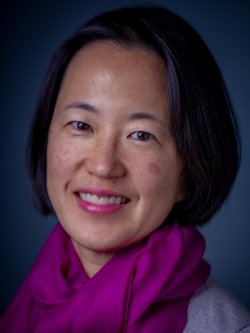
Dr. Beth Wassell is a Professor in the Department of Content Area Teacher Education at Rowan University's College of Education. She teaches undergraduate and graduate courses in language teaching and culturally responsive education. Her research employs critical sociocultural frameworks to examine educational equity in P-12 settings, focusing on emergent bilingual students and social justice in world language education. Her research explores agency in reshaping teaching structures, urban schooling experiences, and anti-racist language education. Recent studies investigate DEI in world language curricula, translanguaging approaches, and family-school partnerships in immigrant communities. Analysis of recent publications reveals strong emphasis on educational equity, anti-racist pedagogy, language education reform, and immigrant student support. Methodologically, her work prioritizes participatory approaches centering student/family voices. Awards include: 2019 Fulbright Core Scholar to Spain Dr. Wassell consults with public school districts and develops professional development programs. Her educational background includes: Ed.D. in Teaching, Learning and Curriculum (University of Pennsylvania) M.A. in Spanish (University of Central Florida) Graduate Certificate in TESOL (Pennsylvania State University) B.A. in Spanish and Secondary Education (Rowan University)
Jennifer Szydlik is a Professor at the University of Wisconsin Oshkosh, Department of Mathematics. She specializes in mathematics education with a focus on preparing elementary teachers. Her research emphasizes mathematical practices, pedagogical strategies, and educator development. Her work explores how to foster mathematical reasoning and conceptual understanding in pre-service teachers through inquiry-based learning and classroom dialogue. Key areas include Common Core Standards implementation, algebra/geometry pedagogy, and assessing mathematical sophistication. Her publications span over two decades, from foundational calculus education studies (1995) to contemporary work on transforming elementary teacher preparation (2020). Current research trends focus on improving preservice teachers' mathematical beliefs and content knowledge through innovative curricula. No scientific awards are listed, though her CV indicates sustained contributions to mathematics education scholarship. She advises no listed students but actively engages in curriculum development for teacher training programs. No specific grants or labs are documented in the provided text.
Sascha Friesike is Professor of Digital Innovation Design at Berlin University of the Arts and Director of the Weizenbaum Institute for Networked Society. He also serves as program director for 'Leadership in Digital Communication/Innovation' at Berlin Career College and maintains research affiliations with the Alexander von Humboldt Institute for Internet and Society. His research examines how digitalization transforms creative and knowledge production processes across academia, industry, and society. Core themes include digital creativity, remix innovation patterns, open science infrastructures, and societal impacts of algorithmic systems. Recent work analyzes how maker communities leverage digital tools for collaborative creation and how scientific communication adapts to social media platforms. Friesike has published extensively on knowledge recombination in digital environments, developing taxonomies of remixing behaviors in 3D printing communities. Current projects investigate incentive systems for academic collaboration, AI-augmented creativity, and the governance of open knowledge ecosystems. He actively contributes to science policy debates through publications exploring tensions between openness in scientific research versus commercial innovation.
Natale Rampazzo is a Research Professor and Research Director at the National Research Council (CNR) within the Institute for Research on Innovation and Services for Development (IRISS). He holds a Doctorate in Administrative Structures History from the University of Salerno and has held academic roles at multiple universities, including Naples Federico II and Link Campus University. His work focuses on intellectual property law, innovation governance, and regulatory frameworks for technology and culture. Dr. Rampazzo directs the IRISS Newsletter, coordinates research projects on geographical indications and sustainable fishing, and advises on EU policies. He chairs the Institute Council and evaluates research projects for the European Commission, ANVUR, and others. His qualifications include a national qualification as a full professor (2017) and expertise in international law, legal history, and administrative simplification. Key research projects include 'Geographical Indications as Tools for Economic Development' and 'BBNJ Agreement Implementation.' His publications span law reviews, edited volumes, and books on topics like TRIPS compliance, wine law history, and administrative reform challenges for businesses. He maintains dual roles as a practicing lawyer (since 1999) and journalist (since 2009), emphasizing interdisciplinary engagement. His work bridges legal, economic, and cultural dimensions of innovation, with a focus on EU policy integration and societal impact.
Prof. Doris Schroeder is a Professor of Moral Philosophy at the School of Law, UCLan Cyprus. She also serves as Director of the Centre for Professional Ethics at UCLan UK and a Professorial Fellow at the Centre for Applied Philosophy and Public Ethics (University of Melbourne). Her academic career spans over three decades with roles at institutions like the University of Oslo and the University of Birmingham's Centre for Bioethics. Prof. Schroeder holds a PhD in Philosophy from the University of Birmingham (1998) and multiple advanced degrees in Philosophy, Politics, and Business/Economics from RWTH Aachen University. She is a Fellow of the UK Higher Education Academy and holds teaching qualification SD2. Her research focuses on global ethics, including benefit sharing, international justice, vulnerability in research, and dignity. She has organized major conferences such as 'Ethics Dumping – Looking for Justice' at the European Parliament and co-chaired EU-funded projects like the €4.7M 'Pro-active Pandemic Crisis Ethics and Integrity Framework' (2022–2025). Prof. Schroeder has published extensively on ethics in global research partnerships, artificial intelligence, and responsible innovation. She serves on ethics review panels for the European Commission and is Series Editor for SpringerBriefs in Research and Innovation Governance.
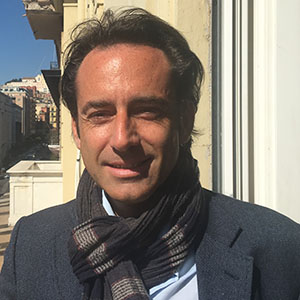
Alessandro Tavoni is a Full Professor of Environmental Economics at the Department of Economics, University of Bologna. Previously, he served as Associate Professor at the London School of Economics (LSE), leading the Changing Behaviour Research Programme at the Grantham Research Institute. His research focuses on overcoming behavioral and political barriers to climate cooperation through game theory and experimental methods. He leads the ERC Consolidator Grant-funded 'GREEN TIPPING' project, exploring social tipping interventions to amplify climate action. Tavoni holds visiting roles at the LSE, Princeton University, and the Beijer Institute. His work spans climate policy design, international agreements, and sustainability strategies. Education & Career: Professor of Environmental Economics, University of Bologna (current) Associate Professor, LSE (prior role) Research Interests: Game theory applied to climate policy Social norms and tipping interventions Experimental economics for sustainability solutions Climate clubs and international cooperation mechanisms Grants & Awards: ERC Consolidator Grant (2023) for 'GREEN TIPPING' Advising & Teams: Pioneers the GREEN TIPPING initiative with postdoc recruitment Leads interdisciplinary teams at the Grantham Research Institute and Princeton Labs & Collaborations: Changing Behaviour Research Programme at LSE Cross-institutional partnerships with the Beijer Institute and EAERE
RA (Rutgerd) Boelens is a **Professor of Water Governance and Social Justice** at Wageningen University & Research (Department of Environmental Sciences) and a **Special Professor of Political Ecology of Water** at the University of Amsterdam (CEDLA). He also holds visiting professorships at Catholic University Peru and Central University Ecuador. His research focuses on hydrosocial territories, river commons, and environmental justice movements. He leads the **ERC Consolidator 'Riverhood' project** and coordinates initiatives like the **Water Justice Alliance** and **NWO Water Struggles**. Boelens explores how water governance intersects with power dynamics, socio-ecological justice, and translocal movements. He has advised on projects such as the **Tagus-Segura Interbasin Transfer** and **Groningen Gas Extraction**, analyzing their impacts on communities and ecosystems. His work bridges academia and activism, emphasizing grassroots river defense strategies. Key projects include the **Moving Rivers Network** (www.movingrivers.org) and collaborations with global water justice movements. He has published extensively on river imaginaries, multispecies justice, and climate adaptation, with a focus on Latin America, Spain, and the Netherlands.
Jacko van Ast is an Associate Professor at the Department of Public Administration, Erasmus School of Social and Behavioural Sciences, Erasmus University Rotterdam, specializing in institutional and legal dimensions of international water management within multi-disciplinary teams addressing complex institutional change processes. Education: Master of Dutch Law, Erasmus University Rotterdam (1986), with triple specialization in civil law, business law, and environmental regulation; thesis focused on enforcement of environmental policy developed during an internship at the Environmental Federation of the Province of South-Holland. Research Interests: Van Ast's work centers on water governance , environmental law , and sustainable development across transboundary contexts. His research critically examines how legal frameworks interact with institutional arrangements in water management, emphasizing public participation mechanisms , expert knowledge integration , and adaptive governance for flood risk mitigation and climate adaptation. Key case studies span the Netherlands, India, Indonesia, Poland, and South Africa, revealing how traditional institutions like Indonesia's 'Adat' systems contribute to sustainable common-pool resource management while confronting modern governance challenges. Publication Trends: Analysis of his 114 publications (2023-2011) reveals consistent focus on institutional innovation in water governance, particularly urban lake systems and transboundary river basins. His work demonstrates evolving methodology from legal analysis toward participatory action research, integrating stakeholder values with technical expertise. Recurring themes include co-valuation of flood risks, institutional barriers to sustainable water management, and the role of cultural values in shaping governance outcomes across diverse socio-political contexts. Scientific awards: None documented in source materials. Advising and Grants: While supervising at least one graduate student (per 'Supervised Work' notation), Van Ast has coordinated the environmental infrastructure specialization for IHS-EUR's Master on Urban Development and led the pre-master program for Public Administration. His grant portfolio includes international projects on South African water law, Polish flood management systems, and Dutch-French-German water regulation, often involving multi-stakeholder partnerships with governmental agencies and NGOs to address practical governance challenges. Labs and Teams: He operates within the Erasmus Centre for Sustainability and Management (ESM) and Institute for Housing and Urban Development Studies (IHS-EUR), collaborating with interdisciplinary teams combining environmental scientists, legal scholars, and policy analysts. Current initiatives focus on integrating traditional knowledge systems with modern governance frameworks for climate-resilient water management in rapidly urbanizing regions.
Dr. Xiuwen Wu is an Associate Professor in the Special Education department at the National College of Education, National Louis University, where she also coordinates the B.A. Special Education program. She joined the university in 2003 and teaches courses at undergraduate and graduate levels, including Introduction to Special Education , Literacy in Inclusive Education , and Assistive Technology . She holds a Ph.D. in Special Education from Michigan State University (2003), an M.A. in Applied Linguistics from Beijing Foreign Studies University (1996), and a B.A. in English from Harbin Institute of Technology (1993). Her teaching background includes EFL instruction in China and lectureship at her alma mater. Dr. Wu's research explores innovative instructional frameworks for diverse learners, with emphasis on: Visual literacy and primary sources in special education Co-teaching models and Universal Design for Learning (UDL) Mathematics education using game-based approaches like the Go game Practice-based teacher education and assistive technology integration Her publications demonstrate strong focus on mathematics pedagogy through game-based learning, high-leverage teaching practices in special education, and technology-enhanced feedback mechanisms. Recent works analyze the efficacy of traditional games in elementary math curricula and core practices in teacher preparation programs.
Dr. Mika Munakata is a Professor of Mathematics at Montclair State University's College of Science and Mathematics. She specializes in mathematics education, focusing on interdisciplinary science-mathematics connections, teacher leadership, and STEM education at the undergraduate level. Her roles include teaching methods courses for future educators, content courses for inservice teachers, and research courses for doctoral students. She collaborates with K-12 school districts to implement innovative programs. Education: Bachelor of Arts, Pomona College Master of Arts, Teachers College, Columbia University Master of Science, Teachers College, Columbia University Doctor of Philosophy, Columbia University Research Interests: Dr. Munakata investigates the impact of professional development on science/mathematics teachers, teacher leadership development, and undergraduate STEM education. Her work emphasizes creativity in teaching across disciplines and the role of innovative programs in fostering student achievement. Key Projects: Wipro Science Education Fellowship: Teacher-leadership program supporting K-12 science educators. Creativity in Mathematics and Science (CMS) Project: NSF-funded initiative integrating creativity into STEM education. CUSP Partnership: NJ grant improving 5-8 grade mathematics through Common Core-aligned professional development. Crossing Boundaries Project: Developing math-ecology modules for undergraduate biology students. Grants & Partnerships: Over $2M in external funding from NSF, NJDOE, and industry partners like Wipro Technologies. Collaborations include University of Massachusetts Boston, Bergen Community College, and local school districts. Labs/Teams: Leadership in the CMS Project team and PRISM (Professional Resources in Science and Mathematics) collaboration. Active in Montclair State’s STEM education innovation initiatives.
Reinhard Bernsteiner is an Adjunct Professor at the University of Nebraska at Omaha (Department of Information Systems & Quantitative Analysis) and a long-standing lecturer at Management Center Innsbruck, where he teaches in programs including Industrial Engineering & Management (Master), Management, Communication & IT (Bachelor/Master), and Mechatronics (Bachelor). His academic career spans over two decades, with additional roles such as Lecturer at the Higher Technical Vocational School for Industrial Engineering since 1995. He holds a Dr. from the University for Health and Life Sciences (2004–2008) and a Mag. from Johannes Kepler University (1985–1989). Bernsteiner's research centers on emerging technologies and their societal impacts. Primary interests include: Internet of Things (IoT) : Applications in education and industry Augmented Reality (AR) : Industrial training and educational tools Knowledge Management : Frameworks for open innovation AI & Digital Transformation : Ethical implications and business integration Educational Technology : Enhancing learning through VR, gamification, and data analytics His 15 most recent publications (2024–2025) reveal a strong focus on IoT/AR in vocational education, AI-driven project management, blockchain in healthcare, and digital transformation challenges. Common themes include empirical studies on technology adoption, systematic literature reviews, and interdisciplinary approaches bridging engineering, business, and pedagogy. Awards & Recognition: Best Paper Award at EDULEARN for Motivating Students to Acquire Digital Skills (2021) Bernsteiner has supervised 100+ bachelor, diploma, and master theses, primarily exploring IoT, AR, data science, and business process optimization. Students investigated topics ranging from AI ethics to sustainable supply chains, reflecting his interdisciplinary mentorship. No grant or lab affiliations were documented.
Prof. PhDr. Vasil Gluchman, CSc. is a distinguished academic serving as a Professor at the University of Prešov’s Faculty of Arts, heading the Institute of Philosophy and Ethics. He holds the UNESCO Chair in Bioethics and serves as Chief Editor of Ethics & Bioethics (in Central Europe) . His academic career spans roles including editor of Bioethics in Central Europe and author of influential books like Etika na Slovensku – minulosť a prítomnosť (Ethics in Slovakia – Past and Present). His research focuses on bioethics, consequentialist ethics, and the history of ethics in Slovakia. Key interests include Slovak Lutheran ethics, applied ethics, and moral philosophy. Gluchman’s work bridges historical and contemporary ethical inquiries, often addressing Slovak and Central European contexts. Recent publications highlight themes like Marxist labor theory, Slovak national movements, and African philosophical perspectives. His articles frequently intersect ethics with historical, political, and cultural studies, reflecting a multidisciplinary approach. Awarded the UNESCO Bioethics Chair, he has contributed to global bioethics discourse through editorial leadership and academic outreach. His research also explores ethics in education, medical practices, and public administration, emphasizing the common good and moral reasoning.
Mai Otsuki is an Associate Professor in the Department of Information and Computer Science at Keio University's Faculty of Science and Technology, specializing in Human-Computer Interaction with a focus on Augmented and Virtual Reality systems. Her research spans nearly two decades, with an extensive publication record in top-tier venues including CHI, UIST, VRST, and IEEE Transactions on Visualization and Computer Graphics. Dr. Otsuki's primary research interests center on developing novel interaction techniques for augmented and virtual environments, particularly focusing on remote collaboration, spatial interfaces, and haptic feedback systems. Her work addresses fundamental challenges in how humans perceive and interact with virtual elements, with practical applications in remote instruction, industrial training, sports education, and service industry skill development. She has pioneered approaches for gaze representation, semantic labeling in AR, and physical interaction with virtual objects. Her recent publications (2023-2025) demonstrate continued innovation in applying AR/VR technologies to practical domains including industrial machinery operation, shopping experiences, and assembly tasks, with growing emphasis on physiological metrics and cognitive load assessment. Her work consistently bridges theoretical HCI principles with real-world applications, showing particular strength in experimental design and user-centered evaluation methodologies. Dr. Otsuki has established a robust collaborative network with researchers across Japan and internationally, frequently working with Hideaki Kuzuoka, Asako Kimura, Fumihisa Shibata, and Hideyuki Tamura. Her research group appears to focus on developing practical AR/VR systems that address specific human performance challenges in collaborative and instructional contexts.
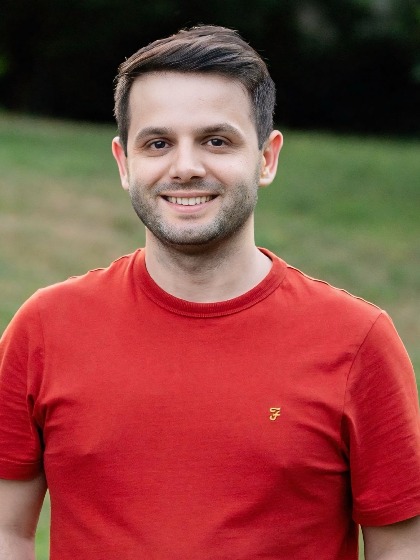
Islam Borinca is an Assistant Professor of Social Psychology at the University of Groningen, Netherlands, within the Faculty of Behavioural and Social Sciences. His research focuses on conflict dynamics, intergroup relations, and reconciliation mechanisms in post-conflict settings. He investigates how techniques like apologies, meta-humanization, and intergroup contact reduce dehumanization and foster social cohesion. Borinca holds a PhD from the Universities of Geneva and Lausanne (2016–2021) and has held academic roles at University College Dublin, University of Limerick, and Université Libre de Bruxelles. He is an Associate Editor of Peace and Conflict: Journal of Peace Psychology and contributes to UNESCO’s Inclusive Policy Lab. Education: PhD in Social Psychology (Geneva/Lausanne, 2016–2021) M.Sc. Counseling & School Psychology (University of Pristina, 2013–2015) B.A. Psychology (University of Pristina, 2008–2012) Research Interests: Conflict resolution, intergroup reconciliation, dehumanization reduction, post-conflict societies, and the psychological underpinnings of collective victimhood. His work emphasizes applying interventions in diverse contexts, such as Kosovo and Northern Ireland. Publications: Over 30 peer-reviewed articles in journals like Journal of Experimental Social Psychology , Personality and Social Psychology Bulletin , and Peace and Conflict . Recent work explores meta-humanization’s role in reconciliation and normative apologies’ impact on victimhood dynamics. Awards: OBRSS Research Support Scheme (UCD, 2022–2025) Heymans Small Collaborative Research Grant (2023) Swiss Federal PhD Scholarship (2016–2020) Grants & Collaborations: Leads projects on societal transitions, reimagining masculinities, and adversity in organizations. Collaborates with interdisciplinary networks like the STAB consortium and UNESCO’s Inclusive Policy Lab. Labs/Teams: Co-leads the Societal Transitions and Behavior Change (STAB) network in the Netherlands, focusing on just societal transitions and behavioral change.
Dr. Robin Neef is a Researcher at the University of Groningen's Faculty of Spatial Sciences, Department of Planning. He specializes in infrastructure planning, institutional theory, and transdisciplinary research methodologies. His work focuses on cross-sectoral governance challenges and the application of serious games for infrastructure decision-making. He coordinates the Next Generation Infrastructures program and has contributed to projects addressing infrastructure renewal, water imbalance management, and sustainable logistics. His research bridges institutional analysis with practical applications, emphasizing participatory approaches and future scenario development. Notable contributions include the development of the InfraLife serious game and analyses of institutional frameworks for infrastructure networks. He collaborates widely, addressing issues like multi-modal connectivity and policy impact assessment through both academic and applied initiatives. His expertise in institutional design and futuring techniques has led to publications on governance innovations and scenario-based modeling. Current work explores systemic interdependencies in infrastructure systems and strategies for adaptive network management.