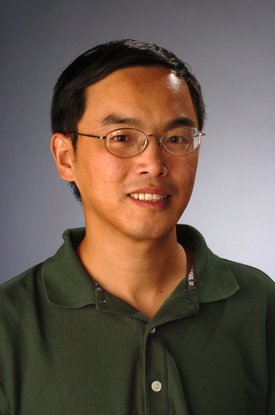
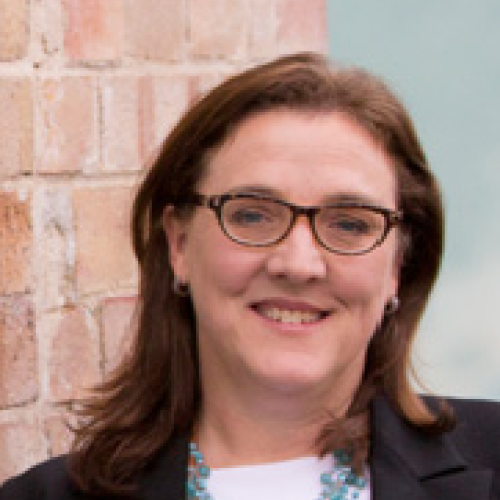
Dr. Helen Lewis is an Associate Professor in Education and Childhood Studies at Swansea University's School of Social Sciences. She serves as the School Education Lead and Programme Director for the Primary Postgraduate Certificate in Education (PGCE). Her work bridges teacher education, metacognitive development in children, and innovative uses of animal-assisted interventions in schools. Her research focuses on two pillars: 1) fostering children's thinking skills and metacognition through pedagogical frameworks like Project Zero's VSRD methodology, and 2) exploring how school dogs enhance pupil well-being, learning, and resilience. Recent projects include an ESRC-funded initiative creating best practice guidelines for canine-assisted education. Professionally, she holds certifications in animal-assisted play therapy and canine intervention strategies. She actively contributes to academic governance as an External Examiner at institutions like University College London and serves on national committees such as the National School Dog Alliance and Let's Think Forum. Her career highlights include leadership roles in program development (BA Education Studies, MA Education), peer review for academic journals, and governance as a primary school inspector for Estyn. She balances rigorous scholarship with practical advocacy for evidence-based educational practices.
Dr. Dibyadyuti Roy is an Associate Professor in Cultural Studies, Media Studies, and Digital Humanities at the University of Leeds, within the School of Fine Art, History of Art and Cultural Studies. His work bridges data-driven research with humanistic inquiry, focusing on digital cultures in Majority World contexts. He co-founded India's first Digital Humanities collective, DHARTI, and led initiatives like the DHAI 2018 conference. Currently, he serves on the Executive Council of the British Association for South Asian Studies (BASAS) and affiliates with the Data & Society Research Institute. Programme Director for BA Cultural and Media Studies Steering Committee Member of PRiA (Pedagogic Research in the Arts) Research interests include algorithmic accountability, postcolonial masculinities, and science/technology studies. His research critiques technological narratives through postcolonial lenses, addressing issues like social media health promotion during India's pandemic, nuclear historiography, and digital divides. He has held prior faculty roles at IIM Indore and IIT Jodhpur. Roy has spearheaded initiatives like the DHARTI Twitter Conference and co-organized workshops on AI in the Global South. His work emphasizes ethical, decolonial, and intersectional approaches to digital humanities and technology studies.
Chris Adrian is a Senior Lecturer in the Department of Accounting at Monash University, specializing in corporate governance, financial accounting, and auditing. His research explores intersections between environmental factors (e.g., climate change, natural disasters) and corporate financial practices, alongside political influences on capital markets. Prior to Monash (since 2017), he held a Lecturer position at Macquarie University. Chris earned his PhD in 2015, focusing on corporate governance stakeholder perceptions. His work has been published in journals like Journal of Business Ethics and International Journal of Auditing , with recent studies examining audit fee dynamics during natural disasters, political connections in audit committees, and pandemic resilience through sustainability disclosures. Education: PhD (2015) Professional Affiliations: American Accounting Association (AAA), European Accounting Association (EAA), Accounting and Finance Association of Australia and New Zealand (AFAANZ) His research projects include applying large language models to sustainability reporting standards and analyzing charity performance during climate disasters. He is currently accepting PhD students and serves as an ad-hoc reviewer for multiple accounting journals. Key themes in his articles include audit risk mitigation during political shifts, disaster-driven corporate tax behaviors, and pandemic impacts on firm valuation. His work consistently bridges financial reporting practices with broader socio-environmental challenges.
Scott Walbridge is the Chair of the Department of Civil and Environmental Engineering at the University of Waterloo, where he has been actively teaching and researching since 2006. He holds a Doctorate in Civil Engineering from the Swiss Federal Institute of Technology (EPFL), a Master's from the University of Alberta, and a Bachelor's in Civil Engineering from the same institution. His research focuses on enhancing structural safety and durability through fatigue assessment, retrofitting of welded metal structures, modular construction, and life-cycle cost analysis. He chairs the CSA aluminum structures technical subcommittee for bridge design codes (S6) and actively contributes to code development for structural welding and aluminum design. Walbridge has been Program Director for Waterloo’s Architectural Engineering program (2018–2022) and serves on editorial boards for journals like Structural Engineering International and ASCE Journal of Bridge Engineering . Education: PhD, Civil Engineering (Steel Structures), EPFL, Switzerland (2005) MSc, Structural Engineering, University of Alberta (1998) BSc, Civil Engineering, University of Alberta (1996) Research Interests: Fatigue assessment, welded metal structures, modular construction, structural reliability, fracture mechanics, and life-cycle cost analysis. His work bridges theoretical frameworks with practical applications, such as improving fatigue life prediction for aluminum bridge decks and optimizing material selection for corrosion resistance. Professional Engagement: Chair of CSA S6 Aluminum Structures Subcommittee, active member of welding code committees (W59, W59.2), and contributor to national bridge design standards. His leadership in code development ensures alignment with modern material technologies and sustainability goals. Teaching & Advising: Recently taught courses like CIVE 512 (Rehabilitation of Structures) and CIVE 704 (Bridge Design). He is currently accepting graduate students in structural engineering and bridge design.
Riyadh Baghdadi is an Assistant Professor of Computer Science at New York University Abu Dhabi and a Global Network Assistant Professor at the Tandon School of Engineering, NYU. He is also a Research Affiliate at MIT, where he previously completed a postdoctoral fellowship. His academic journey includes a PhD and Master’s from Sorbonne University (INRIA/UPMC) and an engineering degree from Ecole Supérieure d’Informatique in Algiers. Assistant Professor, NYU Abu Dhabi Global Network Assistant Professor, Tandon School of Engineering, NYU Research Affiliate, MIT His research lies at the intersection of compilers, programming languages, and applied machine learning, with a focus on developing advanced compiler techniques for deep learning, high-performance computing, and data-parallel algorithms. He is the lead developer of the Tiramisu compiler , a polyhedral compiler designed to optimize dense and sparse deep learning workloads across diverse architectures including CPUs, GPUs, and FPGAs. Riyadh’s recent publications demonstrate a strong trend toward integrating machine learning into compiler optimization—particularly in cost modeling, loop scheduling, and automatic code generation. His work addresses critical challenges in optimizing sparse neural networks and enabling efficient execution on resource-constrained platforms like smartphones and autonomous vehicles. Outstanding Paper Award, MLSys 2021 He has mentored 18 students and taught core courses such as Computer Systems Organization and Machine Learning at NYUAD. His service to the academic community includes program committee roles at MLSys, IPDPS, ECOOP, and PACT, as well as organizing workshops on polyhedral compilation and machine learning for hardware-software co-design. Riyadh actively contributes to open-source projects and collaborates with industry leaders including Google, Facebook, NVIDIA, and Intel. He leads the development of Tiramisu and collaborates on DSLs like GraphIt and Halide, focusing on performance portability and automation in compiler design.
Andrew Burton-Jones is a Professor of Business Information Systems at The University of Queensland Business School, where he also serves as co-lead of the Future of Health Research Hub and Chair of the Education Steering Committee of the Queensland Digital Health Centre. He is affiliated with multiple research centers including the Centre for the Business and Economics of Health, Centre for Enterprise AI, and Queensland Digital Health Centre across different faculties at UQ. His educational background includes a Bachelor (Honours) of Commerce and Master of Commerce from The University of Queensland, followed by a PhD from Georgia State University. With extensive international experience, he previously served as a tenured Associate Professor at the University of British Columbia before returning to UQ in May 2012. Burton-Jones' research focuses on three interconnected areas: organizational effectiveness in IT use (particularly electronic health records in healthcare settings), methods for analyzing and designing IT systems, and theoretical development within the Information Systems discipline. His work bridges academic theory with practical healthcare applications, with strong emphasis on digital transformation in health services. His recent publications reveal a strong focus on digital health applications, electronic medical records, and digital transformation in healthcare contexts. There's also significant attention to theoretical development in information systems, platform generativity, and research methodology. The work shows increasing integration of healthcare contexts with information systems theory. Fellow of the Association for Information Systems Fellow of the Academy of Social Sciences of Australia Editor-in-Chief of MIS Quarterly (2021-2023) President of the Association for Information Systems (2024-2025) Representative for the Americas for the Association of Information Systems International Representative for the Academy of Management (OCIS/CTO Division) Burton-Jones has supervised numerous PhD students across various topics related to digital health, information systems, and organizational transformation. He has secured substantial research funding including the UQ-QH HDR Alliance Program (2021-2027), ARC Training Centre for Information Resilience (2021-2026), and multiple Digital Health CRC grants. His leadership extends to helping found UQ's Graduate Certificate in Clinical Informatics and Digital Health. He is actively involved in the Future of Health Research Hub, Queensland Digital Health Centre, and Centre for Enterprise AI, where his work focuses on addressing real-world healthcare challenges through information systems research and digital transformation initiatives.
Dr. Silvana Deilen is a Researcher at the Institute for Translation Studies & Technical Communication within the Faculty of Language and Information Sciences at the University of Hildesheim. She joined the university in 2023 after working as a Research Associate at Johannes Gutenberg University Mainz from 2018-2024. Her primary research focus centers on accessible communication, particularly in the areas of Easy Language and Plain Language translation, with special emphasis on cognitive aspects of translation processes and AI-assisted translation technologies. Dr. Deilen earned her B.A. in Multilingual Communication from Cologne University of Applied Sciences (2012-2015), followed by an M.A. in Specialized Translation from the same institution (2015-2018). She completed her doctoral studies (Dr. phil.) in Translation Studies at Johannes Gutenberg University Mainz (2018-2021) with summa cum laude distinction, supervised by Prof. Dr. Silvia Hansen-Schirra and Prof. Dr. Arne Nagels. Her research interests span multiple interconnected domains within translation and communication accessibility. A significant portion of her work examines the cognitive processing of compound words in Easy Language, utilizing eye-tracking methodologies to investigate how visual segmentation affects reading behavior and cognitive load. She has pioneered research on AI-assisted translation for health communication, particularly focusing on how large language models can support the creation of accessible health information. Her work bridges theoretical translation studies with practical applications in healthcare, government communication, and digital accessibility. Dr. Deilen's publication record reveals a clear trajectory toward increasingly sophisticated integration of technology and accessibility. Her recent work shows strong emphasis on evaluating AI systems like ChatGPT for translation tasks, developing editorial workflows for AI-assisted translation of health information, and investigating cognitive aspects of compound translation. The interdisciplinary nature of her research connects linguistics, cognitive science, health communication, and artificial intelligence, demonstrating how translation studies can address real-world accessibility challenges. 2014 & 2016: PROMOS Scholarships 2018-2021: Doctoral Scholarship from Gutenberg Young Researchers College 2020: Best Student Paper Award at Swiss Conference on Barrier-free Communication 2023: Award for Outstanding Dissertation from Johannes Gutenberg University Mainz 2023: Multiple research grants from University of Hildesheim, Wort & Bild Verlag, and Niedersachsen Zukunftsdiskurse 2025: DAAD Postdoctoral Research Grant Dr. Deilen actively collaborates on significant research projects including the KI-GesKom project (AI-Supported Health Communication in Plain Language), which receives funding from the state of Niedersachsen. She works closely with Prof. Dr. Ekaterina Lapshinova-Koltunski, Prof. Dr. Christiane Maaß, and Sergio Hernández Garrido as part of the Research Center for Easy Language. Her work with the Apotheken Umschau demonstrates practical application of research, translating health information into accessible formats for people with communication limitations. Dr. Deilen also contributes to the academic community as a program chair and scientific committee member for international conferences including UCCTS 2025 and Translation in Transition 2024.
Dr. Sam Ferguson is a Senior Lecturer at the School of Computer Science, University of Technology Sydney (UTS), with a multidisciplinary background in music performance, cognitive science, and psycho-acoustics. His research explores the intersection of sound, music, and human experience through creative coding, machine learning, and interactive systems. Key Research Areas: Sound and Music Computing, Human-Computer Interaction, Creative Coding, Cognitive Science, Installation Art, and Acoustics. Current Projects: ARC Linkage project on creative coding and multiplicitous media; industry collaborations on IoT-based audiovisual systems. Recent Publications: Focus on spatial audio complexity, gestural interaction with networked sound, music emotion recognition frameworks, and robotic performance through genre-based cultural platforms. Leadership Roles: Director of Teaching & Learning Engagement; former Deputy Head of School (Teaching and Learning); active in ACM Creativity and Cognition Steering Committee. Teaching: Courses like Digital Media Studio , Prototyping Physical Interaction , and Data Processing using R within UTS's interdisciplinary Software Development Studio.
Dr. Asieh Hosseini Tabaghdehi is a Senior Lecturer in Strategy & Business Economy at Brunel Business School, Brunel University of London. She serves as Programme Lead for the BSc International Business Programme and Trade2Grow Executive Education Programme. Additionally, she is Impact Lead at the Brunel Centre for AI: Social and Digital Innovation, where she leads the capability area in the Future of Work. Dr. Tabaghdehi is also an economist and social impact advisor for the independent NGO, Social Innovation Movement. Dr. Tabaghdehi earned her PhD in Economics and Finance (2008) and MSc in International Money, Finance, and Investment (2015), both from Brunel University London. She also holds a BA in Theoretical Economics from University of Mazandaran. She completed the Postgraduate Certificate in Academic Practice and is a Fellow of the Higher Education Academy. Dr. Tabaghdehi is internationally recognized for her research on digital transformation, with particular expertise in the ethical integration of artificial intelligence and digital technologies. Her work focuses on how emerging technologies shape industries, labor markets, and society, with emphasis on enhancing SME growth through technological innovation. She explores applications across critical sectors including social care, supply chain management, and environmental sustainability. A central theme in her research is smart data governance, ensuring ethical, transparent, and responsible use of data in decision-making processes. Her research portfolio demonstrates a consistent focus on the intersection of technology, ethics, and business strategy. She has developed frameworks like the Digital Business Auditing Framework, which has been adopted internationally for smart city initiatives. Her work connects academic research with practical policy applications, as evidenced by her presentations as oral and written evidence to the House of Commons Select Committee. Her publications span AI ethics, digital footprint implications, fertility economics, and healthcare cost analysis, showing interdisciplinary breadth while maintaining thematic coherence around digital transformation's societal impact. Scientific Awards and Recognition Semi-finalist: Research Impact Award at Brunel University London, 2023 Staff Award: Exceptional in Collegiality and Supportive to Colleagues at Brunel University London, 2022 Exceptional Performance at Regents University London, 2018-19 Staff Award in Teaching, Learning and Assessment at Regents University London, 2016 Best Lecturer Award at London Brunel International College, 2014 Best Lecturer Award at London Brunel International College, 2013 Dr. Tabaghdehi actively supervises PhD students researching areas including Smart Data Governance, Ethical AI Governance, Digital Innovation Impact, Responsible AI Adoption Strategies, Sustainability, and Future of Labour Market. She has secured research funding from multiple sources including the Economic & Social Research Council (ESRC), Brunel University London, and Brunel Business School. Her current projects include research on AI Adoption and Governance, Youth digital addiction, Algorithm Reliability Framework, and SMEs digital footprints. She has also co-designed the "Digital Adoption" module for the UK Government's Help to Grow Management program, demonstrating the practical application of her research. As a member of multiple professional organizations, Dr. Tabaghdehi serves as an associate practitioner at Social Value International, associate member of the Big Innovation Centre, and member of the All-Party Parliamentary Group on AI. She is also a member of the ESRC Review College, British Academy of Management Review College, and Energy Institute UK, contributing to the broader academic and policy communities through these roles.
Teemu Malmi is a Professor in the Department of Accounting at the School of Business, Aalto University, Finland. He has been an influential figure in management accounting research, particularly in management control systems and performance measurement. His academic qualifications include a Doctoral degree (1997), Licentiate degree (1994), and Master's degree (1990), all in Business and Economics from the Helsinki School of Economics. His research interests span management control, performance measurement, digitalization in finance, public sector accounting, and organizational behavior. His work often integrates empirical analysis with case studies, including a notable investigation into Nokia’s management control challenges. He has published extensively in top-tier journals and contributed to major handbooks in accounting and information systems. The recent trend in his publications (2020–2025) reflects a growing emphasis on digital transformation, blockchain, data analytics, and the evolving role of finance functions. His research increasingly bridges traditional accounting with technology and public policy, especially in healthcare financing and sustainability. Scientific Awards: “Thirst for knowledge” (“Tiedon Jano”) award by JOKO Executive Education Oy (2001) Teemu Malmi has supervised at least five theses and led externally funded research projects, including the SOTE/Kaks project (2015–2016) on social and healthcare services. He has been actively involved in academic service, such as serving on editorial boards, hosting international scholars, presenting keynote lectures, and participating in funding organization committees. His media appearances demonstrate his engagement in public discourse on welfare policy and regional financing in Finland. There is no indication of part-time status, retirement, or former staff designation; he remains an active academic.
Dongsheng Yang is an Assistant Professor with the Electrical Energy Systems Group at the Department of Electrical Engineering of Eindhoven University of Technology (TU/e). He has been working at TU/e since 2019, focusing on power electronics and renewable energy integration, and previously served as Assistant Professor at Aalborg University's Department of Energy Technology (2018-2019). Dr. Yang received his B.S., M.S., and Ph.D. degrees in electrical engineering from Nanjing University of Aeronautics and Astronautics, Nanjing, China, in 2008, 2011, and 2016, respectively. His academic journey progressed from postdoctoral researcher at Aalborg University (2016) to faculty positions at both institutions. Dr. Yang's research focuses on the modeling, analysis, control, and design of power electronics dominated power systems , with the goal of safely accommodating high-penetrations of renewable energy sources and energy-efficient end-uses. His work spans several critical areas in modern power systems: Power electronics dominated grid stability and control Renewable energy integration and grid synchronization EV fast-charging infrastructure development Hydrogen production systems Medium-frequency transformer design and modeling AI applications in power electronics Analysis of Dr. Yang's recent publications reveals a strategic research trajectory toward developing advanced control strategies for power converters, improving modeling techniques through AI approaches, and addressing practical implementation challenges for renewable energy systems. His work spans both theoretical developments and practical applications, with increasing emphasis on neural network frameworks for magnetic modeling, safety boundaries for EV charging architectures, and enhanced fault ride-through capabilities for grid-connected systems. This progression demonstrates his commitment to solving real-world engineering challenges in the transition to renewable energy. Dr. Yang has received professional recognition including: Senior Member of IEEE Corresponding Member of CIGRE Working Group C4.56 Topic chair, technical committee member, and reviewer for top-level conferences and journals in power electronics Dr. Yang actively supervises doctoral candidates and postdoctoral researchers, including Xiao Yang (working on AI for power electronics), Saizhao Yang (postdoc), and L.A. Vlaar. He serves as project manager for multiple significant research initiatives totaling over €5 million in funding: REDCON (2023-2028) - Reconfigurable power electronics testbench Flexible Offshore Wind Hydrogen Power Plant Module (2022-2026) Sectorplan-DCES-Y.D.inv.: Reconfigurable power electronics testbench (2021-2029) E2GO-RDC Cost-reduction of EV fast-charging station (2021-2026) CW620863 System impact analysis for large scale renewable hydrogen production (2022-2023) Dr. Yang leads research within the Electrical Energy Systems group at TU/e's High Tech Systems Center, focusing on power conversion technologies. His work connects with multiple research teams across Europe through collaborative projects focused on renewable energy integration, EV infrastructure, and hydrogen production systems. He also teaches the course 'Dynamic control of power conversion in renewable energy systems' and contributes to the UN Sustainable Development Goals related to affordable and clean energy.
Dirk Leuffen is a Professor of International Politics at the Department of Politics and Public Administration at the University of Konstanz. Since April 2024, he has served as the University of Konstanz' Vice Rector for Research, Innovation and Impact, having previously held this position from 2015 to 2019. He is also a representative of the German Rectors' Conference (HRK) in the Committee for the selection and evaluation of International Max Planck Research Schools (IMPRS) since 2019. Leuffen directs the project 'Conditions of European Solidarity' (CONSOLI) with Sharon Baute at the Cluster of Excellence on the Politics of Inequality, and has led multiple significant research projects including 'EU3D: EU Differentiation, Dominance and Democracy' and 'EMU-SCEUS - The Choice for Europe since Maastricht.' Leuffen earned his doctoral degree from the University of Mannheim and previously worked as a Senior Researcher at ETH Zurich before joining the University of Konstanz. Professor Leuffen's research focuses on European integration, with particular emphasis on differentiated integration, decision-making processes within the European Union, and the interplay between domestic and international politics. His work examines how citizens perceive and respond to various forms of European integration, with a strong interest in the legitimacy of differentiated integration arrangements and public support for European solidarity. He investigates political preference formation, particularly how crises like the Eurozone crisis and the COVID-19 pandemic shape European policy preferences. His research combines theoretical frameworks from political science with empirical analysis of public opinion data across multiple EU member states. His recent publications reveal a strong focus on how democratic backsliding affects European solidarity, the role of fairness considerations in citizen evaluations of EU policies, and the institutional design features that foster public support for differentiated integration. Leuffen's work often employs experimental methods and comparative survey research across multiple European countries, demonstrating a methodological sophistication that bridges qualitative and quantitative approaches. His research consistently addresses the tension between national sovereignty and European integration, examining how citizens balance concerns about national autonomy with support for European cooperation. As Vice Rector for Research and a principal investigator on multiple major projects, Leuffen has secured significant research funding and leads interdisciplinary teams examining the politics of inequality and European integration. His leadership extends beyond his institution through his role in the German Rectors' Conference, where he influences national research policy and evaluation frameworks. Leuffen is an active member of the Cluster of Excellence on the Politics of Inequality at the University of Konstanz, where he contributes to the research group 'Political Science & International Politics.' His work often involves collaboration with researchers across Europe, reflecting the transnational nature of his research focus on European integration and solidarity.
Ellen Kuhl serves as the Catherine Holman Johnson Director of Stanford Bio-X and the Walter B. Reinhold Professor in the School of Engineering at Stanford University. She holds dual appointments as Professor of Mechanical Engineering and, by courtesy, Bioengineering, leading interdisciplinary research at the convergence of physics, computation, and biology. Her academic credentials include: Habil., TU Kaiserslautern (2004) Ph.D., University of Stuttgart (2000) M.S., Leibniz University of Hanover (1995) B.S., Leibniz University of Hanover (1993) Kuhl pioneers Living Matter Physics , developing computational frameworks that integrate physics-based modeling with machine learning to simulate biological systems across scales. Her work spans cardiovascular dynamics (including the 400-member global Living Heart Project), neurodegenerative disease progression (Alzheimer's tau pathology), and sustainable food systems (mechanics of plant/fungi-based meats). Recent innovations focus on automated model discovery using constitutive neural networks to democratize simulation tools for soft matter systems, with applications in precision medicine and climate-resilient food innovation. Her lab actively bridges engineering fundamentals with urgent societal challenges in healthcare and planetary health. Her publication trajectory reveals accelerating integration of AI with biomechanics, particularly in automated constitutive modeling for diverse tissues and food materials. Key trends include uncertainty quantification in neural networks, physics-informed machine learning for digital twins, and democratization of simulation tools for non-experts – reflecting her commitment to accessible computational science. Major recognitions include: National Science Foundation Career Award (2010) Humboldt Research Award (2016) ASME Ted Belytschko Applied Mechanics Award (2021) ERC Advanced Grant (2024) Fellowships in ASME and AIMBE As Bio-X Director, Kuhl orchestrates major interdisciplinary initiatives connecting engineering with life sciences, securing substantial funding including the 2024 ERC Advanced Grant. Her leadership extends to the US National Committee on Biomechanics and World Council of Biomechanics, while her Living Heart Project demonstrates exceptional translational impact through industry/medical partnerships across 24 countries. The Living Matter Lab operates as a nexus for high-impact research, developing computational tools that transform cardiovascular medicine, decode neurodegenerative mechanisms, and engineer sustainable food alternatives. Current projects leverage AI to accelerate plant-based meat development, model elephant-trunk-inspired soft robotics, and personalize cardiac simulations – all unified by her vision of physics-driven machine learning for global challenges.
Peng Gao is a Professor in the Department of Geography and the Environment at Syracuse University, affiliated with the Maxwell School of Citizenship and Public Affairs. His work bridges river geomorphology and urban geospatial analysis, leveraging GIS, remote sensing, and UAV technologies to address environmental and social challenges. Education: Ph.D., Physical Geography, State University of New York at Buffalo (2003) M.S., Physical Geography, Lanzhou University (1993) B.S., Solid Mechanics, Lanzhou University (1990) Professor Gao specializes in river morphodynamics—particularly in the Qinghai-Tibet Plateau—and geospatial applications for urban planning. His research examines braided/meandering river systems, peatland hydrology, and how urban built environments influence social inequities and public health outcomes through spatial analysis. His 2020-2024 publications reveal a dual focus: (1) fluvial processes in high-altitude regions (e.g., neck cutoff dynamics, braided river discharge estimation using Landsat), and (2) urban applications (e.g., green building design, lead poisoning exposure mapping). This reflects a strategic integration of field geomorphology with computational geospatial modeling. Professor Gao actively mentors through SOURCE undergraduate research grants and PhD committees. Current funded projects include peatland mapping in the Andean Altiplano, I-81 Viaduct impact analysis in Syracuse, and studies on urban built environments affecting childhood lead poisoning. His work utilizes UAVs for BVLOS operations and collaborates with Syracuse CoE on urban environmental simulations, emphasizing technical innovation in geospatial data acquisition and analysis.
Renate Egan is a Professor and Deputy Head of School (Engagement) at the School of Photovoltaics and Renewable Energy Engineering , University of New South Wales (UNSW). She leads UNSW's activities in the Australian Centre for Advanced Photovoltaics , a national research consortium involving multiple Australian institutions. Her research focuses on: Techno-economic analysis of photovoltaic technologies Energy data analytics for decentralized systems Electricity market restructuring Technology transfer and commercialization Recent work examines machine learning applications in energy demand forecasting, thermal storage optimization, and bushfire resilience. She collaborates extensively across academia, industry, and government sectors. Key affiliations include: Co-Founder of Solar Analytics (Australia's largest independent energy monitoring provider) Executive Committee member of the IEA PV Power Systems program