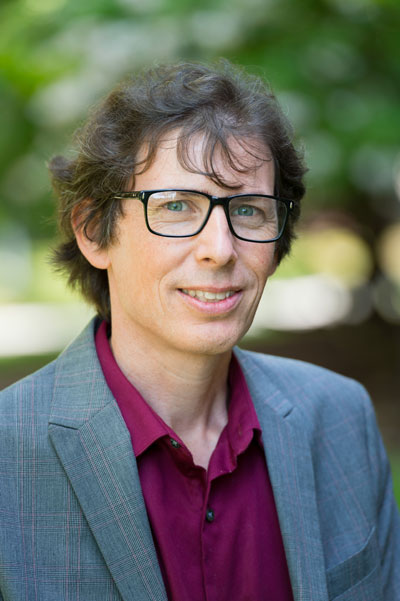
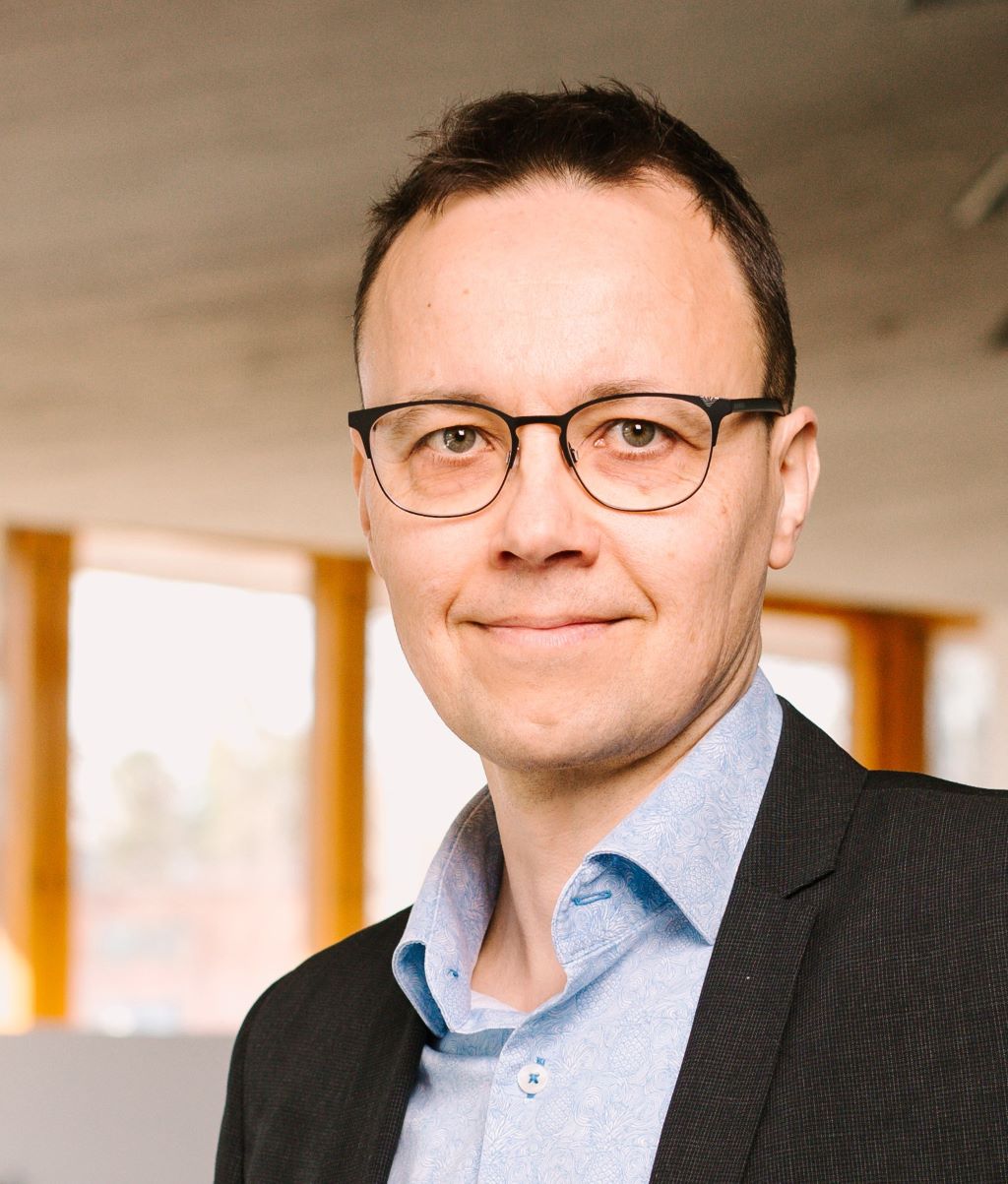
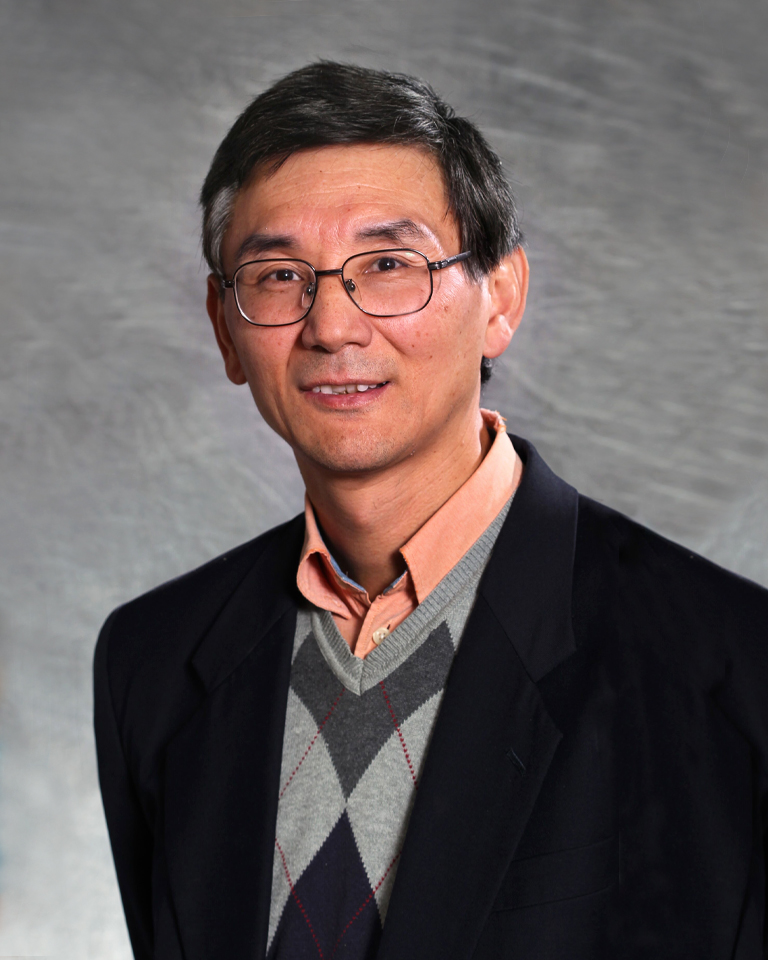
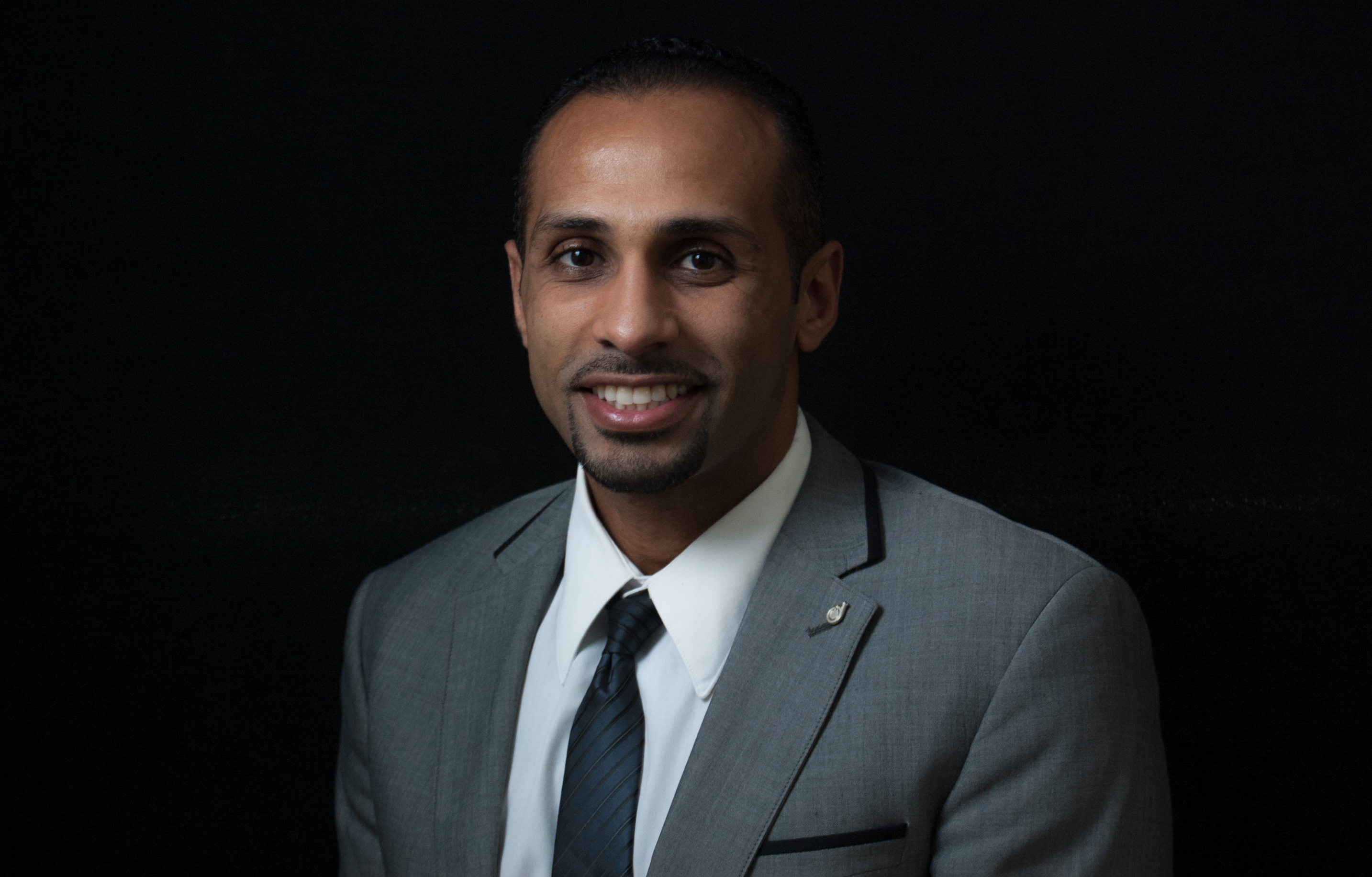
Gianluca Iaccarino is a Professor of Mechanical Engineering at Stanford University and the Robert Bosch Chairholder. He serves as Director of the PSAAP Center and leads large-scale computational research initiatives in uncertainty quantification, exascale computing, and multiphysics simulations. His academic journey includes a PhD in Mechanical Engineering from Politecnico di Bari (2005), postdoctoral work at Stanford's Center for Turbulence Research, and progression from Research Engineer to full Professor. Education : PhD (Politecnico di Bari), MS/BS in Aeronautical Engineering (University of Naples) Research : Computational engineering, turbulence modeling, uncertainty quantification, biomedical fluid dynamics, and exascale-ready algorithms Publications : 15+ recent articles focus on turbulence modeling, data-driven simulations, and uncertainty quantification across diverse applications in aerospace, biomedical, and energy systems Awards : PECASE (2010), APS Fellow (2019), multiple best paper awards (AIAA, ASME), Terman Fellow (2007) Students : Advises doctoral and master's students in mechanical engineering and computational methods Leadership : Director of PSAAP Center (2014-present), Chair of Mechanical Engineering Department (2024-present)
Mika Järvinen serves as Associate Professor in the Department of Energy and Mechanical Engineering at Aalto University, leveraging fundamental sciences—physics, thermodynamics, chemistry, and numerical modeling—to address cross-sector energy challenges. His research spans sustainable bioenergy and inter-linked circular economy systems integrating energy, materials, and environmental considerations across biomass, pulp/paper, metallurgy, and waste-to-energy industries. His expertise centers on sustainable bioenergy and circular economy frameworks, utilizing numerical modeling to optimize combustion engineering and metallurgical processes. By maintaining diverse industrial engagement, he ensures research continuity during economic fluctuations while advancing black liquor spraying technologies and energy-material-environment synergies. This approach enables flexible, physics-based solutions for complex industrial energy conversion problems. Professor Järvinen's 2025 publications reveal a cohesive focus on renewable energy systems operating within planetary boundaries, spanning carbon capture (calcium looping), low-temperature heat engines, and comprehensive textbook development. His work integrates solar, wind, bioenergy, and storage technologies into holistic frameworks that balance technical innovation with ecological constraints, emphasizing system-level sustainability over isolated component optimization. His scientific recognition includes: Best Dissertation Award (2002) from Helsinki University of Technology's Department of Machine Technology for research on black liquor droplet conversion Resonate Award (2015) from Caltech University's Resnick Institute As lead of the Energy Conversion and Systems research group, he directs projects bridging fundamental modeling with industrial applications while developing educational resources for next-generation energy engineers. His laboratory work emphasizes experimental validation of numerical models across combustion, metallurgical, and biomass conversion processes.
Steven Rogak is a Professor in the Department of Mechanical Engineering at the University of British Columbia's Faculty of Applied Science. He holds a P.Eng. license and degrees including a B.A.Sc. in Mechanical Engineering from UBC, and M.Sc. and Ph.D. from Caltech. P.Eng., University of British Columbia B.A.Sc., University of British Columbia M.Sc., Ph.D., California Institute of Technology His research focuses on aerosol science, particularly solid nanoparticles from combustion processes, their climate and health impacts, and mitigation strategies. Key areas include: Soot morphology and transport properties Engine emission reduction via fuel injectors Indoor air filtration systems Membrane-based energy exchangers Atmospheric particulate analysis The 15 most recent articles span experimental and theoretical studies on soot characterization, membrane technologies, and aerosol dynamics, with applications in climate modeling, healthcare ventilation, and sustainable materials. Collaborations include Westport Innovations and interdisciplinary teams. Rogak leads the Aerosol Laboratory at UBC, where he applies fluid mechanics and heat transfer fundamentals to address environmental and health challenges. He emphasizes experimental rigor and welcomes graduate students with expertise in these areas.
Dr. Muhammad Gulzari is an Assistant Professor at the School of Civil Engineering, University College Dublin (UCD). Previously, he held positions as Lecturer/Assistant Professor at the University of Galway (2023–2024), Adjunct Assistant Professor at Trinity College Dublin (2022–2023), and a Research Fellow at Trinity College Dublin (2021–2023). He earned his Ph.D. in Civil Structural Engineering from City University of Hong Kong (2021) and a B.Sc. in Civil Engineering from the University of Engineering and Technology Lahore (2017). Education: Bachelor of Engineering, Civil Engineering, University of Engineering and Technology Lahore Ph.D., Civil Structural Engineering, City University of Hong Kong Research Interests: His work focuses on structured materials and dynamics, including finite element modeling, phononic crystals, acoustic and mechanical metamaterials, vibration and noise control, and applications in structural health monitoring. He leads the Structured Materials and Dynamics Lab at UCD, exploring nonlinear and nonreciprocal metamaterials. Teaching and Awards: He has taught courses in Fluid Mechanics, Thermodynamics, and Combustion Engineering. Notable recognitions include the Seal of Excellence Award from the EU-Horizon MSCA Postdoctoral Fellowship (2021) and nominations for teaching excellence awards at Trinity College Dublin and University of Galway. Grants: TimberFlow: Enhancing Efficiency in Mass Timber Construction (Enterprise Ireland, 2025) Indoor Acoustic Quality via Acoustic Metamaterials (Enterprise Ireland, 2025) RUBBERPAVE: ELT Integration in Pavement Construction (Enterprise Ireland, 2024–2026) Deep Learning for Metamaterial Design (Irish Research Council, 2021–2023) Labs and Collaborations: His research group collaborates with industry partners like Amplitude Acoustics and G-frame Structures Ltd. Key projects include developing metamaterials for noise/vibration control and sustainable construction materials.
Assoc Prof Ng Teng Yong is an Associate Professor at the School of Mechanical & Aerospace Engineering (NTU), specializing in numerical modeling and simulation. With a background as Research Manager at A*STAR Institute of High Performance Computing, his work spans materials science, nanotechnology, and aerospace engineering. Current focus on graphene-based desalination membranes Expertise in molecular dynamics simulations Investigates nanoscale fluid mechanics and structural dynamics Recent publications highlight advancements in energy-efficient electrodialysis, smart robotics, and nonlinear vibration analysis. His interdisciplinary approach integrates computational methods with experimental validation in additive manufacturing and soft material mechanics.
Ashwani K. Gupta is a Distinguished University Professor at the University of Maryland, holding the Minta Martin Professorship in Engineering. He serves as Professor in the Department of Mechanical Engineering, Professor at the Institute of Physical Science and Technology, and Affiliate Professor in the Department of Aerospace Engineering. With over 45 years of experience in combustion engineering since graduating from Southampton University in 1970, Gupta has established himself as a leading authority in advanced combustion technologies. Dr. Gupta earned his Ph.D. from the University of Sheffield in 1973, followed by a D.Sc. from the same institution in 1986 and another D.Sc. from Southampton University in 2013. His academic journey includes six years at MIT as a research staff member and three years at Sheffield University as an independent research worker before joining the University of Maryland in 1983. Gupta's research focuses on revolutionizing combustion technology through innovations in swirl flows, high-temperature air combustion (HiTAC), and distributed combustion systems. His pioneering work on 'colorless distributed combustion' has enabled ultra-low emission combustion processes with significant applications in gas turbine engines and waste-to-energy conversion. His research spans biofuels, CO2 utilization, sulfur chemistry, waste conversion, and advanced laser diagnostics, addressing critical challenges in sustainable energy and environmental protection. Analyzing his recent publications reveals a strong emphasis on waste-to-energy conversion, biomass processing, and CO2-assisted technologies. Gupta's work demonstrates a clear trajectory toward sustainable energy solutions, with increasing integration of artificial intelligence for combustion optimization and emission control. His research bridges fundamental combustion science with practical engineering applications for cleaner energy systems. Among Gupta's numerous accolades are: Election to Fellowship of the Royal Academy of Engineering (2023) Honorary Fellowship of the Royal Aeronautical Society (2020) Recognition as one of the top 2% of scientists worldwide by Stanford University (2022-2024) Multiple prestigious medals from ASME and AIAA including the Soichiro Honda Medal (2018) and AIAA Air Breathing Propulsion Award (2014) Honorary doctorates from three international universities Gupta has secured substantial research funding throughout his career, resulting in over 850 technical papers, three books, 18 edited books, and 22 book chapters. He has delivered over 100 plenary/keynote/invited presentations at international conferences. His mentorship has shaped numerous graduate students who continue to contribute to the field of combustion engineering. Gupta directs the Combustion Laboratory at the University of Maryland, which serves as a hub for cutting-edge research in sustainable combustion technologies. The Combustion Laboratory, under Gupta's leadership, has become a center of excellence for advanced combustion research, particularly in distributed combustion systems, waste-to-energy conversion, and alternative fuels. The lab maintains strong collaborations with industry partners and international research institutions, facilitating technology transfer and practical implementation of research findings. Gupta's team employs state-of-the-art diagnostics and computational tools to advance fundamental understanding while developing practical engineering solutions for cleaner energy systems.
Simo Hostikka is a Professor in the Department of Civil Engineering at Aalto University's School of Engineering. His research focuses on fire safety engineering , utilizing numerical fire simulations to address critical challenges in building and infrastructure safety. Key Expertise: Fire Dynamics Simulator (FDS) development, thermal radiation heat transfer, pyrolysis modeling, fire toxicity calculations, and probabilistic risk analysis. Leadership: Supervises advanced fire safety research and contributes to international fire safety standards. Research Trends: Recent publications emphasize fire toxicity modeling , hydrogen fire safety , radiation heat transfer , and fire retardancy of polymeric materials . His work bridges computational methods with real-world fire safety applications. Scientific Awards: Philip Thomas Medal of Excellence (2008, 2005) Sjölin Award (2012) Interflam Trophy (2007) Harmathy Award (2020, 2019) Dean’s Award for Best MSc Thesis (2020) Best Paper in Rakenteiden Mekaniikka (2009) Advising: Supervised Topi Sikanen, who received the Young Talent Award from the International Water Mist Association.
University of Illinois Urbana-ChampaignUnited States
Prashant Mehta is a Professor of Mechanical Science and Engineering at the University of Illinois at Urbana-Champaign , affiliated with the Coordinated Science Laboratory . His research focuses on controlled interacting particle systems and machine learning applications , particularly in human activity recognition using motion sensors. Education: Ph.D. in Mathematics, Cornell University (2004) M.S. in Electrical & Computer Engineering, University of Massachusetts Amherst (1996) B.E. in Electrical & Electronics Engineering, Birla Institute of Technology & Sciences (1993) Mehta's work has pioneered the feedback particle filter (FPF) algorithm for nonlinear estimation, applied in robotic systems and gesture recognition. His research spans control of combustion instabilities in jet engines, mean-field games , and dynamical systems in aerospace engineering. His publications emphasize nonlinear control theory and stochastic filtering , with recent trends in sensor data pattern recognition and cyber-physical systems . He has received multiple scientific awards , including the MURI award for the Cyberoctopus project and Excellence in Undergraduate Advising Awards . Scientific Honors: MURI Award (2019) for Cyberoctopus Excellence in Undergraduate Advising (2010, 2008) Outstanding Teaching Assistant Award (1994) Senior Member, IEEE Control Systems Society Member, ASME Energy Systems Subcommittee Member, SIAM Dynamical Systems Group Mehta has supervised students like Jin Kim (IEEE CDC Best Student Paper, 2019) and co-founded the startup Rithmio , acquired by Bosch Sensortec . His laboratory develops gesture-detection filters for applications in soft robotics and human-machine interfaces .
Yiguang Ju is the Robert Porter Patterson Professor of Mechanical and Aerospace Engineering at Princeton University, affiliated with the HMEI Grand Challenges Program. His research focuses on plasma-assisted combustion, alternative fuels, and nano-material synthesis via flame processes. He investigates energy-efficient systems for microscale energy conversion, catalytic reactions, and low-temperature plasma chemistry. Research interests include non-equilibrium plasma dynamics, ammonia synthesis, and high-pressure oxidation kinetics. He develops advanced diagnostics like hybrid laser spectroscopy and machine learning models to study reaction mechanisms. Recent work explores plasma-enhanced combustion for hydrogen and alternative fuels, with applications in energy storage and emission reduction. His studies address challenges in plasma-chemistry interactions, material synthesis, and high-pressure combustion systems. His articles highlight innovations in plasma catalysis, combustion kinetics, and atmospheric chemistry. Collaborative projects include plasma-based material recycling and supercritical-pressure reactor analysis. He leads initiatives in clean energy technologies and sustainable chemical processes.
Kareem Ahmed is a Professor in the Department of Mechanical and Aerospace Engineering at the University of Central Florida (UCF) and a faculty member of the Center for Advanced Turbomachinery and Energy Research. He leads research in advanced propulsion and energy systems, focusing on high-speed turbulent combustion, detonations, and hypersonic technologies. His work includes groundbreaking projects in detonation-based propulsion for hypersonic flight and power generation, supported by over $17 million in grants from NASA, AFOSR, and DOE. Education: Ph.D. and M.S. in Mechanical Engineering, University at Buffalo (SUNY) B.S. in Mechanical Engineering, New York State College of Ceramics at Alfred University Research Interests: Ahmed’s expertise spans detonation dynamics, supersonic reacting flows, flow-flame control, and advanced laser diagnostics . His team explores innovations like rotating detonation engines (RDEs) and scramjet combustion systems, with applications in aerospace defense and space exploration. Awards and Recognition: AIAA Associate Fellow American Chemical Society Doctoral New Investigator Award AFOSR Summer Faculty Fellowship UCF Trustee Chair (2025–2030) Grants & Advising: PI of over $17M in research funding; mentors 145+ doctoral, master’s, and undergraduate students. Collaborates with industry leaders like GE, Aerojet Rocketdyne, and Pratt & Whitney. Labs & Teams: Director of UCF’s Center of Excellence in Hypersonic and Space Propulsion, advancing technologies for 15-minute transcontinental flight and clean rocket fuels.
State University of New York at BuffaloUnited States
Jun Liu is an Assistant Professor in the Department of Mechanical and Aerospace Engineering at the School of Engineering and Applied Sciences, University at Buffalo. His research focuses on advanced energy materials, nano/micro-mechanics, and self-powered systems, with applications in triboelectric energy harvesting and scanning probe microscopy. Education: PhD, Materials Engineering, University of Alberta (2018) MS, Materials Science, Shanghai University (2015) BE, Materials Science and Engineering, Nanchang University (2012) Research Interests: Development of tribovoltaic and triboelectric systems for self-powered electronics Mechanical energy harvesting via dynamic heterojunctions and Schottky contacts 3D-printed hydrogel structures for energy absorption and flexible electronics Nanoscale characterization using atomic force microscopy Design of nanocomposite sensors and catalytic materials Publication Trends: His work emphasizes triboelectricity, nanoscale energy conversion, and sustainable materials. Recent articles explore bionic tactile sensing, tunable hydrogels, and quantum dynamics in sliding interfaces. Awards: SONY Faculty Innovation Award (2021) Nature Springer MINE Young Scientist Award (2020) International Contest of Applications in Nano/Micro Technology Prize (2013) Laboratory: Advanced Energy Materials and Nanomechanics Lab at University at Buffalo.
Laureate Professor Behdad Moghtaderi is a globally recognized chemical engineer at The University of Newcastle's School of Engineering. He leads research in clean energy technologies, including the GRANEX heat engine, greenhouse gas abatement, and chemical looping processes. His work addresses critical challenges in energy efficiency, renewable energy systems, and reducing fugitive methane emissions from coal mines. With over $48M in research funding and 220+ publications, he directs the Newcastle Institute for Energy and Resources (NIER) and holds leadership roles in national and international energy initiatives. Education: PhD (University of Sydney), MEng (University of Sydney), BSc (Shiraz University) Administrative Roles: Director of NIER, former Head of School of Engineering, and member of global energy advisory bodies Research interests span energy systems, combustion science, and sustainable technologies. Notable innovations include the VAMCO system for methane abatement and solar thermal GRANEX installations. Awards include the Carrick Teaching Citation and multiple engineering excellence recognitions. Scientific contributions include 14 PhD completions and over 20 funded projects. Current focus areas include hydrogen safety, carbon capture, and thermochemical energy storage. His labs (NIER) collaborate with industry partners like Siemens Energy and the Australian Hydrogen Council.
William Anderson is a Professor in the School of Aeronautics and Astronautics at Purdue University since 2001. He holds a Ph.D. in Mechanical Engineering (Pennsylvania State University, 1996), M.S. in Chemical Engineering (University of Arizona, 1984), and B.S. in Chemistry (Arizona State University, 1979). His research focuses on chemical propulsion systems, combustion dynamics, and rocket engine design methodologies. Key research areas include measurement and modeling of combustion instabilities, rocket combustor stability, and liquid propulsion systems. His work spans experimental and computational studies of thermoacoustic behavior, injector design, and hypergolic reaction mechanisms. He has led projects on resonance igniters, hydrogen peroxide/kerosene combustors, and multi-fidelity modeling frameworks. Anderson has been recognized with the C.T. Sun Research Award (2005) and multiple Best Paper Awards from AIAA conferences. He served as Global Engineering Program Director (2011–2014) and is an Associate Fellow of AIAA. His expertise is showcased in invited lectures at institutions worldwide, including Technical University of Munich and Harbin Institute of Technology. He has authored/co-authored books on rocket propulsion and combustion instability, including Rocket Propulsion (Cambridge University Press, 2018) and edited volumes such as Liquid Rocket Engine Combustion Instability (AIAA, 1995). His lab collaborates internationally on advanced propulsion technologies, emphasizing design, build, and test methodologies.
Lenya Ryzhik is a Professor in the Department of Mathematics at Stanford University, specializing in analysis and partial differential equations with applications in various physical contexts. His research spans stochastic processes, wave propagation, and front dynamics in random media, with significant contributions to understanding reaction-diffusion systems and their applications in mathematical biology and physics. Professor Ryzhik's research interests focus on the mathematical analysis of partial differential equations arising in physical systems. His work particularly emphasizes stochastic PDEs, wave propagation in random media, front propagation in reaction-diffusion systems, and homogenization theory. He investigates how randomness and complex structures affect wave propagation, front speeds, and transport phenomena, with applications ranging from combustion theory to population dynamics and quantum mechanics. The publication record demonstrates a consistent focus on understanding propagation phenomena in complex environments. Ryzhik's research shows a progression from classical PDE analysis toward increasingly sophisticated stochastic frameworks, particularly examining high-dimensional systems and random media. His recent work has focused on KPZ fluctuations, random heat equations, and non-local reaction-diffusion models, revealing deep connections between probability theory and partial differential equations. Alfred P. Sloan Research Fellowship (2002-2004) AFOSR NSSEFF Fellowship (2010-2015) Ryzhik has advised graduate students including Alexandra Stavrianidi, and has secured substantial research funding throughout his career. His grant history includes multiple NSF awards (DMS-9971742, DMS-0203537, DMS-0604687, DMS-0908507, DMS-1311903), ONR funding (N00014-02-1-0089, N00014-04-1-0224), and FRG support for collaborative research on nonlinear evolution problems. He co-organized a Summer School and Workshop on 'Recent Advances in PDEs and Fluids' at Stanford in 2013. Ryzhik maintains an active research group collaborating with leading mathematicians worldwide, particularly with researchers at institutions like NYU, Chicago, and various European universities. His work frequently involves interdisciplinary collaborations bridging mathematics with physics and biology.
Norwegian University of Science And TechnologyNorway
Terese Løvås serves as Vice Dean of Research and Innovation at the Faculty of Engineering, Norwegian University of Science and Technology (NTNU), where she leads strategic development of research and innovation activities. She concurrently holds the position of Professor of Combustion and Thermodynamics within the Department of Energy and Process Engineering. Her leadership responsibilities include oversight of Centers of Excellence, Horizon Europe projects, and PhD researcher training. Her research focuses on combustion engineering and alternative fuel technologies , particularly investigating ammonia and hydrogen combustion for zero-emission engines, biomass gasification processes, and reactive multiphase flow modeling. She heads the Engine Lab at NTNU and teaches Thermodynamics, Heat, and Combustion courses. Her work bridges theoretical modeling with experimental validation in sustainable energy systems. Løvås actively contributes to major research initiatives including LowEmission (SFI center), ACTIVATE (ammonia-powered agricultural vehicles), AMAZE (ammonia zero-emission), and CAHEMA (marine ammonia/hydrogen engines). Her publications reveal strong trends in ammonia combustion chemistry , emissions reduction , and advanced computational modeling for sustainable fuel systems, with increasing focus on nitrogen oxide formation mechanisms and dual-fuel strategies. Member of the Board of Directors, Combustion Institute (2022–present) Joint Editor, Proceedings of the Combustion Institute (2019–present) Alumni Fellow in Engineering, Churchill College, Cambridge University As Vice Dean, she manages NTNU's Research and Innovation Committee and represents the faculty in NTNU's Research and Innovation Committee. She supervises multiple PhD candidates and leads international collaborations through projects funded by the Norwegian Research Council, Nordic Energy Research, and EU programs. Her laboratory work focuses on optical engine diagnostics and advanced combustion testing. Løvås maintains active industry engagement through her leadership in the ComKin Research Group and membership in the Institute of Physics and Scandinavian-Nordic Section of the Combustion Institute. Her current work emphasizes practical implementation of ammonia-fueled engine technologies for marine and agricultural applications.