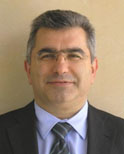
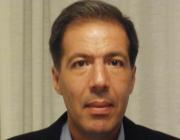
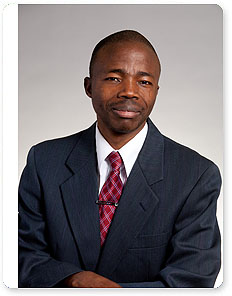
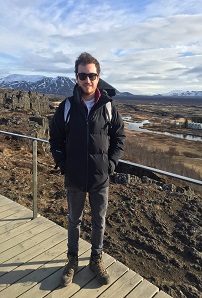
Carl L. Anderson is a Professor at the Department of Mechanical Engineering, Michigan Technological University. He holds a Ph.D. from the University of Wisconsin - Madison. His research focuses on heat transfer, internal combustion engines, torque converters, and microwave telemetry techniques for automotive applications. Key research areas include spray impingement signatures in diesel engines, cavitation detection in torque converters, and piston heat transfer in two-stroke engines. He has developed innovative microwave telemetry systems for measuring temperature, pressure, and strain in rotating/reciprocating machinery. His publications emphasize automotive engineering challenges, including emission reduction strategies for snowmobiles and structural analysis of turbine blades. Research methods involve advanced instrumentation and computational modeling to address durability and thermal management issues in engine components.
Dr. Fabien Goulay is an Associate Professor and Associate Chair for Graduate Studies in the C. Eugene Bennett Department of Chemistry at West Virginia University (WVU), part of the Eberly College of Arts and Sciences. He joined WVU in 2011 and was promoted to Associate Professor in 2017. His research focuses on chemical dynamics, energy science, and heterogeneous chemistry, with a particular emphasis on radical reactions, aerosol processes, and high-energy plasma environments. He employs advanced laser and synchrotron-based techniques, including fast flow reactors and molecular dynamic simulations. His teaching includes courses on physical chemistry and molecular spectroscopy. Education: Ph.D. from the University of Rennes (France), postdoctoral training at UC Berkeley and Sandia National Laboratories. His research group, the Goulay Lab, investigates three major areas: (i) large hydrocarbon radical formation, (ii) aerosol surface chemistry, and (iii) plasma-assisted radical chemistry. Recent work includes studies on cyclopentadiene radical reactions, heterogeneous oxidation of atmospheric aerosols, and OH radical interactions in multicomponent systems. Lab and Team: The Goulay Group includes graduate students (e.g., Emmanuel Ubana, Kyani Kiser) and undergraduates (e.g., Oliver Kelly, Katriana Beckwith). Collaborators include Dr. Mark Tinsley (WVU Chemistry) and the Grassian group at UC San Diego. The lab utilizes a high-temperature fast flow reactor and advanced spectroscopic tools for gas-phase and heterogeneous studies.
Professor Mathioudakis Konstantinos holds a prestigious position at the School of Mechanical Engineering, National Technical University of Athens (NTUA), leading the Laboratory of Thermal Turbomachines. His academic journey includes a Doctorate in Applied Sciences from the Catholic University of Leuven (Belgium) with highest distinction, alongside advanced studies from the Von Karman Institute and NTUA. He has over 35 years of professional experience in academia and industry, including roles as Secretary General for Energy (2009–2015) and professorships since 1990. His research focuses on gas turbine performance optimization, turbomachinery diagnostics, and energy systems, with notable contributions to fault detection algorithms, combustion chamber modeling, and alternative fuels. Key areas include aero-engine preliminary design, marine propulsion systems, and solar hybrid technologies. He has authored over 150 peer-reviewed papers and received multiple awards, including best paper honors from ASME and ImechE. Education: PhD in Applied Sciences (1985), Catholic University of Leuven Fluid Dynamics Diploma (1981), Von Karman Institute Mechanical Engineering (1980), NTUA Awards: ASME Best Paper Awards (2012, 2004, 2003, 2002) PE Publishing Award (2004) Outstanding Service Award (ASME, 2002) Professor Mathioudakis has pioneered diagnostic methodologies combining probabilistic reasoning and neural networks, enhancing fault localization accuracy. His work on transient modeling and steady-state diagnostics improves engine operability and maintenance strategies. He actively contributes to international committees, including leadership roles in ASME’s Controls and Diagnostics Committee. Current duties include coordinating Erasmus programs and advising on propulsion systems for next-generation aircraft. His lab develops tools for turbine disk design, contra-rotating propeller modeling, and solar hybrid gas turbines, bridging academic research with industrial applications.
National and Kapodistrian University of AthensGreece
Antonios Fatsis is a Professor at the Department of Aerospace Science and Technology, School of Natural Sciences, National and Kapodistrian University of Athens. He has held academic roles at various institutions, including the TEI of Sterea Ellada and the TEI of Chalkida, where he served as Department Head and Program Director. His expertise spans turbomachinery, computational fluid dynamics, heat transfer, and aerodynamics. Education includes a Doctorate in Applied Sciences from the von Karman Institute and Ghent University (1995), a Master's in Mechanical Engineering from the von Karman Institute (1990), and a Bachelor's in Mechanical Engineering from the University of Patras (1989). He has authored two books and over 28 peer-reviewed articles, focusing on turbine performance, wave rotor technology, and fluid mechanics. Research interests include unsteady flow analysis, centrifugal compressor design, and energy efficiency in naval propulsion systems. Awards include inclusion in *Who's Who in Sciences and Engineering* and recognition for doctoral excellence. He has supervised 65 student theses and led multiple funded research projects, such as EFFI-LOW-RES (2013-2015) and GEOWAICHME (2010-2014). His work integrates experimental and numerical methods to advance aerospace and mechanical engineering.
Douglas Stamps is a Professor of Mechanical Engineering at the University of Evansville, where he has taught since 1995. He holds a PhD from the University of Michigan, an MS from MIT, and a BS from University of Evansville. His professional experience includes senior research roles at Sandia National Laboratories focusing on combustion hazards for nuclear safety programs. Stamps specializes in heat transfer, combustion, thermodynamics, and fluid mechanics, with professional affiliations in ASEE and ASME. His research spans fundamental combustion phenomena, engineering education innovation, and nuclear safety applications. Recent publications focus on pedagogical adaptations during the COVID-19 pandemic and vertically integrated curricula. Awarded the 2004 ASEE Outstanding Teacher Award, his work demonstrates consistent impact in both technical research and educational methodology. Honors include scholarly recognition from the Illinois/Indiana ASEE section. His technical reports for the U.S. Nuclear Regulatory Commission and patented inventions highlight applied research contributions. Professional consulting extends his expertise to industry projects in combustion and fluid mechanics.
Dr. Israel Dunmade is Professor of Sustainable Engineering at Mount Royal University, holding credentials including PhD, P.Eng, PMP, EP. Research spans lifecycle engineering applications including sustainable infrastructure, circular economy models, and waste valorization. Leadership roles include Alberta Directorship of Canadian Society for Bioengineering and Foundation Board membership. Professional network extends to International Network for Science and Technology of Sustainability. Research outputs include two books and extensive peer-reviewed publications. Technical expertise encompasses lifecycle assessment, sustainable design, renewable energy systems, and waste-to-energy conversion, with geographic focus on African development contexts.
Raphael Assier is a Reader in Applied Mathematics at the University of Manchester, Department of Mathematics. His research focuses on canonical scattering problems, mathematical diffraction theory, and complex analysis applications. He holds a PhD from the University of Cambridge and has held positions at Imperial College London before joining Manchester in 2013. His work bridges pure mathematics and industrial applications, including acoustic and electromagnetic wave scattering, combustion instabilities, and elastic wave dynamics. Education: Graduated from Ecole Centrale de Lyon, completed MAST (Part III) at Cambridge, and earned a PhD in Applied Mathematics from Cambridge under Nigel Peake. Research areas include wave diffraction by quarter-planes, functions of several complex variables, and homogenization techniques for periodic media. Research Groups: Mathematics of Waves and Materials, Continuum Mechanics (Fluid/Solid Dynamics), and Industrial and Applied Mathematics. Collaborations span global institutions, with recent work on wedge diffraction, Floquet-Bloch transforms, and high-frequency homogenization.
Professor Peter Ireland FREng is a Donald Schultz Professor of Turbomachinery and Director of the Oxford Thermofluids Institute at the University of Oxford. He specializes in advanced cooling technologies for aero-engines and decarbonization strategies for aviation. His research pioneered temperature-sensitive liquid crystal techniques for heat transfer analysis, now widely used in industry. He previously served as a senior heat transfer specialist at Rolls-Royce (2007–2011), addressing turbine cooling, nuclear power, and fire modeling challenges. Currently, he leads a team of 16 researchers and co-founded two companies focused on cooling innovations and zero-carbon flight. His research interests include turbine blade cooling systems, high-heat-flux materials, and plasma-facing components for fusion reactors. He has authored over 230 papers and holds 25+ patents, with recent work emphasizing transpiration cooling, aerothermal stress modeling, and effusion cooling optimization. Awards include Fellowships from the Royal Academy of Engineering, the Institution of Mechanical Engineers, and St. Catherine’s/St. Anne’s Colleges. Key contributions: Liquid crystal cooling measurement techniques, high-performance turbine cooling designs Consultancies: Heat exchangers, zero-carbon flight technologies Labs: Oxford Thermofluids Institute
Daniel Bryant is a researcher focused on atmospheric aerosol chemistry and analytical chemistry, particularly investigating organic aerosol composition, health impacts, and methodological advancements. His work addresses global air quality challenges, aiming to quantify and characterize pollutants like PM2.5. He is affiliated with a postdoctoral project under the NERC-funded HIPTox initiative, a cross-disciplinary collaboration exploring pollution's neurological and cognitive effects. His research employs advanced techniques such as LC-ESI-HRMS and atmospheric flow reactors to analyze organic aerosol formation pathways and sources. He has developed methodologies to improve quantification accuracy and links pollutant sources to health outcomes. Bryant's work spans global locations, including Delhi and Beijing, studying both biogenic and anthropogenic contributions to air pollution. Publications highlight innovations in non-target analysis, toxicity predictions via machine learning, and combustion chemistry insights. His collaborative projects integrate atmospheric chemistry, epidemiology, and toxicology, reflecting a commitment to addressing environmental health challenges through multidisciplinary approaches.
Chloe Dedic is an Associate Professor at the University of Virginia School of Engineering and Applied Science, Department of Mechanical and Aerospace Engineering. She holds a B.S. and Ph.D. from Iowa State University and serves as the UVA MAE Director for Diversity, Equity, and Inclusion. Her research focuses on ultrafast laser diagnostics applied to hypersonic propulsion, clean energy conversion, and combustion systems. She develops advanced measurement techniques for harsh environments featuring extreme pressures, shock waves, and non-equilibrium flows. Recent publications demonstrate consistent focus on optical diagnostics for propulsion systems, with emerging themes in scramjet flowpath control and multi-physics measurement techniques combining spectroscopy with computational modeling. Awards: AFOSR Young Investigator Award (2021) NASA Early Career Faculty Award (2020) DARPA Young Faculty Award (2020) Virginia Space Grant Consortium New Investigator Award (2019) NSF Graduate Research Fellow (2012-2017) She teaches courses in Thermodynamics, Applied Engineering Optics, and Thermal Systems Analysis, and leads the Reacting Flow Lab where interdisciplinary teams collaborate on propulsion and energy conversion challenges.
Weihong Yang is a Researcher at the Royal Institute of Technology (KTH), specializing in sustainable energy and materials processing. They hold academic positions as a teacher and course coordinator for courses such as Circular Economy for Material Processes, Energy and Material Sustainability, and Combustion in Industrial Processes. Research interests focus on catalytic processes for biomass conversion, waste-to-energy systems, and sustainable materials. Key areas include pyrolysis of biomass and plastics, catalytic reforming for syngas production, and valorization of waste streams like WEEE and municipal solid waste. Publications highlight innovations in bio-based materials, hydrogen production, and carbon-negative technologies. Ongoing work emphasizes renewable energy applications and environmental sustainability through advanced thermal and catalytic processes.
Ramis Örlü is a Full Professor of Fluid Mechanics at OsloMet – Oslo Metropolitan University (since 2024). Previously, he held roles including Associate Professor at OsloMet (2023–2024), Adjunct Professor at the University of Bologna (2017–2023), and Docent at KTH Royal Institute of Technology (2015–2023). He obtained his Ph.D. in engineering mechanics from KTH in 2009 and an engineering degree from Ruhr University Bochum in 2003. His research focuses on turbulent flows, skin-friction and drag reduction, experimental fluid dynamics, and high-fidelity simulations. He has extensive experience with wind tunnel facilities and advanced measurement techniques. He serves as editor of Experimental Thermal and Fluid Science and on editorial boards of Flow, Turbulence and Combustion and Advances in Aerodynamics . His recent work includes studies on turbulent boundary layers around airfoils, adverse pressure gradient effects, and plasma actuator efficiency. He has collaborated with institutions like KIT, FAU Erlangen, and Turkish-German University through guest professorships and fellowships. Örlü’s research bridges fundamental fluid mechanics with industrial applications, emphasizing turbulence control and flow characterization. His experimental and simulation datasets are publicly accessible for select cases, furthering collaborative research efforts.
Pengfei Liu is an Assistant Professor in the School of Earth & Atmospheric Sciences at the Georgia Institute of Technology (Georgia Tech), within the College of Sciences. His research focuses on atmospheric chemistry and aerosols, particularly their roles in climate interactions and air quality. He holds a Ph.D. in Environmental Science and Engineering from Harvard University (2017), an M.S. in Atmospheric Physics and Environment from Peking University (2011), and a B.S. in Atmospheric Sciences from Peking University (2008). Dr. Liu’s research interests span aerosol-climate interactions, organic particulate matter properties, and biomass burning emissions across timescales. He investigates how atmospheric aerosols influence cloud formation, fog microphysics, and long-term environmental changes using laboratory experiments and advanced modeling techniques. His work also addresses mercury emissions in India, regional air quality policies, and the health impacts of air pollution exposure in older populations. His publications highlight innovative approaches to measuring aerosol hygroscopicity, refining emission inventories, and exploring the chemical reactivity of particles under varying environmental conditions. Notably, he has contributed to improving historical biomass burning emission estimates using ice core data and inverse modeling, with implications for global climate forcing. Collaborations involve interdisciplinary projects linking atmospheric chemistry, public health, and machine learning. Though no specific advisees or awards are listed, his research is supported by grants addressing topics such as aerosol optical properties, regional climate dynamics, and environmental health disparities. He actively engages in field studies and model development to advance understanding of anthropogenic and natural aerosol processes.
Christophe Duwig is a Professor at the Department of Chemical Engineering, KTH Royal Institute of Technology. He serves as Vice-Director of the KTH Energy Platform and coordinates strategic initiatives like the KTH Nuclear Next and Battery Initiative. His research focuses on process simulation, fluid mechanics, heat transfer, and clean energy technologies. He leads projects addressing carbon capture, renewable heat systems, and clean air solutions through collaborations with institutions like Stockholm University and RISE Research Institutes of Sweden. Research Interests: His work integrates high-fidelity computational fluid dynamics (CFD), including LES and CFD simulations of reacting flows, with advanced post-processing tools like machine learning and proper orthogonal decomposition. Key areas include CO2 capture, hydrogen combustion optimization, and waste heat recovery. He emphasizes translating research into practical solutions for decarbonization and clean air through initiatives like C3Air®. Publications: Recent articles highlight innovations in CO2 capture efficiency, hydrogen-fueled combustion dynamics, and heat transfer optimization in electronic cooling systems. His work often bridges fundamental fluid mechanics with industrial applications, addressing global challenges in energy sustainability and climate action. Grants & Leadership: Coordinates multi-disciplinary research efforts under SDG 7 (Clean Energy) and SDG 13 (Climate Action). Leads teams in projects such as C3Air® and the KTH Climate Action Centre, fostering international collaborations to tackle air pollution and carbon removal. Supervises PhD and MSc students in computational engineering and sustainable technologies. Labs & Teams: Active in the Division of Process Technology and KTH’s Energy and Environmental initiatives. His lab develops novel heat exchangers, combustion models, and smart energy management systems for buildings and industrial processes.
Dr. Marcus Bannerman is an Associate Professor in the School of Engineering at the University of Aberdeen, UK. His research focuses on computational techniques applied to engineering challenges, particularly in cement chemistry, molecular dynamics, and thermodynamics. He has supervised PhD students including W. Abdul, Craig Moir, and T. Hanein. His work includes developing software tools like DynamO for molecular dynamics simulations and Stator for collision calculations. He teaches chemical engineering and offshore process engineering, contributing to course materials and LaTeX thesis templates. His recent publications address clinker microstructure analysis, hard-sphere fluid dynamics, and methane plasma-catalysis. Bannerman collaborates on interdisciplinary projects, such as optimizing cement production processes and advancing computational methods for material science. Education: PhD in Discontinuous Potential Systems (University of Manchester, 2009) Software Contributions: DynamO, Stator, SimCem.com Teaching: Offshore Process Engineering, Heat/Mass Transfer, Separation Processes Research Interests: Computational modeling of materials, phase transitions, energy-efficient processes, and cement chemistry innovations. His work bridges fundamental physics and industrial applications, with a focus on sustainable materials and energy systems. Grants & Projects: Not explicitly stated in provided texts, but collaborations include funding from the Bavarian Ministry for endometriosis research (indirectly mentioned via FAU team context). Labs/Teams: Leads computational engineering research groups at Aberdeen, emphasizing open-source software development for scientific computing.