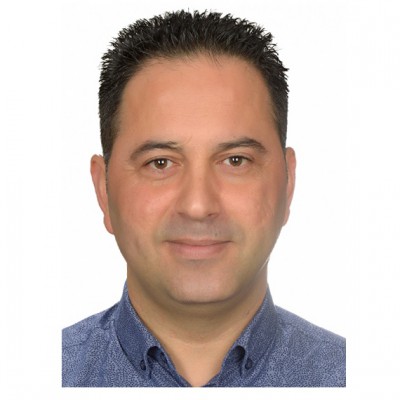
Prof. Dr. Hüseyin Yapıcı is a faculty member in the Department of Mechanical Engineering at Başkent University . His research focuses on Nuclear Energy Systems , Accelerator Technology , and Thermodynamics . Nuclear Reactor Design Energy Systems Optimization Heat Transfer Analysis His work involves numerical simulations , neutronic analysis , and nuclear waste transmutation . Recent publications highlight three-dimensional power density modeling in accelerator-driven systems and tritium production studies. Prof. Yapıcı has supervised numerous students, including Gizem Bakır , Alper Buğra Arslan , and Büşra Durmaz , across diverse projects from fusion-fission hybrids to renewable energy systems .
Prof. Ayşegül Aksoy is a faculty member in the Department of Environmental Engineering at Middle East Technical University (METU) since 2002. She holds a Ph.D. in Civil Engineering from the University of Virginia (2000) and has held visiting roles at Stanford University (2015-2016) and the University of California Davis (2001). Her academic leadership includes Vice Chair roles in METU's Environmental Engineering Department (2012-2015 and 2006-2009), and she co-developed UN courses on Black Sea environmental management. Her research focuses on environmental systems engineering, integrated waste management, water quality modeling, and remote sensing applications. Notable projects include developing autonomous systems for lake turnover monitoring, optimizing landfill leachate management, and evaluating solar sludge drying alternatives. She has directed over 20 graduate theses and contributed to research funded by TÜBİTAK, Newton Fund, and EU programs. Key awards include the AQUA 360 Best Paper Award (2021) and TÜBİTAK Fellowships. Her work spans 120+ peer-reviewed publications, with recent focus areas including anaerobic digestion optimization, GIS-based waste routing, and pollutant fate modeling in heterogeneous aquifers. She advises on national environmental policies and manages projects like the 'Turnover Response System Development' (2020-2023) and 'Chlorophyll-a Modeling in Lake Eymir' (2009-2010).
Prof. Erdem Günay is a full Professor in the Department of Energy Systems Engineering at Istanbul Bilgi University, where he has been serving since 2013, rising through the academic ranks. He holds a Ph.D. in Chemical Engineering from Bogazici University, where he also completed his B.S. and M.S. degrees, and conducted postdoctoral research. His academic journey reflects a deep commitment to energy systems and sustainable technologies. B.S. in Chemical Engineering, Bogazici University, 2002 M.S. in Chemical Engineering, Bogazici University, 2005 Ph.D. in Chemical Engineering, Bogazici University, 2012 Postdoctoral Research Associate, Catalyst Design and Reaction Engineering Laboratory, Bogazici University, 2013 Prof. Günay’s research centers on the integration of machine learning and artificial intelligence with energy systems engineering. His work spans renewable energy (solar, wind, bioenergy), hydrogen production, CO₂ utilization, fuel cells, and energy demand forecasting. He employs advanced data mining, neural networks, and explainable AI to model, simulate, and optimize complex energy processes, contributing significantly to sustainable energy solutions. His interdisciplinary approach bridges chemical engineering, environmental science, and computational modeling. His recent publications demonstrate a strong trend in applying machine learning to sustainable bioenergy, catalysis, and environmental management. From optimizing biochar production to forecasting global temperature anomalies and enhancing microbial fuel cells, his research leverages AI to address pressing energy and environmental challenges. The articles reflect a consistent focus on sustainability, efficiency, and innovation in energy technologies, with a growing emphasis on explainability and real-world applicability of AI models. Prof. Günay has not been mentioned to have received any specific scientific awards, but his extensive publication record in high-impact journals indicates strong recognition in his field. He has advised several Master’s students, including Muaaz Jnani, Duru Akalın, and co-advised Ahmet Coşgun and Meltem Baysal. He actively supervises senior design projects in areas such as biogas production, biodiesel from shea butter, pyrolysis, and solar desalination, fostering hands-on learning and innovation among students. While no external grants are explicitly mentioned, his research output suggests active involvement in funded projects. His teaching portfolio includes core courses such as Thermodynamics, Fluid Mechanics, Fuels and Combustion, and Energy Systems Modeling and Simulation. Although specific lab or research team names are not provided, his frequent collaborations with researchers like Ramazan Yıldırım, N. Alper Tapan, and Ahmet Coşgun suggest active participation in a research group focused on AI-driven energy and catalysis research at Istanbul Bilgi University.
Erdinç Altuğ serves as a Professor in the Department of Mechanical Engineering at Istanbul Technical University, specializing in advanced aerial robotics and control systems. His work bridges theoretical control methodologies with practical UAV applications. Research interests focus on Unmanned Aerial Vehicle design and fault tolerance Quadcopter dynamics and vertical takeoff systems Adaptive control for parametric variations Rapid prototyping of hybrid VTOL platforms His recent publications demonstrate consistent innovation in autonomous flight systems, particularly in fault-tolerant operational modal analysis and modular multi-drone configurations. Current projects include: Hibrit İnsansız Hava Aracı Ile Otonom Teslimat Sistemi Geliştirilmesi (TUBITAK, 2020-2022) Mini Jet Motorlu Dikine Kalkıp İnebilen Otonom Taşıyıcı Robot Geliştirilmesi (TUBITAK, 2018-2021) Kampüs içi ve bina içi ortamlarda çalışacak otonom taşıma aracı algoritmaları (SRP, 2018-2021) Supervising 26 graduate works, his research impacts both academic and industrial UAV development.
Veysi Başhan serves as an Assistant Professor in the Department of Marine Engineering within the Faculty of Naval Architecture and Ocean Engineering at Istanbul Technical University (ITU). His academic profile demonstrates active engagement in maritime engineering research with current publications extending through 2025 and an active research project on hybrid renewable energy systems analysis. Professor Başhan's research spans critical maritime engineering domains with particular emphasis on renewable energy integration, risk assessment methodologies, and marine propulsion systems. His work innovatively combines fuzzy logic, Bayesian networks, and multi-criteria decision-making approaches to address complex challenges in maritime operations, energy systems, and safety protocols. This interdisciplinary approach bridges traditional marine engineering with modern computational techniques for risk analysis and system optimization. His publication portfolio reveals a clear trajectory toward sustainable maritime technologies, with increasing focus on wind-solar hybrid systems, alternative fuels like methanol, and autonomous navigation reliability. The research demonstrates consistent application of fuzzy-based analytical frameworks across diverse maritime contexts from engine performance to ballast water treatment systems. Current research activities include the 2024 project "Hibrit Yenilenebilir Enerji Sistemlerinde Arızaların Analizi ve Çözüm Önerileri" (Analysis of Failures in Hybrid Renewable Energy Systems and Solution Proposals), indicating ongoing commitment to solving practical engineering challenges in renewable energy integration for maritime applications. His scholarly impact is evidenced by 32 research outputs, 366 Scopus citations, and an h-index of 9.
Prof. Feridun Boylu is a Professor in the Department of Mineral Processing Engineering at Istanbul Technical University (ITU), affiliated with the Faculty of Mines. His research focuses on mineral processing techniques, coal technology, and industrial raw materials. He holds a PhD in Ore Coal Preparation and Evaluation from ITU and has extensive experience in academic leadership roles, including Head of Department and Advisor to the Rector at ITU. His work spans over 30 years, with contributions to coal flotation, dense medium cyclones, and bentonite characterization. Prof. Boylu has supervised numerous theses and leads projects funded by national and international grants, including EU initiatives like FineFuture. His research emphasizes sustainable mining practices and advanced separation technologies. Education: PhD (Ore Coal Preparation and Evaluation, ITU, 2004), MSc (Ore Coal Preparation, ITU, 1998), BSc (Mining Engineering, ITU, 1993) Key Roles: Professor at ITU, Former Head of Department (2021–2021), Erasmus Coordinator (2020–present), and International Student Coordinator (2021–present) Research Interests: Chemical-biological recovery techniques, coal water slurries, flotation optimization, and mineral beneficiation. His work addresses challenges in fine particle flotation, coal preparation, and sustainable utilization of industrial raw materials. Recent Projects: Includes the EU-funded FineFuture project (2019–2023) and studies on three-product dense medium cyclones and machine learning for mill liner wear prediction. His research bridges theoretical modeling and industrial applications in mineral processing.
Assoc. Prof. Dr. Celalettin Duran is a Turkish geographer and associate professor at Kastamonu University's Faculty of Humanities and Social Sciences, Department of Geography. With a career spanning since 2005, his work connects physical geography, ecology, and GIS technologies. PhD in Physical Geography (Fırat University, 2011) MSc in Physical Geography (Fırat University, 2005) BSc in Forest Engineering (Istanbul University, 1999) Research spans three core areas: Ecology (soil contamination, radiological risks, forest health), Ecological Design/Planning (agroforestry systems, spatial suitability analysis), and Geographic Information Systems (GIS applications in environmental monitoring, climate-vegetation mapping). Recent work includes 2025 studies on chestnut forests and doline distribution, 2024 analyses of radiogenic heat in clay bricks, and 2023 assessments of radon risks in beverages. Collaborates with Şeref Turhan and Aslı Kurnaz on industrial pollution studies Worked with Halil Günek on Mersin region ecological research Part of 7 funded projects including Devrekani Plateau silvopastoral systems
Alper Tolga Çalık serves as an Assistant Professor in the Department of Mechanical Engineering at Istanbul Technical University (ITU), Turkey. His research centers on advanced combustion systems for internal combustion engines, with particular expertise in diesel and Wankel engine technologies, emission control strategies, and computational fluid dynamics modeling. His primary research interests include combustion regime analysis in compression-ignited engines, exhaust gas recirculation optimization, turbulent jet ignition systems for rotary engines, and machine learning applications for predicting oil dilution and emissions. Recent work demonstrates strong focus on alternative ignition methods for Wankel engines and numerical investigations of flow fields in rotary combustion chambers. Çalık's publication record shows consistent output since 2005, with notable acceleration in high-impact journals (Fuel, SAE Technical Papers) from 2013-2024. His research demonstrates evolving trends from fundamental combustion analysis (2007) toward practical applications in emission reduction (2013-2019) and cutting-edge ignition systems (2021-2024), with increasing integration of computational methods. He actively supervises graduate students (3 supervised works documented) and leads research projects including the 2023 ITU ZES Solar Car Team battery pack design and 2019 autonomous driving integration for solar electric vehicles. His work with the ARIBA solar vehicle team demonstrates commitment to applied renewable energy transportation solutions.
Burak Zincir is an Associate Professor in the Department of Marine Engineering at Istanbul Technical University. His research focuses on sustainable alternative fuels, decarbonization strategies in maritime transportation, and environmental impact analysis of marine technologies. He has led projects such as the 'Sustainable Biofuel Assessment Model for Maritime Transportation' and 'Determination and Analysis of Risk Factors in Ammonia-Fueled Ship Fuel Supply System.' His work emphasizes alternative fuels like hydrogen, ammonia, and biofuels, alongside regulatory compliance with international standards (e.g., IMO criteria). He has received the 'Most Successful Doctoral Thesis Award 2019' in 2020, recognizing his contributions to maritime decarbonization research. Recent publications explore CCS-SCR integration, hydrogen fuel cells for cargo ships, and lifecycle emissions of biofuels. His projects often involve case studies analyzing fuel viability, policy implications, and energy efficiency improvements in maritime systems. Zincir's research collaborations span environmental engineering, renewable energy integration, and shipping policy analysis. He actively contributes to global efforts to reduce greenhouse gas emissions through innovative fuel solutions and sustainable maritime practices.
Prof. Dr. Raif Bayır is a Turkish academic at Karabük University's College of Engineering, Department of Mechatronics Engineering. With a career spanning 2000-2024, he has held continuous full-time faculty positions from Assistant Professor to Professor. His research focuses on Robotics, Hybrid/Electric Vehicles, and Artificial Intelligence. Doctorate: Gazi University (2005) - Electronics & Computer Education Postgraduate: Gazi University (1998) - Electronics & Computer Education Undergraduate: Gazi University (1995) - Electronics & Computer Education His work integrates Artificial Intelligence techniques into Electric Vehicle systems, Robotics, and Agricultural Engineering applications. Recent publications emphasize Deep Learning for Mask Detection, Real-Time Battery Monitoring, and Autonomous Navigation Systems. Scientific awards include: 2017 METU Line-Following Robot 1st Prize 2016 TÜBİTAK Domestic Product Award 2015 TÜBİTAK Electromobil Best Design Prize He has advised over 20 graduate theses on topics spanning Electric Vehicle Components, Beehive Monitoring Systems, and Intelligent Control Applications. His research teams have developed multiple TÜBİTAK-supported projects including Automotive Test Stands and Battery Management Systems.
Prof. Dr. Burak Aricak is a faculty member at Bursa Technical University , where he serves in the Faculty of Forestry under the Department of Forest Engineering . His work integrates geospatial technologies and environmental science to address critical forestry challenges. Research Focus : Forest Road Planning, Harvesting Techniques, GIS & Remote Sensing Applications, and Ergonomics. Key Publications (2023-2025) explore climate change effects on forest species distribution, heavy metal accumulation in trees, soil respiration dynamics post-harvesting, and UAV/LiDAR advancements for biomass estimation. Contact : burak.aricak@btu.edu.tr | +90 (224)-8081101
Kerem Ciddi is an Assistant Professor in the Department of Industrial Engineering at Dumlupınar University in Kütahya, Turkey. He holds a PhD in Industrial Engineering from Gazi University and has held visiting academic roles at institutions such as Clausthal University of Technology (Germany), Rensselaer Polytechnic Institute (USA), and several universities across Europe. His research focuses on supply chain management, logistics optimization, and operations research with a particular emphasis on mathematical modeling and sustainability. Education: Bachelor of Industrial Engineering, Gazi University (1994–1998) Doctor of Industrial Engineering, Gazi University (2005–2011) Research Interests: Dr. Ciddi’s work integrates mathematical modeling, optimization techniques, and statistical analysis to address challenges in supply chain logistics, reverse logistics systems, energy efficiency, and decision-making under uncertainty. His areas include: Quantitative models for sustainable supply chain networks Multi-objective optimization in industrial systems Neural networks and regression analysis for energy systems Fuzzy logic applications in decision support systems Publications & Awards: He has contributed over 10 peer-reviewed articles and conference papers, including studies on neural network-based heat transfer modeling and TÜBİTAK-funded research on compressed air systems. His 2017 TÜBİTAK Postdoctoral Fellowship supported his work at Rensselaer Polytechnic Institute. Teaching & Service: He has taught courses in operations research, supply chain management, and mathematical modeling at both undergraduate and graduate levels. His professional affiliations include the Turkish Union of Chambers of Mechanical Engineers (TMMOB).
Erol Gültekin is an Assistant Professor in the Department of Mechanical Engineering at Turkish Air Force Academy University, affiliated with the Faculty of Engineering. His research focuses on structural optimization, engine design, and battery safety, with applications in automotive, aerospace, and materials science. He collaborates with institutions like Bursa Uludağ University on projects involving lattice structures and engine mechanisms. Key research interests include topology optimization, fuel additive effects on engine performance, and lattice structure analysis for battery housing. He employs tools like HyperWorks and SolidWorks for simulations and prototyping. Recent studies highlight advancements in rhombic-drive engine mechanisms, fuel additives for SI engines, and lattice structures for crashworthiness. His work addresses energy efficiency, mass reduction, and safety in mechanical systems. No scientific awards are listed, but his contributions span multiple peer-reviewed publications since 2019. Collaborations with co-authors like Mehmet Yahşi and Alper Calam drive innovations in structural and automotive engineering.
Özgen Akalın is a Professor in the Department of Mechanical Engineering at Istanbul Technical University. He specializes in vehicle dynamics, control systems, and tribology, with a focus on model predictive control, suspension systems, and engine lubrication. His research contributes to UN Sustainable Development Goals related to sustainable infrastructure and innovation. His work includes optimizing cylinder bore honing patterns, reducing engine friction via laser texturing, and developing adaptive control strategies for autonomous vehicles. He leads projects on sustainable vehicle technologies and regenerative suspension systems, funded by TÜBİTAK and industry partners. Notable awards include the Applied Vehicle Technology Panel Excellence Award (2021) and Graduate Award (1996). His research spans 30+ years with over 90 publications, including studies on articulated vehicle stability, trajectory control, and engine wear analysis. He advises 47 ongoing theses in mechanical engineering and vehicle systems.
Caglar Karatug is an Assistant Professor in the Department of Marine Engineering at Istanbul Technical University. His research focuses on predictive maintenance strategies for ship machinery systems, energy efficiency in maritime transportation, and sustainable development goals related to marine engineering. He has contributed to advancements in renewable energy applications onboard ships, risk assessment methodologies for emission control technologies, and digital transformation in smart ship operations. Research interests include maintenance optimization for marine systems, emission reduction techniques for container vessels, and the integration of solar/wind energy systems with marine propulsion. His work addresses UN Sustainable Development Goals through innovations in energy efficiency and pollution prevention. Recent publications analyze hybrid predictive maintenance approaches, cost-benefit tradeoffs of emission reduction technologies, and reliability assessment methods for marine engines. His research emphasizes practical applications of advanced analytics and sustainability practices in the maritime sector.