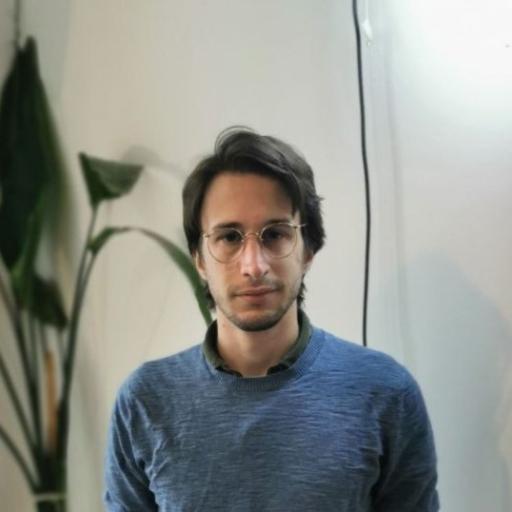
Dr. Tommaso Schettini is an Assistant Professor in the Department of Mechanical, Industrial and Aerospace Engineering at Concordia University. His research focuses on transportation systems optimization, including electric vehicle charger location, metro timetabling, and demand-driven scheduling strategies. He holds an ORCID identifier (0000-0003-2578-1539) and supervises Master's and PhD students in Industrial Engineering. His work integrates operations research techniques like Benders decomposition and metaheuristics to solve real-world transportation and manufacturing challenges. Research Areas: Electric Vehicle Infrastructure Planning, Metro Timetabling Strategies, Integer Programming, Discrete Simulation-based Optimization, and Combinatorial Optimization. Notable contributions include developing pattern-based algorithms for short-turning metro lines and optimizing micro-mobility integration with public transit. His articles span 2016–2024, emphasizing demand-driven approaches in transportation and manufacturing systems.
Prof. Gregorio Iglesias is a Professor of Marine Renewable Energy at University College Cork (UCC) and Honorary Professor of Coastal Engineering at the University of Plymouth. His expertise lies in Marine Renewable Energy and Coastal Engineering, with a focus on wave and tidal energy systems, offshore wind integration, and coastal protection strategies. He has secured over €12M in research funding as Principal Investigator and authored/edited key texts such as Wave and Tidal Energy (Wiley) and Ocean Energy and Coastal Protection (Springer). Education: BEng (Civil Engineering, 1992), MEng (Civil Engineering, 1993), PhD (Engineering, 2001). Research Interests: Advanced modeling of wave energy converters, floating offshore wind turbines, coastal erosion mitigation, and climate change impacts on marine energy resources. His work bridges theoretical advancements and practical applications, including coasts like the Port of Gijón (Spain) and the Shannon Estuary. Recent publications highlight climate-driven renewable energy transitions, multi-hazard coastal resilience frameworks, and techno-economic assessments of offshore systems. He chairs the IEC Standards panel for wave energy device testing and serves as Subject Editor for Energy (Elsevier) . Professional Activities: Lead of Marine Renewable Energy research at MaREI (Ireland), former Head of the COAST Engineering Group at Plymouth (2012–2018), and member of PIANC’s Universities Consortium. His work has generated 5,459 citations with an h-index of 41. Teaching: Delivers modules on Ocean Energy (NE4003/NE6005) and Hydraulics (CE3007).
Dr. Llinos Roberts is the Head of Community-Based Learning for the Graduate Entry Medicine (GEM) and Physician Associate programs at Swansea University School of Medicine. She concurrently serves as a General Practitioner (GP) in the Cwm Gwendraeth area and a partner in Cross Hands and Tumble surgery. Fluent in Welsh, she contributes to medical media through columns and public discourse. Her expertise spans clinical skills training, medical professionalism, and community-based medical education. Affiliations: Swansea University School of Medicine, Cross Hands & Tumble Surgery Roles: Academic lead for community learning programs, GP practitioner Teaching focuses on clinical skills (PM-240F/PM-350D), medical professionalism (PM-241F/PM-351D), and physician associate training (PMXM01/P MXM04). Modules emphasize practical clinical training and ethical medical practice aligned with GMC guidelines.
Professor Felix Naumann is Chair for Information Systems at the Hasso Plattner Institute (HPI) at the University of Potsdam in Germany, where he leads the Information Systems research group. He is also Coordinator for MSc. Data Engineering and for the Data and AI track for MSc. Computer Science, and Speaker of the Research School on Data Science and Engineering. His extensive academic career includes visiting positions at CIRES Centre in Brisbane (2024-2025), SAP's Innovation Center (2020), AT&T Research (2016), and QCRI (2012). Professor Naumann's research focuses on data profiling, data cleansing, data integration, and data quality assessment with over 200 scientific publications. His work spans theoretical foundations and practical applications, with significant contributions to data quality metrics, metadata extraction, and AI-driven data preparation techniques. His research group develops prominent systems like Metanome for data profiling and Metis for data quality assessment. His recent publications demonstrate continued innovation in data management, with a growing intersection between traditional database research and AI applications. The 15 most recent papers show increasing focus on data quality for AI applications (KITQAR), multimodal data analysis (MELArt), and practical data cleaning frameworks that bridge database systems with machine learning pipelines. GI Dissertationspreis 2000 for best computer science PhD thesis IBM Research Division Award, 2002 Distinguished ACM member since 2021 Distinguished Reviewer Award - SIGMOD 2023 Best paper award at EDBT 2024 for Tasheeh paper Professor Naumann has successfully advised over 30 PhD students who now hold prominent positions at institutions like MIT, Google, Snowflake, and universities worldwide. His research has been funded by major grants including DFG Nachwuchsforschergruppe (2003-2008), IBM SUR Grant (2007), and DFG Forschergruppe Stratosphere (2010-2016). He leads the Information Systems research group at HPI, which includes PostDocs, PhD students, and student assistants working on projects like Metanome, Metis, KITQAR, and Janus, focusing on data profiling, quality assessment, and change exploration in data systems.
Sophie N. Parragh is Professor and Head of the Institute of Production and Logistics Management at Johannes Kepler University Linz, where she also serves as program director of the master's degree program in Economic and Business Analytics. She received her PhD from the University of Vienna in 2009 and completed her habilitation in 2016, following postdoctoral research at the IBM Center for Advanced Studies in Porto and a visiting professorship at the Vienna University of Economics and Business. Her research focuses on developing exact and heuristic optimization algorithms for complex logistics and transportation problems. Key areas include vehicle routing, green logistics, disaster relief distribution planning, scheduling, and multi-objective optimization. She has particular expertise in branch-and-bound, branch-and-price, column generation, and metaheuristics approaches to solve challenging combinatorial optimization problems. Dr. Parragh's publication record shows a consistent trend toward increasingly complex multi-objective problems, with recent work focusing on electric vehicle routing, multi-echelon production planning under uncertainty, and bi-objective facility location problems with applications in disaster relief. Her research bridges theoretical optimization methods with practical applications in logistics and transportation. Scientific Awards: ÖGOR (Austrian Society for Operations Research) dissertation prize doc.award from the University of Vienna Hertha Firnberg Postdoc fellowship from the Austrian Science Fund (FWF) Dr. Parragh has served as department editor for OR Spectrum and as associate editor for Transportation Science, Transportation Research Part B: Methodological, INFORMS Journal on Computing, and Networks. She has led and participated in numerous third-party funded research projects in operations research, including work in healthcare logistics, field staff routing, production planning, and electric vehicle routing. In 2021-2022, she co-organized the monthly VeRoLog webinar series, demonstrating her active engagement with the international operations research community. She maintains strong research collaborations across Europe, evidenced by her co-authored publications with researchers from institutions in Austria, France, Portugal, Denmark, and beyond. Her work consistently addresses both theoretical challenges in optimization and practical applications in industry and public service contexts.
Bob Turner is an active Associate Professor of Political Science at Skidmore College in Saratoga Springs, NY, with dual affiliation in the Environmental Studies program. He maintains an office in Ladd Hall (Room 316) and teaches courses including State and Local Politics, where he guides students through intensive case studies of policy issues across different states. His research focuses primarily on State and Local Politics in the American context, with special emphasis on polling methodology and regional political analysis. In 2021, he founded the SPI Polling Institute at Skidmore College, which conducts educational surveys on political and social issues in Saratoga Springs and New York's Capital District. Through this institute, students gain hands-on experience designing surveys and analyzing data, with findings published in regional media outlets including the Times Union, Daily Gazette, Saratoga Today, and Saratogian. Professor Turner demonstrates strong community engagement through both his academic work and personal interests. His "Fishing Professor" column for the Saratoga Lake Association Newsletter, active from April 2022 through July 2023, showcases his knowledge of local waterways and fishing techniques across numerous Adirondack lakes including Saratoga Lake, Lower Saranac, and Loon Lake. The SPI Polling Institute operates as a non-profit academic institution with primary educational goals, providing students with practical research experience while generating valuable data on local political dynamics. Turner's State and Local Politics course materials reveal his methodological approach emphasizing qualitative case study analysis of policy issues across different jurisdictions.
Dr. Mehdi Jafarian is a Senior Lecturer in the School of Chemical Engineering at the University of Adelaide . His work focuses on hydrogen production , CO2 capture , solar thermal energy , and chemical looping combustion . Key research areas include: Solar thermal integration in industrial processes Hydrogen generation via methane pyrolysis CO2 sequestration technologies Advanced water treatment systems Thermochemical energy storage Research Trends : Recent publications emphasize hydrogen production optimization , PFAS removal , and molten metal reactor systems . Sub-fields span flash reactor modeling , hydrodynamic cavitation , and membrane-free electrolysis . Contact : mehdi.jafarian@adelaide.edu.au
Melanie Mitchell is a Professor at the Santa Fe Institute, where she conducts research at the intersection of artificial intelligence, cognitive science, and complex systems. Her work focuses on conceptual abstraction and analogy-making in artificial intelligence systems, seeking to understand the mechanisms that enable both human and machine intelligence. Mitchell received her PhD in Computer Science from the University of Michigan in 1990 and has held positions at numerous institutions including the University of Michigan, Los Alamos National Laboratory, the Oregon Graduate Institute, and Portland State University. Her research bridges the gap between theoretical understanding of intelligence and practical AI development. Her recent publications explore fundamental questions about AI understanding, reasoning capabilities, and the relationship between language models and world knowledge. She has developed novel evaluation frameworks for assessing analogical reasoning and abstraction in AI systems, challenging assumptions about what current AI can truly comprehend. Her work often examines the limitations of large language models while proposing pathways for more robust and human-like artificial intelligence. 2010 Phi Beta Kappa Science Book Award for "Complexity: A Guided Tour" Finalist for the 2023 Cosmos Prize for Scientific Writing for "Artificial Intelligence: A Guide for Thinking Humans" Senior Scientific Award from the Complex Systems Society Distinguished Cognitive Scientist Award from UC Merced Herbert A. Simon Award of the International Conference on Complex Systems Mitchell actively advises numerous PhD students and postdoctoral researchers, fostering the next generation of researchers in AI and complex systems. She has also developed educational resources including the popular online course "Introduction to Complexity" on Complexity Explorer. Her public outreach includes a Substack newsletter "AI: A Guide for Thinking Humans," Science Magazine columns, and the podcast series "The Nature of Intelligence."
Brian C. Keegan is an Associate Professor in the Department of Information Science at the University of Colorado Boulder. He is also a director of the Colorado Laboratory for Users, Media, and Networks (COLUMN) and holds courtesy appointments in the Department of Computer Science, with affiliations at the ATLAS Institute, Institute for Behavioral Research, American Politics Research Lab, and REACH. PhD in Media, Technology and Society from Northwestern University S.B. in Mechanical Engineering and Science, Technology and Society from MIT His research focuses on social computing , network science , and data science , with three primary areas: (1) high-tempo online collaborations, (2) governing information commons, and (3) public interest data science. He uses digital traces of social behavior to study how disruptions reveal collaborative social structures, primarily in platforms like Wikipedia, Reddit, and Twitter. Recent articles explore virtual community governance , Cannabis sativa biology , decentralized social media , and peer-produced information dynamics . Scientific accolades include Best Paper and Honorable Mention awards at top venues like ACM CSCW and AAAI ICWSM. Funding comes from the National Science Foundation . Dr. Keegan advises on social media governance , online collaboration , and data science ethics , and collaborates with organizations like Steep Hill Labs, Leafly, and Colvin Run Networks.
Kiyoshi Ono is a Professor at Waseda University's School of Creative Science and Engineering, Faculty of Science and Engineering, specializing in structural and earthquake engineering. He holds a Doctor of Engineering degree from Osaka University and has been actively contributing to academia since at least 2007, following his tenure as Associate Professor at Osaka University Graduate School of Engineering (2002-2007). His academic journey demonstrates a consistent focus on advancing structural engineering knowledge with practical applications for infrastructure resilience. Professor Ono's research interests center around structure engineering and earthquake engineering, with particular expertise in steel structures, bridge engineering, and high-performance steel materials. His work explores the seismic performance of steel structures, innovative bridge design methods, and the application of high-strength steel materials (particularly SBHS series) to improve structural safety and durability. He investigates how material properties affect structural behavior under seismic loads, developing evaluation methods that balance safety with economic considerations. His publication record shows a consistent research trajectory with 41 papers, 123 citations, and an h-index of 4 according to Scopus. The most recent publications (2015-2024) demonstrate his ongoing commitment to advancing knowledge in steel structure performance, particularly focusing on high-performance steel materials and their application in seismic-resistant design. His research spans fundamental material properties investigations to practical structural applications, showing a comprehensive approach from microscopic material behavior to macroscopic structural performance. Scientific Awards: New Road Technology 5-Year Plan Award (2003) Professor Ono actively contributes to academic knowledge dissemination through numerous publications, presentations, and his role in developing industry standards. His work on the 'Steel and Composite Structure Standard Specifications' and 'Buckling Design Guidelines' demonstrates his influence on engineering practice. He serves on committees including the Japan Society of Civil Engineers Kansai Branch (as General Affairs and Accounting Committee Member since 2010) and the Performance-Based Seismic Design Committee for Bridges. His professional memberships include the Japan Society of Civil Engineers Kansai Branch, Japanese Society of Steel Construction, and Japan Society of Civil Engineers, reflecting his active engagement with the engineering community. His research projects consistently address practical challenges in bridge engineering while advancing theoretical understanding of structural behavior under extreme loading conditions.
Rainer Hahn is an Associate Professor in Biochemical Engineering at the Institute of Biochemical Engineering, Department of Biotechnology and Food Sciences, University of Natural Resources and Life Sciences, Vienna (BOKU). He also serves as Head of the Downstream Processing Unit at the BioIndustrial Pilot Plant and is a key researcher at the Austrian Center of Industrial Biotechnology (ACIB). His work is centered on bioprocess engineering with a strong focus on downstream processing and biopharmaceutical purification. University: University of Natural Resources and Life Sciences, Vienna (BOKU) School: Department of Biotechnology and Food Sciences Department: Institute of Biochemical Engineering Role: Associate Professor, Head of Downstream Processing Unit His research interests span Bioprocess Engineering , Downstream Processing , Industrial Biotechnology , Pharmaceutical Technology , and Chemical Biology . He investigates advanced purification techniques, particularly in chromatography and protein separation processes. His recent work emphasizes multicomponent adsorption, protein A affinity systems, and purification of complex biomolecules like secretory immunoglobulin A (sIgA). The trend in his recent publications reveals a strong emphasis on protein purification , chromatographic modeling , and process optimization in biopharmaceutical manufacturing. His work integrates experimental analysis with mathematical modeling to improve efficiency and predictability in downstream operations, especially in multi-component systems. Topics such as continuous chromatography , pH transients , and affinity resin development reflect his leadership in advancing industrial bioprocessing. His notable scientific awards include: HOUSKA PRIZE (Recognition Award) - 2016 Dissertation Prize of the Austrian Society for Biotechnology - 2002 Rainer Hahn has been actively involved in numerous research projects funded by FWF, national enterprises, and private foundations, focusing on biopharmaceutical purification and process development. He mentors students and contributes to academic training through lectures and supervision. He is also a dedicated reviewer for leading journals such as Journal of Chromatography A , Biotechnology and Bioengineering , and Separation and Purification Technology . His work is closely tied to industrial applications, particularly in the development of scalable and efficient biomanufacturing processes. He is associated with the BioIndustrial Pilot Plant and collaborates with ACIB, contributing to innovation in industrial biotechnology. His research group focuses on developing robust downstream strategies for next-generation biopharmaceuticals.
Laurens Bliek is an Assistant Professor at the Department of Industrial Engineering & Innovation Sciences, Eindhoven University of Technology (TU/e). He specializes in combining artificial intelligence (AI) with optimization techniques for computationally intensive problems, focusing on sustainable applications such as public transport, electric vehicles, and CO 2 reduction. Education: MSc in Applied Mathematics (2014), PhD in Systems & Control (2019) from Delft University of Technology. Prior Role: Postdoctoral researcher at the Algorithmics group, Delft University of Technology. Research Interests: His work addresses AI-driven optimization of expensive cost functions, particularly in logistics, communications, and healthcare. He develops methods to handle computationally intensive simulators and digital twins, emphasizing real-time decision-making and sustainability. Recent Publications: His research spans predictive maintenance using Fourier graph neural networks, real-time container yard allocation, and 5G network optimization. Articles appear in journals like IEEE Transactions on Neural Networks and Learning Systems and Computer Networks . Collaborations: Laurens collaborates with industry partners (LioniX, Dutch Railways) and organizations (European Supply Chain Forum, Logistics Community Brabant). He co-leads the 12-PhD program AI Planner of the Future and participates in AI sustainability working groups. Supervision: Co-promotor of PhD students Ya Song and Abdo Abouelrous, focusing on AI applications in routing and maintenance logistics.
Xiao-Li Meng is the Whipple V. N. Jones Professor of Statistics at Harvard University and Founding Editor-in-Chief of the Harvard Data Science Review. He has held leadership roles including Chair of Harvard's Department of Statistics (2004-2012) and Dean of the Graduate School of Arts and Sciences (2012-2017). A globally recognized statistician, he was awarded the COPSS President’s Award (2001) as the best statistician under 40. His research spans foundational statistical theory, computational methods (e.g., EM algorithm, MCMC), and interdisciplinary applications in astronomy, public health, and engineering. Meng earned his BS in Mathematics from Fudan University (1982) and PhD in Statistics from Harvard (1990), with a faculty tenure at the University of Chicago before returning to Harvard in 2001. His work emphasizes bridging theoretical and applied statistics, with notable contributions to Bayesian inference, differential privacy, and astrostatistics. He authored the influential column The XL-Files in the IMS Bulletin, blending technical insight with accessible commentary. Meng advocates for data science education and ethical AI, emphasizing collaboration across disciplines and societal sectors. His leadership has shaped Harvard’s graduate programs and data science initiatives, while his over 150 publications and 400+ presentations reflect a prolific career at the intersection of academia and public impact. Awardees include the IMS Fellowship, ASA Founders Award, and NSF CAREER Award. His current projects explore generative AI ethics, data democratization, and statistical paradigms in big data environments. Meng’s vision prioritizes ‘conducting principled data science’ through rigorous methodological development and societal accountability.
Juergen Pfingstner is a Post-doctoral Fellow at the University of Oslo (since 2015) within the Department of Physics. His research focuses on advanced accelerator technologies, particularly at CERN's CLIC Test Facility (ATF2). Key areas include emittance preservation, ground motion mitigation, and free-electron laser (FEL) design. He holds a PhD from the Vienna University of Technology (2013) and a Master's in Electrical Engineering from Graz University of Technology (2008), specializing in control engineering and electromagnetic field computation. His academic journey includes a postdoctoral stint at CERN (2012–2014), where he investigated ground motion effects on CLIC performance. Collaborations span institutions like KEK (ATF2 facility) and the X-band FEL collaboration. Research interests bridge particle accelerator physics, control systems, and high-frequency radiation technologies. Publications emphasize CLIC final focus systems, wakefield suppression, and plasma wakefield acceleration. His work addresses both theoretical and experimental challenges in next-generation collider design, including THz radiation facilities and feedback control methodologies.
Mauro Bonfanti is a Fixed-term Assistant Professor at the Department of Mechanical and Aerospace Engineering (DIMEAS) at Politecnico di Torino, Italy. His academic work focuses on wave energy conversion systems, mechatronics, and applied mechanics within the field of industrial and information engineering. Dr. Bonfanti's primary research interests include wave energy conversion systems, system identification, optimal control, mechatronics, and renewable energy systems. His work centers on developing advanced control strategies for wave energy converters, with particular emphasis on improving energy extraction efficiency through innovative mechanical designs and control algorithms. He has made significant contributions to the understanding of wave-structure interactions, hydrodynamic modeling of floating bodies, and optimization of wave energy converter systems under various sea conditions. His research bridges theoretical modeling with practical implementation, often involving high-fidelity numerical simulations validated through experimental testing. His publication record demonstrates a strong focus on advancing wave energy conversion technology, with particular emphasis on control systems, hydrodynamic modeling, and optimization techniques. The research shows progression from fundamental modeling approaches to increasingly sophisticated control strategies and system integration. Recent work has expanded to include hybrid renewable energy systems that combine wave and wind energy technologies. Dr. Bonfanti serves as a Scientific Responsible for several research projects including OCEANGLIDE, AQUALEV, and WISE, which focus on innovative wave energy conversion technologies. He holds multiple patents related to wave energy conversion systems, including the WISE (Water-air Injectable Swath Elevator) and AQUALEV magnetic support systems. He actively supervises PhD students including Alessandro Brusasco, Matteo Mastorakis, Francesco Balestrieri, and Domenico Edoardo Sfasciamuro, guiding research in sustainable materials, mechanical engineering, and wave energy conversion systems. His teaching responsibilities include courses on System Identification and Optimal Control of Wave Energy Conversion Systems, as well as Mechatronics across multiple academic years. Dr. Bonfanti is a member of the Mechatronics and Servosystems research group at DIMEAS, where he collaborates on projects related to marine renewable energy systems and advanced control technologies.