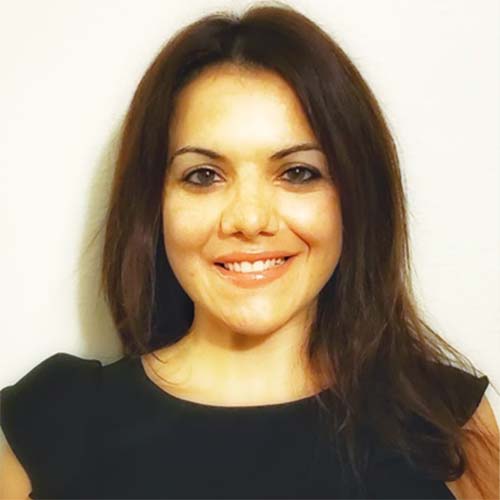
Alan J. Michaels is a Professor and Director of the NSI Spectrum Dominance Division at Virginia Tech, leading research in digital communications, electronic warfare, and quantum algorithms. He holds affiliations with the Bradley Department of Electrical and Computer Engineering and the Department of Mathematics. Previously, he served at Harris Corporation in engineering leadership roles. Education includes multiple degrees from Georgia Institute of Technology (B.S., M.S., Ph.D. in ECE; B.S., M.S. in Applied Mathematics; M.S. in Operations Research) and an MBA from Carnegie Mellon University. Research focuses on RF spectrum dominance, applied mathematics, and cybersecurity. Notable contributions include 44 U.S. patents, over 80 peer-reviewed publications, and leadership in $171M+ research projects. He pioneered initiatives like the Vertically Integrated Projects (VIP) model for undergrad research and the Southwest VA node of the Commonwealth Cyber Initiative (CCI). Awarded Fellow of the National Academy of Inventors for his inventive impact. His work bridges academia and industry, emphasizing practical applications in restricted research domains.
Dr. Suman Bista is a Research Fellow at the QUT Centre for Robotics, Queensland University of Technology. He holds a PhD in Signal Processing and Telecommunications from Université de Rennes. His primary research focuses on robotics, computer vision, and SLAM algorithms, with notable contributions to indoor navigation systems, semantic segmentation, and medical imaging applications. He has published extensively in top-tier journals like the International Journal of Robotics Research and conferences such as IEEE/RSJ IROS. Key research interests include visual servoing, resource-constrained robotics, and simulation environments for active scene understanding. His work bridges theoretical advancements with practical applications in autonomous systems and healthcare diagnostics. Dr. Bista’s publications highlight innovative solutions in robotics navigation, including the development of BenchBot environments for simulating real-world robotics challenges. His research emphasizes cross-disciplinary approaches, integrating computer vision techniques with robotics hardware design.
Rémy Allard is an Assistant Professor at the School of Optometry, University of Montréal, specializing in psychophysics of vision. His research examines aging effects on visual perception, particularly motion perception mechanisms and clinical test development for retinal function assessment. With interdisciplinary training spanning computer science, mathematics, and vision sciences, he develops psychophysical tests to study contrast sensitivity and motion perception in aging, resulting in patented diagnostic tools. His research interests focus on psychophysical modeling of aging effects on photoreceptor function, neural noise in visual processing, and clinical test development for early detection of retinal pathologies like age-related macular degeneration. Current projects include developing functional clinical tests to evaluate photoreceptor efficiency and studying motion processing systems. Dr. Allard maintains research affiliations with CRIR, RRSV, and CIRCA. His recent publications demonstrate consistent focus on visual psychophysics, photoreceptor function in aging, and motion perception mechanisms. Research trends show increasing focus on clinical applications and diagnostic tools for retinal diseases. He teaches courses including Psychophysics of Vision, Methodology and Applied Statistics. His research has been supported by multiple grants from Canadian research councils focusing on motion perception systems, visual attention in 3D spaces, and early detection of retinal pathologies.
Markku Hauta-Kasari is the 1st Vice Dean and a Professor of Computer Science at the University of Eastern Finland (UEF), affiliated with the School of Computing under the Faculty of Science, Forestry and Technology. He holds a MSc (1994) and PhD (1999) in computer science and information processing from the University of Kuopio and Lappeenranta University of Technology, respectively. His career includes roles as Director of InFotonics Center Joensuu (2003–2010) and Head of the School of Computing (2014–2021). As a researcher, he focuses on spectral color science, pattern recognition, and computer vision with applications in biomedical imaging, material analysis, and clinical diagnostics. His work bridges academia and industry through projects like the BioColour Library and the ODSI-DB dental imaging database. Key research areas include hyperspectral imaging for tumor detection, spectral analysis of biological tissues, and optimizing light sources for medical visualization. He has led over 50 peer-reviewed publications and contributed to international collaborations, including visiting research roles in Japan. He chairs the Pattern Recognition Society of Finland and the CIE TC8-07 Technical Committee on Multispectral Imaging. Hauta-Kasari’s innovations span clinical tools like real-time spectral imaging systems for neurosurgery and dental diagnostics, leveraging machine learning for improved diagnostic accuracy. His laboratories emphasize interdisciplinary approaches to solve challenges in medicine, forestry, and material science.
Manuela Waldner is an Assistant Professor (tenure track) at TU Wien's Department of Computer Graphics and Visualization. She leads research in visual interfaces for exploring large-scale data, focusing on human-computer interaction and attention guidance in complex visualizations. Her work spans academic roles including Visualization Group membership and PhD Program Visual Heritage involvement. Research interests include: Interactive data exploration Guided visual attention mechanisms Emerging display environments (VR, multi-display systems) Publications emphasize practical applications of visualization techniques in domains like geographic data, medical imaging, and collaborative analytics. Notable projects include weBIGeo (geographic visualization) and Deskollage (visual information foraging). Awards include the Best Paper Award at EuroVA 2024 . Teaching roles include courses on Information Visualization , Computer Graphics , and Visual Computing . Active in academic service through program committees and editorial roles.
Alex Baldwin is an Assistant Professor at McGill University within the Department of Ophthalmology & Visual Sciences. He serves as a Junior Scientist in the Brain Repair and Integrative Neuroscience (BRaIN) program at the Research Institute of the McGill University Health Centre. Supervisor in McGill's Integrated Program in Neuroscience (IPN) Supervisor in Quantitative Life Sciences program Laboratory located at Montreal General Hospital Research focuses span computational neuroscience, visual psychophysics, and binocular vision mechanisms , particularly examining: Amblyopia and spatial scrambling Aging-related changes in stereopsis Visual noise adaptation Contrast summation models Contour integration processes Digital therapeutic development His lab employs Matlab/Octave (Psychtoolbox), Python (PsychoPy), and Unity/C# for experimental design, with Python (Jupyter) and Matlab (Palamedes Toolbox) for data analysis. Collaborations include Wenzhou Medical University. Scientific recognition includes: NSERC Discovery Grant (2022-2027) HBHL Ignite Funding FRQ-S Vision Health Research Network Pilot Training opportunities available for undergraduate (PSYC-396/COGS-444/COGS-401) and graduate students , with current advisees working on topics including: Visual snow syndrome neural mechanisms Binocular imbalance in aging Contour integration modeling Adaptive strategies in amblyopia Dichoptic ebook therapy development
Peter Schelkens is a Professor at the Department of Electronics and Informatics (ETRO), Vrije Universiteit Brussel (VUB). He holds additional roles including Department Chair and Head of Research Group, focusing on technology transfer and innovation in electronics and informatics. His research spans fundamental signal processing, holography, medical imaging, and standardized multimedia coding frameworks like JPEG Pleno. Education and Academic Background: Postdoctoral Fellowship (2002–2011) funded by the Research Foundation – Flanders (FWO). His work bridges theoretical advancements with applied domains such as eHealth, bio-informatics, and cultural heritage preservation. Research Interests: Holography and digital signal processing dominate his focus, including holographic compression, Fourier-based techniques, and light field imaging. Strategic projects involve error-resilient coding, computer architectures (e.g., GPU/GPGPU), and quality assessment metrics. His applied research addresses medical imaging, 3D media broadcasting, and immersive technologies. Article Trends: Recent work emphasizes holographic video codecs (e.g., INTERFERE), high-throughput hologram generation, and JPEG Pleno standardization. He explores computational methods for 3D metrology and deep learning applications in hologram optimization. Scientific Awards: Gauss Award (2000), ERC Consolidator Grant (2014), Best Associate Editor Award (2014), and multiple industry accolades. Grants/Projects: Leads major initiatives like the SRP-Onderzoekszwaartepunt LSDS (2022–2027) and GEAR (2021–2025), focusing on health tech and learning-based systems. Labs/Teams: Active in ETRO, the interdisciplinary research group at VUB, collaborating globally on holography, multimedia standards, and biomedical imaging systems.
Katrin Angerbauer is a Researcher at the Institute for Visualization and Interactive Systems (VISUS) at the University of Stuttgart, Faculty of Computer Science. Her work bridges Human-Computer Interaction (HCI) , Accessibility in Visualization , and Immersive Technologies . She contributes to empirical studies on Virtual Reality (VR) , Augmented Reality (AR) , and 2D/3D visualization techniques , focusing on user experience, attention guidance, and inclusive design.
Professor Christopher Tyler is a visual neuroscientist specializing in visual and oculomotor function and disorders at City St George's, University of London. He joined the institution in 2013 after working at several universities in the United States and maintaining a long-standing affiliation with the Smith-Kettlewell Eye Research Institute in San Francisco, where he established its Brain Imaging Center. His research spans multiple disciplines including neuroscience, psychology, and vision science, with active international collaborations across France, Germany, United States, Taiwan, Israel and Australia. Professor Tyler received his training in Experimental Psychology at the Universities of Leicester, Aston and Keele before taking postdoctoral fellowships at Northeastern University, Boston, University of Bristol and Bell Laboratories. His educational background provides a strong foundation for his interdisciplinary research that bridges visual neuroscience, psychophysics, and computational modeling. His research interests focus on the neural processing of visual information, with particular emphasis on form, symmetry, flicker, motion, color, and stereoscopic depth perception. Professor Tyler has developed effective psychophysical and electrophysiological tests for diagnosing retinal, optic nerve, visual cortical and oculomotor disorders. His current work investigates the effects of traumatic brain damage on eye movements and their brainstem control mechanisms, with significant implications for understanding and treating traumatic brain injury. Professor Tyler's extensive publication record demonstrates consistent contributions to understanding visual perception across multiple dimensions. His recent work shows a strong focus on traumatic brain injury effects on vision, advanced computational modeling of visual processes, symmetry processing, and the intersection of visual science with art history. His research bridges fundamental neuroscience with clinical applications, particularly in understanding how brain trauma affects visual function. Smith-Kettlewell Eye Research Institute (1996) Kettlewell Chair Smith-Kettlewell Eye Research Institute (1985) Kettlewell Chair American Academy of Optometry (1982) Garland-Clay Award Professor Tyler has taught courses at numerous prestigious institutions including Northeastern, UCLA, UC Santa Barbara, UC Berkeley and the University of Paris. His research has been supported by significant grants from CDMRP (US) for studying human oculomotor functions in traumatic brain injury, AFOSR (US) for encoding 3D structure in visual scenes, and NSF (US) for investigating neural dynamics of conceptual learning. He maintains an active research laboratory focused on visual neuroscience and has collaborated with numerous researchers worldwide. His research center is focused on Optometry and Visual Neuroscience, where he leads investigations into visual perception mechanisms and their applications to clinical problems. Professor Tyler's work bridges fundamental neuroscience with practical applications in vision science and clinical optometry.
Dr.-Ing. Christoph Rehekampff is a Senior Researcher at the Chair of Microtechnology and Medical Device Technology (Technical University of Munich), where he has been a team member since May 2018. His work bridges Additive Manufacturing , Medical Robotics , and Precision Engineering . Research Focus: His research spans 3D Printing (metal/polymer material jetting, FDM), Medical Device Design (dental zirconia coloring, sensor encapsulation), and Robotics (mobile platforms, origami-inspired arms). He explores automated design , closed-loop control , and support structure optimization . Publication Trends: His recent work (2023) includes inline topology measurement , UWB-based mobile robots , and workspace-specific arm design . Earlier studies (2021-2019) focused on material jetting , dental implant coloration , and sensor integration . Scientific Awards: MACHINES Advanced Manufacturing Best Student Paper Award (2nd price, 2021) IEEE ROBIO 2023 Best Paper Award Finalist Teaching: He lectures on Messtechnik und medizinische Assistenzsysteme (MMA) and Mikrotechnische Sensoren und Aktoren (MSA) .
Professor Dariusz Sawicki is a faculty member at Warsaw University of Technology's Faculty of Electrical Engineering, affiliated with The Institute of the Theory of Electrical Engineering, Measurement and Information Systems. His research spans computer vision, optical engineering, and human factors with applications in virtual reality and occupational safety. His primary research interests focus on advanced optical systems including ray tracing methodologies, light source characterization, and image processing techniques. Specialized work in glare assessment at outdoor workplaces has established him as an expert in lighting ergonomics, while his development of Semi-Cave virtual reality environments demonstrates interdisciplinary innovation connecting computer graphics with human psychophysiology. Recent publications reveal expanding work in botanical reconstruction, fractal generation, and pandemic-era communication systems. Professor Sawicki has supervised 92 promoted theses and authored 80 publications with significant bibliometric impact (h-index 9 in Scopus). His work includes 1 patent and participation in multiple projects, with research funded through institutional support at Warsaw University of Technology. Current laboratory activities center on the Semi-Cave virtual reality facility for studying audiovisual environment impacts on human performance. 80 Publications with cumulative ministry score of 2,315 92 Supervised theses 1 Patent h-index (Scopus): 9 | h-index (WoS): 8 Total CiteScore: 63.19
Casey M. Owens is the Novus International Professor of Poultry Science at the Center of Excellence for Poultry Science , University of Arkansas. She joined the faculty in 2000 and was promoted to Associate Professor with Tenure in 2006. Owens also holds an Adjunct Associate Professor appointment in the Department of Food Science. Education: Ph.D., Food Science and Technology, Texas A&M University, 1999 M.S., Food Science and Technology, Texas A&M University, 1996 B.S., Poultry Science, Texas A&M University, 1994 Her research focuses on preslaughter environmental conditions and processing techniques affecting poultry muscle metabolism and meat quality . Key areas include pale, soft exudative (PSE) meat , woody breast myopathy , and postmortem electrical stimulation . She has developed the Meullenet-Owens Razor Shear (MORS) method for meat tenderness evaluation. Recent publications highlight her work on instrumental texture analysis, myopathy mitigation , and nutritional interventions for improving meat quality. Owens teaches POSC 4314 Egg & Meat Technology and POSC 5413/4413 Value Added Muscle Foods , emphasizing muscle ultrastructure , protein functionality , and processed meat development .
Dr. Alice Skelton is an Assistant Professor in Developmental Psychology at the University of Sussex, leading the Nature and Development Lab and co-leading the Sussex Baby Lab. Her research focuses on how visual environments, particularly natural scenes, impact infant and child perceptual and cognitive development. She holds a PhD in Infant Color Perception from the University of Sussex, an MSc in Cognitive Neuroscience, and a BSc in Psychology and Philosophy from the University of Leeds. Her research interests include infant color perception, environmental calibration of vision, and the relationship between visual diets and cognitive development. She has published extensively on topics such as color categorization, aesthetic preferences, and the role of natural scenes in perceptual maturation. Dr. Skelton’s work bridges developmental science and applied research, with projects like the BabySee App and collaborations with industry on color vision testing (e.g., ColourSpot). She actively engages in public outreach, contributing to media discussions on vision and development. Key Grants: ERC COLOURMIND, Sussex Research With Impact Awards Awards: Palmer Award (2019), Speaker Award (ICVS 2019) Her teaching spans undergraduate and postgraduate courses in Developmental Psychology and Child Development. She advises multiple PhD, MSc, and undergraduate researchers, focusing on projects like infant-nature interactions and aesthetic preferences.
Prof. Dr. Norbert Jung is a Professor of Secure Embedded Systems at the Bonn-Rhein-Sieg University of Applied Sciences (Department of Computer Science), where he also served as Founding Director of the Institute for Security Research (2011–2024). He is a core member of the NRW Promotionskolleg for Applied Research and leads the Biometrics Evaluation Center (BEZ) at the university’s Sankt Augustin campus. His expertise spans cybersecurity, embedded systems, and optoelectronic sensor technology, with a focus on biometric security, real-time signal processing, and safety-critical machine systems. Prof. Jung holds a Diplom-Ingenieur in Communications Engineering from RWTH Aachen University, where he also earned his Dr.-Ing. in optoelectronics and signal processing. His career includes R&D roles at Philips Electronics in medical imaging systems. Since 1999, he has led numerous national and industrial projects, including Biolab II (biometric system evaluation), ROSE3D (robust 3D camera systems), and SMOOTH (safety switches for industrial machinery). His work addresses challenges in anti-spoofing biometrics, industrial robot safety, and sensor-based material classification. Key research themes include: Biometric system resilience against presentation attacks Safety-critical embedded systems for manufacturing Near-infrared (NIR) and multispectral imaging for skin detection Optoelectronic sensor innovation for industrial and medical applications He has spearheaded projects such as the BEZ center, which evaluates biometric systems for government and industry. His lab infrastructure includes optoelectronics and laser labs (H008/H010) and collaborates with the German Federal Office for Information Security (BSI). Prof. Jung is also the laser safety officer for his department.
Emanuela Marasco is an Assistant Professor at George Mason University within the College of Engineering and Computing , affiliated with the Information Sciences and Technology (IST) Department , Center for Secure Information Systems (CSIS) , and Institute for Digital Innovation (IDIA) . She leads the CySBeR Lab and holds a tenure-track position. PhD: Computer and Automation Engineering, University of Naples Federico II (Italy), 2010 BSc/MSc: Computer Engineering, University of Naples Federico II (Italy), 2006 Her research focuses on Artificial Intelligence (AI) with applications in Computer Vision , Hyperspectral Imaging , Biometrics , and Cybersecurity . Key themes include: Designing AI algorithms for identity verification using pattern recognition and deep learning . Developing multi-factor authentication systems, including a patented biometric-based MFA technology . Advancing hyperspectral imaging for biochemical analysis in security contexts. Her recent publications explore fingerprint anti-spoofing , demographic bias mitigation , and AI integration in virtual reality and military decision-making . She has received the Mason Innovation Award (2023, 2025) and IDIA P3 Faculty Fellowship (2023) . NSF-funded projects: "Sweaty Digits" ($200,000, 2023-2025) and "Hyperspectral Sweat Metabolite Detection" (2020). She has previously held postdoctoral positions at the University of North Carolina at Charlotte and West Virginia University , contributing to pattern recognition and biometric interoperability research.